Amazon says it has identified the driver who stole a California woman’s cat and is working with local police, but they still haven’t recovered the beloved pet.
You’d think it would be relatively trivial to reunite a woman with her cat after an Amazon delivery driver stole the kitty on Dec. 11.
After all, the victim’s own Amazon Ring camera system captured video of the driver walking away with Piper the cat after dropping off a package. Amazon knows precisely who the driver is, where he lives and how to contact him, because he’s a contractor for the company.
And it’s difficult to imagine how it would stretch the resources of the Lakewood (California) Sheriff’s Department to send a deputy out to arrest the guy and retrieve the cat.
The driver picks Piper up by the scruff of her neck, which could cause serious injury in an adult cat.
This wasn’t a high stakes heist by pros with a plan to disappear.
It was a local delivery driver who made an impulsive decision to steal a cat from a customer.
Do the police really think the man is hiding out in a local motel with the shades down and the cat tied to a chair, cutting out letters from a magazine for a ransome note?
Getting Piper back matters very much to Diane Huff Medina and her children, who miss the chatty Siamese mix.
It doesn’t matter at all to the police or to Amazon, which finally issued a statement calling the theft a “horrible act” and saying it was cooperating with police.
“The Amazon Flex delivery partner in question is no longer eligible to deliver to our customers,” an Amazon spokesman said.
That doesn’t help Diane Huff-Medina get Piper back, nor does it help her reassure her children that the feline, who has been with the family for six years, will be returned unharmed.
“Every day they ask, ‘Is she back yet?’ It’s hard to tell them,”Huff-Medina told local media this week.
In our last post, we noted that in cases where people were reunited with their pets, they did not wait for Amazon or the police to act. Neither has the same sense of urgency as an animal’s own family, and unfortunately police are often reluctant to devote time or manpower to these cases because pets are considered property. When the most severe potential charge is petty larceny — which takes into account a cat or dog’s monetary value, but not its emotional value — stolen pets are considered minor crimes.
Huff-Medina has done well to shame Amazon and local police by going to the media and getting Piper’s story out there. We hope she gets good news soon.
The short clip shows just about everything wrong with cat shows.
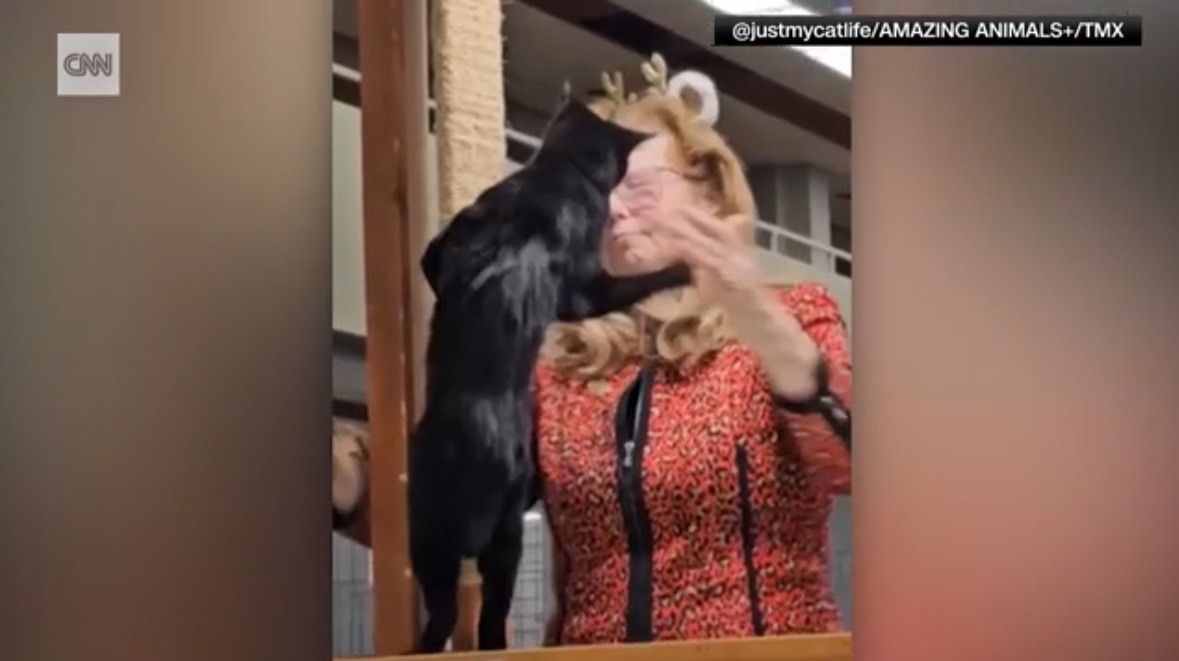
Amid the subdued noise of the show, in which hundreds of people collectively try not to freak out the felines who definitely don’t want to be there, Beethoven — number 176 — was called up.
Anyone who knows anything about cats could tell little dude was not gonna do well.
“Beautiful coat, shiny, nice green eyes,” said a judge, a woman wearing cat ears.
Having exhausted her supply of superlatives, she ran a hand down Beethoven’s tail, then grabbed both his front legs from behind in a way I’ve never seen anyone try to move a cat and tried to spin him around.
Beethoven wasn’t having it.
The void unleashed a symphony of hisses, feints and dodges while trying to get away, but the judge — seriously, has she ever dealt with a cat before? — shoved him, then tried to grab him again as if the pointless evaluation could be saved.
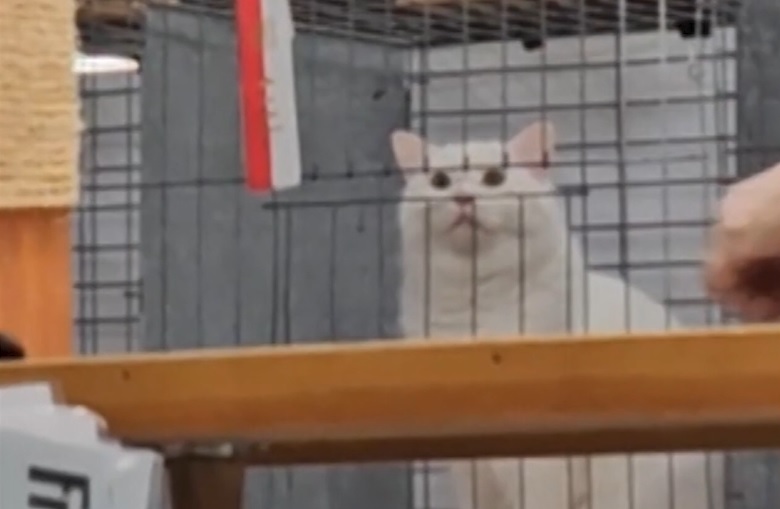
That’s when The Conductor lunged in for a hard right paw-slap, leaving #177– a white chonkster on deck — with a look that said “Oh no he didn’t!”
Contestant 177 needs popcorn. Someone get this cat some popcorn!
“I need the owner here now,” the judge said, like a doctor snapping at a nurse for a scalpel as a patient’s blood pressure plummets on an operating table.
Beethoven was disqualified, but he should have gotten points. He should have gotten all the points.
Oh, people who participate in “cat fancy” will tell you their ridiculous soirees are really just social events for the feline-inclined, as if they don’t privately rage when their cats lose like Patrick Bateman stewing over the fact that Bryce prefers Van Patten’s business card to his own.
But seriously, what the hell is going on at these shows?
Most of them are celebrations of the cat world’s worst excesses, with people lugging their terrified $10,000 Savannahs, $4,000 Bengals, currently out-of-fashion Persians and other breed cats to gymnasiums or hotel ballrooms where they’re mishandled, judged like collector’s items and measured against absurd arbitrary standards written by God-knows-who.
The breed standards read like wine descriptions in obnoxious catalogues: “The tail should be long and sturdy, powerful yet restrained like a rhinoceros in a steel cage. The coat should be of moderate length and silky, yet not so shiny as to invite comparisons to the Arkenstone of Thráin, that wondrous jewel. The head should be angular, recalling the good old days of colonial occupation in Siam when elegant men and women would lounge in opulent royal palaces enjoying stiff cocktails as the locals fanned them. The paws should leave tigerian pug marks, but the toes should not be arranged so close together as to appear inartful…”
The insanity of it makes me want to pose as a judge, grabbing a cat and taking a deep huff from its behind as horrified cat fanciers look on.
“I get notes of summer in New York, rotting garbage and the perpetual smell of urine on the 6 line. Hints of jasmine, cinnamon and Temptations Seafood Medley filtered through the miraculous feline intestinal system! The flavor profile is ecstatic. Oh! The aftertaste! Bitter yet triumphant!”
Except for the non-breed portion of the show, which you get the impression is treated like a non-televised undercard fight at a UFC event, the participants are basically big-upping cats who come from breeders, holding them up as the feline ideal while allowing a few scraps to fall off the table for those dirty little moggies who were the result of two cats voluntarily copulating, not some breeder putting Big Tom and Queen #7 in a cage together until BT puts one in the bun.
Ew, a shelter cat!
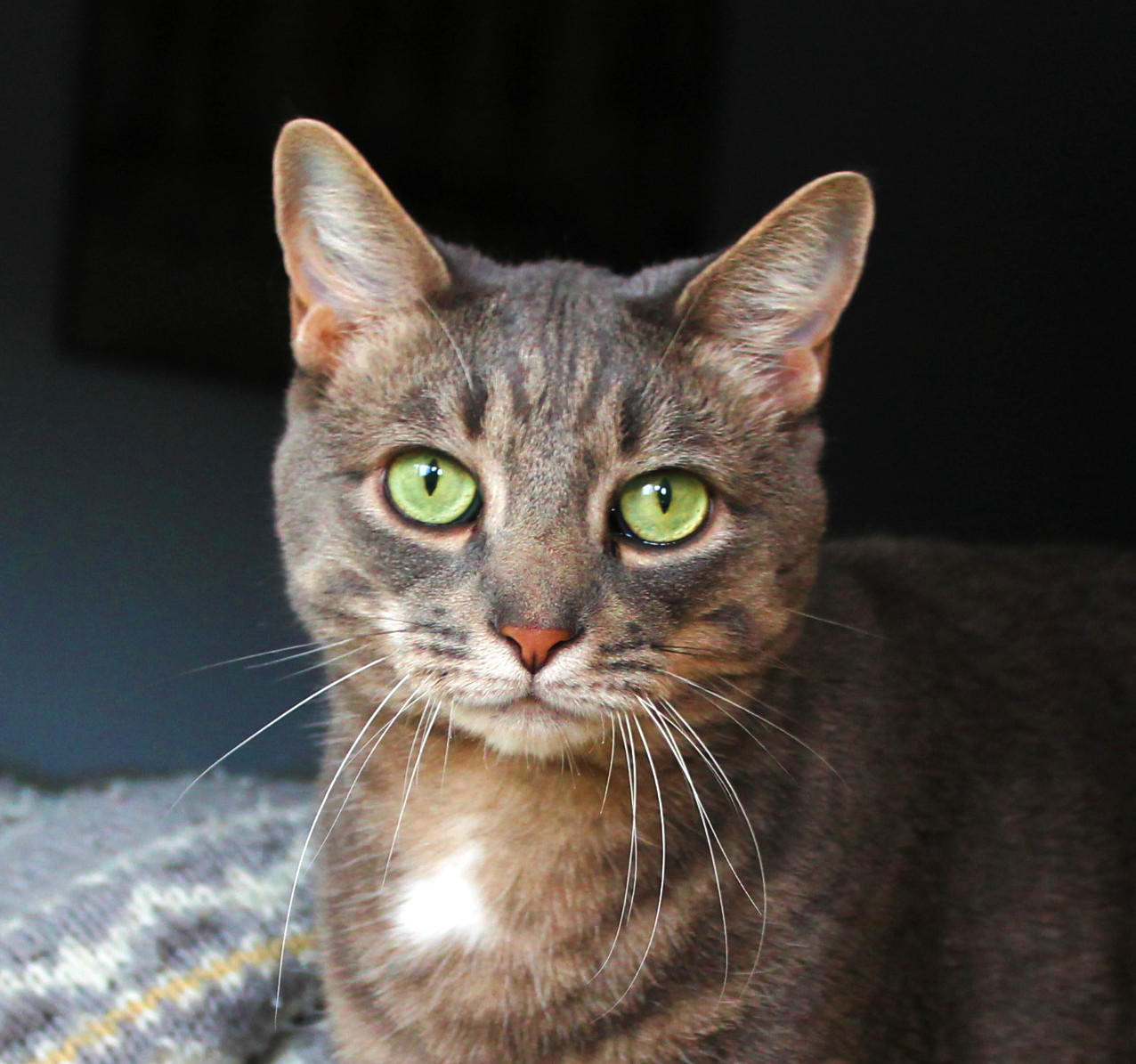
You know what I say to these cat shows and their judges? Look at this dude! Look at him! Behold his handsomeness:
Not only is he charming and ridiculously good looking, his office has many leather-bound books and smells of rich mahogany. Cat judges, eat your hearts out!
The president of the Americats registered his displeasure with a new study claiming cats should be fed only once a day.
WASHINGTON — A new study suggesting cats should only be fed once daily is “an attack on our freedoms” and “quite possibly the biggest threat to felinekind since vacuums,” an angry President Buddy said Friday.
“One meal a day! That’s what these supposed ‘scientists’ say,” the president of the Americats said during a White House press briefing. “But could it be they have an agenda?”
The president waited a few moments as aide cats wheeled in a projector, then took reporters through a slide presentation positing a connection between the study’s authors and “nefarious interlopers from the Siamese communist government.”
“University of Guelph? What the hell is a Guelph? It sounds Siamese,” President Buddy said, clicking through the slides.
“The Siamese, led by Chairman Xinnie the Pooh, want to take away your freedoms,” the president said. “They want to tell you that you can’t have a tremendous turkey dinner at food o’clock because you ate eight hours earlier. If it were up to them, none of us would ever have snacks.”
The study involved only eight cats, all four years old or younger, who were fed a large meal once a day for three weeks, then smaller meals four times a day for three weeks. Feeding cats only once a day helped those cats burn more fat and make better use of the protein available to them, the authors said.
Cats fed once daily seemed “more satisfied” and didn’t ask for food as much as they did when they were fed four times a day, according to the study.
“That’s how you know it’s fake news,” President Buddy said. “Who are these supposed cats who are cool with eating once a day? I’ve never met them.”
The president said he would form a new commission, the Yums Studies Council, to “foster studies supporting the view that we need at least four meals a day, and that six or seven would be awesome.”
When I was looking to adopt a cat I spent hours on the web reading about cat care, kitten proofing, behavior and, of course, breed.
Run a Google search about looking for the right cat and you’ll get several pages of nearly identical results about different cat breeds, what their personalities are like and what to expect from them.
Yet it turned out advice from a friend — who grew up with cats and has two of his own — was more accurate than anything I’d read online.
“When it comes to cats it’s a crapshoot, man,” my friend told me. “You never know what you’re gonna get.”
I wanted an engaged, friendly pet, and all the breed guides suggested Siamese are the best choice. But what I heard from shelter staffers echoed my friend’s observation: Don’t depend on a breed description because every cat is unique.
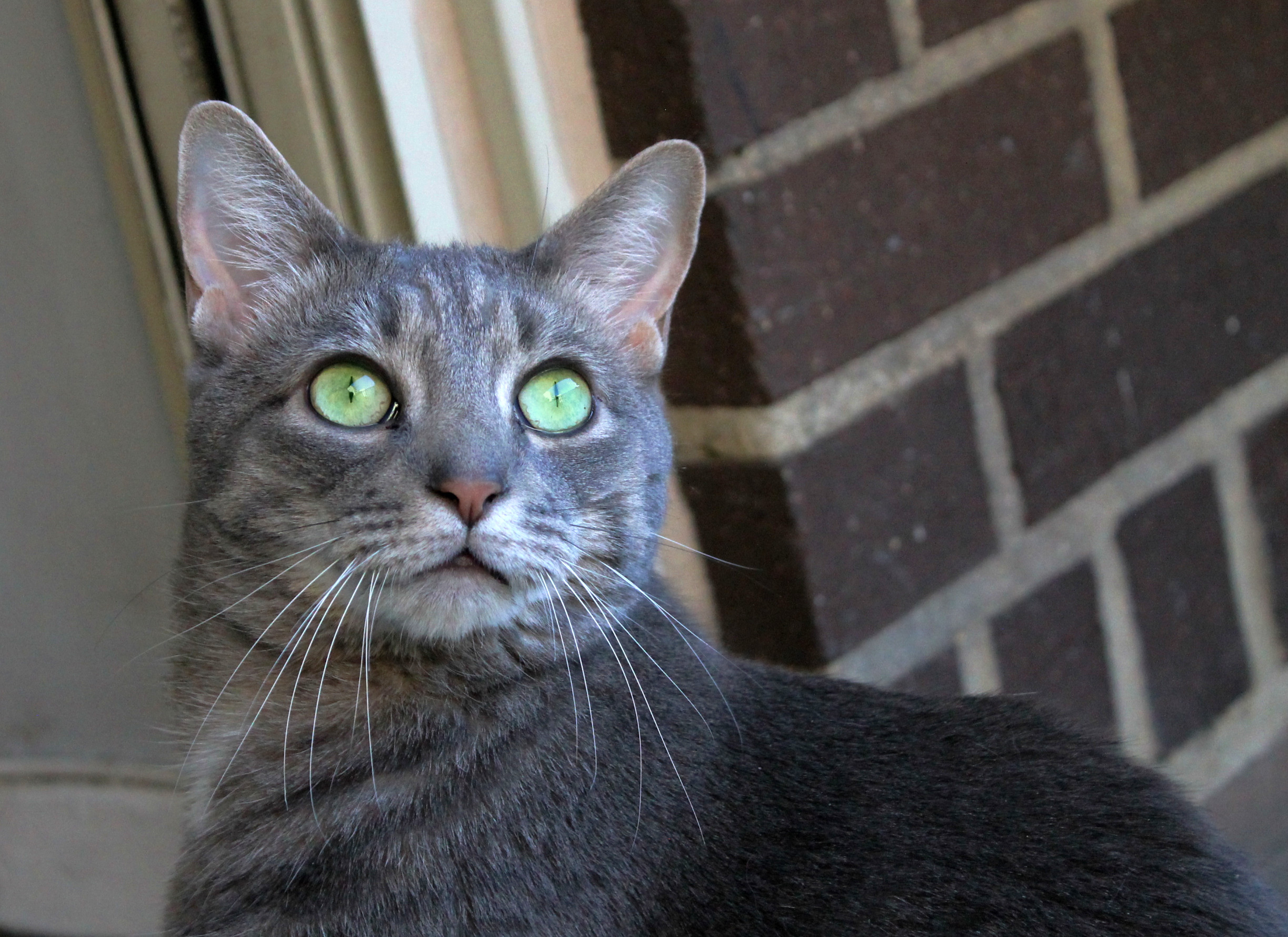
In the end I adopted Buddy, a gray tabby domestic shorthair. No particular breed, in other words. (Though he thinks he’s his own special kind of cat, and he’s not wrong.)
Buddy the Buddesian.
Buddy, it turns out, is vocal, bold and friendly. He’s constantly by my side. He’s got a vibrant language of trills, meows and chirps with which he shares his opinion on everything. Where other cats hide when guests are over or a delivery guy knocks on the door, Buddy runs up, curious to see who’s on the other side and if they’re going to be his newest friends.
So why is it so difficult to pin down a cat’s personality, and why don’t cats fit the behavioral profiles of their breeds the way dogs do?
The answer lies in how both animals were domesticated, and their respective paths to becoming companion animals.
Dogs have been working animals for 30,000 years. The earliest dogs helped their humans hunt and guarded their camps at night, alerting them to dangerous situations or intruders. Later, when humans domesticated livestock and developed agriculture, dogs were bred for different purposes: Some herded sheep, some scared off wolves and coyotes, others pulled sleds.
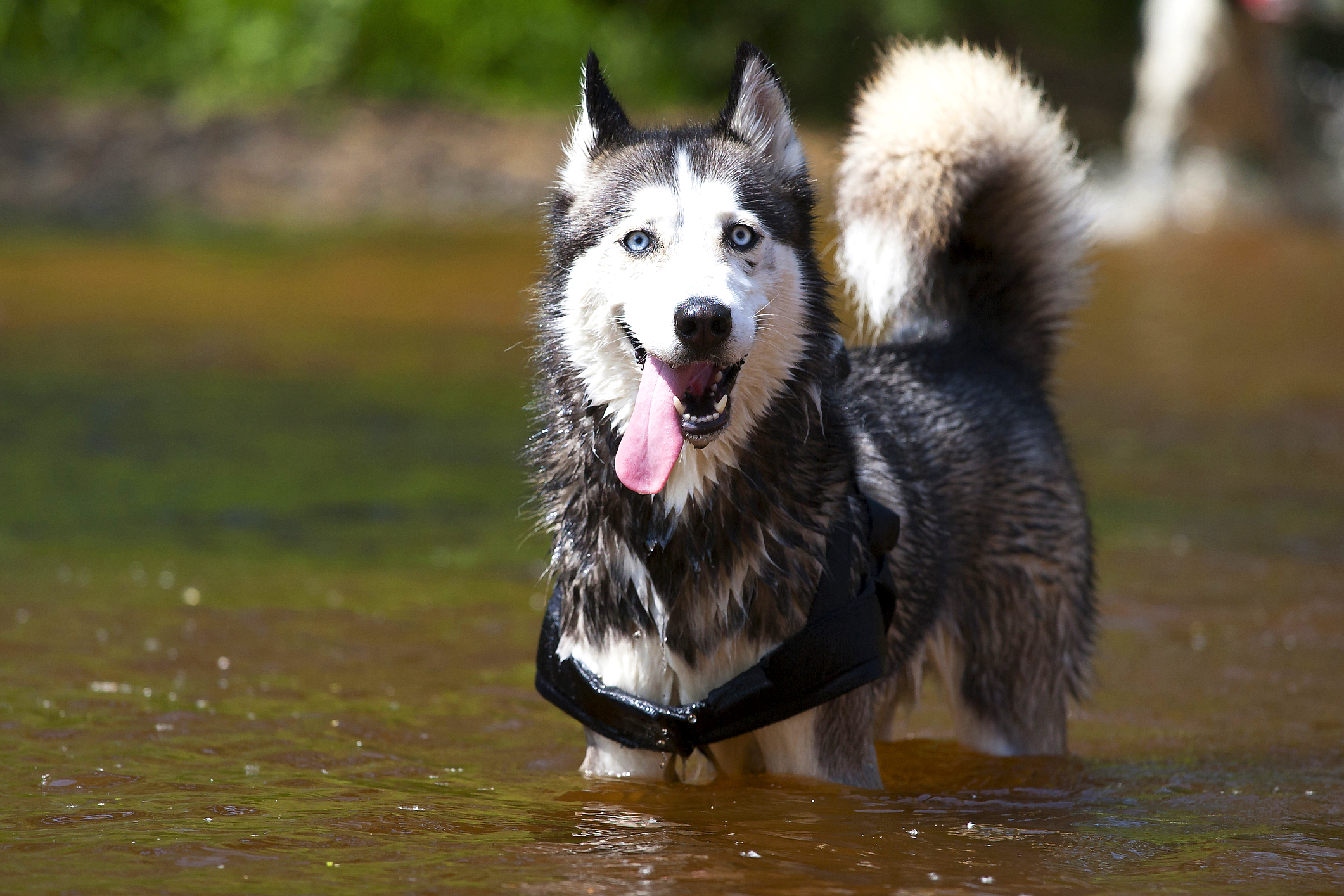
Siberian Huskies were originally sled dogs and require lots of play and stimulation. Credit: Hans Surfer
Today we’ve got dogs who sniff out explosives, drugs and diseases. Police dogs catch a scent and help officers track down suspects. Therapy dogs bring joy to the elderly, sick and injured, while guide dogs make it possible for people with disabilities to live independently.
The point is, human hands have indelibly shaped canis familiaris since long before recorded history. These days dogs are valued primarily for their companionship, but virtually every breed has a lineage that began with practicality, meaning humans shaped them for disposition and ability. A dog’s breed is a good indication of its temperament.
Cats? Not so much.
Cats are famously self-domesticated: When humans developed agriculture and began storing grain, rodents flocked to the abundant new food sources, to the dismay of early human societies.
That’s when cats just showed up, exterminating rodents while showing no interest in grain. Humans didn’t need to breed felines to hunt mice and rats — it’s as natural to cats as grooming and burying their business.
Cats didn’t take on many other jobs in addition to their mousing duties, mostly because they’re famously resistant to following orders, but their hunting skills were so valuable to early societies that they didn’t need to do anything else to earn their keep.
Because of that, no one bothered breeding cats until fairly recently, and the vast majority of cat breeding focuses on changing the way cats look, not how they behave.
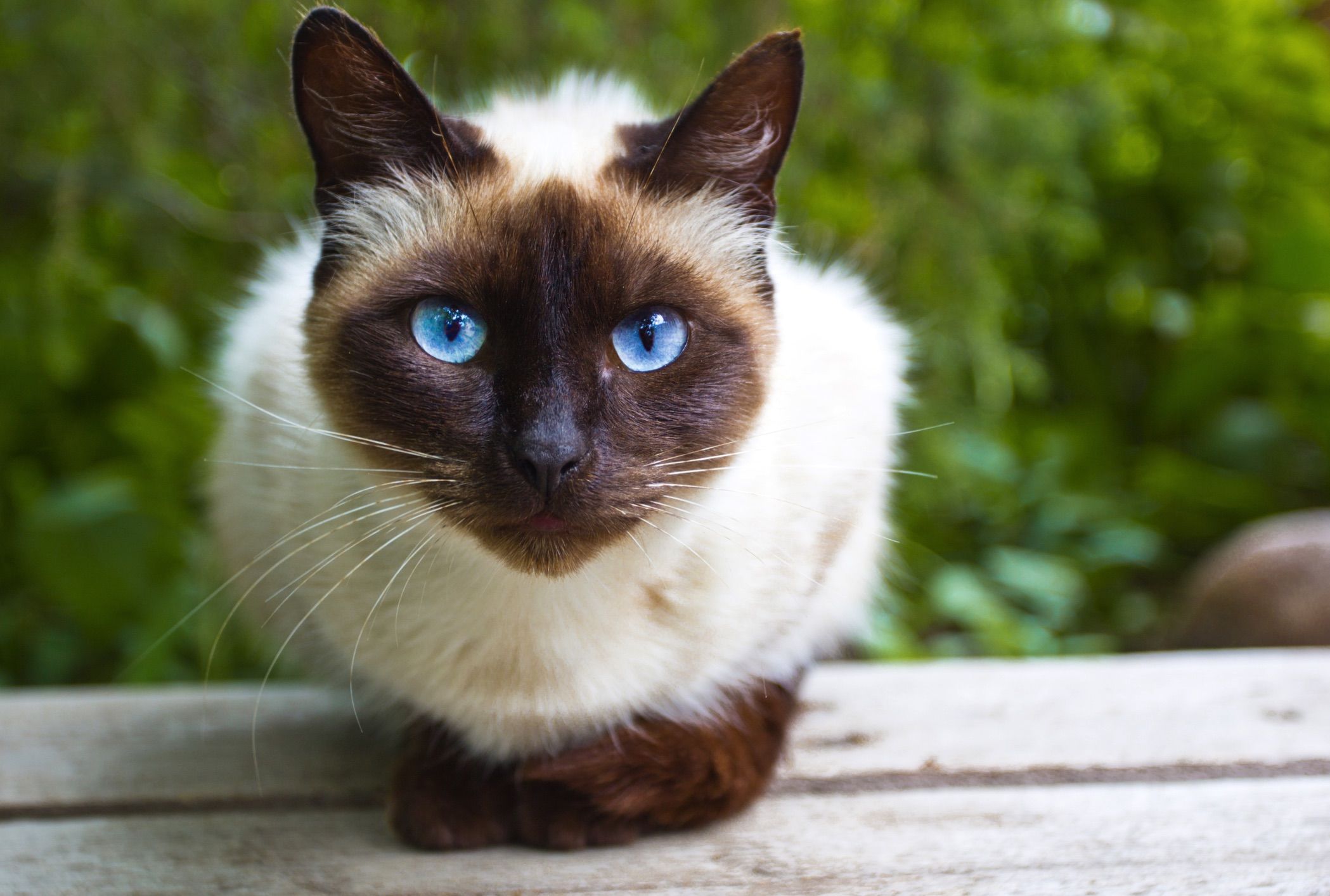
Siamese cats originated in Siam, now known as Thailand. The breed is known for being vocal, but not all Siamese are talkative. Credit: iStock/Chromatos
We like to attribute qualities to cat breeds, and some of them are based in truth. Siamese do tend to talk more than other cats, ragdolls really do go limp when they’re picked up, and Maine Coons are famously chill despite dwarfing most other domestic cats.
But without the behaviorally-specific lineage common to dogs, cat breed behavioral attributes are more like broad stereotypes.
Beyond that, a cat’s personality is primarily determined by genetics and how they were raised in kittenhood. That’s why it’s crucial to handle and socialize kittens when they’re just weeks old, and why ferals will always fear humans.
It’s also why you should take stereotypes about cat breeds with a grain of salt when looking to adopt. If you’re adopting an adult, any good rescue will have information on the cat’s personality, likes and dislikes. If you’re adopting a kitten, you’re pulling the lever on a slot machine.
My advice is to put aside preconceptions about breeds, keep an open mind about looks, and find a cat who connects with you. Like people, no two cats are the same, and a cat’s personality is much more important than the color of its fur when it comes to bonding with an animal who will be in your life for the next 15 to 20 years.
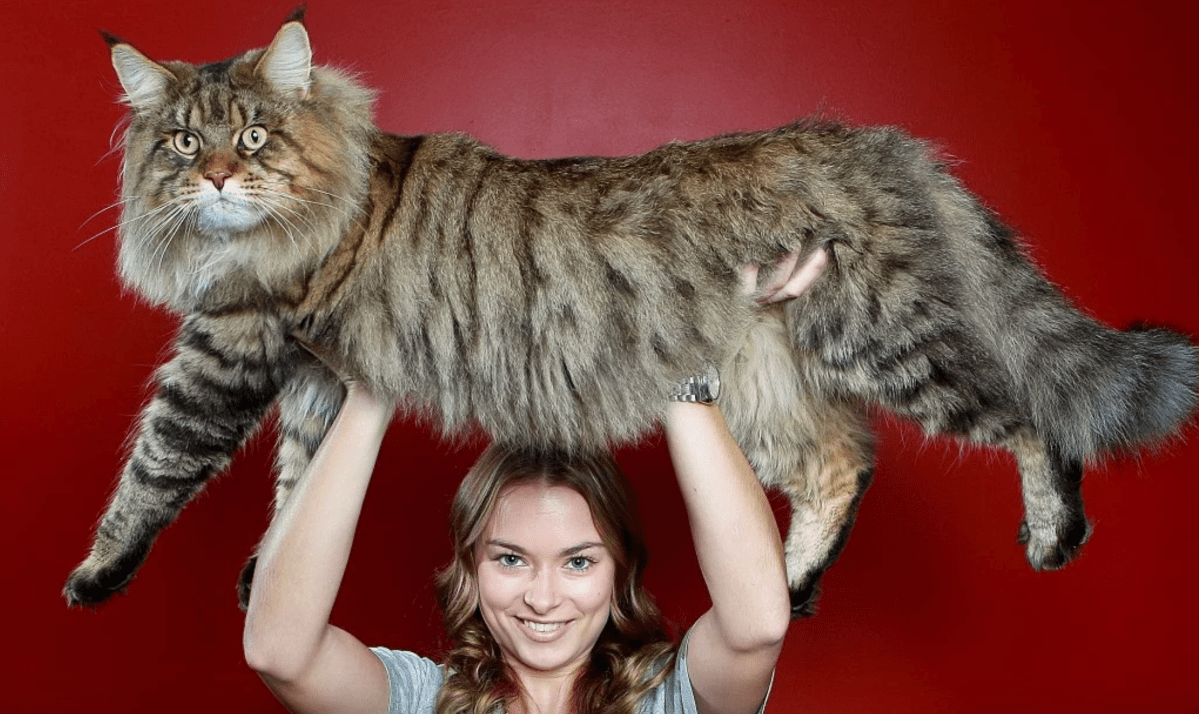
Featured image: Natalie Chettle holds Rupert, a Maine Coone.



 Pain In The Bud