Keep The Cat, Ditch The Boyfriend

A boyfriend or girlfriend who wants you to ditch your cat is asking you to do a lot more than that. It’s about control and manipulation.

If subreddits, advice columns and social media are any indication, a disturbing number of people ask or demand their would-be significant others to ditch their cats before their relationships can progress.

But even by the standards of the demanding, heartless boyfriends and girlfriends who insist the cat has to go in a relationship, this one’s a doozy. A woman writes to the Washington Post’s Carolyn Hax for advice on what to do with her boyfriend, who has some very strange ideas about cats:

Hi Carolyn: I’ve had my cat since college (almost 10 years). I’ve been dating my boyfriend for two years, I love him more than I’ve ever loved anyone, and we’d like to move in together.

My boyfriend hates cats. Hates them. He isn’t allergic (though he used to say he was, until I insisted on a test). He does have a strong aversion to them, probably from his family, who have some kind of belief that they’re evil or unclean. I’ve sought to understand it but could never get a coherent explanation out of any of them.

He jumps when the cat is in the room. And my cat is extremely affectionate, so doesn’t understand why he can’t come sit with us and be friends.

My boyfriend is offended I won’t give up the cat so he can move in. I’ve suggested compromises such as keeping the cat to just one part of the apartment, but he insists he needs the cat out.

I feel the cat was here first so this is an unreasonable ask. My boyfriend feels if I really love him then nothing should take precedence over his moving in, and he now says my hesitance is causing him to question the foundation of the entire relationship.

I cannot imagine rehoming my cat. I also can’t imagine ending my relationship. Am I being unreasonable or is he?

Hax goes beyond the usual “demanding significant others are major red flags” advice and points out that the boyfriend isn’t just placing his own emotional wellbeing above the letter-writer’s, he’s also trying to prune her life of things he doesn’t like or want as a precondition for moving forward in a relationship.

The cat, she points out, “is a hairy decoy, distracting you from the serious mistake you’re poised to make: thinking about your relationship in terms of what you owe the other person. All you owe anyone is to be yourself. … It’s on him to ask his own questions about living with that real you. It’s on him to assume the work of living with his own answers.”

That’s good advice for anyone who finds themselves in that sort of situation, but I do think the red flag aspect reinforces Hax’s good counsel. If the guy lied about being allergic to get his girlfriend to ditch her cat, he’s more manipulative than she may be willing to admit and he’s calculating about it, trying to disguise something he wants as a medical necessity.

But he goes even further than that with the “if you really love me, you’ll do this” emotional ploy, and by claiming his girlfriend’s loyalty to her cat is causing him to “question the foundation of the entire relationship.”

The foundation’s rotten, pal. You’re the reason.

Of course, all the human drama obscures the third individual involved in this mess: the cat. The letter writer has had the little guy for 10 years, which means they’ve long since bonded, he loves her, and he literally can’t imagine living in another place with another person.

Surrendering him to a shelter would be incredibly cruel. It would be a life-shattering betrayal of trust and cause incredible anguish to the poor cat in addition to putting him in real danger of being euthanized. And all for a jerk who fakes an allergy to get his girlfriend to dump the kitty she’s loved for a decade? Hell no.

I hope she finds a guy who loves cats. He’ll most definitely make a better boyfriend than this weirdo.

Study: Even Experienced Caretakers Give Cats ‘Unwelcome Affection’

When it comes to petting cats, less is more. Not everyone knows that.

By chance, one of the first things I saw Tuesday in my post-wake-up browsing was a short video of three guys standing in a triangle formation, each of them with a puppy. A drum recording began, and the men began drumming an overturned pot in the middle with the puppies’ paws.

The dogs, of course, had no idea what was going on. They were confused and stressed. Then I saw this from the official TikTok page of Imperial Point Animal Hospital in Delray Beach, Florida:

That’s a veterinarian abusing a kitten.

It might not be overt abuse. She’s not hitting or screaming at the poor cat. But she’s taking a sentient being with its own feelings, likes and dislikes, comforts and discomforts, and using it as a toy for clicks and likes on social media.

I thought about that when I read the newest study from Nottingham Trent University and the University of Nottingham, which looks at the way people interact with their cats and how their behavior may or may not align with what cats prefer and what they’re comfortable with.

Although Bud and I have a deep bond formed over more than seven years of spending time together, establishing trust, mutual respect and love, he would tear my face off if I did to him what the vet tech is doing to the kitten in the above video.

And you know what? He’d be justified, once he got over the shock and wondered if I’d been replaced with a doppleganger.

The UK study involved more than 100 felines at Battersea Dogs and Cats’ London cattery, with scientists recording interactions between humans and cats via a GoPro camera in a large pen where people can interact with cats one-on-one. There were 120 human participants of various ages and from different walks of life. Each person interacted with three cats separately.

Researchers looked at whether the cat or the human initiated interaction, where the human touched the cat, whether the human restrained the cat, and the cat’s response.

They also collected information on each human participant, such as how many cats they have at home and how long they’ve been caring for felines. Human participants rated themselves on how well they know cats and how well they take care of them.

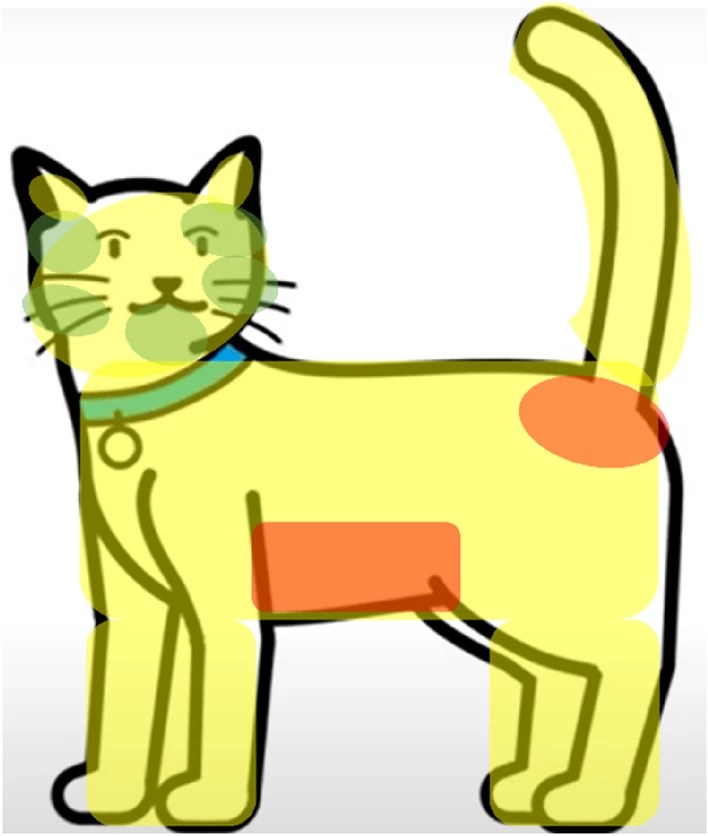
They used a system that corresponds to the below image to grade physical affection. The image is mostly self-explanatory, but to be clear, the green areas are where cats like to be touched, the yellow areas are “meh,” and the red areas are no-go zones for most cats:

greenyellowredcatareas

In earlier studies, the team established what many cat caretakers know: Allowing cats to initiate physical interactions, going easier and lighter on petting, letting cats control how long the interactions last, and avoiding any kind of restraint are “best practices” for petting cats. They reaffirmed that scratching cats under the chin, rubbing their cheeks and forehead are “the best ways to increase their affection and reduce aggression.”

That might seem obvious, but in research there’s an important distinction between knowing something (or thinking you know it) and proving it with research. It’s important to prove it, and to forgo assumptions, to produce credible and repeatable experiments.

Animal behaviorist Lauren Finka, lead author on the new study, said although the above may seem like common knowledge among experienced caretakers, that’s not always true, and it’s not always reflected in their behavior.

“Our findings suggest that certain characteristics we might assume would make someone good at interacting with cats—how knowledgeable they say they are, their cat ownership experiences and being older—should not always be considered as reliable indicators of a person’s suitability to adopt certain cats, particularly those with specific handling or behavioral needs,” Finka said.

We should point out here that these are “best practices” for establishing a healthy, trusting relationship with cats, and taking their feelings into consideration. Lots of people might force their cats to do things without much push back, but that doesn’t mean the cat is happy. No one’s perfect, and there are always things we can learn about how to do better by our furry friends.

Finka also said she hopes people who run shelters and rescues take the research into consideration. That’s because some people run into the same problems I did: When you’ve never had a cat, and/or you don’t fit the profile of what people think a “cat person” is or should be, you could encounter resistance or skepticism from shelter staff.

One volunteer at an animal shelter asked me if I was adopting a kitten for my kids or girlfriend, because it didn’t occur to her that I’d want a cat. Some shelters require references from a veterinarian, which you can’t get if you’ve never had a pet before.

“Importantly, within shelters, we should also avoid discriminating against potential adopters with no previous cat ownership experience,” Finka said, “because with the right support, they may make fantastic cat guardians.”

For us, it’s more confirmation of what we’ve always believed: The more you take your cat’s feelings into consideration, and treat the little one with the respect he or she deserves, the happier your cat and the deeper your bond will grow.

Sunday Cats: Eurasian Lynx Captured On Long Island, ‘Loneliest Cat’ Has Been Returned To Shelter Twice

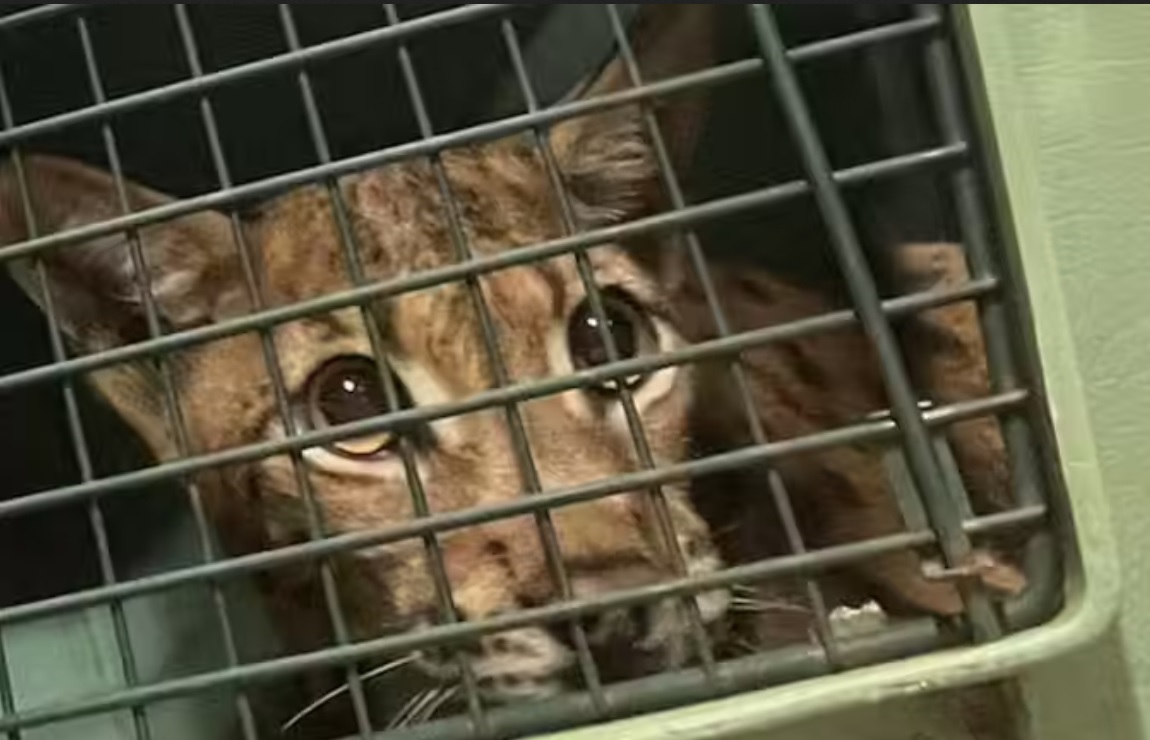
SPCA staff and veterinarians believe the well-socialized wildcat was the illegal pet of someone living in or near Central Islip.

The saga of a “big cat” spotted on Long Island this week has come to an end with the animal’s capture.

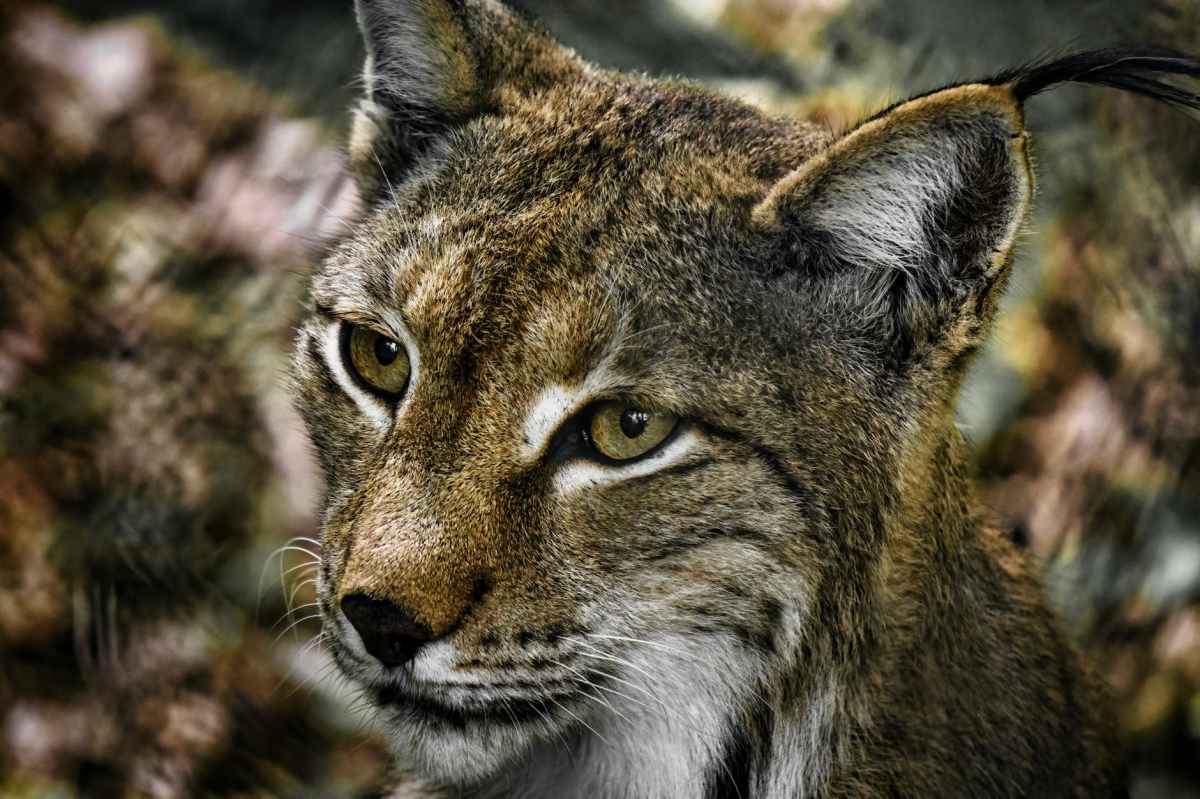
Authorities believe the cat is a Eurasian Lynx and was a pet who escaped or was abandoned by his owner. The frightened feline was first spotted on Wednesday in Central Islip, Long Island, a suburb that stretches for 118 miles just south of New York City.

“Scared the daylights out of me,” Diane Huwer, a self-proclaimed cat lover who was the first to encounter the lynx, told the local ABC affiliate.

The area encompasses two counties and is one of the most densely populated places in the U.S. with more than 7.6 million people. It’s one of the worst places in the world for a wild cat to be abandoned, with heavy traffic, ubiquitous environmental noise and endless shopping plazas surrounded by labyrinthine residential neighborhoods.

It’s illegal to own wild animals in New York, and the cat’s “owner” likely would have kept it without a proper enclosure to avoid attention from authorities.

The lynx’s sightings made the headlines in the New York papers, as well as coverage by local TV news and online publications. It went viral on social media, with users trying to determine what kind of cat it was from the handful of blurry photos witnesses were able to snap. Some media coverage suggested it was a true big cat. (Here at PITB, we thought it was possibly a Savannah cat or an American lynx.)

lynxleonardo
Authorities said the Eurasian Lynx was clearly socialized and wasn’t aggressive when they finally caught him. Credit: SPCA

Local authorities searched fruitlessly for three days and were about to give up early Saturday morning when someone spotted the wild cat in a residential neighborhood and called police.

The hungry feline was pawing through garbage cans next to a house in Central Islip. Authorities said the young lynx was friendly and socialized to humans.

“He was rubbing his face on the cage, looked like he was a friendly cat and from the tips we’ve gotten,” Frankie Floridia of Strong Island Animal Rescue said. “It seems these people have had him since he was a baby.”

Veterinarians have named the lynx Leonardo de Catbrio and said he’s about a year old. Despite his ordeal, the 40-pound cat was not malnourished or dehydrated, and the vets who gave him a check-up said he’s in good health. They’re waiting on lab results to confirm his species.

“Someone obviously had it as a pet,” the SPCA’s Roy Gross told Newsday. “These are wild animals, not the type of animals anyone should have. … They don’t belong in captivity this way.”

In the meantime, police, the state Department of Environmental Conservation and the SPCA are looking for Leonardo’s “owner,” who faces misdemeanor charges and a fine of up to $1,000 if he or she is convicted. They’re sure to have questions about how the person acquired a wild cat, let alone a non-native species. It’s been illegal to “import” wild animals since the Wildlife Act of 1976, and the illegal wildlife market has been a scourge on law enforcement and conservationists alike.

“I know everybody wants something that’s exotic,” Gross said. “They want something cool. It’s not cool.”

Header image of Eurasian Lynx courtesy of Pexels

A lonely cat in the UK needs a forever home

Eleven is a silver tabby who’s been returned to the shelter twice by would-be adopters, and staff at the shelter are appealing to the public to find her a forever home with patient humans.

The four-year-old with bright green eyes has been with Battersea Cats and Dogs in south London since April. Her rescuers say she takes a while to adjust to new surroundings, and they believe that’s why Eleven was returned twice within days. If Eleven’s failed adopters had been more patient, shelter staff said, they would  have discovered she’s a loving lap cat once trust is established.

Eleven the Cat
Eleven the Cat takes a while to warm up to new people. Credit: Battersea Cats and Dogs

They hope to place her in an “understanding home” with people who “will give her the time and space to settle in, as she would be a wonderful addition to a home.”

“Eleven needs her own space when she’s settling in, so she can hiss and swipe if pushed into interactions that she is not ready for,” a shelter spokesman told the Mirror. “She expects respect, but once given she will reward you with plenty of love. She is a super clever cat, who enjoys learning and she will sit on command for a treat of course.”

Frankie Sad Eyes Needs A Home

Frankie was surrendered at 13 years old and hasn’t had the easiest time adjusting to shelter life.

Even though I am the honored servant to the king, His Grace Buddy I, I am not immune to adoptable cats who tug at the heartstrings.

Frankie Sad Eyes is one of those cats. Just look at those eyes!

The little guy is 13 years old, and at an age when he should be enjoying a quiet, nap- and treat-filled life as the senior statesman among cats, he’s been surrendered by his people and has landed in a shelter.

Thankfully that shelter is Tabby’s Place, a no-kill, no-cage sanctuary in New Jersey that has a reputation for doing right by its cats. Still, any feline would be shocked by the experience of losing his or her family and ending up in a strange place with unfamiliar people and cats.

Frankie Sad Eyes
Frankie looks sad, and undoubtedly he’s finding it difficult adjusting to life in a sanctuary, but staff at Tabby’s Place say he’s a “joyful” cat with a zest for life.

Alas, I can’t adopt Frankie. Like the King himself, he’s not particularly keen on sharing his throne, so there can be no future where Buddy and Frankie are, well, buddies.

But Frankie, who is described as “a zesty, exuberant sweetheart” who still has kitten-like energy, is looking for a home where he can establish his new and forever kingdom, with a human or humans who will dote on him and see to his every need.

Visit Tabby’s Place to view their adoptable cats, make a donation or just brighten your day.

UPDATE: Kaya The Kitten To Spend Another Week In Shelter’s Care Before Adoption

Kaya the kitten is recovering at her foster home after surgery.

UPDATE, 12/1: To Rescue says Kaya the kitten is “healing nicely” after surgery on her eyes, but will remain with her foster family for another week before she’s cleared for adoption. Kaya was examined by a veterinarian on Nov. 30 and was given the all-clear. She’ll stay in foster care until she’s finished with her medication.

Original post:

Several readers asked for a follow-up about Kaya the kitten after our earlier post about her.

The shelter To Rescue turned to the internet for help after not a single potential adopter showed interest in Kaya, who has a congenital facial malformation but is otherwise healthy.

Kaya had successful surgery on her eyes on Nov. 16 and has been recovering in her foster home, where she continues to be her natural, playful self, shelter staff say.

She was scheduled for a follow-up vet visit today, Nov. 30. We’ll update as soon as we hear anything else.

If you’re interested in adopting sweet Kaya, you can visit the shelter’s site and fill out an adoption application.