A Virginia man created National Black Cat Appreciation Day, a celebration of melanistic house panthers, in honor of his late sister, who loved her 20-year-old black cat named Sinbad.
Happy National Black Cat Appreciation Day!
A few years after the death of his 33-year-old sister, June, Wayne Morris wanted to do something in her honor. June adored her black cat, Sinbad, who died at 20 years old, just two months after she passed.
So the Virginia man teamed up with Rikki’s Refuge, a sanctuary where he volunteered, and created National Black Cat Appreciation Day in 2011. Morris chose the day of June’s passing, August 17, in her memory, and that first year marked it by holding a fundraiser for Rikki’s Refuge.
Morris was delighted by black cats as well. He often posted about Norman and Batman, his own melanistic miniature panthers, advocated for the adoption of black felines, and painted whimsical scenes of cats, which were auctioned to raise money for Rikki’s.
Morris often posted about his cats, including Batman, seen here. Credit: Wayne Morris
Wayne Morris founded National Black Cat Day.
Morris also liked to show off his other black cat, Norman. Credit: Wayne Morris
Morris painted scenes involving black cats, which were auctioned off to raise money for feline rescues. Credit: Wayne Morris
Batman. Credit: Wayne Morris
(Above, clockwise from top left: Batman, Wayne Morris, Norman, Batman again, and one of Morris’s paintings.)
Wayne Morris died in 2022, but the day he founded has continued to grow in popularity. In the 14 years since its inaugural celebration, National Black Cat Appreciation Day has spread via fundraisers for shelters across the country, as well as sites within the online catosphere, like this one.
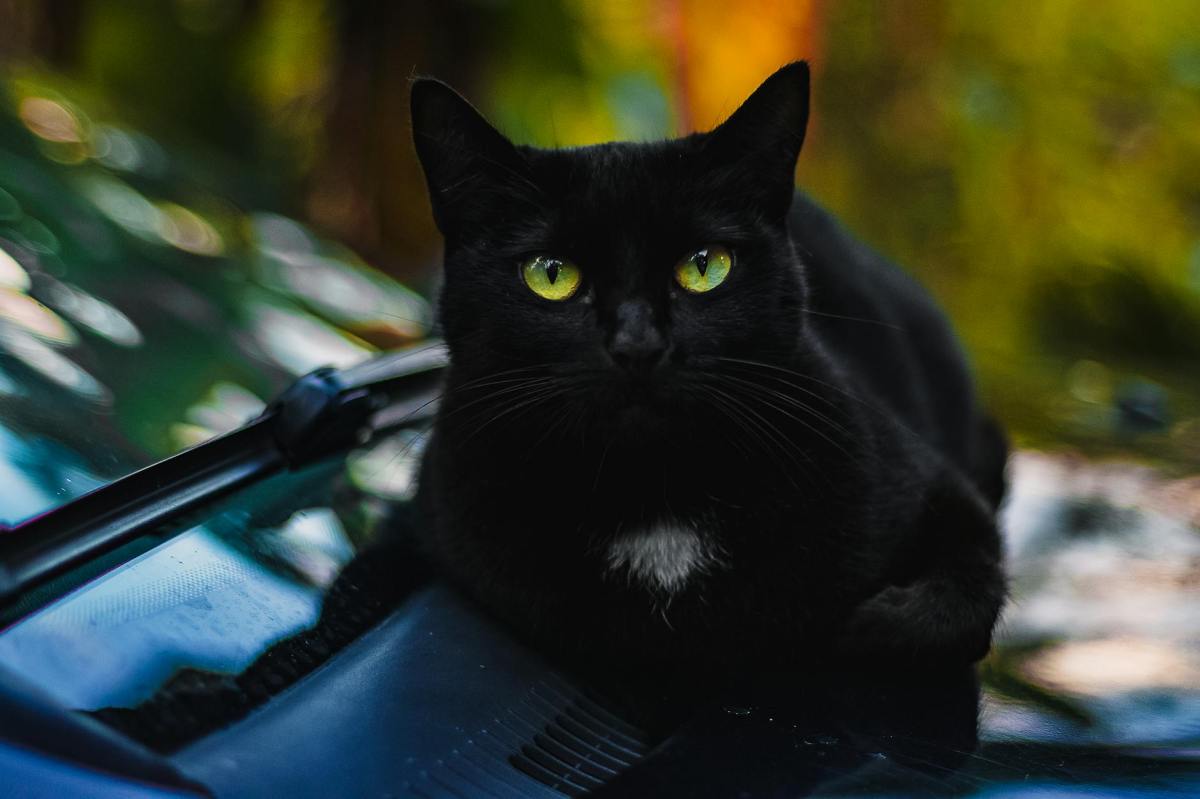
Morris was motivated beyond honoring his sister and raising money for his favorite rescue. Black cats — also affectionately known as voids — have suffered unfortunate reputational damage over the centuries.
Melanistic felines are actually considered good luck in Japan, China and most of Asia, where they can be found in temples and their likenesses are used as maneki neko, the ubiquitous “lucky cats” in homes and businesses. (Black maneki neko are said to ward off evil spirits, diseases and people with bad intentions, while the golden cat statues are associated with wealth and the white neko are thought to bring good health.)
But in much of the western world they’re associated with bad luck, “evil” forces in folklore, and they’ve been invoked in outbursts of moral panic over things like witchcraft.
Big cats can be voids too, like this stunning black jaguar in Scotland’s Edinburgh Zoo. Credit: Wikimedia Commons
A black cat — or a statue of one — was said to be involved in Satanic rituals in Spain by Konrad van Marburg, an inquisitor known for his brutal zealotry. While the effect of that accusation has been exaggerated for years in internet discussions and posts (Pope Gregory IX’s papal bull dealt with a small area of Germany and did not declare that black cats were Satanic), it naturally comes up in superstitions about the animals.
A 2020 study of 8,000 adoptions found black cats were less likely to be adopted and more likely to be euthanized. That study and others found there was “scant evidence” for the dramatic margins suggested by anecdotal accounts circulating online and in some publications, but confirmed the problem is real. Research also suggests that negative perceptions of black cats isn’t correlated to religious preferences, but is tied to general belief in the supernatural.
Interestingly, additional research has hinted at a decidedly more modern and petty reason people may hesitate to adopt black cats: they think voids are more difficult to photograph, which is an issue for people who want to show their pets off online. (We’ve written about that particular hang-up before, and noted it’s possible to take beautiful photographs of voids by being mindful of factors like lighting and contrast between fur color and the background.)
Regardless, the combined effect of the superstitions and negative associations has harmed black-coated felines, and National Black Cat Appreciation Day is also an attempt to push back and show people that black cats are just, well, cats.
The world-famous cat shrine has experienced a surge in tourism, leaving it bereft of the familiar statues that are inspired by the legend of a friendly cat.
Gōtoku-ji temple has a unique problem.
The complex, where legend says a friendly waving cat led a Japanese feudal lord and his men to warmth and safety ahead of a brutal storm, has seen an influx of travelers since Japan relaxed its COVID-era restrictions and tourists have returned.
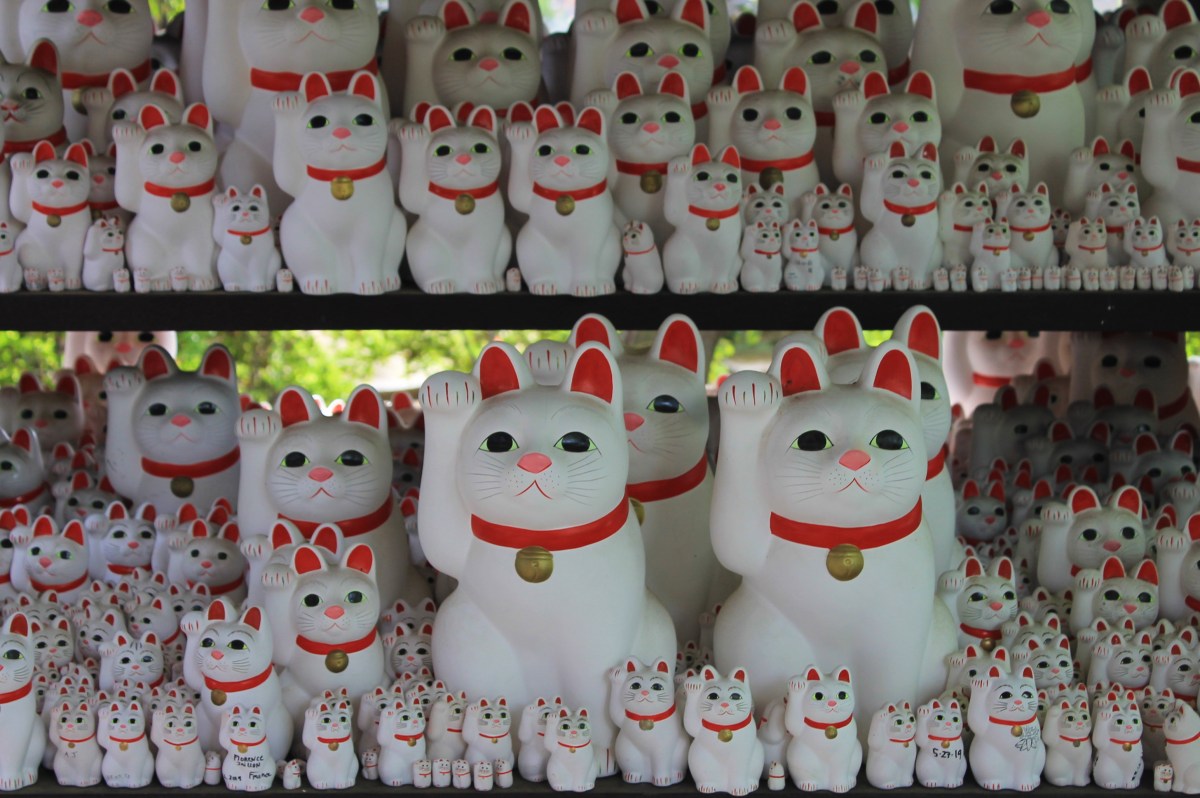
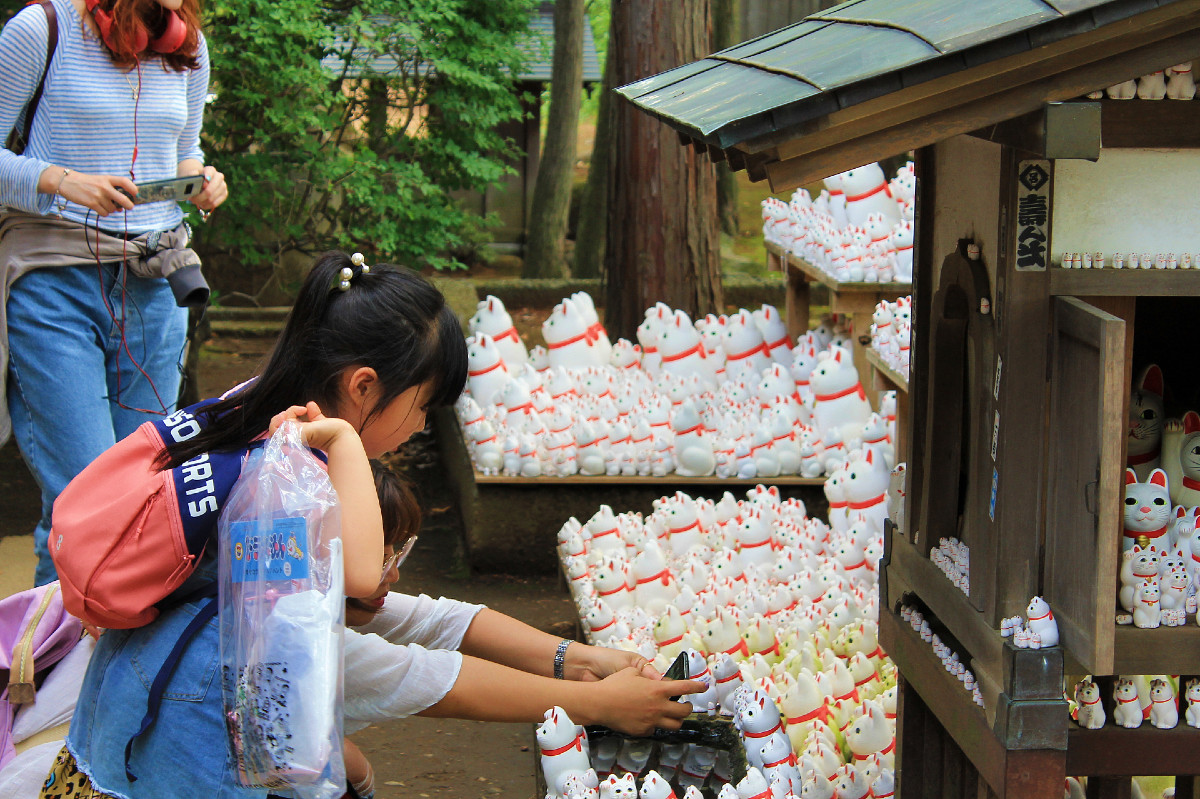
Now Gōtoku-ji can’t keep up with the demand for maneki neko, the ubiquitous “beckoning cat” statues that visitors purchase at the shrine’s tiny gift shop, the Washington Post says in a new report. People who come to the temple write prayers on the statues and place them in a perpetually-expanding section of the shrine grounds.
The cats are said to bring good luck, with variations in their designs and colors: red for health, pink for love, gold for success and so on. White maneki neko, which are sold at the shrine, are the original and “all purpose” prayer cats. The shrine is Buddhist, but practitioners of Shinto, Jainism, Christianity and other religions write prayers on the little cats, hoping they’ll be heard by whichever version of God they believe in.
The manufacturer, which also makes statues for the Lunar New Year and other festivities, can’t keep up with the demand. Now staff at Gōtoku-ji have put up signs apologizing to visitors. They say they don’t know when they’ll get more maneki neko.
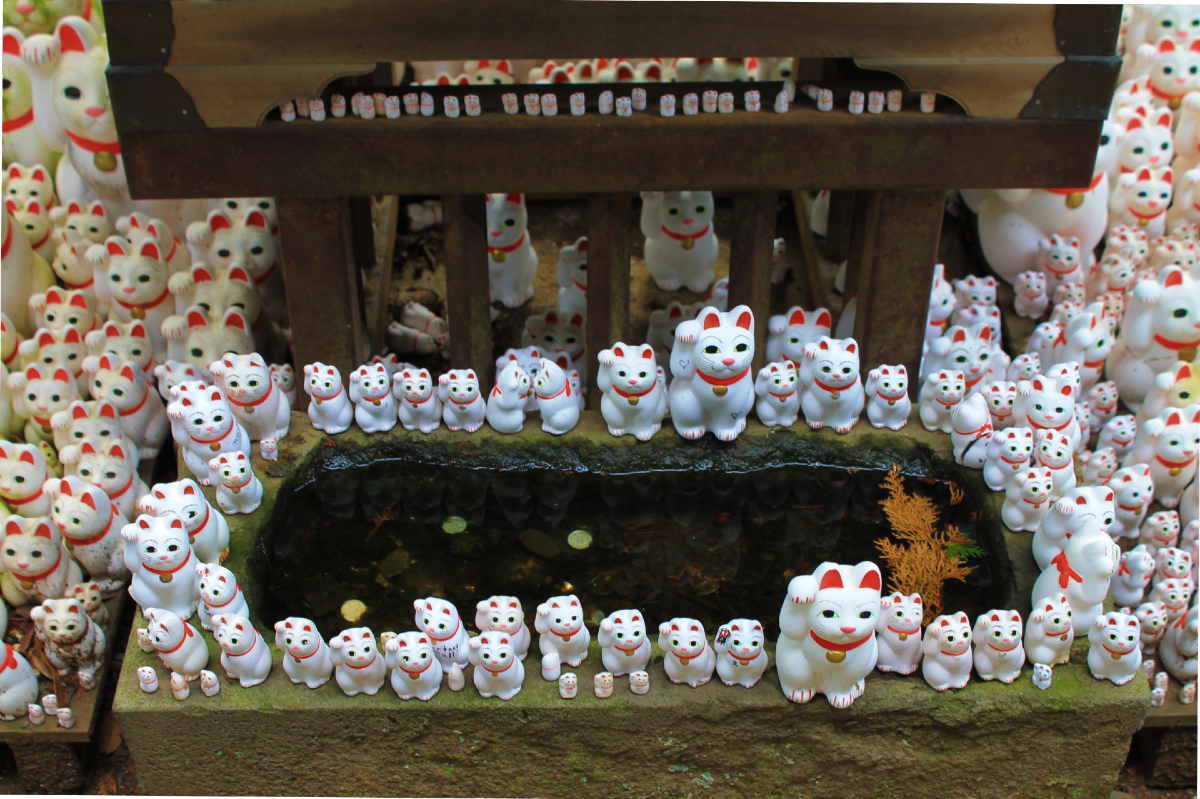
When I visited in 2019 there were many thousands of the iconic statues, but the photos from Monday’s WaPo story show thousands more placed on recently-built shelves. Temple staff have begun asking visitors to take their maneki neko home with them instead of leaving them at Gōtoku-ji. They clean, shelve and organize the thousands of statues currently there and won’t dispose of them because they represent the prayers of visitors, but the volume has become unmanageable.
Visitors leave their own maneki neko statues at the shrine, often with personal messages asking for different blessings and written in black marker on the back of the statues. Credit: Pain In The Bud
Despite Gōtoku-ji’s rise in popularity, I still recommend checking it out, especially for cat lovers who are headed to Japan. While most of Tokyo’s most famous shrines are located in the city proper, with modern skyscrapers looming above temples that date to pre-modern Japan — never letting you forget you’re in a bustling metropolis — Gōtoku-ji is in Setagaya, a mostly-residential ward.
The temple grounds are surrounded by homes and they’re quiet in a way that others aren’t. The shrine is well-manicured and beautiful, dotted with statuary as well as centuries-old wooden temple structures.
When I was there a smiling elderly docent walked the grounds carrying a photo album that showed the temple and its structures over the years. With my sister-in-law’s rudimentary Japanese we were able to get a bit around the language barrier, and he told me one of the most striking buildings, a three-story tiered wooden tower, was home to one of the resident cats who liked to sleep on its second floor.
I wasn’t able to catch a glimpse of the little one but I imagine Gōtoku-ji is one of the best places on the planet a stray cat could call home. Like the people of Turkey, respect for cats is ingrained in Japanese culture and temple cats in particular are treated extremely well. Some even have their own Instagram pages and fan clubs, becoming tourist draws in their own right.
Maneki Neko statues at Setagaya shrine. Credit: PITB
Felines play a major role in Ghostwire: Tokyo, a horror adventure from Japanese studio Tango.
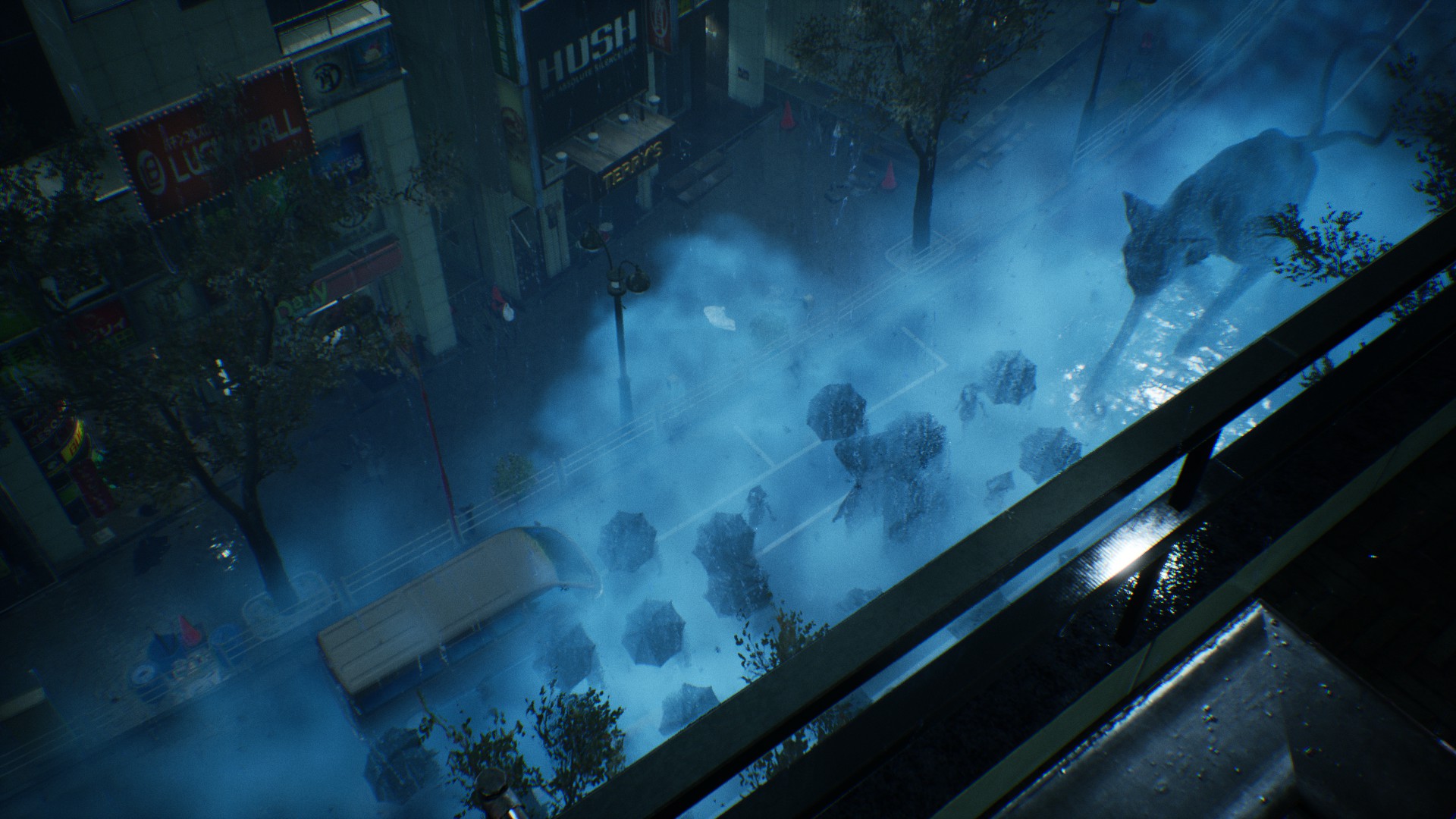
The premise of Ghostwire: Tokyo is simple: The entire human population of the city has vanished in some mysterious, cataclysmic supernatural event, leaving the heart of Tokyo silent, vacant and draped in an ethereal fog.
Instead of the bustle of humanity, the city is now populated by demons and yōkai, which are roughly equivalent to ghosts in Japanese folklore.
Only one human survives: Akito, our protagonist. He remains alive due to pure luck after a spirit named KK inhabits his body, intending to use it to fight the supernatural forces that have emptied Tokyo of its human inhabitants.
Akito and KK come to an uneasy truce sharing one body due to their aligned goals. KK’s presence not only allows Akito to survive the malevolent forces at work, but also imbues him with fantastic elemental powers to wield against the yōkai prowling the otherwise empty streets: He can summon wind, fire and water, and cleanse spirits and locations with Shinto prayer rituals.
A torii gate.
Akito performs a ritual to cleanse a torii gate.
Akito is set on rescuing his sister from sharing the same fate as hundreds of thousands of others, while KK spent his human life — and now his afterlife — trying to stop the mysterious figure behind the spirit invasion from harvesting human souls. For Akito to do the former, he and KK must do the latter.
Oh, and there are animals — lots of scared, confused cats and dogs who don’t know what to make of the city’s supernatural new inhabitants and don’t understand why the humans have gone missing. KK’s powers allow Akito to read animals’ thoughts.
“I can’t smell my buddy anywhere,” a confused dog tells me early in the game, whimpering as he wanders near the Shibuya scramble crossing.
It’s worth paying attention to Ghostwire’s lost pets. Feed a dog and the good boy could lead you to a cache of cash or a Jizo statue where you can say a prayer and augment your powers. Stop to pet and talk to a cat, and she might tell you a yokai is hiding nearby, disguising itself as an every day object.
True to a country obsessed with felines going back centuries, a cat isn’t always just a cat in the world of Ghostwire: Tokyo.
There are your regular domestic pets and strays, which are simply called neko, the Japanese word for cat. Akito encounters them often, comforts them and can read their thoughts with KK’s powers. Like the dogs, they’re confused, scared and hungry.
A cute cat warns me about nearby malevolent spirits.
A good boy leads me to a statue of Jizō Bosatsu, a deity who watches over children and travelers, and eases the suffering of lost souls.
“You’ve gotta spend money to make money, so why not spend it here with meow?”
This nekomata was meowing a hilariously out-of-tune song when I passed his shop stall.
Akito with a cat.
Then there are nekomata, which are the spirits of domestic cats who have become yōkai. Nekomata have made themselves at home in the absence of humans, showing their entrepreneurial spirit. The ghost cats have taken over every convenience store and kiosk in the city, urging Akito and KK to buy their snacks and supernatural wares to “be purrpared” for what awaits them.
“You’ve gotta spend money to make money,” one nekomata tells me, “so why not spend it here with meow?”
Nekomata are not to be confused with bakeneko, who are also yōkai but differ from their spirit cat cousins in subtle ways. Bakeneko can be friendly, mischievous or ambivalent, they can move without making a sound, and like nekomata they can speak and understand human language. Unlike nekomata, which have two tails, bakeneko only have one.
Finally, there are maneki neko. You’ve seen maneki neko even if you don’t realize it, probably on the counter of your local Japanese grocery, sushi house or Chinese restaurant. They’re the smiling, beckoning cats who are said to bring good fortune, health and other benefits. They’re based on the legend of a friendly cat who led a road-weary Japanese feudal lord and his men to a sanctuary just before a violent thunderstorm centuries ago, and have become ubiquitous in Japan and wider Asian culture.
For a game with a grim premise set in an empty but lived-in city, there’s plenty of bizarre humor as well. One mission has you delivering toilet paper to a human spirit who really, really needs to wipe after an epic bowel movement before he can move on and rest easy in the afterlife.
On another occasion I stopped to admire the detail and near-photorealistic beauty of a street bordering a shrine when I heard a nekomata hilariously meowing a cheerful song out of tune. When I turned toward the little cat, I saw him floating in the air and bouncing to his happy song.
As Akito, the player is tasked with lifting the fog from neighborhoods of central Tokyo, rescuing the spirits of deceased humans before they can be harvested by the demons and yōkai, and investigating the what, why and how of Tokyo’s takeover by malevolent spirits.
Akito and KK accomplish the former by “cleansing” Tokyo’s many shrines using a ritual performed at the shrine torii gates. Once a torii gate is cleansed, the fog around it subsides and more of Tokyo opens up for exploration and investigation. Meanwhile, Akito and KK must fight off yōkai to reach the floating spirits of Tokyo’s citizens, using a talisman to secure them. The duo can then “wire” the spirits to an ally outside the city, who helps return them to their bodies. The game keeps track of how many souls are saved, with the count rising to the hundreds of thousands for adept players.
One of the nastier yokai, toting an umbrella.
A yokai who takes the form of a headless, ethereal Japanese schoolgirl. If you let them get too close, they can seriously hurt and even kill you.
Akito performs a ritual to cleanse a torii gate.
The game remains true to Japanese folklore in the way it presents enemies, who are usually corruptions of human souls who have deep regrets about their lives. The spirits represent anxieties unique to, or prevalent in, Japanese society.
There are Rain Walkers, unnaturally thin salarymen toting umbrellas who advance on you inexorably, representing the angry spirits of men who spent their entire lives in service to a corporation, hardly spending time with their families or raising their kids because they work so much.
There are the Students of Pain and Misery, headless schoolgirls and schoolboys representing the spirits of teenagers whose grades couldn’t carry them into good universities, damning them to a life of tedious, low-paying jobs. Those are real concerns in a country where students spend in excess of 10 hours a day, six days a week in school. Teenagers are under enormous pressure to get top grades, and teen suicide is a major contributor to the country’s unusually high suicide rates.
Spirits of Lamentation are dangerous and move in sickeningly unnatural ways as spirits of people who were estranged from loved ones, while the small, raincoat-clad Forsaken are the spirits of abused children.
These malevolent spirits and others wander the streets, linger in alleys and leap across rooftops, but they also form groups called Hyakki Yagyo, which are parades of oni and yōkai who march through the streets of Japanese cities on summer nights, according to folklore.
You’ll hear the Hyakki Yagyo before you see it, tipped off by the booming taiko drums that accompany the ghostly parade.
The arrival of Hyakki Yagyo in Ghostwire is impressively atmospheric: Lights and neon signs flicker and die out, while taiko drums boom from the mists. Then you see the spirits — yōkai with their umbrellas, massive demons, bizarre apparitions.
The first time I encountered a Hyakki Yagyo, I was so engrossed in watching the procession that I didn’t realize I was in its path until it was too late. I learned that if you get too close, the spirits yank you into an ethereal plane and surround you in numbers, determined to end your physical existence and make you one of them. Those encounters are among the most difficult in the game, but they’re also a fun test of skill.
Ghostwire gives us the most complete recreation of Tokyo in any game to date, and it’s magnificent. The metropolis extends seemingly forever in every direction, with 36 million people living a metro area that sprawls for almost 1,000 square miles. (That’s three times the size of New York with all its boroughs.)
Because of that, no game studio can handle the challenge of recreating the entire city on a 1:1 scale, and Ghostwire doesn’t attempt it. Instead the game world encompasses the famous Shibuya district and part of Minato City, two of the most bustling and famous districts in the heart of Tokyo. It’s a massive playground stretching from west of the scramble crossing, through Roppongi and all the way to Tokyo Tower.
Ghostwire is beautiful, polished and a hell of a lot of fun to play. You’re not going to find the gloriously intuitive combat of a game like Control, or even an experience like the fluid melee action of Shadow Warrior 2. Ghostwire’s combat is pedestrian compared to those games, but it becomes more fun and interesting as the game progresses and you’re given different powers and options to deal with a growing variety of ghastly enemies.
The lure of a game like this is its moody atmosphere, magnificent visuals, tense sound design and a plot that weaves hundreds of years of Japanese folklore into the mix, creating a world unlike anything else in gaming.
The writing deftly transitions between serious and funny, tense and lighthearded, and the partnership between Akito and KK allows for a running dialogue throughout the game, with the two of them asking each other questions, arguing over tasks and reacting to the craziness around them. What starts out as an uneasy alliance held together by necessity becomes grudging mutual respect and eventually friendship.
Rounding out the cast of characters are Mari, Rinko, KK’s friend Ed, and the masked protagonist. Rinko is the spirit of a woman who worked with KK in their human lives. Rinko and KK were killed for their determination, and in death they continue the fight against the malevolent spirits. Ed is a weirdo: He’s KK’s man on the outside, helping to reunite the severed souls of Tokyo with their human bodies when Akito and KK rescue them, but the only way to talk to Ed is by payphone — and even then, he only answers in recordings.
Mari is Akito’s sister, who was unconscious and helpless in a hospital when everyone vanished. More than anything, Akito wants to protect her.
Finally, there’s the man in a oni mask, the mysterious mastermind behind the supernatural takeover of Tokyo. Who is he? What does he want? Can he be defeated?
To answer those questions requires an adventure very much worth having.
Title: Ghostwire: Tokyo Release date: March 25, 2022 Platforms: PC, Playstation 5 Audience: Mature Cats: Many
Akito pulls the “cores” from two yokai during a battle sequence in Ghostwire: Tokyo.
A cat stares out from a living portrait in a
A maneki neko during a warped reality sequence.
A trio of stray cats who tell Akito they’re worried about the vanishing humans.
The famous “beckoning cat” traces its origins to feudal Japan, where a friendly cat was said to lead a weary lord and his men to refuge at a humble temple.
In a new article, National Geographic delves into the history of maneki neko — Japan’s famous “beckoning cat” — and how the image became ubiquitous in modern society.
Chances are you’ve seen maneki neko even if you don’t realize it. The iconic feline image has transcended its homeland and is common not only in China, Vietnam, Thailand and the rest of Asia, it’s also made its way to the US and Canada as well, earning a place in shops run by Japanese and westerners alike.
Visitors leave their own maneki neko statues at the shrine, often with personal messages asking for different blessings and written in black marker on the back of the statues. Credit: Pain In The Bud
There’s a reason for that: The waving cat not only represents luck and good fortune, it’s a welcoming gesture meant to attract customers. Maneki neko find a place in homes too, with different coat colors and patterns representing different positive attributes: A white cat is supposed to bring happiness, while a black cat wards off evil spirits and a calico is believed to bring luck in all its forms.
Maneki Neko statues at Setagaya shrine. Credit: PITB
As a cat lover I kept an eye out for the iconic statues during my time in Japan and, although I missed Buddy, I couldn’t leave without seeing where it all began: The cat shrine at Setagaya, a quiet Tokyo suburb where, according to legend, a feudal lord followed a beckoning cat by the roadside and found refuge from the elements in a humble shrine, where the temple monk invited them inside and gave a memorable sermon.
The feudal lord was so grateful for the hospitality, and for finding shelter to wait out a violent thunderstorm, that he vowed to become the temple’s patron. The grounds contain several temples today, as well as separate shrine areas for maneki neko left by visitors and wooden icons with hopeful messages written on them.
All images in this post are from my trip to Setagaya’s cat shrine in the summer of 2019. To see more, check out the post I wrote at the time from Tokyo.
One of the highlights of my trip to Japan last summer was Gotokuji Temple, the famous “cat shrine” in Tokyo’s Setagaya suburb.
Gotokuji is home to thousands of statues of maneki-neko, or “beckoning cat,” an important and ubiquitous image in Japan: Statues of maneki-neko adorn shops and virtually every public place in Tokyo, but Gotokuji is where the legend of the beckoning cat was born. Visitors write prayers on the statues and ask for good luck for a variety of venture, from opening new businesses to getting married.
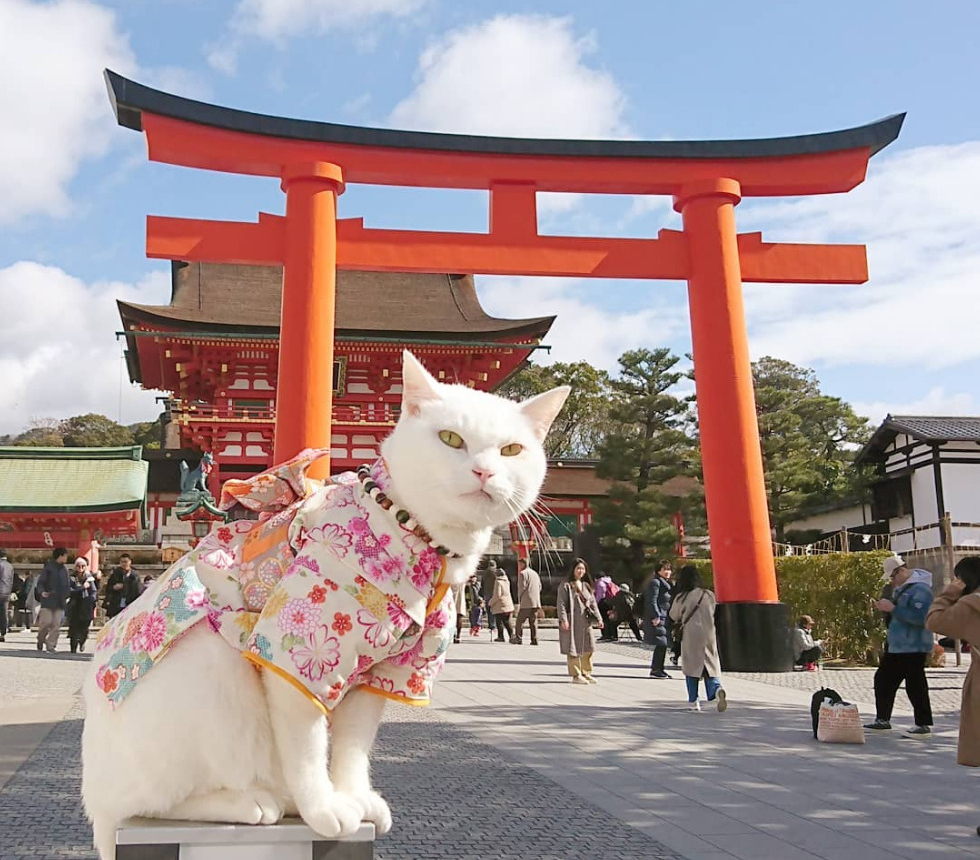
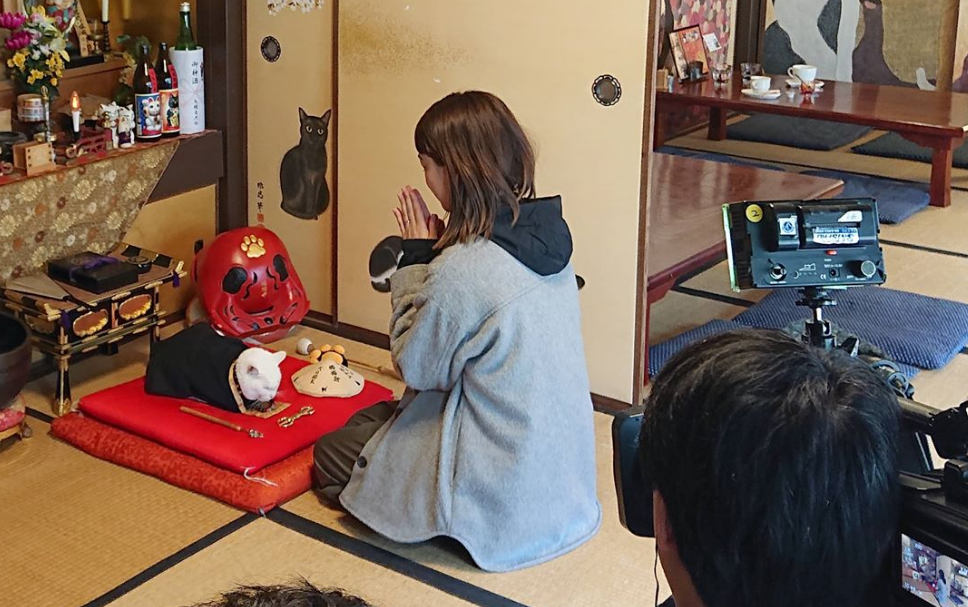
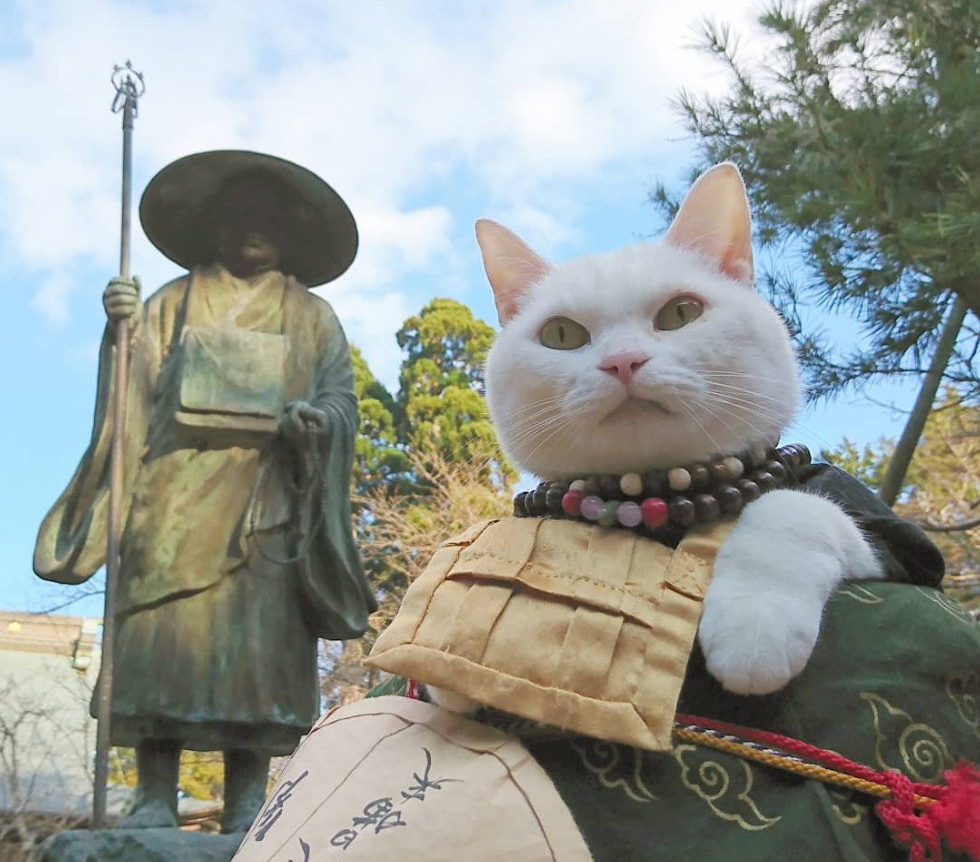
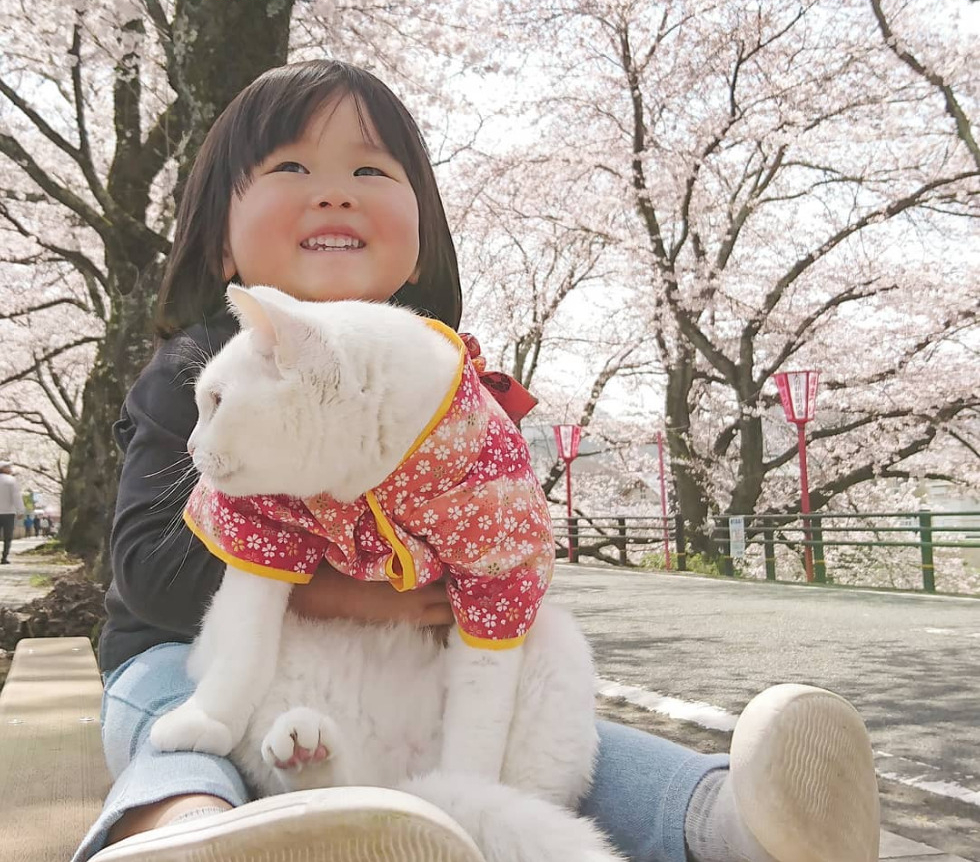
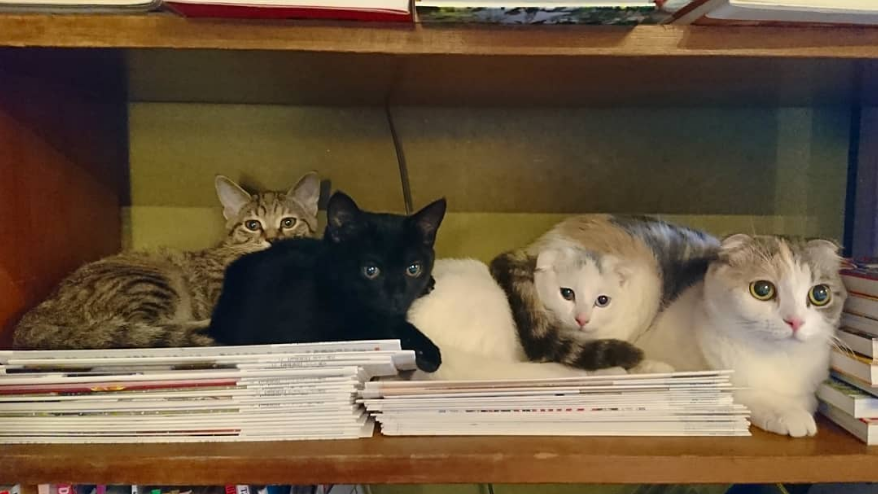
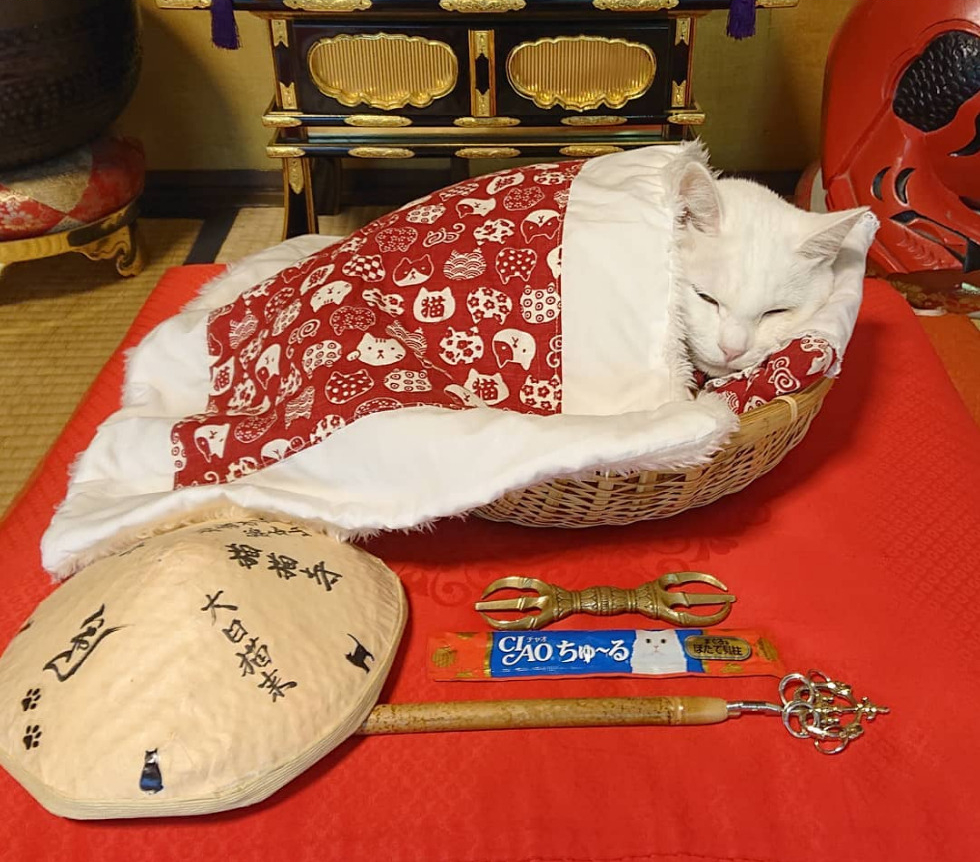
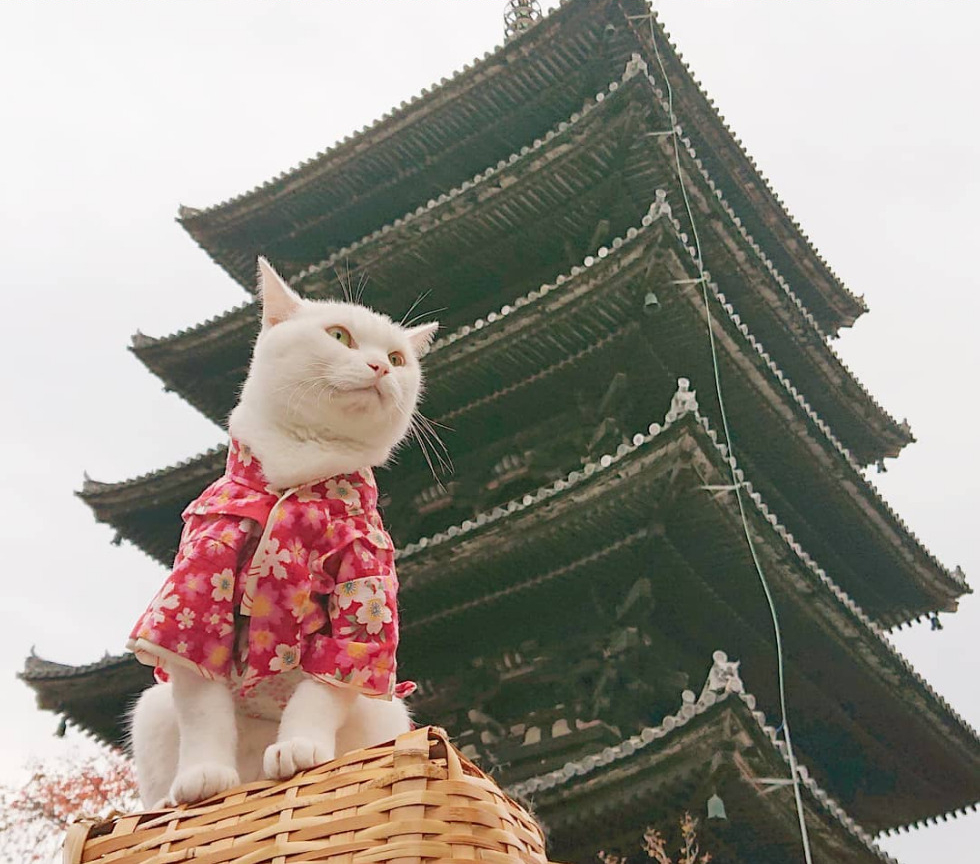
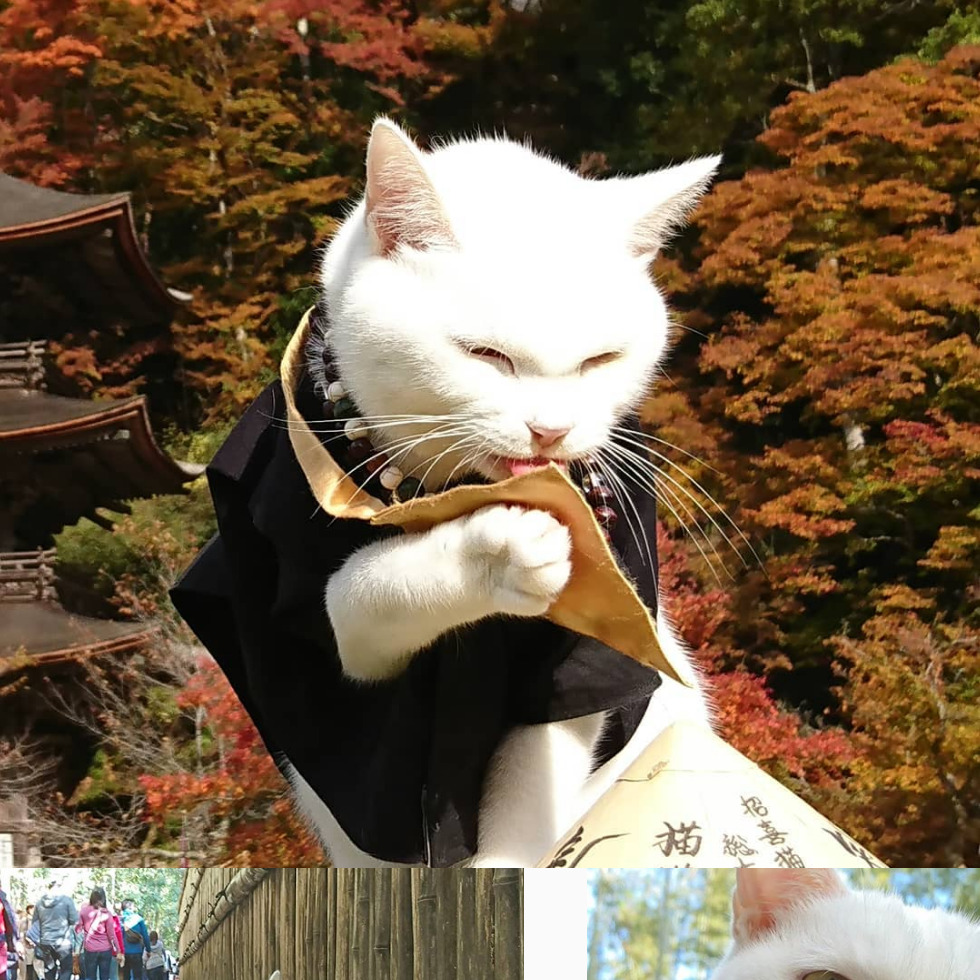
There is, however, only one current feline resident at Gotokuji, while Kyoto’s Nyan Nyan Ji — literally “meow meow shrine” — is populated exclusively by feline “monks,” who wear monkly garb and take their duties — especially napping, er, meditating — very seriously.
The most recognizable of them is Koyuki, the chief cat priestess at Nyan Nyan Ji.
Here are some photos, all courtesy of the temple’s Instagram, showing what life is like for Koyuki and her fellow priests:
“This is how it’s supposed to be, humans: You kneeling before us. Those ancient Egyptians had it right.”
“I can call upon powerful minions to smite you whenever I please.”
“Tiny humans are permitted to touch my holy personage.”
“And here is the nursery, where it’s currently reading time for our kittens…”
“Walk with me on the path to deliciousness…”
“Read the sign! We’re not open until I says so. Now if you please, I have napping to do.”











 Pain In The Bud