With their otter-like features, their squeaky vocalizations and their mastery of multiple environments, jaguarundis are unique in the world of cats.
Jaguarundi
Taxonomic name:Herpailurus yagouaroundi Genus: Felis (small cats) Size: Males weigh up to 20 lbs, with typical sexual dimorphism for felid species Lifespan: Up to 20 years in captivity Gestation: 75 days Litter size: Between one and four kittens per litter Distribution: Almost the entirety of South America as well as the southern US IUCN Red List status: Least concern, but threatened by habitat loss
If you spot a jaguarundi in the wild, there’s a good chance you won’t know what you’re looking at.
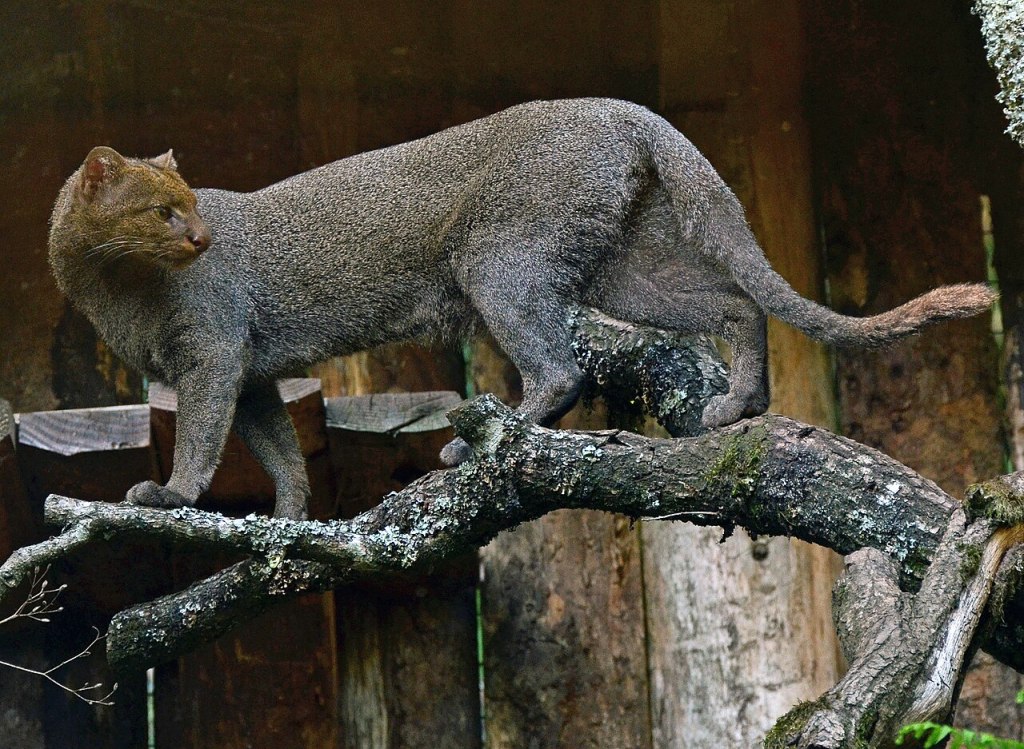
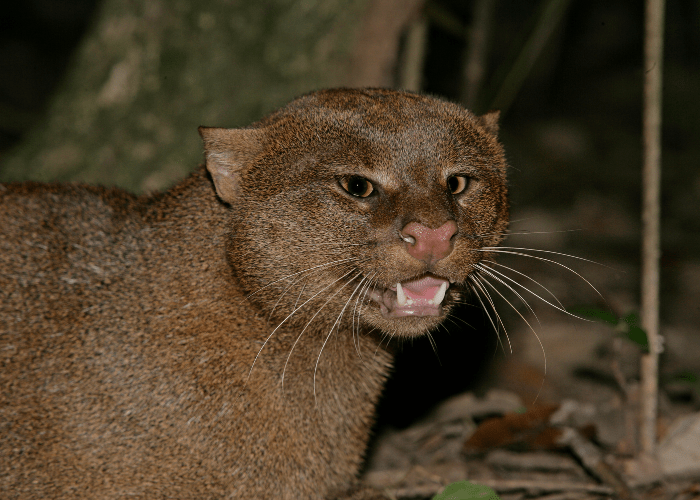
Their sleek, elongated bodies are almost weaselesque when seen from the side, an impression made stronger by the way their heads are shaped in profile. From some angles they can strongly resemble otters, an likeness strengthened by their short, dusky coats.
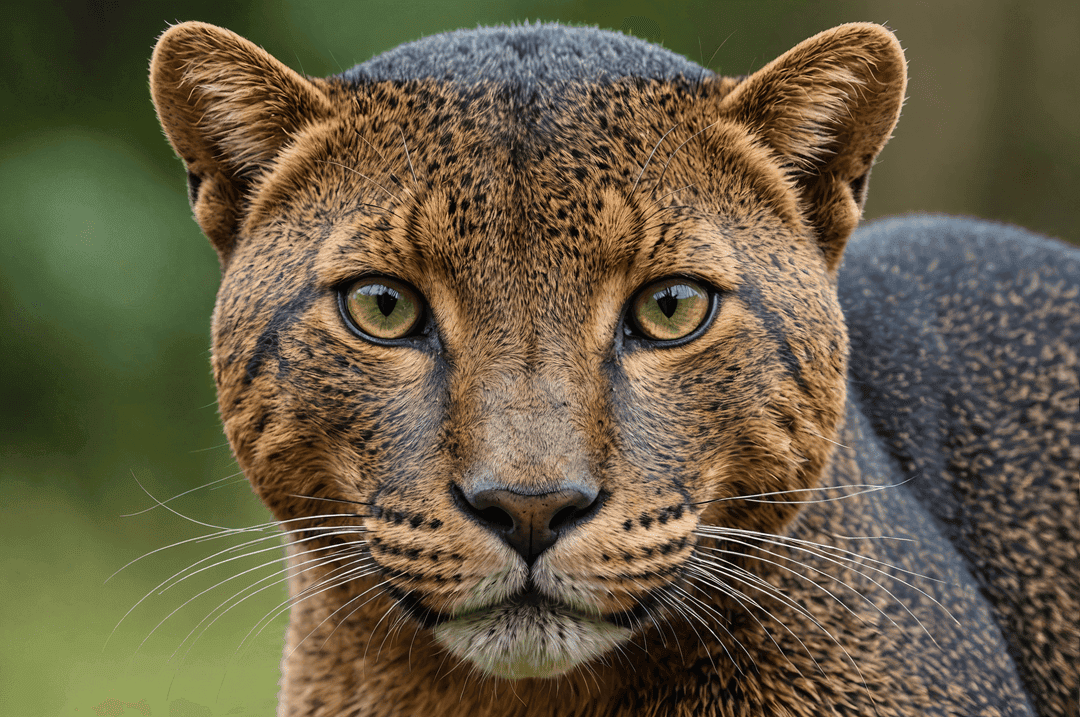
But seen head-on they’re definitely cats, and even though they’re small felines — about one and a half to two times the size of domestic kitties — their facial features can be reminiscent of big cats, especially their broader noses, rounded ears and the set of their eyes.
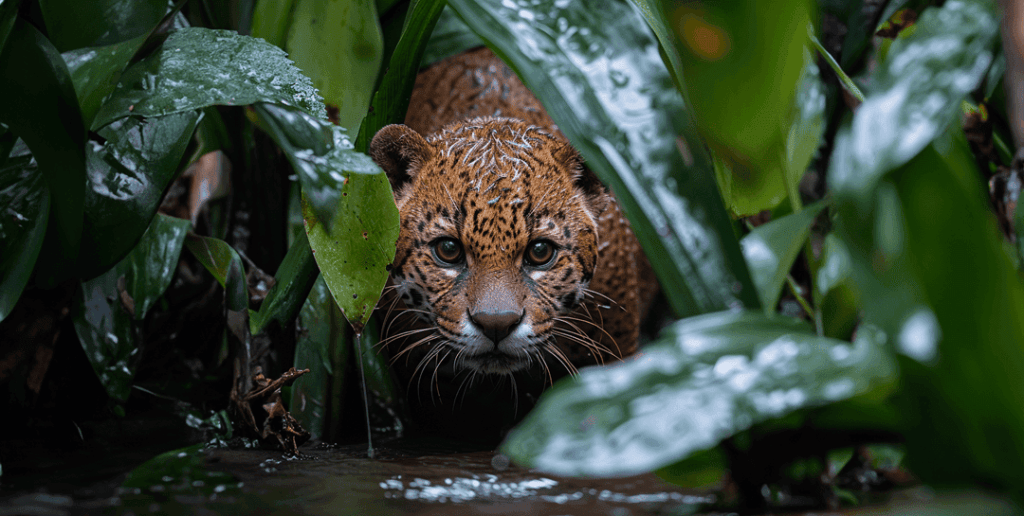
Seen from an angle like this, jaguarundis resemble jaguar cubs:
Indeed, jaguarundi means “dark jaguar” in Old Guarani, an extinct predecessor of the Tupi family of indigenous languages that were spoken in South America for thousands of years before the arrival of the conquistadors and the Spanish language. Modern variants of the language still exist in countries like Paraguay, which may account for the enduring names of several species of western hemisphere cats. (Jaguar itself is based on the indigenous Tupi word “yguara,” and pumas have dozens of surviving names with indigenous roots to go along with their many names in English.)
As New World cats, jaguarundis boast an impressive range that stretches from southern Argentina through Latin America and into the lower US states.
Like their larger cousins, the jaguars, jaguarundis are comfortable in the water and are strong swimmers. They’re also adept hunters on land, excellent climbers, and they’re impressively sure-footed while traversing branches high above ground level.
In short, the adaptable felines can just about do it all.
Note the otter-like appearance of the jaguarundi head in side profile.
In the wild, jaguarundis have been known to hunt prey as large as small deer and help themselves to seafood snacks when the mood strikes them, but analyses of their diets shows they have a strong preference for mammals, particularly a variety of wild rodents found in dense jungles and forests.
Jaguarundis don’t just look different compared to other cats — they sound different as well.
Conservationists call the jaguarundi’s vocalizations “whistles” and “chirps,” but to us they sound more like squeaks.
Take a listen for yourself:
It’s illegal under the Big Cat Public Safety Act to keep jaguarundis as pets, and the jaguarundi curl, a breed meant to mimic the appearance of the jaguarundi, is not related to the wild cat.
While they’re known to range in Texas and Arizona, sightings of jaguarundis are rare. From a distance their movement looks almost indistinguishable from those of house cats, and they’re famously elusive — by the time most people do a double take, the shy felines have disappeared into tall grass, brush or jungle.
Free-ranging cats do have a negative impact on wildlife, but we’re not going to solve the problem by demonizing them and culling them by the millions.
The Literary Hub story starts off with a provocative question: what if cats ruled the world?
This is a question I find amusing to ponder, so instantly my mind was filled with images of cats scandalizing foreign heads of state by insouciantly swiping gifts off tables, angering diplomats by yawning and nodding off during summits, and financing the construction of massive and unnecessary coastal walls, on the off chance the ocean decides to move inland and get them wet.
Then the writer cited the repeatedly-debunked “study” that credulous media of all stripes still reference without bothering to read the text — that infamous 2013 Nature Communications paper, published by birders who author books with titles like “Cat Wars: The Consequences Of A Cuddly Killer.”
Some journalists don’t know any better, some are overworked, and some are frankly too lazy to read the study with a critical eye, but I think one of the more likely reasons people continue to cite the paper is because it’s easier to blame felinekind for wildlife extirpation than it is to admit we’re the primary culprits. After all, according to the WWF’s most recent annual review, we’ve killed off 73 percent of Earth’s wildlife since 1970, and we certainly didn’t need house cats to help us push elephants, rhinos, every species of higher non-human primate, and innumerable other species to the brink of extinction.
We did that. We did it with our relentless development, consuming and fracturing wild habitats. We did it with careless industrialization, by dumping chemicals and garbage into our rivers and lakes until more than half of them were rendered too polluted to swim in or drink from. We did it by bulldozing old growth forest and jungle, by exploiting species for fur, folk medicine, ivory, sport hunting and in the illegal wildlife trade.
Cheetahs are critically endangered, and they’re being driven to extinction even faster by poachers, who sell them to wealthy buyers in oil-rich gulf states where they’re trendy pets. Credit: Riccardo Parretti/Pexels
More than 47,000 species — that we know of — are headed toward extinction. It’s so much easier to blame it on anyone or anything else than admit we need to make major changes to our lifestyles and policies.
But don’t take my word for it. Here’s what Alley Cat Allies has to say about the 2013 meta-analysis and its derivative papers:
“The Smithsonian-funded study published in Nature Communications is not rigorous science. It is a literature review that surveys a variety of unrelated, older studies and concocts a highly speculative conclusion that suits the researchers’ seemingly desperate anti-cat agenda. This speculative research is highly dangerous. It is being used by opponents of outdoor cats and Trap-Neuter-Return (including the authors) to further an agenda to kill more cats and roll back decades of progress on TNR. And it is being spread unchecked by the media.“
Here’s what a group of ethicists and anthropologists wrote about the claims against cats in the journal Conservation Biology, lamenting the lack of nuance and danger in arguing that cats must be stopped “by any means necessary.” The drive to blame felines, they argue, has “fueled an unwarranted moral panic over cats”:
“Contrary to Loss and Marra’s claims that the scientific consensus is consistent with their views that cats are a global threat to biodiversity, the actual scientific consensus is that cats can, in certain contexts, have suppressive population-level effects on some other species (Twardek et al. 2017). This is something that is true of all predators, native or not (Wallach et al. 2010). Thus, cats should not be profiled as a general threat a priori and without reference to important factors of ecological context, situational factors, clear definition of harms, and evidence thereof.”
“There are there are serious reasons to suspect the reliability of the new, extreme cat-killer statistics,” wrote Barbara J. King, retired chairwoman of the department of anthropology at The College of William and Mary.
Feline predatory impact varies by local conditions. Free-ranging cats in cities and suburbs kill rodents, but have minimal impact on other animals, data shows. Credit: Patricia Luquet/Pexels
Like we’ve often noted here on PITB, the authors of the Nature Communications study can’t even say how many free-ranging felines exist in the US. They say it’s between 20 and 120 million. That’s a 100 million difference in the potential cat population! How can they tell us how many birds and mammals are killed by cats if they can’t even tell us how many cats there are? No amount of massaging the numbers can provide an accurate picture if the initial data is shaky or nonexistent.
Furthermore, the nature of a meta-analysis means the authors depend on earlier studies for estimates on predatory impact, but the 2013 Nature Communications paper does not include any data —not a single study — on feline predatory impact. In other words, they have no idea how many animals free-ranging cats actually kill.
In authentic studies that actually do measure predatory impact, the data varies widely in geographic and demographic context. Data derived from the D.C. Cat Count, for example, shows that cats living more than 800 feet from forested areas rarely kill wildlife, and are much more likely to kill rodents.
Those who cite the bunk study and its derivatives are “demonizing cats with shaky statistics,” King wrote, adding she was alarmed by “an unsettling degree of uncertainty in the study’s key numbers.”
Free-roaming populations are reduced when cat colonies are managed, and the animals are fed and fixed. Credit: Mia X/Pexels
Ultimately, we agree with Wayne Pacelle, former president of the Humane Society of the United States.
The meta-analysis authors “have thrown out a provocative number for cat predation totals, and their piece has been published in a highly credible publication, but they admit the study has many deficiencies. We don’t quarrel with the conclusion that the impact is big, but the numbers are informed guesswork.”
Cats do have a negative impact on wildlife, it varies according to local circumstances, and those of us who love cats have a responsibility to keep our pets indoors and help manage free-ranging populations.
But cooler heads must prevail, approaches to managing cats must be evidence-based, and the effort requires people of all kinds working together — which becomes much more difficult when agenda-driven pseudoacademics whip people into a frenzy by portraying felines as bloodthirsty, invasive monsters who need to be wiped out “by any means necessary.”
Solving the problem of free-ranging cats requires us to own up to our own role in species extinction and to take measured, evidence-based steps to protect vulnerable wildlife. Otherwise, we’re inflicting a whole lot of suffering on sentient creatures and accomplishing absolutely nothing.



 Pain In The Bud