Cats Are Fighting The Ukraine War On The Propaganda Front — And From The Trenches

From the military camps where they stop mice from wreaking havoc to social media where they help raise money, Ukraine’s felines are enduring the war alongside their people.

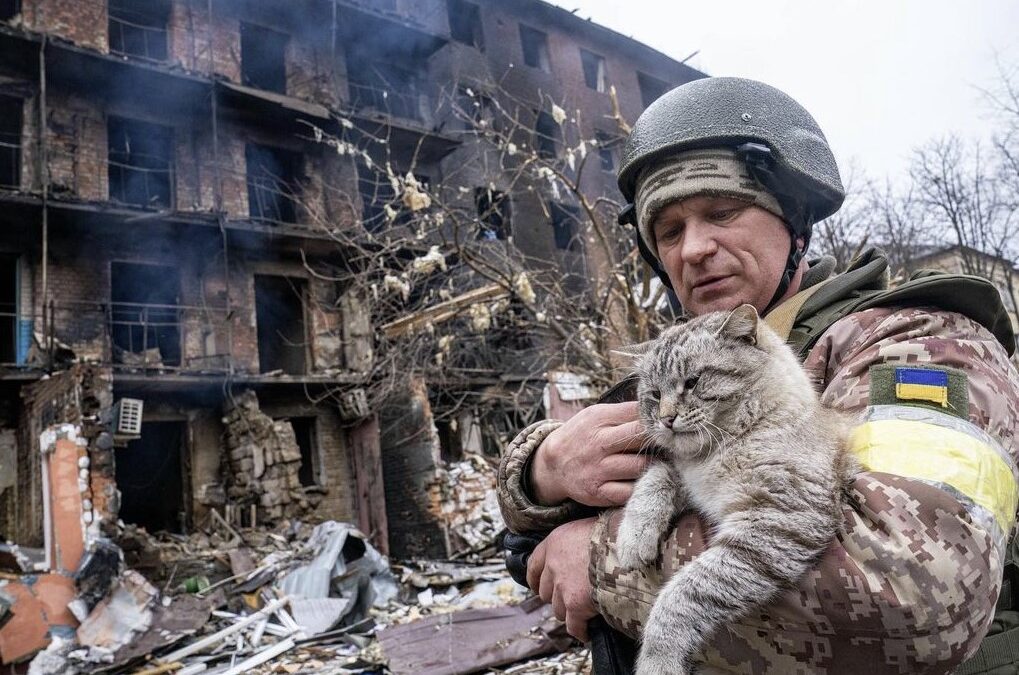
Roman Sinicyn and his men were living in an abandoned house in a destroyed village for a month.

Although each of the Ukrainian soldiers contributed to their survival and fought the Russians, perhaps their biggest hero was Syrsky the Cat.

The fearless feline evicted a rodent infestation in the platoon’s temporary headquarters, hunting the mice mercilessly as his humans engaged in firefights with invading Russians. By day Syrsky made the soldiers’ temporary lodgings livable and by night he soothed their trauma with healing purrs.

The cheese-loving moggie’s moniker is a double-entendre: he’s named for Ukrainian Army Land Forces Commander Oleksandr Syrsky, and for the Ukrainian word for cheese, syr.

A new story from Politico EU details the important role of felines as the costly war enters its third year. Russian missiles, bombs and artillery have flattened villages, sending civilians fleeing and often separating them from their families and their pets.

The bewildered cats and dogs, accustomed to easy lives indoors, are suddenly thrust into a world of death, explosions, mine fields and other horrors.

As the war endured past its early phases, former pets began seeking out humans where they could find them — in military camps and in the rodent-infested trenches where they hunkered down against the constant thunderclaps of Russian artillery.

During peak war season in the summer, Vladimir Putin’s bedraggled military fires up to 20,000 artillery rounds a day according to the Associated Press, with that number dipping to “only” 7,000 per day as the war machine slows in brutally cold Slavic winters.

shaybykcat
Oleksandr Liashuk, a Ukrainian soldier, with his cat Shaybyk. Credit: Oleksandr Liashuk

Just like they did 10,000 years ago when they first domesticated themselves, cats proved their worth by chasing out mice and rats, but this time they didn’t have to convince humans to allow them to stick around. They were welcomed with open arms and hands bearing snacks, serving as hunters and therapy animals to men enduring a living hell.

“When this scared little creature comes to you, seeking protection, how could you say no? We are strong, so we protect weaker beings, who got into the same awful circumstances as we did, just because Russians showed up on our land,” Oleksandr Yabchanka, a Ukrainian medic, told Politico.

It’s amazing how a return to primitive circumstances has so quickly pushed humans back toward reliance on animals who made it possible for our species to survive in the first place.

Without dogs, early hunter-gatherers would have been much worse off on the hunt and their groups would have been much more susceptible to ambush when they slept. Indigenous societies eking out existences on the tundra would have no reliable animals to pull sleds. Without oxen to pull plows, farmers wouldn’t be able to produce enough food for civilization to thrive and grow.

And the people of nascent human settlements, taking the first great leap forward for our species with the invention of agriculture, would have starved out over long winters as mice and rats gnawed away at their food stores — if not for cats, our furry friends.

In 2024 humans can’t live without cats once again. Felines patrol Ukraine’s World War I style bunkers, killing hordes of mice. Mice that otherwise devour MREs, chew through comm link and power wires, damage weapons and make soldiers miserable.

ukrainecat
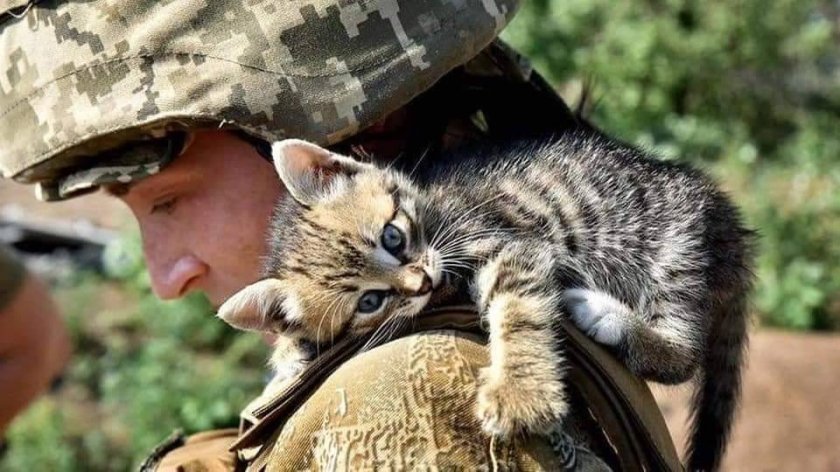
A Ukrainian soldier with a stray kitten. Credit: Ukraine Ministry of Defense

Some cats become unofficial unit mascots and good luck charms, but many others are claimed by individual soldiers who find normalcy and relief in their company.

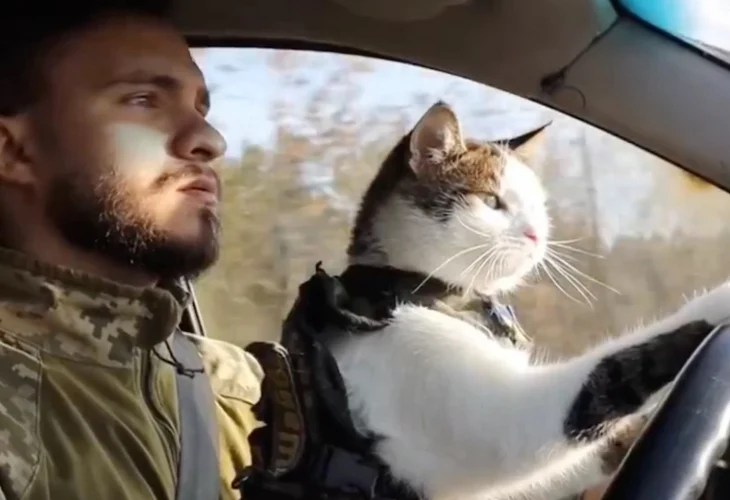
One soldier/cat pair are viral sensations thanks to videos of the alert cat riding along with his human, scanning the terrain ahead. Another story detailed a patrol whose men just avoided an ambush thanks to their company’s cat, who spotted the enemy first and frantically warned that something was wrong.

In that way, cats are serving the propaganda effort as well, helping the public to connect to the men and women defending them.

Military cats have become signals for Ukrainians to rally around, but Russians are doing it too. Russia is a famously cat-loving country, and Putin’s government has latched onto stories about the felines accompanying his men into battle — an effort that Politico notes is meant to humanize Russian soldiers and create the impression that it values them even as it continues to conscript unwilling civilians and ship them to the front line “meat grinders” with a few weeks’ worth of training, meager supplies and minimal ammunition for their rifles.

In that respect, the soldiers of Ukraine and Russia have at least two things in common — they love their feline companions, and they’re enduring hell as well as a high risk of death because of one small man’s delusions of greatness and legacy. Western media tends to ignore the humanity of Russian conscripts, and the pro-Ukrainian side of the internet calls them “orcs,” painting them as the mindless and disposable drones of a bloodthirsty dictator.

But they’re human too, with their own hopes and fears, and mothers back home worrying about them. They don’t want to be there. It seems fanciful to imagine Russians refusing to continue the invasion when Putin has squads behind the front lines with guns pointed at his own men to prevent them from deserting or refusing to fight. But maybe the men in the trenches can come together over shared interest and shared love of cats, and help put an end to three years of misery.

Clarence The Three-Legged Kitten, Plus: Happy New Year From A Cat Cafe In Tokyo

Fellow blogger Molly Hunt is fostering a special little guy who’s recovering from an amputation.

Blogger, cozy mystery cat writer and foster parent Molly Hunt has opened her home to a special little guy, and following his progress is a good reminder of the great work so many cat lovers do — walking the walk, as they say.

Molly’s charge, Clarence, is just a kitten but he’s already had a really rough go of it:

“Clarence, a six-month-old kitten, came to the Oregon Humane Society with a 1.5” round wound on his right hip. Tests traced its origin to a mass attached to the bone which may have occurred when a previous fracture healed badly. The left hip had also been affected by the trauma. The upshot was surgery on the left hip and the amputation of the entire right leg. Two days later, the call went out for a foster parent, a call that I happily answered.

It had been several months since I’d fostered a cat, and I was excited to begin again. I have a designated foster room with a pleasantly equipped kennel where I’d cared for many cats with mobility issues. I thought this one would be similar—limited movement, no running or jumping, and a twice-daily set of physical therapy exercises. I wasn’t worried about the fact he had only three legs. I’ve seen tripod cats who got along just fine, not limited by their disability as humans tend to be. I understood this would be a new experience for me, but I forgot to take into account that it was a new experience for Clarence too.”

Molly writes movingly about Clarence, his trauma upon waking up to find a leg missing, and the way he’s quickly adapted to his new situation. Cats are incredibly resilient, especially when they have the love and care of a good human to help them along:

Clarence was shocked to find out he no longer had a back leg. I’ve rarely seen cats react with that sort of complete panic. It’s usually caused by a loud noise such as fireworks or something unexpectedly crashing to the ground. This was different. This was Clarence’s own private terror.

Despite his initial shock, Clarence has been learning how to get around on three legs and he’s even gotten back to playing with his favorite toys. We wish Clarence and Molly the best on their journey together and if Clarence doesn’t end up as a foster “fail,” we hope he finds a forever home full of support and love. Click here to read parts one, two and three from Molly.

Happy New Year From Tokyo

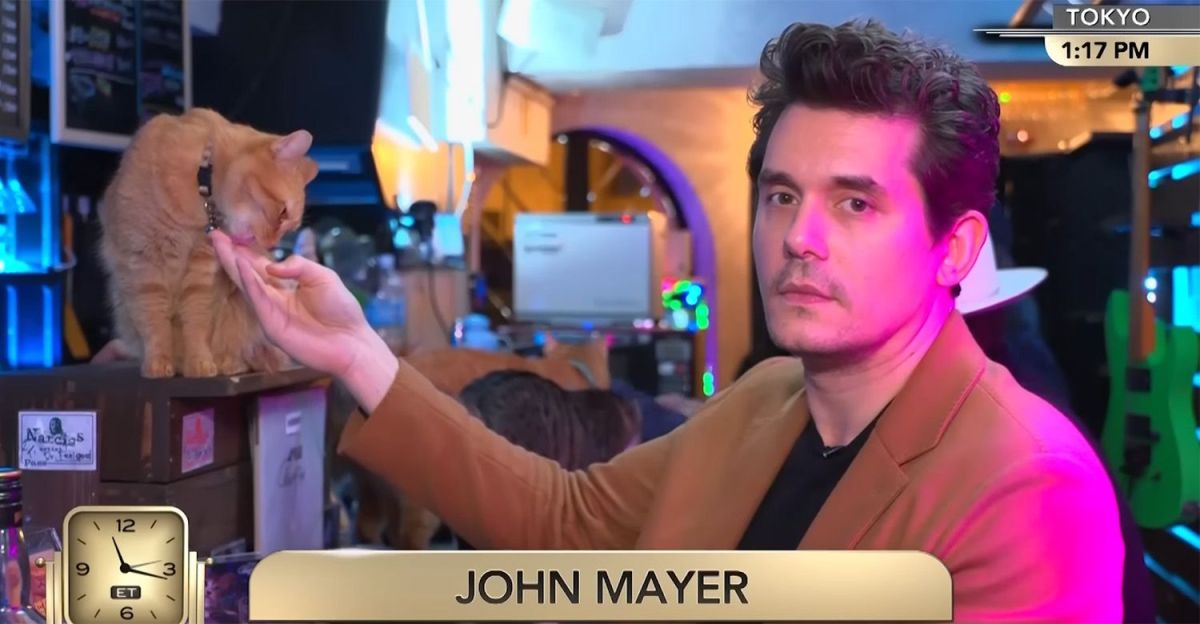
John Mayer brought some feline fun to the New Year’s Eve festivities this year when he called in to CNN’s broadcast from a cat cafe in Tokyo, amusing Anderson Cooper to no end:

The cafe is called Cats In The Box and it’s located in Shinjuku. I’ve got some photos of the exterior of the place from my time there — unlike the cat cafe I visited in Roppongi, Cats In The Box has prominent, floor-to-ceiling windows looking out over one of Tokyo’s busiest neighborhoods, so you can’t miss it. From the street you can see the furry residents climbing their cat condos and chasing toys as if they’re saying “Come on in, join the fun and buy me some of that good ‘nip, will ya?”

Japan is famously in love with cats, and in addition to having several cat cafes, Shinjuku also boasts a famous 3D billboard that features a cute calico padding around and meowing in between advertisements.

Click to play the short video below:

These People Surrendered Their Healthy Cats For Ridiculous Reasons

When we open our homes to furry overlords, we make a promise to give them good homes and care for them for life. Unfortunately not everyone sees it that way.

Stories about people abandoning perfectly healthy cats for inane reasons abound, but this week two particularly egregious cases from the same shelter caught my eye.

In the first case, Biscuit the cat was living comfortably in a home with “her cat best friend” when the latter feline died. Instead of realizing his surviving cat was distraught and taking special care of her, Biscuit’s former “owner” brought her to a shelter, saying he was surrendering her for euthanasia because his family “wanted a kitten” instead.

At 12 years old, Biscuit is “as sweet as a 12-week-old kitten,” staff at the Chesapeake Feline Association in Maryland wrote in a caption accompanying a video explaining her situation.

@chesapeakefeline

Biscuit lived her whole life with her best cat friend and what she thought was her forever family…until her companion cat passed away and her owner decided he wanted a kitten instead….so he brought Biscuit in to be put down. We quickly scooped her up and gave her so much love, but she is ready for a new family to call her own. Biscuit is about 12 years old but is just as sweet as a 12 week old kitten, please don’t let her age scare you ♥️ #catrescue #sheltercats #adoptdontshop #fyp #catsoftiktok #adoptablecats #adoptme #adoptablecatsoftiktok #maryland #delaware #pennsylvania #ownersurrender #seniorcat #sheltercat

♬ the winner takes it all – november ultra

Thankfully the shelter did not honor the man’s wishes for Biscuit to be put down, and the video is starting to accumulate views and comments. Let’s hope Biscuit’s future loving human is among them, and I’d like to think the CFA told her former human to beat it and sent him home without the kitten he wanted.

If they give in, that poor kitten’s going to come back to them a few years down the line as the guy keeps trading ’em in for younger ones like Leonardo DiCaprio.

Ignoramus Surrenders Cat For Scratching A Carpet

Cats have claws. Cats scratch. They don’t do it to piss us off and they don’t do it to ruin furniture. They do it because they’re genetically hardwired to, because it served multiple functions when their ancestors were in the wild — including marking territory — and because it still has practical purposes, like wearing down claws that have grown too long.

Anyone who knows the most basic facts about cats knows this. Anyone who has done at least minimal research before bringing a feline home knows you need to provide kitty with scratchers and redirect him to them when he goes for another object.

And if you have furniture you really want to protect, you make arrangements before bringing your new friend home, whether that means up-armoring a couch with scratch guards, putting soft nail caps on kitty’s claws, keeping her out of a certain room or one of many other potential solutions.

What you don’t do is adopt a cat, give him a home for six months, then take him back because he scratched your carpet.

Doing that makes you a jerk.

I’m not sure if general ignorance is the problem here, or if people see cute felines on Instagram et al, imagine unicorns and rainbows and bright-eyed kittens poking out of baskets, and never even think about the fact that felis catus is an animal, not a Pokemon or a stuffed toy.

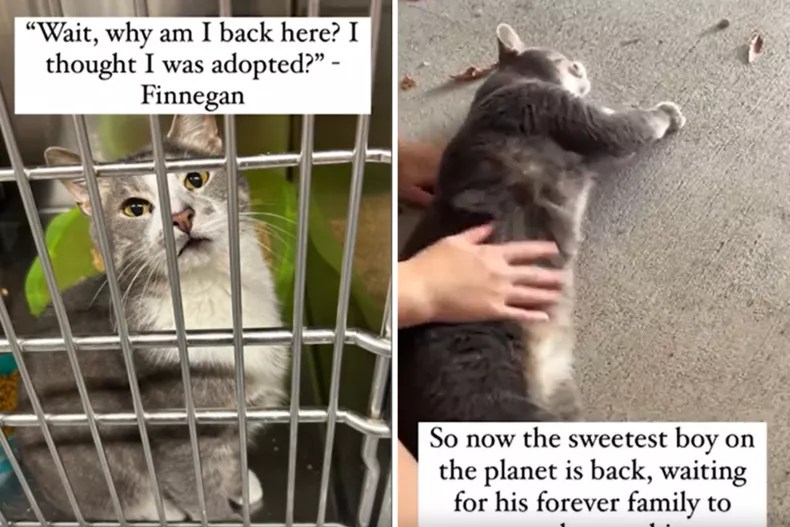
In any case, surrender for acting like a cat is exactly what happened to Finnegan, a gray and white tabby who “melt[s] in your arm and give[s] you all the love,” shelter staff wrote.

The little guy’s offense? Scratching a carpet. Shelter staff really tried to make it work: They offered to put nail caps on Finnegan every month at no charge and his humans still said no.

His ordeal has not soured him on people, thankfully. A video from the shelter shows him loving massages from volunteers at the shelter, and he looks like an incredibly chill little dude. He deserves a home where people love him.

You can find Biscuit, Finnegan and lots of other adoptable cats on the shelter’s Petfinder page and website.

Finnegan the cat
Finnegan, seen here in stills from a video, was surrendered by his people for the crime of behaving like a cat.

That’s Not How You Speak Meowinese!

A popular X account posts “cute” cat videos that aren’t always so cute, another consequence of people misunderstanding cats and their behavior.

This dude thinks he’s speaking to a cat in her native tongue, but what he’s doing is the equivalent of running up to a bunch of Klingons and shouting “I shall impale you on the edge of my bat’leth!” while mistaking it for a friendly greeting.

It looks like someone hired this guy to rescue the kitty, who like so many of her kind are prone to do, climbed up too high and then decided she didn’t like her odds on the way down. I don’t think his intention was to scare the hell out of her, but that’s exactly what he’s done:

That’s not “Hi, kitty, I’m here to rescue you! Be calm, we’ll get you down in no time!”

It’s “I’m here, I speak your language, and I have bad intentions!”

If you listen with headphones or turn the volume up, you can hear the poor cat crying in distress, the kind of cry that felines make when they’re seriously freaked out and worried for their safety. No wonder kitty backed up. Her fur is raised and her posture aligns with her vocalizations and the rest of her body language.

Like most things posted to Twitter X, this is utterly lacking in context and we don’t know what happened next. I wouldn’t be surprised if the rescue attempt went horribly wrong. I hope not, but man, that’s not how you rescue a cat.

The video was posted by the account “place where cat shouldn’t be,” or @catshouldnt, and a common theme in the images and videos on that feed is cats in distress. They’re mistaken for “cute” situations by viewers, the majority of whom aren’t familiar with feline behavior.

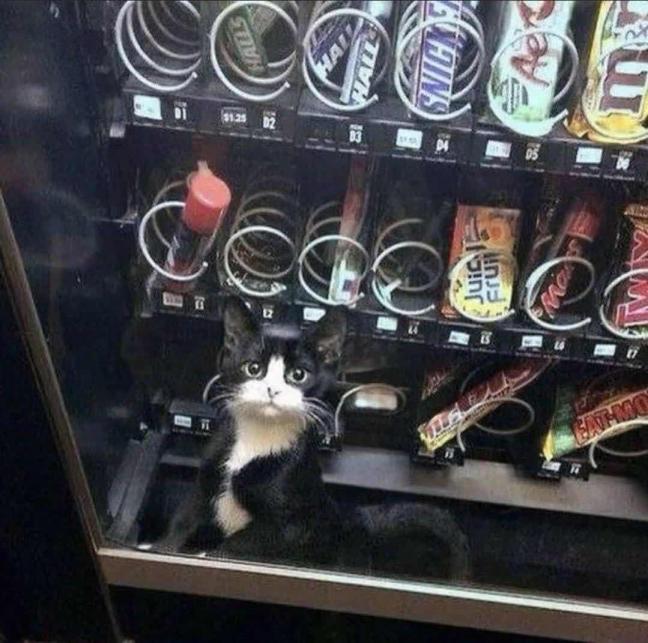
Like, for instance, this photo. The tuxedo kitten is undeniably cute and he doesn’t look distressed…yet. But getting out is going to be a lot more difficult than getting in, and when people are willing to do just about anything for clicks, attention and the associated dopamine hit, cats often end up with the short end of the stick.

Cat in a vending machine
Bud would be jealous of this cat. Thankfully he’s too, uh, meowscular to fit. Yeah, that’s it. Too meowscular. Nothing to do with a few extra pounds…

Cats May Negatively Impact Your Sleep, But There’s Nothing You Can Do About It, Human!

Who are we to deny our feline masters their chosen sleeping spots?

Newsweek has a new interview with a veterinarian who warns that allowing your cats on your bed could be bad for sleep, but admits her own miniature pride rules the bed and often crowds her halfway off the mattress.

The main takeaway is that allowing your feline overlords on your bed can have positives and negatives, but good luck trying to do anything about it.

Of course no one quoted in the story says that outright, but the solutions they offer are limited to getting an air filter, washing your sheets more often, trying to train your cat to stay in one spot on the bed (lol), and keeping kittens off the bed from the very beginning, which is a diplomatic way of admitting if your cat is an adult, you’ve got no say in the matter.

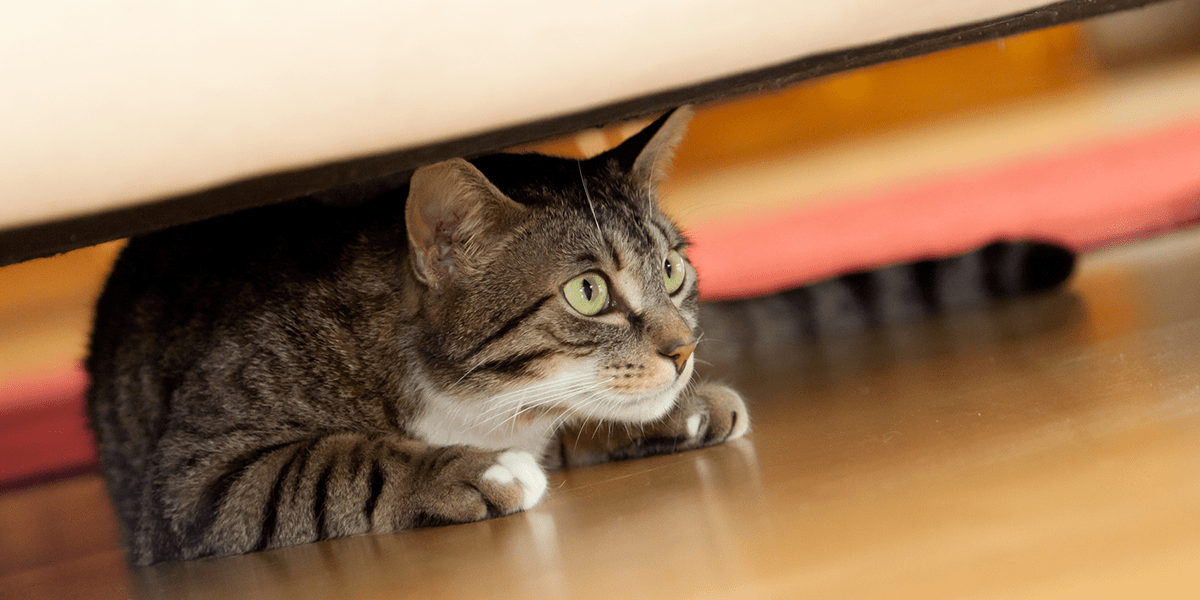
I’ve often said that when I brought Buddy home I was prepared for a skittish cat who might dive under the bed and not emerge for days or weeks except to eat. That’s what many of the guides for first-time kitten adopters said, anyway.

But Bud defied expectations and came striding out of his carrier like a furry little Genghis Khan who just started conquering shit.

“Ooh, nice chair. Mine! I like this desk, this’ll make a nice napping spot. Mine! What’s this? You sleep here? Not anymore. Mine! Well, okay, you can sleep here too I guess…”

I realized immediately I was not going to be able to keep him off the bed, and I was already feeling awful that I’d just taken him from his mom and brought him to a strange new place, so there was no chance I was going to lock him out of my bedroom even if he did wage a nightly war on my feet and ricochet around the bedroom, gleefully cackling in the dark after successfully startling me out of sleep.

buddybaby

It’s fair to say I wondered what the hell I’d gotten myself into in those first few weeks, especially when he began coming up with more diabolic ways of torturing me. Those torture methods culminated with The High Jump, in which Bud climbed to the highest possible perch in my bedroom, then leaped in a kamikaze attack, landing square on my stomach so I was violently torn from my dreams and folded up like a suitcase all at once.

I remember my heart pounding as my little lunatic kitten vanished back into the shadows, trilling with delight and waiting for my breathing to slow again before launching another attack.

It went like that for weeks, maybe more, and I lost a lot of sleep but eventually his schedule synced with mine, I learned to tire him out with late night play time, and our nights became peaceful. Buddy began draping himself over me or burrowing into my side, which he still does all these years later.

If the sole measurement is quality of sleep, who can say what the final balance is? How do you measure the penalty of perhaps waking up more frequently, but falling asleep faster? Can you quantify the benefit of falling asleep to the soothing buzz of a cat purring next to you?

YMMV, but for me Bud is a calming presence. Or has been, since he stopped finding it amusing to attack me all night. There’s also a final benefit that has nothing to do with sleep quality: Letting your feline friend snooze with you helps strengthen your bond, and solidifies their status as a true member of the family.

Now if you’ll excuse me, Bud wants to nap and needs his human mattress…

buddysleep