A bartender gets more than he bargained for when he agrees to watch his neighbor’s cat in the new comedic crime flick Caught Stealing.
In Caught Stealing, the newest film from director Darren Aronofsky, a seedy guy named Russ (Matt Smith) asks his neighbor Hank (Austin Butler) to watch his cat for a few days while he’s out of town.
The cat is not only a handsome little fellow, he’s got a spiffy name: Bud.
The problem? Russ has seriously pissed off New York’s criminal element, and Hank is unaware a category five shitstorm is about to make landfall. No matter how many beatings he takes from gangsters who mistake him for his neighbor, the Lower East Side bartender takes his cat-sitting duties seriously.
“Bud remains central to the action,” the New York Times notes. “His skeptical gazes punctuate scenes and his presence endears the audience to Hank, who goes out of his way to protect the somewhat ornery creature when the going gets rough.”
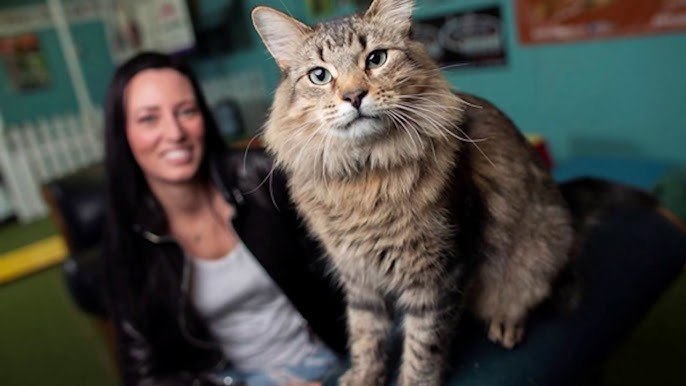
Tonic and his co-star, Austin Butler. Credit: Melissa Millett
Alas, Caught Stealing‘s Bud is not our Bud, although that’s probably for the better. Our Bud would drive the on-set catering crew mad with his turkey-related demands, and he’d run off camera to hide behind my legs during fight scenes.
Instead, Bud is played by a pro, a cat named Tonic who has appeared in the remake of Stephen King’s Pet Sematary and the horror flick Thanksgiving.
Aronofsky tells the Times about the on-set cat wrangling, noting felines are usually “not very notorious for their collaboration skills.”
Still, Charlie Huston, who wrote the book the movie’s based on as well as the screenplay, said the team didn’t take any shortcuts with Bud.
“I don’t feel like we made it as easy for ourselves as some people would have wanted,” Huston told the Times. “I remember a lot of conversations about, ‘Do we have to have the [expletive] cat in this scene?’”
The fact that they did keep him squarely in the action is testament to Tonic. Before the little guy got the role, the team had it narrowed down to him and one other cat. Tonic made the decision easy for them.
“It was just such a no-brainer because the other cat was fine, but Tonic was such a rock star on Day 1 and that was without prep,” Huston said.
Tonic with trainer Melissa Millett. Credit: Melissa Millett
Tonic is so accustomed to performing in live events and movie appearances, he was ready to show off his skills — and to get his paws on his rewards.
“The second he came out of his crate,” trainer Melissa Millett said, “he looked like he thought he was the king of the world and he was ready for all the chicken.”
“Harm or death to an animal caused by another animal is not a criminal matter,” even when footage shows dog owners urging their pets to attack, the NYPD claims.
The NYPD says its hands are tied after a group of people sent their pit bulls after a well-known shop cat in Manhattan and cheered as they dogs brutally ended the tabby’s life.
Freddy was the resident moggie at Michelle Flowers, a florist on Amsterdam Avenue in Washington Heights. The little guy was outside the shop at about 9 p.m. on July 4 when a man and two women set their dogs loose on him, then celebrated and cheered as they killed him.
Credit: Cat Collective
The pit bull owners then “smoked, danced and ate food while taking photos and mimicking the grisly scene,” according to the New York Post. Surveillance cameras caught the attack and its aftermath, showing the three black-clad dog owners and others who witnessed the violence and did nothing.
A disgusted neighbor contacted the Cat Collective, a group of volunteers who feed and care for strays in the neighborhood, and they collected Freddy’s remains, then told the florist’s owner what happened.
“Someone deliberately set dogs on a defenseless cat while people watched and cheered,” Dan Rimada of Bodega Cats of New York told the Post.
Cat Collective is offering cash rewards to anyone who can identify the dog owners and the celebrating bystanders, but the police won’t do anything.
An NYPD spokesman told the paper that “harm or death to an animal caused by another animal is not a criminal matter,” citing a gap in the law.
A proposed bill, dubbed Penny’s law after a chihuahua that was mauled by pit bulls earlier this year in Manhattan, hasn’t made it out of committee in the New York State legislature, while New York’s city council is looking at a municipal law that would make it a crime to set dogs on other animals.
Credit: Cat Collective
It’s actually difficult to believe nothing can be done to get justice for Freddy, Penny and other animals aside from civil cases, which can only result in monetary damages.
Manhattan DA Alvin Bragg, who is controversial to say the least for creatively interpreting the law, seems like just the kind of district attorney who could find a way to prosecute the dog owners. The fact that the authorities are outright dismissing the possibility indicates Bragg doesn’t see this as a priority.
Working with the police to find ways to get justice is Bragg’s job, as well as the job of the attorneys working for him in the district attorney’s office. At the very least, they should be able to find something with which to charge the suspects, even if it really turns out there’s no way to hold them criminally accountable for Freddy’s death.
We hope Freddy’s killers are identified and held responsible, and we hope no more pets and strays have to be killed before lawmakers at the city and state level make it a priority to close an obvious gap in the law.
“Oh my God, this is my job every day!” Charlie Shaw says of his position as a big cat keeper at one of America’s most well-known and well-funded zoos.
If you’ve ever wondered what it’s like to work with big cats, WTOP has a new interview with Charlie Shaw, a big cat keeper at the Smithsonian National Zoo.
Hint: it involves a lot of meat, physical enrichment, olfactory enrichment, and checking on the felids to make sure they’re healthy.
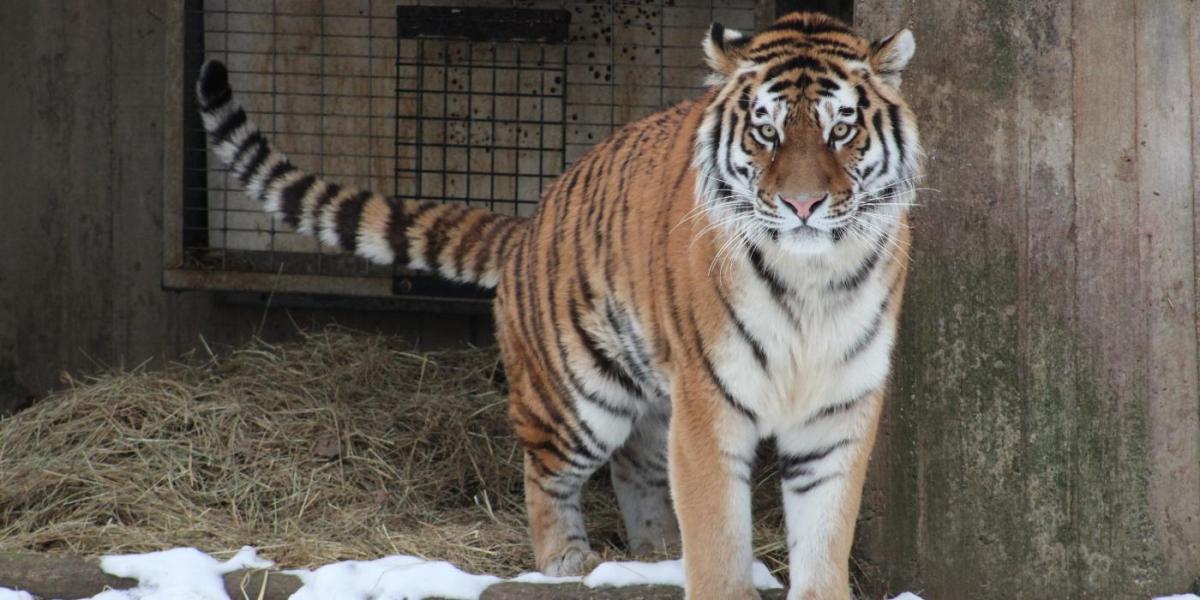
Shaw starts his day by feeding the hungry apex predators, including Damai, a 16-year-old tiger who wants all the snacks, and Vostok, a fast-growing young Amur tiger who doesn’t know a genetically-compatible mate is arriving in short order, and he’ll get to be a dad if things go well.
The genetic matches are carefully made to avoid inbreeding and give the species the best chance to recover.
“Tigers are critically endangered,” Shaw told WTOP. “What we want to do is make sure the gene pool itself is still very diverse.”
Vostok loves to swim. Credit: Charlie Shaw/Smithsonian National Zoo
Shaw says he’s working his dream job.
“You walk in and the tigers all chuff at you, or the lions roar. And you’re like, ‘Oh, my God, this is my job every day!’”
THAT story
I’m aware of it, and I think every person concerned about the welfare of cats should at least know it’s happening.
But it’s also extremely distressing. I actually had nightmares the night after I read it. So I’m offering a strong warning here: think about it before you click the story. The report is by CNN, so there are no gory images and the reporters aren’t trying to make anyone uncomfortable, but the reality of it is bad enough.
For everyone who doesn’t want to know the more upsetting details, the essence of it is that there’s a network of people making “content” of themselves torturing and killing cats, and a rapidly growing audience of people who pay thousands of dollars to “sponsor” the horrific content.
They have “menus” set up where people can select the cat they want to see tortured and specify the ways in which the cat should be hurt and killed. CNN, citing a group of vigilantes trying to dismantle the networks, says people pay up to $1,300 for the “service.” Collectively, the torturers and their audience refer to themselves as “cat lovers.”
The Chinese government, to no one’s surprise, does not care. There are no criminal penalties for what the content producers are doing, and the government hasn’t responded to complaints from concerned people or media networks.
I might address it in the future, but for now I don’t even know what to say. I was away when I read it, and it made me really want to hug Bud and make sure he’s never out of my care. Ever.
Police used the kitty’s mugshot to reunite her with her family. Meanwhile, a judge in California has issued a warrant for a man accused of murdering dozens of cats in his neighborhood.
When a kind passerby scooped up a lost cat and brought her to a nearby police station in Bangkok last week, police were happy to help reunite her with her family.
But the cat, whom they later learned is named Nub Tang (“Counting Money”) wasn’t particularly happy about being rescued, and she tried to chomp down on several officers who were trying to help her.
So a lieutenant who goes by the name Inspector Da online devised a novel way of making the best of the situation and reuniting Nub Tang with her family.
The Inspector “arrested” and “booked” Nub Tang on charges of assaulting an officer. He took a mugshot of the grumpy shorthair and took her paw prints, then posted them online.
Nub Tang even looked grumpy in her “mugshot.” Clearly, she’s a criminal.
The amusing images and story helped draw attention to the post, and the next day, after Inspector Da had taken Nub Tang home with him overnight to make sure she was comfortable and felt safe, Nub Tang’s humans saw the posts and contacted the precinct.
Inspector Da — real name Parinda Yukol Pakeesuk — happily handed the feisty feline back to her people, but not before posing for some photos with them and saying goodbye to his temporary pal.
Nub Tang has a lot of personality for such a tiny cat. Credit: Da Parinda/Facebook
Warrant issued for alleged cat killer who didn’t show for court
A California man accused of killing dozens of cats skipped out on his initial court appearance.
Police in Santa Ana arrested 45-year-old Alejandro Oliveros Acosta in April after media pressure prompted them to finally take reports of a cat killer seriously.
Neighbors had been lodging complaints and asking police to act for more than a year after pets and strays went missing. Acosta and his white pickup truck were captured on several doorbell cameras and home security cams, including one that caught a clear view of him allegedly luring and abducting a neighbor’s pet cat.
After their complaints failed to prompt action from police, people in the neighborhood turned to local media, sharing footage and information.
A local TV news report finally cranked up pressure on the cops, who arrested Acosta in late April. A search of Acosta’s home turned up the bodies of deceased neighborhood cats and evidence that Acosta had allegedly killed “dozens” of felines, a Santa Ana police spokeswoman said.
Acosta didn’t show up for a May 21 preliminary hearing. Now police are looking for him and the court has issued a warrant for his arrest.
The Santa Ana man previously posted $40,000 bail, money he will forfeit if he remains a scofflaw.
In Switzerland you can be charged with a crime and face significant fines for feeding other people’s cats. Meanwhile. the “kids identifying as cats” culture war rumors are back and as inane as ever.
The Swiss seem to take cat theft pretty seriously, to the point where they’re perfectly willing to drag people to court for feeding other people’s cats.
That’s what happened to a 68-year-old woman in Zurich who is accused of being so nice to Leo, a neighbor’s cat, that the little guy decided her house was now his house.
According to local media reports, a Zurich prosecutor wants to fine her 3,600CHF (Swiss francs), which is $4,370 in ‘Merican greenbacks! That’s a lot of money for giving a cat some Temps and cans of tuna.
To be fair, Leo’s original family isn’t happy, especially because they specifically asked the woman to stop feeding their cat. She can’t claim she accidentally adopted him, since she let him into her apartment and even installed a cat flap for him, according to Swiss media reports.
“Cases like this are increasingly ending up in court because the rightful owners report the “feeders”. Under Swiss law, cats are “other people’s property” and systematic feeding and giving a home to another person’s cat is considered unlawful appropriation.
But if a neighbour’s cats are only fed occasionally, this is not a punishable offence in Switzerland.”
There’s really not enough information to form an opinion about this particular case. Was Leo mistreated or not getting enough to eat? Did his new human have designs on him from the beginning? Did she just think she was doing the right thing?
“Gimme the nomnoms, human!” Credit: Wikimedia Commons
As for me, this is another good reason to keep Bud inside. If I let him roam the halls of the building unsupervised, he’d probably start a bidding war between me and neighbors in two or three other apartments, making it clear that whoever supplies him with the most delicious and most frequent snacks will enjoy the great honor of serving him.
Kids identifying as cats: the fake controversy that won’t die
Just a quick recap, for anyone who hasn’t been keeping up on this uniquely American culture war spectacle: Politicians of a certain stripe really like rumors about kids identifying as cats, so much so that they’ve confidently asserted it’s happening all over America, telling anecdotes about it while on the campaign trail during the 2020, 2022, and 2024 political cycles.
That encompasses two presidential elections and a midterm year, but it’s not relegated to federal cycles. State-level pols love to talk about it too.
It’s a culture war dog whistle, and politicians from both parties love stuff like this because it gets everyone all riled up, which means no one’s talking about all the grift, insider trading and other fun activities our “leaders” involve themselves in.
The thing is, to date not a single one of the claims has been backed up by proof. I know this because I’ve investigated every one of them, and invariably they turn out to be rumors. I’ve gotten emails and comments telling me I’m a fool for debunking the claims, and I’ve literally begged people to give me a real example of cat-identifying kids dropping deuces in litter boxes, but again, all the claims collapse under minimal scrutiny.
Every time a politician has told a story about allegedly cat-identifying kids and litter boxes in schools, it follows the same pattern: they insist it’s true, double down on the claim, try to change the goalposts, and finally, they grudgingly admit they can’t point to a single example.
In a week or two, we go from righteous condemnation and fury to “Well, my wife’s best friend teaches sixth grade, and she said she heard from a teacher in another district that kids were meowing in class.”
Furries outside a convention, not a school. Credit: Furscience
Texas state Rep. Stan Gerdes is in the righteous condemnation stage after introducing the Forbidding Unlawful Representation of Roleplaying In Education Act, aka the FURRIES Act.
Gerdes wants to ban meowing, hissing, barking, litter boxes, leashes and animal costumes from school grounds and events, but in his wisdom he’s excluded school mascots and Halloween costumes.
He is, however, fast approaching the “my cousin’s best friend’s co-worker said” stage, after he couldn’t point to a single cat- or furry-related incident when pressed during a committee meeting on May 1. He eventually named a school district, saying he’d gotten a “extremely concerning” and verified account of an incident there, only for the district to issue a statement saying it didn’t happen.
Gerdes did call to ask if there were litter boxes in the school, the district said, and when he was told there was not, he insisted a manual check of all school bathrooms, which also came up empty. Let’s see how long he sticks to his story before he finally admits he has no proof.







 Pain In The Bud