‘Petfluencers’ Make Their Cats Wear Clothes, Plus: Why A New Coat Color Has Emerged

The quest for clicks and attention is a race to the bottom, and “petfluencers” are willing to dive deep to differentiate themselves from the thousands of others trying to build an audience.

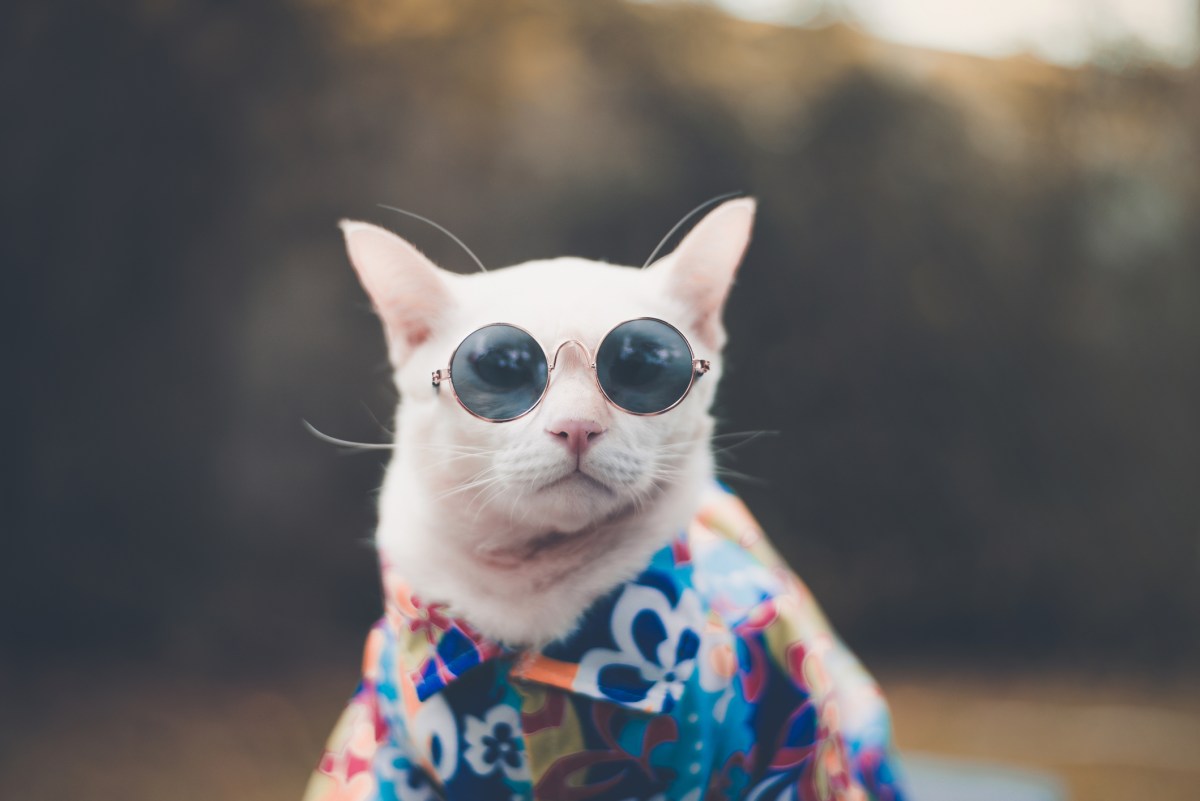
Clothes, sneakers and hats. Vitamin supplements, energy drinks and probiotics. Backpacks and costumes.

What do all those things have in common? People are buying them for their pets, not themselves, and they’re part of the reason people in the UK spent more on pets in 2024 than childcare, hobbies or dating, according to Nationwide UK.

The problem is, they’re not doing it for their pets. Experts, including veterinarians and animal behaviorists, tell The Guardian that most cats, aside from hairless varieties like Sphynx cats, don’t like wearing clothing, nor do they like wearing costumes, or taking baths with heavy perfumes and essential oils.

Influencers — or petfluencers — stage elaborate “pampering” scenes, and make their pets wear different clothes to show off their shopping “hauls.” Some pose their animals like dolls and find ways to coerce them to remain still. Audiences think it’s cute. It’s not.

As for me, I’ve got a handy chart when I’m unsure if Bud will be cool with something:

  • Make him wear clothes. Result: Get clawed to death
  • Give him baths with essential oils. Result: Get clawed to death
  • Make him wear sneakers. Result: Death by bite to the jugular
  • Force him to eat supplements or guzzle energy drinks. Result: Shredded skin and lots of blood, perhaps some light homicide.

While the animals themselves aren’t thrilled with these new trends, they probably won’t go away any time soon. There’s just too much money involved.

The average pet owner in the UK spent the equivalent of $163 per month on their companions, and only half of UK households have pets compared to 66 percent in the US. Although there’s not an apples to apples comparison of total expenses on pets per month by household in the US, Americans spend $68 a month on cats on average, according to research by ValuePenguin. For dogs, it’s about $110 a month.

‘Salty liquorice’ cats owe their unique coats to a missing snip of DNA

It’s always an interesting occasion when nature gives us something new, and the salmiak cat is definitely unprecedented in the world of feline aesthetics.

The unique cats, named after a popular liquorice candy from Finland, have a coat pattern that results from a gradient on individual strands of fur, starting out black and getting lighter toward the tip. It gives their coats a singular peppered look, and in photographs the unusual felines almost look as if they’re rendered in monochrome stippling.

Credit: Ari Kankainen
The Finnish candy the cats are named for.

The salmiak cat wasn’t the product of any breeding program, and reports in Finnish media say strays with the new coat pattern/color first emerged in 2007.

To find out how the salmiak emerged, a team of Finnish, British and American scientists sequenced the genomes of two salmiak cats. They found a mutation in genes that express coat color that resulted in a missing sequence of DNA, and they confirmed the mutation is recessive. That means to get salmiak kittens, both parents have to have the mutation.
Scientists Finally Figure Out Why Some Cats Are Orange, PLUS: Are Street Cats Really ‘Taking Over?’

More Americans say they can’t afford to keep their cats because of inflation, leading to an increase in surrendered and dumped cats in some places.

More than 110 years ago, American geneticist Clarence Cook Little developed a theory explaining why some cats have orange coloring and some don’t.

Now Little has been proven correct thanks to the work of separate teams in Japan and the US, which discovered the mechanism that leads to orange coloring, including fully ginger felines as well as calicos and tortoiseshells.

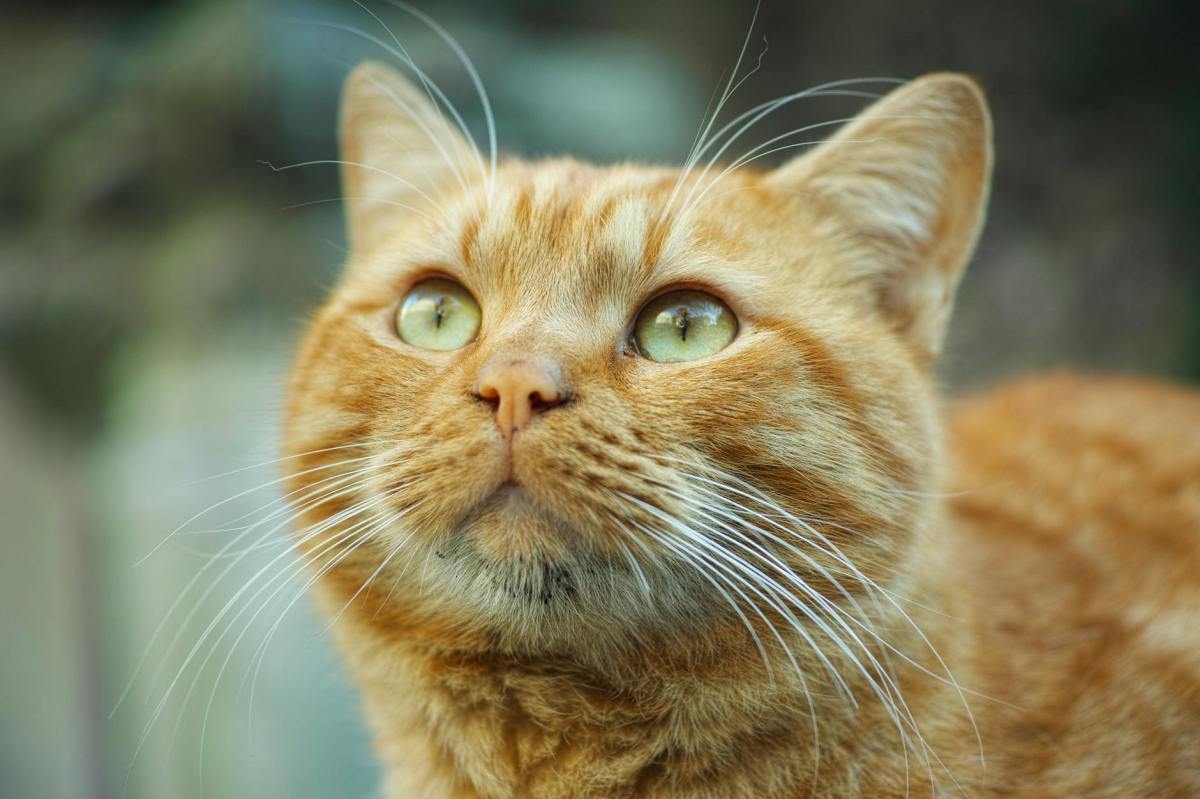
The explanation may be a bit too heavy on genetics for some readers, but essentially the researchers found the specific gene that leads to the growth or orange fur. They’ve known about the gene for a long time, but didn’t realize the totality of its function. Its official name is ARHGAP36, but for the sake of simplicity, scientists are calling it “the orange gene.”

“The orange gene has a known role in hair follicle development, but scientists didn’t previously know it is also involved in pigment production,” a team of geneticists and biotechnologists wrote in The Conversation, a science publication. “This means that a new pathway for pigment production has been discovered, opening the way for exciting and important research into a basic biological process.”

calico cat relaxing on wooden bench outdoors
In partially orange cats like calicos and tortoiseshells, the blotches of color are the result of imperfect gene copies and a secondary pigment-related gene switching “on and off.” Credit: Mehmet Guzel/Pexels

Ginger cats are usually male, but the pigmant can also appear in female cats due to an error in gene copying which deletes one segment of the orange pigment-producing genetic code.

That’s why calicos and tortoiseshells have orange blotches or mixed orange fur. “[T]he orange gene is persistently switched on in orange areas but is mostly switched off in non-orange areas of a cat’s coat,” the authors wrote.

Are there more strays in 2024?

Time magazine has a story examining the problem of stray cats in America’s urban and suburban population centers, why it’s happening, and what can be done about it.

First, might as well get this out of the way: We don’t know if there are “more” cats. The claim that there are more relies on anecdotes, and there’s no hard data to back that up. You have to be highly motivated to invest the time and money into a proper census like the D.C. Cat Count, and it’s an understatement to say most towns and cities are either not willing to do that, or don’t have the resources.

What we do know is there may be more cats in certain areas, with individual shelters in some places reporting record numbers of surrenders and cats scooped up by animal control.

close up of a stray cat on the metal railing
Rescuers say people who can’t afford food, supplies and veterinary care are surrendering or dumping their cats in larger numbers than in years past. Credit: Dou011fu Tunce/Pexels

The story quotes rescuers who say they’ve seen more surrendered pets, as well as data from Shelter Animals Count, which tallies self-reported information from shelters and rescues. The latter says 32 percent of cats taken in were owner surrenders in 2024, compared to 30.5 percent in 2019.

“It’s a combination of people surrendering their pets and people not adopting because they’re not sure they can take on the financial commitment,” Animal Care Centers of NYC’s Katy Hansen told Time.

Rescuers say that’s reflected in their experiences trapping the felines, who are friendly and acclimated to humans.

The people surrendering their pets cite inflation, not only impacting the cost of essentials like food and litter, but also more expensive veterinary care.

The story additionally includes this eye-popping detail:

“At Veterinary Care Group, a private equity-owned practice in Brooklyn, the cost of spaying or neutering a cat has soared to $850 per animal. By contrast, at the nonprofit veterinary clinic Zweigart recently founded in Brooklyn, the cost of spaying or neutering a cat is $225 and a mid-sized dog is $300.”

The lesson here: Steer well clear of veterinary clinics that aren’t vet-owned or are obtuse about their ownership. Private equity groups don’t buy clinics out of love for animals.

a close up shot of a tabby cat
The cost of spay/neuter procedures ranges dramatically at different veterinary practices. Credit: Tima Miroshnichenko/Pexels

As for solutions to local spikes in stray populations, the story doesn’t offer any. It mentions TNR (trap, neuter, return) but only in the context of a lawsuit against the San Diego Humane Society for its neuter/vaccination program.

That said, there probably isn’t a one-size-fits-all technique. What works for a small town won’t necessarily work in a city, and there are dozens of factors that could influence the prevalence of stray cats and colonies. Still, city councils and town boards don’t need to reinvent the wheel. Chances are if they look, they’ll find a municipality similar to their own where locals have successfully stabilized feline populations.

As for the Buddies, I’d live in my car before giving Bud up. He wouldn’t be thrilled about that situation, and we’d have to head south because the winters here are brutal, but as long as Bud has his servant, he’s good.

A previous version of this post incorrectly described cat chromosomes. The story has been updated to remove the error.

Amazing Cats: The Adorable Colocolo, Feline Of The Pampas

With a perpetual kitten-like appearance and mismatched coat patterns, colocolos may look like the product of AI or Photoshop, but these little ones are very real — and very feisty.

We’re heading back into obscure territory with this edition of Amazing Cats, focusing on a little-known species that ekes out an existence in the forests and plains of South America.

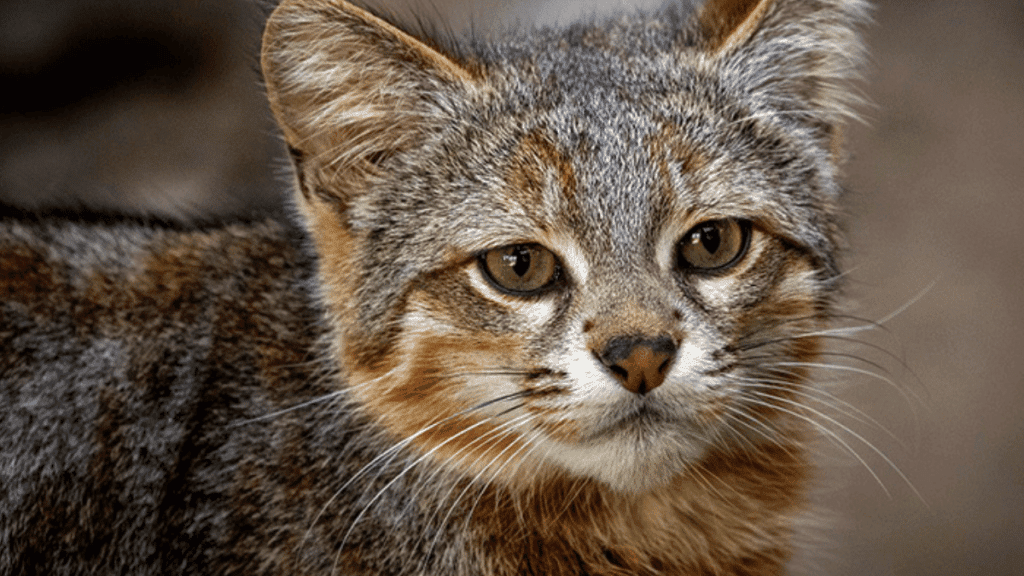
The colocolo, also known as the Pampas cat, superficially resembles the familiar house cat, but a closer look reveals some striking differences.

Colocolos are small, about the same size and weight as felis catus, but their tails can be quite a bit shorter and extremely fluffy.

Colocolo full
Colocolos have pattern and color combinations seen only in their species. This one has rosettes on his body and tabby stripes on his limbs and tail. Some colocolos have thick tails with tabby-like rings, while others have bushy tails more commonly associated with long haired domestic cat breeds.

There are at least five variations of fur color and pattern, ranging  from marbled to jaguaresque rosettes and, most strikingly, a seemingly mismatched pattern in which the legs have dark stripes over rusty/cinnamon-colored fur, which contrasts dramatically with the gray, gold, silver or tan of their bodies. The overall effect makes some colocolos look like they’ve been photoshopped, or assembled from spare parts.

Some colocolos appear to have solid-color coats which are actually an agouti pattern with barely visible bands of slightly darker fur.

While the species may look stocky, conservationists say it’s smaller than it appears, with its fur making up the majority of its “bulk.”

Colocolo color variant
This photo might look like a fake, but it’s a documented combination of coat pattern and color among colocolos.
Colocolo color variant
Another photograph of a colocolo with the rusty/cinnamon limb coloring.

As if that wasn’t enough to distinguish them, Pampas cats have neotenous features that give them an even stronger kittenlike appearance compared to house cats and comparable species like the rusty spotted cat.

In other words, they’re very cute and looking at them can trigger the same protective instincts we feel when we see kittens and cute adult cats. But don’t let their disarming features deceive you — these little guys are not cuddly, don’t respond well to people who get close, and will turn aggressive if you encroach on their space.

Cute colocolo
This adorable colocolo appears to be giving the side-eye to someone. Note the slight suggestion of the classic tabby “M” on the forehead.

While they’re alternately called the Pampas cat, the word “colocolo” comes from the language of the Mapuche, an indigenous group that lived in lands that are parts of modern day Chile and Argentina.

In the Mapuche language, Colo Colo was the name of a Mapuche warrior who led his people in their resistance against Spanish conquistadors in the 16th century, but it’s also the name of an evil rat-like creature in Mapuche folklore. It’s not clear how a feline came to bear the name, but the species — leopardus colocolo — is often called gato colocolo to distinguish between the historical figure and the modern-day Chilean football club, Colo-Colo.

Colocolo
You might feel an urge to hug a colocolo, but that would not be a good idea. Experts say the small cats don’t take kindly to close human proximity.

Although they’re associated with the pampa, the flatlands in and around Peru best known for the mysterious Nazca lines, colocolo are adaptable and thrive in forests, jungles, wetlands, and mountain ranges like the Andes, among other terrain.

Their range stretches from Argentina in the south through Chile, Bolivia, Paraguay, Ecuador, western Brazil and an isolated population in Uruguay.

Despite their relatively wide distribution and variety of habitat, colocolos are not well understood. Experts still haven’t settled the question of whether they’re all one species or whether subgroups qualify as their own subspecies. Their hunting habits are not well-documented, although it’s known they prefer small rodents, and there is ongoing debate about whether they are crepuscular, like most felid species, or nocturnal.

Colocolo share a continent with jaguars, pumas, ocelot, jaguarundi, margay, oncilla, kodkod, Geoffrey’s cat and the Andean cat, and the fact that they live in the deep wilderness makes them more difficult to study.

Because their coloration and coat patterns can vary so widely, Pampas cats are often mistaken for other small wildcats living in South America, and people unfamiliar with their species sometimes mistake them for domestic felines.

They’re also very rare in zoos, with only one US zoo (Cincinnati) counting them among their exhibits, and only four Pampas cats in captivity worldwide. (Excluding private captivity by poachers and illegal wildlife traders.)

Like virtually every species of wildcat, the colocolo’s numbers are declining due to a number of factors, primarily human activity like habitat destruction, sport hunting and development cutting populations off from each other.

The more people are aware of these beautiful and little-known felines, the better their chances for long term survival as conservation groups receive more donations to help protect them, and lawmakers are pressured to protect the wilderness where they live.

Yawning colocolo
Like all cats, colocolos appreciate the value of a nice nap.

Previously:

Amazing Cats: The Mysterious Marbled Cat
Amazing Cats: The Rusty-Spotted Cat
Amazing Cats: ‘He Who Kills With One Bound’
Amazing Cats: The Puma

Amazing Cats: The Sunda Clouded Leopard