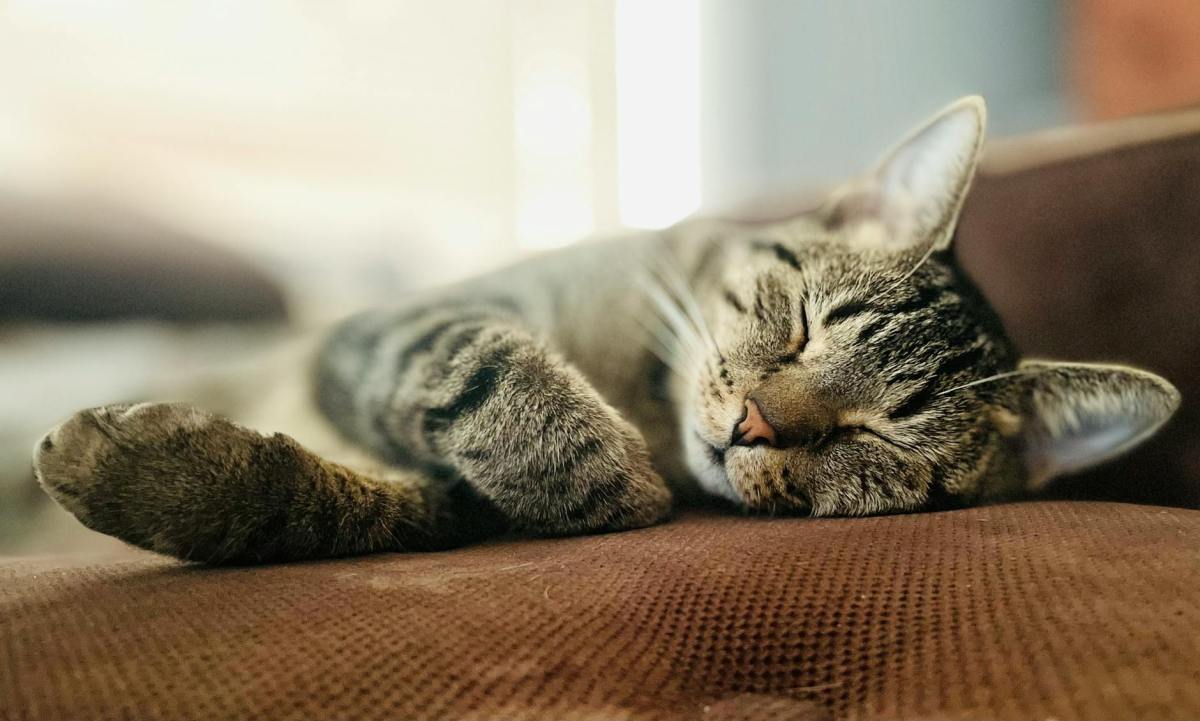
Terry Lauerman literally sleeps on the job, and cats love him for it.
Seven years ago, Terry Lauerman and the Safe Haven Cat Sanctuary went viral.
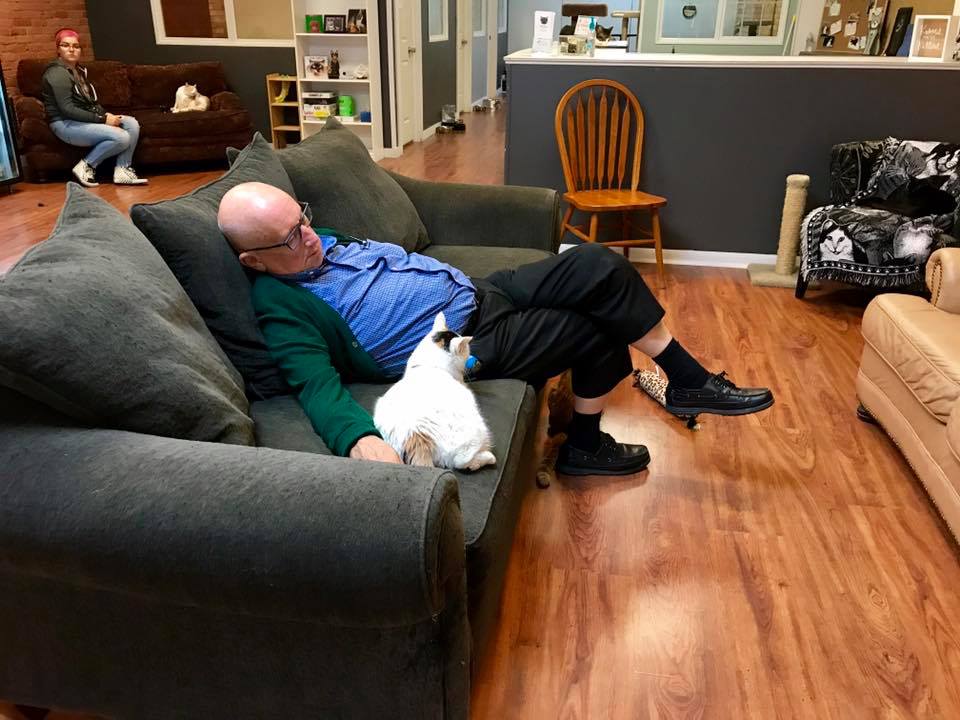
Lauerman, then 75, walked into the Green Bay, Wisconsin, rescue one day and told the staff he liked to brush cats. They welcomed him as a volunteer, he immediately curled up with a cat — and fell asleep.
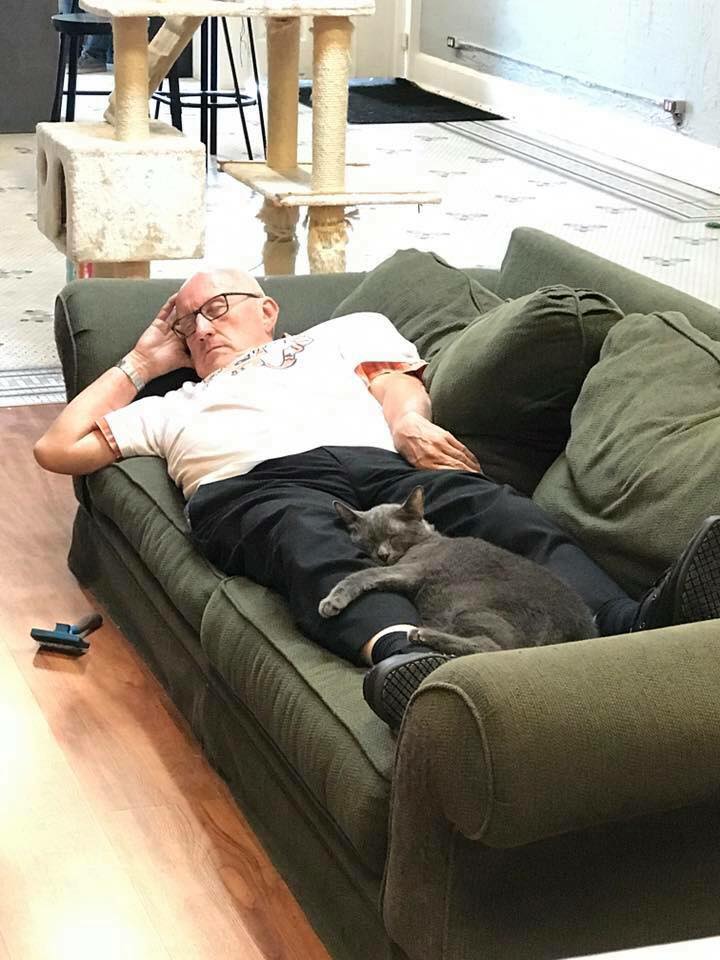
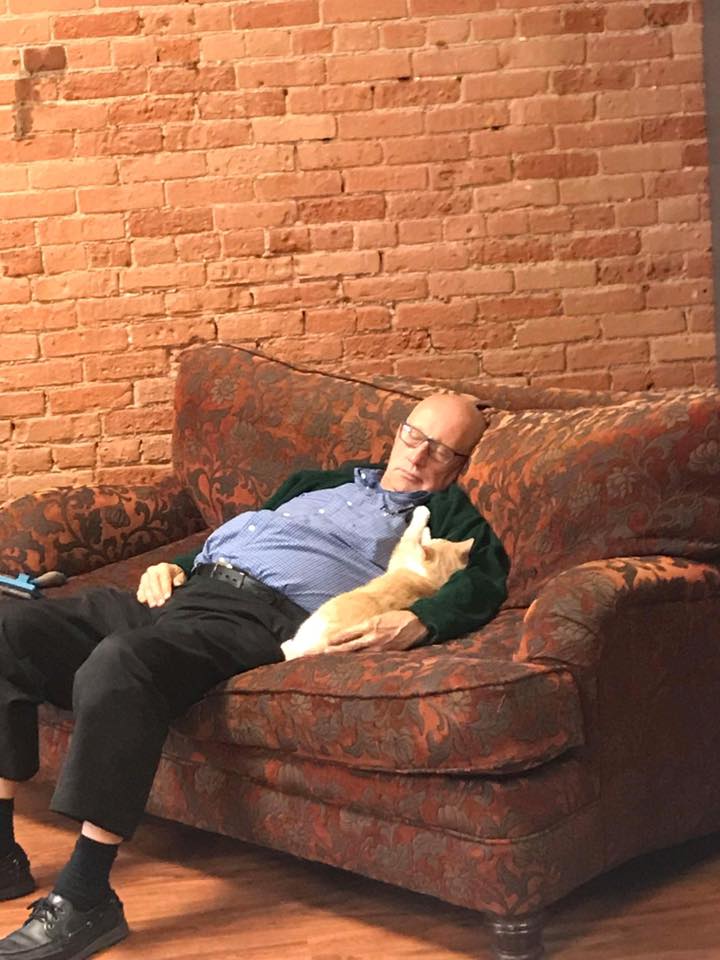
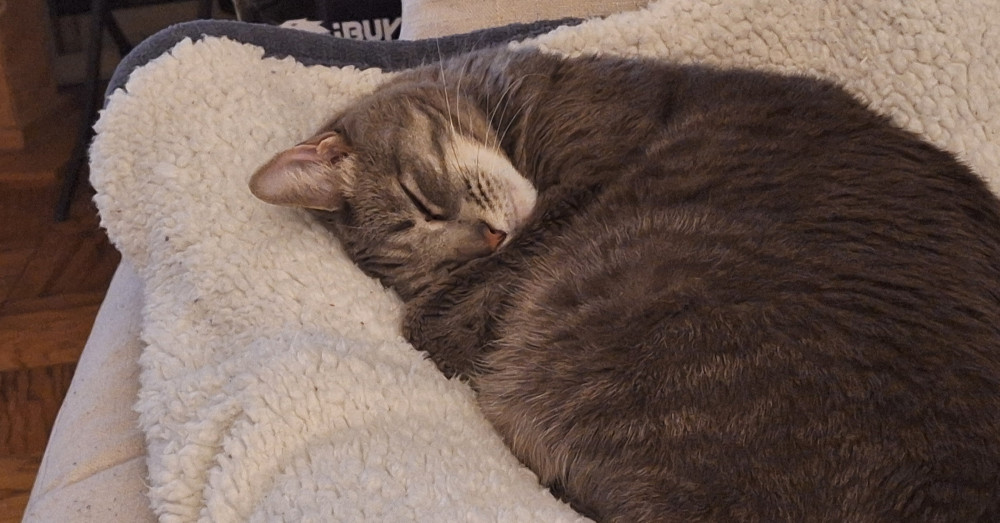
Since then, Lauerman’s been going to Safe Haven every day, brushing his feline friends, then yawning and passing out with a cat in his arms.
Lauerman usually spends an hour sleeping on the couch with a cat, then wakes up and moves to another couch to nap with the next cat, WCCO reports. He did this for six months straight before Feldhausen eventually told him he had become an official volunteer and had him fill out a form.
Now CBS went back to check on Lauerman and the shelter. He’s still at it, napping away the hours with the shelter’s cats, giving a comfort they wouldn’t normally have until finding their forever homes.
“We’re very lucky that he walked in here,” said Elizabeth Feldhausen, Safe Haven’s executive director.
Lauerman, who is also a brother at a nearby abbey, said he senses God in our four-legged friends, which is a notion he probably shouldn’t share with them lest they become even more imperious.
“I’ve always been a cat person,” he said. “To me it’s a blessing to be touched by creation.”
As a CBS reporter put it: “You sleep on the job.”
“Yes,” Lauerman said, “that’s exactly it.”
Bud and I salute Mr. Lauerman. Years ago we heard a friend observe that “there are two kinds of people in the world: those who take naps, and those who don’t even understand how that’s possible.”
At the time, I agreed with her. But napping starts to seem like a great idea as the years pass by, and when you have a cat, well, sometimes you don’t have a choice. With 11 years now under my belt as Bud’s pillow, I can safely say there are few things more relaxing than opening a book, reading a few chapters as your little buddy curls up in your lap, and easing into some Zs.
Images via Safe Haven Cat Sanctuary.Header image via Pexels.
As veterinarians treat the surviving animals for ailments like smoke inhalation and burned paws, donors from all over the world have contributed $750,000 to help the newly homeless moggies and ensure Happy Cat continues in some form.
Investigators are still looking for the exact cause of Monday’s fire, which claimed the life of a New York cat sanctuary founder and about 100 of its feline residents, but they now say the blaze doesn’t look suspicious.
The fire started inside the main structure at Happy Cat sanctuary, Brookhaven Fire Marshal Chris Mehrmann told local media, and investigators “cannot rule out a fire caused by propane-fed portable heaters that were in the area of fire origin.”
Happy Cat founder Christopher Arsenault, 65, was found on the second floor of the building surrounded by animals he was trying to rescue. Neighbors told investigators that they saw Arsenault emerge from the home with several cats, then dash back inside in an attempt to rescue more of the felines he cared for.
When Arsenault converted the home into a sanctuary, he cut holes in the walls and floors to create passages for the cats. Unfortunately, Mehrmann said, the fire spread more quickly because of those modifications.
In the meantime, people from the local community, the SPCA and privately run animal welfare organizations have teamed up to care for the 200 or so surviving felines. Donations have also come pouring in from all over the world, totaling more than $750,000 as of Friday morning.
More than $670,000 of the funds have come from 13,000-plus cat lovers from dozens of countries who contributed to a GoFundMe drive started by Lisa Jaeger of Jaeger’s Run Animal Rescue in nearby Port Jefferson, NY.
A memorial image created by Loving Paws, a small rescue in Suffolk County, Long Island.
The surviving cats have a range of injuries, from minor sprains to life-threatening lung damage from smoke inhalation. Volunteers have spent the past several days trying to collect the traumatized animals from the vicinity of the destroyed sanctuary.
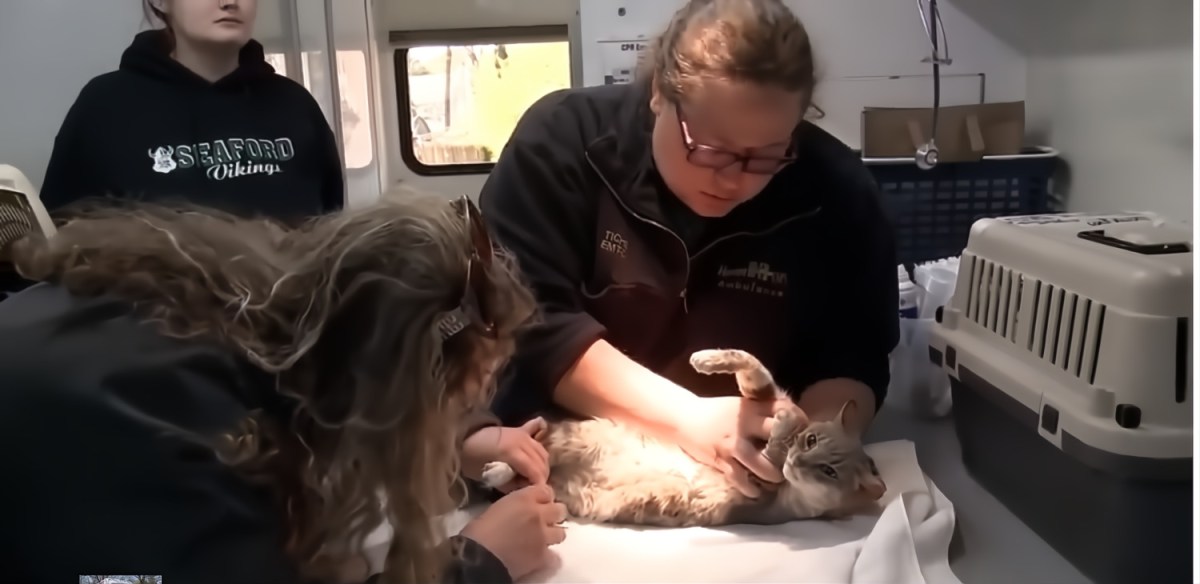
“I knew Chris well. I knew when he started. He died doing what he loved… rescuing animals,” said Robert Misseri, co-founder of Paws of War, which brought a mobile veterinary clinic to the site of the former sanctuary this week. “The very least we can do is continue his legacy and make sure that every single one [of the] cats get the proper love and care that they need to move forward.”
Veterinarians said they’ve treated lots of cats with burnt paws. Although the animals are skittish from the harrowing experience, rescues and shelters in the area are helping them find forever homes, veterinarian Jason Michael Heller told ABC News.
“We’re going to ask for our colleagues in the area here, hopefully, to take a few cats and try to get them healthy enough to be able to eat and be adopted,” Heller said.
People in the Long Island rescue community are also working on a public memorial for Arsenault, a man who dedicated his entire life to the animals in his care.
“There’s not going to be another Chris, ever, who does this,” said John Spat of Animal Protection Service, “and all we can do is try to recover what he was trying to do and try to move forward and help his organization work forward.”
Chris Arsenault ran back into the fire in an attempt to save more cats and never reemerged.
A man who founded a cat sanctuary to honor the legacy of his deceased son was killed, along with some 100 of the cats he cared for, in a raging fire Monday morning.
Christopher Arsenault, 65, lived on the premises of the Happy Cat sanctuary in Medford, along with about 300 cats he’d saved from euthanasia, dangerous situations and difficult lives as strays.
Firefighters were dispatched a few minutes after 7 am and it took them an hour and 20 minutes to bring the powerful blaze under control. Arsenault was able to get out of the main structure on the Suffolk County, Long Island, compound, but dashed back in to save more of his cats, according to neighbors who witnessed the fire.
Chris Arsenault at Happy Cat sanctuary. Credit: Happy Cat Sanctuary
The Suffolk County homicide and arson investigation squads are assigned to the case, Suffolk police Chief of Detectives William Doherty told the New York Post.
However, it can take weeks for lab results from the state police crime lab in Albany, and fire investigators will need to comb through the remains of the ruined structure and the rubble to find a point of origin.
“It’s too early in the investigation to determine any cause,” Doherty told the Post.
The grounds and facilities at Happy Cat sanctuary were meticulously maintained, but that did not stop some in the community from complaining about the existence of the sanctuary.
Arsenault “vowed to take the unwanted, discarded, homeless [cats], the ones that people were going to euthanize, he refused and he took them into his sanctuary, sometimes for no money at all,” Lisa Jaeger, a local cat rescuer who worked with Arsenault, told NBC New York. “He started the sanctuary [in 2007]. This was his life. He gave his life to save these cats.”
The sanctuary’s Facebook page was flooded with an outpouring of grief on Monday from people who knew and supported Arsenault.
“He was always so concerned about each and every single cat he had in his care. Didn’t matter how many… they were all his babies,” one distraught woman wrote. “To think he literally lost his life trying to save them breaks my heart and makes all the sense in the world that he would never leave them behind.”
Local rescuers and the county SPCA were trying to corral the surviving 200 cats on Monday. Some fled the grounds during the fire and remained unaccounted for, while others remained close to the destroyed sanctuary despite the chaos and the significant amount of activity from first responders.
Despite his efforts, Arsenault was the subject of a harassment campaign on social media from neighbors and a small group of people who alleged Arsenault wasn’t properly caring for cats. There’s no evidence to back up those claims, and Happy Cat has not been the subject of any violations.
A petition on Change.org posted last year demanded a stop to the alleged harassment of Arsenault by neighbors and a local code enforcement officer. It garnered 28,665 verified signatures.
Despite locals standing up for him, Arsenault had found a piece of property in upstate New York and was preparing to move his cats and sanctuary to that location.
John DeBacker, who participates in local trap, neuter, return (TNR) efforts, referenced the push back against Happy Cat in a post about the fire on Monday.
“Despite being harassed for months, he continued to fight for the cats,” the post read, “and I truly hope everyone can screenshot posts from one of the groups that has been harassing him in case arson is connected.”
An outdoor area at Happy Cat sanctuary. Credit: Happy Cat Sanctuary
It’s important to note that there is no evidence connecting any of the critics to the fire, authorities have not commented on the source of the fire, and any speculation about the cause is just that: speculation. It’s also important to emphasize that just because police homicide and arson squads are investigating an incident does not mean either of those crimes has taken place. Authorities won’t know anything for sure until they can thoroughly investigate the fire scene and get lab reports on evidence.
Arsenault himself said he felt compelled to respond to critics last month in a video he posted to Youtube.
“The audacity of these people to call Happy Cat sanctuary a hoarding situation, to be claiming that we’re committing animal abuse and animal neglect,” he said “The cats that I see…these are cats that are out there and have nowhere to go. These are cats that are suffering out there. And this is where sanctuaries come in … Right now [the critics are] just taking a big handful of spaghetti, and they’re just throwing it up against the wall to see what sticks to come after Happy Cat sanctuary.”
“If you feed your pet contaminated raw meat or milk, they will likely die. I’m not exaggerating, just giving it to you straight,” one infectious disease specialist warned.
In more disconcerting news from the bird flu front, a new study warns of exceptionally high mortality rates for cats who are infected with the virus.
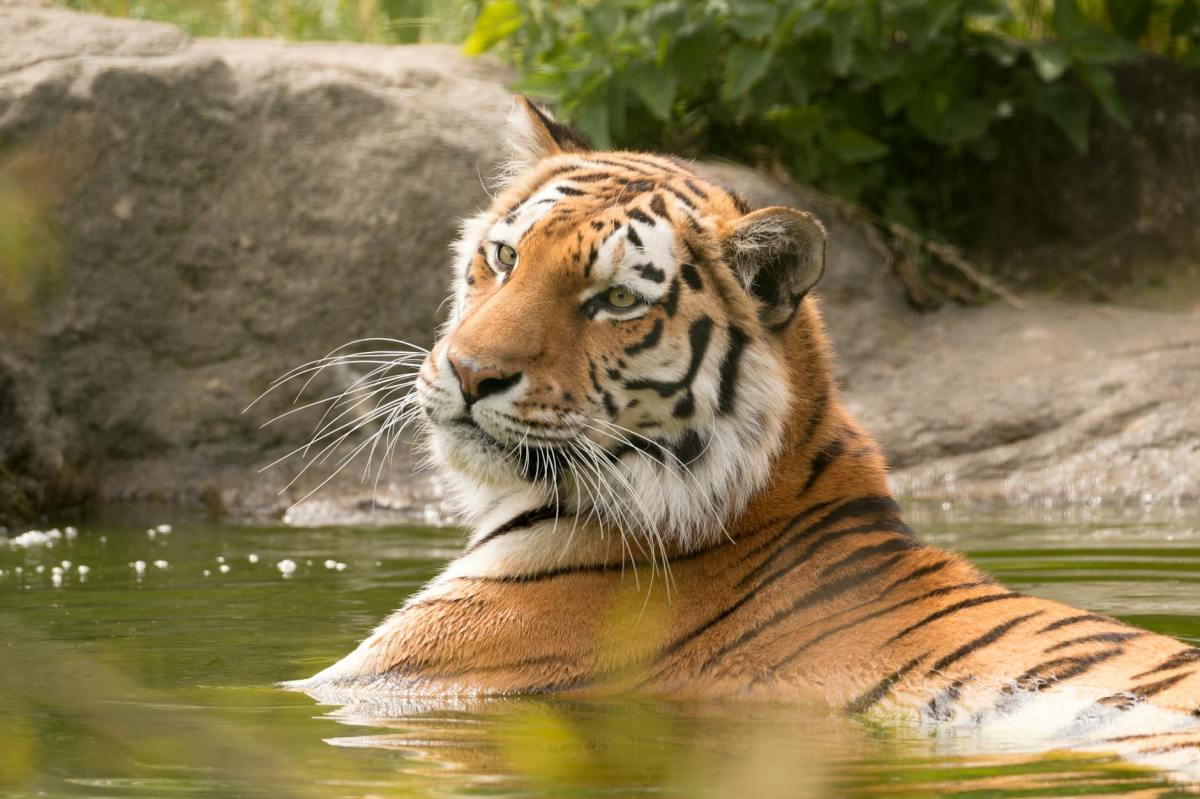
That applies to all species of cats, from the true big cats in the panthera genus — tigers, lions, jaguars and leopards — to felines, a broad group that includes domestic cats, lynx, cheetahs, pumas, ocelots, servals, jaguarundis and others.
“We don’t know if the cats are more susceptible than anybody else,” the American Veterinary Medical Association’s Michael Bailey told USA Today. “It’s just the fact they’re exposed to higher viral burdens because of where they go.”
Whether cats are more susceptible is up for debate, but one SPCA chapter said felids of all species are “uniquely vulnerable” to avian influenza because there are so many ways it can be transmitted to them by doing nothing more than what they typically do.
The @SeattleTimes reported on the first 2 cases of Avian bird flu that’s killed 2 wild #cougars in Washington, as discovered by Panthera #Puma Program and Washington Department of Fish & Wildlife. Learn more from Puma Program Director Dr. Mark Elbroch: https://t.co/feOcHnPpWTpic.twitter.com/v2nrM1jDOC
Cats can be infected by catching and eating birds and mice, drinking raw milk, eating raw meat (including commercial raw pet food), and exposure to infected animals, including cows.
In Washington state, two wild pumas died after contracting the virus from prey, a development Panthera puma director Mark Elbroch called “troubling.”
“It certainly raises eyebrows and makes one wonder: is it indicative of a bigger pattern out of sight?” Elbroch asked, noting pumas are at the top of the food chain in the Pacific northwest.
To date, as many as 900 cattle herds across the US have tested positive for bird flu, according to the US Department of Agriculture, while two thirds of California’s dairy farms — 660 out of 984 — had confirmed cases as of Dec. 26.
Bird flu was the confirmed cause of death in a house cat from Washington who died after eating Northwest Naturals commercial raw food, which has since been recalled. Three house cats in Texas succumbed to the virus, which they possibly contracted from hunting mice. The bird flu was also responsible for the deaths of two domestic cats in California who drank raw milk, and 20 of 37 wild cats — including a tiger, several pumas, bobcats and a Geoffroy’s cat (pictured at left) — at the Wild Felid Advocacy Center, a sanctuary in Washington.
Contrary to popular belief, cats are typically lactose intolerant. Credit: DHG Photography/Pexels
Veterinarians are warning people to keep their cats indoors and to avoid raw meat diets, which have become more popular in recent years. Cats should not be given cow’s milk anyway, since most are lactose intolerant. As a general rule, kittens should consume milk from their mothers or kitten-specific formula, but should not be given milk from any other source.
“If you feed your pet contaminated raw meat or milk, they will likely die. I’m not exaggerating, just giving it to you straight,” tweeted Dr. Kristen Coleman, an assistant professor at the University of Maryland’s School of Public Health.
While the west coast accounts for the majority of confirmed bird flu infections, the virus continues to spread. A map from the Centers for Disease Control shows where infections have been verified as of late December:
Credit: Centers for Disease Control
Unfortunately, the bird flu outbreak comes on the heels of a heavily politicized pandemic and a major loss in trust in American institutions like the CDC after efforts to obscure the origins of SARS-CoV2, the virus that causes COVID-19.
It’s not clear if the fallout will make Americans less likely to heed warnings about bird flu and other potential viruses, but animal welfare groups and virologists say people can keep their cats safe with a handful of common-sense steps.
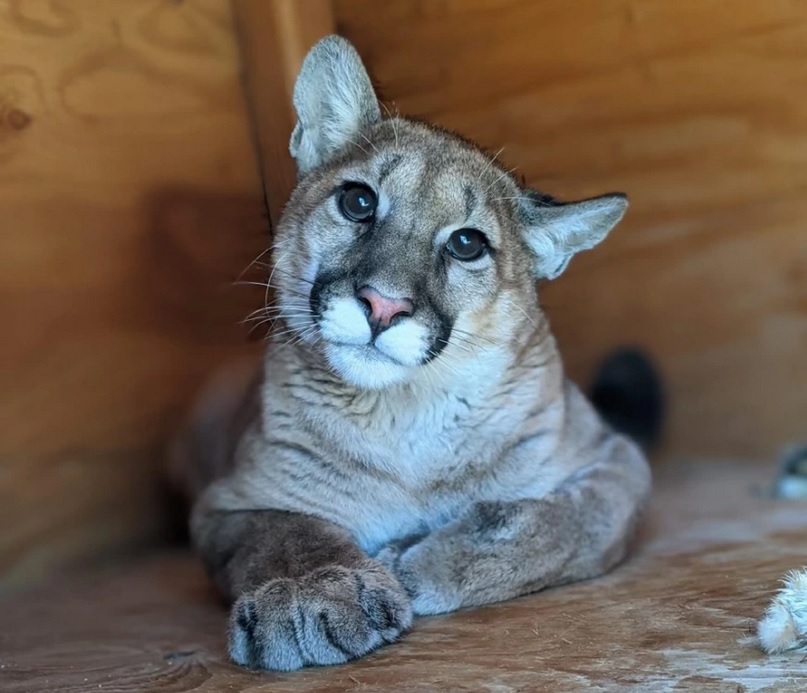
Nicholas requires regular veterinary care after his mother was killed and he almost lost his life when a driver struck them on a California highway.
Nicholas was just a cub and was following his mother across a busy toll road in Orange County, Calif., in 2020 when a driver hit them, killing his mother and leaving him with life-long disabilities.
Along with the trauma of watching his mother die, the little puma endured months of surgeries to repair his body. Since then, young Nicholas had been living in a sanctuary in northern California, but was about to find himself homeless when the sanctuary’s operators went bankrupt.
With just hours to go before that facility was closed, a sanctuary called Lions, Tigers & Bears of San Diego County swooped in and agreed to take the special-needs puma, who requires regular veterinary care.
“Nicholas has a head tilt and neurological issues, both conditions require ongoing veterinary care,” Lions Tigers & Bears founder Bobbi Brink told KTLA. “We’ve had a few animals with these issues, so our veterinary team is well-versed in providing the specialized care required for Nicholas, and we’re relieved to give him a permanent home with a den, a healthy diet, medical care and enrichment and toys.”
The handsome young puma is currently in quarantine, Brink said, and will be moved into his permanent habitat after 30 days.
Although California is part of their native range and home to a relatively stable population of mountain lions, the species is seriously threatened by habitat destruction, habitat fracturing and vehicle traffic. Some 70 pumas are killed each year on California’s highways, and experts say the survivors are stranded on isolated “islands” of habitat, separated from potential mates by deadly highways. Indeed, scientists who track native wildlife in California have noted signs of inbreeding among pumas, as the animals are cut off from other populations of their species.
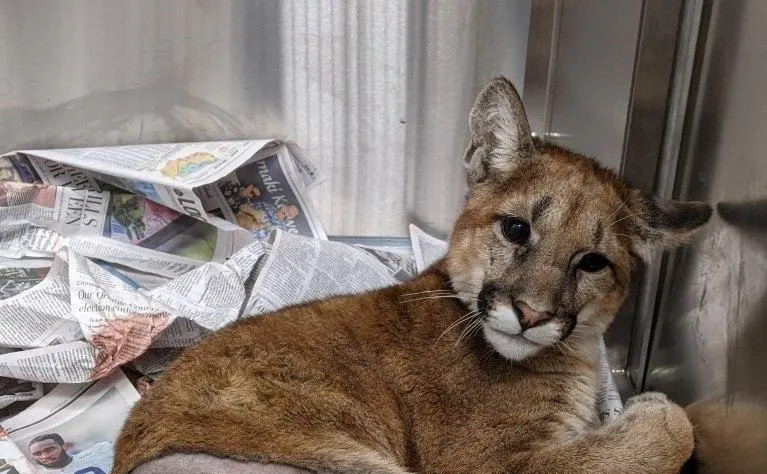
Nicholas in quarantine. Credit: Lions Tigers & Bears sanctuary
The life of the much-celebrated, recently deceased mountain lion P-22 illustrates the problems faced by the unique cats.
P-22 became famous when he migrated from southern California to Los Angeles, crossing the state’s busiest and most dangerous highways to get there. He settled in LA’s Griffith Park, which straddles the hills with the famous Hollywood sign and the outdoor Greek Theatre.
Although he became a local icon, frequently making cameos on the doorbell camera systems of people living nearby and making his rounds through the park and surrounding neighborhoods, P-22’s range was only nine square miles — the smallest range ever recorded for an adult male mountain lion — and he did not have opportunities to mate and produce cubs, as his kingdom was cut off from areas where he might encounter female pumas.
One solution to the problem is to build land bridges connecting areas where mountain lions and other wildlife make their homes. In April of 2022, officials broke ground on the Wallis Annenberg Wildlife Crossing, which when complete will connect Agoura Hills to the nearby Santa Monica Mountains.
But such projects are wildly expensive and take years to complete. The Wallis Annenberg Wildlife Crossing has a $90 million price tag and won’t be finished until 2025. On the bright side, about two thirds of the cost has been covered by private donations, proving Californians and other wildlife lovers are invested in the survival of mountain lions, coyotes, deer and other fauna expected to make use of the bridge.
It’s also an encouraging sign indicating efforts to educate the public about local wildlife have been successful. Along with the other problems they face, pumas — also known as catamounts, cougars and dozens of other names — are often confused with African lions.
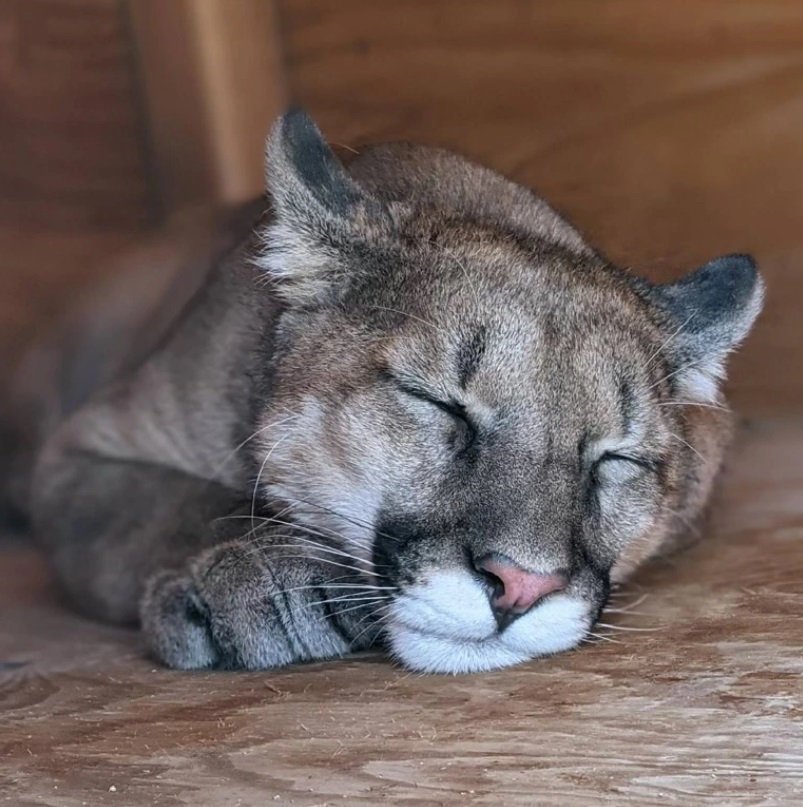
Nicholas enjoys a nap. Credit: Lions Tigers & Bears sanctuary
Because they’re large cats, they’re called lions and they resemble their African counterparts, many people assume mountain lions are dangerous. But not only are mountain lions (puma concolor) an entirely different species than African lions (panthera leo), they are not in the same category of felid.
Pumas are actually felines, meaning they’re more closely related to domestic cats, and like smaller cats they can purr but cannot roar. True big cats, like tigers, lions, jaguars and leopards, are members of the genus panthera and are capable of roaring, but not purring or meowing.
Perhaps most importantly, pumas are not aggressive toward humans. There are only 27 recorded deaths from encounters with mountain lions over the past century compared to more than 50,000 deaths from dogs, for example, and in almost every one of those cases the pumas were either cornered or their cubs were threatened.
Nicholas is not only a reminder that animal life is valuable, his circumstances also remind us that we’re going to have to find creative ways to ensure the survival of many species as humanity expands. The global population is expected to level off at about 11 billion and then slowly contract as third-world countries undergo the same lifestyle changes common to nations that have already made the transition to first world. But until then, it will take a massive and coordinated effort to ensure we don’t end up on a very lonely planet and likely endanger our own survival with the cascade failures that arise from extirpating entire species.





 Pain In The Bud