After 10,000 Years, Dire Wolves Walk The Earth Again

The surprise announcement came from Colossal Biosciences, a company best known for its project to bring back the woolly mammoth.

A US biotech company shocked the world Monday when it announced the births of three dire wolf puppies, bringing back a species that hasn’t lived for more than ten millennia.

Or a version of that species, at least.

Scientists with Colossal Biosciences extracted DNA “from a 13,000 year old tooth and a 72,000 year old skull and made healthy dire wolf puppies,” Colossal CEO Ben Lamm said in a statement.

Of course, it wasn’t that simple.

The dire wolf, Aenocyon dirus, was heavier, stockier and had thicker fur than modern-day gray wolves. In addition, its bite was incredibly strong, generating more force than any living species of canid.

To create the dire wolf puppies, Colossal used the genomes reconstructed from the tooth and skull, spliced them with gray wolf DNA, and made 20 gene edits in 14 genes. Healthy embryos were implanted in three surrogates — large, mixed-breed dogs — and were successfully delivered.

Romulus, one of two male dire wolf pups born late in 2024. Credit: Colossal Biosciences
Remus, who was born at the same time as Romulus. Credit: Colossal Biosciences

Whether the new puppies are officially dire wolves is up for debate and beyond the scope of this post, but just like humans and chimpanzees share 98.7 percent of their DNA, dire wolves and gray wolves share 99.5 percent of their DNA.

The species also existed concurrently with gray wolves and there was interbreeding between the populations, meaning gray wolves already have dire wolf lineage.

As a result, the puppies may be more dire wolf than some are willing to admit. Just how far a “de-extinction” project has to go for the animals to qualify as their namesakes will be debated for years, and there are innumerable questions for which we won’t have answers until the pups grow and scientists monitor their behavior in addition to their physical health.

They won’t behave precisely the way their ancestors did, since they are growing up in a captive environment with teams of specialists constantly monitoring them. The wolves are “essentially living the Ritz Carlton lifestyle of a wolf. They can’t get a splinter without us knowing about it,” Colossal’s chief science officer, Beth Shapiro, told the New York Times.

Whether bringing back dire wolves is a “good” thing is also a topic for another day, at least as far as this post goes. You may disagree, and feel free to say so in the comments, but this is a subject you could write half a library of books on, encompassing ecological, moral and philosophical questions that don’t have easy answers.

It’s made even more complex by the situation we find ourselves in, with our own behavior and relentless expansion killing off more than 70 percent of the world’s wildlife since 1970, according to the World Wildlife Fund. The company wants to use its technology to help critically endangered species, like the red fox, avoid extinction.

Colossal has partnered with leaders in the fields of genetics and bioethics, as well as organizations that specialize in animal welfare. The puppies are in a sizable, custom-built facility in an undisclosed location, secured by “zoo grade” barriers, and the company enlisted the help of the SPCA to create an environment appropriate for them. Colossal says their care regimen will include socialization and the development of pack dynamics.

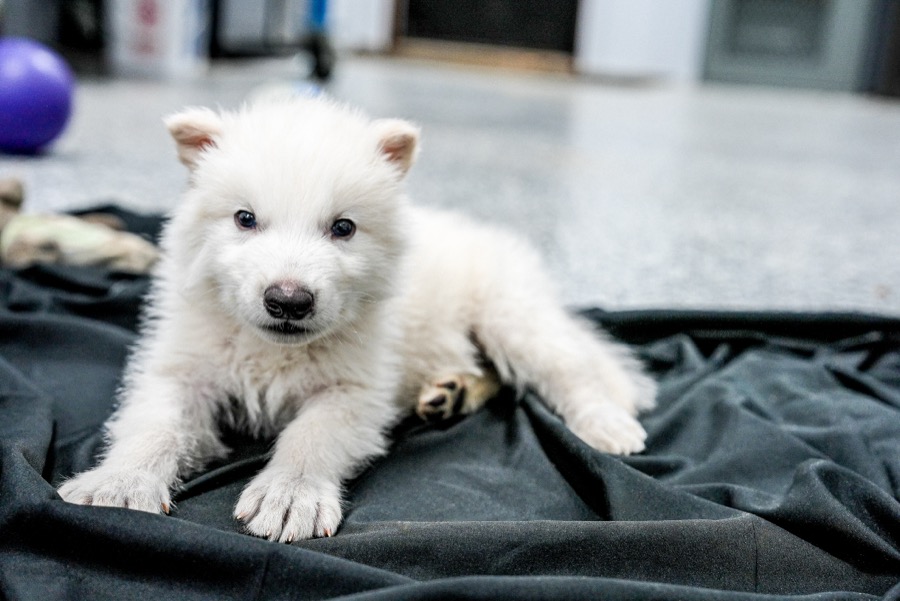
A newborn dire wolf pup. Credit: Colossal Biosciences

The company has well-publicized projects to bring back woolly mammoths and the dodo, and ultimately, its founders say they want to restore balance in places where apex predators have been brought to extinction by human activity.

“This project demonstrates the awesome potential for advances in genetic engineering and reproductive technologies to recreate lost diversity,” Andrew Pask, a Colossal board member and professor of biosciences at the University of Melbourne, said in a statement. “Apex predators are critical to stabilizing entire ecosystems and their loss from the landscape can have profound impacts on biodiversity.”


The pups are named Romulus, Remus and Khaleesi. That last name is in homage to the character Daenerys Targaryen (Emilia Clarke) from the book series A Song of Ice and Fire, and Game of Thrones, the television adaptation. Dire wolves play a major part in the narrative, and the series is credited with bringing the long-extinct animals back into the popular imagination.

Jon Snow (Kit Harrington) discovers an orphaned dire wolf pup in the first season of Game of Thrones. The pup, who grows into a fierce and massive adult wolf named Ghost, plays a pivotal role in many major events in the series. Credit: HBO
Khaleesi, a female dire wolf, named after the character Daenerys Targaryen from Game of Thrones. Credit: Colossal Biosciences

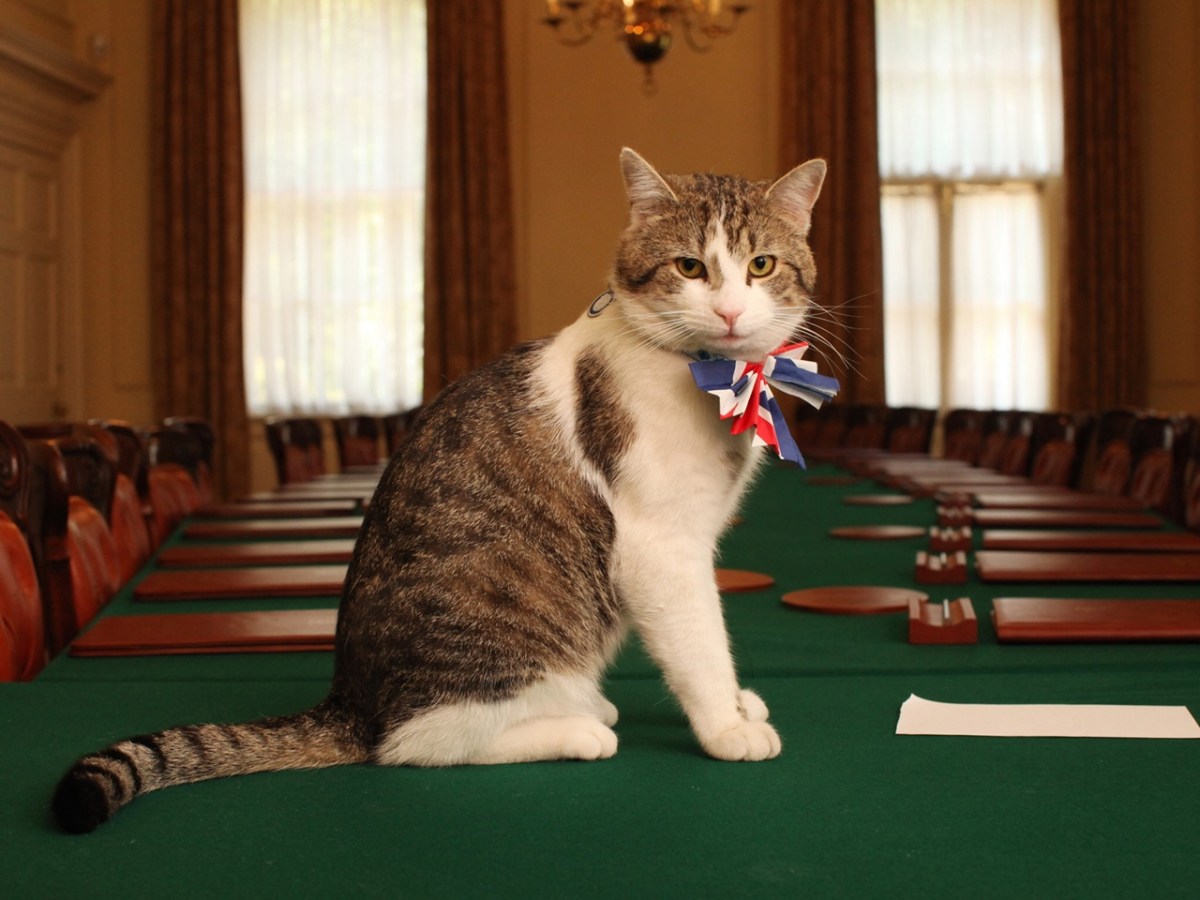
Larry The Cat Defends UK Prime Minister’s Home From A Fox

No. 10 Downing Street’s chief mouser shows he’s capable of defending his home from all manner of animal intruders.

Larry the Cat has been the official chief mouser at the UK’s prime minister’s home since 2011.

Now he should be bestowed with a new title — chief foxer.

The famous tabby was lounging guarding No. 10 Downing Street on a recent evening when a fox approached the property. Larry slow-walked the canid intruder back to an adjacent garden, but wasn’t satisfied when the fox lingered, so he laid the smacketh down to show foxy who was boss.

The thick-headed vulpine interloper tried a third time to get closer to the house, but Larry wasn’t having it.

The encounter was a reminder that Larry can handle business when sufficiently motivated.

Larry is a former stray rescued by London’s Battersea Dogs and Cats and was four years old when he got the job on the strength of the shelter’s claim that he was an excellent hunter who would solve No. 10’s rodent problem. Bringing in a capable kitty became a priority in 2011 when the rats on site became so bold, they’d walk right past reporters and TV cameras outside the prime minister’s official residence and office.

The long-tenured mouser got a bad rep in his early days, when critics complained he “does little besides sleep” and spend time with his “lady friend,” Maisie, while also depositing hair on Prime Minister David Cameron’s suits.

But it’s Larry who’s had the last laugh as his tenure has outlast those of three prime ministers — Cameron, Theresa May and Boris Johnson. He’s now on his fourth PM, Liz Truss.

According to his official profile on the UK government’s website, “Larry spends his days greeting guests to the house, inspecting security defences and testing antique furniture for napping quality. His day-to-day responsibilities also include contemplating a solution to the mouse occupancy of the house. Larry says this is still ‘in tactical planning stage.'”

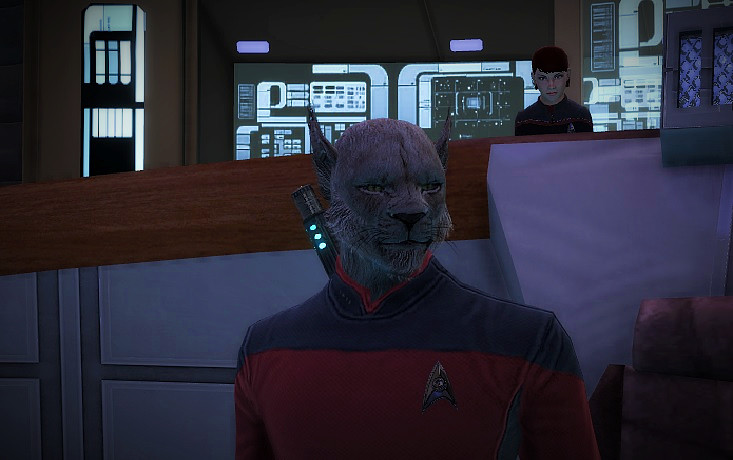
Captain Buddy and the Voyages of the USS Yums

Captain Buddy and the USS Yums arrive at the Dog 359 system to assess the species Canidae’s candidacy for membership in the Furrderation.

Catptain’s Log, Stardate 20.20 dash 6.22 dot Yums:

We have arrived in orbit around Canis Prime in the Dog 359 system, home to a primitive pre-warp species known as Canis Familiaris.

Despite the presence of a team of interpreters, our diplomats have been unable to get the inhabitants of Canis Prime to calm down and stop trying to hump them.

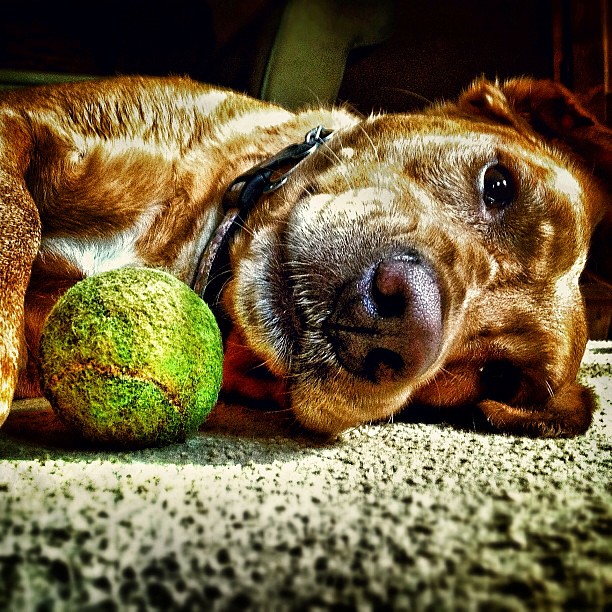
After presenting the primitive canids with a ball, a recreational object meant as a gift of goodwill, the canids pointedly refuse to accept the gift, insisting that our diplomats throw it, only for the canids to bring it back to them covered in a revolting membrane of canid slobber and demand they throw it again.

Our Interstellar Dog Intelligence and Observation Team (IDIOT) clearly failed to prepare us for these strange creatures and their repulsive rituals.

“Captain, I beg you to beam us up,” my normally stoic first officer, Commander Stryker, implored. “Please. These beings are too primitive and stupid to join the Furrderation.”

dogslobber
A member of the primitive species Canis Familiaris with the desecrated goodwill ball. Credit: Flickr

Tensions reached a boiling point when the members of my away team dug a latrine a few klicks from the primary canid settlement, Good Boyistan, and returned later to find a crowd of canids fighting amongst themselves to consume the team’s eliminations.

Shortly afterward we received a hail from the Canid Welcoming Committee on the surface, formally requesting to tour the ship, with an uncomfortably specific number of questions about our ship’s litter system, as well as how and where our waste is disposed.

I’ve ordered my Chief of Security, Lieutenant Wharf, to post guards at all privy chambers on the vessel. I will not have my ship used as a dining facility by these strange creatures.

I regret having to conclude my report by advising against allowing the Canidae membership in the Furrderation. There’s just something fishy about them, aside from the whole eating our poop and slobbering things. They are too friendly, suspiciously friendly even, and their culture does not appear to have any concept of personal space. In addition, they are embarrassingly easy to manipulate with simple praise, which would create a security risk for our Furrderation member species.

Captain Buddy out.

Lieutenant, have the transporter room recall the away team immediately and set a course for the Fowl 62c system, warp five. It’s time we get the hell away from these filthy, disgusting, smelly…is this thing still recording?