While New Zealand’s Vigilantes Slaughter Cats, The Country Has Pledged To Eradicate Free-Roaming Felines By 2050

Convinced that culling cats will prevent local wildlife from going extinct, despite no evidence supporting that idea, New Zealand’s authorities have pledged to wipe out ferals and strays.

A recent RNZ story about efforts to exterminate cats in New Zealand starts with an anecdote about a man named Victor Tinndale, describing the way he bludgeons a cat to death as casually as if he’s sipping a cup of coffee.

Tinndale has taken it upon himself to kill cats even though the country’s wildlife management authorities told him not to. Why? Because he thinks cats are responsible for driving native species toward extinction.

He doesn’t know that, of course. No one does. No one’s bothered to do the research, and the driving force behind the claim that cats are responsible is a series of meta-analyses by birders who literally invented numbers to align with their predetermined conclusions about predatory impact.

To date there is not a single study that accurately measures feline predatory impact, nor is there a shred of evidence that slaughtering cats — whether beating them to death, shooting them with shotguns or poisoning them — has any beneficial impact on endangered bird species.

Yet there are vigilantes aplenty slaughtering cats across New Zealand, youth hunting contests encouraging kids to shoot cats and kittens, and government-sponsored extermination programs, like a particularly ghastly effort on a small island off New Zealand’s coast, where members of a team tell themselves they’re doing good work by sniping animals who are doing what they were born to do.
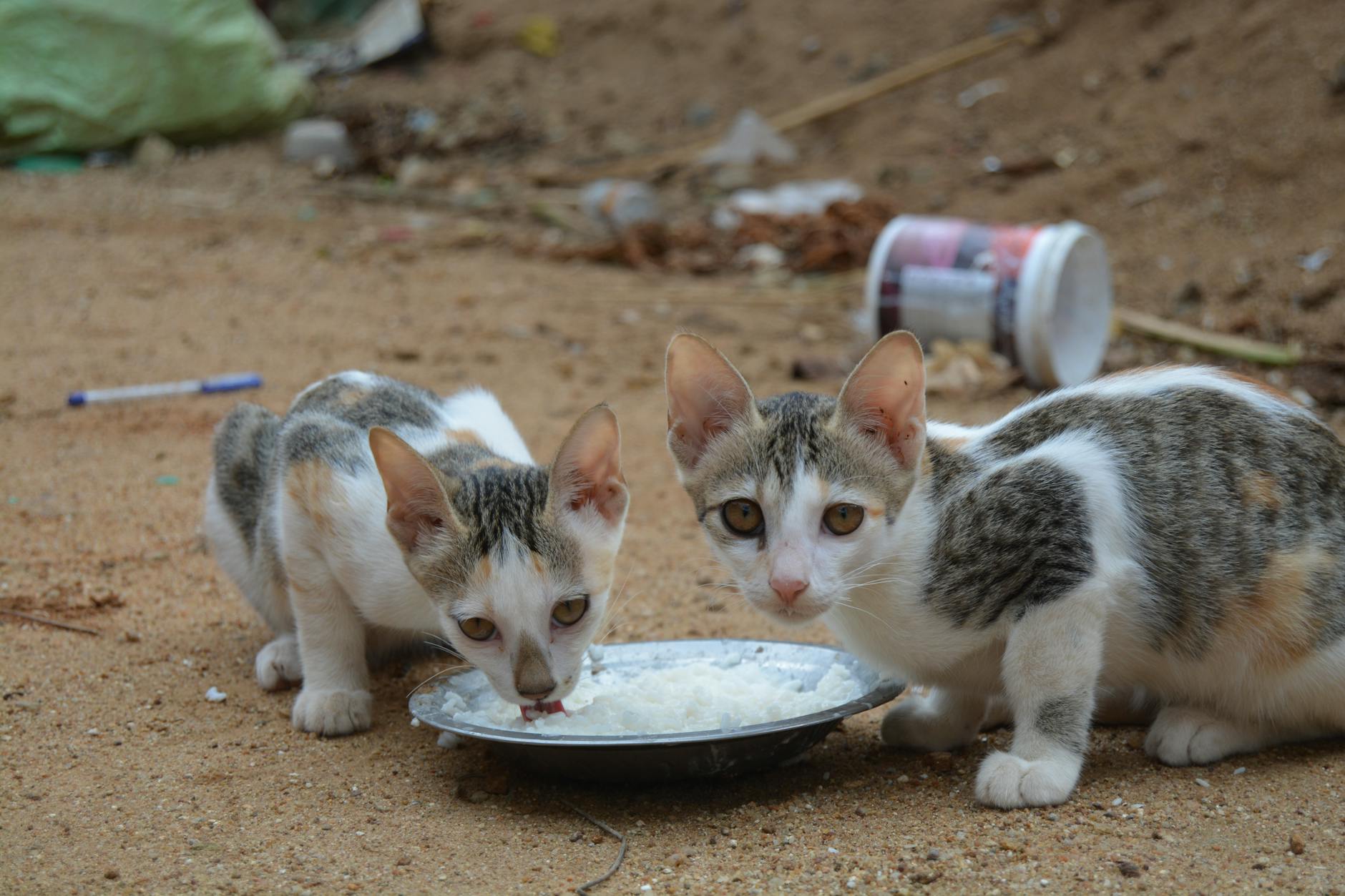
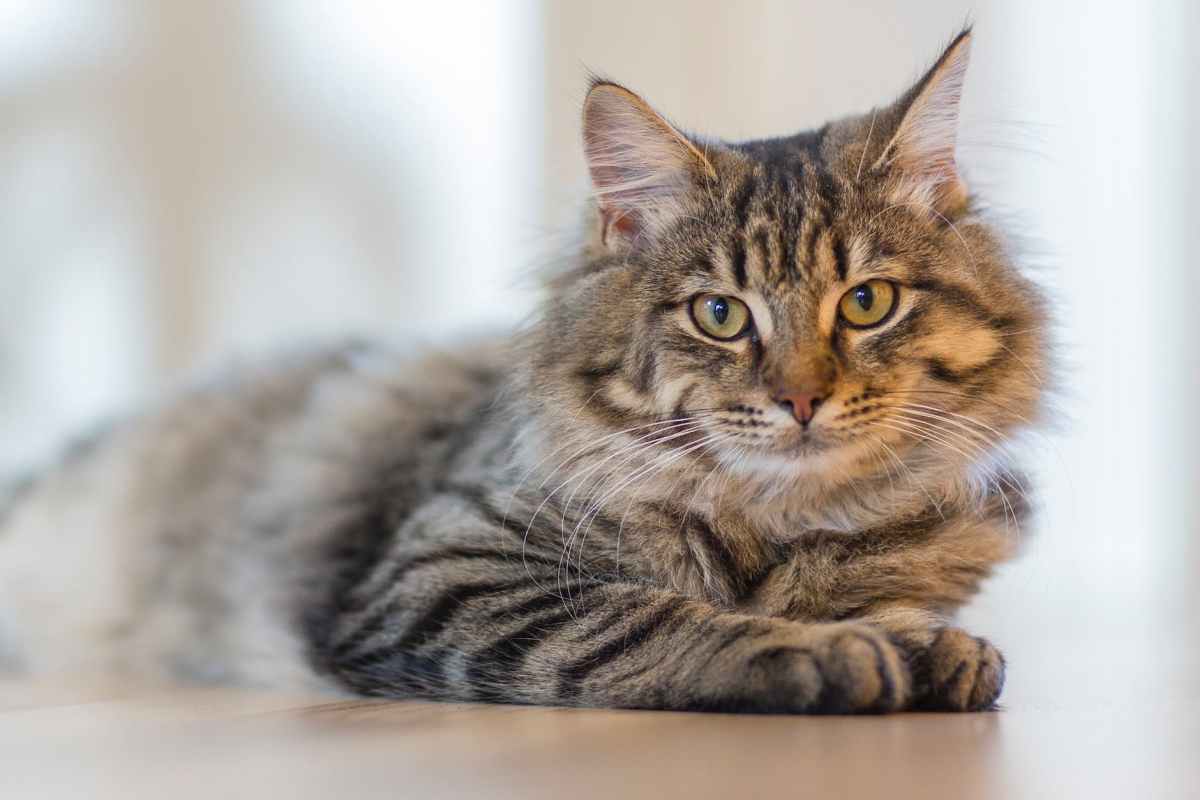
Ferals and strays already have tough lives without being hunted for sport or at the behest of government officials who aren’t in full possession of the facts. Credit: Mohan Rai/Pexels

The RNZ story describes Tinndale merrily skipping through the Aotearoan wilderness, singing songs and cracking jokes like a perverse Tom Bombadil as he murders cats unfortunate enough to get caught in his traps.

RNZ cameras follow Tinndale as he finds a terrified feline in one of the his traps. Tinndale describes the cat’s impending death at his hands as some sort of inevitable cosmic justice. He didn’t sentence the cat to die, he argues. He’s just the man who carries out the sentence.

“This cat is just an utter killing machine,” Tinndale says, addressing a camera as he repeats rhetoric from birder Peter Marra — who has advocated for the destruction of the entire species — almost word for word. “I’d hate to think what this cat has slayed to survive. So this guy has got to go, you know?”

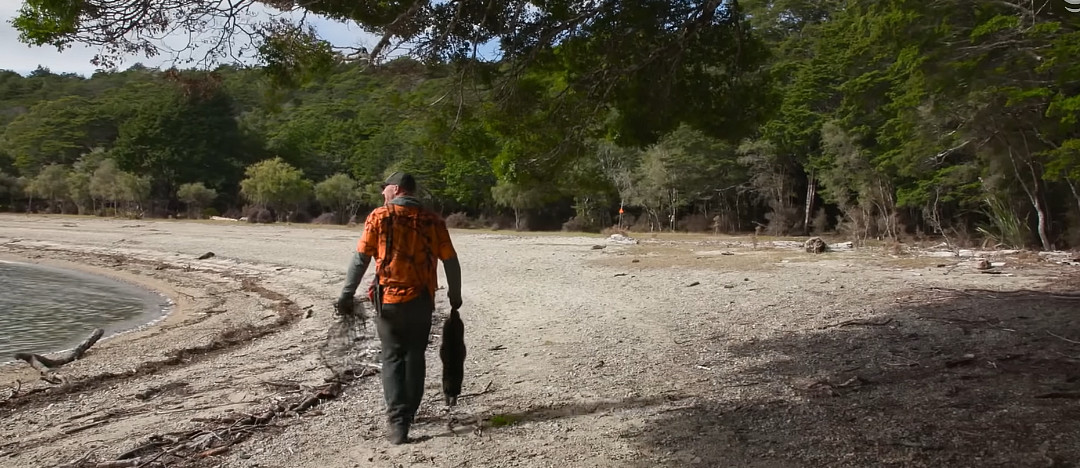
The next scene shows Tinndale walking along the shore, the cat now hanging dead in his hands. He is judge, jury and executioner.

Tinndale buries his victims in a “graveyard” he made near a hut, admitting the graveyard is a “little bit of a laugh.” Tinndale was shocked, the story says, when New Zealand’s Department of Conservation didn’t pat him on the head for his vigilante efforts.

“I thought they’d have a chuckle, you know, and be pleased, but it was nothing of the sort,” he told RNZ.

Thought they’d have a chuckle?

This man thinks bludgeoning animals to death is hilarious. He is a psychotic vigilante who has taken it upon himself to violently end life. Why is he allowed to own weapons? Why is he not in prison or on a court-mandated mental illness management program?

Brad Windust with a trophy hunter’s expression as he shows off a Maine Coon mix he killed with the help of his hunting dog. Credit: Supplied to NRZ

The story goes on to quote Jessi Morgan of the Predator Free New Zealand Trust, who flat-out admits she can’t say how many cats there are in the country, let alone measure their predatory impact.

“I’ve seen estimates from two-and-a-half million to 14 million, which basically tells us we’ve got no idea what those numbers are,” Morgan said before immediately relaying anecdotes from hunters and farmers who say they’re “seeing more.”

This is not how we make decisions between life and death! This is not science, not by any definition of the word. This is not public policy. This is vigilantism and a mob mentality, amplified by the fact that it’s easier to blame a defenseless species for our own conservation failures and humanity’s impact on wildlife.

It is gross, utter disrespect for life under the guise of conservation, by people who not only can’t articulate what sort of damage they think felines are doing to their country, but have not a scrap of evidence that vigilantes running around bludgeoning cats to death are doing anything other than causing needless suffering.

Worse, it’s clear at least some of these self-appointed nature guardians are enjoying the task of murdering cats. It’s evident in their smiles as they show off their prizes and in the way they talk about their “work” — not as a solemn duty after all other options have been exhausted, but as something to “have a chuckle” over.
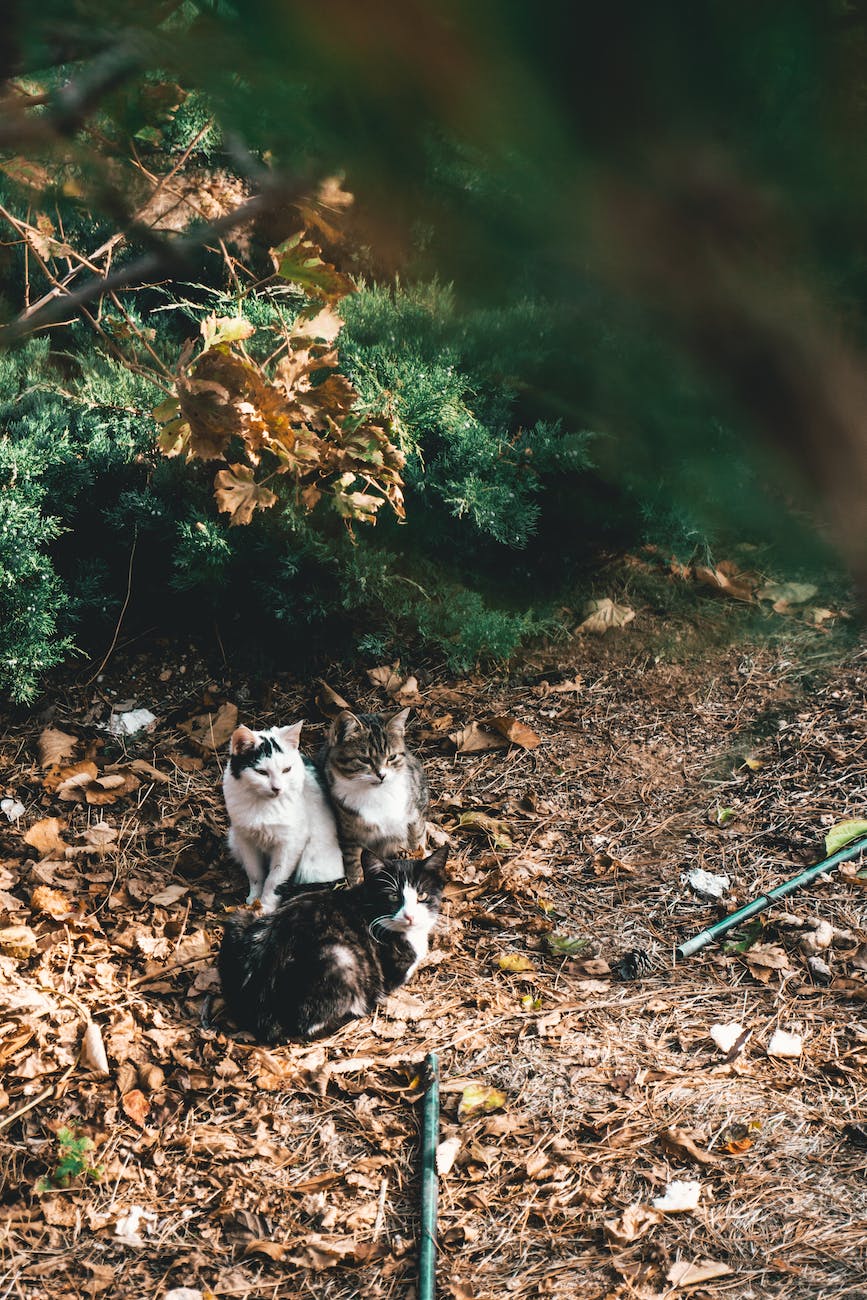
Credit: Dianne Concha/Pexels

This is also a failure of journalism, a failure to follow the most basic best practices and rules, to ask for proof when people assert opinions and call them facts. Those who call themselves journalists, who credulously spread the bunk studies about feline impact on native species, should be ashamed of themselves for not even taking a few minutes to read the studies they cite. Anyone who reads the research would immediately understand that the “studies” — which are really meta-analyses of old data — don’t provide any proof that cats are responsible for pushing endangered species toward extinction. They do nothing of the sort.

What we do know, and have confirmed over more than half a century of rigorous science, is that we are responsible for wiping out wildlife — more than 73 percent of the world’s monitored wildlife populations in the past 50 years alone, according to the World Wildlife Fund’s annual report.

Cats did not render more than half the rivers and lakes in the US unsuitable for swimming or collecting drinking water. Cats did not dump PCBs in the Hudson River, test nukes on desert ranges and in the ocean, create vast stormfronts of smog that shut down entire cities for days, or bleach coral reefs around the planet. Cats didn’t overfish the oceans, build the skyscrapers that kill innumerable birds every year, or bulldoze vast stretches of jungle in places like Borneo, Sumatra and the Amazon.

We did that.

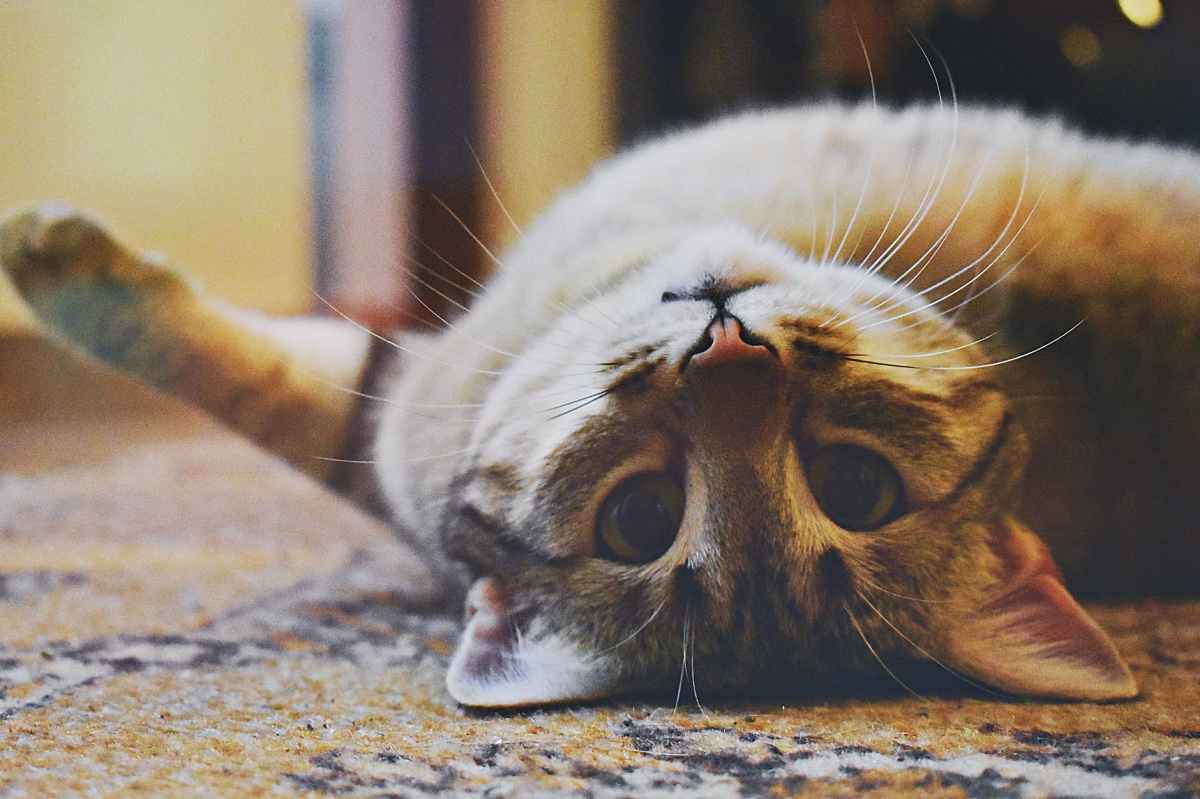
Aside from the fact that they don’t have homes, these cats are no different than pet felines. They are the same species. Credit: Wikimedia Commons

Animal welfare groups have never disputed the idea that cats probably do have a part in endangering small mammals and bird species. They are predators. Hunting is their role.

But that is a far cry from proving they have a measurable impact, let alone are the primary drivers. In rare cases when research teams did the hard work of taking a feline census, as Washington, D.C.’s Cat Count did, the population numbers turn out to be considerably lower than expected.

Data from the Cat Count also confirmed what we know, that cats do not stray more than a few hundred feet from their territory, whether it’s a human home or a small shelter in a managed colony. In urban and suburban environments, the study found, cats have minimal impact through hunting unless they’re living directly adjacent to wooded areas.

Sending a bunch of lunatics out, dancing and skipping as they arbitrarily slaughter sentient creatures with real emotions, is the kind of monstrous behavior only humans are capable of.

Human-made devices and structures kill innumerable birds annually, a fact that isn’t accounted for in studies and news stories blaming cats for bird species extinctions. Credit: Amol Mande/Pexels

But it isn’t enough for New Zealand’s government to have vigilantes killing cats, or community-sponsored cat hunts. Now the government has pledged to eradicate feral cats by 2050. Because feral cats are the same species as stray and pet cats, and there is no way to determine by sight if a cat is feral or just frightened, that means any feline found outdoors will be killed.

“In order to boost biodiversity, to boost heritage landscape and to boost the type of place we want to see, we’ve got to get rid of some of these killers,” says Tama Potaka, the country’s conservation minister.

Note the language in the linked story, which describes domestic cats as if they’re a separate species. That’s the kind of ignorance that drives these cruel efforts.

New Zealand is heavily reliant on tourism, with visitors accounting for almost six percent of the country’s GDP before COVID-19, a number the country’s leaders expect to match in late 2025 as the tourism industry recovers. It’s part of New Zealand’s overall shift to services instead of products in an effort to diversify its economy.

Anyone who loves cats, who thinks men shouldn’t play God, who thinks we ought to demand at least something in the form of proof before allowing socially maladjusted vigilantes to brutally kill animals, should boycott New Zealand as a travel destination.

If you enjoy PITB’s content and want to help us keep the lights on, please consider whitelisting this site on your ad blocker.

Header image: Tinndale walking with a cat he killed via RNZ
Cat Hunt Canceled, Kiwi Journalist Says Cats ‘Need To Be Shot,’ ‘Run Over’ And ‘Wiped Off The Face Of Aotearoa’

Cats are blamed, to the exclusion of almost all other factors, for the decline in native bird populations in New Zealand.

A New Zealand group canceled a cat-hunting competition for kids after receiving massive backlash for the plan, but one Kiwi journalist told a national audience he thinks the cat hunt is a great idea and doesn’t go far enough.

“When it comes to feeral kets, I’m on the soide of the kea, the kākāpō and the kiwi ivery sangle doy of the week and my missige to [the organizers] is ‘Git the competition back on, git the keds back out thea,'” said the vowel-desecrating morning show host Patrick Gower. “If thea gonna hunt and thea’s feeral kets in the way, then we hif to woipe them out. Feeral kets need to be shot, they need to be run ovah, they need to be trepped, they need to be woiped off the foice of Aotearoa and I imploah the school to git it back on, and look, I’ll put up some rewoade as well foah any kets these kids git down theah as well.”

English translation: “I think the cat-killing contest is a wonderful idea, cats need to be shot, run over and exterminated from New Zealand, and I hate cats so much that I’ll put up some of my own money as prizes for the children who bag the most kills.”

You’ve got to wonder what cats have done to Patrick Gower for him to hate them so much, and fortunately dear readers, PITB has the answer!

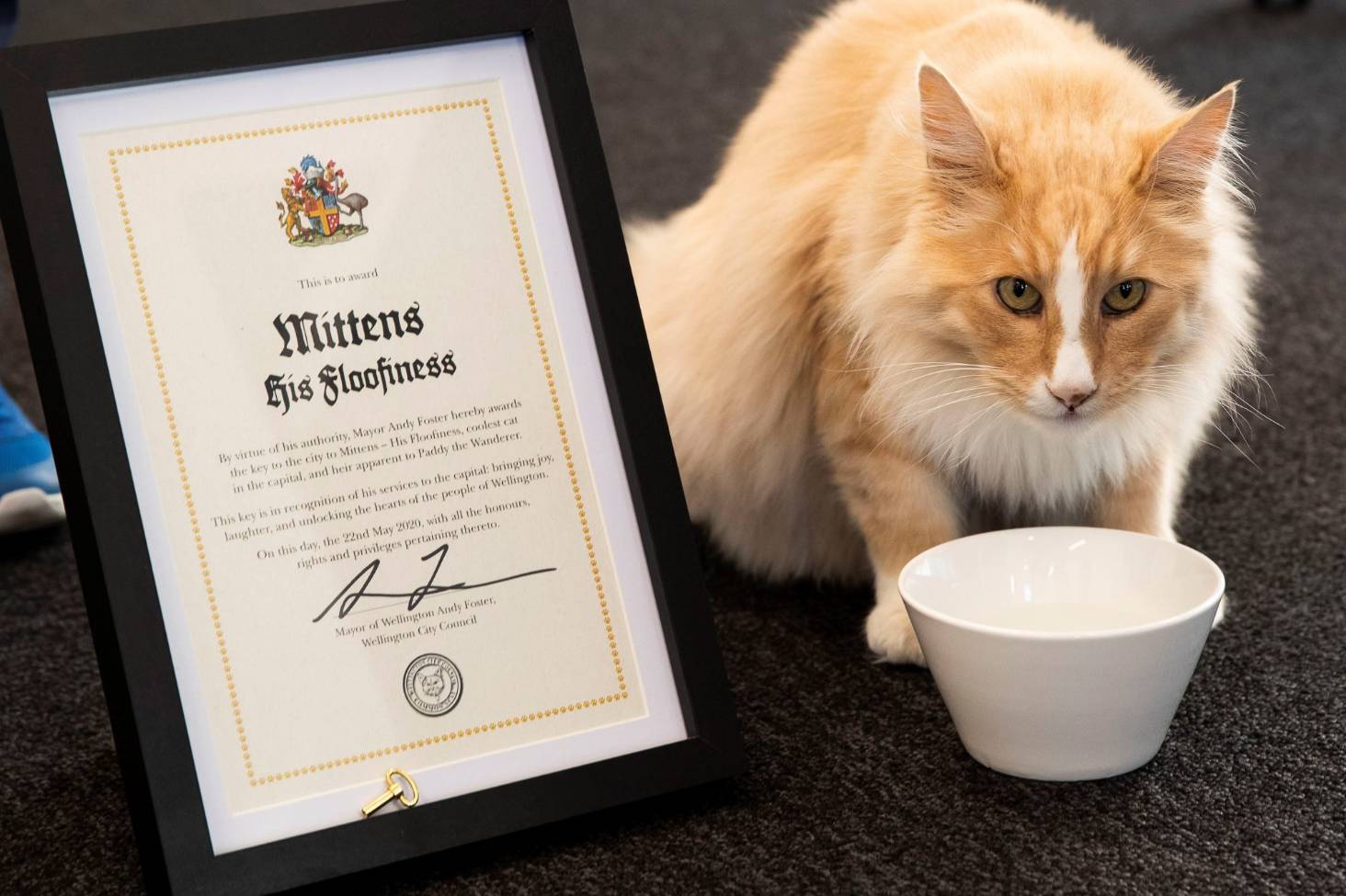
Gower lost the New Zealander of the Year competition of 2020 to a cute orange tabby named Mittens.

Think about that: All those years of doing Pulitzer-worthy breakfast show kitchen demonstrations, of slaving away at the anchor desk bringing viewers important news about reality TV stars and parroting former Prime Minister Jacinda Ardern’s declaration that New Zealand’s government is “the single source of truth” on COVID, and Gower loses the honor to a damn cat. Mittens even has the key to the City of Wellington, and Gower does not.

So sad.

Mittens the Cat
Mittens receiving honors that have eluded morning show host Patrick Gower. Credit: Wellington City Council

It’s unfortunate when a man in influential position, small country or not, enthusiastically encourages children to practice being future serial killers by slaughtering innocent animals because he thinks — despite the complete absence of evidence — that arbitrarily gunning down and running over sentient animals will save birds.

Really, you’d think before calling for the extirpation of an entire species of animal that these people would have something, even a single bogus research study, claiming that bird populations would recover if only people started killing cats on sight.

But no such proof exists, and the burden of proof rests with Gower, fellow Kiwi cat-hater Gareth Morgan and others who harbor an irrational and ill-advised hatred of tiny animals who are simply behaving the way nature designed them to behave.

What we do know is that managing cat populations can be done, but it’s difficult, time-consuming work that requires dedication and patience.

Cities like Washington, D.C., with its exhaustive cat count, and communities across the US have provided the blueprint with TNR efforts and a mass push for all pet owners to spay and neuter their cats. The results have been remarkable, and shelters save more than a million felines a year compared to just a decade ago. There’s still work to be done to bring the number of euthanizations down to zero.

Patrick Gower
Gower

It’s also worth noting that the organizers of the North Canterbury Hunting Competition and supporters like Gower are coming from a place of ignorance. In their original, now-deleted announcement, the organizers offered a “guide” to telling the difference between feral and pet cats, unaware that they are the same species. The only difference is that pet cats are fortunate enough to have homes, and strays and ferals do not.

The group said it was offering its “guide” as a way to prevent children from killing pet cats, but how exactly would they do that when a pet is indistinguishable from a colony stray or a feral? Would they find a microchip on the corpse of a cat they killed and say “Oops, guess that one doesn’t count!”?

Does a cat somehow feel less if it doesn’t have a home? Is its life worth less if it doesn’t have a collar and eat from a bowl?

It’s barbaric and so poorly thought-out, it really boggles the mind that the idea of a cat-killing competition for kids was voiced, let alone approved, planned and promoted by supposed adults.

As for the contest itself, we’re very glad it’s been called off, even if the organizers want to play victim and say their feelings have been hurt by the response to their murderous event.

That, however, doesn’t solve the problem. The fact that the organizers thought this was a good idea in the first place, and the increasingly pitched rhetoric from the likes of Gower and Morgan, are normalizing the idea of slaughtering innocent animals who have their own minds, thoughts and feelings, and who have been shaped by 10,000 years of history to live with and depend on humans.

Instead of calling for blood and whipping people into a frenzy, influential New Zealanders should read about cats and animal cognition in general, so they’re aware that felines experience the full range of primary and secondary emotions and are very much capable of suffering the same way we do when we’re injured, stressed and our lives are in danger.

That, unlike claims that cats are primarily responsible for the decline in bird populations, is hard scientific fact. We can peer into the brains of felines, watch their neurons fire, see different brain regions light up as they think specific thoughts and respond to specific smells and sights.

Maybe if people who hate cats understand what they are, they’ll feel some empathy for a beautiful species, animals who have been companions and literal life savers to humans since before deepest antiquity, animals whose lives have intrinsic value regardless of what they mean to us. At the very least, we owe them that.

New Zealand Hunting Contest For Children Offers Prizes For Killing The Most Cats

One of New Zealand’s most prominent economists has called cats “serial killers” who are driven by “bloodlust,” and is one of many who blame domestic cats for the decline of local wildlife.

An annual hunting competition for children in New Zealand has a new category this year, awarding a cash prize to the young hunter who kills the most cats.

You read that right.

The North Canterbury Hunting Competition announced the new category on Saturday and says it will offer a $250 prize to any child 14 or younger who kills the most felines.

In a statement, the local SPCA pointed out the obvious, that cats will suffer horribly, pets will die and the competition will result in bungled kills en masse, leaving wounded cats to suffer horribly before the children finish them off — if indeed they do.

“There is a good chance someone’s pet may be killed during this event,” the Canterbury SPCA wrote in a statement. “In addition, children often use air rifles in these sorts of events which increase the likelihood of pain and distress, and can cause a prolonged death.”

photo of cats
Credit: Ali Arapou011/pexels

Prompted by the same sloppy “research studies” that inspired Australia to kill millions of cats — and resulted in a mouse plague of biblical proportions in 2021 and 2022, causing billions of dollars in damage to farms, homes, businesses and infrastructure — New Zealand is on a disinformation-fueled jihad against felines.

Like all such studies, the claims that cats are singlehandedly responsible for declines in native wildlife, thus absolving direct human activities of blame, come by way of overzealous bird conservationists and others who insist the mass murder of cats will save native birds and small mammals. As if humans destroying habitats, dumping chemical waste, creating wind farms that act as bird dicers, building glass skyscrapers that millions of birds fly into every year, saturating entire swathes of the Earth with light pollution and EM radiation that harms and confuses animals — and all the other things people do — have no impact whatsoever, and it’s only those dastardly cats who are the culprits.

You’ve got to hand it to the misguided conservationists, who have picked tiny scapegoats who can’t defend themselves verbally or physically against humans.

To understand how the “hunting” (killing) competition can be real, it’s important to understand the context of the way cats are portrayed in New Zealand. Gareth Morgan, a Kiwi economist and politician, launched a campaign about a decade ago with the stated goal of eradicating cats from the island nation of 5.1 million people, which would forbid people from adopting new cats and end programs like trap, neuter, return (TNR) in favor of having local animal control departments kill felines.

Morgan, whose Cats to Go site portrays kitties with devil horns and glowing red eyes, says cats are evil animals driven by “bloodlust.”

“Cats are the only true sadists of the animal world, serial killers who torture without mercy,” Morgan has said.

Hunting Competition
A screenshot from the group’s Facebook page announcing a new prize for young hunters.

The North Canterbury Hunting Competition, which also offers prizes like dirt bikes for child hunters, pulled the new category announcement from its Facebook page on Monday but stopped short of canceling the event, blaming people who were upset by the idea of cat hunting.

Citing abusive feedback, the group said it’s “incredibly disappointed by this reaction” and said the hunt is for a good cause, raising money for local projects.

Reason #53 To Keep Your Cats Indoors: Vigilantes

A cat killer warns people in one neighborhood to get their cats off the streets.

One bad thing about having Google News alerts for cat-related stories is the sheer, sickening volume of articles about cats who are maimed, tortured, killed by vigilante lunatics, dispatched by overzealous birders, shot with BB guns or arrows, poisoned with antifreeze, murdered as proxies in domestic violence incidents, kicked like soccer balls by juvenile psychopaths, or tragically killed by someone’s epic stupidity.

The amount of violence directed at felines is mind-boggling, and it doesn’t reflect well on the US: For example in Istanbul, a city of more than 15 million people, there are some 130,000 cats living on the streets, not including pets. While many ‘Mericans see an animal and think “Let’s shoot it!” the people of Turkey are overwhelmingly compassionate, going to incredible lengths to make sure street cats are fed, watered, sheltered and have access to veterinary care.

Today’s story fits in the “vigilante lunatics” category.

It’s not clear if the person in question simply hates cats or is acting out of some misguided campaign to “protect” small wildlife, but we do know that a would-be cat killer is threatening to kill outdoor kitties in Joplin, Missouri, a city about 230 miles east of Oklahoma City.

photo of british shorthair cat sitting on grass field
Credit: Kirsten Bu00fchne/Pexels

The suspect slapped warning letters and posters on the front doors of homes along four separate streets between 2:40 and 5 a.m. on Monday, local police said.

Cops haven’t released the full text of the letters, but said the letter-writer threatened to kill any stray or feral cats he or she comes across in the neighborhood. Likewise, while police did say images of the letter-writer were captured on doorbell cameras, they’re holding the identifying details close to the vest right now, which they may do for any number of reasons.

One of the homeowner who received the letter said he fears his two missing cats are now dead. Another neighbor said the letters follow similar threats by a woman wearing a red jacket, who told some people in the neighborhood to keep their cats inside or else.

“The lady, she was walking up and down the streets going door to door telling everybody that they better watch out for our cats because they were going to start being euthanized,” the neighbor told WKSN, the local NBC affiliate.

Joplin police are offering $2,500 to anyone with information that leads to the arrest of the letter-writer.