Australia ‘Declares War’ On Cats, Plans To Eradicate Ferals And Strays

Australia announced the plan after a new report called cats the greatest driver of extinction in the country.

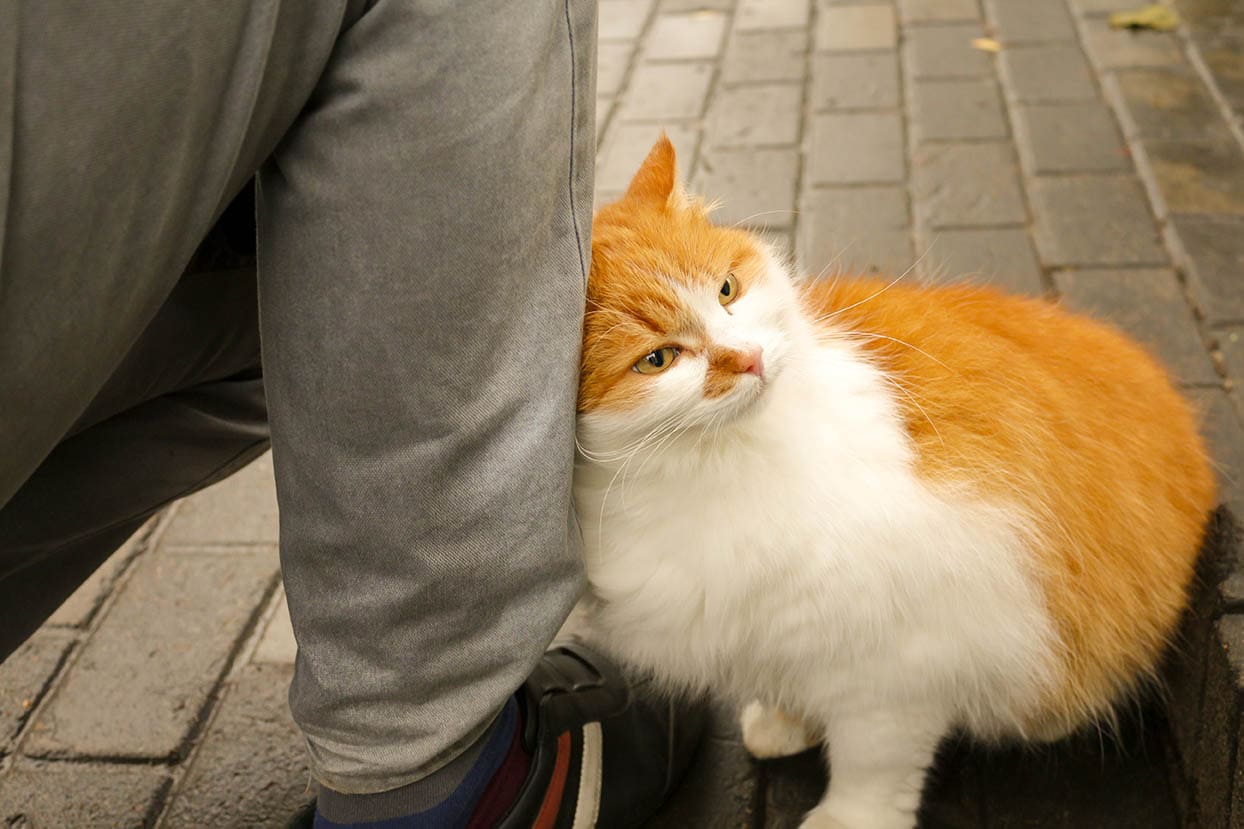
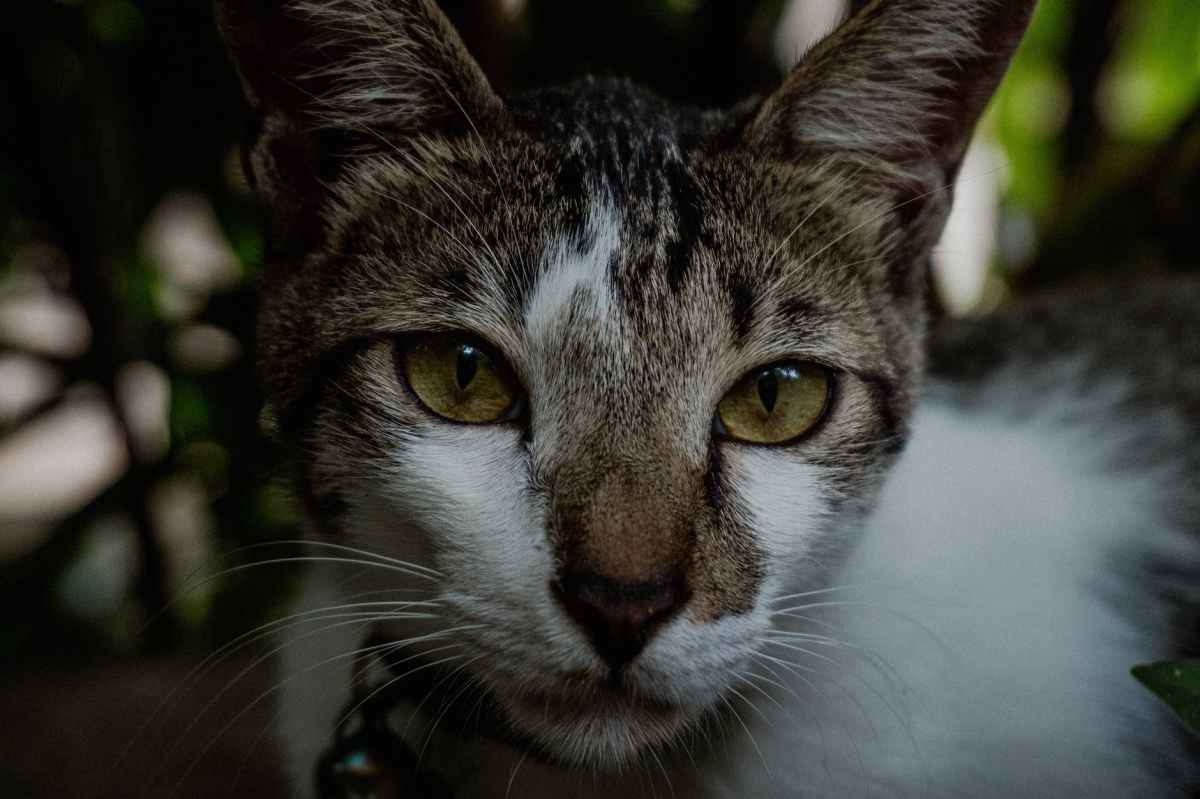
While their neighbors in New Zealand called for “woah on feeral kets” earlier this year, Australia is planning its own nationwide effort to wipe out free-roaming cats in an attempt to prevent the extinction of local wildlife.

The “war” announcement, made on Wednesday by Australia’s Environment Minister, Tanya Plibersek, comes on the heels of a report that calls “invasive animals” like cats the primary force behind species extinction in most of the world, including Australia. The report was released by a group of academics from 143 countries who make up the Intergovernmental Platform on Biodiversity and Ecosystem Services (IPBES), which advises the UN and sovereign states on wildlife policy.

Plibersek singled out felines in a press conference announcing the plan.

“They played a role in Australia’s two latest extinctions … they are one of the main reasons Australia is the mammal extinction capital of the world,” she said.

In addition to targeting felines on the mainland, Plibersek said Australia’s government would attempt to completely purge Christmas and French islands of their cat populations.

I have not had the opportunity to read an advance of the report, which was just released, and it will require careful reading as well as additional research before I’d feel comfortable commenting on the claims. That said, the numbers bandied about in press accounts (which claim cats kill more than 2.6 billion animals a year in Australia) are similar to the claims we’ve heard before, so unless there’s original research here and not a rehash of the same meta-analyses frequently cited in stories about cats and their impact on biodiversity, it doesn’t change the simple fact that it’s bad policy to act without reliable data.

I’m talking about an actual effort to count the feral and stray cat population in defined areas, as the Washington, D.C. Cat Count did using trail cameras, monitors and other methods. Obviously that can’t be applied to an entire country, but it can be done in different locations and provide a baseline to work with. Without that effort, the estimates of feline impact are nothing more than guesswork by professors sitting behind desks often entire continents away from the locales in question, plugging invented numbers into formulas intended to extrapolate totals for birds, mammals, lizards and insects killed by felis catus.

While similar studies estimated the number of cats in the US at between 25 and 125 million, Australia’s federal government says there are between 1.4 and 5.6 million cats in the country. If that’s true, it means each free-roaming cat in Australia kills between 500 and 1,850+ animals a year. It’s also difficult to accept estimates of predatory impact when the corresponding estimates of total cat population are so vague.
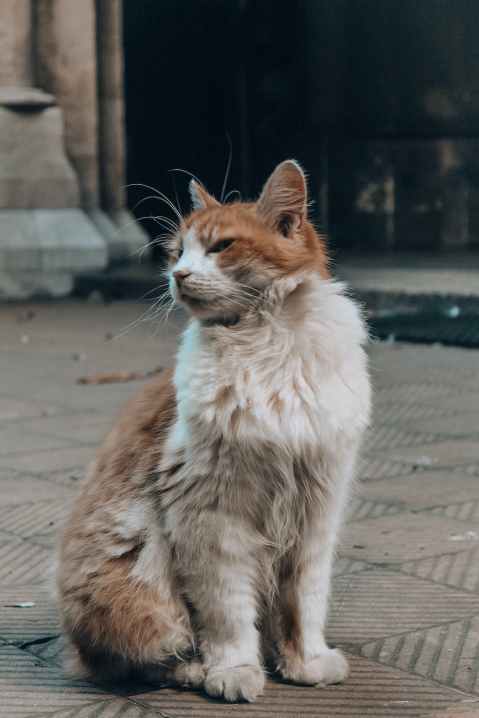
a fluffy cat on a sidewalk
A “feeral ket.” Credit: Ferhan Akgu00fcn/Pexels

Still, as I’ve written in earlier posts, government intervention was inevitable without proactive measures. Australia’s cat lovers and caretakers would do well to voluntarily keep their pets inside, and to double their efforts to catch, spay/neuter and find homes for as many strays as they can.

If you live in Australia, you have until December to provide feedback to the federal government, and it’s probably a good idea to check with your local animal welfare groups, which are undoubtedly composing their own responses to the plan.

The ‘Litter Boxes In Schools’ Lie Just Won’t Die

Montana’s top education official is the latest government official to claim kids who “identify as cats” are relieving themselves in litter boxes at school.

Our esteemed nation’s infantile culture wars were front and center in the lead-up to the 2022 midterm elections, and dozens of candidates — including prospective governors, senators, congressmen and people eyeing local offices — humiliated themselves by promising to end the alleged scourge of public schools providing litter boxes so students who “identify as cats” can comfortably shit in a manner befitting their adopted species during school hours.

As we’ve pointed out before, the litter boxes in schools thing is an urban legend, a hoax or a malicious lie depending on your perspective. It’s also an exercise in unfairly dragging cats into our petty ideological arguments, and the poor little guys can’t seem to claw their way out.

People like podcaster Joe Rogan, congresswoman Lauren Boebert and her sister from another mister, Marjorie Taylor-Green, are among the most prominent public figures to fall for the hoax and do their part in spreading it. Even the Australians got in on the panic.

We looked into the claims at the time, and none of them turned out to have any merit. In most cases, the claims were based on third- and fourth-hand accounts: “My neighbor’s sister works in the Washington Free School District, she says another teacher told her they were putting litter boxes in the middle school!” and that sort of thing.

The other claims evaporated when the people making them were asked to provide specifics. Rogan managed to check both boxes when he finally admitted he couldn’t confirm his story.

‘I have a friend and my friend’s wife is a school teacher,” Rogan said on his podcast. “And she told him that there was discussions in the school that the mother wanted to put a litter box in a school.”

The claims died down after midterms, but they’re back again with the top education official in Montana claiming cat-identified children all over her state are pooping in litter boxes with the blessing of their teachers and principals.

“Let’s talk about boys in girls bathrooms and that safety issue,” said Elsie Arntzen, superintendent of public instruction in Montana, in an Aug. 15 interview with Montana Public Radio. “Let’s talk about those litter boxes that some schools are putting out for children who want to view themselves as some sort of an animal. Is this where public education should be? I say no.”

Arntzen
Arntzen, who has congressional ambitions, hasn’t been able to produce evidence of her claims. Credit: Montana state government

When asked to provide details, Arntzen doubled down, claiming she had evidence that schools in her states were equipping bathrooms with litter boxes. When Montana Free Press looked into the claim and Arntzen’s own office couldn’t produce anything to substantiate it, Arntzen through a spokesperson claimed that, actually, the office has complaints from parents “all over the state,” which they claim qualifies as the aforementioned evidence. In a development that surprised no one, Arntzen’s office couldn’t produce those complaints either and reluctantly admitted it had not fielded calls or emails from concerned parents.

Which means Arntzen, who is eyeing a congressional seat in her state, based her claim entirely on hearsay, just like all the others.

It’d be nice if this is the last we hear of the urban legend, but with 2024 around the corner and the culture war more intense and irritating than ever, chances are this is only a preview of many similar claims to come.

Family Returns Cat After A Day To ‘Swap Her For A Kitten’

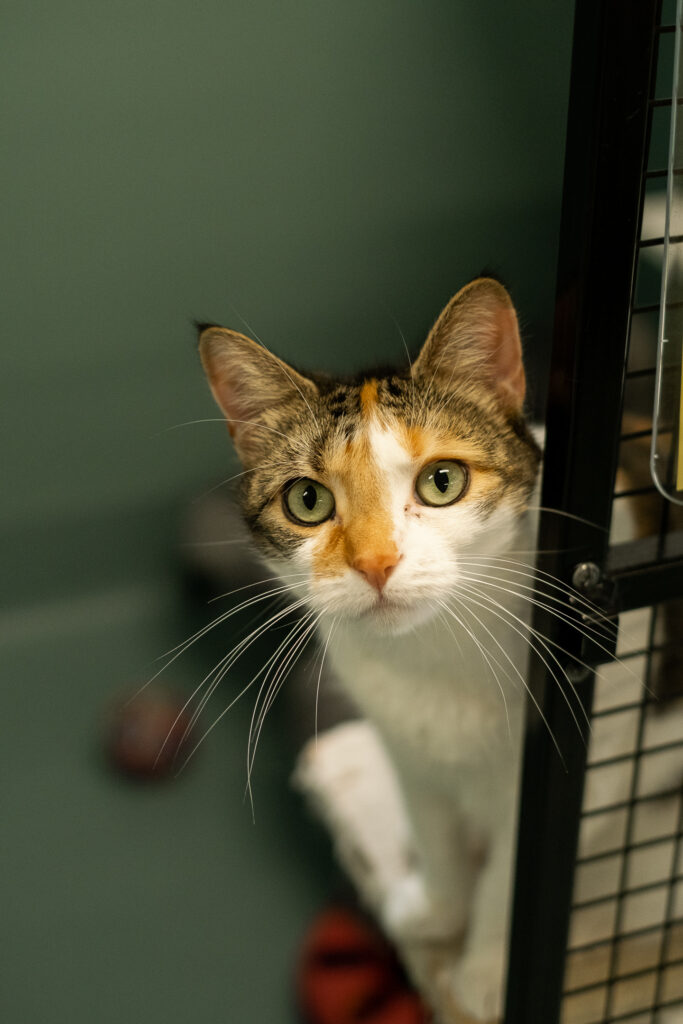
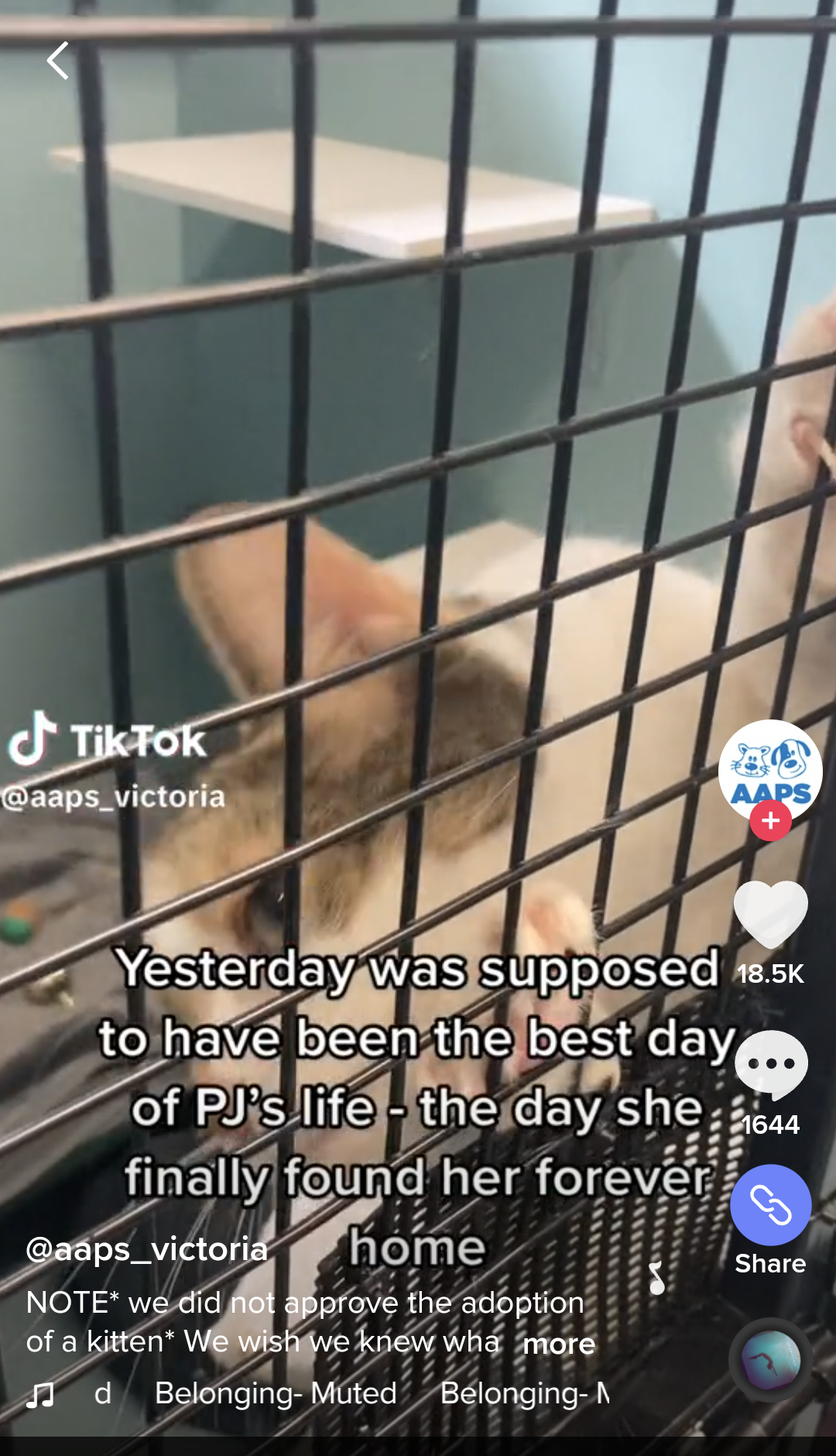
PJ is a shy cat, and her adopters were reminded that she would need time to adjust to her new home.

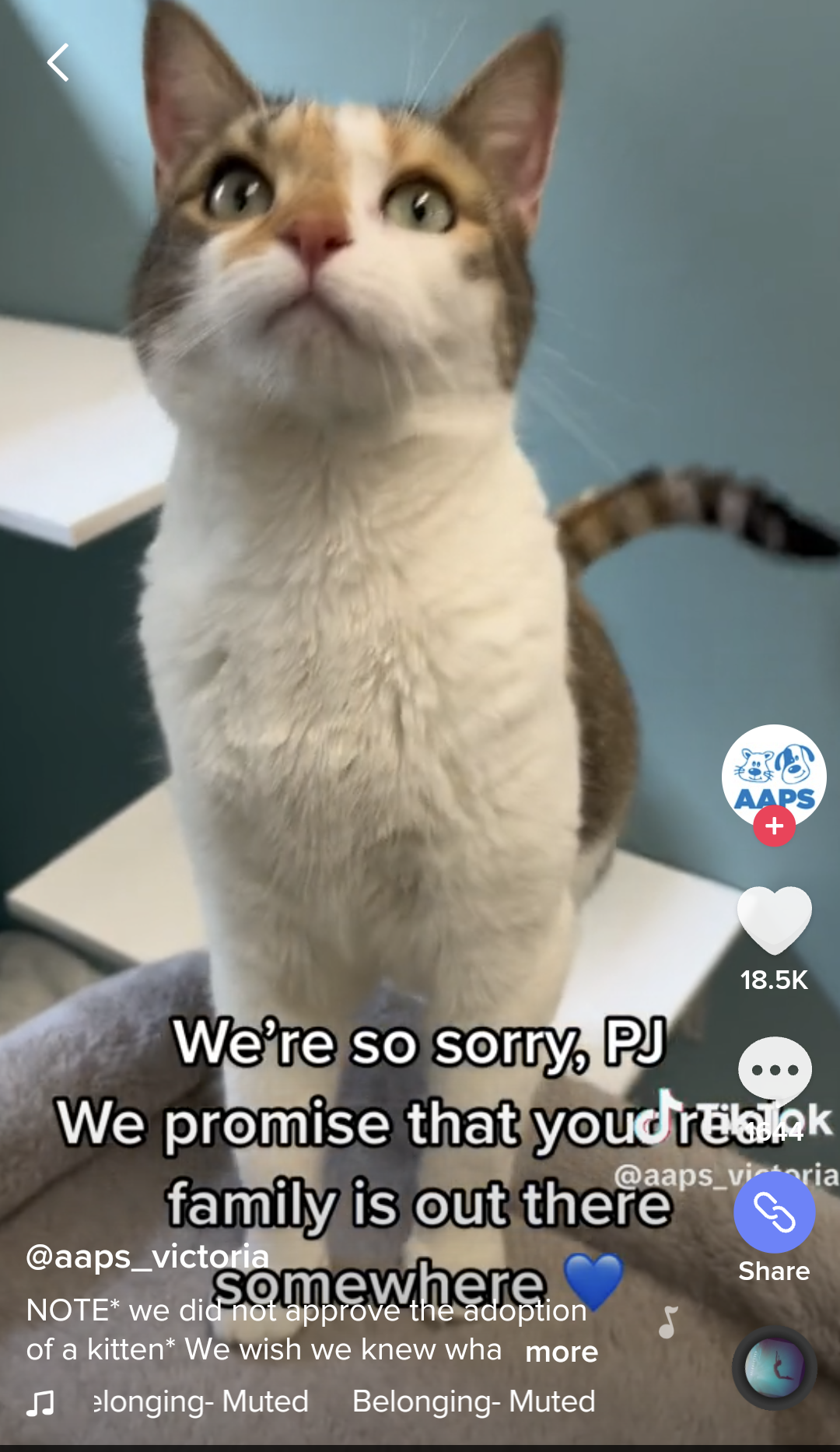
A family adopted a shy, anxious cat who has been waiting months for a forever home, then brought her back within 24 hours, explaining that they decided they wanted to “swap” her for a kitten.

I’ll pause for a second here to let PITB readers yell a few choice words about the family.

Okay, now that’s out of the way, hear me out: I think the cat, PJ, dodged a bullet.

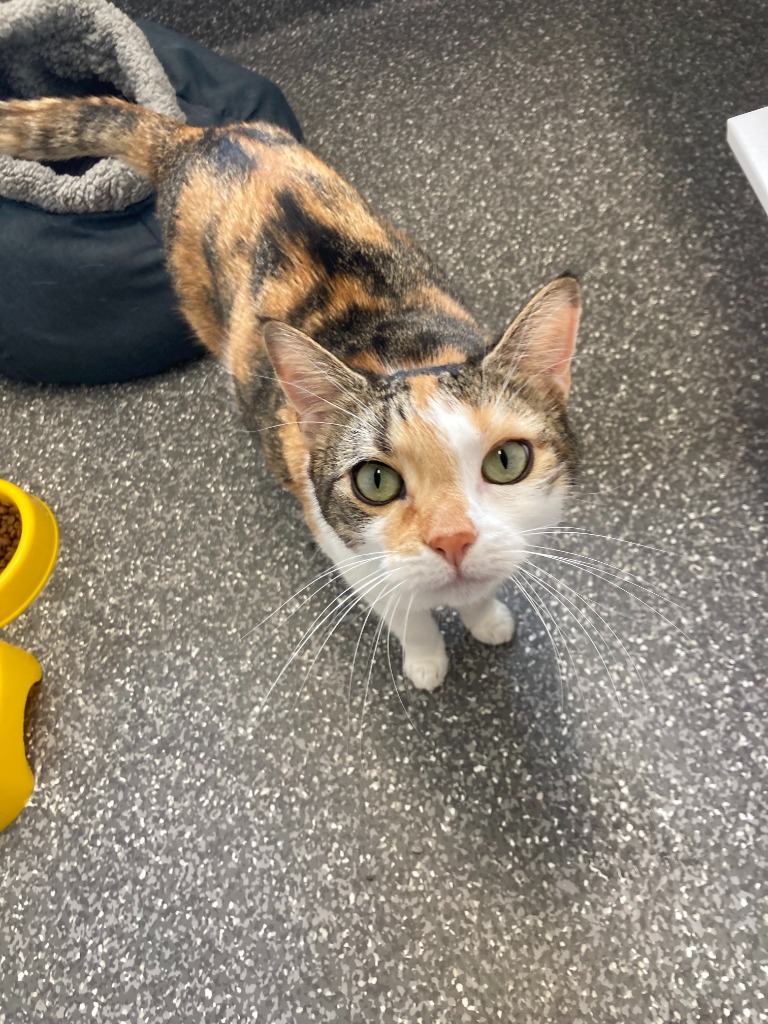
The staff at the Melbourne, Australia shelter say they went above and beyond to screen for people who insisted they would be patient with the two-year-old Calico, made sure the adopters met her several times, and sent them home with a list of resources for dealing with a shy cat.

PJ
PJ Credit: AAPS Victoria

It sounds like they did a pretty thorough job, and the whole situation illustrates how difficult it is for people who run shelters to be sure they’re sending their animals to good homes.

But PJ wasn’t going to a good home. The kind of people who would return a cat after a day to “swap her for a kitten” are extremely unlikely to be good caretakers, and to treat PJ like the thinking, feeling feline she is.

PJ
PJ’s back at the shelter after her “forever home” didn’t work out.

I’ve seen cats like that, and they live miserable, bored, unloved lives. Once their novelty wears off or they’re no longer cute kittens, they become background noise, ignored as if they’re basically house plants. They have no way out of those situations, sadly, and no way to express their feelings, which is why it’s so important for us to learn to listen to our cats. But that’s a subject for a different post.

And no, the shelter did not honor the request to “swap” PJ with a kitten, as if the adopters were in Target, bringing back a 44 inch flat screen for a 50 inch 8K model.

Let’s hope a kind soul hears about PJ’s situation and has a home for her. If any of our Australian readers are interested, PJ’s with the Australian Animal Protection Society (AAPS) in Victoria, and you can find her adoption profile here.

PJ
Credit: AAPS

Screenshot_20230503-032026~2

UK Couple Narrowly Avoid Striking ‘Big Cat’ In Road, Cali Cat Cafe Holds Festivus Fundraiser

For decades witnesses have claimed they’ve seen big cats prowling the English countryside.

A UK couple say they narrowly avoided hitting a big cat that bolted in front of their car Wednesday morning.

Chris and Marion said they were driving on the A303 in Hampshire, a rural road in southern England surrounded by farmland, fields and wooded stretches, at 7 a.m. when the felid leapt across the road and ran into a nearby field, possibly giving chase to prey. While others suggested it could have been a lynx — which went extinct in the UK more than 1,000 years ago — the witnesses ruled out the possibility, saying the cat was “twice the size of a fox” with a tail that was “thick and solid.”

When they made a Facebook post about the encounter, several others claimed they’ve seen a similar-looking “big cat” moving through Hampshire’s fields. There are several groups dedicated to alleged big cat sightings in the UK on Facebook.

It’s the latest in a surprisingly persistent legend of phantom big cats prowling the British countryside. There are no extant big cats in the UK or in Europe. They exist only on other continents: Lions and leopards in Africa, tigers and leopards in Asia, and jaguars in South America. Among felids that are not true big cats but are often grouped with them, pumas exist only in the Americas and cheetahs are exclusively found in Africa.

Despite that, hundreds of witnesses report seeing feliform animals much larger than well-fed ferals or small wildcats. A similar phenomenon exists in Australia, where for years people have insisted they’ve seen big cats slinking through the bush.

Ghost Cat
“Ghost Cat” illustration by Ken Jovi Credit: Ken Jovi/Artstation

While it’s possible that people in the British countryside or Australian bush are illegally keeping large felids, and it’s possible that a handful could have escaped over the decades, that’s an unlikely explanation for the sightings for several reasons. While big cats are apex predators, animals who have lived in captivity all their lives and have been given food will not know where to go or how to hunt. In places like Texas, where as many as 5,000 tigers live in backyard enclosures, escaped cats are quickly spotted wandering human neighborhoods, confused and looking for food.

If an escaped tiger or leopard was somehow able to rapidly adjust to the English countryside and fend for itself without being spotted, there would be evidence — pug marks, droppings, claw marks denoting territorial boundaries on trees, the carcasses of prey animals, burglarized pens, farm animals missing and terrorized.

That goes double if, as some suggest, there is a breeding population of panthera genus cats. Even a handful of such animals would consume thousands of pounds of meat each week.

Still, as Wednesday’s alleged sighting proves, rumors of large cats stalking the mists of the English countryside are unlikely to die out any time soon.

A Festivus for the Rest of Us…And Our Cats

Festivus is the celebration that keeps on giving.

The operators of Tail Town Cats, a cat cafe in Pasadena, California, are hosting a Festivus get-together that will double as a showcase for adoptable kitties and a way to help support adoption efforts.

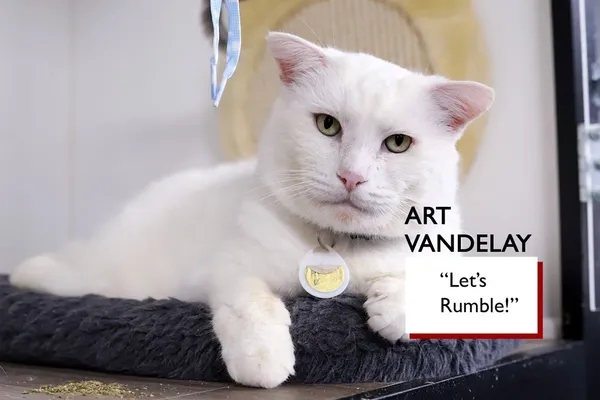
Hosted by a cat named Art Vandelay — who found his forever home through the cafe — the celebration will include a traditional Festivus pole, the Airing of Grievances and Feats of Strength. (Among the grievances listed in advance are general disappointment with the frequency of treats, displeasure at sharing litter boxes, and humans who recycle cardboard boxes instead of giving them to the felines.)

People in the Los Angeles area can attend in person, while others can watch online.

Art Vandelay
Art Vandelay found his forever home through the cat cafe and will return to host its first-ever Festivus celebration.

Seinfeld fans will recognize Art Vandelay as George Costanza’s most frequently-used alias. Vandelay is alternately described as an importer-exporter or as an architect. As George famously said: “I’ve always wanted to pretend to be an architect.”

As for Festivus, it’s taken on a life of its own 25 years after it was popularized on Seinfeld.

The made-up holiday had its humble origins in the home of writer Daniel O’Keefe, who introduced it to the nation — and immortalized it in the process — by writing it into “The Strike,” a 1997 episode of the sitcom. At the time, Seinfeld was a ratings juggernaut, averaging more than 30 million viewers an episode. Festivus is celebrated annually on Dec. 23.

Cats May Be Able To Help Detectives Solve Crimes

An Australian team decided to look for DNA evidence in a novel place: cat fur. Their findings could give law enforcement a powerful new tool to identify crime suspects.

Check out our newest feature, catwire!

When you think of a crime scene, you probably picture uniformed officers manning the perimeter, crime scene tape cordoning off the room where the deed was done, detectives trying to reconstruct what happened, and techs collecting evidence.

Those techs might swab surfaces for traces of a suspect. Drinking cups and water bottles might be dusted for fingerprints, stray hair might be bagged and sent back to the laboratory for analysis. Discarded cigarette butts, door handles, buzzers — they can all yield evidence, to say nothing of cell phones, USB sticks and smart appliances.

But what about the pets? If a suspect was especially careful not to leave prints or touch anything at the crime scene, could the fur of a cat harbor DNA?

A team comprised of scientists from Australia’s College of Science and Engineering at Flinders and the Victoria Police Forensic Services Department wanted to know if cat fur could indeed hold critical evidence at crime scenes, so they conducted a study involving 20 pet cats from different homes, and what they found could provide an important tool for law enforcement. Their findings were published in the journal Forensic Science International.

If detectives are trying to piece together the identities of robbers who, say, broke into a home, brutalized the people there at gunpoint and stole their valuables, they can’t interview the victims’ pet cats about what they saw, but it turns out they can swab the kitties’ fur and have an excellent chance of retrieving useful DNA.

Blacksad
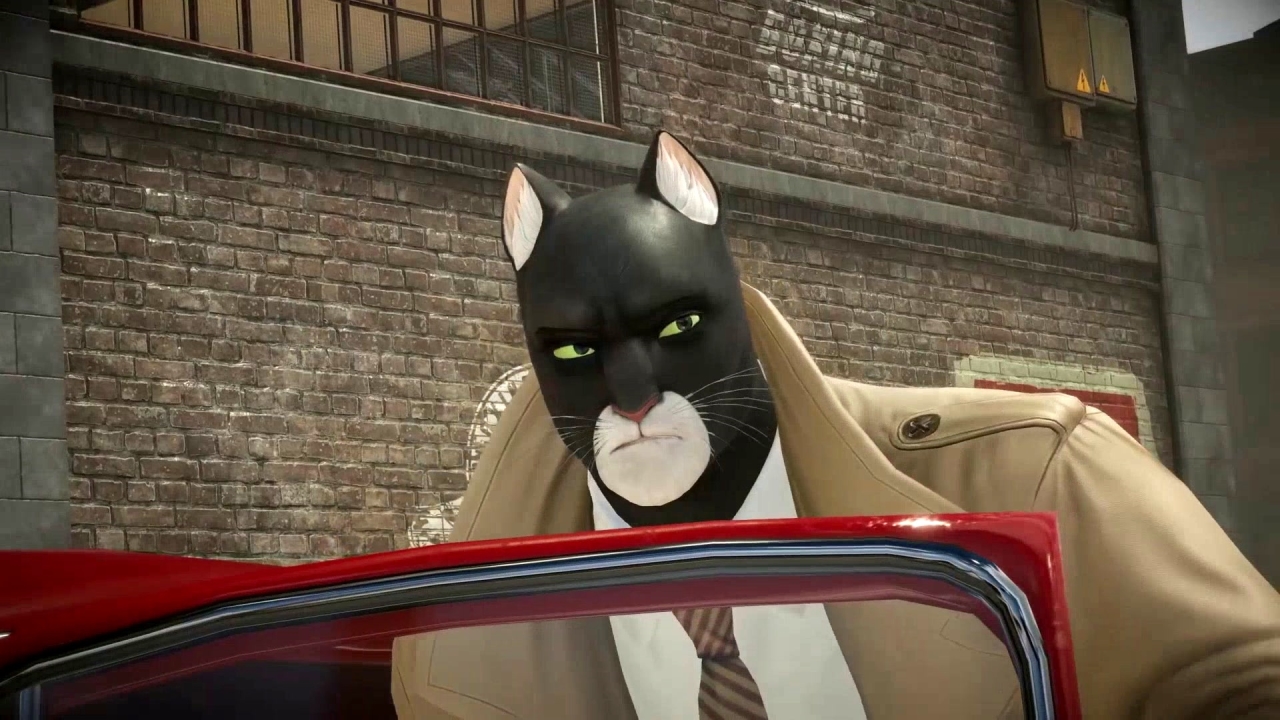
Blacksad is a famous feline detective in his own series of comic books. He may have to be careful not to leave his stray fur all over his own crime scenes.

The research team swabbed the fur of pet cats in their test households, took DNA samples of the adults living in those homes — who were the stand-ins for victims — and asked the human participants to fill out surveys asking about their cats, what they do on a typical day, and whether or not they have interaction with people outside the home.

After the team conducted DNA analysis on the fur swabs “[d]etectable levels of DNA were found in 80% of the samples and interpretable profiles that could be linked to a person of interest were generated in 70% of the cats tested,” the study authors wrote.

While most of the samples matched the DNA of people who lived in the homes — as expected — samples from six cats revealed the presence of DNA from other people. The research team didn’t take DNA samples of minors, and two of the positive fur swab samples came from cats who lived in a home with a child and slept in that child’s bed most evenings. But four other samples turned up “mystery” DNA even though no one else had visited those homes for at least several days.

For DNA from pets to have any real evidentiary value, prosecutors have to prove a “chain of custody” of sorts, establishing that suspects could not have had contact with the animals in question unless they were inside a home where a crime has taken place. If the cat is allowed to roam outdoors every day, for example, it becomes much more difficult to prove a suspect’s DNA was transferred to a pet inside a home rather than on the street.

That’s why the research team is hopeful, but also cautions that their study is a first step toward understanding more about how human DNA is transferred to fur, whether it requires a person to be physically present (as opposed to their DNA being passed along secondhand in stray hair or skin cells), how long a cat’s fur can harbor human DNA, and other questions prosecutors will have to answer.

“This type of data can help us understand the meaning of the DNA results obtained, especially if there is a match to a person of interest,” said study co-author Mariya Goray, a DNA transfer expert. “Are these DNA finding a result of a criminal activity or could they have been transferred and deposited at the scene via a pet?”

The team recommends more research “on the transfer, persistence and prevalence of human DNA to and from cats and other pet animals and the influences animal behavioral habits, the DNA shedder status of the owners and many other relevant factors.”

If they do answer the aforementioned questions and prosecutors believe they can establish a suspect’s presence at a crime scene thanks to feline-provided evidence, it might not be too long before we see a cat-centric episode on future seasons of Law & Order or CSI, both of which are scheduled to be revived as police procedurals enjoy a resurgence on TV.

Must rub on person!
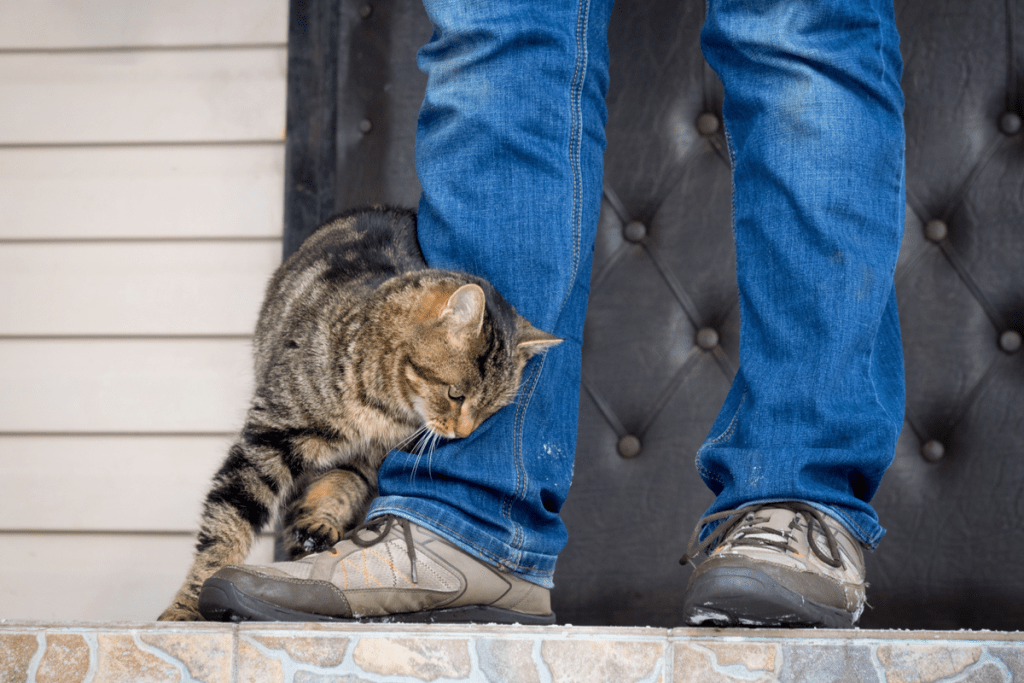
As dedicated cat servants know, cats rub against everything and everyone. The behavior is instinctual, and cats have pheromone glands on their faces, sides and paws, which they use to transfer their scent..and fur.