The First HD Video Streamed From Space Is A Clip Of A Cat Chasing A Laser

In Netflix’s Three Robots, a trio of intelligent wise-cracking machines tour post-apocalyptic Earth after humanity nukes itself out of existence. While humans are long gone from the planet, felines are not, and before long the robots encounter a gray tabby.

“What’s the point of this thing?” one robot asks its friends, looking skeptically at the yawning cat.

“Apparently there’s no point, they [humans] just had them,” the second robot says.

“Well, that’s underselling their influence,” the third robot says. Humans, it explains, “had an entire network that was devoted to the dissemination of pictures of these things.”

The ongoing joke that the internet and modern telecommunications systems were invented solely for the purpose of sharing cat photos and videos won’t die any time soon now, thanks to NASA.

To inaugurate and test its new Deep Space Optical Communications (DSOC) system, which uses lasers instead of radio signals to transmit data, the famed space agency streamed a high definition video of a cat named Taters chasing a laser.

The 15-second clip took half a second to transmit from the spacecraft Psyche and 101 seconds to cross the 19 million miles (30 million kilometers) between Psyche and Earth. For context, that’s a journey about 80 times as long as the distance between Earth and the moon.

So why is NASA doing this? Why create a new communications network when the old one still works? And why send a video of a cat?

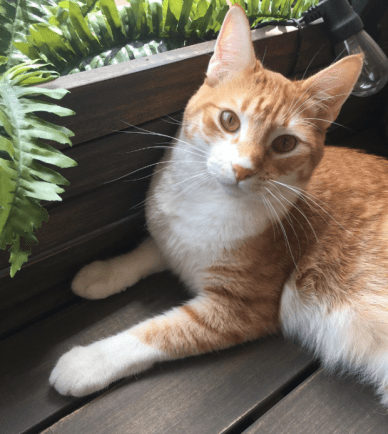
Taters
Taters the cat. Credit: NASA

The answer to the first question is simple: Our machine proxy explorers need more bandwidth to send back data and ultra high definition photos/video of the strange worlds they’re exploring.

We send robotic probes to destinations like the asteroid belt and Venus because we can’t go ourselves, and because it’s the most efficient way to explore. The indomitable human spirit drove us to explore our own planet, and it’s expected that eventually human eyes will see the oceans of Europa and the surface of Mars. But we still have some big engineering challenges ahead of us, like figuring out how to build ships that adequately shield astronauts from radiation, and medical/biological challenges like how to prevent vision, bone density and muscle loss in low or zero gravity.

So in the meantime robotic probes are our ticket, and their numbers are growing quickly.

There are more than 30 active probes exploring our star system now. Most belong to NASA, but others belong to space agencies from the EU, South Korea, Japan, Russia and India, among others. Another 27 new spacecraft are expected to launch this year, headed to destinations like Venus, Mars and the many moons of Jupiter, and at least that many are scheduled to join them in 2026.

That’s a lot of probes.

Each of those craft will have to transmit data back to Earth — scientific data, but also high definition photos and videos of planetary and moon surfaces, asteroid compositions and more.

There isn’t a traffic jam — yet. But there will be soon if every probe’s data is bottlenecked by the lower-bandwidth radio system.

While laser and radio transmissions both travel at the speed of light, the shorter wavelength of laser light allows more data transfer. In simple terms, the DSOC network is like upgrading from an old phone modem to broadband.

As for why NASA chose a video of Taters chasing a laser, there are two main reasons: Fun and honoring history.

Taters’ human, Joby Harris, works for NASA as a visual strategist. When NASA employees were talking about the significance of sending the first high-def video from a probe to Earth, one staffer mentioned that one of the first — or perhaps the first — test videos in the dawn of television was a simple video of a statue of Felix the Cat.

The rest fell into place. Transmitting a video of a cat chasing a laser seemed like the natural choice to test a laser-based comms system. Taters has become something of a celebrity in the process.

One thing we can be sure of: if aliens are watching us from afar, there’s a good chance they’ll conclude felines are the ones running things down here. They may not be wrong.

Would You Ever Confuse Another Cat For Your Own?

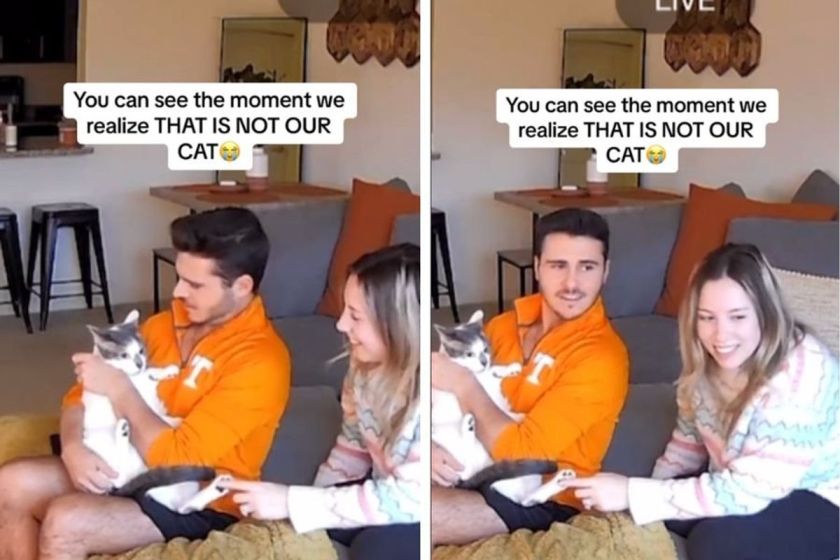
A man and woman on TikTok claim they took in a stray, believing it was their own identical-looking cat.

Back in 2021 we were fascinated by the story of a Redditor who thought he found his missing cat after three weeks, only for his actual cat to come walking through the door a week later.

The cats did look remarkably similar, and it’s conceivable that the Redditor was so happy to have his cat back that he didn’t realize there were very small differences.

Now a couple on TikTok claims something similar has happened to them, although it should be taken with a grain of salt. They claim they brought a cat inside, believing it was their feline overlord, only to begin cuddling him the exact moment they realized their actual cat was outside looking in, appearing none too happy about the situation.

Of course to take the story at face value you’d also have to believe that the entire incident happened to be captured on video by an unnamed third person who happened to be filming them at that moment, and happened to have their camera in portrait mode for maximum TikTok compatibility.

TikTok cat doppelganger claim
The TikTokers

I’m not linking to the account or the Upworthy story that takes it at face value because I’m not a fan of clickbait or content scrapers, but it did remind me of the interesting 2021 story and my reaction to it.

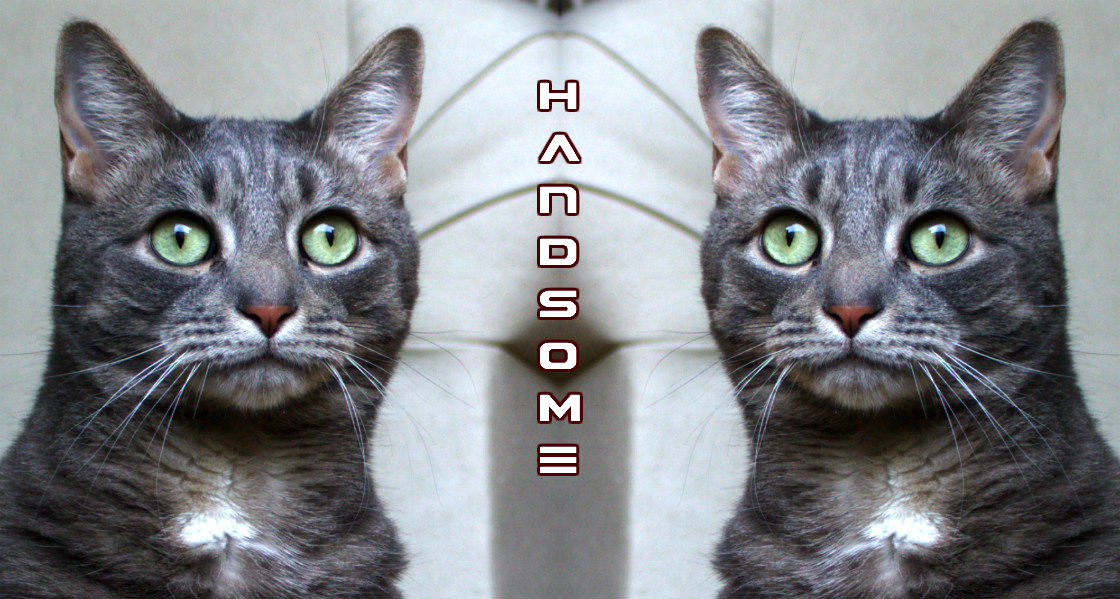
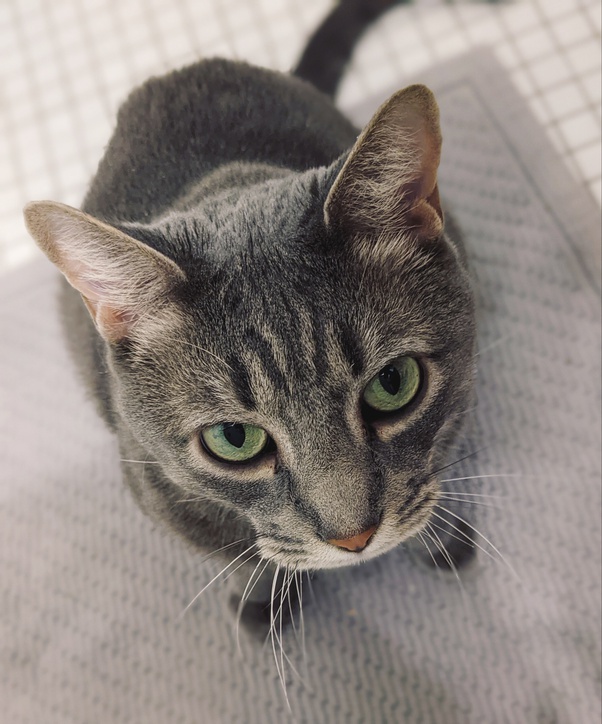
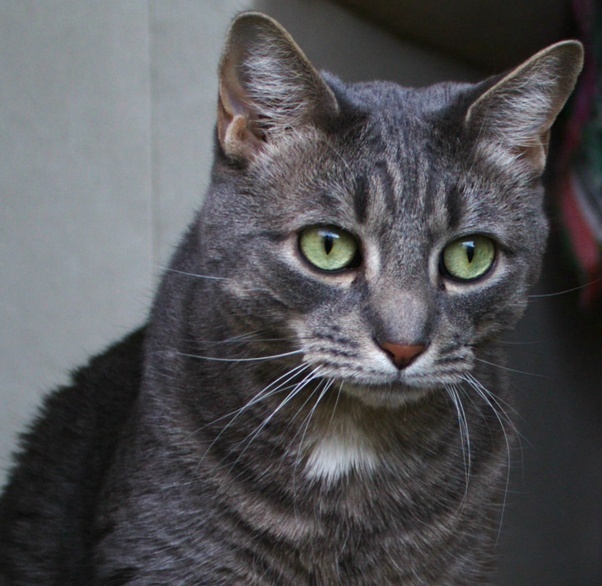
At the time I noted three of Bud’s unique physical characteristics: his bright green eyes framed by dark “guyliner,” the unique tuft of white fur on his chest and perhaps his most obvious distinguishing feature, his pronounced muzzle. You can see it in this photo thanks to the angle:

Buddy from above
A Buddy like no other.

But most of all, Buddy’s personality is utterly unique. I could probably search to the ends of the Earth and hell would freeze over before finding a gray tabby cat with the same physical features, the same tyrannical Elmo voice and the same imperious personality.

I cannot fathom mistaking another cat for Bud because I can’t imagine another cat with all of the above qualities who also narrates his own activities in real time like a play-by-play announcer who sounds like a disco-funk vocalist singing in falsetto.

“Jumping off the couch now…funky! I can see the bottom of my bowl, dude, and that is decidedly un-funktacular! I’m gonna do a few laps around the living room at 27mph while filling you in on my latest theories about the multiverse, okay? Prepare to get funky! So I think there are — ooh, I found a crunchy treat I must have missed earlier! Nomnomnom! — anyway, I was doing some calculations and I believe if we extend out to 11 dimensions, we solve some of the incompatibilities I was telling you about earlier. In simple terms, all particles in our universe are like vibrations on a tiny rubber band, physics is the harmonies on the string, chemistry is the melodies we play on vibrating strings, the universe is a symphony of strings, and the mind of God is cosmic music resonating in 11-dimensional hyperspace! Bring me catnip! I need catnip! Can’t you see I’m on the verge of another breakthrough here?”

Buddy
Buddy: Catnip aficionado, play-by-play announcer and theoretical physicist. Also, beefcake.

I’ve described Bud as a lunatic, and that’s one reason I love him. He’s crazy in the best way, unpredictable, amusing and never boring.

Could you ever mistake another cat for your own? What makes YOUR cat unique?

Cat: ‘No Study Time For You, Human!’

When cats demand attention they can be relentless!

I’m sure the behavior in this video, of a cat absolutely determined not to let her human get a second of studying in, is familiar to everyone who has the privilege of serving a feline:

The cat grabs at the pen, tries to chew on it, covers the book with her body, nibbles on the pages and plays pretty much every trick in the feline book to get her human to stop what she’s doing and engage in some good old Cat Time.

Or more bluntly, she’s saying: “NO STUDY, HUMAN! PAY ATTENTION TO ME!”

I never gave much thought to how students fare with cats but I know writing by hand is pretty much out of the question for me. Bud just won’t let me do it. Either he’s trying to bite the pen or he’s swatting at it with his paws, making my normally neat handwriting look like that of a deranged person demanding ransom or the work of someone stupidly drunk.

I’ve got a tradition of sketching scenes on birthday cards and other things I send to my nieces by snail mail, and Bud must be secured in another room before I can even attempt it.

Same deal with music, unfortunately. If I’ve got a guitar in my hands, little dude tries to cut in with a blazing, discordant solo of his own. Cat claws and guitar strings do not mix. If I’m using my synthesizer, Bud decides we’re going to do a duet by walking across the keyboard and yowling.

I’ve actually sat hunched at my computer for hours trying to stitch together guitar solos from several different takes because they were going swimmingly until Mr. Bud cut in with a paw and a claw, and trying to fix rhythm tracks that were perfect until Buddy the Destroyer decided 4/4 should become 5/8 or a particular chord progression should be interrupted with an accidental bit of guitar dubstep. Thank God for non-destructive digital editing in modern music production! Musicians in the days of analog multitracks must have had to put their felines under lock and key before attempting to record anything.

Do your cats stop you from doing stuff? What are their methods?

That’s Not How You Speak Meowinese!

A popular X account posts “cute” cat videos that aren’t always so cute, another consequence of people misunderstanding cats and their behavior.

This dude thinks he’s speaking to a cat in her native tongue, but what he’s doing is the equivalent of running up to a bunch of Klingons and shouting “I shall impale you on the edge of my bat’leth!” while mistaking it for a friendly greeting.

It looks like someone hired this guy to rescue the kitty, who like so many of her kind are prone to do, climbed up too high and then decided she didn’t like her odds on the way down. I don’t think his intention was to scare the hell out of her, but that’s exactly what he’s done:

That’s not “Hi, kitty, I’m here to rescue you! Be calm, we’ll get you down in no time!”

It’s “I’m here, I speak your language, and I have bad intentions!”

If you listen with headphones or turn the volume up, you can hear the poor cat crying in distress, the kind of cry that felines make when they’re seriously freaked out and worried for their safety. No wonder kitty backed up. Her fur is raised and her posture aligns with her vocalizations and the rest of her body language.

Like most things posted to Twitter X, this is utterly lacking in context and we don’t know what happened next. I wouldn’t be surprised if the rescue attempt went horribly wrong. I hope not, but man, that’s not how you rescue a cat.

The video was posted by the account “place where cat shouldn’t be,” or @catshouldnt, and a common theme in the images and videos on that feed is cats in distress. They’re mistaken for “cute” situations by viewers, the majority of whom aren’t familiar with feline behavior.

Like, for instance, this photo. The tuxedo kitten is undeniably cute and he doesn’t look distressed…yet. But getting out is going to be a lot more difficult than getting in, and when people are willing to do just about anything for clicks, attention and the associated dopamine hit, cats often end up with the short end of the stick.

Cat in a vending machine
Bud would be jealous of this cat. Thankfully he’s too, uh, meowscular to fit. Yeah, that’s it. Too meowscular. Nothing to do with a few extra pounds…

Newest TikTok Trend Has People Terrorizing Their Cats To Taylor Swift Songs

TikTok is a major security risk to the country, a danger to the people using it, and a platform that encourages animal abuse. It’s time for the US government to take action.

The cat is wide-eyed with terror, his mouth moving in protest as his human picks him up.

“Spock already hates me so why not torture him more?” reads the caption on the TikTok video as the woman spins him around to Taylor Swift’s saccharine ballad August.

In another, a man in his 40s stares into the camera, snatches his cat up in one quick motion and then cackles gleefully as he spins his cat, who squirms in his grip and meows plaintively. One woman admitted her cat “hated every second of this” as she twirled her to the Swift track.

tiktokcatstrend
Cats subjected to the Taylor Swift “cat spinning” trend on TikTok.

There are hundreds, perhaps even thousands of these videos on TikTok, the Chinese government-controlled social media platform. Inexplicable as the trend is, it’s far from the first time people have abused and terrorized their cats for “lulz” and the approval of strangers on TikTok.

Previous trends had TikTok users picking their cats up upside-down and one-handed, then “answering” them as if they were telephones while reciting a line from the movie The Princess Diaries.

The 2021 holiday season saw the invention and propagation of a “hack” by someone who claimed that if you chase your cat around and brandish your Christmas tree like a weapon so the cat thinks you’re going to hit her with it, “it’ll be too scared to f**k with” the tree. Classy. The video of the woman terrorizing her cat piled up more than 25 million views and spawned innumerable imitators.

Then there was the “influencer” who smacked his cat around and uploaded footage of it, not by accident but because he says that’s how people properly “discipline” their pets. There are one-off abuse videos, and then there are trends that just won’t die, like the “prank” in which people frighten their cats half to death by placing cucumbers behind them while they’re eating.

TikTok is legitimately evil

More than any other platform, aided by an insidious algorithm that expertly keeps its users glued to the screen and scrolling, TikTok is a vehicle for social contagion, elevating the crass, the outrageous and the destructive as it lavishes clicks and revenue on people who behave abominably.

Just look at the case of Chloe Mitchell, the popular TikToker who nearly destroyed a non-profit animal shelter single-handedly when she threw a tantrum earlier this year. Mitchell enjoyed in excess of 50 million views on videos in which she invented wild stories painting the shelter as some sort of criminal operation run by “scammers” who, she claimed, enrich themselves by adopting out animals.

It would almost be funny for its absurdity if not for the fact that the shelter’s operations were crippled for two months as Mitchell’s followers called in death threats, review-bombed the shelter to ruin its reputation online and made its volunteers fear for their safety.

A major security risk

It baffles me why anyone would continue to use TikTok — or sign up to use it in the first place — when its operators admitted under oath that sensitive data belonging to American users is routinely accessed by the company’s headquarters in Beijing, despite many public assurances that the data was compartmentalized and available only to software engineers in TikTok’s US offices.

The company was also caught spying on journalists and is the subject of a Department of Justice investigation into its misuse of user data.

And if that isn’t reason enough for some people to uninstall the app, consider the fact that TikTok’s Beijing-based parent company, ByteDance, added code that makes the app an extremely malicious piece of spyware software capable of capturing every tap or keystroke by its users.

For those who aren’t well-versed in technical matters, this means having the app on any of your devices is tantamount to handing China’s government the keys to all of your online accounts, including banking and credit, as well as all your text, email and in-app correspondence. ByteDance can read the private texts you exchange with family members, see precisely what you’re doing on sites like Facebook and Youtube, and help itself to users’ most private information.

Some people might not understand the scope of the security risk because they may not know that every organization in China is subservient and ultimately accountable to the Chinese government and the communist party. The communist government can access data from Chinese companies at any time, force them to hand over their proprietary technology and research, and compel them to cooperate with cyber attacks on US citizens and infrastructure. In fact, it’s written into Chinese law. The government has total control over every Chinese corporation and, under President Xi Jinping, has tightened its grip on every layer of society.

It’s not difficult to imagine the Chinese government using the wealth of data collected by TikTok to compromise the devices of people who work on critical US infrastructure, like the power grid or defense systems, and use that access to retrieve their employee login credentials, providing access to the systems they work on.

Imagine cyberattacks that shut down power plants in Texas and across the southern US during severe weather like the deadly heat dome the country experienced this summer. Or Chinese government-sponsored hackers crippling US banking systems, leaving Americans without access to currency for days or weeks.

Then there are the “smaller” risks that are devastating on an individual level: A hacker compromises your devices and locks photographs of deceased loved ones that are priceless to you, or threatens to blast details about your private life to everyone in your contact list if you don’t pay them $10,000 in cryptocurrency.

Or maybe your information isn’t used in any particularly dramatic way, but in the aggregate becomes part of the great data pool the Chinese government uses to build and refine the most invasive social surveillance system in human history.

All that to use an app that promotes videos of people abusing their pets? No thanks. I hope the US government comes to its senses and bans the app from the US entirely before something catastrophic happens because if they don’t, it’s not a matter of if something disastrous will happen, but when.