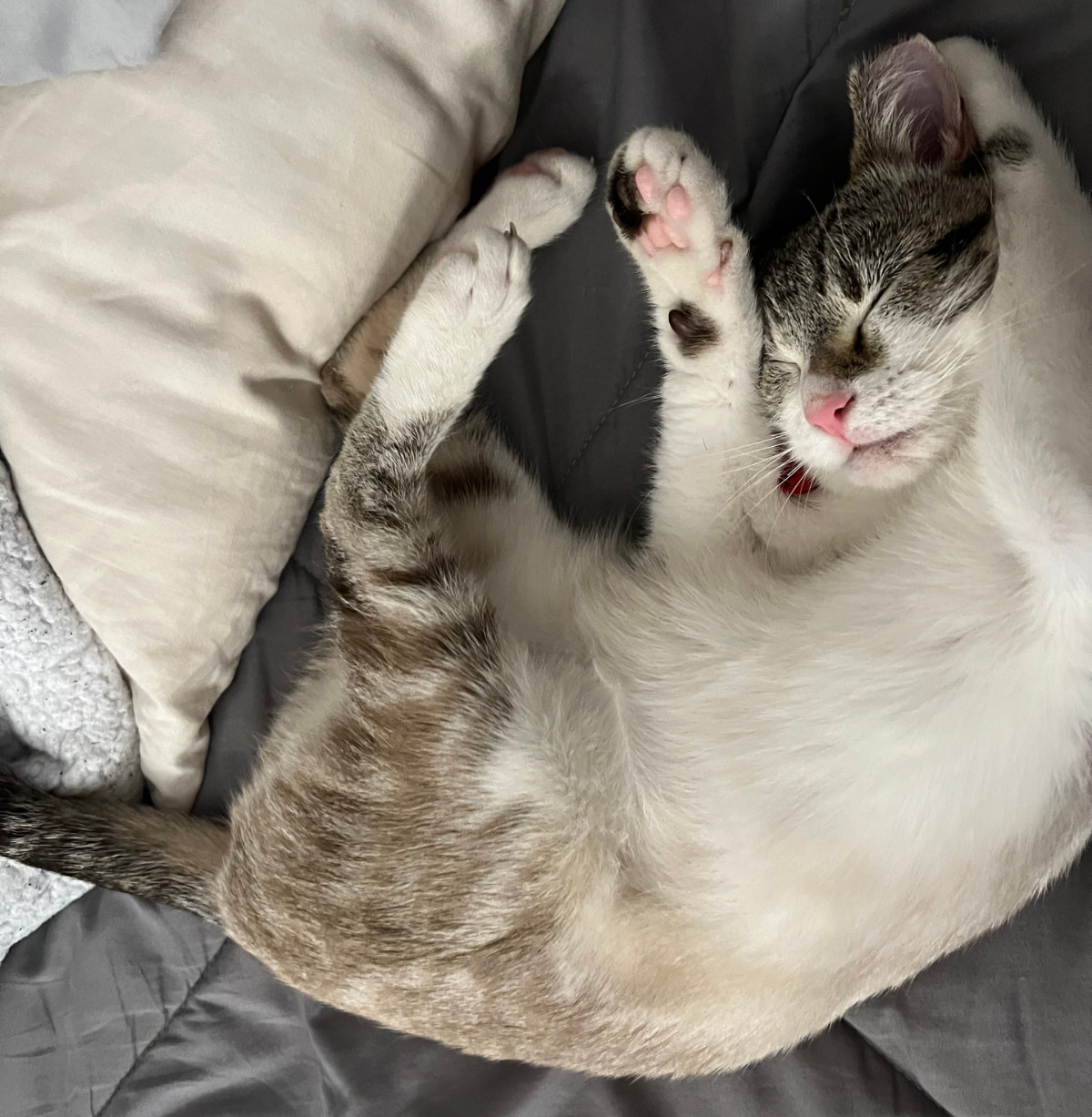
Parsnip Was Rescued From A Hoarder And Found Her Forever Home — Then She Got Sick

An experimental new drug offers hope for cats infected with FIPV, which is almost always fatal.

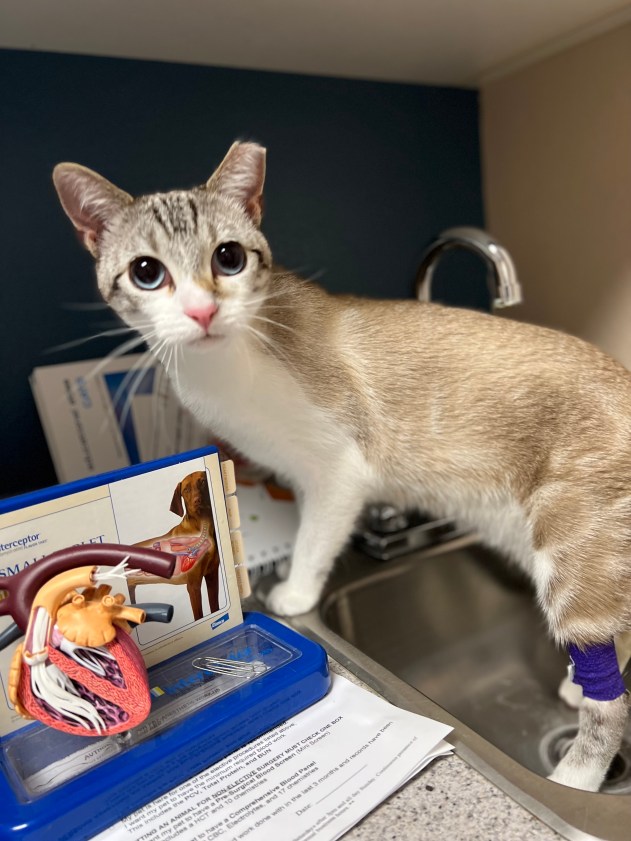
Anae Evangelista was reeling from the deaths of two close friends when she saw Parsnip in a local shelter’s online post.

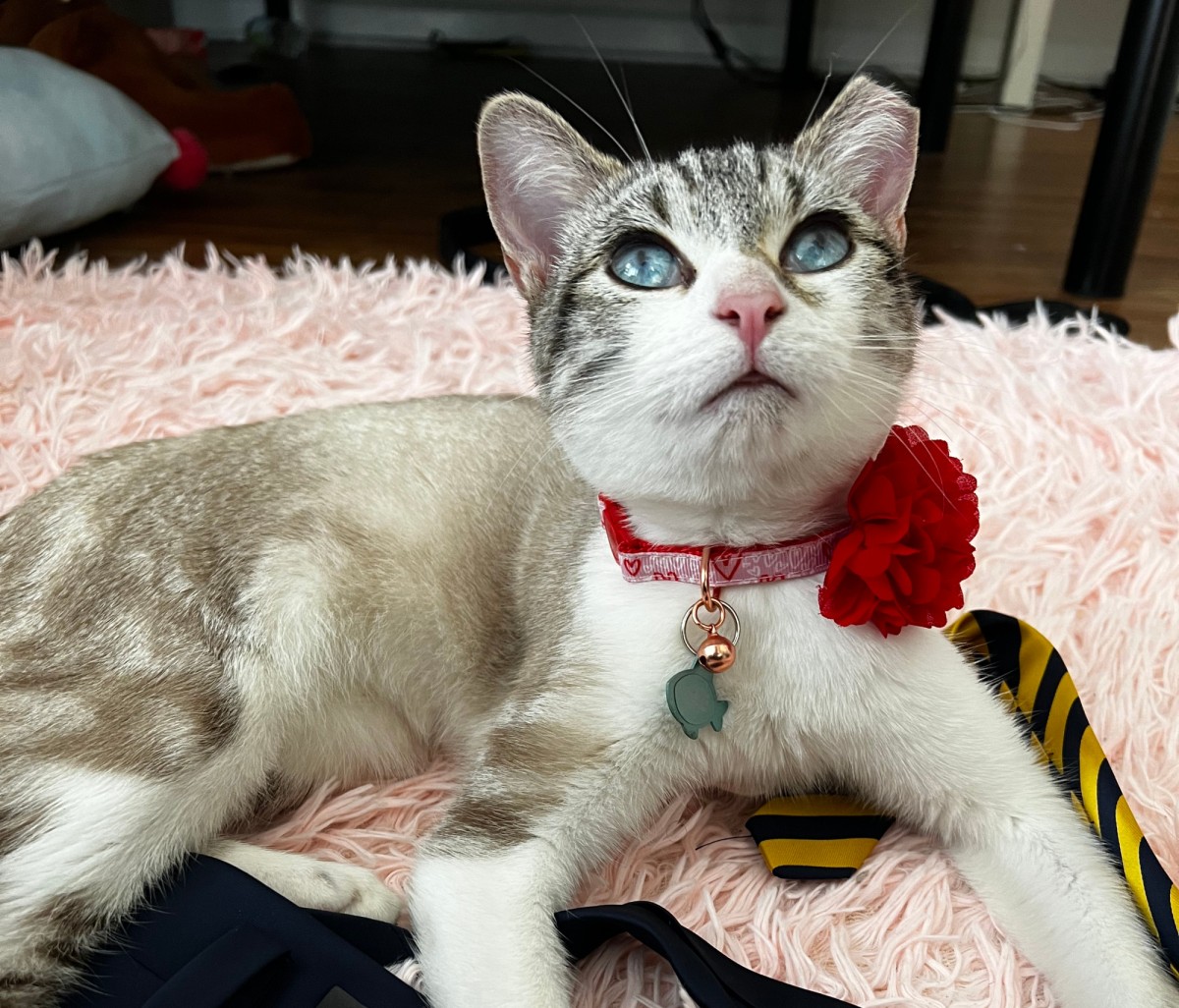
The 21-year-old college student had been thinking of getting a cat for weeks after accompanying a friend to a local shelter. After checking the shelter’s adoptable pets again, she fell in love with an adorable tabby with a clipped ear and sky blue eyes and immediately made plans to see her in San Diego.

Parsnip took to Evangelista immediately.

“She was so affectionate, pushing her head into my hand for pets, and I knew she was the one,” Evangelista told PITB.

Although many cats take days or weeks to adjust to their forever homes, Parsnip “strutted into my apartment as if she owned it from day one, zooming all over the place [with] enough energy to bounce off the walls,” Evangelista said.

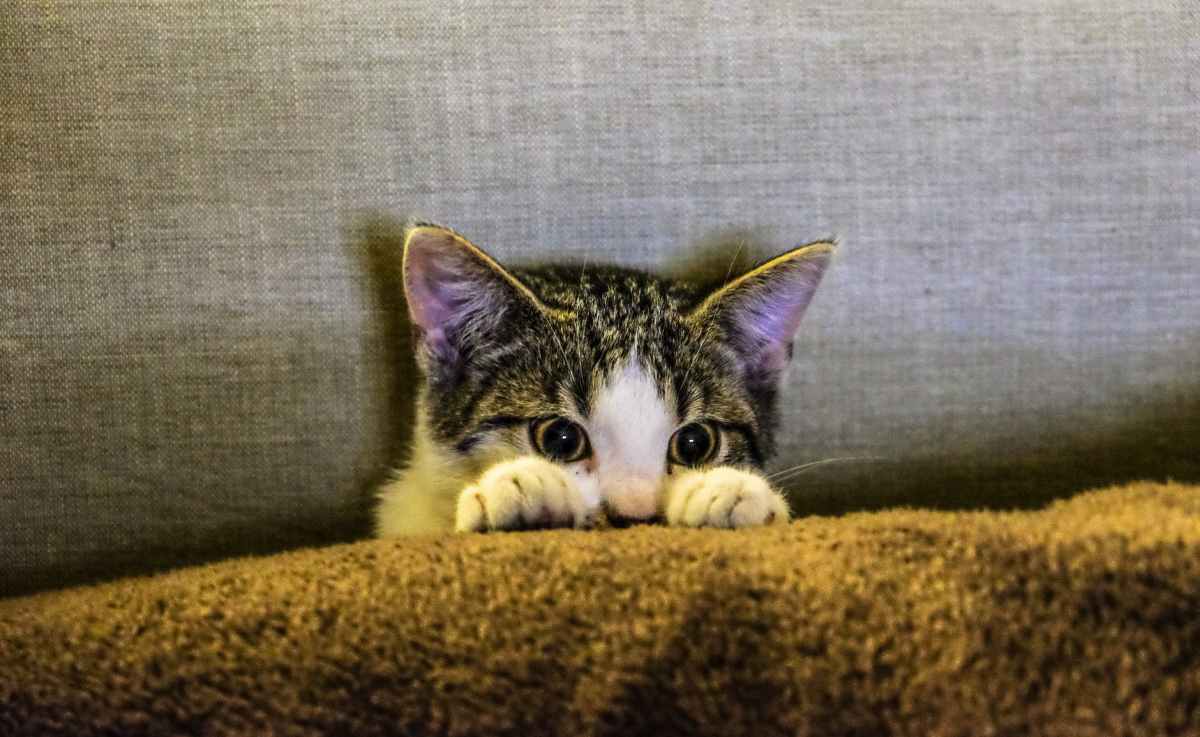
Parsnip sleeping
Parsnip enjoys a snooze with toe beans on display.

Although she had a rough start to life and was rescued from a hoarding situation, Parsnip was friendly, affectionate and warmed quickly to her new home. As human and kitten became fast friends, Parsnip’s presence was an immediate boost to Evangelista’s mental health.

‘She’s been my rock,” she said, “and although she can’t talk, I feel as if she’s constantly encouraging me to stay strong.”

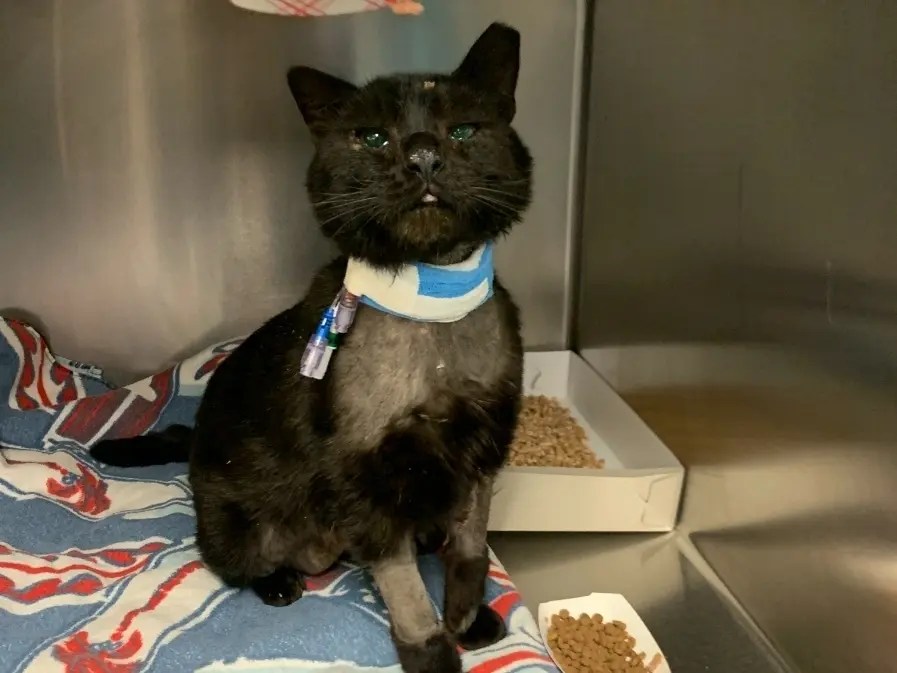
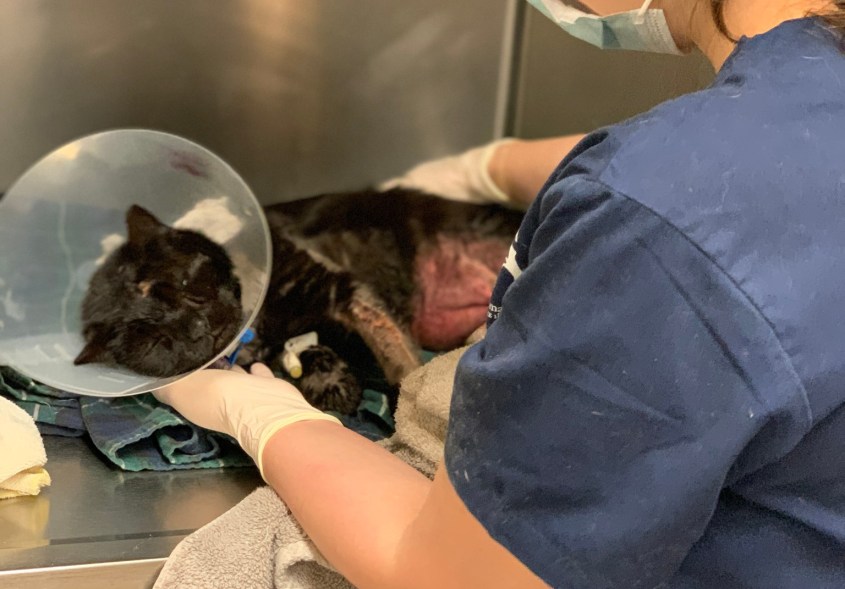
But after about six weeks Parsnip’s energy level took a distressing dive. She was weak, slept a lot and wouldn’t eat much. A vet visit didn’t yield any answers, and the next day Parsnip displayed more telltale signs of a seriously sick cat — she stopped eating and drinking entirely, and began eliminating outside of her litter box.

After consulting another veterinarian, Evangelista finally had an answer. Little Parsnip was suffering from Feline infectious peritonitis, a more virulent strain of feline coronavirus that infects white blood cells resulting in dangerous inflammation, per the Cornell Feline Health Center.

“An intense inflammatory reaction to FIPV occurs around vessels in the tissues where these infected cells locate, often in the abdomen, kidney, or brain,” according to Cornell. “It is this interaction between the body’s own immune system and the virus that is responsible for the development of FIP.”

The disease is “usually progressive and almost always fatal without therapy.”

But there’s hope for Parsnip: With the help of her veterinarian and an online group for people whose cats have FIPV, Evangelista was able to get her kitty accepted for experimental treatment with GS-441524, a nucleoside analogue antiviral drug that has proven effective at treating all types of FIP in several trials in recent years. (It’s been so effective, in fact, that Chinese pharmaceutical manufacturers have been supplying GS-441524 on the black market to cat caretakers who haven’t been able to get their cats into trials.)

Since starting the treatment, Parsnip’s responded well: She’s eating again, the swelling has been in retreat, and she’s once again interested in play time, exploring and other things cats love to do. She’s even able to hop up on the couch again.

That’s a far cry from her condition just three weeks ago when she had a 105-degree fever, no interest in things around her and couldn’t get up under her own power.

The 84-day treatment, subsequent vet visits, monitoring and blood work is expensive: Evangelista estimates it’ll cost her about $5,000 in total. She’s looking to raise half that amount via a GoFundMe. It’s a huge expense, especially for a college student, but for Evangelista, spending the money is without question.

“She’s been my foundation and she deserves the world,” she said, “so I want to give her the chance to live to see it.”

Follow Parsnip’s progress on Instagram @lilmissparsnip

In Ukraine, Cats and Dogs Suffer Along With Their Human Companions

Shelters in Ukraine are running out of food, while the country’s stray cats and dogs are particularly vulnerable as war rages around them.

If you’ve got a cat who doesn’t handle the Fourth of July well and gets freaked out by the annual fireworks, imagine that multiplied by about a thousand, with no respite.

Then imagine that, instead of reassurance from calm humans who know the explosions are just part of a celebration, the cats and dogs of cities like Kiev pick up on the anxiety of the people around them, sensing their fear, reading their body language.

War takes a terrible toll on humanity, a fact that’s been well-documented for centuries, but much less has been written about the suffering and fate of animals in the crossfire of forces they can’t comprehend. (One outstanding take on animals in war is 2006’s Pride of Baghdad, a heartbreaking account of four lions who escaped Baghdad Zoo as US bombs rained down on the Iraqi capital. While Pride of Baghdad is a fictionalized account of what happened to those lions, the story is sadly, infuriatingly true and remains one of the lesser-known accounts among the tens of thousands of stories told about the toll of that war.)

In Ukraine, where the Russian military has taken control of the local airspace and destroyed the country’s airports, people are taking their pets and what possessions they can as they try to escape by land via routes to the border that are backed up by 15 miles or more.

Ukrainian soldier with stray cat
A soldier holds a cat in Mariupol, southeastern Ukraine. Credit: Aleksey Filippov

Meanwhile, as all men of fighting age have been called to stay, stray dogs have been a comfort to Ukrainians on the front line. The soldiers feed the dogs, and the hyper-vigilant dogs alert the soldiers to any unusual activity they pick up on.

“She immediately barks or growls if the enemy is planning an attack. It’s safer and calmer with her – no wonder they say that a dog is man’s best friend,” a 21-year-old Ukrainian soldier named Mykyta told Agency France-Presse as he gave an affectionate pet to a dog adopted by his unit.

Stray cats are cozying up to the soldiers as well. Dmytro, a 29-year-old soldier, said a black cat he named Chernukha has kept him company and helped him cope.

“You come back to the post, lie down on the bed, and here comes Chernukha,” Dmytro told AFP. Chernukha “lies on your stomach and looks at you as if she wants to be petted. It’s a sedative.”

Like many Ukrainians, staff and volunteers who man the country’s shelters have remained defiant and refused to leave. In Kiev, staff at Best Friends shelter are rationing food and trying to locate more.

“It is very difficult and scary for [the animals] and for us. Due to the fighting, suppliers of food for animals are not working,” a shelter staffer told Newsweek. “We need help now with animal food and its transportation to the shelter. We will also be grateful for the financial support.”

Getting food is already difficult and will become more so as Russian troops push further into the capital and civilians hunker down in homes, basements and bomb shelters.

Nastya Aboliesheva, who works for Kiev-based Happy Paw shelter, said “no one is willing to risk their lives to deliver what is needed.”

“Our work now remains important and necessary, because animals do not understand what is happening and also need food and treatment….the main thing that people can help now is not to throw their animals at random, but to be near them or to evacuate with the animals,” she said. “We very much hope that local authorities in Kyiv and other cities will allow people to take animals in boxes to bomb shelters.”

Top image: A Ukrainian soldier petting a cat. Credit: AFP

Will California’s Bill of Rights for Cats and Dogs Make A Difference?

The proposed law would declare cats and dogs have rights, but it doesn’t do much besides that.

Declaring cats and dogs should have fundamental rights, an assemblyman in California has introduced a law that would create a Bill of Rights for the two most popular companion animal species.

The text of the proposed legislation covers the basics including the right to food and water, veterinary care and a life free from abuse, neglect and anxiety. It recognizes felines and canines as sentient animals who need mental stimulation, and says adopting means committing to caring for an animal for its entire life.

But it’s really about pushing for an even greater effort to spay and neuter both species to avoid euthanizing almost a million unwanted cats and dogs every year.

There’s been great progress in the last decade alone: In 2011, kill shelters and animal control departments in the US put down more than 2.6 million cats and dogs. In recent years that number has fallen to 920,000, including 530,000 cats, according to the ASPCA.

That’s still a staggering number of lives taken, and animal advocates think the US can continue the downward trend in euthanizing pets via efforts to educate people and execute trap, neuter, return (TNR) plans.

orange tabby cat beside fawn short coated puppy
An orange tabby and his puppy friend. Credit: Snapwire/Pexels

Whether Assemblyman Miguel Santiago’s bill would help accomplish that is unclear.

It’s already a crime in California to harm an animal as opposed to the majority of states, where pets are considered property and the consequences for hurting or killing someone’s beloved cat or dog don’t go beyond providing monetary compensation. (However, it’s notable that the proposed cat and dog bill of rights would be added to California’s Food and Agriculture Code, not the Criminal Code. The fact that animal welfare legislation continues to exist in agriculture law instead of criminal is a relic of times when the only laws concerning animals were written to regulate their ownership, sale and slaughter.)

Santiago’s bill doesn’t specify a new plan for spaying and neutering more felines and canines. It doesn’t include funds for TNR or fund new enforcement efforts, and it doesn’t provide welfare groups with new tools.

Mostly what it does is require shelters and rescues to display the pet bill of rights in “a conspicuous place” or face a potential $250 fine. It doesn’t even specify how money collected via fines would be used.

But a bill of rights “changes the conversation” around animal welfare, the lawmaker said.

“It sounds pretty simple,” Santiago said, “but we need to talk about it.”

Santiago’s proposed legislation has the support of Judie Mancuso, president of the animal advocacy group Social Compassion in Legislation.

“Those rights go beyond just food, water, and shelter. As stated in the bill, dogs and cats have the right to be respected as sentient beings that experience complex feelings that are common among living animals while being unique to each individual. We’re thrilled to be codifying this into law.”

Dog and cat
“So did you hear about the new bill of rights for cats and dogs? It says I have a right to ride you like a horse. No, seriously. Crouch down so I can get up there!” Credit: Tehmasip Khan/Pexels

There’s a long way to go yet for the potential law.

The bill doesn’t have any co-sponsors and it’s not clear how much support it has among other lawmakers. Without significant support it might not be put forth for consideration at all. New York’s assembly, for example, declined to put a declawing ban on the floor for a vote for years until it finally garnered enough support among politicians on both sides of the aisle, as well as voters and organizations like the PAW Project. The declawing ban finally passed in October of 2019.

Even if Santiago gets co-sponsors and convinces enough colleagues to proceed, it would have to pass in the state senate as well. As for PITB, we think failing the first time around might not be a bad thing if it forces Santiago to think bigger and smarter so it includes real measures to get more pets spayed and neutered. A bill of rights is a nice sentiment, but it won’t change much the way it’s written.

If Santiago and future allies lay out a competent plan for tackling companion animal overpopulation, perhaps it could be a model for other state to follow.

UPDATE: Kaya The Kitten To Spend Another Week In Shelter’s Care Before Adoption

Kaya the kitten is recovering at her foster home after surgery.

UPDATE, 12/1: To Rescue says Kaya the kitten is “healing nicely” after surgery on her eyes, but will remain with her foster family for another week before she’s cleared for adoption. Kaya was examined by a veterinarian on Nov. 30 and was given the all-clear. She’ll stay in foster care until she’s finished with her medication.

Original post:

Several readers asked for a follow-up about Kaya the kitten after our earlier post about her.

The shelter To Rescue turned to the internet for help after not a single potential adopter showed interest in Kaya, who has a congenital facial malformation but is otherwise healthy.

Kaya had successful surgery on her eyes on Nov. 16 and has been recovering in her foster home, where she continues to be her natural, playful self, shelter staff say.

She was scheduled for a follow-up vet visit today, Nov. 30. We’ll update as soon as we hear anything else.

If you’re interested in adopting sweet Kaya, you can visit the shelter’s site and fill out an adoption application.

NYC Mayoral Candidate Has 16 Cats

Both major party mayoral candidates in NYC are longtime animal welfare advocates.

We normally avoid politics on this blog except for the occasional light-hearted satire imagining Buddy as a comically inept president of the Americats, but we’ll make an exception for the New York City mayoral race, which features two animal-loving major party candidates.

Eric Adams, a Democrat, is a former NYPD captain, Brooklyn borough president and vegan who has supported TNR programs in Brooklyn, pushed for more animal-friendly housing in the city and hosted adoption events in his home borough, according to the Humane Society’s Legislative Fund.

Curtis Sliwa is best known nationally as the founder of the unarmed crime prevention group the Guardian Angels, and in New York as a host on the city’s biggest talk radio station. (He’s been on hiatus since launching his mayoral campaign to comply with election law.)

He survived an attempted mafia hit in 1992, jumping out of a cab after he was shot several times by Gotti family enforcers, and he’s a dedicated cat lover, sharing his home with 16 rescues. Most of Sliwa’s cats have disabilities or were pulled from local shelter kill lists. Not all of them are permanent, and the Sliwas consider themselves long-term fosters until they can find the right homes for special needs cats. Last year they were able to place 10 kitties in good homes.

Still, the felines come first in their 87th Street apartment.

“Guess what? It’s the cats who rule the roost,” Sliwa told a New York Post cameraman in June. “We take whatever room is left after the cats carve out their territory.”

Cat furniture dominates the studio apartment Sliwa shares with his wife, Nancy, who told the Post she’s considering adopting more furballs, including a special-needs rescue who is blind. (They had 15 cats at the time and have adopted one more since then.)

Turning to her husband, she quipped: “We might have to lose your half of the closet.”

The couple share litter box duties and clean the multiple boxes in their home at least three times a day, they told the Post.

NYC mayoral candidate Curtis Sliwa plays with his cats.

At the end of Tuesday’s televised mayoral debate, when asked which qualities they admire in their opponents, both Sliwa and Adams praised each other for their work with animals.

The city and its surrounding environs lean heavily blue. Sixty-eight percent of registered voters in the five boroughs are registered Democrats, and Adams holds a commanding 36-point lead according to the latest poll.

Like all Republicans who set their sights on the mayor’s job, Sliwa knew it was going to be an uphill battle even though New Yorkers have tired of the current mayor, Democrat Bill DeBlasio. Sliwa hopes one of his central campaign promises — to enact a no-kill policy across the city’s shelter system — will resonate with voters across the aisle.

Republicans who have won in the past have been centrist, like former Mayor Rudy Giuliani, or nominally Republican, like businessman turned politician Michael Bloomberg. The latter enjoyed widespread name recognition before he turned to politics and supplemented his campaign hauls with his own considerable resources.

Still, the Guardian Angels founder sees Gracie Mansion, the mayor’s Upper East Side home, as a potentially fantastic cat house.

“I’ve been in Gracie Mansion before,” Sliwa told New York magazine. “There is easily room in there for 60 cats.”