What Is Schrödinger’s Cat?

Cats are at the heart of one of the most famous thought experiments in science.

If you’ve spent time around physics types, listened to media appearances by science educators like Michio Kaku and Brian Greene, or even watched episodes of The Big Bang Theory, you’ve almost certainly heard of Schrödinger’s cat.

But what is it, why is it important, and what does it really have to do with cats? Most importantly, if you’re a cat lover, does it involve harming cats?

I promise you, if you stick with me and have a little patience, you’ll not only understand Schrödinger’s cat, but a hugely important element of physics will be demystified for you.
QuantumEntanglementCat

Let’s take a step back. First, we all learned in school that Isaac Newton was the “father of physics,” and Albert Einstein came along about two centuries later, revolutionizing physics by adding to Newton’s work and coming up with his own, more accurate model.

To this day, Newton and Einstein are in a class by themselves among physicists because they single-handedly changed everything we know about the natural world.

We all remember the famous story about Newton watching an apple fall from a tree, wondering why the apple fell down instead of up, and eventually developing his theory of gravity. Newton went on to develop his theories, which describe everything we see in the natural world, from that apple falling to the complexities of orbital mechanics.

Everything seemed to work perfectly, until a physicist named Max Planck came along in 1905 and published a paper introducing quantum physics.

What is quantum physics?

Now the word “quantum” has been incorporated into practically everything these days and has been so utterly abused as a marketing buzzword, a way to add a veneer of science to things that are otherwise nonsense, that it’s essentially a meaningless word to most people. Practically everything is described as quantum, from deodorants to claims of psychic telepathy.

But the gist of it is this: While Newtonian physics does indeed describe everything we see with our own eyes accurately, it does not accurately describe things at the subatomic level.

In other words, there are two sets of rules in our universe. Everything larger than an atom behaves according to one set of rules in our universe, and everything the size of an atom or smaller — which includes subatomic particles — behaves according to a different set of rules.

Not only that, but at the quantum scale, things get really, really weird.

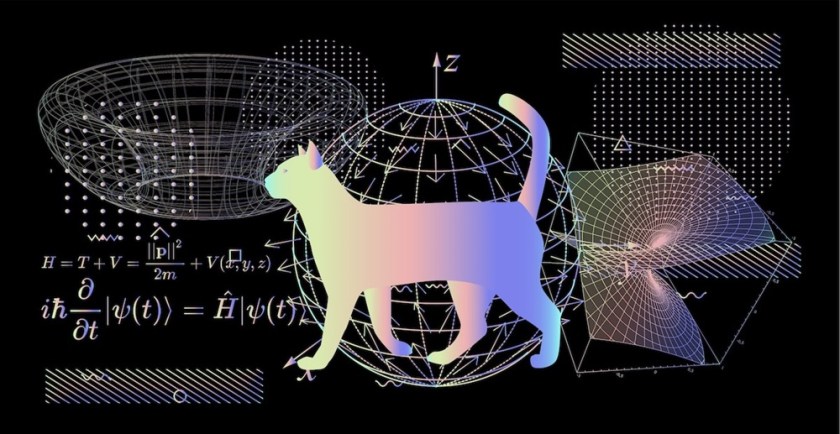
They behave in ways that are completely at odds with everything we intuitively understand about reality, so much so that even Einstein himself was disturbed by what he found. Einstein famously described quantum entanglement — the ability of two different objects to be linked and share properties, regardless of how far apart they are — as “spooky action at a distance.”

So what the hell does this have to do with cats?

Ready to get even weirder?

Thanks to Planck, Einstein, John Stewart Bell and innumerable physicists — who are still studying these concepts, and still winning Nobel prizes for them in 2022 — we know that two particles can be “entangled” and will remain that way no matter how far apart they are.

You could take one particle, transport it 10,000 light years away, and it would still be entangled with the other particle.

But it gets even stranger than that.
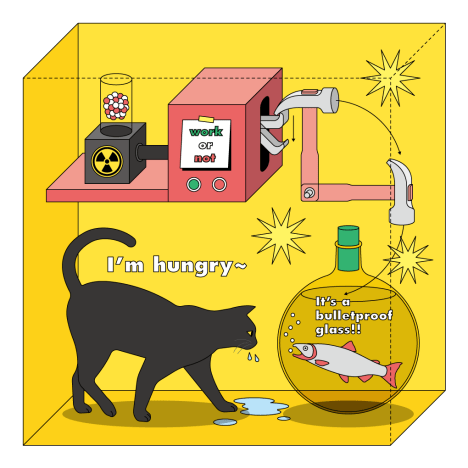
Schrödingerscat

Our entangled particles have certain properties, such as their spin, which are unknowable until we measure them. In fact, they exist simultaneously in all possible states until the moment when we observe them, at which time the wave function “collapses.” It’s called quantum superposition.

Not only that, but when we measure one particle in an entangled pair, the second particle’s wave also “collapses” (settles on a certain state) and we know its spin instantaneously, regardless of how far apart the particles are.

If I measure an entangled particle here on Earth and find its spin is up, I know the corresponding particle that’s been moved to, say, Epsilon Eridani, 10.47 light years away, is spin down.

You can see why this would be profoundly disturbing to scientists. It violates the speed of light, and it’s completely counterintuitive. How can the mere act of observation change something in the physical world, and how can it change something else potentially thousands or millions of light years away? Everything we know, every gut instinct we have, screams that this should not be true.

But it is true.

These aren’t just ideas kicked around by scientists smoking the sticky stuff, by the way. They’ve been proven experimentally many times over. No matter how much we might dislike the idea, no matter how weird or spooky it may seem, it’s true.
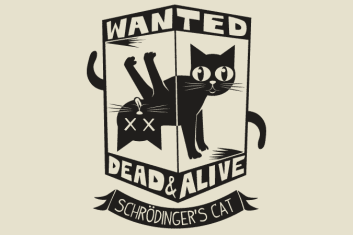
Schrödingerdeadalive

Enter Erwin Schrödinger, an Austrian physicist. He devised a thought experiment that goes like this:

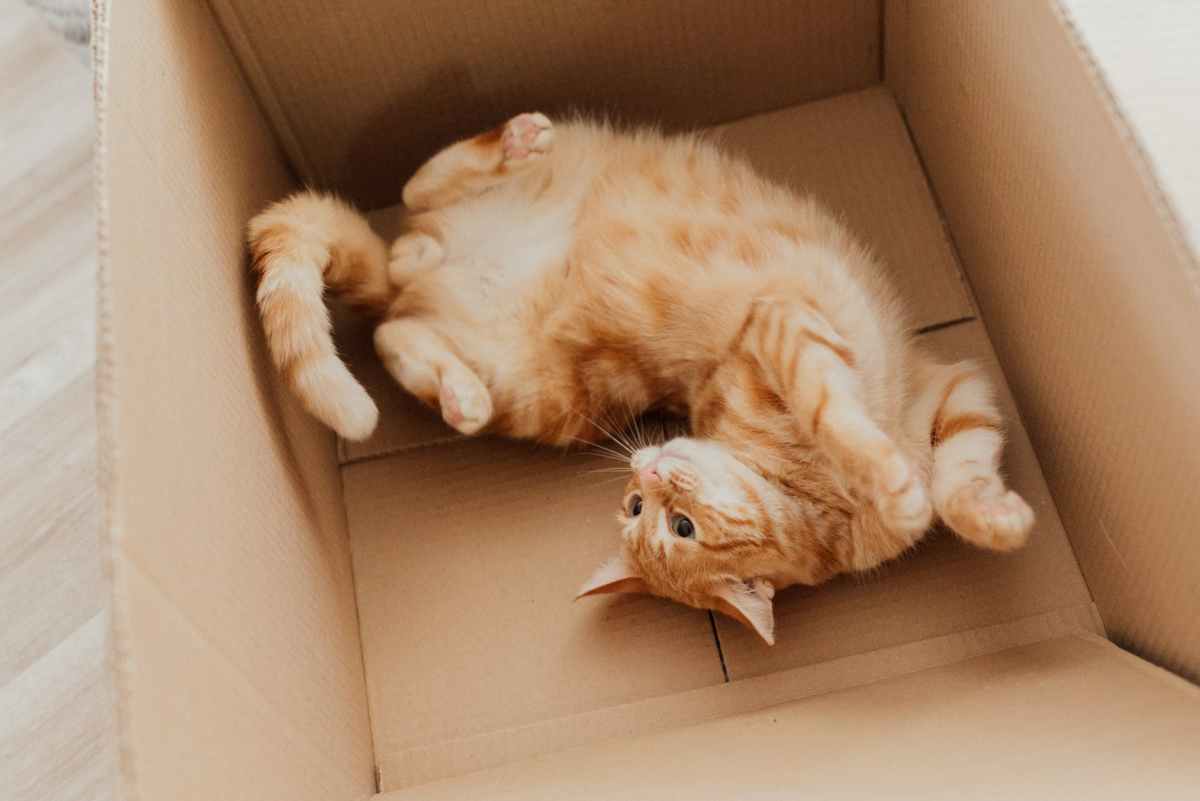
Imagine you have a sealed box with a cat inside. Inside the box are two buttons: One button feeds the cat a yummy treat, the other button kills the cat. There is an equal (50/50) chance of the cat pressing either button. (Other versions use a more complex system involving radioactive material, or poison, that could kill the cat, again with a 50/50 chance.)

We don’t know if the cat is alive or dead until the moment we open the box. So in this thought experiment, we can think of the cat as both alive and dead until we “measure” or “observe” by opening the box.

That’s what’s happening in the above example of quantum entanglement and the idea that a particle is neither in one position or another until we measure it.

Why is measurement the key here? No one knows. Scientists are still arguing about that. Some believe that there’s some special quality of consciousness that interacts with the universe, so the mere act of observing something can change physical reality.

Others scoff at that idea and insist we’re missing something, that it’s not the act of observation that determines the final state of a particle at all.

Regardless, the important thing here for cat lovers is that Schrödinger’s cat is just a thought experiment.

Schrödinger never had a cat, as far as anyone has been able to ascertain, and no one has used an actual cat in an attempt to reconstruct the thought experiment because 1) You wouldn’t learn anything, since cats are not subatomic particles, and 2) Anyone intelligent enough to be a physicist is presumably intelligent enough to understand how absurd, pointless and cruel it would be to use a living being in an experiment that can’t give you any answers.

For those of us who aren’t geniuses, here’s Sheldon explaining the thought experiment as a child (in Young Sheldon) and as an adult (in The Big Bang Theory):
Study Says We Should Use Baby Talk With Cats, Buddy Disagrees

It’s the latest of several studies indicating animals including cats, dogs and horses respond better to higher-pitched, softer voices.

Cats are more responsive when their humans use “baby talk” to address them, a new study claims.

A research team from Paris Nanterre University played a series of recordings for cats. One set of recordings featured a stranger addressing each cat, while another set featured the cat’s human servant calling to the cat.

Each set also had clips in two different tones of voice: one in which the humans spoke to the cats in a tone normally reserved for addressing fellow adults, and another in which they baby-talked their felines.

Not surprisingly the cats were mostly content to ignore the strangers calling them by name even when the strangers used higher-pitched tones, but “displayed a constellation of behaviors suggesting increased attentiveness” when they heard audio of their humans calling them.

The kitties were even more responsive when their humans used the “sing-songy” tone of voice many people reserve for pets, babies, young children and Texans. (Sorry, couldn’t help myself! I’m still salty over my Yankees getting swept by the Astros.)

The research team said the study, which was published today in the journal Animal Cognition, was yet another piece of evidence showing felines are not the ultra-stoic, emotionless animals they’ve been portrayed as for as long as anyone can remember.

“For a long time it has been thought that cats are very independent creatures, only interested in [humans for] eating and shelter, but the fact that they react specifically to their owner, and not just anybody addressing them, supports the idea that they are attached,” said Charlotte de Mouzon, the paper’s lead author. “It brings further evidence to encourage humans to consider cats as sensitive and communicative individuals.”

Although the study included just 16 cats — sample size is a recurring problem in feline-related studies, since researchers often have to travel to the homes of house cats to study their normal behavior — it’s just the latest bit of research on tone in human-cat communication.

Those studies tend to use terms like “pet-directed speech” and “kitten-directed speech” instead of baby talk.

As I wrote last year, I don’t use baby talk with Buddy, and I tend to think of him as, well, my little buddy instead of my “child,” as so many “pet parents” do. That’s not to say I think people who view their pets that way are doing it wrong, or that I don’t have parental feelings toward Bud. Of course I do.

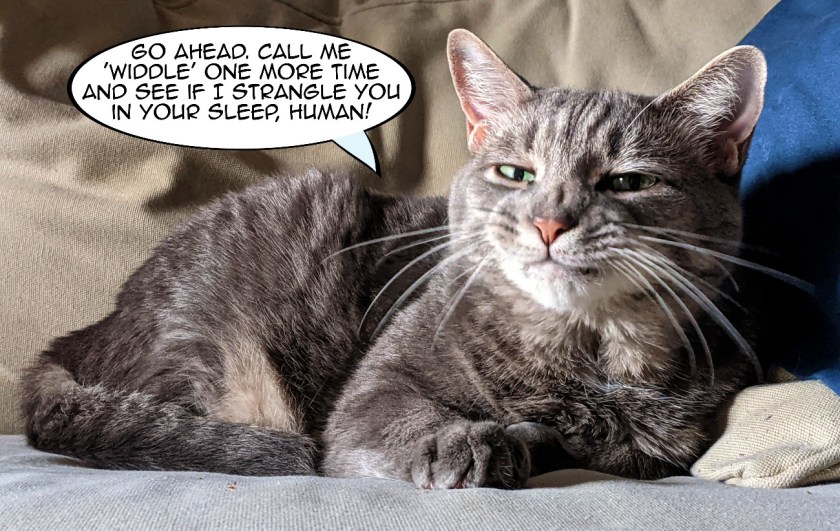
But as I also wrote, Buddy does not tolerate baby talk. I joked that he’d paw-smack me if I spoke to him that way, and indeed he has nipped at me and dispensed warning slaps the handful of times I’ve come close to addressing him that way.

Bud Da Widdle Baby
“Aw! Widdle Buddy is angwy, huh?”

I think it’s because of the way I raised him. He’s not accustomed to it, and he finds it annoying. That makes sense, and it comports with the study authors’ suggestions that the one-on-one relationship between feline and human is an important factor in many facets of cat communication.

But maybe if I’m prepared to dodge a few angry paws I can use the threat of baby talk to nudge Buddy toward being more responsive during those times when he doesn’t feel like coming when called or stopping some important work he’s engrossed in, like chattering away at birds outside.

“Bud! Hey, Bud! Listen to me. I’m talking to you,” I might say. “Okay, have it your way. Who’s da little Buddy wuddy who isn’t wistening to me, huh? Who’s da widdle cwanky boy?”

I’m pretty sure he’ll launch himself at me with a derisive “Mrrrrppp!” and take a big swipe. Haha!

But maybe, just maybe, he’ll be more inclined to listen. Do you baby talk your cats?

Redditor’s Girlfriend Stole And Abandoned Cat After Argument

Studies have shown that when people who have pets are victims of domestic abuse, the pets often become victims too.

A Redditor says her beloved cat, Midnight, is missing after her girlfriend stole the innocent kitty and dropped her off on a random road on Friday as a revenge tactic for an argument the couple had the night before.

Midnight is still missing. Midnight’s owner, using a burner account called Throwaway29374639, updated concerned Redditors and said she was putting up flyers, setting up humane traps and looking in the area where her girlfriend claims she abandoned the cat as she was en route to work.

For her part, the Redditor says her girlfriend admitted what she did and “said she just had a moment of rage, but I just can’t even look at her right now. I kicked her out of my apartment and have been crying in my room for the last few hours. I feel so lost without my cat.”

In the thread, which attracted more than 1,400 comments and tens of thousands of views, many people advised her to report her (now presumably ex) girlfriend to the police, as well as to change the locks to her home and any passwords the two might have shared on various accounts.

We’ve talked before about the strange phenomenon of people who take their anger out on the pets of their partners or ex-partners. Studies have found that men are more likely to do so, and they’re much more likely to target cats than dogs because they see cats as an extension of femininity. In cases where domestic abuse is expanded to include a dog or a cat, the abusers view the pets as proxies for their victims.

But as recent stories have indicated, women sometimes take their anger out on pets as well.

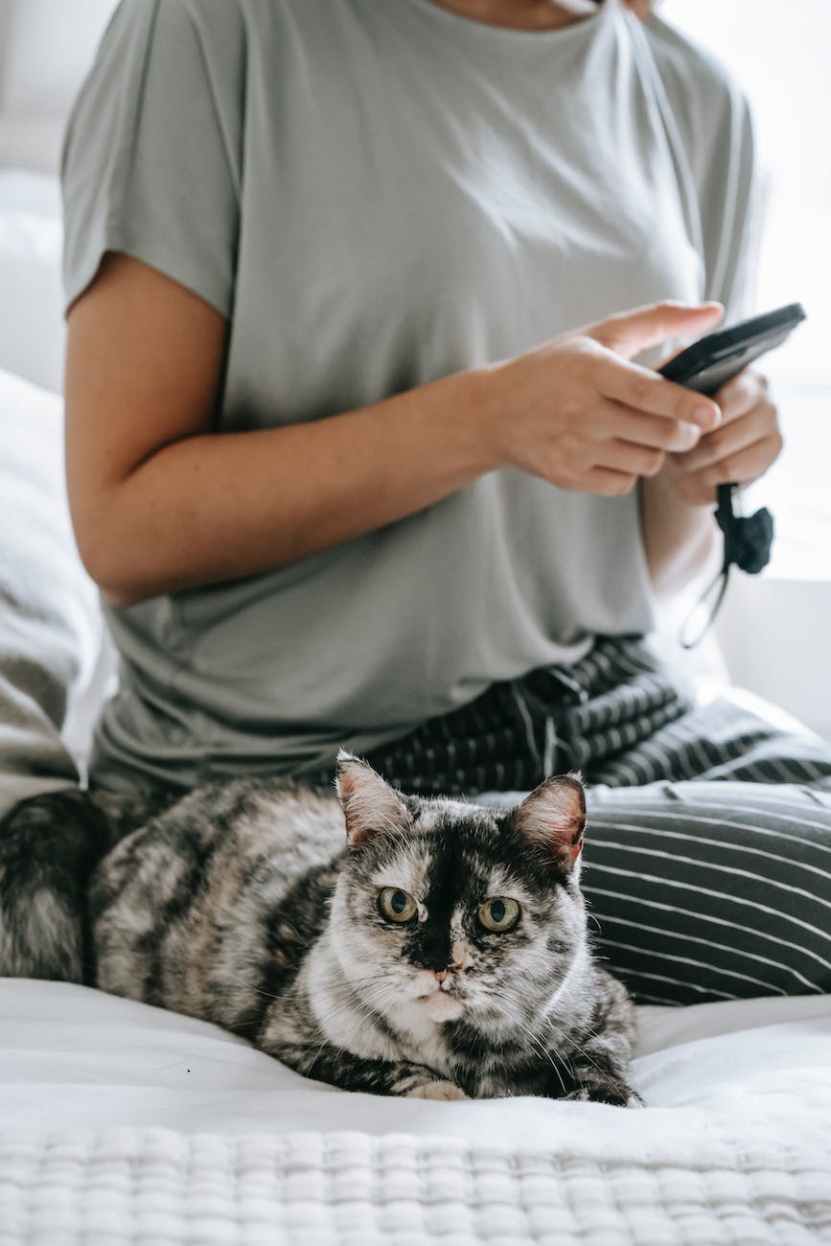
anonymous woman browsing smartphone while sitting on bed near cute cat
When woman are abused by their partners, their pets are often abused as well because they’re seen as proxies for the victims. Credit: Sam Lion/Pexels

Regardless, studies show that the pets of domestic abuse victims are likely to suffer at the hands of their owners’ abusers, and statistics show women who check into domestic violence shelters report their pets were also abused in the majority of cases. Some studies found more than 80 percent of pets who belong to domestic violence victims also become victims.

Women who worry about what will happen to their pets are less likely to leave their abusers and seek temporarily relief at shelters. As a result, some shelters also make arrangements for the pets of abuse victims, giving them safe shelter and taking another worry off the minds of their caretakers.

The links between pet abuse and domestic abuse are in addition to the well-established link between harming animals and “graduating” to harming humans, illustrated most recently by the documented history of feline abuse by the shooters allegedly responsible for massacres in Buffalo, New York, and Uvalde, Texas.

Top image via Pexels and depicts a random cat, not the victim’s cat.

Every Attempt To Translate Meows Has Failed. Why?

A New York Times science writer tries MeowTalk, the app that says it can tell you what your cat is saying.

New York Times science writer Emily Anthes details her experience with MeowTalk in a new story, and has more or less come to the same conclusions I did when I wrote about the app last year — it recognizes the obvious, like purring, but adds to confusion over other vocalizations.

Back in January of 2021, in MeowTalk Says Buddy Is A Very Loving Cat, I wrote about using MeowTalk to analyze the vocalizations Bud makes when he wants a door opened. After all, that should be a pretty basic task for an app that exists to translate meows: Cats ask for things, or demand them, some would say.

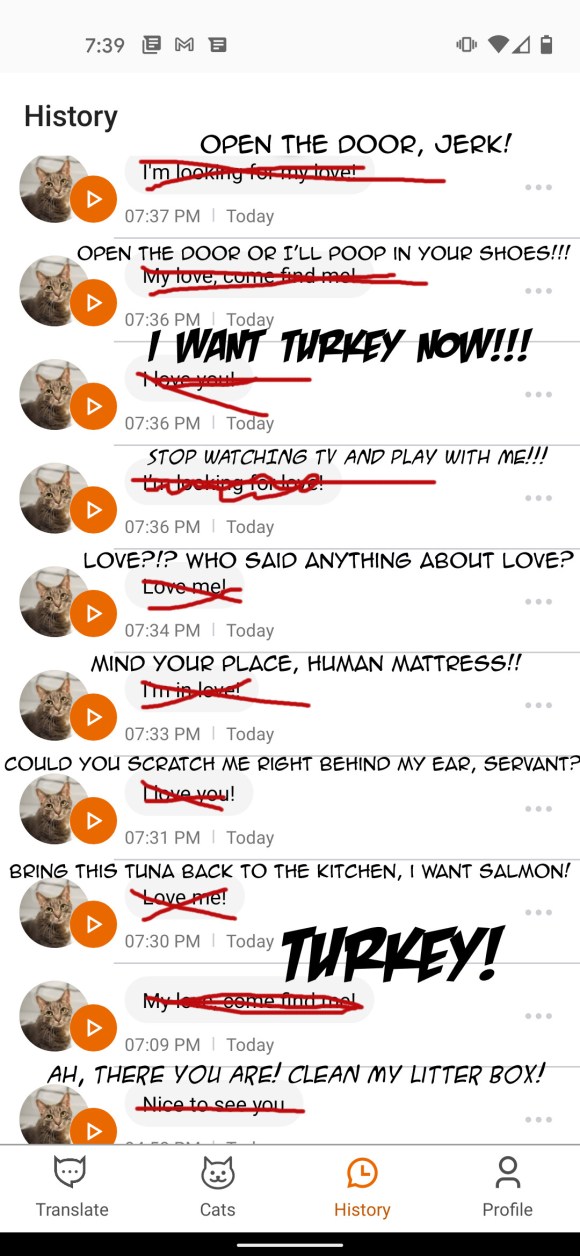
But instead of “Open the door!”, “I want to be near you!”, “Human, I need something!” or even “Obey me, human!”, it told me Bud was serenading me as he pawed and tapped his claws on the door: “I’m looking for love!”, “My love, come find me!”, “I love you!”, “Love me!”, “I’m in love!”

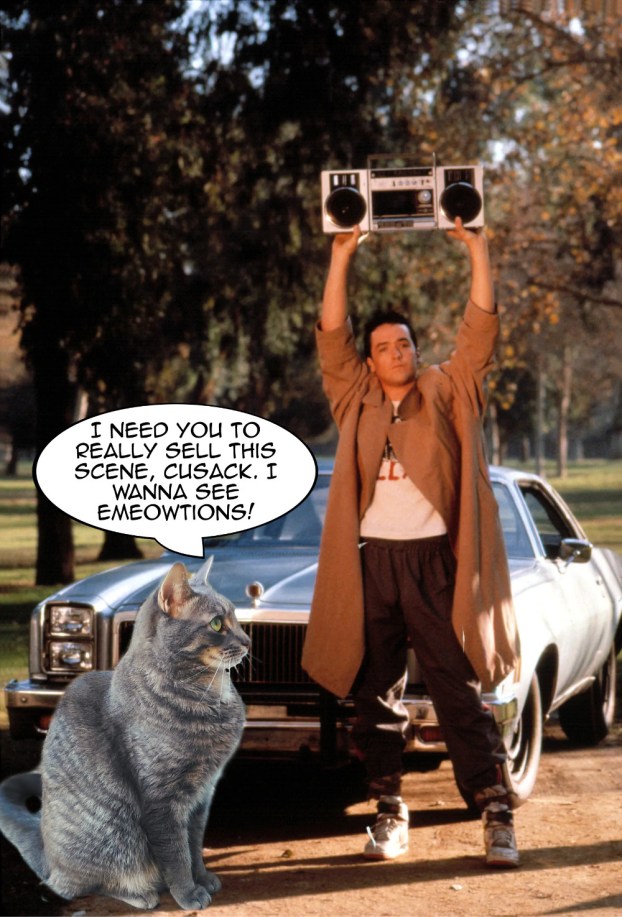
According to MeowTalk, my cat was apparently the author of that scene in Say Anything when John Cusack held up a boombox outside of Ione Skye’s bedroom window.

John Cusack and Buddy the Cat
Buddy the Director.

Anthes had a similar experience:

“At times, I found MeowTalk’s grab bag of conversational translations disturbing. At one point, Momo sounded like a college acquaintance responding to a text: ‘Just chillin’!’ In another, he became a Victorian heroine: ‘My love, I’m here!’ (This encouraged my fiancé to start addressing the cat as ‘my love,’ which was also unsettling.) One afternoon, I picked Momo up off the ground, and when she meowed, I looked at my phone, ‘Hey honey, let’s go somewhere private.’ !”

On the opposite side of the emotional spectrum, MeowTalk took Buddy’s conversation with me about a climbing spot for an argument that nearly came to blows.

“Something made me upset!” Buddy was saying, per MeowTalk. “I’m angry! Give me time to calm down! I am very upset! I am going to fight! It’s on now! Bring it!”

In reality the little dude wanted to jump on the TV stand. Because he’s a serial swiper who loves his gravity experiments, the TV stand is one of like three places he knows he shouldn’t go, which is exactly why he wants to go there. He’s got free rein literally everywhere else.

If MeowTalk had translated “But I really want to!” or something more vague, like “Come on!” or “Please?”, that would be a good indication it’s working as intended. The app should be able to distinguish between pleading, or even arguing, and the kind of freaked-out, hair-on-edge, arched-back kind of vocalizations a cat makes when it’s ready to throw down.

buddytranslations
Accurate translations of Buddy’s meows.

Still, I was optimistic. Here’s what I wrote about MeowTalk last January:

“In some respects it reminds me of Waze, the irreplaceable map and real-time route app famous for saving time and eliminating frustration. I was one of the first to download the app when it launched and found it useless, but when I tried it again a few months later, it steered me past traffic jams and got me to my destination with no fuss.

What was the difference? Few people were using it in those first few days, but as the user base expanded, so did its usefulness.

Like Waze, MeowTalk’s value is in its users, and the data it collects from us. The more cats it hears, the better it’ll become at translating them. If enough of us give it an honest shot, it just may turn out to be the feline equivalent of a universal translator.”

There are also indications we may be looking at things — or hearing them — the “wrong” way. Anthes spoke to Susanne Schötz, a phonetician at Lund University in Sweden, who pointed out the inflection of a feline vocalization carries nuances. In other words, it’s not just the particular sound a cat makes, it’s the way that sound varies tonally.

“They tend to use different kinds of melodies in their meows when they’re trying to point to different things,” said Schötz, who is co-author of an upcoming study on cat vocalizations.

After a few months in which I forgot about MeowTalk, I was dismayed to open the app to find ads wedged between translation attempts, and prompts that asked me to buy the full version to enable MeowTalk to translate certain things.

The developers need to generate revenue, so I don’t begrudge them that. But I think it’s counterproductive to put features behind paywalls when an application like this depends so heavily on people using it and feeding it data.

To use the Waze analogy again, would the app have become popular if it remained the way it was in those first few days after it launched? At the time, I was lucky to see indications that more than a handful of people were using it, even in the New York City area. The app told me nothing useful about real-time traffic conditions.

These days it’s astounding how much real-time traffic information the app receives and processes, routing drivers handily around traffic jams, construction sites and other conditions that might add minutes or even hours to some trips. You can be sure that when you hear a chime and Waze wants to redirect you, other Waze users are transmitting data about a crash or other traffic impediment in your path.

Bud
“I’m thinking deep thoughts about turkey.”

MeowTalk needs more data to be successful, especially since — unlike Waze — it depends on data-hungry machine learning algorithms to parse the sounds it records. Like people, machine learning algorithms have to “practice” to get better, and for a machine, “practice” means hearing hundreds of thousands or millions of meows, chirps, trills, yowls, hisses and purrs from as many cats as possible.

That’s why I’m still optimistic. Machine learning has produced algorithms that can identify human faces and even invent them. It’s produced software that can write prose, navigate roads, translate the text of dead languages and even rule out theories about enduring mysteries like the Voynich Manuscript.

In each of those cases there were innovators, but raw data was at the heart of what they accomplished. If MeowTalk or another company can find a way to feed its algorithms enough data, we may yet figure our furry little friends out — or at least know what they want for dinner.

Study: Even Experienced Caretakers Give Cats ‘Unwelcome Affection’

When it comes to petting cats, less is more. Not everyone knows that.

By chance, one of the first things I saw Tuesday in my post-wake-up browsing was a short video of three guys standing in a triangle formation, each of them with a puppy. A drum recording began, and the men began drumming an overturned pot in the middle with the puppies’ paws.

The dogs, of course, had no idea what was going on. They were confused and stressed. Then I saw this from the official TikTok page of Imperial Point Animal Hospital in Delray Beach, Florida:

That’s a veterinarian abusing a kitten.

It might not be overt abuse. She’s not hitting or screaming at the poor cat. But she’s taking a sentient being with its own feelings, likes and dislikes, comforts and discomforts, and using it as a toy for clicks and likes on social media.

I thought about that when I read the newest study from Nottingham Trent University and the University of Nottingham, which looks at the way people interact with their cats and how their behavior may or may not align with what cats prefer and what they’re comfortable with.

Although Bud and I have a deep bond formed over more than seven years of spending time together, establishing trust, mutual respect and love, he would tear my face off if I did to him what the vet tech is doing to the kitten in the above video.

And you know what? He’d be justified, once he got over the shock and wondered if I’d been replaced with a doppleganger.

The UK study involved more than 100 felines at Battersea Dogs and Cats’ London cattery, with scientists recording interactions between humans and cats via a GoPro camera in a large pen where people can interact with cats one-on-one. There were 120 human participants of various ages and from different walks of life. Each person interacted with three cats separately.

Researchers looked at whether the cat or the human initiated interaction, where the human touched the cat, whether the human restrained the cat, and the cat’s response.

They also collected information on each human participant, such as how many cats they have at home and how long they’ve been caring for felines. Human participants rated themselves on how well they know cats and how well they take care of them.

They used a system that corresponds to the below image to grade physical affection. The image is mostly self-explanatory, but to be clear, the green areas are where cats like to be touched, the yellow areas are “meh,” and the red areas are no-go zones for most cats:

greenyellowredcatareas

In earlier studies, the team established what many cat caretakers know: Allowing cats to initiate physical interactions, going easier and lighter on petting, letting cats control how long the interactions last, and avoiding any kind of restraint are “best practices” for petting cats. They reaffirmed that scratching cats under the chin, rubbing their cheeks and forehead are “the best ways to increase their affection and reduce aggression.”

That might seem obvious, but in research there’s an important distinction between knowing something (or thinking you know it) and proving it with research. It’s important to prove it, and to forgo assumptions, to produce credible and repeatable experiments.

Animal behaviorist Lauren Finka, lead author on the new study, said although the above may seem like common knowledge among experienced caretakers, that’s not always true, and it’s not always reflected in their behavior.

“Our findings suggest that certain characteristics we might assume would make someone good at interacting with cats—how knowledgeable they say they are, their cat ownership experiences and being older—should not always be considered as reliable indicators of a person’s suitability to adopt certain cats, particularly those with specific handling or behavioral needs,” Finka said.

We should point out here that these are “best practices” for establishing a healthy, trusting relationship with cats, and taking their feelings into consideration. Lots of people might force their cats to do things without much push back, but that doesn’t mean the cat is happy. No one’s perfect, and there are always things we can learn about how to do better by our furry friends.

Finka also said she hopes people who run shelters and rescues take the research into consideration. That’s because some people run into the same problems I did: When you’ve never had a cat, and/or you don’t fit the profile of what people think a “cat person” is or should be, you could encounter resistance or skepticism from shelter staff.

One volunteer at an animal shelter asked me if I was adopting a kitten for my kids or girlfriend, because it didn’t occur to her that I’d want a cat. Some shelters require references from a veterinarian, which you can’t get if you’ve never had a pet before.

“Importantly, within shelters, we should also avoid discriminating against potential adopters with no previous cat ownership experience,” Finka said, “because with the right support, they may make fantastic cat guardians.”

For us, it’s more confirmation of what we’ve always believed: The more you take your cat’s feelings into consideration, and treat the little one with the respect he or she deserves, the happier your cat and the deeper your bond will grow.