How can you tell a rel cat from a computer generated cat?
There’s a new tool that uses algorithmic artificial intelligence to create random images of cats, and the results are virtually indistinguishable from the real thing.
Can you tell which cats are real and which ones are computer-generated? (Kindly share your answers in the comments, numbering them from left to right. The person with the best score gets bragging rights!)
We’ll follow up with the answers after everyone’s had a day to make their guesses or informed choices, as it were.
The algorithm was created by a process called machine learning, which you’ve probably heard at some point even if you haven’t sought out information about artificial intelligence.
In simple terms, machine learning means the creators fed massive amounts of data — millions of photos of cats — to the software algorithm. The algorithm analyzes the data and learns how patterns in the data create accurate images of felines.
Crucially, the algorithm never learns what a cat actually is. It doesn’t know a cat is an animal in the real world. It doesn’t know what the real world is, and it doesn’t know what animals are. All it knows is that data, organized a certain way, produces images that look like the photos it’s been fed.
That’s a key difference because, while we have made huge strides with machine learning, that’s not the kind of artificial intelligence the Elon Musks of the world freak out about when they smoke pot and watch The Matrix. We’ll never have to worry about our cat-generating algorithms rising up and eliminating humanity. 🙂
Artificial general intelligence — or AGI — is the potentially dangerous form of AI, but that’s a whole other piece of business: It involves recreating consciousness and the mind on a machine substrate.
We can’t even define consciousness and we know shockingly little about how the brain works, so that’s not happening any time soon. And even if we could it off, there’s a growing body of evidence supporting the concept of embodied cognition. That’s the idea that the mind cannot be separate from the brain, and the brain cannot be separate from the body, as well as a recognition that everything from pain signals to gut flora has an effect on our cognitive routines.
The bottom line: “AI” can get pretty good at making pictures of cats, but it’s not taking over the world any time soon.
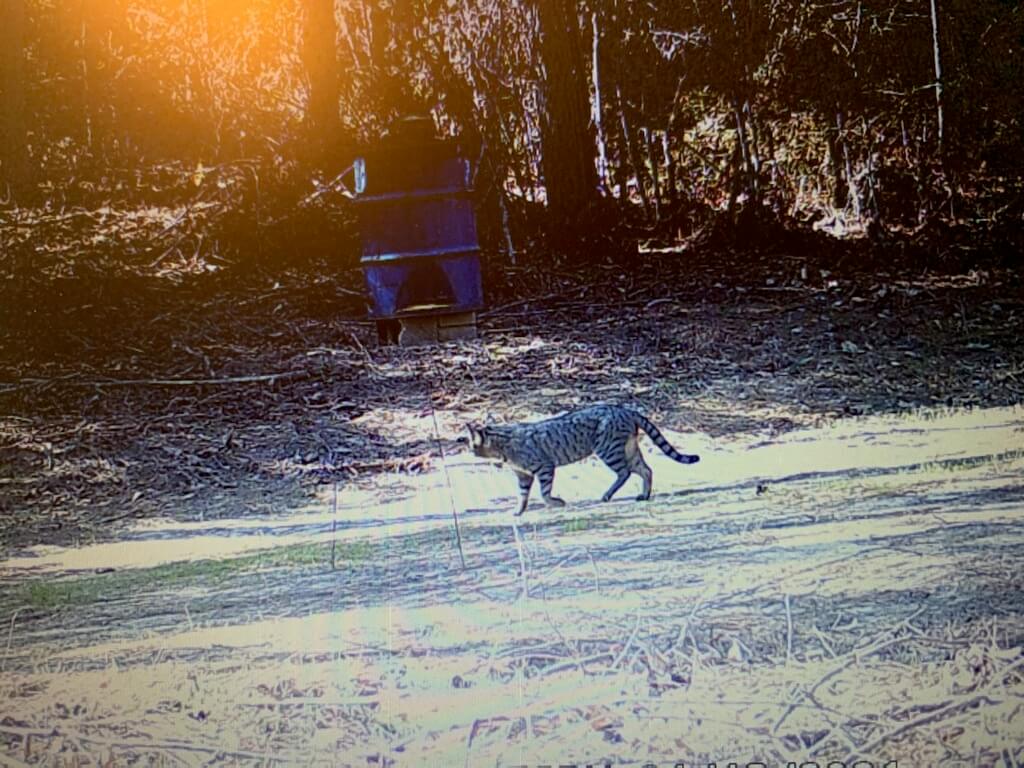
A reader in Alabama sent this image to the Bangor Daily News and asked for help identifying the cat.
Like many other states, Alabama is home to bobcats and cougars, but we can cross them both off the list: The long tail eliminates the possibility of a bobcat, while the coat pattern and build of the cat rules out a puma.
Aside from puma, bobcats and the lynx, almost all other species of wild cat in the western hemisphere are found only in South America.
The cat in the photo is muscular and looks like it’s taking a leisurely stroll, but something in the wooded area has caught its attention. The dipped tail may indicate uncertainty. Its tabby stripes are well-defined but broken, a trait often seen in domestic cats.
Finally, although Bangor says there’s not much to help put the cat’s overall size in context, it’s almost certainly smaller than it looks, judging from the barrel in the background. In fact, if you expand the image and look closely at the barrel, you can see there’s an arched entry cut out of it, and it’s secured to some kind of foundation. Who knows, maybe someone converted it into a small shelter for this cat and other strays.
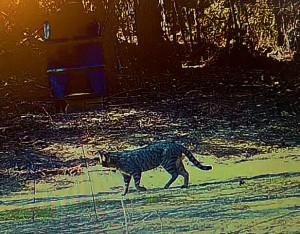
I took the image, cropped it close, tried to enhance the details as much as possible without ruining the data, and got this:
The mystery cat of Alabama
My verdict: It’s a domestic cat.
The proportions, tail and gait are all consistent with a domestic cat, as is the coat pattern. The cat in the photo doesn’t resemble any local wild cats, and the cat isn’t as large as it may initially appear.
A longtime veterinarian in Alabama has been arrested and charged with animal cruelty for hitting, choking and dropping a terrified cat in his exam room, according to police.
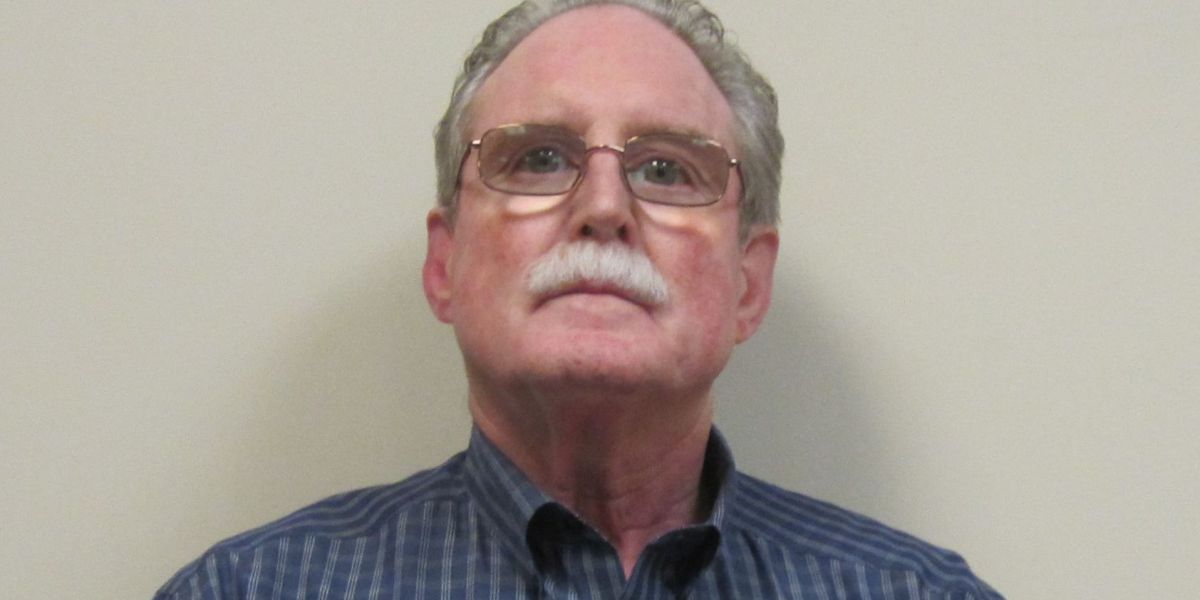
Richard Timothy Logan, 65, is a veterinarian at Andrews Avenue Animal Hospital in Ozark, Alabama.
A man identified as Logan was examining a calico cat in November, in an exam room at the animal hospital when he grabbed the cat by the scruff of her neck and punched her on the top of her head with a closed fist, video of the exam shows. Still holding the cat by her scruff, he slammed her down onto the exam table, then did it again more forcefully.
Logan then swiped the cat off the exam table, causing her to fall to the floor.
Logan steps out of the frame for several seconds, then the video cuts forward, showing Logan again with his hands on the cat as a veterinary assistant holds the terrified, screaming feline down.
He punches the cat a second time, makes an annoyed gesture, then picks the cat up by her collar and dangles her as she struggles.
Animal rights activists and local people outraged by the video protested outside Andrews Avenue Animal Hospital this week, holding signs of the abused calico and demanding the Alabama State Board of Veterinary Medicine — which is conducting its own investigation separate from the criminal probe — revoke Logan’s license.
“We’re hoping for awareness, first of all, of animal abuse and we’re hoping that Dr. Logan will lose his license,” cat owner Rhonda Eller told Alabama’s Dothan Eagle. “There should not be veterinarians that don’t love animals and care for animals. Obviously, they should choose a different profession.”
Some of the protesters were clients of the animal hospital, and were alarmed not only by what they saw on the video — which was anonymously posted to Facebook on April 5 — but what may have happened behind closed doors when they brought their own pets in.
“I’ve been coming here so long, leaving my animals overnight [or] for a week when he said they needed it,” Michele Brown, a client of the hospital, told the Eagle. “What has happened to my animals while they were here and I never knew it?”
Neither Logan nor the animal hospital have issued public statements on the allegations, but Logan’s attorney, David Harrison, is acting as if the video does not show his client terrorizing a cat who was supposed to be in his care.
“He is a good veterinarian and people are destroying this man’s reputation,” Harrison told WTVY, an Alabama local news station. “I have instructed Dr. Logan to file a lawsuit against all who have smeared lies on social media. Facebook is not a court of law.”
Protesters stand across from Andrews Avenue Animal Hospital in Ozark, Alabama, this week.
Logan was charged with two counts of cruelty to animals.
Under Alabama law, if Logan is convicted, the most severe potential sentence is a $3,000 fine and up to one year in county jail. Because he doesn’t have priors, if he’s convicted he’s not likely to serve any jail time. Animal cruelty is a misdemeanor in Alabama’s penal code.
In the meantime, comments from Dale County District Attorney Kirke Adams do not sound promising.
“While this video is deeply concerning, I would like to take this opportunity to implore people to have this same concern over child victim crimes and gun violence,” Adams said, appearing to downplay the severity of the allegations against Logan.
The cat “is alive and doing better with its owner,” Ozark police wrote in a statement posted to Facebook. Cops say they’ve interviewed the owner as well as “other witnesses.” It’s not clear if those witnesses include the veterinary tech who was present or other employees at the animal hospital, nor did police say who filmed the abuse.
Top photo: Richard Timothy Logan mugshot courtesy Ozark Police Department
A protester at Andrews Avenue Animal Hospital
A protester stands outside of Andrews Avenue Animal Hospital in Ozark, Alabama, this week.
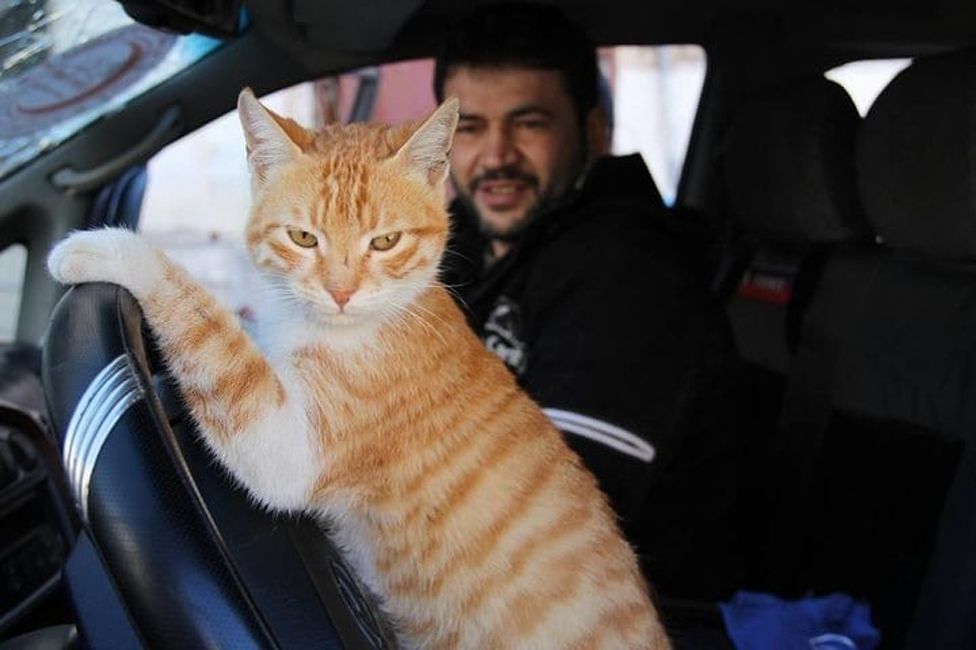
The Cat Man of Aleppo has survived bombs, chemical gas, a siege and a risky flight to Turkey as he’s cared for people and cats suffering in Syria’s civil war.
Human beings have lived in the city known as Aleppo for more than 4,000 years, making it one of the oldest continually-inhabited settlements in human history.
But as the raging civil war in Syria expanded and bombs began to fall on the country’s largest city, there was an unprecedented mass exodus — reducing Aleppo’s population from 4.6 million in 2010 to less than 600,000 by 2014.
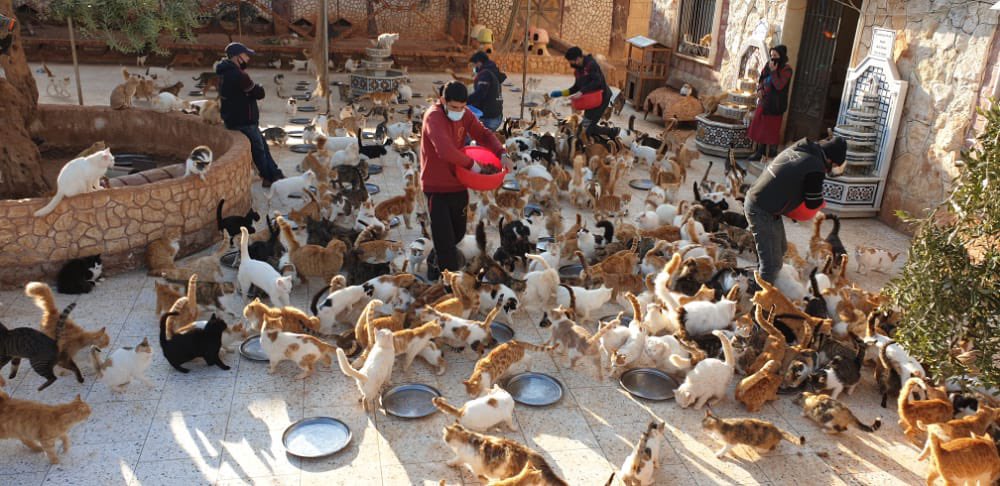
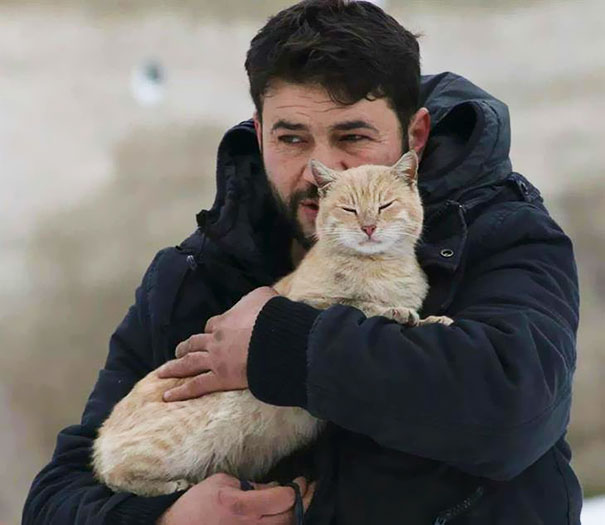
Mohammad Alaa Aljaleel was one of the stubborn few who stayed. His wife and children fled to safety in Turkey in 2015, but anchored by his commitment to people who couldn’t leave, Aljaleel stayed behind to continue driving his ambulance and feeding a growing population of abandoned cats.
At first friends and acquaintances turned to Aljaleel to take their cats as they prepared to flee the crumbling city, knowing he was fond of felines and would care for them as his own.
Others heard about the “cat man of Aleppo,” and soon Aljaleel’s home became a sanctuary for former pets from all over the city, which was becoming a ghost town.
With few remaining people to feed them — and food sources like restaurant dumpsters drying up — hungry stray cats started showing up too.
“Since everyone has left the country, including my own friends, these cats have become my friends here,” Aljaleel said in 2016, as a BBC camera crew filmed him among the hundreds of cats in his care.
Aljaleel, the Cat Man of Aleppo, hugs a tabby in his care.
One day a car pulled up and a little girl stepped out, cradling a cat.
Her parents “knew there was a cat sanctuary here,” Aljaleel told the BBC at the time. “The girl had brought the cat up since she was a kitten. She cried as she handed her over to me, and they left the country.”
For many people leaving the city in search of refuge in Europe or elsewhere in Syria, the decision to leave a beloved pet was agonizing.
But entrusting a cat to Aljaleel and his makeshift sanctuary — where the animal would be fed and well cared for — was much more palatable than making it to the border of an EU country only for a border guard or customs official to refuse the cat entry, forcing families to choose between pet and safety.
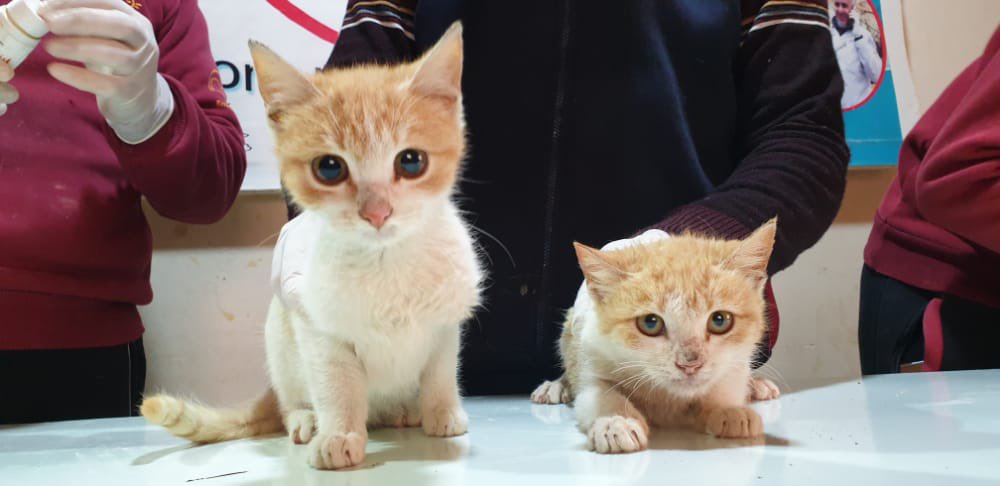
Kittens who were brought to Ernesto’s Sanctuary with their mother.
For people like the little girl, knowing their cats were in Aljaleel’s sanctuary meant maintaining a tie to home and hope that they could return.
“I’ve been taking photos of the cat and sending them to her in Turkey. She begs me, ‘Send me photos of her. I miss her. Please promise to return my cat to me when I get back.'”
That was in 2016. Almost five years later it looks like the young girl won’t be returning to Syria, and her cat is likely dead.
After Aljaleel’s makeshift cat sanctuary swelled to include more than 200 cats, things took a turn for the worse.
The Syrian government and rebel forces dug in, calling on allies for support and resources. ISIS and Iranian-backed insurgents entered the fray, seeing opportunity to advance their own interests amid the chaos.
So too did Russia and the United States. Both countries treated the conflict as a proxy war, with Russia backing Assad and his Syrian government forces, while the US and its allies threw their support behind an opposition that grew out of the Arab Spring in 2011.
The US and Russia provided the combatants with training and weapons systems, increasing the destructive firepower at the command of the belligerents. Both countries sought to advance their geopolitical ambitions in the region when they entered the conflict.
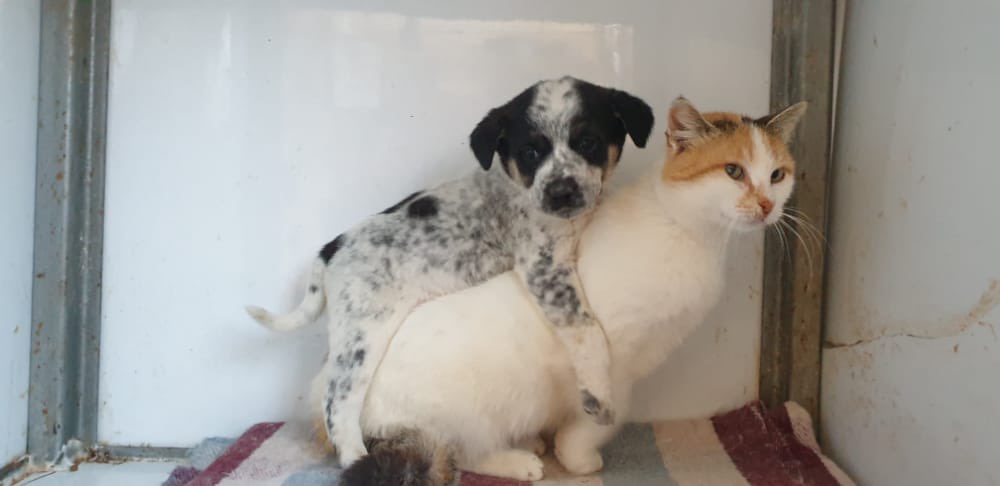
Not just cats: Alina and Samira are best friends and are inseparable. Credit: Ernesto’s Paradise
In internal memos justifying intervention in Syria, the US State Department predicted the civil war would flare out in months. Instead, the war has now lasted more than a decade, and in a move The Guardian called “a bloody end to [former President Barack] Obama’s reign,” in 2016 the US dropped 26,171 bombs on countries in the Middle East, with Syria absorbing the lion’s share.
Perhaps it was one of those bombs — or a bomb from Russia, or one of Syrian dictator Bashar al Assad’s own warheads — that obliterated Aljaleel’s sanctuary. It’s unlikely anyone will ever know. But one thing all sides agree on is that the chlorine gas was courtesy of Assad, who has not hesitated to use chemical weapons against his own people in the bloody war.
Weeks after Aljaleel was featured in a BBC short about the impact of the war, Aljaleel “watched helplessly as his cat sanctuary was first bombed, then gassed during the intense final stages of the siege of Aleppo,” per the BBC.
Some 180 of the 200 or so cats who found refuge with Aljaleel were killed by the bomb and the chlorine gas, and the stubborn man who dug in his heels and cared for Aleppo’s cats while everyone else fled finally gave up on his city.
Aljaleel and his cats survived the power outages, the destruction of the water works, the food shortages and a military siege of the city, but now the Cat Man of Aleppo was just a cat man in an ambulance.
He packed the few surviving cats, his meager possessions and a few sick, injured or elderly people into an ambulance and joined a convoy of civilians escaping the crumbling city. It was a tense and perilous journey, as those who fled knew Assad had no reservations about targeting his own people if it served his goals.
After seeing his family and recovering in Turkey, and with the help of an Italian benefactor and a growing community of supporters on social media, Aljaleel took his cats and his friends to a rural area in Syria, far from targets of opportunity, where he purchased a plot of land, put down roots and began his sanctuary anew.
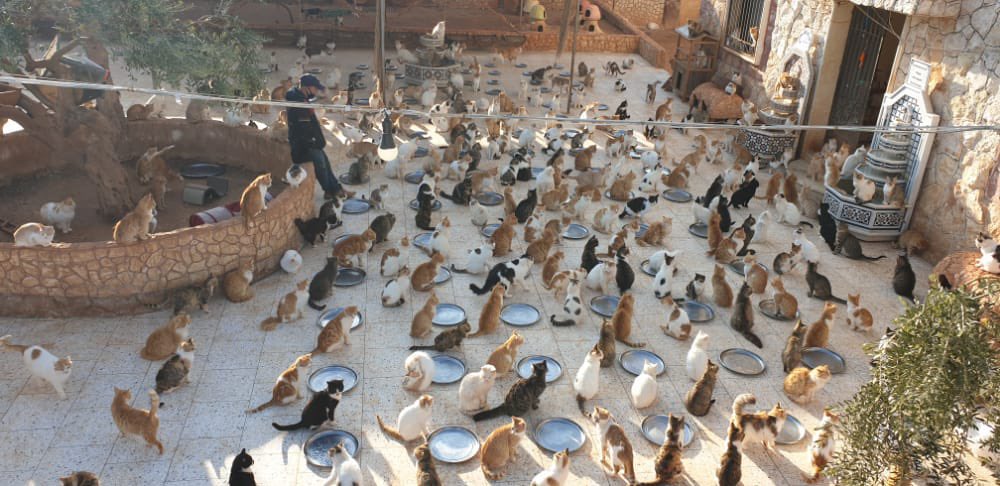
Even in war, cats know when it’s time to eat. The kitties of Ernesto’s Paradise wait by the more than 100 plates set out for them, eager for meal time. Credit: Ernesto’s Sanctuary.
That sanctuary is called Ernesto’s Paradise, named after Aljaleel’s own cat.
Ernesto’s Paradise is home to several hundred cats, plus four monkeys, horses, rabbits and dogs. There’s a playground for kids and — after a long search to find a veterinarian who hadn’t fled — Ernesto’s finally has a doctor in the house too.
The civil war in Syria has created perhaps the worst refugee crises in modern history, with millions fleeing to Europe and elsewhere in search of sanctuary.
The war had claimed 387,118 souls as of December 2020, according to the UK-based Syrian Observatory for Human Rights. Another 205,300 were missing and presumed dead, according to SOHR. In addition, more than 88,000 people have been tortured to death in Assad’s prisons, while thousands more were taken by ISIS and other terrorist groups operating in the country.
But “children and animals are the big losers” in war, Aljaleel told the BBC, and that’s why he chose to return.
“I’ve always felt it’s my duty and my pleasure to help people and animals whenever they need help,” he said. “I believe that whoever does this will be the happiest person in the world, besides being lucky in his life.”
You can follow and support Aljaleel’s work via Twitter, Facebook and by visiting his sanctuary’s official site. Direct donations to the sanctuary can be sent here.
The amount of violence directed at felines is mind-boggling, and it doesn’t reflect well on the US: For example in Istanbul, a city of more than 15 million people, there are some 130,000 cats living on the streets, not including pets. While many ‘Mericans see an animal and think “Let’s shoot it!” the people of Turkey are overwhelmingly compassionate, going to incredible lengths to make sure street cats are fed, watered, sheltered and have access to veterinary care.
Today’s story fits in the “vigilante lunatics” category.
It’s not clear if the person in question simply hates cats or is acting out of some misguided campaign to “protect” small wildlife, but we do know that a would-be cat killer is threatening to kill outdoor kitties in Joplin, Missouri, a city about 230 miles east of Oklahoma City.
Credit: Kirsten Bu00fchne/Pexels
The suspect slapped warning letters and posters on the front doors of homes along four separate streets between 2:40 and 5 a.m. on Monday, local police said.
Cops haven’t released the full text of the letters, but said the letter-writer threatened to kill any stray or feral cats he or she comes across in the neighborhood. Likewise, while police did say images of the letter-writer were captured on doorbell cameras, they’re holding the identifying details close to the vest right now, which they may do for any number of reasons.
One of the homeowner who received the letter said he fears his two missing cats are now dead. Another neighbor said the letters follow similar threats by a woman wearing a red jacket, who told some people in the neighborhood to keep their cats inside or else.
“The lady, she was walking up and down the streets going door to door telling everybody that they better watch out for our cats because they were going to start being euthanized,” the neighbor told WKSN, the local NBC affiliate.
Joplin police are offering $2,500 to anyone with information that leads to the arrest of the letter-writer.




 Pain In The Bud