Australia ‘Declares War’ On Cats, Plans To Eradicate Ferals And Strays

Australia announced the plan after a new report called cats the greatest driver of extinction in the country.

While their neighbors in New Zealand called for “woah on feeral kets” earlier this year, Australia is planning its own nationwide effort to wipe out free-roaming cats in an attempt to prevent the extinction of local wildlife.

The “war” announcement, made on Wednesday by Australia’s Environment Minister, Tanya Plibersek, comes on the heels of a report that calls “invasive animals” like cats the primary force behind species extinction in most of the world, including Australia. The report was released by a group of academics from 143 countries who make up the Intergovernmental Platform on Biodiversity and Ecosystem Services (IPBES), which advises the UN and sovereign states on wildlife policy.

Plibersek singled out felines in a press conference announcing the plan.

“They played a role in Australia’s two latest extinctions … they are one of the main reasons Australia is the mammal extinction capital of the world,” she said.

In addition to targeting felines on the mainland, Plibersek said Australia’s government would attempt to completely purge Christmas and French islands of their cat populations.

I have not had the opportunity to read an advance of the report, which was just released, and it will require careful reading as well as additional research before I’d feel comfortable commenting on the claims. That said, the numbers bandied about in press accounts (which claim cats kill more than 2.6 billion animals a year in Australia) are similar to the claims we’ve heard before, so unless there’s original research here and not a rehash of the same meta-analyses frequently cited in stories about cats and their impact on biodiversity, it doesn’t change the simple fact that it’s bad policy to act without reliable data.

I’m talking about an actual effort to count the feral and stray cat population in defined areas, as the Washington, D.C. Cat Count did using trail cameras, monitors and other methods. Obviously that can’t be applied to an entire country, but it can be done in different locations and provide a baseline to work with. Without that effort, the estimates of feline impact are nothing more than guesswork by professors sitting behind desks often entire continents away from the locales in question, plugging invented numbers into formulas intended to extrapolate totals for birds, mammals, lizards and insects killed by felis catus.

While similar studies estimated the number of cats in the US at between 25 and 125 million, Australia’s federal government says there are between 1.4 and 5.6 million cats in the country. If that’s true, it means each free-roaming cat in Australia kills between 500 and 1,850+ animals a year. It’s also difficult to accept estimates of predatory impact when the corresponding estimates of total cat population are so vague.

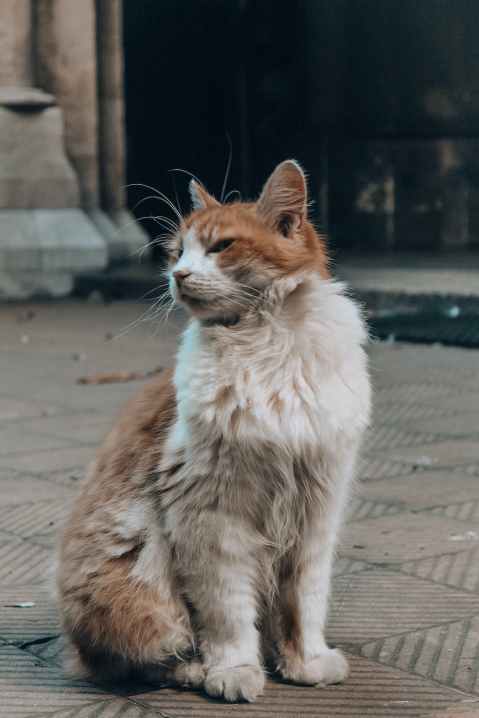
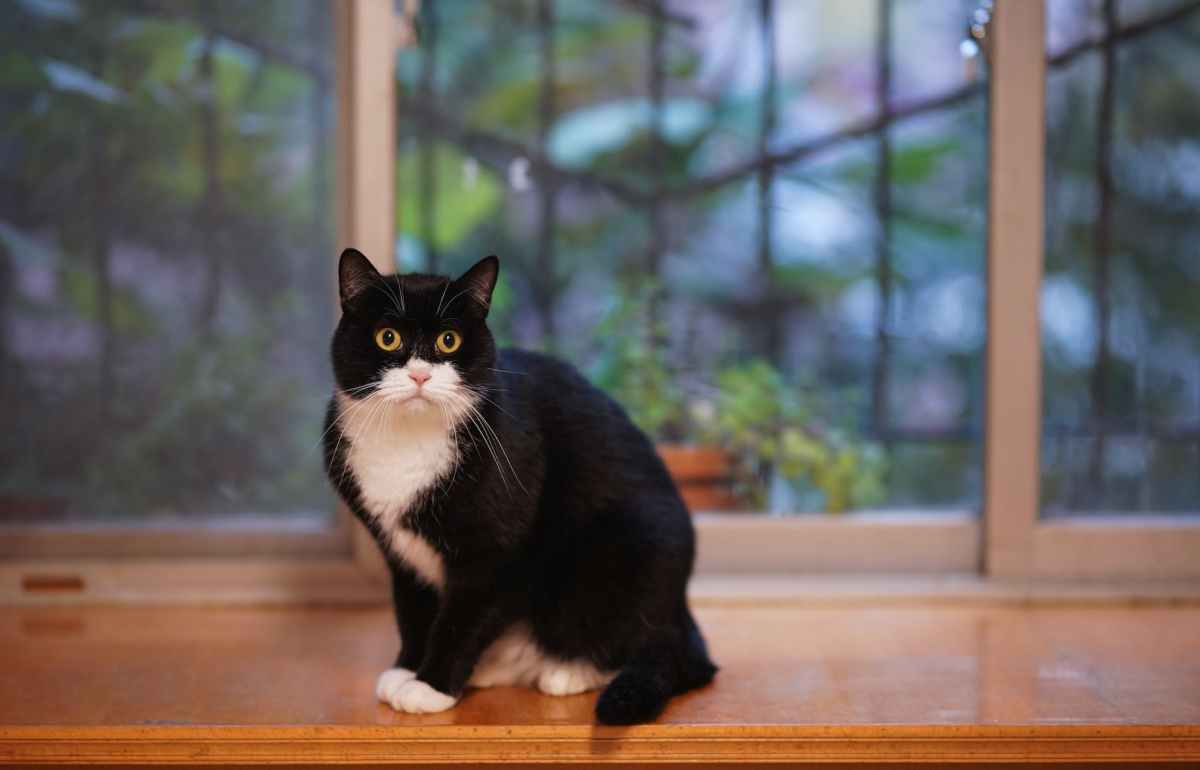
a fluffy cat on a sidewalk
A “feeral ket.” Credit: Ferhan Akgu00fcn/Pexels

Still, as I’ve written in earlier posts, government intervention was inevitable without proactive measures. Australia’s cat lovers and caretakers would do well to voluntarily keep their pets inside, and to double their efforts to catch, spay/neuter and find homes for as many strays as they can.

If you live in Australia, you have until December to provide feedback to the federal government, and it’s probably a good idea to check with your local animal welfare groups, which are undoubtedly composing their own responses to the plan.

Two Families Battle Over A Cat, Prompting The Question: What Defines Pet ‘Ownership’?

Bob/Maui the cat was adopted by one family in 2013, went missing a few months later and was rescued by another family, who have had him for 10 years.

Bob the cat was adopted by Carol Holmes of Wichita, Kansas, in 2013.

Holmes says Bob disappeared a few months later and that was the last she saw of him.

Alex Streight, who also lived in Wichita at the time, found Bob in a bad way, malnourished and in “bad condition.”

“He was in horrible shape,” Streight told WRAL, a North Carolina TV news station. “I fed him, kept looking for [the] owner. I posted in the Wichita groups, but I never found anyone.”

Streight, who was 27 years old and pregnant at the time, said the veterinarian gave her no indication the cat belonged to anyone, and her efforts to find a potential owner were unsuccessful, so she paid for his veterinary fees, adopted him and named him Maui.

When Streight moved to North Carolina in 2015, she took Maui with her and he’s been living happily with her family ever since. In late August Maui slipped out of Streight’s North Carolina home. A neighbor picked him up and brought him to the vet, and the veterinarian realized there was a microchip. A scan showed Holmes as the cat’s owner.

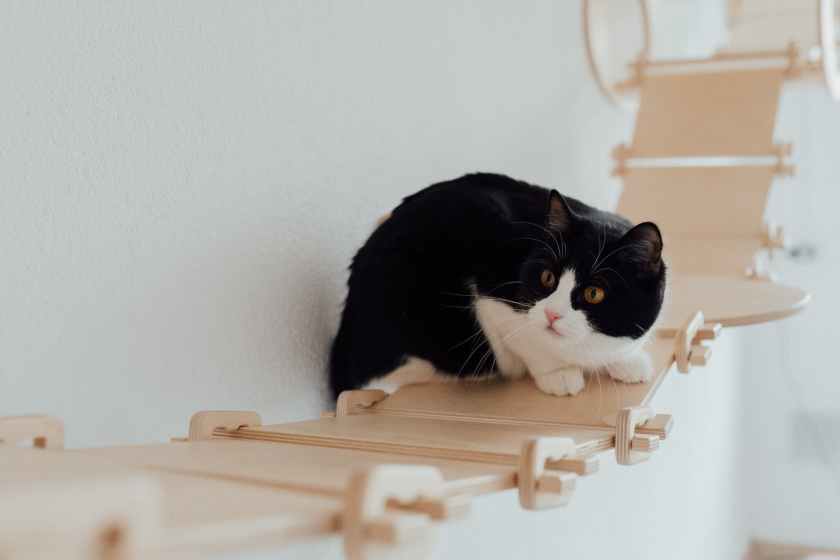
a tuxedo cat on a hanging wooden bridge
Credit: Arina Krasnikova/Pexels

Now Bob/Maui is in the custody of Wake County (NC) Animal Control, whose staff don’t sound keen on returning the cat to Streight. They’ve called Wilson, who said she’d like to be reunited with Bob/Maui, and when Streight went to animal control to get her cat — returning with the veterinary records when they wouldn’t release him to her the first time — the staff called police.

“The cat is in protective custody where an investigation will begin,” Jennifer Federico, a veterinarian with the county animal control, told the station. “The cat is safe and isolated.”

Federico seems intent on making the situation more complicated than it needs to be, telling WRAL that “Microchipping proves ownership, so we have to take that into consideration, and launch a full investigation.”

Streight doesn’t see it that way. She wasn’t registered as the owner on the chip, but she’s got 10 years’ worth of veterinary records, a photograph of Maui laying on her couch the day he slipped out of her house, and photos and videos showing the tuxedo cat with her kids and other pets over the past decade.

“It’s just absurd to me that anyone would think to take someone’s pet away from the family that he’s been with for ten years,” Streight said.

We have to agree with Streight here, and it’s disturbing that animal control has not only made itself the arbiter of the cat’s fate, but has apparently decided that nominal ownership based on a microchipping from 2013 trumps the fact that Maui has been happily a part of Streight’s family for at least 95 percent of his life.

We feel for Wilson, but Streight did everything right: She looked for the cat’s family, posted about him online, cleaned him up and got him veterinary care, then adopted him when all indications were he didn’t have a home. With a decade’s worth of vet bills, photos and videos backing her up, it’s clear Maui is happy in her home, has been well cared-for, and if he could speak there’s little doubt about where he’d prefer to go.

She’s clearly bonded to the cat, and he to her: Only someone who really loves their furry friend regularly takes photos of their cat, even after 10 years. I can attest to that fact: Probably 60 or 70 percent of the photos on my phone are of Buddy, and I’d be devastated if we were separated.

What do you think? Should Bob/Maui be returned to Wilson or Streight?

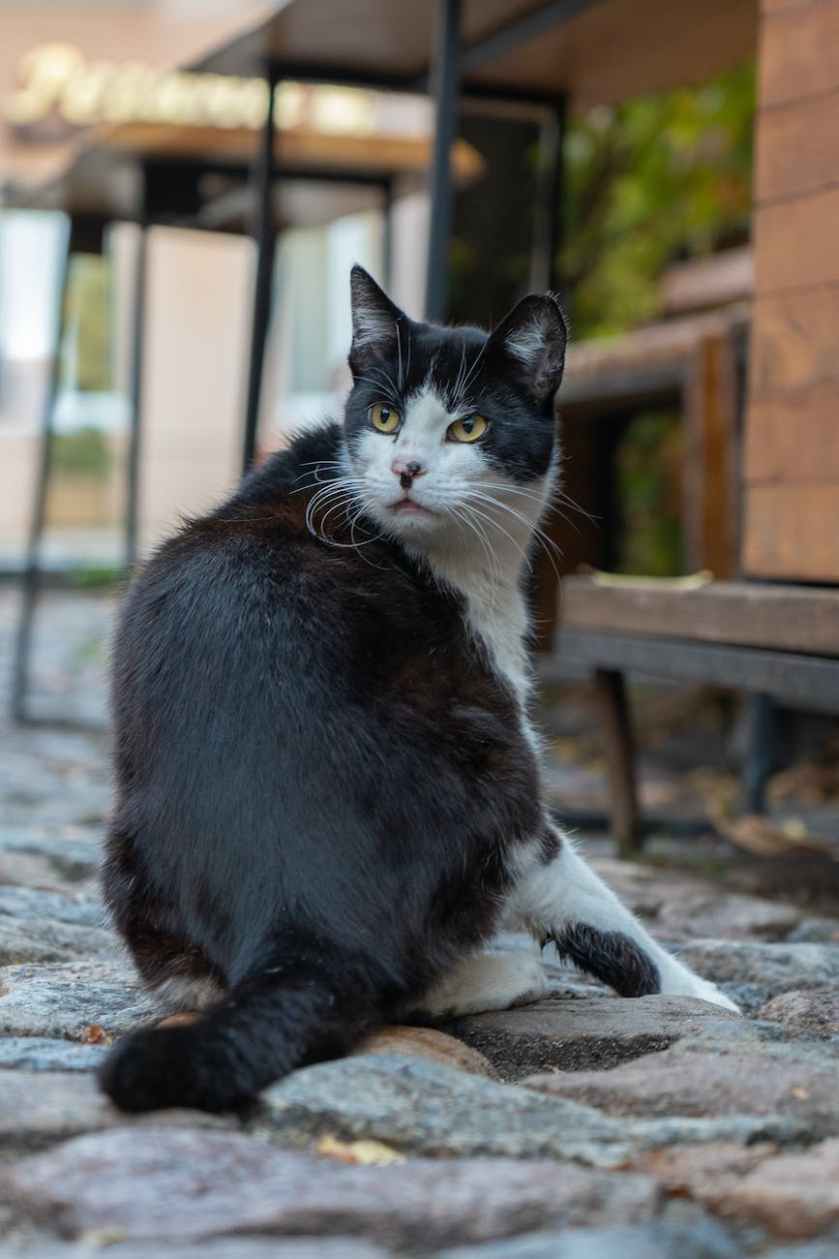
tuxedo cat sitting on ground
Credit: Dima Solomin/Pexels

At Exeter Cathedral, Felines Have Feasted For Centuries Thanks To World’s Oldest Cat Door

Viking raiders, Roman ruins, an astronomical clock and a bishop who badly needed the services of a competent feline hunter: the story of the oldest known cat flap.

In 1598 Bishop Cotton arrived at his new post to find he had a serious rodent problem.

The new leader of Exeter Cathedral realized mice and rats were attracted to the animal fat used to lubricate the complex inner workings of the ancient structure’s astronomical clock, so he did what any sensible person would — he got himself a cat and had a flap installed so kitty had free reign of the church grounds and the chambers that held the hidden clockwork.

The newly-discovered details came to light thanks to the efforts of Diane Walker, the cathedral’s historian. One record shows the bishop paid a carpenter eight pence to cut a circular, cat-size hole in the heavy wooden door leading to the clockwork chamber, as well as ledgers showing the cat was officially on the church’s payroll.

“Back in the 14th and 15th Centuries we have records in the cathedral of payments of 13 pence a quarter for the cat and occasionally 26 pence a quarter for the cat,” Walker told the BBC. “We don’t know if that was double rations because they had been doing a good job or whether there were actually two cats.”

365692370_686569446830535_5166972407635373821_n
Credit: Exeter Cathedral

I love the idea of a happy cat licking her lips and cheerfully chowing down on medieval Temptations as reward for a job well done.

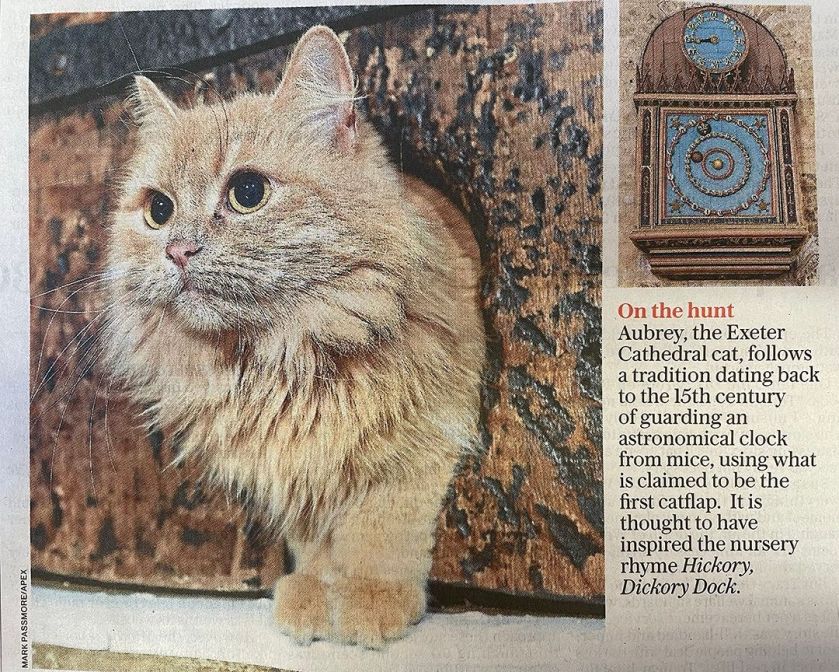
The cathedral has provided steady employment for felines, who still keep the rodents at bay on the grounds more than 400 years after Bishop Cotton hired his first mouser. Cute ginger tabby Audrey, pictured above, holds down the fort these days.

Exeter Cathedral has an interesting history besides its feline employees. It owes its existence to the vikings: the church decided to build a new cathedral as the bishop’s seat because his previous post was located near river routes and was vulnerable to raids from viking invaders.

Exeter Cathedral
Credit: Exeter Cathedral

Previously the site of several Roman structures, including a public bath house, the grounds were chosen because Exeter was a prosperous, bustling city and church officials thought it had a bright future.

The cornerstone was laid in 1112 and it took almost 300 years to finish, becoming one of the finest examples of a gothic cathedral in the Norman style.

The ‘Litter Boxes In Schools’ Lie Just Won’t Die

Montana’s top education official is the latest government official to claim kids who “identify as cats” are relieving themselves in litter boxes at school.

Our esteemed nation’s infantile culture wars were front and center in the lead-up to the 2022 midterm elections, and dozens of candidates — including prospective governors, senators, congressmen and people eyeing local offices — humiliated themselves by promising to end the alleged scourge of public schools providing litter boxes so students who “identify as cats” can comfortably shit in a manner befitting their adopted species during school hours.

As we’ve pointed out before, the litter boxes in schools thing is an urban legend, a hoax or a malicious lie depending on your perspective. It’s also an exercise in unfairly dragging cats into our petty ideological arguments, and the poor little guys can’t seem to claw their way out.

People like podcaster Joe Rogan, congresswoman Lauren Boebert and her sister from another mister, Marjorie Taylor-Green, are among the most prominent public figures to fall for the hoax and do their part in spreading it. Even the Australians got in on the panic.

We looked into the claims at the time, and none of them turned out to have any merit. In most cases, the claims were based on third- and fourth-hand accounts: “My neighbor’s sister works in the Washington Free School District, she says another teacher told her they were putting litter boxes in the middle school!” and that sort of thing.

The other claims evaporated when the people making them were asked to provide specifics. Rogan managed to check both boxes when he finally admitted he couldn’t confirm his story.

‘I have a friend and my friend’s wife is a school teacher,” Rogan said on his podcast. “And she told him that there was discussions in the school that the mother wanted to put a litter box in a school.”

The claims died down after midterms, but they’re back again with the top education official in Montana claiming cat-identified children all over her state are pooping in litter boxes with the blessing of their teachers and principals.

“Let’s talk about boys in girls bathrooms and that safety issue,” said Elsie Arntzen, superintendent of public instruction in Montana, in an Aug. 15 interview with Montana Public Radio. “Let’s talk about those litter boxes that some schools are putting out for children who want to view themselves as some sort of an animal. Is this where public education should be? I say no.”

Arntzen
Arntzen, who has congressional ambitions, hasn’t been able to produce evidence of her claims. Credit: Montana state government

When asked to provide details, Arntzen doubled down, claiming she had evidence that schools in her states were equipping bathrooms with litter boxes. When Montana Free Press looked into the claim and Arntzen’s own office couldn’t produce anything to substantiate it, Arntzen through a spokesperson claimed that, actually, the office has complaints from parents “all over the state,” which they claim qualifies as the aforementioned evidence. In a development that surprised no one, Arntzen’s office couldn’t produce those complaints either and reluctantly admitted it had not fielded calls or emails from concerned parents.

Which means Arntzen, who is eyeing a congressional seat in her state, based her claim entirely on hearsay, just like all the others.

It’d be nice if this is the last we hear of the urban legend, but with 2024 around the corner and the culture war more intense and irritating than ever, chances are this is only a preview of many similar claims to come.

New Zealanders Make No Excuses For Shooting Cats, Calling Them ‘Bird-Killing Machines’

There’s not a shred of evidence that shows arbitrarily gunning down cats has any positive impact on the environment, but that hasn’t stopped vigilantes from hunting them.

There’s this bizarre and infuriating idea among people who call themselves conservationists that they can save certain animals by running around and arbitrarily gunning down other animals.

These people will shoot certain species of birds to protect other bird species, extirpate ferrets, pine martens and various other mustelids, and have had a hard-on for cats ever since a series of shockingly dishonest pieces of propaganda masquerading as studies used fabulated data to paint felines as furry demon spawn who feast on birds by the billions in countries like the US, New Zealand and Australia.

They used to be quiet about it because they realized gunning down cats isn’t exactly good PR for their cause, but now they don’t even bother.

Like John McConnell, a 67-year-old New Zealander whose hobby is going out with a rifle to shoot cats at night because he thinks that’s an effective way to protect birds.

“I shoot them,” McConnell told The Guardian. “Seriously. If it’s a cat and I know whose it is, I’ll leave it. But if it’s a stray cat – it’s a goner. Even if it’s domestic and it’s out at night, I’m getting to the point where I’d shoot those as well, because they shouldn’t be out.”

Two things to note here:

  • McConnell is playing vigilante cat killer, having appointed himself arbiter of which animals get to live and which ones don’t, but he doesn’t understand that stray, feral and pet cats are all the same species. This is a man who thinks the difference between a domesticated and wild animal is whether it has a home.
  • The article contains no statistics and nothing in the way of numbers other than a wild estimate of New Zealand’s cat population, yet it’s filled with anecdotes: people who claim they see more birds after they’ve bagged a couple of cats, but can offer no evidence. That’s not an effective or smart way to make public policy.

Between the bogus studies and the lack of any data remotely suggesting that arbitrarily shooting domesticated animals has a measurable impact on bird populations, there is nothing to support this kind of ruthless nonsense. You’d think that, if an entire country is going to war with an animal species and has vowed to take potentially millions of lives, there would be something — anything — to back up the claim that inflicting all that misery and suffering on sentient creatures would accomplish a conservation goal.

mouseplagueaustralia
Australia’s reward for culling cats: annual mouse plagues for the past three years since killing millions of cats with air-dropped sausages laced with a chemical that is poisonous only to felids.

Especially after their neighbors, the Australians, killed two million cats with poisoned sausages in a similarly misguided attempt at protecting wildlife and were rewarded for their efforts with three years (and counting) of biblical mouse plagues that destroyed thousands of homes, farms and businesses, and caused billions in damage. Mice, by the way, are a non-native species introduced by settlers from the UK.

Credit another blow to the environment from human behavior as people randomly shoot cats. I suppose blaming cats is easier than admitting we’ve behaved abominably and are the root cause of these problems.

But let’s stop for a moment and imagine if the situation were reversed. Imagine people who want to protect cats decided they’re going to start shooting dogs, foxes, coyotes, owls, eagles and other large birds of prey.

Suppose someone decided that John McConnell’s dog shouldn’t be out for walks and shot it in an act of conservationist vigilantism.

Would anyone tolerate that? Wouldn’t they be labeled lunatics and condemned? What makes the cat culling any different, aside from “justification” in the form of a handful of widely-condemned, heavily-criticized studies that violate just about every elementary rule of scientific research?

Here’s comedian Bill Burr’s take on the absurdity of human efforts to manage wildlife population by shooting animals. Burr, whose everyman facade and humor often mask salient points, also takes the rest of us to task by pointing out it’s humanity, not the behavior of animals, that has the biggest impact on the planet and its wildlife, yet no one’s suggesting we cull our own population.

“I think it’s weird that human beings are trying to control the populations of animals. You know? Like any time the deer population gets out of control, some dude will get on TV like [puts on a redneck accent] ‘Okay, the deer population is up to about 17, 1,800, realistically we need to get that number down to about five or six, alright? So starting tomorrow, if you got a gun, f—ing shoot them in the face!’ I’m just sitting at home like, ‘What are the deer doing that’s so bad for the environment?’ [Slips into a redneck accent again] ‘They eat all the f—in’ grass! They comin’ up to trees, just nibblin’! Just nibblin’!’ Dude, the deer didn’t put a hole in the ozone layer, alright? That’s not a bunch of dogs clogging up the freeway. It’s us, alright?”

Then he lays into people who breed like rabbits, and this is a personal pet peeve of mine whenever I hear someone like Alec Baldwin, a man who has eight children, four massive homes, a fleet of SUVs and an army of nannies, holding court on environmental responsibility and global warming. Baldwin has 12 to 16 people living under his roof at any time, with palatial homes that consume more energy each than entire European villages, yet that doesn’t stop him from adopting a patrician tone and lecturing the “peasants” (his word) on their environmental responsibilities.

A word of caution: while I think Burr is hilarious, this clip is also peppered with obscenities, as his most of his material. If that sort of thing bothers you, skip the clip. If not, well, he’s got a point: