Alabama Cat Ladies Sue City Officials Over Arrest, Conviction For Trapping Cats

The women were arrested for managing a cat colony in the summer of 2022, convicted in December, then won a subsequent appeal in April of 2023. Now they’ve filed a lawsuit against the police and mayor involved in the saga, alleging false arrest and malicious prosecution.

Two women who were arrested for trying to manage a colony of stray cats have filed a lawsuit against the mayor, police chief, assistant chief and three officers involved in the ugly incident.

The July 2022 arrest drew nationwide outrage and condemnation as police responded in force to a complaint that Beverly Roberts, 86, and Mary Alston, 61, were trespassing in a wooded area and trapping cats. Body camera footage showed police treating the women like violent criminals, the police response itself was disproportionate, and the police chief doubled down on his insistence that the women deserved to be treated harshly even after damning footage showed the officers laughing about “beatin’ up on some old ladies.”

Now Roberts and Alston have sued Wetumpka Mayor Jerry Willis, Police Chief Greg Benton, the assistant chief and three officers, according to the Montgomery Advertiser.

Noting that the women were paying out of their own pockets to help manage the stray cat population, the paper detailed the allegations in the civil suit:

“The suit alleges that Willis directed their arrests and that Benton and Reeves acted on the mayor’s orders. The women had angered city officials for “being vocal” about the care of animals in the city and appearing at several city council meetings to complain that the city was not enforcing anti-animal cruelty ordinances on the books, specifically the law banning the chaining or tethering of dogs, the lawsuit states.

The suit argues that the women were arrested under false circumstances. The women were originally charged with criminal trespassing.”

Footage of the summer 2022 arrest showed officers handling the women roughly, jabbing their fingers in their faces, threatening them with additional charges and barking at them to move more quickly.

The women were taken aback.

“I’m teetering on going to jail for feeding cats?” Alston asked in body camera footage of the police response.

Another officer towered over Roberts, jabbing a finger at her and warning it was “going to get ugly” if she didn’t move more quickly before eventually cuffing her.

bravecop
A Wetumpka police officer wags a finger at Roberts, who was 84 years old at the time, before handcuffing her hands behind her back and rifling through her personal possessions.

After a show trial in municipal court in late 2022, in which Roberts and Alston were convicted of trespassing by a judge appointed by Mayor Jerry Willis, the women appealed. Despite the conviction, the municipal trial resulted in the release of damning information, including the fact that it was Willis himself who called the police on Roberts and Alston, that he did so because he didn’t like their complaints about the way the city handled animal issues, and that he instructed the police to arrest the women before they arrived in four patrol cars and had a chance to assess the situation.

Willis called the police after spotting Alston’s car near a county-owned plot of land, and lacking any ordinance that prohibited feeding or trapping stray cats, the police resorted to charging the women with misdemeanor trespassing and “obstructing governmental operations,” a charge roughly equivalent to resisting arrest.

But the land was county-owned, there were no prohibitions on managing cat colonies or conducting TNR (trap, neuter, return), and the footage — which police tried to hide from the public for months before finally caving to legal threats from attorneys for the women — was damning, drawing universal condemnation.

Roberts and Alston appealed, and in April of 2023 county court Judge J. Amanda Baxley accepted a motion by prosecutors to drop the case.

The civil suit “alleges unlawful seizure and detention, excessive force, malicious prosecution, negligence, wantonness and other counts,” per the Advertiser.

Attorneys for Roberts and Alston didn’t specify a dollar amount, but said they’re seeking “compensatory and punitive damages” and legal fees related to the arrest and resulting drama, which has played out for more than a year and a half. A spokesman for the City of Wetumpka did not respond to the Advertiser’s request for comment.
Cats Are Fighting The Ukraine War On The Propaganda Front — And From The Trenches

From the military camps where they stop mice from wreaking havoc to social media where they help raise money, Ukraine’s felines are enduring the war alongside their people.

Roman Sinicyn and his men were living in an abandoned house in a destroyed village for a month.

Although each of the Ukrainian soldiers contributed to their survival and fought the Russians, perhaps their biggest hero was Syrsky the Cat.

The fearless feline evicted a rodent infestation in the platoon’s temporary headquarters, hunting the mice mercilessly as his humans engaged in firefights with invading Russians. By day Syrsky made the soldiers’ temporary lodgings livable and by night he soothed their trauma with healing purrs.

The cheese-loving moggie’s moniker is a double-entendre: he’s named for Ukrainian Army Land Forces Commander Oleksandr Syrsky, and for the Ukrainian word for cheese, syr.

A new story from Politico EU details the important role of felines as the costly war enters its third year. Russian missiles, bombs and artillery have flattened villages, sending civilians fleeing and often separating them from their families and their pets.

The bewildered cats and dogs, accustomed to easy lives indoors, are suddenly thrust into a world of death, explosions, mine fields and other horrors.

As the war endured past its early phases, former pets began seeking out humans where they could find them — in military camps and in the rodent-infested trenches where they hunkered down against the constant thunderclaps of Russian artillery.

During peak war season in the summer, Vladimir Putin’s bedraggled military fires up to 20,000 artillery rounds a day according to the Associated Press, with that number dipping to “only” 7,000 per day as the war machine slows in brutally cold Slavic winters.

shaybykcat
Oleksandr Liashuk, a Ukrainian soldier, with his cat Shaybyk. Credit: Oleksandr Liashuk

Just like they did 10,000 years ago when they first domesticated themselves, cats proved their worth by chasing out mice and rats, but this time they didn’t have to convince humans to allow them to stick around. They were welcomed with open arms and hands bearing snacks, serving as hunters and therapy animals to men enduring a living hell.

“When this scared little creature comes to you, seeking protection, how could you say no? We are strong, so we protect weaker beings, who got into the same awful circumstances as we did, just because Russians showed up on our land,” Oleksandr Yabchanka, a Ukrainian medic, told Politico.

It’s amazing how a return to primitive circumstances has so quickly pushed humans back toward reliance on animals who made it possible for our species to survive in the first place.

Without dogs, early hunter-gatherers would have been much worse off on the hunt and their groups would have been much more susceptible to ambush when they slept. Indigenous societies eking out existences on the tundra would have no reliable animals to pull sleds. Without oxen to pull plows, farmers wouldn’t be able to produce enough food for civilization to thrive and grow.

And the people of nascent human settlements, taking the first great leap forward for our species with the invention of agriculture, would have starved out over long winters as mice and rats gnawed away at their food stores — if not for cats, our furry friends.

In 2024 humans can’t live without cats once again. Felines patrol Ukraine’s World War I style bunkers, killing hordes of mice. Mice that otherwise devour MREs, chew through comm link and power wires, damage weapons and make soldiers miserable.

ukrainecat
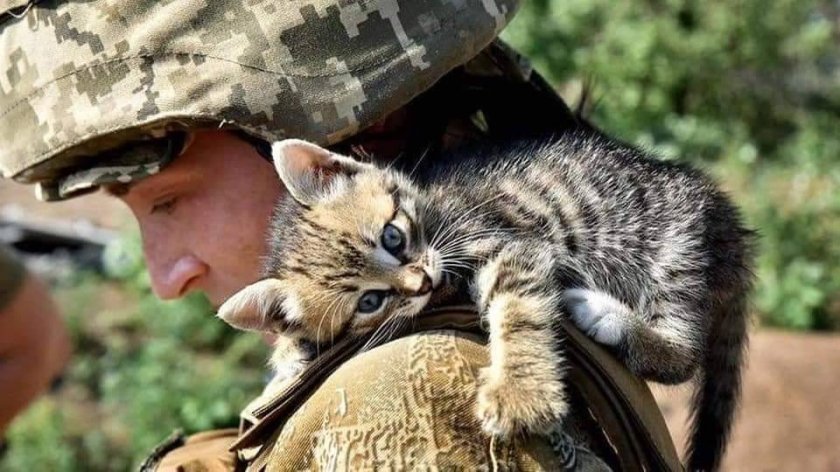
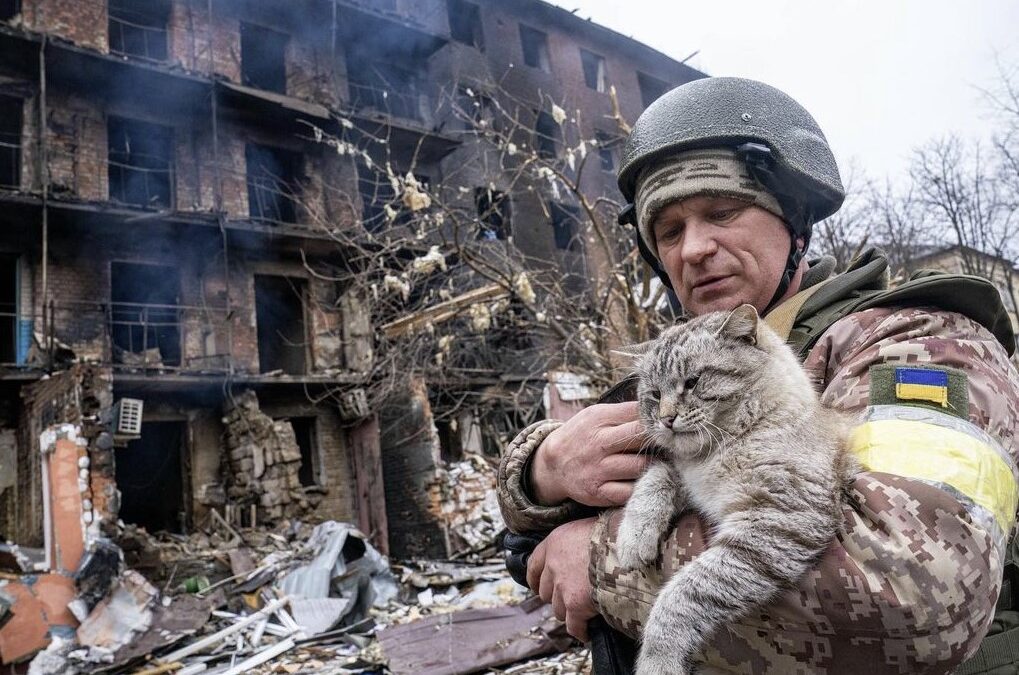
A Ukrainian soldier with a stray kitten. Credit: Ukraine Ministry of Defense

Some cats become unofficial unit mascots and good luck charms, but many others are claimed by individual soldiers who find normalcy and relief in their company.

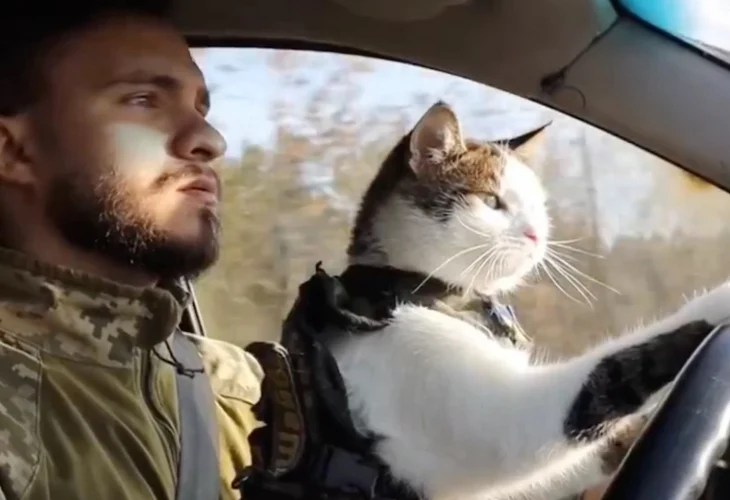
One soldier/cat pair are viral sensations thanks to videos of the alert cat riding along with his human, scanning the terrain ahead. Another story detailed a patrol whose men just avoided an ambush thanks to their company’s cat, who spotted the enemy first and frantically warned that something was wrong.

In that way, cats are serving the propaganda effort as well, helping the public to connect to the men and women defending them.

Military cats have become signals for Ukrainians to rally around, but Russians are doing it too. Russia is a famously cat-loving country, and Putin’s government has latched onto stories about the felines accompanying his men into battle — an effort that Politico notes is meant to humanize Russian soldiers and create the impression that it values them even as it continues to conscript unwilling civilians and ship them to the front line “meat grinders” with a few weeks’ worth of training, meager supplies and minimal ammunition for their rifles.

In that respect, the soldiers of Ukraine and Russia have at least two things in common — they love their feline companions, and they’re enduring hell as well as a high risk of death because of one small man’s delusions of greatness and legacy. Western media tends to ignore the humanity of Russian conscripts, and the pro-Ukrainian side of the internet calls them “orcs,” painting them as the mindless and disposable drones of a bloodthirsty dictator.

But they’re human too, with their own hopes and fears, and mothers back home worrying about them. They don’t want to be there. It seems fanciful to imagine Russians refusing to continue the invasion when Putin has squads behind the front lines with guns pointed at his own men to prevent them from deserting or refusing to fight. But maybe the men in the trenches can come together over shared interest and shared love of cats, and help put an end to three years of misery.

The First HD Video Streamed From Space Is A Clip Of A Cat Chasing A Laser

In Netflix’s Three Robots, a trio of intelligent wise-cracking machines tour post-apocalyptic Earth after humanity nukes itself out of existence. While humans are long gone from the planet, felines are not, and before long the robots encounter a gray tabby.

“What’s the point of this thing?” one robot asks its friends, looking skeptically at the yawning cat.

“Apparently there’s no point, they [humans] just had them,” the second robot says.

“Well, that’s underselling their influence,” the third robot says. Humans, it explains, “had an entire network that was devoted to the dissemination of pictures of these things.”

The ongoing joke that the internet and modern telecommunications systems were invented solely for the purpose of sharing cat photos and videos won’t die any time soon now, thanks to NASA.

To inaugurate and test its new Deep Space Optical Communications (DSOC) system, which uses lasers instead of radio signals to transmit data, the famed space agency streamed a high definition video of a cat named Taters chasing a laser.

The 15-second clip took half a second to transmit from the spacecraft Psyche and 101 seconds to cross the 19 million miles (30 million kilometers) between Psyche and Earth. For context, that’s a journey about 80 times as long as the distance between Earth and the moon.

So why is NASA doing this? Why create a new communications network when the old one still works? And why send a video of a cat?

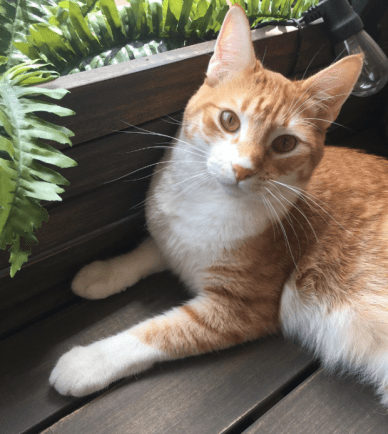
Taters
Taters the cat. Credit: NASA

The answer to the first question is simple: Our machine proxy explorers need more bandwidth to send back data and ultra high definition photos/video of the strange worlds they’re exploring.

We send robotic probes to destinations like the asteroid belt and Venus because we can’t go ourselves, and because it’s the most efficient way to explore. The indomitable human spirit drove us to explore our own planet, and it’s expected that eventually human eyes will see the oceans of Europa and the surface of Mars. But we still have some big engineering challenges ahead of us, like figuring out how to build ships that adequately shield astronauts from radiation, and medical/biological challenges like how to prevent vision, bone density and muscle loss in low or zero gravity.

So in the meantime robotic probes are our ticket, and their numbers are growing quickly.

There are more than 30 active probes exploring our star system now. Most belong to NASA, but others belong to space agencies from the EU, South Korea, Japan, Russia and India, among others. Another 27 new spacecraft are expected to launch this year, headed to destinations like Venus, Mars and the many moons of Jupiter, and at least that many are scheduled to join them in 2026.

That’s a lot of probes.

Each of those craft will have to transmit data back to Earth — scientific data, but also high definition photos and videos of planetary and moon surfaces, asteroid compositions and more.

There isn’t a traffic jam — yet. But there will be soon if every probe’s data is bottlenecked by the lower-bandwidth radio system.

While laser and radio transmissions both travel at the speed of light, the shorter wavelength of laser light allows more data transfer. In simple terms, the DSOC network is like upgrading from an old phone modem to broadband.

As for why NASA chose a video of Taters chasing a laser, there are two main reasons: Fun and honoring history.

Taters’ human, Joby Harris, works for NASA as a visual strategist. When NASA employees were talking about the significance of sending the first high-def video from a probe to Earth, one staffer mentioned that one of the first — or perhaps the first — test videos in the dawn of television was a simple video of a statue of Felix the Cat.

The rest fell into place. Transmitting a video of a cat chasing a laser seemed like the natural choice to test a laser-based comms system. Taters has become something of a celebrity in the process.

One thing we can be sure of: if aliens are watching us from afar, there’s a good chance they’ll conclude felines are the ones running things down here. They may not be wrong.

You’re Allowed To Be Angry About A Dead Cat In Russia

The outrage over the death of a pet cat may be the best barometer of Russia’s national mood as its disastrous war on Ukraine enters its third year.

For the past two years I’ve had a lurid hobby. I’ve been watching translated clips from the bizarre world of Russian state TV, where Vladimir Putin’s pet propagandists tell the Russian people what to think.

There’s ringleader Vladimir Solovyov, a guy who dresses like the admiral of a galactic fleet of military starships and is prone to wild mood swings. Depending on when you catch Solovyov he could be cackling maniacally at the prospect of nuking London or crying into his microphone as he laments the loss of his overseas bank accounts and his boss’s slipping grip on power.

There’s Margarita Simonyan, the 43-year-old head of RT (Russia Today) and rumored alcoholic who, strangely, is even-keeled compared to Star Admiral Solovyov.

Then there are the second-tier propagandists: Olga Skabeeva, the “Iron Doll of Putin TV” who matter-of-factly endorses horrific war crimes, and men like Anton Krasovsky, who famously fantasized about drowning Ukrainian children in the Tysa River, a tributary of the Danube, his desk rising three inches as he excitedly repeated “Just drown those children, drown them!” Apparently he forgot he was on television and said the quiet part out loud, forcing his boss (Simonyan) to grudgingly condemn his words.

Simonyan and Solovyov
Margarita Simonyan, left, and Vladimir Solovyov, right, are two of Russia’s most famous pro-Putin propagandists. Credit: Russian state TV

Solovyov, Simonyan and the others looked like a bunch of investors celebrating the sale of a billion-dollar company during the opening phases of the war in early 2022, giddily playing footage of Russian missiles taking out Ukrainian apartment buildings and artillery flattening hospitals.

Their rhetoric was extra-dimensional at the time: they spoke often of a glorious New World Order with Russia at its head and all of humanity united under Putin’s tiny feet, where people would undoubtedly conclude that life under Russian masters is better than any over-hyped concept of freedom.

When Russia faltered and Ukraine began stringing together victories with the help of western weapons and real-time intelligence from the US and UK, the tone of Putin’s propagandists grew bitter. Their body language mirrored their frustration. Solovyov began a tradition of threatening to nuke a different country every day, for “crimes” like acknowledging the reality of Russia’s military incompetence or calling for peace.

To date, Solovyov’s threatened to nuke the UK, France, Spain, Germany, Italy, Japan, Finland, Sweden and the US, and that’s just off the top of my head. He especially hates the British for reasons that aren’t entirely clear, but he regularly makes it clear that it’s only through Putin’s benevolence that cities like London and Paris continue to exist.

He’s also extremely fond of Tucker Carlson: he plays clips from Carlson’s show on X regularly, offered him a job after the American was fired by Fox News, and has declared him the greatest journalist in the western world.

In Putin Russia, cat feed you!

I thought of that motley crew of Putinious jackwagons this week as I read about the Russian public’s horrified response to an incident on a train.

A couple was traveling on a Russian Railways train to St. Petersburg when their beloved cat, Twix, escaped his carrier. The frightened ginger tabby just kept running until he was scooped up by a female conductor, who unceremoniously tossed him into the snow in Russia’s frigid Kirov Oblast. Temperatures regularly dip into the single digits and below zero in the winters there.

On Jan. 20, after a search joined by hundreds of people, little Twix’s body was found in the snow about a half mile from the train tracks. The feline, who was used to safety and warmth, suffered multiple animal bites and died either from his wounds or the temperature.

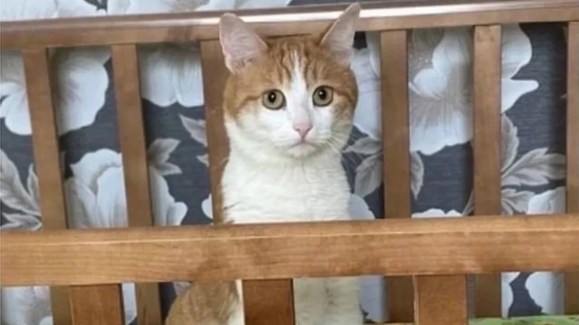
twixcat
Twix the cat in a photo from his family that was reposted to a Russian Telegram channel.

To say Russians are furious is an understatement.

Twix’s fate has been the talk of Russian social media platforms for days. Surveillance camera footage of the conductor tossing the tabby ignited a new level of rage. As of Wednesday more than 300,000 Russians had signed a petition calling for the firing of the conductor, whose name hasn’t been released by the state-owned passenger railroad company. A second petition goes further, calling for criminal prosecution, and has 100,000 signatures in just a few days.

Public outrage about the fate of Twix just might be the first authentic sentiment to reach Russian media in years.

In an unusual move, the government acquiesced — partly — to the public’s demands and pulled the conductor from duty pending an investigation. They’ve also acknowledged that Twix’s humans had properly purchased a pass for him and were riding in a car designated for passengers with pets. In the future, they’ve vowed, conductors won’t toss animals from trains.

Russia is a famously cat-loving country. Felines comprise more than 64 percent of all pets kept by Russians, and more than half of all Russian households have pet cats. They’re considerably more popular than dogs in the nation of 143 million.

Cats are popular in Russian folklore, where traditions say the furry ones have the power to ward off evil, and they’re a much more convenient pet for the millions who live in Soviet-era apartment blocks in cities like Moscow and St. Petersburg.

Still, this feels like something more.

Russians haven’t had an easy two years thanks to Putin’s disastrous “special military operation.” They can face years in prison simply for calling for peace with Ukraine. Unless they’re part of the nation’s elite or have connections among them, men can’t leave the country because the military needs more warm bodies. The country’s economy is in shambles as the government pumps more money into the war and international sanctions have taken their toll.

russiantankloot
A Russian tank laden with loot, including a toilet, rolls past the ruins of residential buildings in Popasna, a city in eastern Ukraine.

The government has canceled or downplayed annual military celebrations so the public won’t be reminded of the war’s costs. Russia is on pace to lose an astonishing 500,000 men in two years of combat, according to the UK’s Ministry of Defense, and Putin has tried to stem the anger of the country’s mothers by staging several meetings with actresses posing as the moms of Russia’s war dead, events which have been heavily covered by state press.

Russians can’t oppose the war they’re dying in. They can’t mourn their dead fathers, sons, brothers and husbands, not by revealing their real emotions.

Quality of life has further degraded in a country where tens of millions don’t even have indoor plumbing, which is why there have been so many clips of Russian soldiers stealing toilets, washing machines and other appliances from Ukrainian homes. The prospect of being pulled off the street, sent for two weeks’ worth of rudimentary training and deployed as cannon fodder hangs heavy over the heads of Russian men and their families, especially ethnic minorities and the poor.

But Twix? They can mourn him. They can get angry about what happened to him. The furious public sentiment regarding his death wasn’t manufactured by Solovyov and company. State TV didn’t spark the backlash, it was forced to acknowledge it.

I’m neither a Russophile nor an expert on that often difficult-to-understand country, but I’d bet all my rubles that those dueling petitions say more about the Russian mood than any opinion poll to come out of Russia since 2022, and definitely more than the words of anyone allowed to express an opinion on Russian TV.

RIP Twix.

The UK’s Big Cats Are Just Like UFOs, Existing In Blurry Photos And Human Imagination

Blurry photos and fleeting encounters keep the legend of big cats in the UK alive. Could there be leopards, pumas and other large cats roaming the countryside?

For all the advances in optics and camera technology over the last 20 years alone, there are two kinds of people who love blurry, low-resolution footage: UFO enthusiasts and people who are convinced the UK is like a cold, rainy Africa with big cats lurking in every bush and field.

To be a member of either group you’ve got to shut down critical thinking faculties, suspend disbelief and put faith in the highly improbable. (Or the impossible when it comes to people who insist little green men are zipping across the night sky in sleek ships that defy all we know about physics and aerodynamics.)

The UK’s big cat believers claim the country is home to a thriving native population of large felids. Some of them think they’re “panthers,” not specifying which species of cat they think is out there, while others claim jaguars, leopards or tigers are prowling the English countryside, spotted only fleetingly at the edges of fields or in the brush, and only by people who own two-decade-old Nokia flip phones with rudimentary cameras.

They believe a native, breeding population not only exists, but for centuries has eluded capture and avoided leaving compelling evidence.

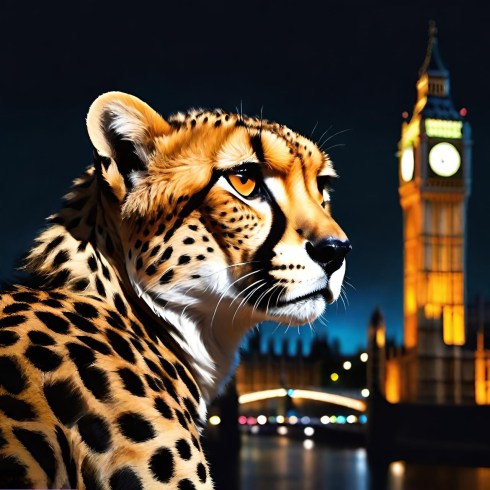
Cheetah in London
“Pardon me, mate, could you point me toward Aldersgate Street?”

The phantom cats have remarkable stealth abilities. They’ve never tripped a trail camera or appeared in a single frame of CCTV footage. Not a single tree marked for territory, not a single pile of cow bones picked clean by giant barbed tongues, not a single clump of panthera dung. Not even a hungry cub drawn into a village by the smell of barbecue on a summer night.

The reported sightings say more about human capacity for imagination — and how poor we are at estimating size over distance — than they do about the crypto-pumas and melanistic tigers some people swear they’ve seen.

When alleged big cats are spotted in the UK, they’re always seen fleetingly and from afar. When witnesses try to confirm what they’ve seen, the animals are gone.

“I was coming up to Jolly Nice from Oxford at around 7.50pm and the car in front of me was travelling at a steady pace. I looked to the verge of the other side of the road because I saw a bright pair of eyes low down. Upon further inspection, I suddenly realised there was a large outline of a low and stocky cat that was huge.”

That’s the testimony of a UK man who told the Stroud Times, a local newspaper, that he encountered a big cat a few minutes before 8 p.m. on Friday in Nailsworth, a town of about 5,600 people a little more than 100 miles west of London. His description mirrors that of others who say they’ve spotted large felids, mostly in the UK’s countryside and small villages.

Small Cats Looking Big
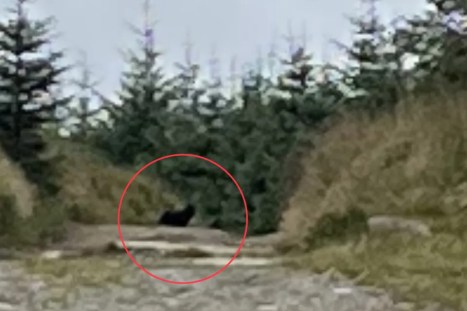
Photograph from a previous “big cat sighting.” It’s typical of the photos that surface with claims of leopards and pumas stalking the countryside. Blurred details and digital zoom make it difficult to gauge distance and scale.

The story’s headline reads: “Big cat expert’s verdict: beast spotted was a leopard.”

The expert in question is Rick Minter, an amateur biologist who has made UK big cat legends into something of a cottage industry by publishing books, hosting a podcast and frequently speaking to newspapers about the phenomenon. It’s not clear how Minter decided the animal in Friday’s sighting was a “black leopard,” but he’s said in previous interviews that he believes most alleged big cat sightings in the UK are leopards, with pumas accounting for most of the others.

Neither animal is native to Europe. Pumas range from South America to the American northwest and midwest, with isolated populations in places like Florida. Leopards are native to Africa and Asia, with ranges that overlap with lions on the former continent and tigers on the latter, mostly in India.

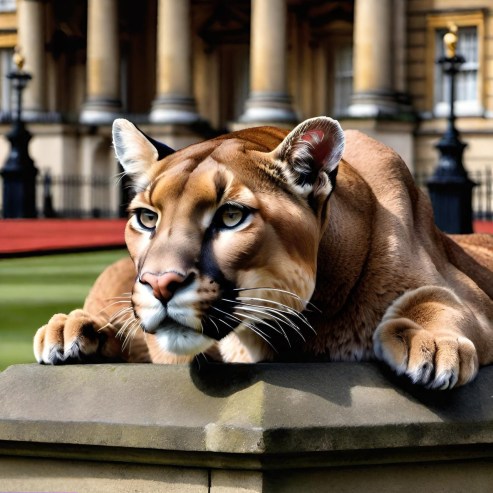
Puma at Buckingham Palace
“I’m originally from San Diego, actually, but the expat life suits me and the British are very tasty.”

Some have floated the possibility that the mysterious felids are escaped pets who have successfully adjusted to the countryside. Minter says the evidence points to breeding populations.

If there are thriving populations, the cats would need to exist in numbers, with at least 50 on the extreme low end. If they’re escaped pets, the authorities would know.

Unlike the US, where big cat ownership was banned in the vast majority of states even before the recent Big Cat Public Safety Act was passed, owning a massive carnivore slash killing machine isn’t illegal in the UK. But owners have to register their animals, seek approval for the habitats and enclosures they’ve built, and submit to annual inspection.

There have been a handful of escapes over the decades and each time the authorities were able to capture or kill the animals, often tracking them via livestock kills. Pet tigers and leopards might be dangerous, but they’re still at a disadvantage compared to their wild brethren, meaning they go for the easy, guaranteed kills when they’re hungry. Nothing’s easier than a docile farm animal that’s never seen a big cat.

Tiger at a pub
“Oi, wanna have a pint and watch Man U vs Arsenal on the telly?”

More recently, big cat hunters in the UK have tried to find more compelling evidence than a couple of blurry photographs of house cats out for a stroll. They’ve touted suspicious-looking pug marks, and in August 2022 found black fur on a barbed wire fence. According to the believers, a UK lab confirmed the fur belonged to a leopard, but there was no chain of custody, no documentation of how the sample was found and handled. Big cat experts remain skeptical.

Indeed, Oxford’s Egil Droge, a wildlife conservationist, points out that in places where big cats live, you don’t have to go hunting for evidence. It’s everywhere.

“I’ve worked with large carnivores in Africa since 2007 and it’s obvious if big cats are around. You would regularly come across prints of their paws along roads. The rasping sound of a leopard’s roar can be heard from several kilometres,” Droge wrote, noting that leopards in particular are not discriminating about what they kill and leave ample evidence of their handiwork when they’ve hunted.

Still, as improbable as the sightings are, the big cat enthusiasts of the UK have one up on UFO enthusiasts and hunters of cryptics like Big Foot, the Loch Ness Monster and the Jersey Devil: the creatures they’re looking for actually exist and may surprise us yet.