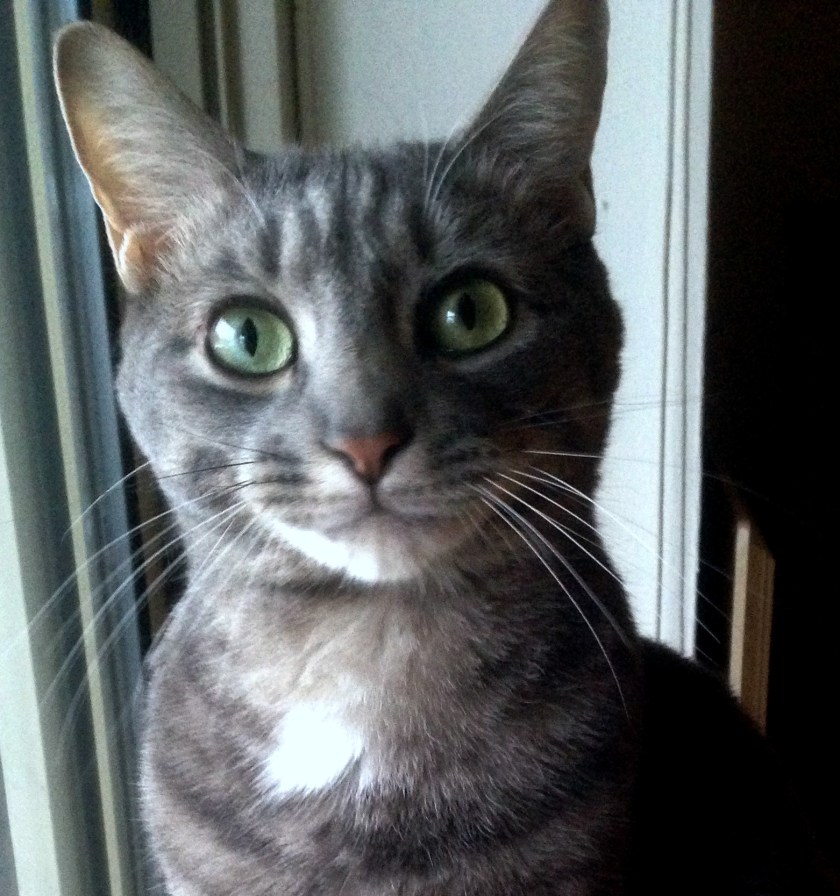
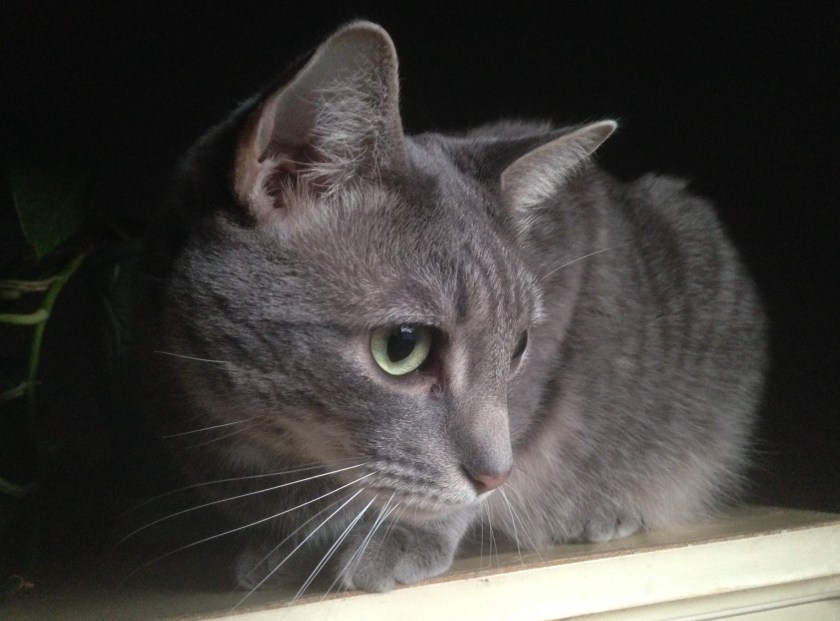
If you’re a regular reader of Pain In The Bud you know that Buddy is — how shall we put this delicately? — a complete brat.
Born to a well-loved momma cat and adopted as a kitten, the Budster has known nothing but indoor warmth, comfort and a doting Big Buddy to see to his every need.
Yet I’ve heard it said that even rescue cats, saved from miserable circumstances in hoarders’ homes or brought in from the freezing cold, have an instinctual ability to put their humans in their place.
Grateful? Yes. But to a cat it simply means the natural order has been restored with a human who realizes kitty is a king or queen.
Reader Anna Keller confirms this: She rescued her cat, Frank, from the mean streets of LA, but it didn’t take long for Frank to adjust to his new pampered reality, relegating Anna to “the servants’ quarters of Anna’s Frank’s house.”
Frank lounging in his parlor.
That got us thinking: What if every cat had access to a servant bell system a la Downton Abbey?
In order to be able to communicate efficiently with the domestic staff, internal bell systems became very popular when they were invented in 1744. Prior to this invention, servants would have to wait outside their employer’s rooms or linger unassumingly in the background of the family quarters, waiting for orders. This was considered intrusive and inefficient. The innovative bell systems therefore increased privacy and meant that servants could remain in their quarters whilst waiting to be summoned. This new facility became a standard in this era.
Imagine the labels: “Buddy’s Bedroom,” “Buddy’s Dining Nook,” “Nap Room,” “Food Can Room,” “Human Litterbox Room” and so on.
Even worse, imagine the incessant ringing!
RING! “I can see the bottom of my bowl! Get up here and fill it!” RING! “You missed a microscopic piece of turd when you scooped my box, how am I supposed to poop here?” RING! “What did we say about feeding me tuna after I’ve had salmon? No consecutive fish dishes!” RING! “I would like to be scratched behind the ears, servant!”
“Will that be all, My Lord?”
“Yes, Carson. You may retire to the servants’ quarters…”
RING! “You closed the door. We do not tolerate closed doors in this house! Oh, and Carson? Have Mrs. Patmore send up a late night snack, I’m feeling peckish.”
Hell, Buddy would use the bell even while I’m sleeping.
RING! “You just rolled over onto your back and disturbed my sleep. Do not forget you are my mattress!” RING! “Stop snoring!” RING! “Wake up and feed me breakfast!”
Note to self: Do not ever, ever allow Buddy to watch Downton Abbey, lest dangerous ideas form in his little head.
Debunking the myth that cats need to roam freely outdoors to be happy.
Sometimes you’ve gotta fib to protect the ones you love, which is how I found myself lying to Buddy the first time he wanted to go outside and ineptly chase hunt birds.
“I’m sorry, Bud, I can’t let you do that,” I said, doing my best to sound serious and authoritative.
“Why not?” Buddy asked, pawing at the door impatiently.
“Because it isn’t safe.”
Buddy was exasperated. “I’m 10 months old! I can take care of myself!”
“You don’t understand. It’s not for your protection.”
I lowered my voice conspiratorially and nodded toward the birds outside. “It’s for them. Mice too. Squirrels. Even coyotes.”
Comprehension dawned on the little guy’s face.
“To protect them from me?”
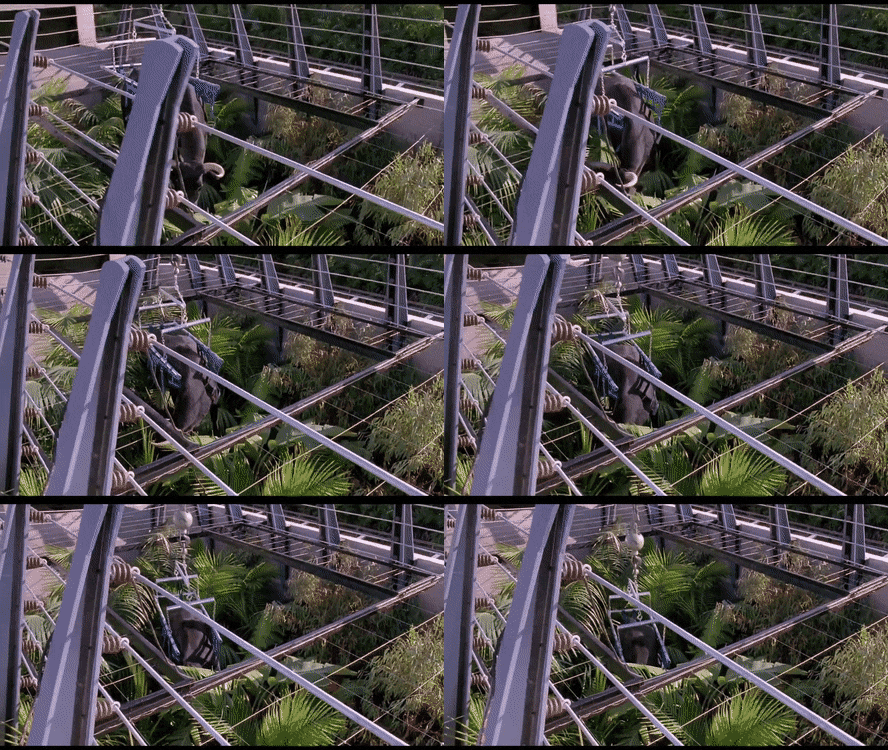
“Precisely,” I said gravely. “It wouldn’t be fair, unleashing a beast of your size and power on those poor unsuspecting creatures. It’d be like that scene in Jurassic Park when they lowered a cow into the velociraptor cage.”
Buddy nodded.
“That makes sense.” He eased onto his hind legs and raised his front left paw, flexing. “I mean, I am really ripped. These guns must be intimidating.”
“They most certainly are,” I agreed. “So ripped! So you can understand why I can’t let you out.”
“Illegal, you say? Like actually illegal?”
“A $500 fine if you even step out the front door.”
“Damn.”
After that he didn’t ask to go outside anymore and was satisfied with telling people that the local Council of Dangerous and Awesome Animals had specifically forbidden Buddy the Beast from stalking the neighborhood unless chaperoned by a human with his huge muscles restrained in a harness.
Ed Sheeran’s cat: A preventable tragedy
I recalled this totally accurate and real conversation after reading news that musician Ed Sheeran’s cat, Graham, has died. I clicked on the story expecting to read about a loyal cat who’d stuck with Sheeran over the better part of two decades before succumbing to old age.
That’s not how Graham died.
Sheeran’s five-year-old cat had his life cut short when he was hit by a car on July 31.
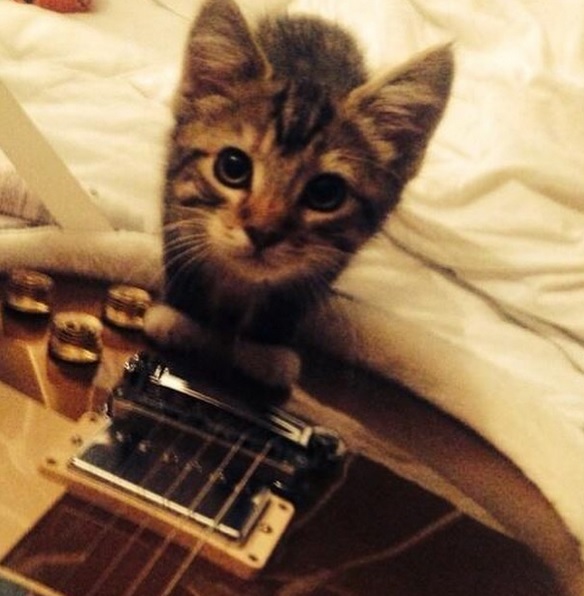
Graham, Ed Sheeran’s cat, as a kitten. He’s pictured sitting on a Les Paul guitar.
Allowing cats to roam free is the norm in the UK, even in busy neighborhoods. Cats are killed in traffic — or meet other unfortunate ends — regularly. Even a rampage by an alleged serial murderer of cats, who was said to kill more than 300, didn’t dissuade them from keeping their cats safely indoors, nor did the subsequent (pardon) copy-cats.
The usual excuses paint cats as one step removed from wild animals, creatures who range several miles in their “natural” states as outdoor kitties.
The problem is, that’s not true.
Domestic cats don’t belong in the wild
Cats are domesticated animals. They’ve evolved over 10,000 years from African and Eurasian wildcats, to the human-friendly mousers who protected grain stores, and finally to the companion animals we all know and love.
They are second only to dogs, who were domesticated 30,000 years ago, as animals who are uniquely attuned to human presence, able to read our expressions, detect our moods from our pheromones and parse the subtleties in our vocalizations.
Cats belong with humans. They have no “natural habitat.” As domesticates who are genetically distinct from their wildcat ancestors, there’s no place in nature for them.
In other words, cats belong in human homes, benefiting from human companionship, protection and care.
They’re not as fast, agile or nimble as their wild cousins, and while some can adjust to rough living, most don’t: The lifespan of a feral cat is a pitiful two to five years compared to the 16 years or so an average, well-cared-for indoor cat can live. For feral cats eking out an existence on their own, as opposed to living in a colony, the average lifespan is less than two years.
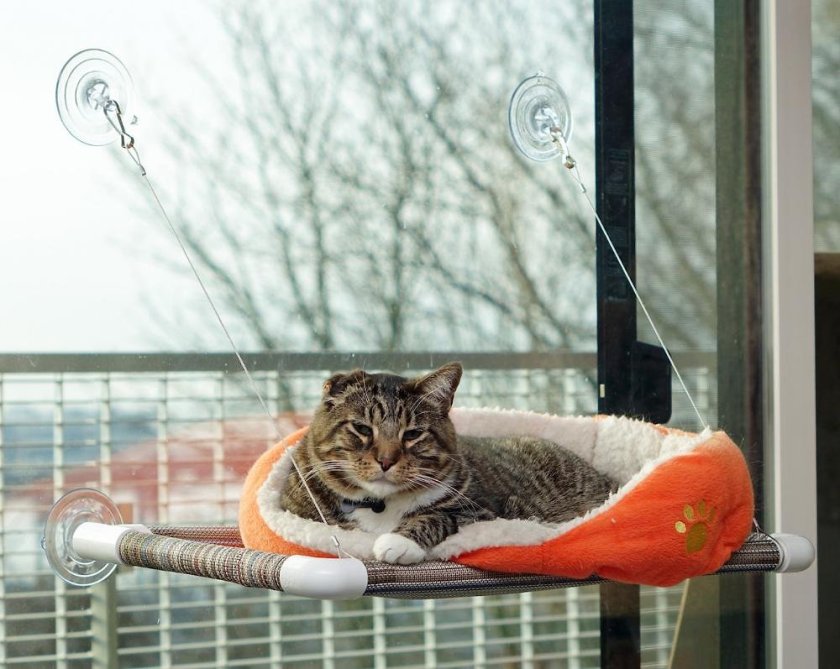
Window perches allow cats prime views of the outdoors without exposing them to danger.
It’s our responsibility to protect our cats
The point is that we’re not doing cats any favors by letting them roam outdoors unsupervised. In addition to being ill-equipped to deal with nature and predators, they’re also defenseless against maladjusted and hostile humans who do things like intentionally poison flower beds. They’re particularly vulnerable to vehicle traffic. They’re easy meals for large birds of prey, wild canids and other mid-sized animals.
So what’s the solution? Simple: Be a good caretaker.
An indoor life shouldn’t be boring. It’s our responsibility as caretakers to provide our cats with attention, affection, toys and stimulation.
Contrary to popular misconceptions, cats aren’t antisocial animals. They want to play, to interact with people, to simulate hunts with wand toys and laser pointers. They feel safe snoozing and purring in human laps. That’s not just the opinion of cat lovers, it’s backed up by solid research showing cats value human companionship.
A happy indoor life
If we give them the attention we’re supposed to, there’s no reason why our cats should be bored indoors. And an indoor life doesn’t have to be completely devoid of nature. That’s why there are customized cat perches, catios and harnesses, allowing domestic cats to watch and enjoy the outdoors without exposing them to the many dangers outside.
The Grahams of the world shouldn’t die early because of our misguided belief that cats need to roam like tigers. Keep your buddy indoors, give him the attention he needs, and he’ll have a long and happy life.
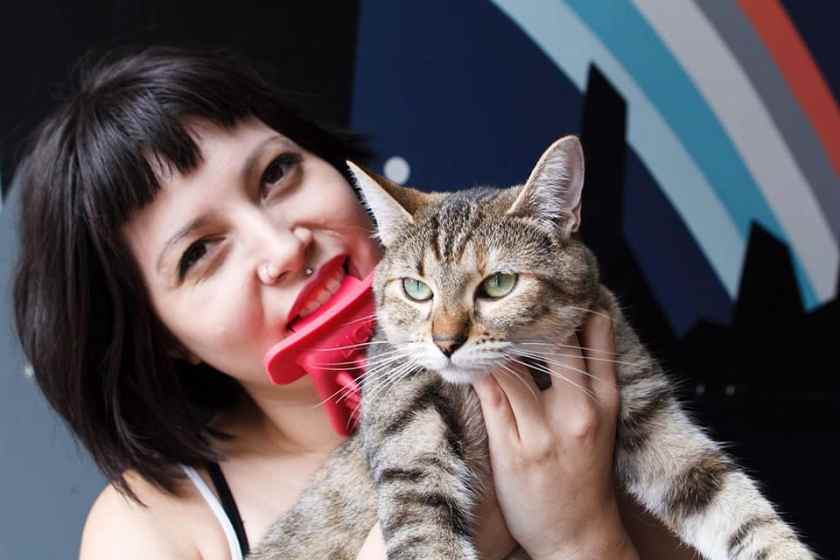
“I want my human to lick me with a rubber tongue!” said no cat ever.
Dear Buddy,
I know your advice column is meant for cats, but I thought you’d make an exception for a human who seeks your wise and benevolent guidance, Oh Great Handsome One, for who else is as smart and perceptive as Buddy?
My question is: Should I buy a Licki? You know, one of those silicon rubber “tongues” with spikes that are supposed to mimic a kitty’s bristled tongue. I’d like to bond with my cat, and according to the people who make the Licki, grooming my kitty just like a momma cat is the best way to bond.
What do you think?
– Human In Hawkins, Indiana
Dear HiHi,
Oh hell no!
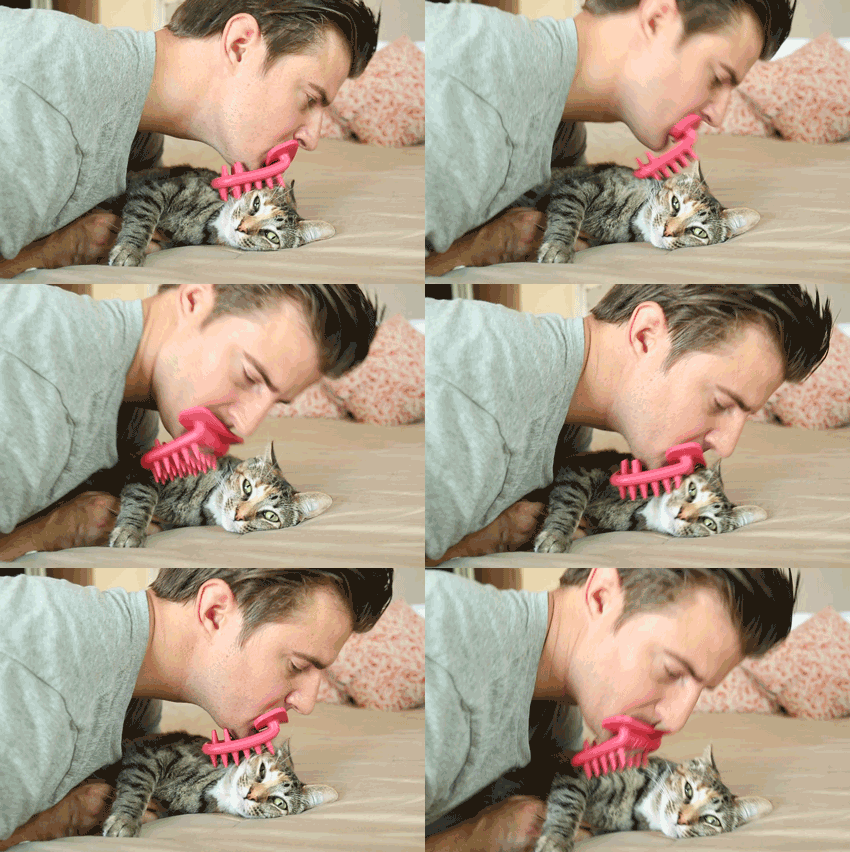
Big Buddy bought one of those things and creeped up on me all stealth-like when I was taking a nap one day. One second I’m dreaming about bountiful feasts with endless roast turkey, the next I’m waking up to that daft two-legs dragging a rubber tongue back and forth through my fur, looking like an epileptic seal.
I thought I was being attacked by a porcupine dipped in crazy glue! Once I realized what was happening, I gave Big Buddy a hard paw smack and bit his hand for emphasis: Get that weak shit out of my personal space!
Horrific and embarrassing for everyone involved. Don’t. Just don’t.
So no, don’t buy a Licki. You’ll just waste $25 on a piece of rubber that makes your cats loathe you. Instead, provide massages on-demand and step your treats game up. Now that is something your kitties will appreciate.
– Buddy out
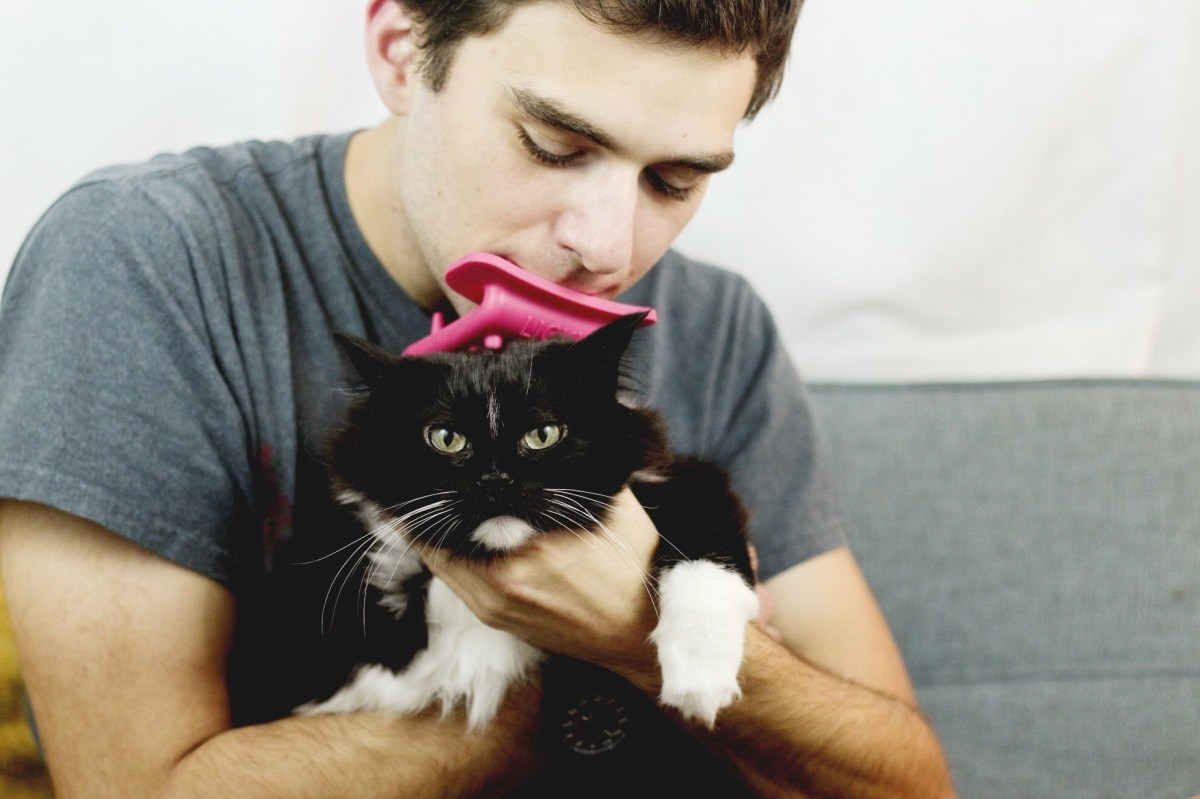
“Get it away from me!”This poor cat looks traumatized. He should smack his human like I did.
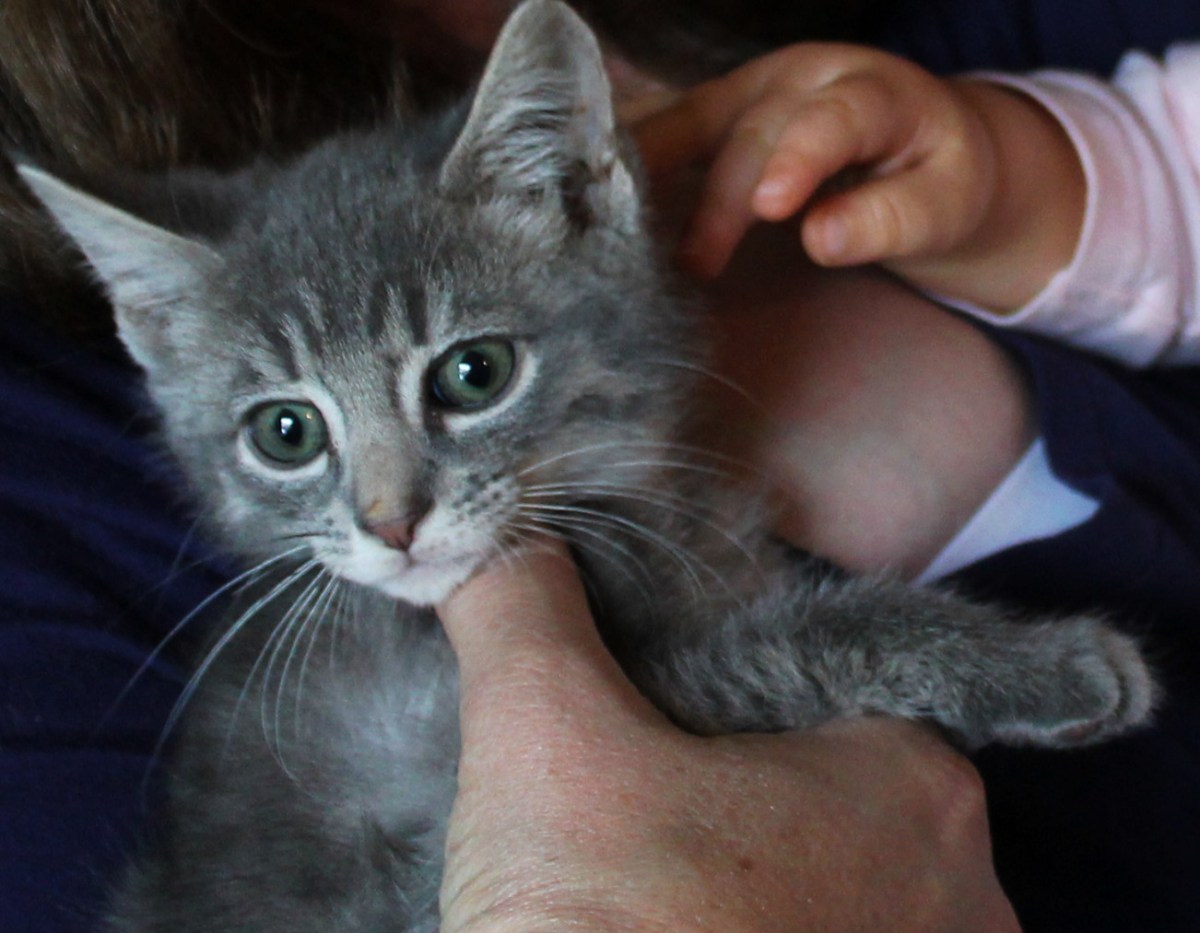
He was small and his mew was only a squeak, but he already had a very big heart and lots of love to give.
Dear Buddy,
How did your hooman adopt you? What happened?
Head bump,
Stasi in ‘Stralia
Dapper, debonair and delightful.
Dear Stasi,
At the dawn of time in 1 AB (Anno Buddy), a mommy cat gave birth to a litter of feisty felines. They were strapping young kitties, and when the time came for them to pair up with humans and move to their new homes, they went one-by-one.
All except one, the smallest and runtiest of the bunch. He was sick and he had a limp, but he was a happy little boy. Every day he waved goodbye to his brothers and sisters, and wondered if anyone would want him. He was small and his mew was only a squeak, but he already had a very big heart and lots of love to give.
Then it happened. A mysterious stranger enquired about the runt and almost two weeks later he arrived in person to take the little kitten home. The little kitten was scared. This human put music on in the car ride home, and his singing voice was terrible!
The kitten cried.
“Don’t worry,” the human said as he drove. “Me and you are going to be best buddies! You’ll see!”
After arriving at a strange new place, claiming every inch of it and pooping under the human’s bed for two weeks, the little kitten knew he had found his home. The human’s bed became his bed. The human became his pillow. Things were turning out okay.
The human fed the kitten healthy food. The kitten’s limp improved, his coat started to look healthy, and his poops were less nasty. The kitten also learned that the box with litter inside it was for the aforementioned pooping, not for making sand castles.
The kitten still had no name. One day the human’s mom observer her son with the kitten, and after her son called the cat “little buddy,” she said: “That’s a perfect name for him: Bud. You guys are the Buddies. Buddy number one and Buddy number two.”
They were henceforth known as Big Buddy and Little Buddy.
Buddy the cat surveying his territory from an elevated position.
The big human and little cat became best friends. One day Big Buddy brought home a harness. Little Buddy didn’t like it. But after a lot of practice, Little Buddy learned to accept the harness and learned how to walk on it next to his Big Buddy.
It was during one of those walks that a human female saw Little Buddy and declared him the cutest kitten ever. Suddenly Little Buddy realized he was very handsome, and embarked on a career as a kitty model that continues to this day.
Soon Little Buddy began pumping iron, and began the transformation to the strong, regal kitty with huge muscles that you’re familiar with today.
And there you have it. Buddy’s origin story.
– Buddy the Brave
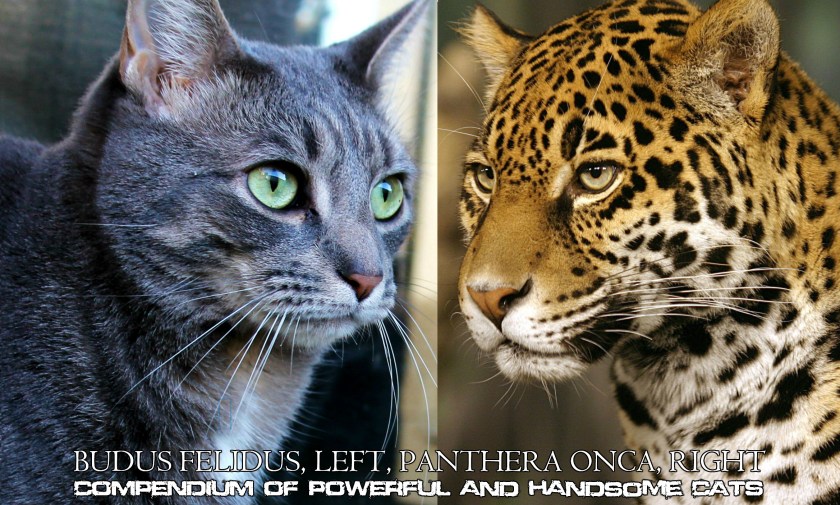
Many scientists believe Budus Felidus, left, is directly related to Panthera Onc, right, also known as the leopard. Others believe Budus Felidus is a sub-species of tiger.





 Pain In The Bud