‘Study’ Claiming Vegan Cats Are Healthier Is A Mockery Of Science

A new paper claims cats are healthier when fed human diets, but the “study” is activism masquerading as science.

We have a science problem in this country.

Tens of millions of adults are scientifically illiterate and cannot articulate a simple definition of the scientific method.

That includes the usual suspects, the people who don’t understand the difference between anecdotes and hard data and say things like “Evolution’s just a theory” or “I don’t believe in science” as if it’s an ideology or religion. It also includes people who like to declare they’re “into science” as if it’s a band or a genre of cinema, and often post articles from sites like “I F—-ing Love Science,” which routinely mistakes natural phenomena like stars, interstellar space and the animal life for “science.”

To quote Sam Kriss’ wonderful essay on the subject: “‘Science’ comes to metonymically refer to the natural world, the object of science; it’s like describing a crime as ‘the police,’ or the ocean as ‘drinking.'”

Science is a formalized method for studying the natural world. That’s it. No more, no less. It isn’t natural phenomena itself, it isn’t something that requires faith. It’s meant to be challenged, with each piece of knowledge hard-won as the scientific community collectively chips away at the vast edifice of things we don’t understand.

The lack of scientific literacy is an indictment of the American education system, but the science and journalism communities are also big contributors. A flawed academic publishing system encourages researchers to make grandiose claims in abstracts and press releases to increase the chances their work will get positive coverage in the press. Few journalists are more scientifically literate than the general population, so they report dubious claims credulously and present individual studies as the final word on subjects instead of tentative first steps in contributing to the corpus of human knowledge.

We see this all the time with reporting on the environmental impact of felines, but it’s certainly not limited to that subject. How many times have you seen your local news anchors or newspapers tout studies saying coffee is healthy, only to report the next week that a new study says coffee isn’t healthy after all?

“Those scientists can’t make up their minds,” they’ll say with a forced chuckle before handing the broadcast over to the weatherman, oblivious to their own failure to provide context.

The effort to rebrand cats as vegans

A new “study,” given prominent play today by major news outlets like Newsweek and aggregators like Drudge, is a classic example of misleading claims given the veneer of scientific authority. The paper claims vegan cats are “healthier” than their meat-eating counterparts. The study — which is actually a survey — says no such thing, and its authors are surely aware that the way it’s been packaged for media consumption will cause confusion, but they’ve gone ahead with it anyway.

The research involved asking 1,369 cat owners to fill out surveys about their cats, the cats’ diets, and their veterinary health histories.

Of those surveyed, there were 123 reported “vegan cats” in their households (about nine percent of the total), and while the abstract and media pitches claim the surveys show vegan cats are healthier, the differences are statistically insignificant. The sample size is too small to draw any conclusions from, and the fact that the details are self-reported means the “data” is worthless: People who put their cats on vegan diets despite knowing felines are obligate carnivores have a vested interest in defending their decision. They’re not impartial, and their survey answers aren’t either. (The paper acknowledges that 91 percent of the respondents are female, and 65 percent are vegans, vegetarians or pescatarians themselves. Those are admirable choices for a human diet, but not for a cat.)

Relying on self-reported “data” also means the research team doesn’t actually know the true veterinary histories of the cats in question, nor does it know anything about the nutrient content of the vegan “cat food” given to the 123 cats who have been deprived of meat. It also cannot account for possibilities like the so-called vegan cats slipping out at night to hunt rodents.
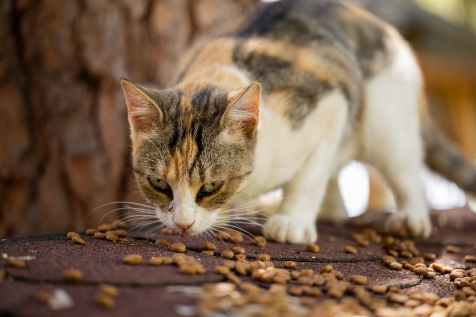
a close up shot of a cat eating
Credit: Engin Akyurt/Pexels

That’s especially important because of “vegan cat food’s” dubious history. Evolution, the brand that popularized the concept, is owned and operated by a man named Eric Weisman, who has been prosecuted and repeatedly sanctioned for misrepresenting himself as a physician, veterinarian and scientist — and continues to misrepresent himself.

Weisman, a chiropractor by trade, racked up a long list of violations in his chosen field before his chiropractor license was pulled, then was charged and convicted criminally for, among other things, practicing veterinary medicine and regular medicine without a license. Weisman’s list of offenses include “treating” cancer patients, “treating” and misdiagnosing animals, and posing as a physician for years, including in advertisements and literature related to his pet food and fake veterinary practices.

Weisman is still calling himself a physician in violation of his plea agreement, and he’s still selling “vegan cat food.” Would anyone in their right mind weigh the claims of that man against the tens of thousands of veterinarians and pet nutritionists who are horrified at the idea of restricting cats to vegan diets?

(In case you’re tempted to think chiropractors are legitimate to begin with, you should know that chiropractor was founded by a lifelong quack who claimed its methods were taught to him by the ghost of a physician, which allegedly appeared to him during a seance. Chiropractor’s founder dodged accountability for years by claiming his practice was a “religion.” The fact that it’s now a $15 billion industry despite its origins, and decades of research that has found no benefit to the practice, illustrates how eager people are to believe just about anything.)

The consequences of bad science

Not only will the “study” and press coverage of it mislead people into believing its claims, it’s another black mark on the scientific community. Trust is hard-won, easily lost, and for better or worse the misdeeds of a few scientists reflects on the entire field.

Others will simply believe it, especially when major news outlets like Newsweek report the results without question, without acknowledging that it’s a lazy effort masquerading as science by a research team that already knew what result it wanted before handing out the surveys. (The “study” was funded by ProVeg, an NGO that promotes plant-based consumption and is involved in the development of plant-based foods.)

Lastly and most tragically, cats will suffer for it. Cats who are denied meat suffer slow and agonizing deaths, with health problems accumulating due to the lack of certain proteins until they go blind, become chronically malnourished and eventually suffer organ failure.

And for what?

Because some people believe human morals apply to cats?

Because, despite all common sense, they think they can change a species that has been dependent on meat for so long in their evolutionary history that their bodies literally cannot synthesize certain proteins and cannot extract nutrients from most plant material?

How would we like it if we were dependent on giants to feed us, and those giants decided we could and should live on a diet of marshmallows? We’d suffer horribly and we’d die, but at least we’d know why.

Cats don’t have that luxury. They depend on us to do right by them, and when we adopt them it’s our basic responsibility to keep them healthy and well-fed. Let’s not fail our little friends by pretending human ethics is applicable to a species that can’t understand it, or consent to participating in it.
Australia ‘Declares War’ On Cats, Plans To Eradicate Ferals And Strays

Australia announced the plan after a new report called cats the greatest driver of extinction in the country.

While their neighbors in New Zealand called for “woah on feeral kets” earlier this year, Australia is planning its own nationwide effort to wipe out free-roaming cats in an attempt to prevent the extinction of local wildlife.

The “war” announcement, made on Wednesday by Australia’s Environment Minister, Tanya Plibersek, comes on the heels of a report that calls “invasive animals” like cats the primary force behind species extinction in most of the world, including Australia. The report was released by a group of academics from 143 countries who make up the Intergovernmental Platform on Biodiversity and Ecosystem Services (IPBES), which advises the UN and sovereign states on wildlife policy.

Plibersek singled out felines in a press conference announcing the plan.

“They played a role in Australia’s two latest extinctions … they are one of the main reasons Australia is the mammal extinction capital of the world,” she said.

In addition to targeting felines on the mainland, Plibersek said Australia’s government would attempt to completely purge Christmas and French islands of their cat populations.

I have not had the opportunity to read an advance of the report, which was just released, and it will require careful reading as well as additional research before I’d feel comfortable commenting on the claims. That said, the numbers bandied about in press accounts (which claim cats kill more than 2.6 billion animals a year in Australia) are similar to the claims we’ve heard before, so unless there’s original research here and not a rehash of the same meta-analyses frequently cited in stories about cats and their impact on biodiversity, it doesn’t change the simple fact that it’s bad policy to act without reliable data.

I’m talking about an actual effort to count the feral and stray cat population in defined areas, as the Washington, D.C. Cat Count did using trail cameras, monitors and other methods. Obviously that can’t be applied to an entire country, but it can be done in different locations and provide a baseline to work with. Without that effort, the estimates of feline impact are nothing more than guesswork by professors sitting behind desks often entire continents away from the locales in question, plugging invented numbers into formulas intended to extrapolate totals for birds, mammals, lizards and insects killed by felis catus.

While similar studies estimated the number of cats in the US at between 25 and 125 million, Australia’s federal government says there are between 1.4 and 5.6 million cats in the country. If that’s true, it means each free-roaming cat in Australia kills between 500 and 1,850+ animals a year. It’s also difficult to accept estimates of predatory impact when the corresponding estimates of total cat population are so vague.

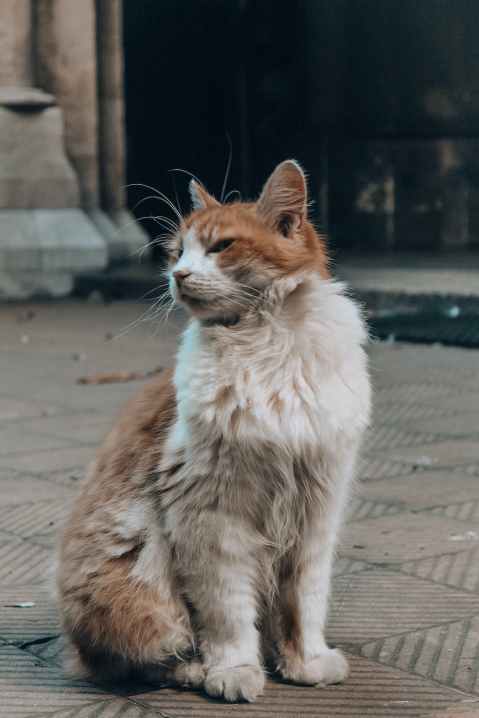
a fluffy cat on a sidewalk
A “feeral ket.” Credit: Ferhan Akgu00fcn/Pexels

Still, as I’ve written in earlier posts, government intervention was inevitable without proactive measures. Australia’s cat lovers and caretakers would do well to voluntarily keep their pets inside, and to double their efforts to catch, spay/neuter and find homes for as many strays as they can.

If you live in Australia, you have until December to provide feedback to the federal government, and it’s probably a good idea to check with your local animal welfare groups, which are undoubtedly composing their own responses to the plan.

Tiny Sand Cats Have The Largest Ranges Of All Felines, Study Says

The little-known, Lilliputian species of feline thrives in some of the harshest environments on Earth, proving cat species are capable of remarkable adaptations to their surroundings.

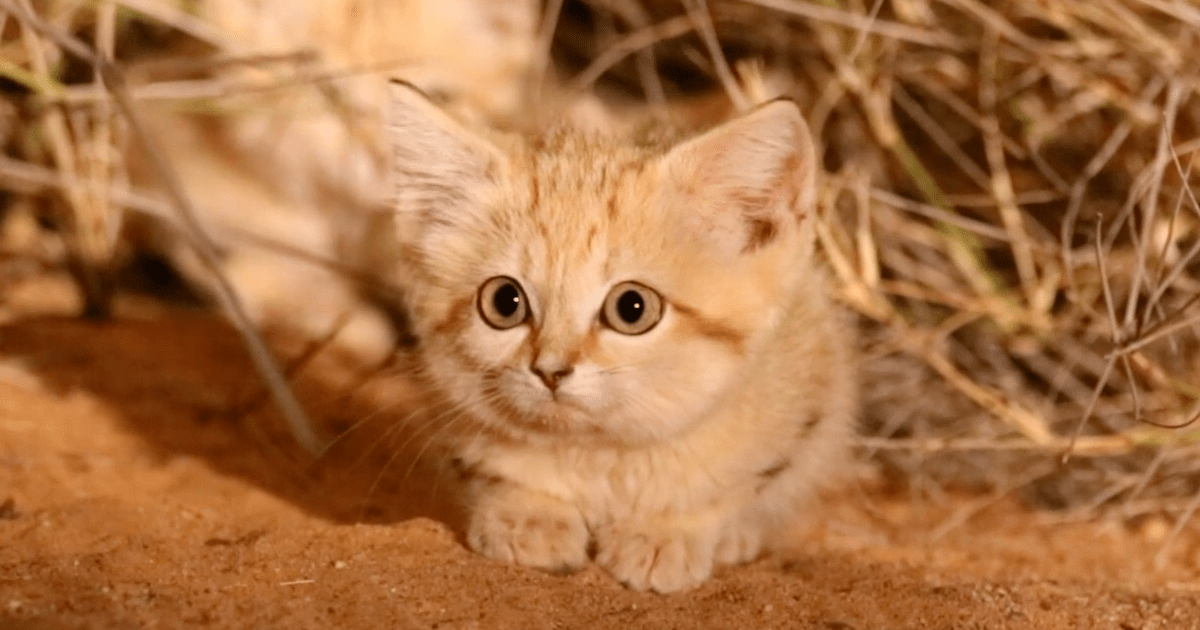
There’s a lot we don’t know about felis margarita, so much so that kittens of the elusive and stealthy species weren’t photographed in the wild until 2017.

Now a study has unveiled a surprising fact about sand cats: despite being tiny in stature, they occupy huge ranges that can rival the size of territories claimed by big cats like tigers and jaguars. One cat claimed 1,758 square kilometers — about 1,093 square miles — for himself according to Gregory Breton, the study’s author, who said the cat’s behavior showed sand cat ranges are “considerably larger than previously estimated.”

That individual maintained his impressive range for more than six months before moving on. His behavior and the movement of 21 others tracked via radio collars suggests the species could be semi-nomadic, moving or adjusting their ranges as they look for prey and water in some of the hottest, most arid environments on the planet.

“If true, this type of movement in response to rainfall is previously unrecorded among wild cat species,” wrote Breton, who is managing director of the cat conservation group Panthera in France.

In addition to following sources of water, the cats may maintain such large ranges because prey are more spread out compared to biomes like jungles, forests and wetlands where other species of cats make their homes.

(Above: Tap or click the images for full resolution versions.)

Impressive ranges weren’t the only surprise the tiny cats had for researchers. Breton and his colleagues managed to catch and examine more than 40 sand cats before releasing them back into the wild and noted they were all healthy, with few scars, no fresh wounds and no broken teeth.

The lack of wounds “means that it is likely that sand cats exhibit little territoriality and tolerate each other across their ranges,” Breton wrote  “This beloved cat may indeed share habitat with others of its species — maybe their perception does match their nature, at least towards other sand cats.”

Sand cats can be found in the Algerian Sahara, the deserts of the Arabian Peninsula and countries like Chad, Niger and Morocco. The Panthera team tracked the Lilliputian felines in the latter country, traversing the desert and arid landscapes of southwestern Morocco where temperatures peaked at 122 degrees Fahrenheit (50 degrees Celsius) during the day.

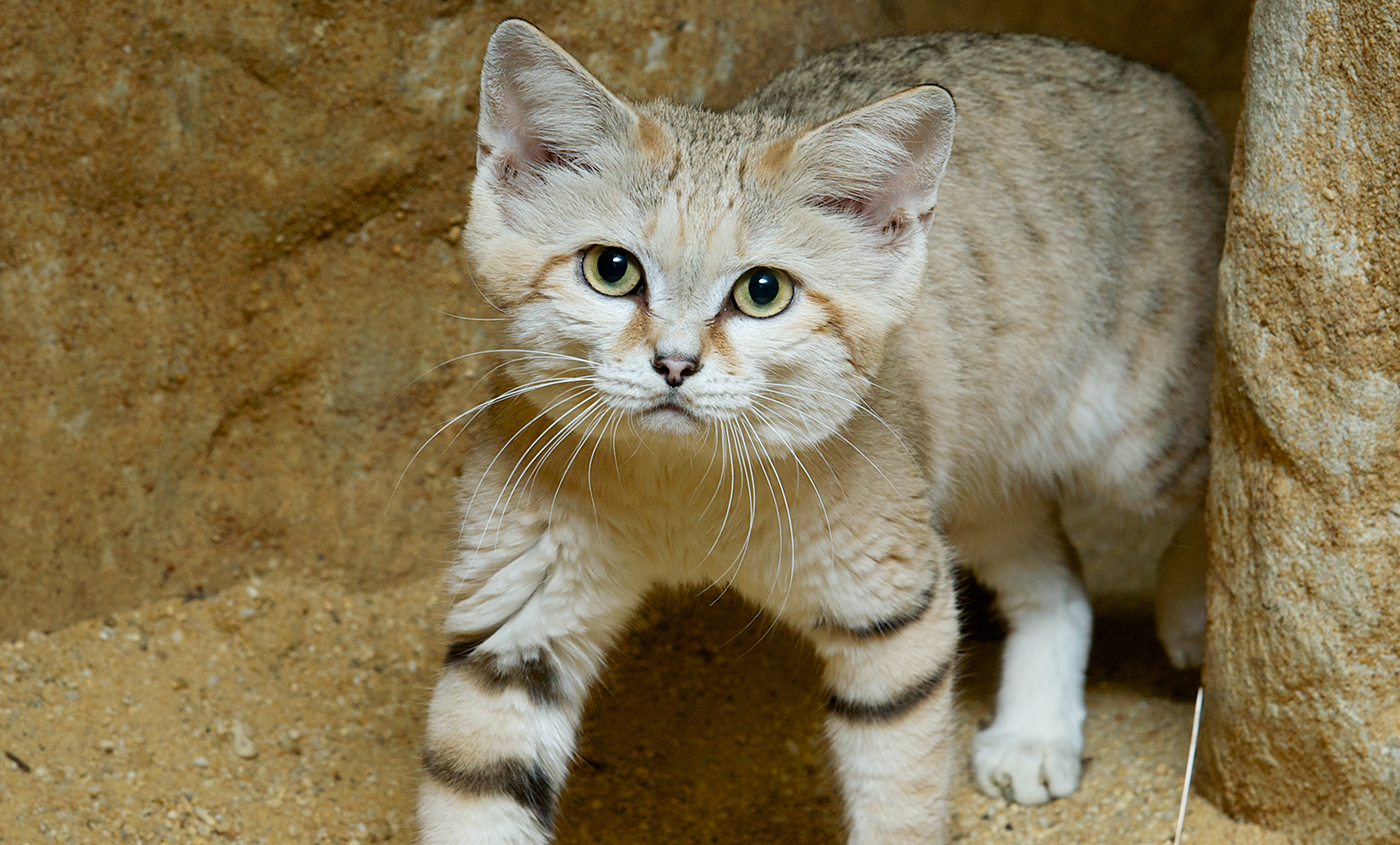
Sand cats have what Breton describes as “whimsical faces,” sporting wide, swept ears to go along with the general horizontal appearance of their heads.

They have golden, classic tabby markings and sand-colored fur with well-defined dark rings on their limbs, allowing them to expertly blend into their surroundings. Sand cat camouflage is so effective and the species is so quiet that one of the best ways to find them is at night, using search lights to pick out their reflective inner eyelids amid the desert landscape.

They’re also considerably smaller than house cats, weighing up to 7.5 pounds.

Breton said his team’s research is critical for estimates of sand cat population, which in turn will help authorities determine the conservation status of the elusive feline.

20130418-001CN
Credit: Panthera 

‘Every Time We Needed To Refill, They Charged Us More’: FDA Says 2 US Women Made Millions Off Desperate People Whose Cats Had FIPV

The importers are accused of jacking up prices almost 16 fold on FIPV drugs they illegally imported from China, the FDA says.

FIPV is pretty much a guaranteed death sentence for cats, and the only way to cure it is with an experimental drug that doesn’t have FDA approval.

Oregon’s Nancy Ross and Nicole Randall of Texas knew that, and as importers selling the cure via the popular Facebook group FIP Warriors, the FDA says they banked on the desperation of people who would do almost anything to save their cats — including forking over vast sums of money.

Ross and Randall are now accused by the FDA of smuggling GS-441524 from China, where it’s manufactured illegally, and hiking the price by almost 16 times what they paid for it as they served as the middle women between desperate cat owners and the suppliers in Hong Kong.

Feline infectious peritonitis kills some 95 percent of cats it infects, and veterinarians often tell their clients with FIPV cats that while they can’t prescribe GS-441524, they will help administer it, track their cats’ progress through bloodwork and hopefully save feline lives — if the clients obtain the drug themselves.

FIP Warriors — now in its fifth incarnation as FIP Warriors 5.0 on Facebook — is where people with FIPV cats go to find suppliers. The group has more than 43,000 members, and the FDA says Randall made millions off of them, charging as much as $385 for vials of GS-441524 she obtained for between $25 and $45 from manufacturers in Hong Kong and mainland China.

Randall sold $9.6 million worth of GS-441524 to clients in the US, according to the FDA. Per The Oregonian:

“A spreadsheet found in Randall’s Google email showed customer orders of at least 58,460 vials and 236,836 pills of GS-441524 from July 2020 through June 6, 2022, the affidavit said.”

PITB spoke to several people who paid thousands of dollars for GS-441524 after their cats were diagnosed with FIPV. All of them said they were surprised by the news of the FDA’s investigation, and said they were given various reasons for why the drug was so expensive to acquire.

One customer from Texas, whose cat Seth began his regimen in July of 2020, told PITB she doesn’t regret spending the money to cure Seth, but she “can see how the people saw our desperate situation and took advantage of us.” She was told prices were at a premium because of scarcity.

“It was a very stressful time for us, and every time we needed to refill, they charged us more,” she said. “They knew we couldn’t say no.”

Cat-Cat_Guide-A_grey_tabby_cat_having_its_first_vaccination_injection

Another woman, whose kitten was diagnosed with FIPV in 2021, “was told that the prices were set because they ensure the medication was purchased from a trusted source.”

As a college student at the time, she used her savings and crowdfunded the other half, paying more than $5,000 for her kitten’s treatment. She said she doesn’t think the administrators of the group were ripping her off, since they had FIP cats of their own, and likely didn’t know the importers were making huge profits. She trusted the seller — who was not Ross or Randall — because the group vouched for that person, assuring her they supplied real pills.

“Of course, I don’t think this is a valid justification for hiking up prices up to 16x the amount,” she told PITB, “but I’m sincerely hoping the individual [accused by the FDA] had a valid reason for setting the prices that she did.”

Others paid even more exorbitant prices: a British woman we interviewed for a story about FIPV in 2022 said she paid about £7,000, or $9,400 at the time.

FDA investigators said they intercepted shipments from China and Hong Kong disguised as COVID masks, cat shampoo and chewable medicine for pets, and the Oregonian report says the shipments were listed as “essential oils” and “beauty products” in import documents.

Randall and Ross have not been charged criminally, but they are now targets of a civil asset forfeiture case:

“The government seized five of Randall’s bank and brokerage accounts and her 2022 Tesla Model Y car last year based on a warrant signed by a federal magistrate judge in Oregon.

The warrant identified the bank accounts and car as proceeds from the “crime of smuggling” and subject to forfeiture, according to the affidavit. It also alleged Randall, now 35, used the proceeds to buy several properties, including a ranch in Leander, Texas, in July 2021.”

While the FDA’s affidavit went into detail regarding Randall’s earnings, it describes shipments sent to Ross but does not specify how much she may have made in profit. An attorney for Randall told The Oregonian that the Texas woman will fight the civil asset forfeiture.

The illegal market for GS-441524 exists because the drug’s creator, Gilead Sciences of California, declined to submit it to the FDA for approval. That’s because it’s chemically similar to another drug the company makes, remdesivir, which was floated as a possible treatment for COVID-19. The company was worried any snags in a potential approval process for GS-441524 would also ensnare remdesivir, according to reports, putting the latter drug in limbo during the pandemic.

Now that the pandemic has retreated to much lower levels of infection and death, it’s not clear if Gilead Sciences will reconsider its FIPV medication, but there may be hope in the form of alternate treatments. A report from the American Animal Hospital Association (AAHA) says scientists at the University of California-Davis and UC San Diego are working on several promising therapies, including a potential treatment using CRISPR gene-editing technology.

But until another cure or treatment passes trials and earns FDA approval — a process that could take years — people with FIPV-diagnosed cats remain at the mercy of strangers on the internet, spending thousands of dollars per regimen and hoping the drugs they buy are the real deal.

How Do Cats Apologize To Their Humans?

Even cats sometimes think “My bad!” How do they communicate that to their people?

As George Carlin famously observed, cats don’t accept blame — but that doesn’t mean they don’t apologize sometimes.

Let me preface this by saying I neither expect nor demand apologies for the standard methods of Buddesian destruction. If Bud swipes my phone off the table and it cracks, that’s my fault for leaving it where he’s known to conduct his ongoing gravity experiments. Likewise, there’s no sense getting upset with him when he paw-slaps a set of keys four feet across the room, or when I return from the kitchen to find the remote controls on the floor.

That’s Buddy being a cat. Getting angry at him for it would be pointless, and expressing that anger would only make him fearful and stressed.

There are times, however, when even Bud realizes an apology is in order. As I’ve documented before, the little guy sometimes redirects his fear or aggression to the nearest person, which is invariably me, and almost mindlessly lashes out with claws and/or teeth. After working on it together, he’s improved dramatically and knows how to handle his fear and frustration peacefully. Still, every once in a while he gets really freaked out or overstimulated beyond what he can handle, and he’ll clamp onto a foot or forearm, drawing blood.

That’s when I react. I don’t yell at him beyond telling him to stop, but he can see from my reaction that he’s gone way overboard and done something he shouldn’t do.

Buddy stretching
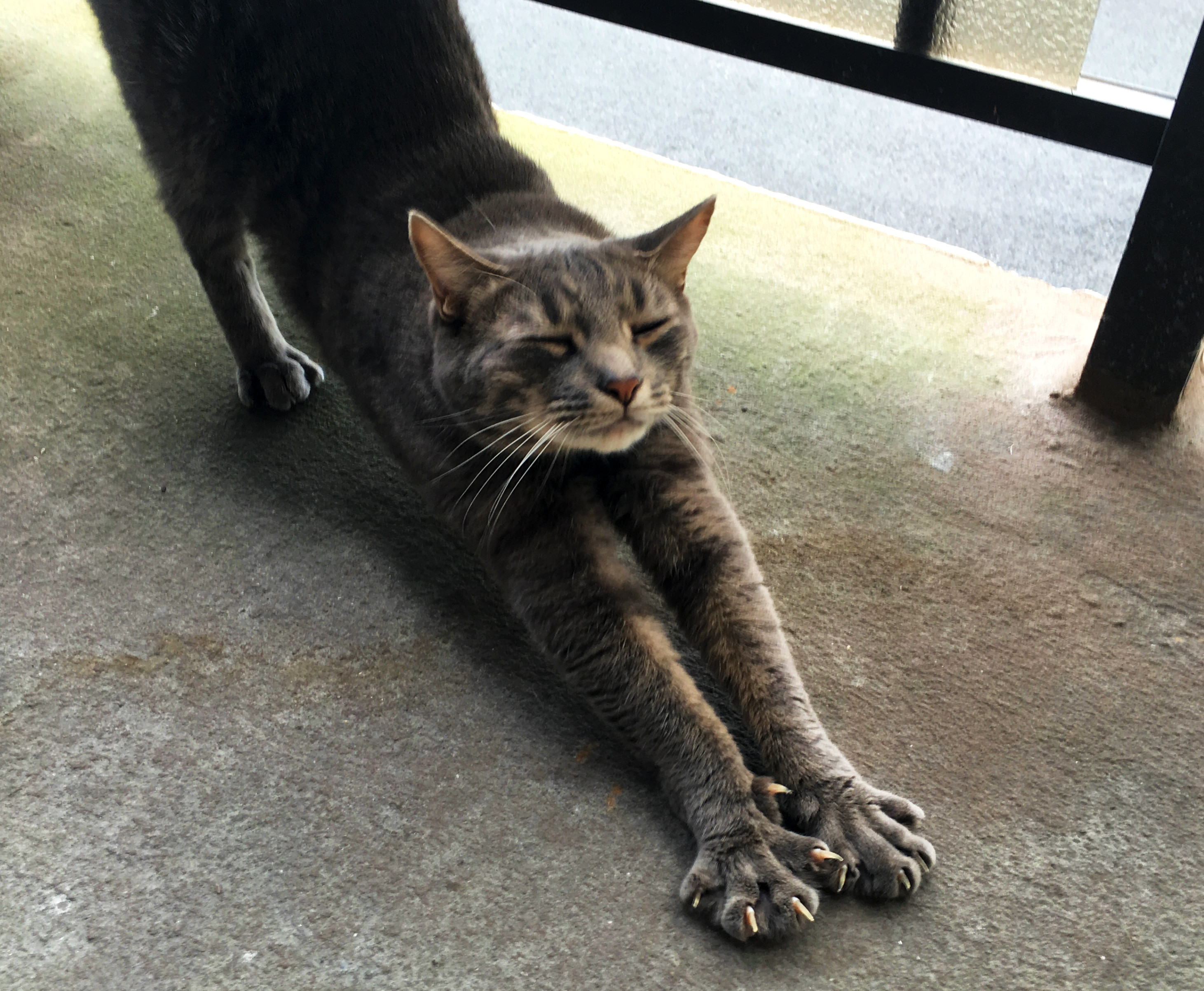
Bud assumes the Striking Tiger, Ten Swords stance. Or maybe he’s just stretching.

He starts the apology phase by running off to the next room or running around the one we’re in, making uncertain “brrrrrrr brrrrrr” noises. (Precisely the same noises he’s made since the day I brought him home as a kitten, when he would poop in the corner of my bedroom underneath my bed. That’s always been the sound he makes when he’s unsure and maybe a little worried.) If I go to wash and dab antibiotic ointment on the cuts, he’ll sit there quietly watching me. He’ll watch until I say “Hey, Bud!” and then approach slowly until he sees me holding out my hand and starts nuzzling against it and purring.

I’ll usually say something like “It’s okay, but you shouldn’t do that,” kindly but firmly. He probably doesn’t grasp my words, but he understands my tone of voice and meaning.

We can only guess exactly what our pets are thinking, but I believe Bud’s telling me he regrets hurting me, didn’t mean to, and he wants to make sure we’re still okay.

As for cats reading us, the video below does a good job of explaining what cats pick up in our tones of voice, body language, facial expressions and even pheromones. Cats may not have been living with humans since the hunter-gatherer days like dogs have, but they still trace their domesticated lineage back 10,000 years, and just like dogs they’re hyper-attuned to the moods and intentions of their closest humans. Partially it’s because they depend on us utterly as their providers of food and water, but when cats and humans share a bond, there’s a strong emotional side to that attunement as well.

How do your cats say they’re sorry?