Only one of those kaiju — Japanese for “strange beast,” aka the giant monsters of the kaiju genre of film — is so powerful he wades through the city nonchalantly, completely indifferent to the carnage around him.
We would like to take this opportunity to remind female cats to please stop sending your harnesses, clippings of your fur, lipstick paw print cards and selfies of your tails to Buddy.
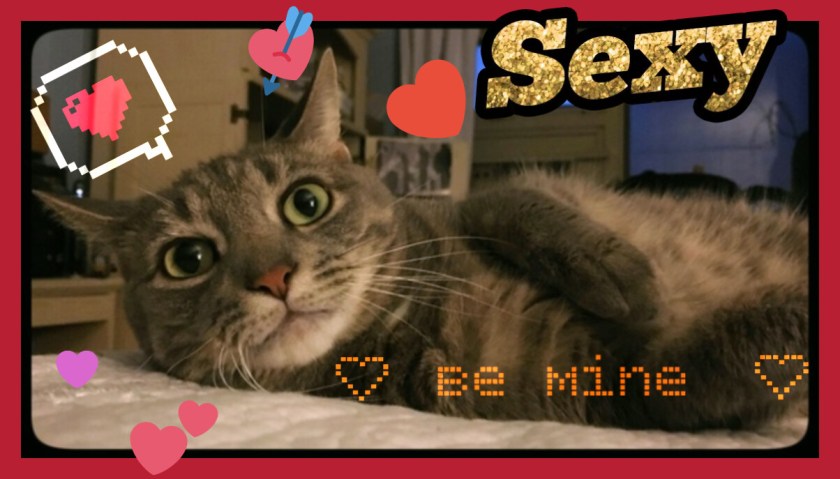
“I’m too sexy for my fur, too sexy for my fur, so sexy I purr!”
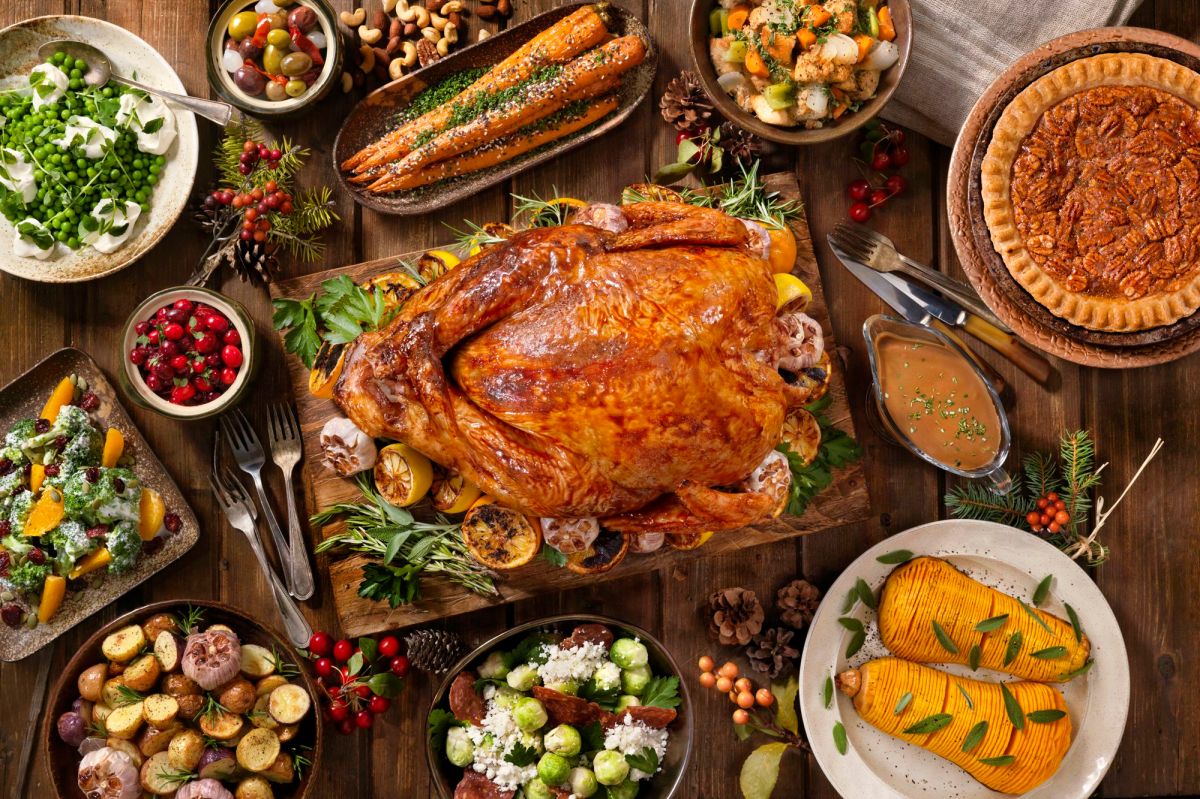
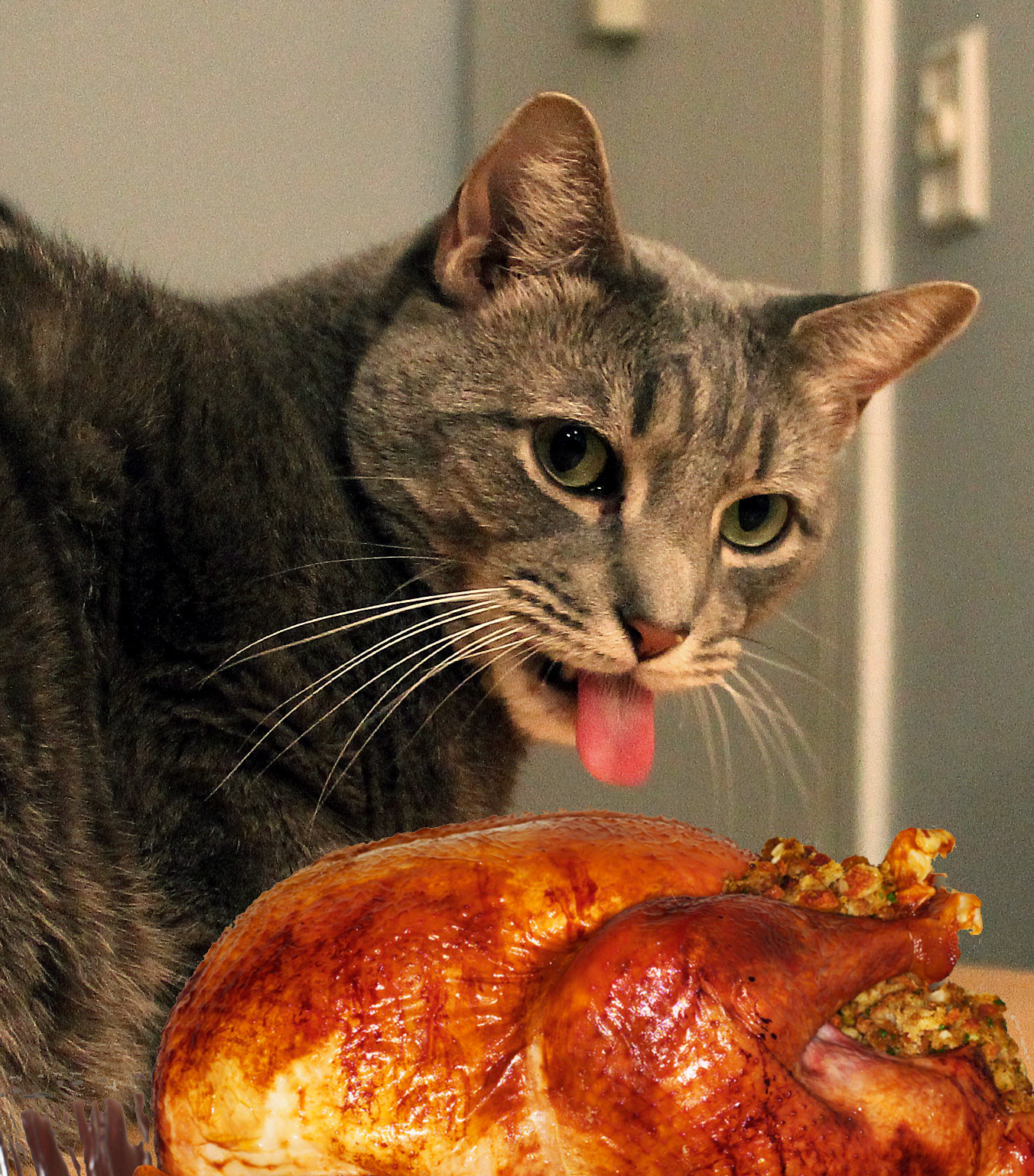
You may have noticed that turkey is a frequent topic of conversation on this blog, and since we’ve had new readers join us it’s a good time to explain just what the hell is going on with my cat’s fowl obsession.
It’s simple: Buddy really loves turkey.
I first noticed it when he was about 10 weeks old. Like most cats he enjoys all kinds of food, but when I fed him turkey one day, he scarfed every last bit of it down, licking his bowl clean.
When he was finished he looked like the happiest kitten in the world, sitting there licking his lips enthusiastically, sopping up every stray morsel before letting loose a tiny, satisfied belch.
“The turkey!”
Before adopting Bud, I’d read enough cautionary stories about finicky cats who’ll only eat a certain kind of meat, in only one texture, from a particular cat food company.
Not only does food become perfunctory for those cats, but if the cat food company discontinues the product, both cat and owner are in for frustration that could stretch for weeks of trial and error. Finding an acceptable alternative is usually an expensive, wasteful process as kitty repeatedly turns his or her nose up at substitutes.
Heeding the cautionary advice of those devoted cat servants, I fed as much variety as was possible from the very beginning. Bud eats salmon, chicken, beef, tuna, shrimp and duck, among other varieties when available.
He genuinely enjoys his meals thanks to the variety, and I’d recommend the same strategy for anyone else bringing a new kitten home. Get ’em started early and you won’t have a picky cat.
But for Bud, nothing compares to turkey. No other food prompts such meows of pure joy, or the urgency with which he leads me to his dining nook when he knows his bowl is filled with yummy turkey goodness, frequently looking over his shoulder to make sure I’m just a step behind him with his beloved turkey.
It’s been that way since he was a baby, and in more than six years it hasn’t changed.
So for Buddy, life’s finest things are turkey, catnip, napping, napping on top of his Big Buddy, and turkey.
Our hero leads his crew through a perilous alien jungle to find the raw materials necessary to repair the USS Delicious.
Following the cowardly attack by the Evil Time-Lord on Capt. Buddy’s starship, the USS Delicious, our brave captain escaped by the fur of his teeth and courageously landed his trusty vessel on a mysterious planet in an uncharted star system.
Now our beloved captain must navigate the myriad hidden dangers of a dark, alien jungle as he leads his crew to locate the raw materials they’ll need to repair the USS Delicious and obtain enough reactor fuel to lift the ship into orbit once again.
But not everything is as it seems, and unseen eyes watch our hero from the murky shadows of the alien flora.
To make matters worse, the crew must ration their yums as their supplies of turkey dwindle.
Despite the considerable challenges they face, Capt. Buddy’s loyal cats endeavor to keep their spirits high as they navigate this virgin world bereft of feline scent-marking and tree-clawing. In a rousing speech, Capt. Buddy reminds his cats that all they need to do is spray a few trees and bury some poops to make this alien planet feel like home.
In Chapter 2: Earth Predator In An Alien Jungle, readers will accompany Buddy on a perilous journey that pits cats — Earth’s mightiest creatures — against the unknown horrors of this nameless, mysterious planet.
Will Capt. Buddy save his crew? Will they survive the perils of an unknown world? Will the USS Delicious reach the stars again so Capt. Buddy can replenish his supply of turkey and confront the Evil Time-Lord?
Read Chapter 2 of Buddy In Space: Earth Predator In An Alien Jungle, on newsstands May 1953 for only 5 cents! This title has been approved by the Comics Code Authority!
A story from Turkey illustrates the deep bond animals share with their favorite people.
A story about an extraordinarily loyal dog has touched the hearts of animal lovers all over the world, and probably has many of us thinking: If I had a medical emergency, would my pet chase an ambulance to the hospital and wait there for days until I emerged?
That’s what Boncuk the loyal dog did after her owner, Cemal Senturk, suffered a brain embolism and was taken to a hospital in the northern Turkish city of Trabzon on Jan. 14.
Boncuk waited patiently for her best friend until Aynur Egeli, Senturk’s daughter, took the loving pup home the first night.
The next morning Boncuk was gone, and Egeli knew exactly where she was going.
“She comes every day around 9 a.m. and waits until nightfall,” Muhammet Akdeniz, a security guard at the hospital, told local media. “When the door opens she pokes her head inside,” Akseniz said, but the polite pooch “doesn’t go in.”
Boncuk poked her head inside but knew she wasn’t allowed inside the hospital.
Boncuk was reunited with Senturk on Wednesday when an orderly wheeled the man out to the hospital entrance. Senturk was later discharged.
In photos and a short video of the reunion, Boncuk is the image of happiness and relief: Her tail wags uncontrollably and she can’t contain her enthusiasm as she literally jumps for joy.
“She’s very used to me,” Senturk said. “And I miss her, too, constantly.”
Boncuk’s story reminds us of Hachiko, the Japanese Akita dog who was so devoted to his owner, Hidesaburō Ueno, that he’d run to Shibuya station every day to greet Ueno as he stepped off the subway. Ueno was in mid-lecture in front of a class of students when he suffered a brain hemorrhage and died on the spot.
It’s a story of animal devotion that resonates so strongly with people that Hachiko was memorialized with a statue just feet from the spot where he stood every day, waiting for Ueno.
Boncuk waits for her owner in front of the hospital.
Yes, this wonderful story begs the question: Would my pet do the same for me?
Putting aside the problem of actually getting to the hospital — which would be almost impossible given the distance, traffic and the fact that he’s an indoor cat — if Bud were allowed to stay in a hospital room with me, I believe wholeheartedly that he would remain by my side.
Like other pets who have strong bonds with their people, he knows when I’m not feeling well, and when I was sidelined with Bell’s palsy and a debilitating headache a few years ago, he never left my side.
That is not to say he wouldn’t be his usual incorrigible self. You know that little button that calls the nurse? He would abuse the hell out of it if he knew its function, and he’d probably think the nurses were there to serve him, bring him snacks and fluff his pillow.
“Nurse! In here! My pillow needs fluffing! Also, could you be a doll and fetch me some Temptations?”
The truth is that pets are not allowed in the vast majority of hospitals. Writing in PetLife, Alicia Beyer notes pets “not only brighten patients’ spirits, but hospitals are reporting that the pet visits can have dramatic effects on patient’s health, recovery and emotional well-being.”
In Canada, there’s an organization called Zachary’s Paws, which was started by Donna Jenkins in honor of her 25-year-old nephew.
“While Zachary was in the hospital for many weeks and very sick after having a stem cell transplant, he begged to see his dog, Chase,” Jenkins told Bored Panda. “We sneaked Chase into ICU to see him and the effect it had on Zachary was remarkable. When Zachary realized he was not going to survive his cancer, he made me promise to start the organization.
But as PetMD notes, there are good reasons why most hospitals don’t allow pets, including problems pets can pose to patients with compromised immune systems and allergies. Hospitals that do allow pet visits have strict standards, and the animals must be thoroughly cleaned by staff before they’re allowed in.
Alas, even as more hospitals allow pet visitation or therapy animals, many exclude cats, and a 2015 report by the Society for Healthcare Epidemiology of America says cats “should be excluded.” The report claims cats can’t be trained as well as dogs, the risk of bites and scratches is higher, and more patients may be allergic to cats.