PITB Reviews: Ghostwire Tokyo: Cats Play A Central Role In This Japanese Horror Game

Felines play a major role in Ghostwire: Tokyo, a horror adventure from Japanese studio Tango.

The premise of Ghostwire: Tokyo is simple: The entire human population of the city has vanished in some mysterious, cataclysmic supernatural event, leaving the heart of Tokyo silent, vacant and draped in an ethereal fog.

Instead of the bustle of humanity, the city is now populated by demons and yōkai, which are roughly equivalent to ghosts in Japanese folklore.

Only one human survives: Akito, our protagonist. He remains alive due to pure luck after a spirit named KK inhabits his body, intending to use it to fight the supernatural forces that have emptied Tokyo of its human inhabitants.

Akito and KK come to an uneasy truce sharing one body due to their aligned goals. KK’s presence not only allows Akito to survive the malevolent forces at work, but also imbues him with fantastic elemental powers to wield against the yōkai prowling the otherwise empty streets: He can summon wind, fire and water, and cleanse spirits and locations with Shinto prayer rituals.

Akito is set on rescuing his sister from sharing the same fate as hundreds of thousands of others, while KK spent his human life — and now his afterlife — trying to stop the mysterious figure behind the spirit invasion from harvesting human souls. For Akito to do the former, he and KK must do the latter.

Oh, and there are animals — lots of scared, confused cats and dogs who don’t know what to make of the city’s supernatural new inhabitants and don’t understand why the humans have gone missing. KK’s powers allow Akito to read animals’ thoughts.

“I can’t smell my buddy anywhere,” a confused dog tells me early in the game, whimpering as he wanders near the Shibuya scramble crossing.

It’s worth paying attention to Ghostwire’s lost pets. Feed a dog and the good boy could lead you to a cache of cash or a Jizo statue where you can say a prayer and augment your powers. Stop to pet and talk to a cat, and she might tell you a yokai is hiding nearby, disguising itself as an every day object.

True to a country obsessed with felines going back centuries, a cat isn’t always just a cat in the world of Ghostwire: Tokyo.

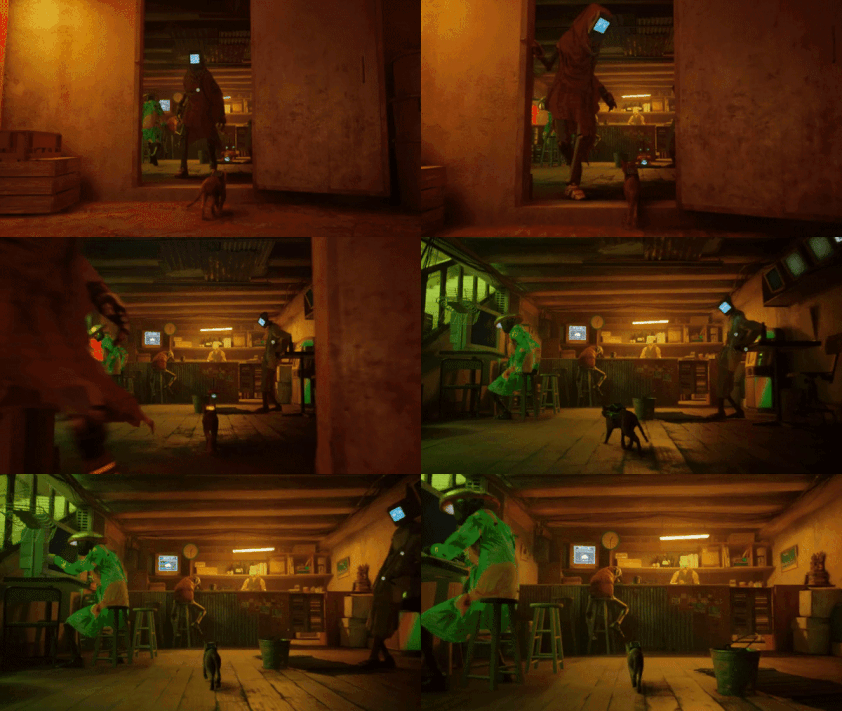
There are your regular domestic pets and strays, which are simply called neko, the Japanese word for cat. Akito encounters them often, comforts them and can read their thoughts with KK’s powers. Like the dogs, they’re confused, scared and hungry.

Then there are nekomata, which are the spirits of domestic cats who have become yōkai. Nekomata have made themselves at home in the absence of humans, showing their entrepreneurial spirit. The ghost cats have taken over every convenience store and kiosk in the city, urging Akito and KK to buy their snacks and supernatural wares to “be purrpared” for what awaits them.

“You’ve gotta spend money to make money,” one nekomata tells me, “so why not spend it here with meow?”

Nekomata are not to be confused with bakeneko, who are also yōkai but differ from their spirit cat cousins in subtle ways. Bakeneko can be friendly, mischievous or ambivalent, they can move without making a sound, and like nekomata they can speak and understand human language. Unlike nekomata, which have two tails, bakeneko only have one.

Finally, there are maneki neko. You’ve seen maneki neko even if you don’t realize it, probably on the counter of your local Japanese grocery, sushi house or Chinese restaurant. They’re the smiling, beckoning cats who are said to bring good fortune, health and other benefits. They’re based on the legend of a friendly cat who led a road-weary Japanese feudal lord and his men to a sanctuary just before a violent thunderstorm centuries ago, and have become ubiquitous in Japan and wider Asian culture.

For a game with a grim premise set in an empty but lived-in city, there’s plenty of bizarre humor as well. One mission has you delivering toilet paper to a human spirit who really, really needs to wipe after an epic bowel movement before he can move on and rest easy in the afterlife.

On another occasion I stopped to admire the detail and near-photorealistic beauty of a street bordering a shrine when I heard a nekomata hilariously meowing a cheerful song out of tune. When I turned toward the little cat, I saw him floating in the air and bouncing to his happy song.

As Akito, the player is tasked with lifting the fog from neighborhoods of central Tokyo, rescuing the spirits of deceased humans before they can be harvested by the demons and yōkai, and investigating the what, why and how of Tokyo’s takeover by malevolent spirits.

Akito and KK accomplish the former by “cleansing” Tokyo’s many shrines using a ritual performed at the shrine torii gates. Once a torii gate is cleansed, the fog around it subsides and more of Tokyo opens up for exploration and investigation. Meanwhile, Akito and KK must fight off yōkai to reach the floating spirits of Tokyo’s citizens, using a talisman to secure them. The duo can then “wire” the spirits to an ally outside the city, who helps return them to their bodies. The game keeps track of how many souls are saved, with the count rising to the hundreds of thousands for adept players.

The game remains true to Japanese folklore in the way it presents enemies, who are usually corruptions of human souls who have deep regrets about their lives. The spirits represent anxieties unique to, or prevalent in, Japanese society.

There are Rain Walkers, unnaturally thin salarymen toting umbrellas who advance on you inexorably, representing the angry spirits of men who spent their entire lives in service to a corporation, hardly spending time with their families or raising their kids because they work so much.

There are the Students of Pain and Misery, headless schoolgirls and schoolboys representing the spirits of teenagers whose grades couldn’t carry them into good universities, damning them to a life of tedious, low-paying jobs. Those are real concerns in a country where students spend in excess of 10 hours a day, six days a week in school. Teenagers are under enormous pressure to get top grades, and teen suicide is a major contributor to the country’s unusually high suicide rates.

Spirits of Lamentation are dangerous and move in sickeningly unnatural ways as spirits of people who were estranged from loved ones, while the small, raincoat-clad Forsaken are the spirits of abused children.

These malevolent spirits and others wander the streets, linger in alleys and leap across rooftops, but they also form groups called Hyakki Yagyo, which are parades of oni and yōkai who march through the streets of Japanese cities on summer nights, according to folklore.
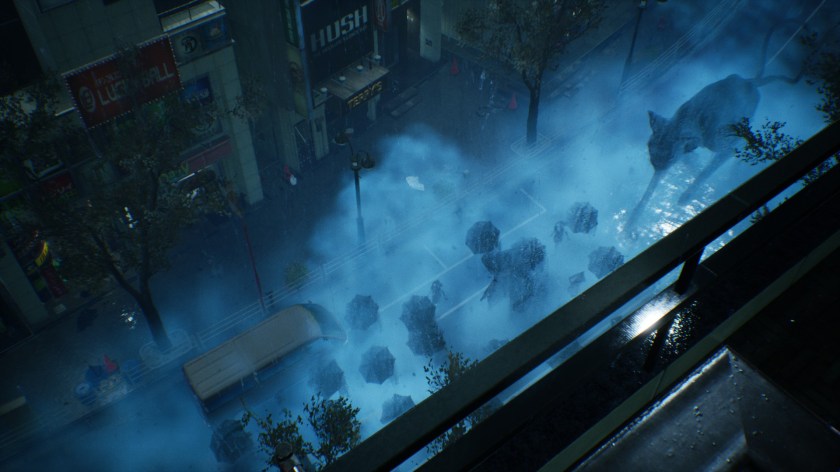
Hyakki Yagyo
You’ll hear the Hyakki Yagyo before you see it, tipped off by the booming taiko drums that accompany the ghostly parade.

The arrival of Hyakki Yagyo in Ghostwire is impressively atmospheric: Lights and neon signs flicker and die out, while taiko drums boom from the mists. Then you see the spirits — yōkai with their umbrellas, massive demons, bizarre apparitions.

The first time I encountered a Hyakki Yagyo, I was so engrossed in watching the procession that I didn’t realize I was in its path until it was too late. I learned that if you get too close, the spirits yank you into an ethereal plane and surround you in numbers, determined to end your physical existence and make you one of them. Those encounters are among the most difficult in the game, but they’re also a fun test of skill.

Ghostwire gives us the most complete recreation of Tokyo in any game to date, and it’s magnificent. The metropolis extends seemingly forever in every direction, with 36 million people living a metro area that sprawls for almost 1,000 square miles. (That’s three times the size of New York with all its boroughs.)

Because of that, no game studio can handle the challenge of recreating the entire city on a 1:1 scale, and Ghostwire doesn’t attempt it. Instead the game world encompasses the famous Shibuya district and part of Minato City, two of the most bustling and famous districts in the heart of Tokyo. It’s a massive playground stretching from west of the scramble crossing, through Roppongi and all the way to Tokyo Tower.

Ghostwire is beautiful, polished and a hell of a lot of fun to play. You’re not going to find the gloriously intuitive combat of a game like Control, or even an experience like the fluid melee action of Shadow Warrior 2. Ghostwire’s combat is pedestrian compared to those games, but it becomes more fun and interesting as the game progresses and you’re given different powers and options to deal with a growing variety of ghastly enemies.

The lure of a game like this is its moody atmosphere, magnificent visuals, tense sound design and a plot that weaves hundreds of years of Japanese folklore into the mix, creating a world unlike anything else in gaming.

The writing deftly transitions between serious and funny, tense and lighthearded, and the partnership between Akito and KK allows for a running dialogue throughout the game, with the two of them asking each other questions, arguing over tasks and reacting to the craziness around them. What starts out as an uneasy alliance held together by necessity becomes grudging mutual respect and eventually friendship.

Rounding out the cast of characters are Mari, Rinko, KK’s friend Ed, and the masked protagonist. Rinko is the spirit of a woman who worked with KK in their human lives. Rinko and KK were killed for their determination, and in death they continue the fight against the malevolent spirits. Ed is a weirdo: He’s KK’s man on the outside, helping to reunite the severed souls of Tokyo with their human bodies when Akito and KK rescue them, but the only way to talk to Ed is by payphone — and even then, he only answers in recordings.

Mari is Akito’s sister, who was unconscious and helpless in a hospital when everyone vanished. More than anything, Akito wants to protect her.

Finally, there’s the man in a oni mask, the mysterious mastermind behind the supernatural takeover of Tokyo. Who is he? What does he want? Can he be defeated?

To answer those questions requires an adventure very much worth having.

Title: Ghostwire: Tokyo
Release date: March 25, 2022
Platforms: PC, Playstation 5
Audience: Mature
Cats: Many

Little Kitty, Big City: Play As A Cat In Tokyo

Little Kitty joins two other highly-anticipated games that put players in the paws of feline protagonists.

It looks like 2022 is going to be a banner year for the fledgling “play as a cat” genre of video games.

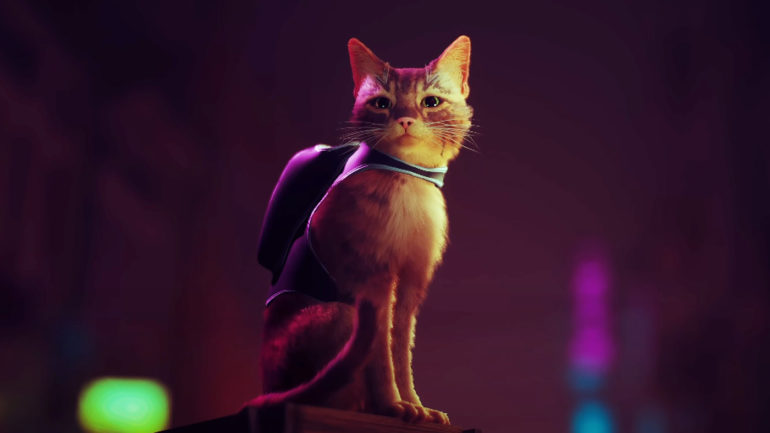
There’s the long-awaited adventure game Stray, slated for early next year, in which the player is an orange tabby navigating an eerie future Hong Kong with heavy cyberpunk vibes. Then there’s Peace Island, an open world mystery game that gives players the choice to switch between nine different cats who are tasked with finding out what happened to their humans and all the other people who have suddenly vanished.

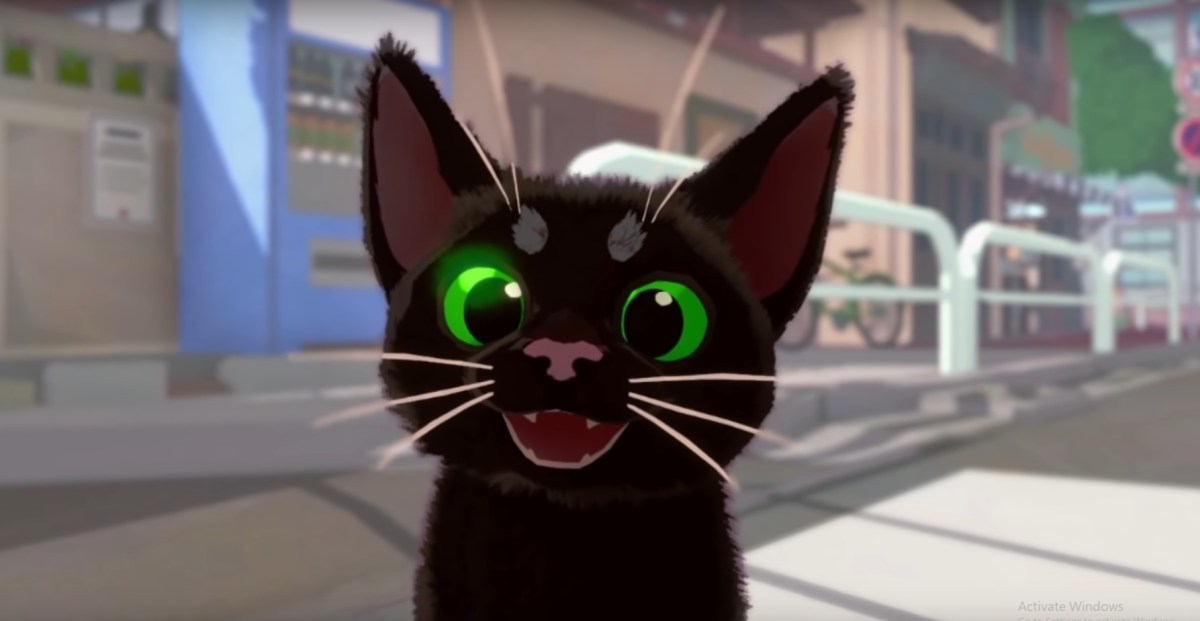
Now there’s a third feline-centric game in the mix: Little Kitty, Big City, which offers players the chance to adventure as a playful black cat with bright green eyes. The goal of Little Kitty, Big City is to help the title kitty find its way home, but as the trailer below repeatedly points out, cats tend to get side tracked:

One thing that stands out immediately is the art style. Stray is all dark urban environs drenched in neon, with neighborhoods inspired by Hong Kong’s former Kowloon Walled City. The title cat is determined, resourceful and adept at navigating dangerous situations, with a big part of the game’s focus not only on achieving goals, but achieving them the way a cat would.

Peace Island occupies a halfway point between Stray’s hi-fidelity noir realism and Little Kitty’s polygonal pastels. The titular island is picturesque and the game emphasizes beautiful sunsets, heavy undergrowth and local animal life. The environment itself is a character of sorts, as the players will have to mine their surroundings for clues about the missing people.

By contrast, Little Kitty, Big City offers us a heavily stylized Japanese metropolis with blue skies, bright colors and a whimsical narrative. The feline protagonist has a goal, but there are also so many boxes to explore, so many trash cans that might yield yums, and yes, plenty of laptops to sit on during grooming sessions. There aren’t mysteries to solve or enemies to watch out for, just a journey that rewards the player for doing what a cat does.

The game’s creators write:

“You’re a curious little kitty with a big personality, on an adventure to find your way back home. Explore the city, make new friends, wear delightful hats, and leave more than a little chaos in your wake. After all, isn’t that what cats do best?”

Above: Stray leans heavily into the cyberpunk aesthetic with Bladerunneresque visuals in a futuristic city.

Above: The cats of Peace Island investigate their eerily quiet home town as they piece together the mystery of the missing humans.

Stray was originally slated for late 2021, but has been pushed back to early 2022. Delays in the video game industry aren’t unusual, and as many publishers have learned the hard way, rushing to release a buggy, unfinished game is always a mistake.

Peace Island doesn’t have a release date yet, and as for Little Kitty, Big City, its Steam page simply says: “Planned release date: Cats don’t have deadlines.”

Dodgers Pitcher Shows Off His Love For Cats

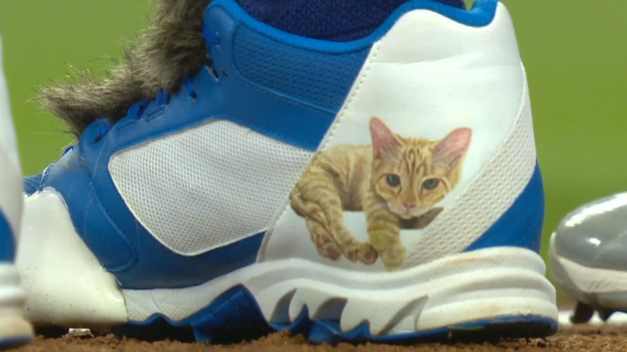
The Dodgers’ Tony Gonsolin is a consummate cat man, entering Saturday’s playoff game against the Braves with a custom pair of cat-celebrating kicks.

The Dodgers’ Tony Gonsolin was rocking a unique look during his appearance Saturday against the Atlanta Braves.

The Los Angeles reliever, known for a repertoire that includes a mid-90s fastball, an extremely effective splitter and a nasty slider, was wearing a custom pair of cleats with fake cat fur to represent his kitties, Tigger and Blu. The custom kicks also featured a graphic of a cute ginger tabby on the sides.

catcleats
Tony Gonsolin’s custom cat cleats, which he wore in the National League Championship Game 2 against Atlanta on Oct. 17, 2021.

The 27-year-old hasn’t exactly been secretive about his love for cats, tweeting often about his furry friends and taking the opportunity to show them off every Caturday, but his Oct. 17 appearance was notable because he took it to a whole new level.

Alas, the Dodgers lost Saturday’s game on a ninth-inning walkoff single by the Braves’ talented Austin Riley. The 24-year-old has had a breakout season this year for Atlanta, hitting .303 with 33 home runs and 107 RBI, numbers that easily put him in the top echelon of offensive third basement.

But Gonsolin’s no slouch either. The righty boasts an impressive 2.85 ERA in three seasons in the MLB — all with the Dodgers — striking out 148 batters in 142.1 innings and posting a tidy 1.089 WHIP.

For our non-baseball-loving friends (me and Bud love us some baseball), that means Gonsolin is an extremely effective reliever, allowing few baserunners and keeping the ball out of play by frequently striking out batters.

Stray’s Feline Protagonist Is Picture Perfect

Stray follows the adventures of a feline protagonist as he navigates a strange city on a journey to get back to his family.

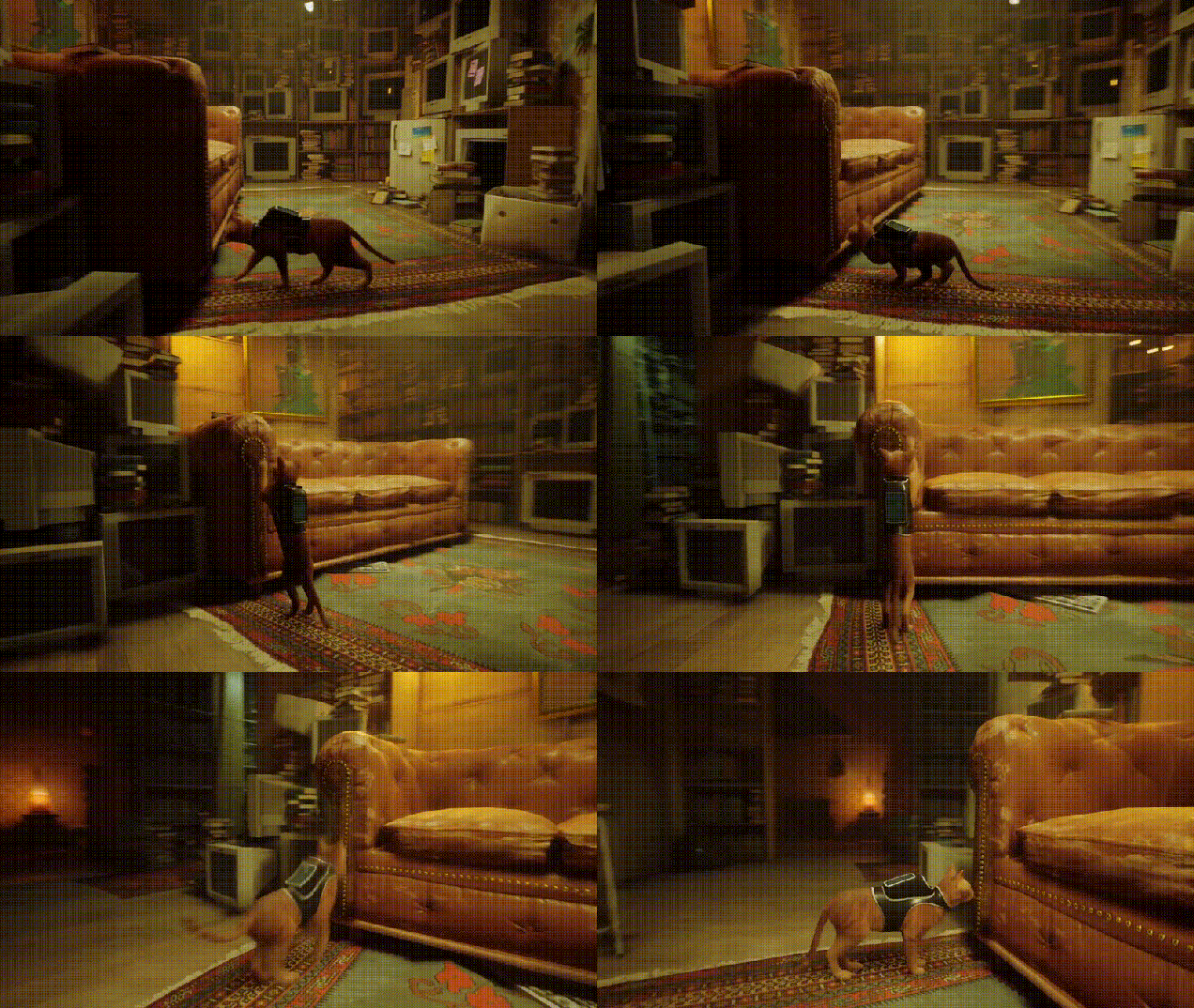
Determined to get inside an apartment, the ginger tabby leaps onto the ledge of an air conditioner unit, then onto the roof, where he drags a piece of debris to the edge, swipes it off and watches it shatter a skylight.

Boom. Kitty door created!

The scene isn’t part of a Youtube video or a documentary about smart cats, it’s a gameplay sequence from the upcoming Stray, a game in which the protagonist is a lost cat who’s been separated from his family and dropped into an eerie, near-future Hong Kong.

The overlap (or Reuleaux triangle) in a Venn diagram of gamers and cat-lovers is pretty sizable, and for that enthusiastic cross-section, there’s no game more highly anticipated than Stray.

Stray
Our hero gets his sustenance from bowls, needs to pause for a scratch every once in a while, and likes to rub against the legs of friendly characters he meets.

Previously we’d seen a short trailer and still screenshots, and now a video from the developers shows off more than four minutes of glorious game footage following the feline protagonist as he explores Hong Kong’s streets, back alleys and noodle shops.

The developers are clearly cat lovers: The kitty hero of Stray moves with the grace, energy and caution of a real domestic feline, and the game forces players to tackle obstacles and challenges the way a cat would. The protagonist cat gains access to a vent shaft, for example, by swiping a coffee mug into fan blades to get them to stop spinning. In another scene, the cat is startled, jumps a full pace back and lands on all fours in a way only cats can.

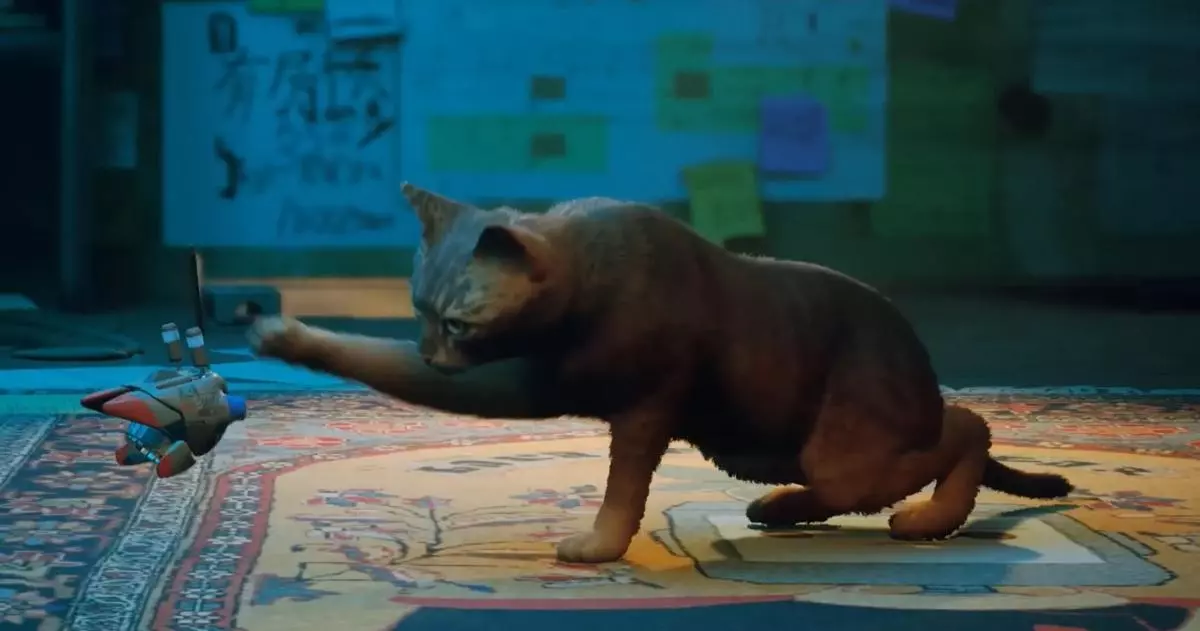
Everything from gait to reactions is perfectly cat-like. In the opening moments, our kitty hero is clearly injured, nursing one of his back legs as he hobbles down an alley. In a later scene he bats curiously at a drone the way a house cat would with a new toy.

There are no magic abilities or impossible inventories here: As the player, you can only do things a cat can do in real life, although you’re given a boost later on when a friendly character equips you with a harness on which B12, the above-mentioned drone, can dock. B12 can interact with man-made inventions, understand your cat’s intentions and facilitate rudimentary communication.

If, for example, your kitty character is dehydrated and stops to paw at a vending machine, B12 can send a signal to the machine, order it to dispense a beverage, then open it for the adventurous cat. B12 also helps your catagonist fight off enemies. By flashing a purple light at hostile machines, for example, the little drone can render them harmless and deactivate them.

Ultimately, though, the game designers want you to think in cat terms to make your way through the game world, and that means considering feline physiology when encountering obstacles, and feline psychology when trying to solve puzzles.

Stray
“A new toy?!” Stray’s hero cat is curious as he meets B-12 for the first time.

The project’s lead designers are both industry veterans who decided to strike out on their own by forming an independent studio after years of working for UbiSoft, the game industry giant known for game franchises like Assassin’s Creed and Watch_Dogs. Like those games, Stray gives players the opportunity to explore a highly detailed open world.

“Our goal is to create a unique experience playing as a cat. We are inspired everyday by Murtaugh and Riggs, our two cats,” creative director Viv said. “Most of the team are cat owners as well, giving us all a lot of helpful first-hand references. Cats are always so playful, cute and lovingly annoying that it’s an endless stream of gameplay ideas for us.”

Stray_gameplay

For the game’s atmosphere, the creators were inspired by Hong Kong’s Kowloon Walled City, a former military fortress that became a slum in the days of British-ruled Hong Kong, with Chinese triad gangs serving as de facto authorities in the lawless zone. Today, the former Kowloon Walled City is a park.

“It is also a very unique point of view for an adventure game. Exploring the strange world we are building feels really fresh when you’re sneaking under a car, or walking the rooftops with the inhabitants below unaware of your presence. Or if you want them to be aware, you can just meow endlessly to annoy them.”

Stray was originally slated for a late 2021 release, but it’s looking more likely that we won’t see it until the first quarter of 2022. Given the recent history of highly anticipated and rushed projects like Cyberpunk 2077, few gamers would begrudge a development team taking its time and getting things right rather than going into a months-long crunch period to meet a holiday deadline. Good things come to those who wait, especially in the complex world of game development.

How One Cat Changed The Fortunes Of Two Baseball Teams

The Yankees are 18-3 and the Orioles have lost 19 straight since a cat interrupted play during their Aug. 2 game at Yankee Stadium.

The Yankees were getting drubbed.

It was the eighth inning of a humid night in the Bronx, and the Bombers were facing yet another loss, this time in humiliating fashion — they were down 7 to 1 against the last-place Baltimore Orioles, who smacked four home runs off of recently-acquired starting pitcher Andrew Heaney.

Fans cried out to the Baseball Gods for intervention, and their prayers were heard: With Yankee slugger Aaron Judge at the plate, a tiny shape streaked across the left side of the infield, just behind the foul line.

“The one and two,” Yankees TV play-by-play man Michael Kay said as the Orioles’ pitcher delivered. “Uh oh…”

The shape moved, and the gait gave it away: It was definitely a cat.

“How in the world did he get out here?” color commentator Paul O’Neill asked.

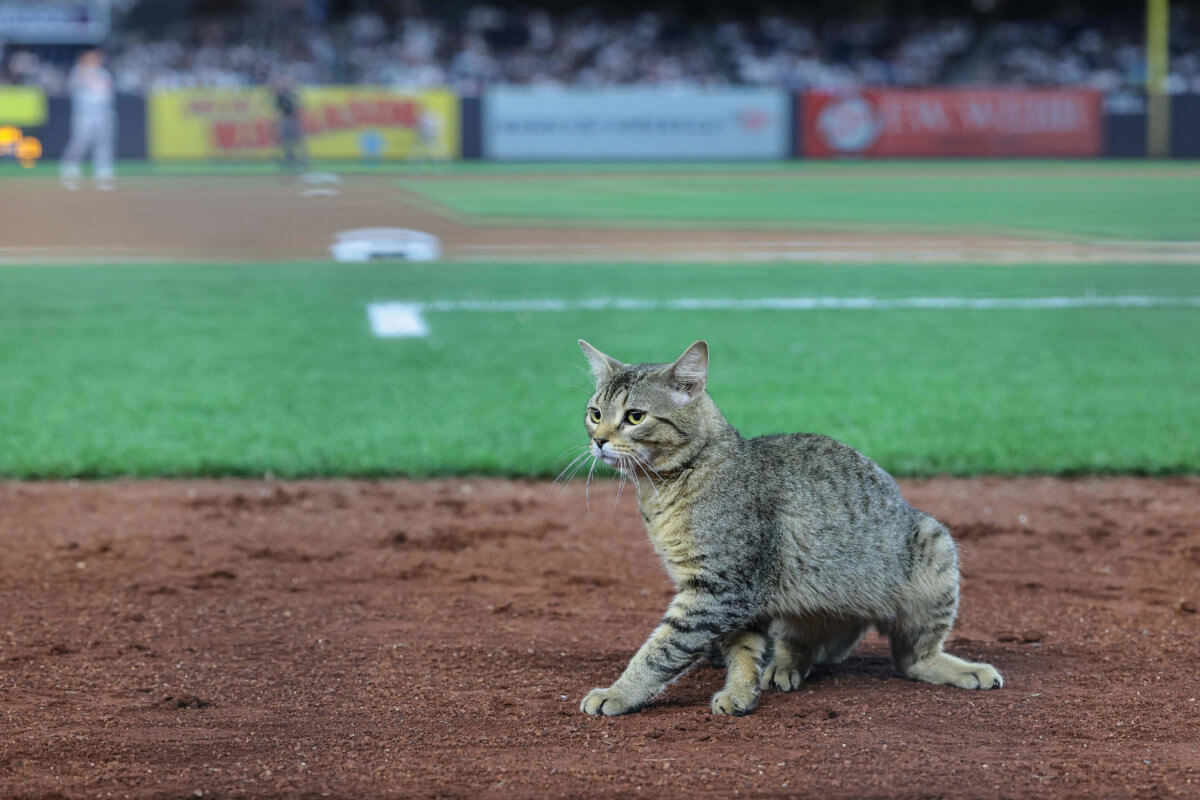
For a moment it looked like play would continue. Then the stadium’s cameras zoomed in on the little interloper, a brownish tabby. The kitty took off toward left field and the crowd went wild.

Orioles left fielder Ryan McKenna stood and watched as the little guy streaked past him, heading for the outfield wall where a door — which remains closed during play — leads to the bullpen.

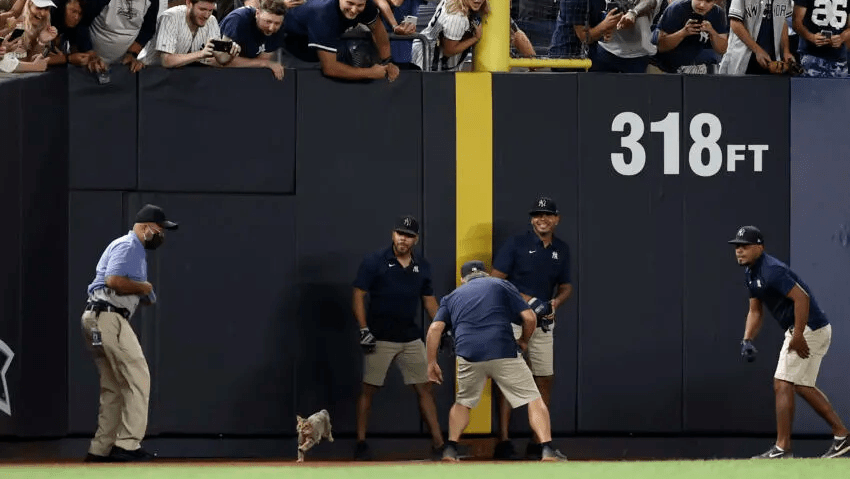
Seeing no way out, the cat paused, then jumped on the padding that lines the walls, drawing more cheers from the crowd, who encouraged him as he tried to leap the rest of the way over the fence.

By the time a quartet of Yankees security guards tried to corner kitty and he dodged them — not once, not twice but three times! — the crowd was pumped, shouting “MVP! MVP! MVP!”

Almost four minutes elapsed from the time the cat appeared on the field to the moment when a Yankees employee with some brains opened a side door, allowing kitty to escape from what was undoubtedly a stressful situation. Quite an adventure for the little guy.

The Orioles won that game and the troubled Yankees looked like they were headed for a bitterly disappointing season.

The cat changed both narratives, at least for the kind of people who put stock in sports superstition — a group that includes the players themselves.

Rally Cat
Rally Cat, as he’s become affectionately known, on the field at Yankee Stadium. Credit: Bronx Times

Since that Aug. 2 game, the Orioles have suffered through a historically brutal stretch, losing 19 games in a row before finally earning a win last night. That epic losing streak represents the worst run of futility in Major League Baseball in 16 years and stopped just two losses shy of a 21-game losing streak set in 1900. (For British and international readers, you read that right: No other sport is as meticulous as baseball when it comes to continuity and keeping stats. Those statistics go all the way back to the first professional games in 1869. While seasons have been interrupted — most recently last year when the schedule was reduced from 162 to 60 games due to the pandemic — only World Wars I and II have scratched entire seasons from the history books.)

Fearing a curse, the Orioles’ players tried all sorts of things to change their luck, most noticeably growing mustaches. (Note to the Orioles: Playing like a major league team tends to work better than growing facial hair.)

The Yankees, meanwhile, have experienced a renaissance that has them looking like the perennial championship contenders they’re supposed to be, vaulting over five other teams in the standings and breathing down the necks of the first-place Tampa Bay Rays.

With their win over the Braves on Tuesday night, the Yankees are 18-3 since Rally Cat (as he’s now known) appeared in Yankee Stadium, and they’re riding an 11-game winning streak, their longest stretch of wins since 1985. It’s a stunning turnaround for a team that had been disappointing all year, looking lifeless for long stretches.

As for the cat, it’s not clear what happened to him. Local shelter operators and animal rescue organizations haven’t heard anything.

One thing was clear to anyone who is familiar with felines: The kitty’s body language clearly conveyed fear and confusion, and he was desperate to find a way out. Any cat would be, with 35,000 humans making a ton of noise, lights and huge advertising screens everywhere, and additional humans standing on the grass in what must look to cats like some bizarre ritual.

Yankees security didn’t do themselves any favors by the way they were trying to remove the cat, Elyise Hallenbeck, director of Strategy for Bideawee Animal Rescue’s Leadership Giving & Feral Cat Initiative, told the Bronx Times.

“They should be grateful that they weren’t able to lay hands on it, because the cat would have won that,” Hallenbeck said. “The cat was severely and terribly, terribly, frightened.”

Rally Cat, wherever you are, we hope you’re in the care of a loving human and you’re enjoying some delicious yums. You deserve it.