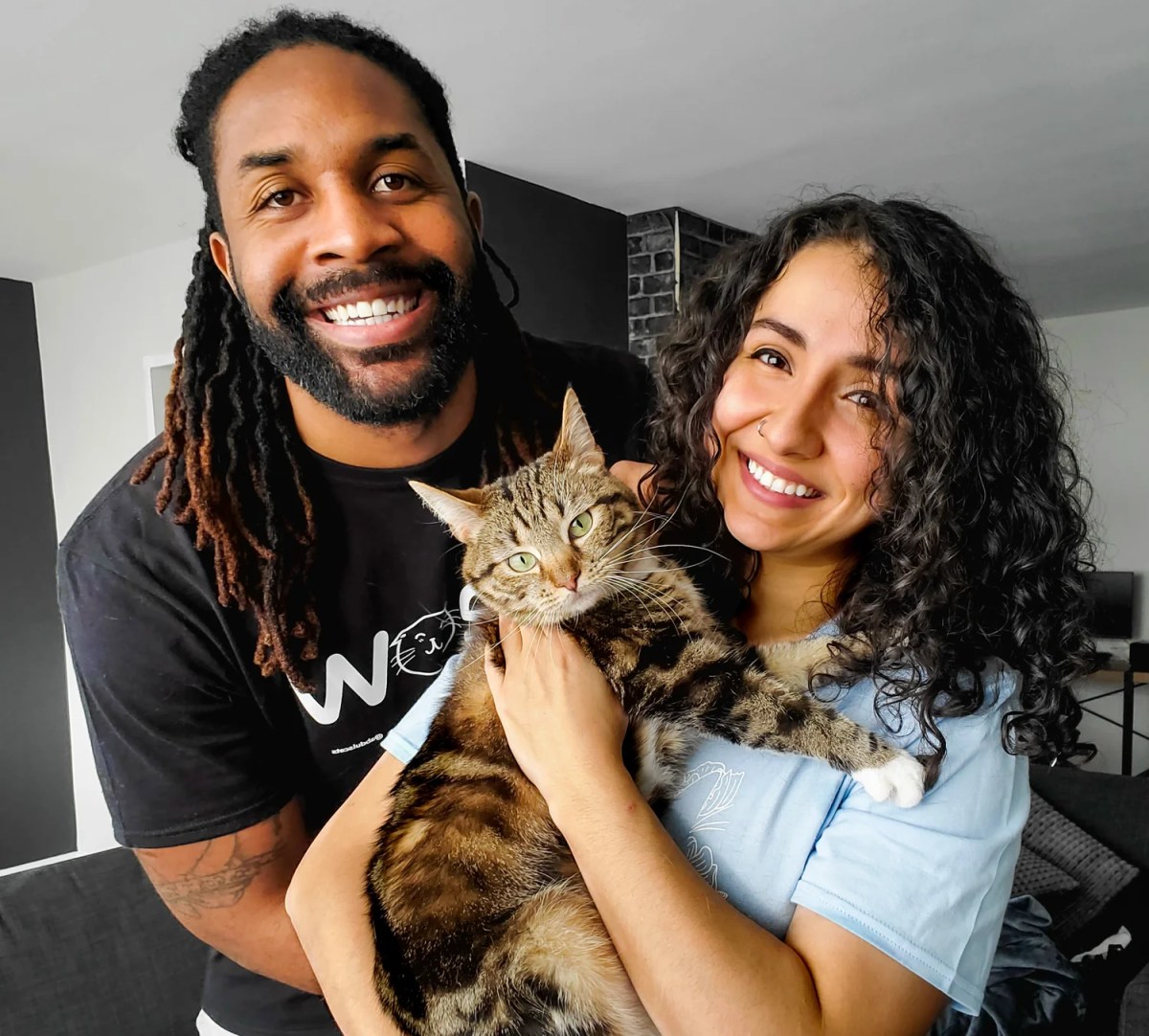
Abdul Raheem found peace when he adopted his beloved cat, Bambi. Now he wants other men to know felines are awesome.
There’s something to the idea that people who aren’t fond of felines just haven’t met the right cat.
For me, it was the experience of interacting with a friend’s affable tuxedo — just one, since all my experiences up to that point had been with people who kept an unreasonable number of cats.
For Abdul Raheem, it was adopting a cat named Bambi after he and his wife fostered and fell in love with her.
“She brought me so much just happiness, and she made my mental health better,” Raheem told the Washington Post. “My anxiety was better when I was around her. So I just want to give other people that feeling.”
Raheem and his wife, Shamiyan Hawramani, became regular fosters for a shelter near their home, and Hawramani began filming her husband’s doting interactions with the baby felines.
Raheem with one of his bottle babies. He and his wife have fostered about 200 kittens and cats since the COVID pandemic.
Their friends found the videos amusing, and lots of people online have too. Abdul’s Cats, an Instagram account documenting Raheem caring for fosters, has a large following — including young men, many of whom are thinking about adopting a cat for the first time because Raheem is showing them something that challenges stereotypes.
My favorite anecdote is about Raheem’s enthusiasm for cats spreading to his friends. At first, they got accustomed to the idea of baby cats jumping in their laps and taking curious swipes at controllers on nights when they’d hang out and play video games.
Then they came to the same conclusion Raheem had: hanging out with cats is relaxing. Several of those friends have since adopted their own feline overlords, and Raheem says one friend now has four cats running around his house.
As for stereotypes, I think cat ladies get a bad rep. They’re the ones who do all the hard work of managing colonies, trapping, fostering, volunteering in shelters and placing cats in good homes.
When you think of the sheer volume of work, and the things they’ve accomplished — including a dramatic reduction in euthanized cats thanks to TNR efforts — they are the unsung heroes. They do it because they love cats.
Jordan Poole is one of several NBA players who have professed their love of felines. In the off-season Poole volunteers with his local shelter.
But it’s also good to toss aside labels and outdated attitudes, like the insistence that cats are companions for women only, and that adopting and caring for a feline friend is somehow unmanly.
Like Jordan Poole, the NBA guard who evangelizes the awesomeness of cats to his fellow players, men like Raheem show guys that they can adopt too.
Now if you’ll excuse me, Bud and I have a busy day of lifting weights, watching football, working on the hot rod we’re restoring in the garage, and drinking beer. Then we’re gonna chant Viking drinking songs until we pass out.
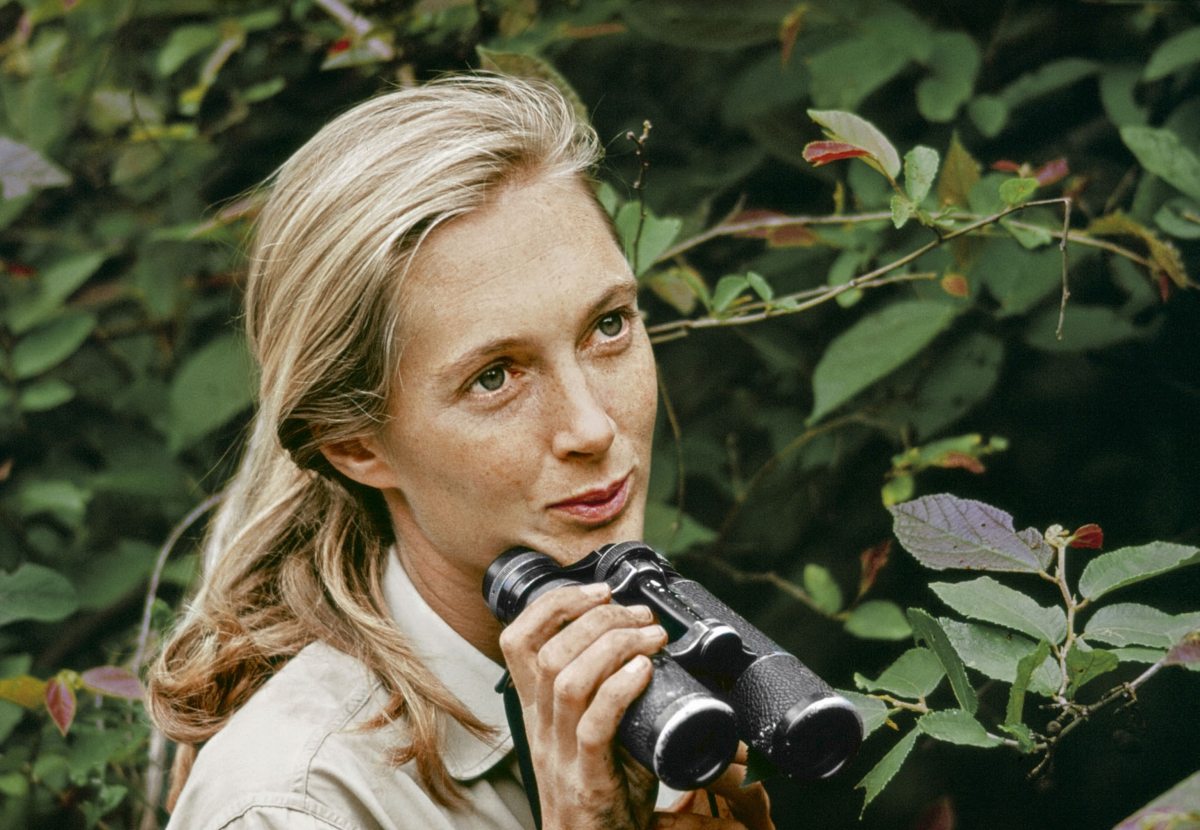
Goodall spent the better part of seven decades with the chimpanzees of Tanzania. Her discoveries were so profound, they forced the scientific community to reevaluate what separates humanity from other animals.
As I’m sure most of you have heard, Jane Goodall passed away Wednesday of natural causes. She was 91.
Goodall’s work was revolutionary and her career was extraordinary. It’s difficult to imagine now, but when Goodall first pitched camp in Tanzania’s Gombe Stream National Park in July of 1960, the scientific community knew virtually nothing about great apes.
Goodall wasn’t exactly welcomed with open arms. Being female and photogenic were the first two strikes against her in the eyes of the establishment.
She was self-taught, didn’t have a degree (she later earned a doctorate at Cambridge), and perhaps her biggest “sins” involved empathy and an attitude more buttoned-up scientists saw as anthropomorphizing the animals.
Goodall with a Gombe chimpanzee. Credit: Wikimedia Commons
Goodall gave the chimps names (a no-no at the time among scientists), carefully observed and recorded their family trees, worked out the obtuse — to human eyes– social hierarchy of primate troops, and witnessed behavior that no one had ever seen before.
She saw friendship, love and loyalty among the chimpanzees, witnessed a bitter war between the Gombe troop and a splinter group, followed families over generations, and saw one chimp die of a broken heart after his mother passed away. (I recommend Goodall’s 1990 book, Through A Window: Thirty Years With The Chimpanzees of Gombe, and the 2002 follow-up, My Life With Chimpanzees, for anyone who wants to read more.)
Her first major contribution, in October of 1960, not only fundamentally challenged our assumptions about animals, it forced us to change the way we regard our own species.
Goodall, observing the chimpanzees from a distance despite the rain that day, watched as a male she named David Graybeard repeatedly dipped blades of grass into the Earth. Curious, Goodall approached the site after Graybeard left, grabbed a few blades of grass and imitated what she’d seen the chimp doing.
She was astonished when she pulled the grass out and the strands were covered in termites. David Graybeard had been eating. He was using a tool to eat!
Goodall at Gombe in the early 1970s. The primatologist secured unprecedented access to the chimpanzees by gaining their trust. Credit: Wikimedia Commons
The discovery was huge because scientists believed tool use was, at the time, limited to mankind. We build and use tools, animals don’t, the thinking went.
When Goodall reported her findings to her mentor, anthropologist Louis Leakey, his prompt response indicated the gravity of her discovery: “Now we must redefine ‘tool,’ redefine ‘man,’ or accept chimpanzees as humans.”
Goodall never stopped working with the chimpanzees of Gombe, and today her formerly humble camp has become a permanent compound where researchers — all inspired by Goodall’s story — continue to study our genetic relatives.
But in her later years, Goodall became known for her activism just as much as her work as a scientist. She traveled constantly, engaging audiences on the subjects of animal conservation, respect for nature and understanding our place in the natural order. It’s a job that has become more necessary than ever as relentless human expansion, habitat fragmentation and human behavior push thousands of species toward extinction.
Credit: The Jane Goodall Institute
We lost Frans de Waal, the famous primatologist, in 2024. Now we’ve lost Goodall, and Sir David Attenborough is less than six months shy of his 100th birthday. We’re going to need people to pick up where they left off, and the job is much more difficult than it looks, requiring expertise, charisma and the ability to connect with audiences who know little about the subject matter.
But that’s a problem for another time. For now, let’s remember Jane and appreciate all she’s done over the span of an incredible life and career.
Free-ranging cats do have a negative impact on wildlife, but we’re not going to solve the problem by demonizing them and culling them by the millions.
The Literary Hub story starts off with a provocative question: what if cats ruled the world?
This is a question I find amusing to ponder, so instantly my mind was filled with images of cats scandalizing foreign heads of state by insouciantly swiping gifts off tables, angering diplomats by yawning and nodding off during summits, and financing the construction of massive and unnecessary coastal walls, on the off chance the ocean decides to move inland and get them wet.
Then the writer cited the repeatedly-debunked “study” that credulous media of all stripes still reference without bothering to read the text — that infamous 2013 Nature Communications paper, published by birders who author books with titles like “Cat Wars: The Consequences Of A Cuddly Killer.”
Some journalists don’t know any better, some are overworked, and some are frankly too lazy to read the study with a critical eye, but I think one of the more likely reasons people continue to cite the paper is because it’s easier to blame felinekind for wildlife extirpation than it is to admit we’re the primary culprits. After all, according to the WWF’s most recent annual review, we’ve killed off 73 percent of Earth’s wildlife since 1970, and we certainly didn’t need house cats to help us push elephants, rhinos, every species of higher non-human primate, and innumerable other species to the brink of extinction.
We did that. We did it with our relentless development, consuming and fracturing wild habitats. We did it with careless industrialization, by dumping chemicals and garbage into our rivers and lakes until more than half of them were rendered too polluted to swim in or drink from. We did it by bulldozing old growth forest and jungle, by exploiting species for fur, folk medicine, ivory, sport hunting and in the illegal wildlife trade.
Cheetahs are critically endangered, and they’re being driven to extinction even faster by poachers, who sell them to wealthy buyers in oil-rich gulf states where they’re trendy pets. Credit: Riccardo Parretti/Pexels
More than 47,000 species — that we know of — are headed toward extinction. It’s so much easier to blame it on anyone or anything else than admit we need to make major changes to our lifestyles and policies.
But don’t take my word for it. Here’s what Alley Cat Allies has to say about the 2013 meta-analysis and its derivative papers:
“The Smithsonian-funded study published in Nature Communications is not rigorous science. It is a literature review that surveys a variety of unrelated, older studies and concocts a highly speculative conclusion that suits the researchers’ seemingly desperate anti-cat agenda. This speculative research is highly dangerous. It is being used by opponents of outdoor cats and Trap-Neuter-Return (including the authors) to further an agenda to kill more cats and roll back decades of progress on TNR. And it is being spread unchecked by the media.“
Here’s what a group of ethicists and anthropologists wrote about the claims against cats in the journal Conservation Biology, lamenting the lack of nuance and danger in arguing that cats must be stopped “by any means necessary.” The drive to blame felines, they argue, has “fueled an unwarranted moral panic over cats”:
“Contrary to Loss and Marra’s claims that the scientific consensus is consistent with their views that cats are a global threat to biodiversity, the actual scientific consensus is that cats can, in certain contexts, have suppressive population-level effects on some other species (Twardek et al. 2017). This is something that is true of all predators, native or not (Wallach et al. 2010). Thus, cats should not be profiled as a general threat a priori and without reference to important factors of ecological context, situational factors, clear definition of harms, and evidence thereof.”
“There are there are serious reasons to suspect the reliability of the new, extreme cat-killer statistics,” wrote Barbara J. King, retired chairwoman of the department of anthropology at The College of William and Mary.
Feline predatory impact varies by local conditions. Free-ranging cats in cities and suburbs kill rodents, but have minimal impact on other animals, data shows. Credit: Patricia Luquet/Pexels
Like we’ve often noted here on PITB, the authors of the Nature Communications study can’t even say how many free-ranging felines exist in the US. They say it’s between 20 and 120 million. That’s a 100 million difference in the potential cat population! How can they tell us how many birds and mammals are killed by cats if they can’t even tell us how many cats there are? No amount of massaging the numbers can provide an accurate picture if the initial data is shaky or nonexistent.
Furthermore, the nature of a meta-analysis means the authors depend on earlier studies for estimates on predatory impact, but the 2013 Nature Communications paper does not include any data —not a single study — on feline predatory impact. In other words, they have no idea how many animals free-ranging cats actually kill.
In authentic studies that actually do measure predatory impact, the data varies widely in geographic and demographic context. Data derived from the D.C. Cat Count, for example, shows that cats living more than 800 feet from forested areas rarely kill wildlife, and are much more likely to kill rodents.
Those who cite the bunk study and its derivatives are “demonizing cats with shaky statistics,” King wrote, adding she was alarmed by “an unsettling degree of uncertainty in the study’s key numbers.”
Free-roaming populations are reduced when cat colonies are managed, and the animals are fed and fixed. Credit: Mia X/Pexels
Ultimately, we agree with Wayne Pacelle, former president of the Humane Society of the United States.
The meta-analysis authors “have thrown out a provocative number for cat predation totals, and their piece has been published in a highly credible publication, but they admit the study has many deficiencies. We don’t quarrel with the conclusion that the impact is big, but the numbers are informed guesswork.”
Cats do have a negative impact on wildlife, it varies according to local circumstances, and those of us who love cats have a responsibility to keep our pets indoors and help manage free-ranging populations.
But cooler heads must prevail, approaches to managing cats must be evidence-based, and the effort requires people of all kinds working together — which becomes much more difficult when agenda-driven pseudoacademics whip people into a frenzy by portraying felines as bloodthirsty, invasive monsters who need to be wiped out “by any means necessary.”
Solving the problem of free-ranging cats requires us to own up to our own role in species extinction and to take measured, evidence-based steps to protect vulnerable wildlife. Otherwise, we’re inflicting a whole lot of suffering on sentient creatures and accomplishing absolutely nothing.
Ryan Easley “wanted to be the one with the most tigers in the ring at one time,” Joe “Exotic” Maldonado said of the Oklahoma man.
A circus big cat trainer and associate of so-called “Tiger King” Joe Maldonado was mauled to death by a tiger at a roadside zoo on Saturday.
Authorities say 37-year-old Ryan Easley was conducting a “show” at the Growler Pines Tiger Preserve when a tiger he “owned” turned on him. The captive predator mauled Easley, attacking his neck and shoulders “in full view of a group of visitors, including children,” PETA wrote in a statement calling on federal authorities to cancel the facility’s licenses.
Easley with a white tiger. Credit: Ryan Easley/Instagram
While Easley called the facility a preserve, others described it as a roadside zoo, and genuine animal sanctuaries do not put animals on public display. The roadside zoo description aligns with the Oklahoma man’s past as a circus trainer of big cats, and Maldonado — who was the subject of the popular 2020 Netflix documentary, Tiger King — seemed to confirm that description when he issued a statement on his friend’s death.
“He wanted to be the one with the most tigers in the ring at one time,” Maldonado wrote in a statement from prison. “Some of his cats were crazy in the head, but it was about having the most performing at one time at all costs.”
Easley acquired some of his tigers from Maldonado, who was convicted of conspiracy to commit murder for hire and 17 counts of violating federal conservation laws in 2019. Maldonado, who remains incarcerated in a federal prison in Fort Worth, Texas, tried in 2017 to hire two men to kill Big Cat Rescue’s Carole Baskin, an activist with whom he had a years-long feud. One of the men Maldonado tried to hire was an FBI informant.
Maldonado is serving a 21-year federal prison sentence. Mugshot credit: Santa Rosa County Jail
PETA has accused Easley of mistreating, neglecting and abusing the tigers at his facility. Tigers are apex predators and hyper-carnivores who do not recognize social hierarchy or have any innate compulsion to follow orders from humans, so “taming” them and getting them to “perform” involves coercion, including physical punishment, withholding food and torture. The brutal mistreatment required to force elephants, lions, tigers and other animals to perform is one reason why traditional animal circuses no longer exist in the west.
Maldonado admitted as much in his statement, noting “you don’t get a tiger to jump through a hoop of fire because they love you.”
“It’s never safe for humans to interact directly with apex predators, and it’s never a surprise when a human is attacked by a stressed big cat who has been caged, whipped, and denied everything natural and important to them,” PETA’s Debbie Metzler wrote in a statement.
Former big cat handler and caretaker Katherine Lee Guard, who is now an activist against keeping big cats as pets and using them in the entertainment industry, spoke to PITB about her experiences in 2023. She noted tigers can turn on their handlers at any time, even if the latter hand-reared the felids since infancy. Once their predatory instincts are triggered, the apex predators feel a powerful compulsion to attack.
Even in accredited zoos where tigers are provided with large enclosures designed for their well-being, given plenty of enrichment and stimulation, and fed well, Guard said people should never enter an area without barriers between themselves and the big cats.
“The cost is too great if something goes wrong,” she said. “And something always goes wrong given enough time.”
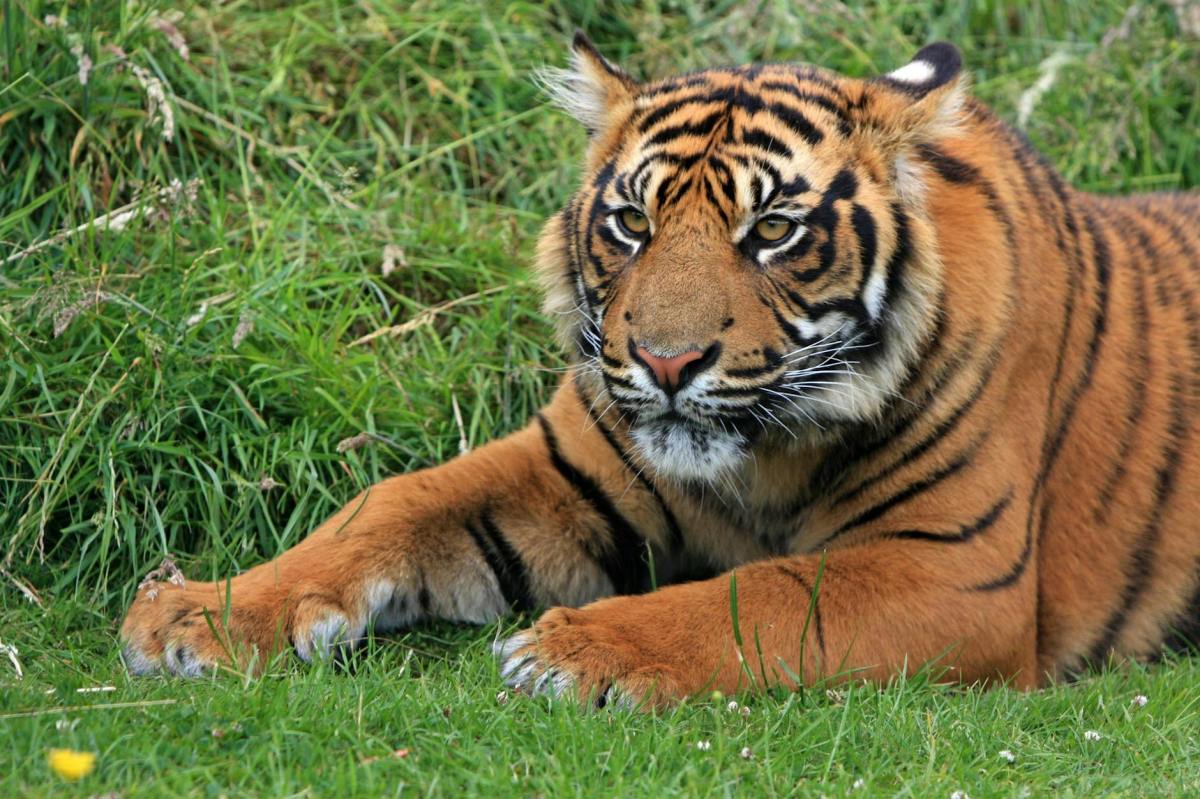
Header image of a Sumatran tiger via Pexels. Do you enjoy reading PITB? Please consider whitelisting us on your ad blocker so we can keep the lights on. Thanks!
Pixie the cat fought for his life and he’s now almost fully healed. Meanwhile, in Ohio, lawmakers want their state to become the sixth to ban declawing.
Back in April, a woman spotted a group of kids literally playing with fire, and was horrified when she got closer and realized they had set a cat ablaze.
She took the cat from the little demons and rushed him over to the ACCT Philly, where the stray — now dubbed Pixie — fought for his life as veterinary staff treated him.
Now Pixie, who doesn’t harbor any ill will toward people and is an affectionate, loving little dude, is all healed up and ready for his forever home.
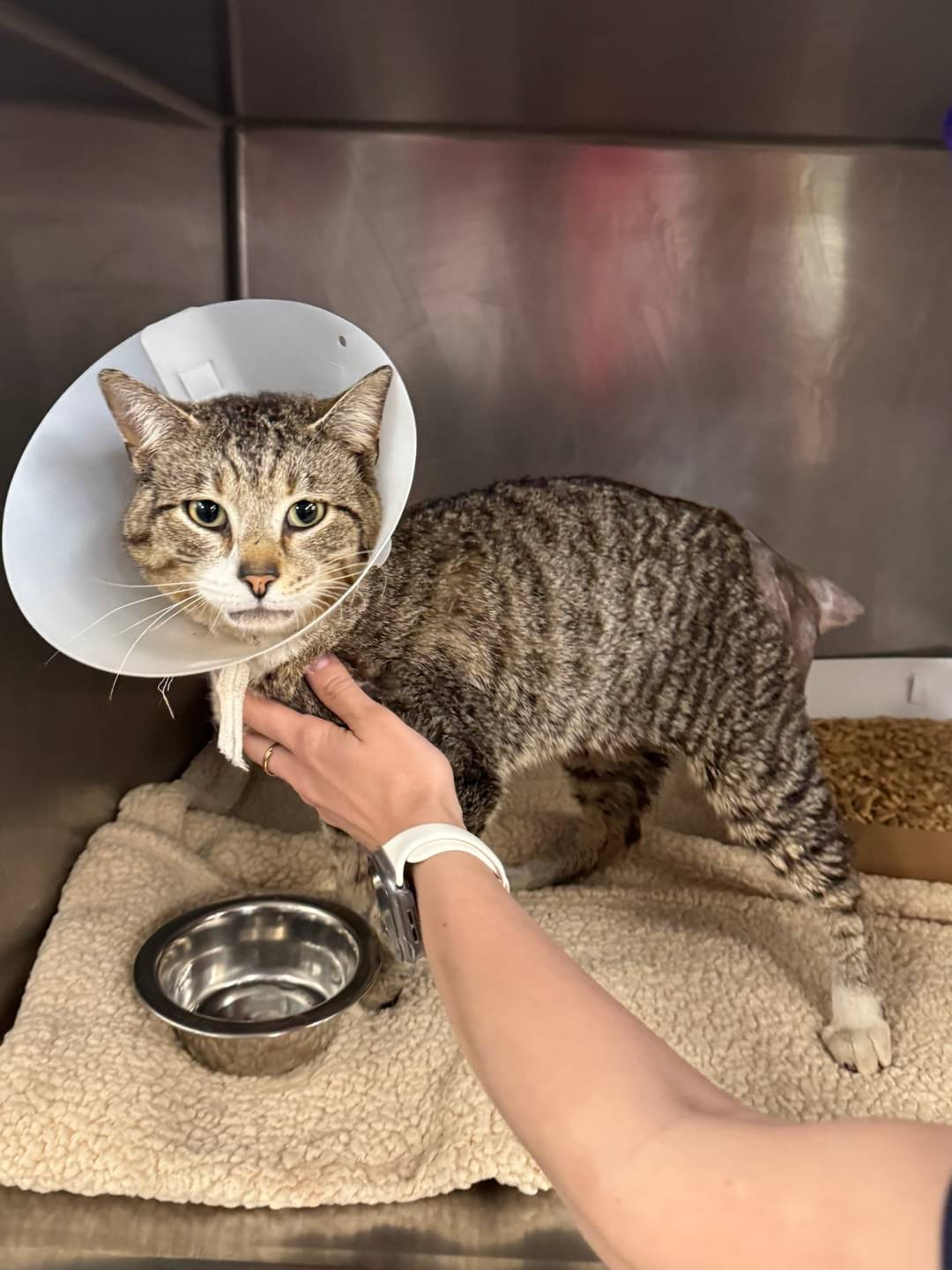
Pixie lost most of his tail and he still suffers from some incontinence episodes — which is to be expected, given the trauma he endured — but his fur has grown back, he’s healthy and he’s ready to be loved.
“Pixie’s story is hard to read. It breaks our hearts. But it’s the reality we fight every single day,” ACCT Philly’s staff posted online. “It’s why we exist – because no animal should ever face such cruelty, and every animal deserves a second chance at life.”
Pixie has recovered from his injuries and he’s ready to go to a good home. Credit: Pennsylvania SPCA
Pixie’s “spirit has been untouched” by his ordeal. If you live in the area and think you can provide a good home for the little guy — and exhibit the patience he needs with his ongoing issues from the cruelty he endured — visit ACCT Philly to fill out an adoption form. We hope Pixie gets a great home and lives his best life.
Another state looks to ban declawing
Our representaves in congress are too busy embarrassing Americans, staging Jerry Springeresque arguments in the legislative chambers and chasing TV cameras, so naturally they have no time for an insignificant issue like animal welfare.
But if they won’t act to bring our barbarian nation in line with the civilized world when it comes to banning the mutilation of cats, at least some state governments are doing what they can.
Ohio’s representatives are pushing for their state to become the sixth to ban the cruel procedure, after New York, Maryland, Virginia, Rhode Island, and Massachusetts. Washington, D.C., has also banned declawing, and a few dozen cities throughout the country have passed their own local prohibitions.
A bipartisan bill sponsored by a Republican and two Democrats has been introduced.
The usual villains in these efforts, the state’s Veterinary Medical Association, have trotted out the same tired arguments that declawing is “discouraged,” but shouldn’t be banned.
That argument doesn’t hold water when the veterinarians who hold VMA memberships are the types who offer package deals for kitten neutering and declawing. Not all or even most vets belong to state VMAs, and almost no veterinarians who specialize in feline care are members, but the vets who do support the group are the ones who see declawing as an income stream.
Their usual strategy is to call in favors from reps whose campaigns the group donates to, who in turn try to prevent declawing bans from ever reaching the floor for a vote.
After decades of successfully defeating such bans, the dam finally broke when New York passed its ban in June of 2019, becoming the first state to outlaw elective declawing.
We wish the bill’s sponsors, and their allies in local animal welfare groups, good luck in moving the legislation forward.