This Man Broke A Cat’s Spine By Slamming It To The Ground. Help Police ID And Catch Him

The police are looking for the public’s help in identifying and tracking down a man seen in a disturbing video.

Cops are looking for the public’s help identifying a man who abused a cat, injuring the feline so badly it had to be euthanized.

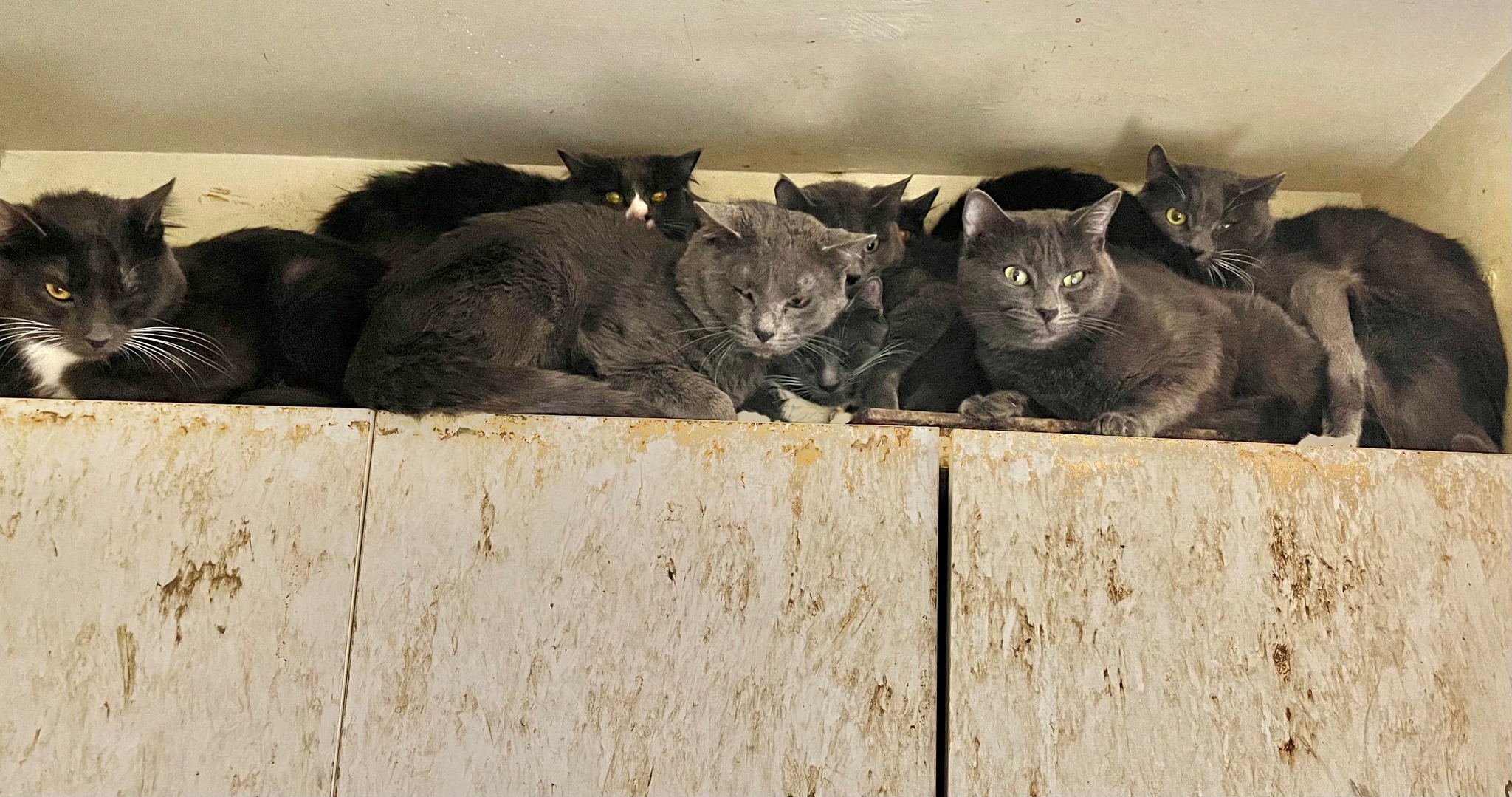
The man chased the cat into an apartment complex in Hamilton, Ohio, on Jan. 24 at 9 p.m. He caught the cat, forced it into a plastic bag and then slammed the bag down hard on the stairwell, according to footage from security cameras the complex. He dumped the cat, still alive and suffering, behind the apartment complex and fled.

The cat was found by deputy dog wardens, according to local media, but had a fractured pelvis and spine and had to be euthanized.

ohioanimalabuser
A still image from Jan. 24. Police say the suspect returned last week to scope out security cameras. Credit: Butler County Sheriff’s Office.

In addition to being shockingly cruel, the suspect isn’t the sharpest tool in the shed. Cops say he doesn’t live in the complex, but returned there last week to look for surveillance cameras. In doing so, he gave the police a better look at his facial features and more images to release to the public.

Per the Hamilton Journal-News:

“In the new photos of the suspect, he is wearing the same coat and shoes, but has a recent hair cut, according to the BCSO.”

For those of you living in the Ohio area, details on how to contact the Butler County Sheriff’s Office are in the post below. Help them find this cruel man so he can be prosecuted and convicted.

Texas Pols Secretly Plot Cat Slaughter: ‘The More The Public Knows, The Uglier It Gets’

Another day, another abhorrent plan to kill cats.

Unaware they were being recorded, elected leaders in a small Texas city let their imaginations run wild in a closed-door meeting about dealing with feral cat colonies.

One proposed mass poisoning to take out as many as 50 cats at a time. Another, perhaps fancying himself a mafia hit man, envisioned taking care of the city’s cat “problem” execution-style with a “.22 round to the back of the head.”

A third proposed dumping the bodies of the dead cats in an area the city already uses to dispose of unwanted animals.

“We have a location on this property that’s called deer heaven,” the committee member told colleagues at the Nov. 6 meeting. “I’m sure it could be kitty cat heaven too.”

Now the city council and wildlife advisory council of Granite Shoals, a city of about 5,100 in central Texas, are trying to explain themselves to an infuriated public, the local Humane Society and their own police, who rebuked them in a public statement that asserted their plans are illegal.

State and local laws “do not allow any cruelty to animals, including feral cats in our community,” police chief John Ortis wrote in a letter to the public.

The Hill Country Humane Society took the extraordinary step of “terminating its relationship” with the city, calling the committee’s plans “blatantly unethical and illegal” in a statement posted on Facebook.

“This recording reveals that not only was there an attempt to develop a plan to inhumanely shoot captured cats and dispose of their carcasses, but there was open discussion between members of the committee and the City Manager about the need to conceal such activities from the general public,” the Humane Society wrote.

Staff at the Humane Society said they’ll still take in stray cats from the city, but they’ve ended their official partnership.

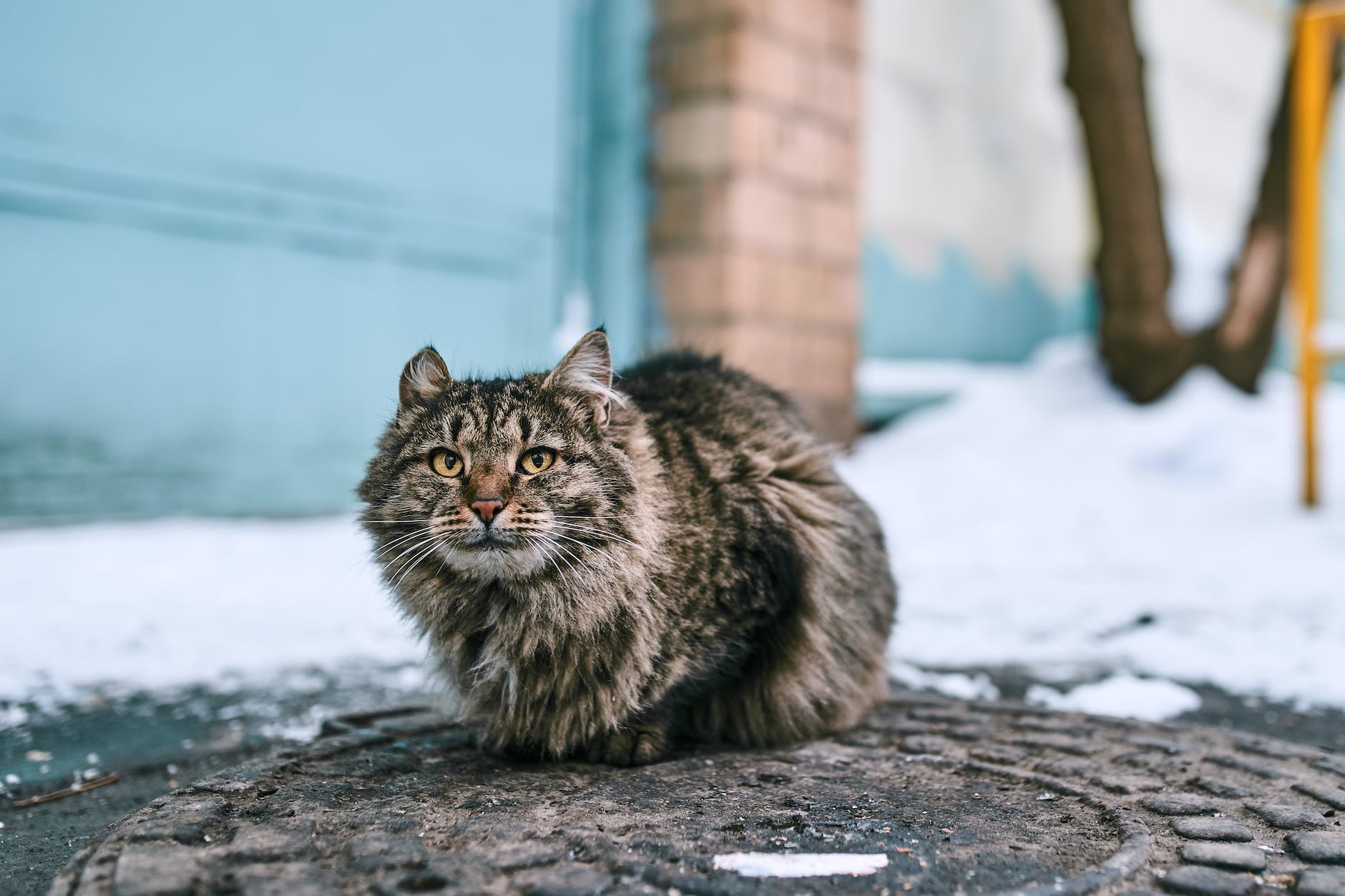
A stray cat. Credit: Aleksandr Nadyojin/Pexels

Todd Holland, the committee chair, denied that his members wanted to keep details of their plans from the public and told local newspaper the Daily Trib that the committee was merely trying to work out the “intricate details” of how to handle a population of about 400 cats. It’s not clear how the city arrived at that number, and there’s been no mention of an official effort to get an accurate tally.

“It’s not like we’re a bunch of cowboys running wild,” Holland said.

But in the recording, committee members clearly discussed hiding details from the public, and the Daily Trib noted that the committee used the word “remove” interchangeably with “euthanize” in written materials detailing the plan, perhaps to soften the language or obscure the fact that the proposed solution was to kill the cats.

Granite Shoals Mayor Ron Munos called the recording “disturbing” and said the committee’s plan will not be put into practice.

“The city is not doing this,” he told the Daily Trib. “We’re not going out and killing cats.”

Here at PITB we feel like a broken record regularly referring back to the junk studies blaming cats for killing billions of birds annually, but the reason we do is because those studies have real-life consequences.

Ill-advised, unethical and illegal plans to eradicate stray cats wouldn’t be explored at municipal and county levels if elected leaders weren’t told that trap, neuter, return (TNR) programs do not work and that outdoor cats pose the most significant thread to local wildlife.

Likewise, we wouldn’t hear about schools sponsoring cat hunts for children or so-called conservationists gunning down entire stray colonies if a small but vocal group of ostensible scientists weren’t routinely publishing dubious studies making improbable and unsupportable claims about feline predatory impact.

In plain terms there’s been a concerted effort to paint domestic cats as dangerous, ruthless killing machines, the media hasn’t treated the claims with skepticism, and the result is a whole lot of cruelty and misery inflicted on innocent animals.

City councils, wildlife biologists, park rangers and others are not armed with the facts when they rely on those studies, and the result is bad policy and decision-making.

Stories like this one out of Texas have become more frequent over the past few years, and we suspect things will get a lot worse for cats without injecting some much-needed sanity and evidence-based solutions to counter the tidal wave of misinformation.

The Result Of Birder Fearmongering: 50 Cats Likely Poisoned, 26 Dead In Texas

The kittens died “foaming at the mouth, throwing up bright green.” Acts of vigilantism against cats are happening more frequently as junk science about their hunting habits spreads via news reports.

Cat rescuer Erica Messina was trapping stray kittens to get them out of the cold and into homes before winter, hoping the young cats would have better lives.

Instead, they died horribly shortly after she successfully trapped them from a lakeside colony in October.

“All of the 13 kittens that I had all passed the same way,” Messina told KBTV, a Fox affiliate in Beaumont, Texas. “They were foaming at the mouth, they were throwing up bright green and peeing bright green.”

Two weeks later, per KBTV, a dozen adult cats from the same colony died the same way the kittens did, “some with chemical burns on their noses.”

“I was upset. I was at work when I found out and I came out here and started asking people, you know, what the problem was,” Messina told the station. “I got no answers.”

Like others who have cared for large colonies of strays who were killed by overzealous birders, Messina says she now has PTSD as she’s trying to save the lives of the remaining cats. She’s managed to catch all but four of them with the help of other local cat lovers and rescue organizations.

They’re getting no help from the authorities. Police referred Messina to Beaumont Animal Care, who told her they can’t help unless she can prove the cats were intentionally harmed. Not only are they putting the burden of proof on the victims in this case, but the victims can’t speak for themselves.

‘A bird-watcher’s paradise’

The colony lived in Collier’s Ferry Park, a lakeside park that also borders marshes where migratory birds spend time alongside native species. Indeed, Beaumont, a coastal Texas city of 115,000, markets itself, and Collier’s Ferry Park in particular, as a prime bird-watching spot.

Colliers Ferry Park
Collier’s Ferry Park in Beaumont, Texas, where 25 cats were killed in an alleged poisoning. Credit: National Parks Service

A 2013 story in the local newspaper, the Beaumont Enterprise, detailed how local officials and business owners were promoting the park as a bird-watching paradise, noting that “[b]irders in particular are a lucrative market” driving tourism in the city. The story explains how the park is ideal for birds and those who like to watch them, details prized species found there — including herons, the least grebe and cinnamon teal — and includes input from a zoologist with a focus on birds, along with a local businessman who leads guided bird tours on the lake.

Collier’s Ferry Park is also listed on a site for “birding hotspots” while Texas Monthly calls it “one of the country’s best bird-watching spots.”

It is precisely the sort of place misguided bird watchers, driven to rage by widespread junk science blaming cats for declines in bird population, tend to dispense what they believe is vigilante justice. It stretches credulity to imagine anyone but a self-styled conservationist who blames cats for bird extinctions would risk a criminal conviction to poison a colony of cats, especially in a well-known hotspot for bird watchers.

Junk science blames cats for declining bird populations

We’ve written our share about the disingenuous and agenda-driven activism that passes for research, most of it published by Peter Marra, a Georgetown avian ecologist who also authored the book Cat Wars: The Devastating Consequences Of A Cuddly Killer. The book advocates a “war” on cats and says they must be extirpated “by any means necessary” to protect birds and small mammals.

It does not, notably, put the blame on human activity, including but not limited to habitat destruction, the widespread use of harmful pesticides, wind farms, sky scrapers and all the other man-made structures, chemicals and machines that have contributed to a 70 percent decline in wildlife in the last 50 years.

catwars2

But don’t take our word for it. Vox Felina calls Marra “a post-truth pioneer” who has claimed cats “kill more birds than actually exist,” while Alley Cat Allies echoes our own criticism by pointing out that Marra’s studies are composites of “a variety of unrelated, older studies” which his team uses to concoct “a highly speculative conclusion that suits the researchers’ seemingly desperate anti-cat agenda.”

“This speculative research is highly dangerous—it is being used by opponents of outdoor cats and Trap-Neuter-Return (including the authors) to further an agenda to kill more cats and roll back
decades of progress on TNR. And it is being spread unchecked by the media.”

In an NPR piece criticizing the studies blaming cats, Barbara J. King shares many of our own criticisms, chiefly that Marra and company have done no original research, relying instead on older studies, most of which have nothing to do with feline predatory habits, and none of which actually measure bird deaths from cats. King also notes, as we have, that it’s impossible to arrive at anything resembling a precise figure for feline ecological impact when Marra et al admit they don’t know how many free-ranging cats there are in the US, offering a uselessly wide estimated of between 20 and 120 million.

She also points out that the research team conducted “statistical perturbations” to massage the data into something fitting their agenda, which is activism, not science.

The researchers are guilty of “violating basic tenets of scientific reasoning when making their claims about outdoor cats,” bioethicist and research scientist William Lynn wrote.

“Advocates of a war against cats have carved out a predetermined conclusion,” Lynn noted, “then backfilled their assertions by cherry picking an accumulation of case studies.”

The war on cats

Across the world, people are using these studies and those of Marra’s acolytes to justify cruel cat-culling programs, like the recently-canceled cat hunt that would have rewarded children for shooting felines in New Zealand, and Australia’s widely-condemned mass culling that used poisoned sausages to kill millions of cats.

Stories of stray and feral cat poisonings in the US abound. Here at PITB we wrote a series of stories exposing how a government biologist in California took it upon himself to hunt cats under the cover of night, killing them with a shotgun and later celebrating in emails to colleagues, calling the dead cats’ bodies “party favors.”

Indeed, one of Marra’s own proteges, Nico Arcilla — formerly Nico Dauphine — went vigilante. Arcilla, who shares author credits with Marra on studies claiming free-ranging cats kill billions of birds, was a working for the Smithsonian National Zoo in Washington, D.C., when she was convicted in 2011 of attempted animal cruelty. The managers of a local colony, suspicious after strange substances began appearing in the feeders they’d set up for the strays, set up cameras which caught Arcilla placing poison on the food left out for the cats.

Back in Beaumont, Texas, a familiar story plays out: people who manage cat colonies out of love for the animals are working with local rescues, pooling together limited resources to save the remaining strays and hoping for justice.

“It’s terrible, you know? There are some people that just hate cats,” said Vyki Derrick, president of local rescue Friends of Ferals. “The rescuers have been trying to pull them out of the colony and it’s just sad that people want to interfere with that when the problem, ‘problem’ is being taken care of.”

Header image credit: Pexels

When Animal Abuse Is Presented As ‘Cute’: The Brutal Existence Of Monkey Pets

Youtube is home to thousands of videos depicting the torture of baby monkeys, many of them presented as “cute” examples of pet ownership.

Look at what Youtube’s algorithm has served up for me: an “adorable” video of a baby monkey who loves to carry his equally small backpack!

Look at him. He loves it!

“That’s the cutest thing I’ve ever seen,” gushed one Youtuber.

“WHY IS THIS SO CUTE HELP ME,” another asks.

Others dub the video “so adorable,” “so cute” and call baby monkey Pika “the most adorable little baby I’ve ever seen.”

The video has five million views in four weeks. A handful of viewers might instinctively know something’s wrong while the vast majority of those people never give a second thought to what they’ve just watched.

Let me tell you what you’re looking at.

“Pika” is an infant rhesus macaque, about four weeks old by the look of him.

He is the “pet” of a woman in China, and to become her pet he was ripped out of his screaming mother’s arms as she fought tooth and nail to keep her grip on her baby. It’s at least a two-person job and the people who steal baby monkeys, either directly from the wild or from enclosures they own on breeding farms, up-armor themselves before going into the cage to protect from vicious bites and scratches.

Such is the fury of a mother whose baby is being taken from her.

(Above: An “adorable” video of an infant rhesus macaque who has been stolen from his mother and sold as a pet and has spent the first few weeks of his life being tortured to force him to walk on two feet. Right: A still from a video from a man who hunts monkeys titled “Baby Monkey Headshot”)

Pika was taken within a few hours to a few days after birth. No one wants adult monkeys so it’s imperative that the babies are swiftly “pulled” from their mothers, photographed and matched with buyers online. In the US an infant macaque will set you back about $5,000, but in China it’s considerably cheaper because the monkeys are native to Asia and certain parts of China, as well as neighboring countries and the territory of Hong Kong.

Being torn from his mother is just the first of many traumas Pika will endure in his guaranteed-to-be-miserable life.

Baby monkeys are a big thing in China, especially among the Mandarin-speaking nouveau riche of the mainland who have considerable disposable income and look for ways to signal their economic status to their peers. Expensive clothes, designer handbags, rare trinkets, you name it. If you’re a young upper class man perhaps you buy a sportscar. If you’re a young woman, you get a baby monkey, create a social media page and show everyone what a fantastic mother you’re going to be by clothing, feeding, training and disciplining the baby.

“Don’t monkeys walk on four legs?” you might be thinking. “They’re not bipedal, are they?”

No, they are not.

To walk upright, Pika has already endured the second major trauma of his young life: The human “mothers” take the little babies, tie their hands behind their backs, then tie a small rope or string around their necks. The other end is tied to an immovable object and the baby is given just enough slack that he can continue breathing if he remains upright.

Topeng Monyet training
This baby monkey has his hands bound and is just beginning his brutal topeng monyet (dancing monkey) training in Indonesia.

This technique, borrowed from the topeng monyet (literally “dancing monkey”) trainers in Jakarta, forces the young monkey’s leg muscles to develop and forces his spine to become accustomed to rigidity.

For the first session, baby Pika would have been left like that for two, maybe three hours, likely screaming for his mother the entire time if his “owner” doesn’t put a stop to it with violence.

The intervals would increase steadily until he’s left like that overnight. Each time the rope is given less slack so Pika is forced to stand rigid.

Topeng monyet training
Topeng monyet training in Indonesia: This is the next phase of training after baby monkeys endure several weeks of being strung up by their necks. Here, a “trainer” is forcing a baby long-tailed macaque to hold an object, which will be part of the “monkey show for kids” the baby will be forced to star in for the next few years of his life. Credit: Jakarta Animal Aid Network

Because they must have the strength and fine motor control to hold onto their mothers’ fur in the wild, macaque infants are ambulatory almost instantly, unlike the helpless infants of their primate cousins like orangutans and, well, humans.

The rope technique allows infants like Pika to quickly become accustomed to walking upright, but they will immediately revert to walking on all fours because that’s how they naturally move and that’s what their muscular-skeletal system is designed for.

That’s why Pika has a “cute backpack.” The backpack is filled with a counterweight so Pika must walk upright or fall over, giving his “owner” what she wants: A “cute” video to share on social media.

Of course Pika could simply refuse to walk, but then he’ll go hungry. Note the reason why he’s laboring, at just a few weeks old, with a counterweight on his back, with an unnatural gait to reach the other side of the room: the demon who purchased him is holding his bottle. No walk, no bottle. Walks, plural, because undoubtedly there were several takes.

(Pika may or may not have a tail. The “owners” often amputate them — without anesthetic — because they’re impediments for preemie diapers, and cutting tail holes in the diapers increases the chances of “accidents” spreading.)

Macaques are hyper-social creatures and they’re so similar to humans socially that psychologist Harry Harlow conducted his infamous maternal deprivation studies on infant rhesus monkeys like Pika.

babyrhesusmonkey
A rhesus macaque baby of about four months old. Rhesus macaques, who are extremely social and nurse from their mothers for up to two years, were used in psychologist Harry Harlow’s infamous maternal deprivation experiments. Credit: Wikimedia Commons

In the wild babies like Pika will spend the first year of life clinging to mom and rarely straying more than a few feet from her. The mother-baby bond is so strong that daughters stay with their mothers for life, and sons stay until they’re five or six years old, at which time they’re booted from their home troops to avoid inbreeding.

The mothers do everything for their babies. They nurse them, groom them, protect them, soothe them when they scrape a knee and scoop them up when an older monkey is bullying them. Macaque babies nurse until up to two years old and they can frequently be seen hugging their mothers.

Through cruel experimentation Harlow found that the tactile feeling of being held in a mother’s arms is absolutely crucial to normal psychological development in primates, humans included. Harlow took infant rhesus monkeys from their mothers within hours and placed them in total isolation. Some babies were given inanimate “surrogate mothers” made of wire, while the others were given surrogates made of cloth. Both groups had major developmental and psychological problems, but the babies with wire “mothers” were far worse off.

That means Pika, who has already been stolen from his mother and forced to endure physical cruelties just weeks after his birth, has also been deprived of something intangible, something so important that it will have an indelible impact on his life.

That is why when you see pet monkeys, you always see them clinging desperately to stuffed animals. The stuffed animals and blankets aren’t their “lovies” like a child would have. It’s much sadder than that. Those inanimate objects are their surrogate mothers which they turn to for comfort and a crude approximation of what it feels like to hold onto their moms.

Some “owners” don’t like that, so they place babies like Pika in barren cages. No matter how horrifically they abuse the babies, when the “owners” let them out in the morning the first thing the baby does is cling to his abuser. That is his nature.

So what happens to Pika?

There’s a timer on cuteness. Pika will be an adorable baby for about a year, which will fly by. By that time he’ll already be showing signs of extreme discontent. He’s got no mother, no friends to play with, no troop, no one to groom or to groom him. He won’t be allowed to climb and explore like he would in the wild, nor can he forage. Food is something placed before him, not something he finds and picks from trees.

Pika, hardwired by hundreds of thousands of years of genetic heritage, will know something’s missing, but he won’t know why. He’ll start to “act out,” only he won’t think of it as acting out because he does not, and cannot, understand human social etiquette, nor what it means to keep things clean by human standards.

As he acts out, he’ll be punished, often severely. He’ll become more of a problem until at about 18 months his “owner” will get rid of him. Some people will take their pet monkeys to sanctuaries, but those are few and far between in China, spots are very hard to get, and the owner will be on the hook for monthly payments for as long as Pika lives, which could be up to 25 years.

So it’s more likely that Pika will be poisoned or simply dropped off somewhere in the woods far from home where he’ll starve or be killed, because he doesn’t have the skills to survive and his kind live in troops. If he’s dropped off where there are other monkeys his chances will be even more slim, since macaques will not accept troop outsiders and can get violent if they perceive an interloper in their territory.

As for Pika’s owner, if she’s not tired of the whole business she’ll buy a new baby. Some women are one and done, but others see it as practicing for parenthood and/or they enjoy the dopamine rush of online attention and praise. I’ve seen some Chinese women go through half a dozen babies, often buying two or three at a time so they can stage spectacularly cruel contests, like dropping a single bottle into a cage and filming the babies fight over it.

What I’ve written here doesn’t even scratch the surface of the cruelty involved with the baby monkey “pet” fad, but don’t make the mistake of believing this is a thing that only happens in China, Thailand or Cambodia. Some 15,000 baby monkeys are purchased every year by Americans, who fare no better when it comes to reaching that 18-to-24-month point when formerly cute, docile babies grow into resentful, frustrated juveniles and become destructive.

While sanctuaries like Jungle Friends exist, they are overcrowded and the same challenges apply to American monkey “owners” as they do to their Chinese counterparts.

We’ll revisit this whole nasty business in a future post, but in the meantime, I ask you to question “cute” animal videos, especially where wild animals and humans are involved.

A note about Youtube and Google: Youtube is owned by Google, whose founders often bragged about their motto: “Don’t be evil.” Youtube and its content moderation teams are well aware their platform hosts tens of thousands of animal abuse videos, including innumerable videos of monkeys — often babies — being abused in horrific ways. There are entire channels, monetized and in good standing with Youtube, that cater exclusively to a depraved audience of self-described monkey haters who call infant macaques and other monkeys “tree rats” and not only provide steady advertising income to the channel operators — which can be life-changing money in countries like Vietnam and Cambodia — but send money via PayPal and Venmo to them with requests for specific kinds of torture

Youtube has been aware of this for almost a decade at least. Going back to 2014, I was one of a group of dozens who mass reported channels to Youtube, tagging blatant and horrific animal abuse. Every report was ignored. The only thing that prompted Youtube to action was when I contacted a friend who worked for PETA at the time and got them to pressure Youtube directly to take down a handful of notorious monkey abuse channels. Youtube took action, but those channels were quickly replaced by new ones, creating a game of wack-a-mole. 

To this day, and despite steady pressure and negative coverage in the press, Youtube takes little more than symbolic action on animal abuse videos, particularly those involving monkeys.

That’s Not How You Speak Meowinese!

A popular X account posts “cute” cat videos that aren’t always so cute, another consequence of people misunderstanding cats and their behavior.

This dude thinks he’s speaking to a cat in her native tongue, but what he’s doing is the equivalent of running up to a bunch of Klingons and shouting “I shall impale you on the edge of my bat’leth!” while mistaking it for a friendly greeting.

It looks like someone hired this guy to rescue the kitty, who like so many of her kind are prone to do, climbed up too high and then decided she didn’t like her odds on the way down. I don’t think his intention was to scare the hell out of her, but that’s exactly what he’s done:

That’s not “Hi, kitty, I’m here to rescue you! Be calm, we’ll get you down in no time!”

It’s “I’m here, I speak your language, and I have bad intentions!”

If you listen with headphones or turn the volume up, you can hear the poor cat crying in distress, the kind of cry that felines make when they’re seriously freaked out and worried for their safety. No wonder kitty backed up. Her fur is raised and her posture aligns with her vocalizations and the rest of her body language.

Like most things posted to Twitter X, this is utterly lacking in context and we don’t know what happened next. I wouldn’t be surprised if the rescue attempt went horribly wrong. I hope not, but man, that’s not how you rescue a cat.

The video was posted by the account “place where cat shouldn’t be,” or @catshouldnt, and a common theme in the images and videos on that feed is cats in distress. They’re mistaken for “cute” situations by viewers, the majority of whom aren’t familiar with feline behavior.

Like, for instance, this photo. The tuxedo kitten is undeniably cute and he doesn’t look distressed…yet. But getting out is going to be a lot more difficult than getting in, and when people are willing to do just about anything for clicks, attention and the associated dopamine hit, cats often end up with the short end of the stick.

Cat in a vending machine
Bud would be jealous of this cat. Thankfully he’s too, uh, meowscular to fit. Yeah, that’s it. Too meowscular. Nothing to do with a few extra pounds…