Blog Posts

Buddy Wants YOU to Follow These Sites!

Buddy’s favorite blogs.

Office of the High Secretariat for Buddesian Decrees, His Majesty’s Palace

August the 7th, 6 AB (Anno Buddy)

Dear subjects,

It has come to my attention that there is a thing called #FollowFriday in which great and respected authors such as myself share links to some of their favorite blogs and sites, so that others might find them and read them.

In the spirit of #FollowFriday, and as the benevolent feline ruler I am, I hereby endorse the following sites of web:

Cattitude Daily: This site is run by my friend Modi, who not only appreciates my rakish handsomeness and luxurious fur, but also writes some good stuff about my fellow cats. Cattitude Daily often answers questions about cats, like why we have webbed feet, why we like to sleep in sinks, and why you should stop trying to touch our feet! I decree you shall check out Modi’s site.

Retro Dee’s Guide to the Best Era Ever: Retro Dee writes about the 1950s, a time when the Romans cheered on the gladiators, husbands and wives slept in separate beds, and life was in black and white. Also, there was no internet and no one had invented Temptations yet, but Marty McFly had a really cool hoverboard. I especially like the old pictures of old people doing old things. Finally, Dee has a cat named Holly and I’m Buddy, so together we’d be Buddy Holly, a guy who was famous for being mentioned in a Weezer song.

090DA4B4-76EA-402B-8634-C5EC7E2F836B
The 1950s.

My Instagram page: Several of my minions mentioned I should have an Instagram page. They said: “Your Grace, the world should know what a handsome king you are.” So now you can follow my blog for my wit and wisdom, and my Instagram for photos of me. Now I have to figure out that there Facebook, and someone else was telling me about two up-and-coming sites called MySpace and Friendster. Soon you won’t be able to escape me anywhere on the Internet!
Study Confirms What We All Know: Cats Are Remarkably Lazy

Unlike other animals, cats aren’t big on food puzzles. They just want the food.

My cat has a morning ritual: He’ll meow in front of the treat cabinet, which now contains healthy snacks, then gobble down his first yums of the day before padding over to the carpet or the couch to lay down.

Ya know, because he worked so hard. After a long and tiring night of sleep and the grueling physical exertion of working his jaw muscles to eat, he needs a respite. A cat nap, if you will.

He’s not unique in this respect, and his morning siesta is just the first of many. Cats need their beauty rest after an exhausting day of lounging, sleeping and having their food literally placed before them.

A new study confirms what we already know — that cats are lazy little bastards — and even hints at new levels of laziness unbeknownst to us thus far.

Working hard or hardly working?

“Get a puzzle feeder,” they say. “Make ’em work a little for their food,” they say. “It’ll stimulate their instincts.”

Animal behaviorists have recommended toys like puzzle feeders and treat balls for years, prompted by research that shows animals enjoy “contrafreeloading,” a fancy way of saying when given a choice between free food and food in a puzzle feeder, animals will opt for the latter.

The behavior is consistent across many species of domestic and wild animals, from dogs and rats to chimpanzees and birds. Maybe it stimulates their urge to forage. Maybe it gives them something fun to do. Or maybe food just tastes better to animals when they’ve earned it.

Cats, however, aren’t contrafreeloaders. They want the easy yums.

That’s according to a new study by a University of California at Davis research team. Cats didn’t ignore the food puzzles entirely, but they showed a clear preference for the low-hanging fruit, so to speak.

“It wasn’t that the cats never used the food puzzle, they just used it less, ate less food from it, and typically would eat from the freely available food first,” said UC Davis’ Mikel Delgado, a co-author of the study.

puzzle-feeder
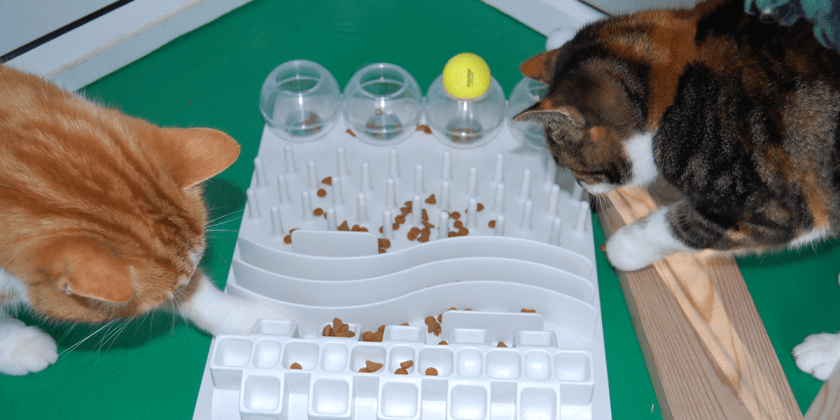
“I’m tellin’ ya, Horace, they do this just to piss us off. How are we supposed to gobble it all down if we have to fish every little kibble out one by one? I hate humans!”

As for why cats aren’t taken with puzzle feeders — besides their inherent laziness, of course — that question will take more studies to answer.

“There are different theories about why animals might contrafreeload, including boredom in captive environments, stimulating natural foraging behaviors, and creating a sense of control over the environment and outcomes,” Delgado said.

When it comes to cats, Delgado’s best guess is that puzzle feeders might just be the wrong game since it doesn’t stimulate their hunting instincts. Maybe the next study should involve small pieces of chicken and turkey tied to the ends of wand toys, so our mighty little hunters can catch their “prey” and dine like proper tigers.

Maybe He’s Born With It. Maybe It’s Meowbelline.

“Buddy. So hot right now. Buddy.”

NEW YORK — Buddy the Cat will be the new face and official spokesmodel of designer Fursace’s new Covidian Collection, the Italian fashion house announced Wednesday.

In addition, Buddy unveiled brand new photos of his four signature looks in his Buddy: 2020 Look Book.

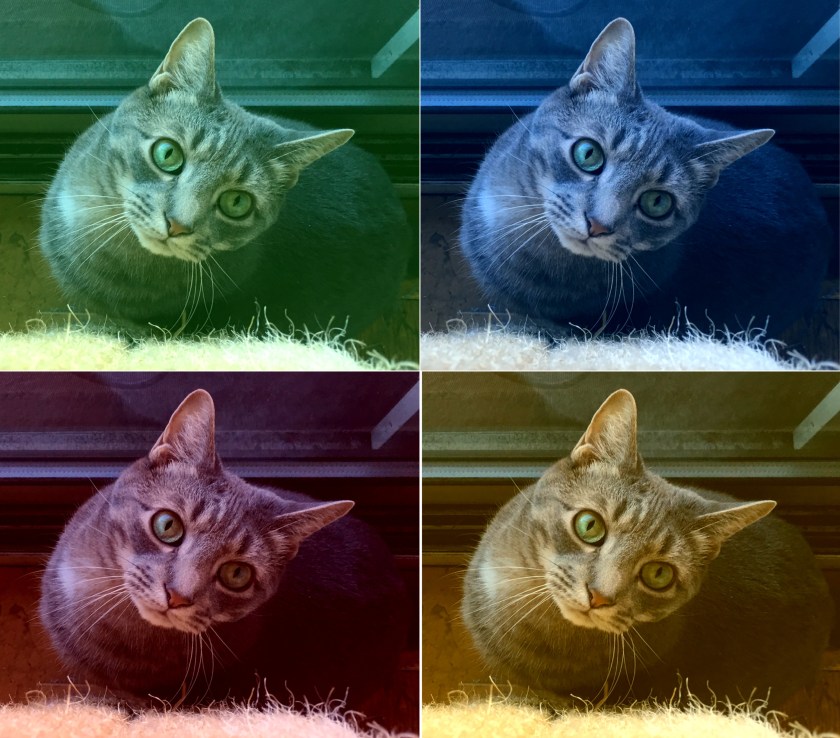
The rakishly handsome tabby’s famous quartet of looks includes icy Blue Steel, Ferrari (a softer look for catalogues and footwear), fiery Le Tigre and the venerated Magnum, which took years to perfect.

“Buddy. So hot right now. Buddy.” – Jacobim Mugatu, designer

Fans got an intimate look at le Tigre at last year’s Feline Fashion Week in Milan, where Bud modeled Dolce and Gabbana’s Meowgnificent collection. The “really, really ridiculously good-looking” cat has been a fixture on the haute couture scene since 2014 when he was a kitten.

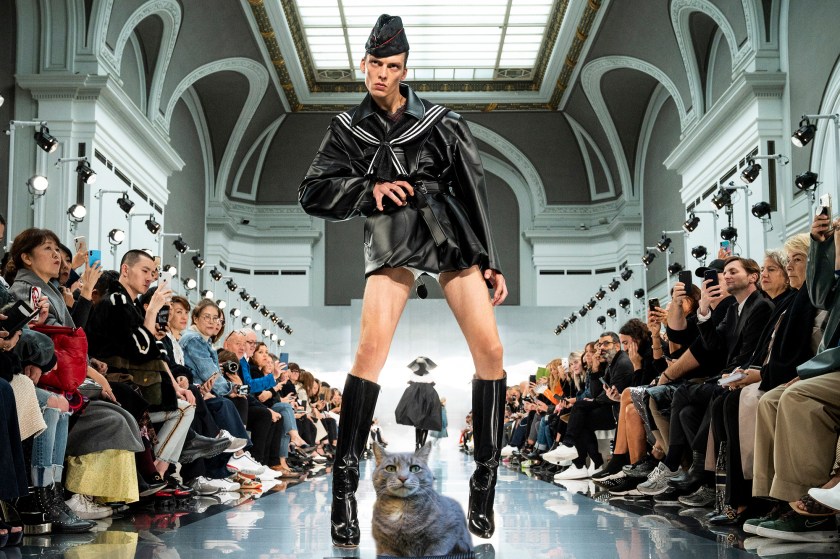
Buddy on the Runway
Buddy the Cat walks the runway ahead of German model Leon Dame during last year’s Fashion Week in Paris.

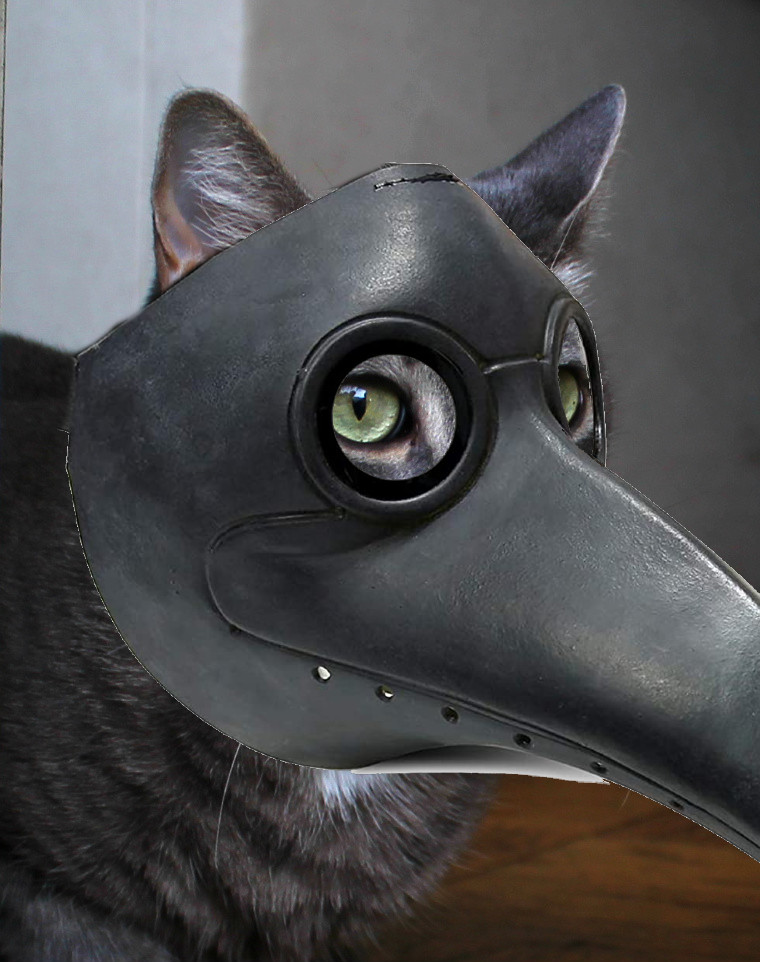
This year the fabulous felid is expected to take the runway for Fursace’s Covidian Collection, a show that draws inspiration from Victorian-era plague doctor masks, gloves and overcoats to create what designer Gianni Fursace calls “pandemic chic.”

“Fashion cuts to the heart of life’s most essential questions, and this season it’s all about one question in particular: What good is protection from the virus if you don’t look fabulous in the first place?” Fursace asked. “What’s the point of surviving if you’re wearing something you wouldn’t be caught dead in?”

buddy_plaguedoctor
Buddy models a $6,250 mask, part of Fursace’s Covidian Collection.

Jacobim Mugatu — the world-famous fashion designer best known for his Derelicte line of homeless-inspired fashionwear and inventing the piano neck tie — praised Fursace for making Buddy the face of his new campaign.

“Buddy has long been my muse as I strive to create clothes that redefine what it means to be fabulous,” Mugatu said. “Buddy. So hot right now. Buddy.”

ferrariletigrebluesteelmagnum
Clockwise from top left: Le Tigre, Blue Steel, Ferrari and Magnum. Credit: Versace Covidian Fall Collection

Cat Is ‘Rehomed,’ Escapes and Walks 40 Miles Back To His People

Garfield’s epic journey took seven weeks.

I have a lot of questions and feelings about this story. Oh, the feels!

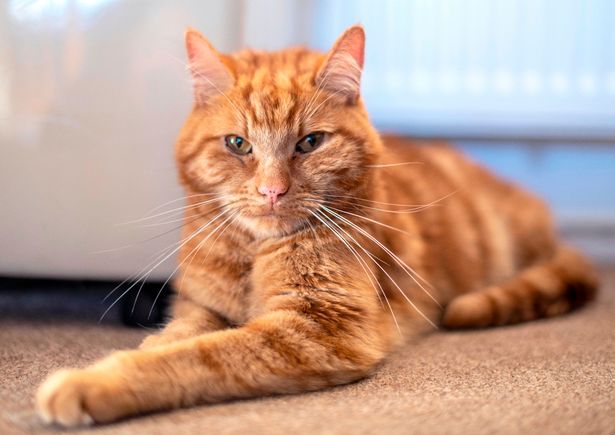
First of all, why did this UK couple, Neil and Leasa Payne, decide to rehome their three-year-old orange tabby named Garfield? The story doesn’t give a reason, saying only that they decided to “give” the cat to “new owners” on June 20 after their kids moved out.

If the cat was for their kids, why didn’t one of them take the little guy? And if he was a family pet, who just gives away a cat they’ve had for three years?

Garfield understandably didn’t like what was happening and left his would-be new home to travel 40 miles — over seven weeks — from North London to Bedfordshire.

That’s a serious hike over dangerous territory for cats, with lots of traffic and potential hazards from humans and other animals alike. Garfield wouldn’t have made it if he wasn’t resourceful, finding food and water during the long journey.

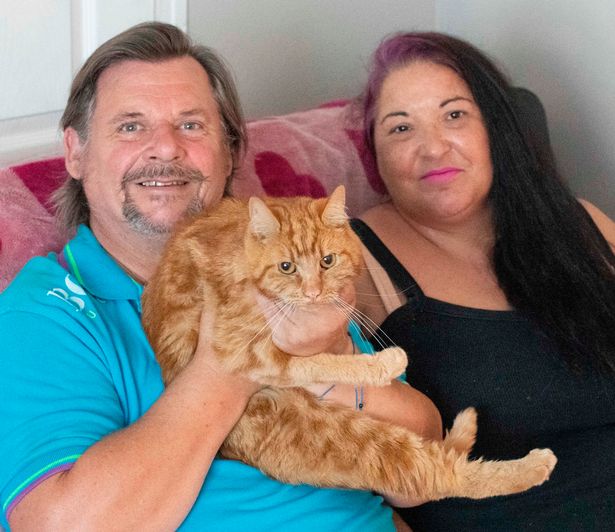
Neil Payne told the UK’s Daily Star he came home one day and was “gobsmacked” when he found Garfield sitting on the front doorstep.

“It’s unbelievable. He was staring at me, crying,” Payne said. “I didn’t think it was him at first. Leasa came to the door and called his name and he jumped up on her.”

Yeah, dude: Garfield was crying because he couldn’t believe you gave him away!

garfieldpayne
Garfield and the Paynes.

Payne told the newspaper he’s “going to give [Garfield] a second chance.”

“We can’t get rid of him now — he has proven that this is his forever home,” he said.

Garfield’s return is even more impressive since the Paynes claim he’s been an indoor-only cat. Not only did the brave feline have to make some serious adjustments to survive on the street, he must have some exceptional senses to make his way back over entirely unfamiliar territory.

The ginger furball’s story is yet more proof that cats have strong emotions and genuinely bond with their people, despite the persistent stereotype of feline aloofness and indifference to humans.

There are clearly details missing from this story, and I hope there were mitigating circumstances. If this incredible cat, who risked life and limb to get back to his humans, is stuck for the rest of his life with people who don’t appreciate him, that’s a shame.

I hope Garfield does indeed have a warm and comfortable forever home, and I hope the Paynes give him the love and affection he obviously wants and deserves. Good job, little dude.


NYT Columnist: ‘If I owned a gun, I swear I would have shot that cat’

Cats are furry little Adolf Hitlers responsible for exterminating the world’s birds and small mammals, according to a New York Times columnist.

What would you do if you encountered a hungry, injured feral cat hiding under a car near your home?

If your first thought is to help the poor little one, enlist the aid of a local rescue and get the cat some much-needed veterinary attention and food in its belly, congratulations: You’re a human being with a conscience.

One New York Times columnist, however, thinks the solution is to indulge in a fantasy about murdering the innocent animal, of using a weapon she doesn’t own and soundly disapproves of to wipe it from existence.

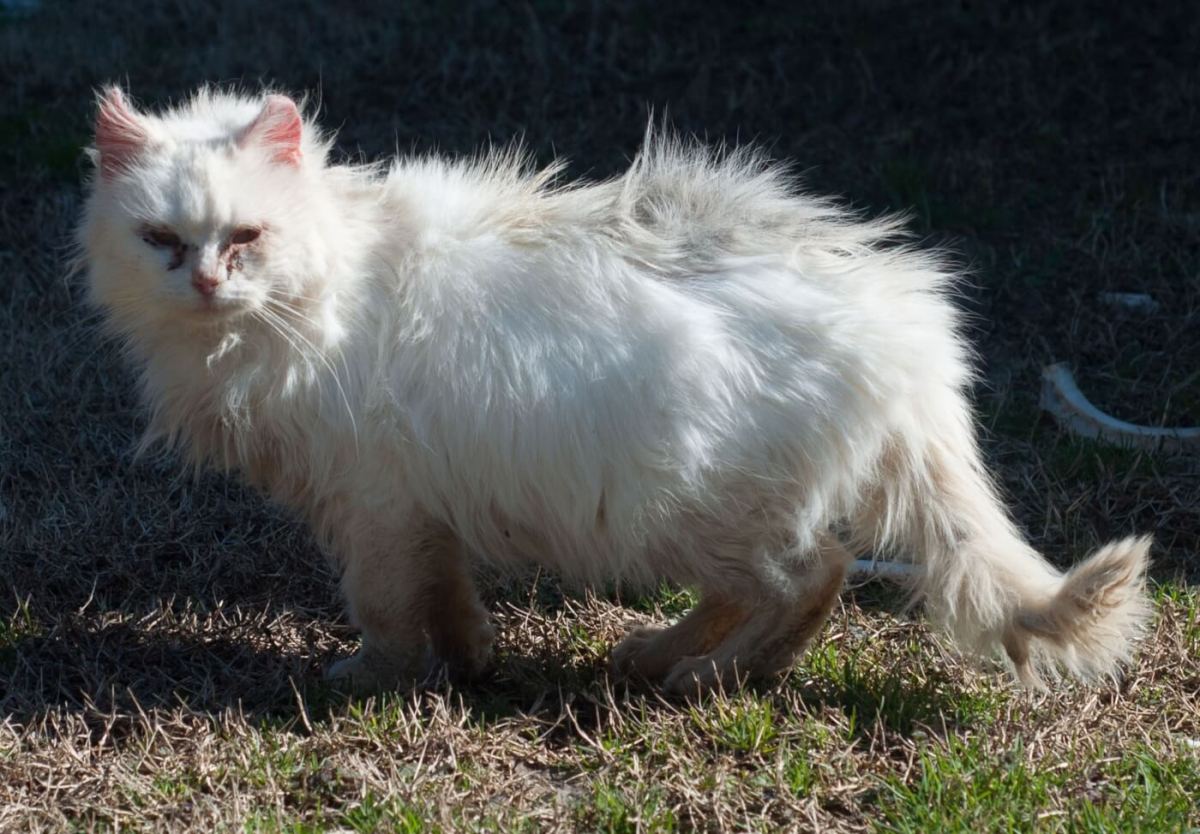
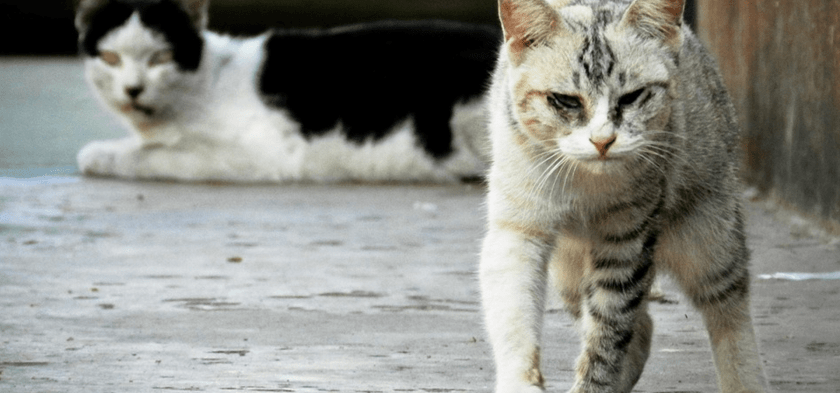
When Margaret Renkl saw the “ragged, battle-scarred tom, thin but not emaciated, with one eye that didn’t open all the way,” her first thought was to kill it, not help it.

“If I owned a gun, I swear I would have shot that cat,” Renkl wrote in her Aug. 3 column, titled “Death of a Cat. “I would have chased that hissing cat out from under the car without a thought and shot it as it fled.”

Imagine: An effete, 60-something, morally self-satisfied woman playing Charles Bronson, standing over the corpse of a cat and slipping a still-smoking pistol into its holster before heading back inside to tweet-lecture the unwashed masses on civil rights, COVID etiquette and respect for wildlife.

feralcats
A feral cat. (Credit)

The staff of the New York Times really seems to be working overtime to prove it’s tone-deaf and hypocritical: It wasn’t so long ago that a Times columnist tut-tutted those who disapprove of breeding and selling $20,000 designer cats while millions of homeless animals are euthanized annually.

Times columnist Alexandra Marvar even went so far as to praise people who use their wealth and connections to flout laws against poaching illegal wildlife, reminiscing about the days when “wild cat companions were were associated glamour, class and creativity.”

“Salvador Dalí brought his ocelot to the St. Regis. Tippi Hedren lounged with her lions in her Los Angeles living room. Josephine Baker’s cheetah, collared in diamonds, strolled the Champs-Élysées. In their time, these wild creatures made chic pets,” Marvar wrote.

While Marvar romanticizes wild animal “ownership,” the reality is sadly less glamorous: Instead of Josephine Bakers leading “chic” diamond-collared cheetahs on idyllic walks through Paris, it’s Texans prodding confused and depressed tigers into tiny backyard enclosures at taser-point, insisting that “muh freedoms” guarantee them the right to treat the world’s iconic megafauna like toys.

So why does Renkl hate cats? Because she’s read bunk scientific research that claims cats kill billions of birds and small animals every year:

I was thinking of the first nest the bluebirds built this spring, the one in which not a single baby survived. I was thinking of the gravid broadhead skink who would lie on our stoop every afternoon, warming her egg-swollen body in the sun. She disappeared one day to lay her eggs and guard her nest, I assumed, but now I wasn’t sure. I was thinking of the chipmunk who lives in a tunnel under our stoop and of the little screech owl, its feet holding down some small prey, its eyes glowing in the infrared light of our trail camera.

The more I thought about those vulnerable creatures, already crowded out by construction and starved out by insecticides, the angrier I got at the feral tom. In truth, I would never kill a cat, but I can surely hate one with a murderous rage. A person who has spent a quarter-century trying to create an oasis for wildlife can go a little mad when a cat shows up in the photos on her trail camera.

Note that Renkl didn’t actually see the starving cat kill those birds or squirrels. She simply assumes that a bird who doesn’t return to her glorious backyard oasis has been gobbled up by evil felines. Her rage is prompted by emotion and assumption, not fact.

She doesn’t have a negative word to say about the construction and pesticide industries either, reserving her “murderous rage” for a raggedy cat just trying to survive because she read studies claiming cats are furry little Adolf Hitlers, exterminating birds one bloody feather at a time.

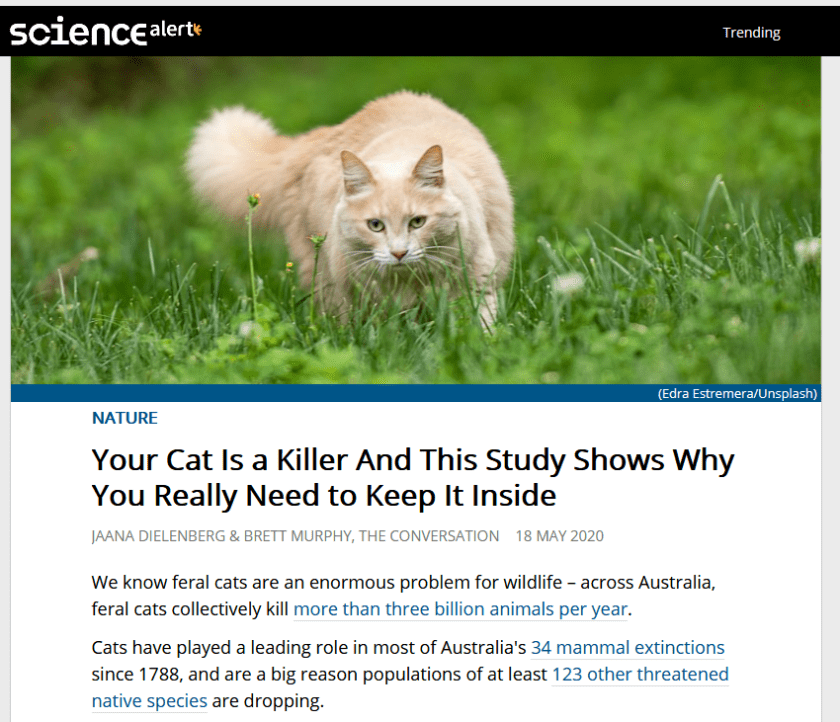
We’ve talked about those cat-blaming studies here on Pain In The Bud: They’re sloppy meta-analyses of earlier studies using plugged-in, arbitrary data and dubious numbers from questionnaires to arrive at the conclusion that cats kill as many as 20 billion small animals in the US alone.

It’s cherry-picking at its worst, beginning with a pretedermined conclusion and inventing, massaging and selecting “data” to support that conclusion rather than doing the hard work of collecting authentic data and honestly interpreting the results.

The researchers who published those studies should be mortified to have their names attached to them. They’re engaging in activism, not science.

We’re not the only ones who have a problem with the aforementioned studies. A team of scientists and ethicists examined the claims and “found them wanting,” blaming the sloppy science of those studies for the claim that “cats are a zombie apocalypse for biodiversity” and the subsequent war on cats in countries like Australia, where some states offer $10 a scalp for people who kill adult cats and $5 a scalp for kittens.

What kind of twisted logic compels people to kill kittens in the name of protecting animals?

Screenshot_2020-08-04 Your Cat Is a Killer And This Study Shows Why You Really Need to Keep It Inside
Bunk research claims are repeated as fact by media outlets. (Source)

The primary and most-cited studies claiming cats kill billions of animals “take specific, local studies and overgeneralize those findings to the world at large,” the critics wrote. The studies ignore “ecological context,” bury contrary evidence and ignore mitigating factors, like the fact that cats often prey on other animals that kill birds.

In other words, they start with a pre-determined conclusion and shape the dubious data to fit, as I wrote above.

And so the claim that cats kill billions of birds and small mammals is repeated as fact by an unskeptical press, and ostensibly serious people, like the Smithsonian Migratory Bird Center’s Pete Marra, advocate a “nationwide effort to rid the landscape of cats.” That’s a nice way of saying he wants to kill hundreds of millions of innocent domestic cats because he doesn’t want to see the glaring flaws in studies about the species’ ecological impact. (Marra also compares feral cat advocates to tobacco companies and climate-change deniers, which is an astounding claim from a man whose name is synonymous with manipulating research data to support his views.)

This is absurd stuff, akin to the extermination of cats in the Dark Ages prompted by stories alleging cats were the agents of Satan, witches and heretics, and central figures in devil-worshiping ceremonies. The only difference is the people of the Dark Ages, who didn’t know better, were driven by religious belief. Their modern day counterparts are driven by religion masquerading as science.

catsdarkages
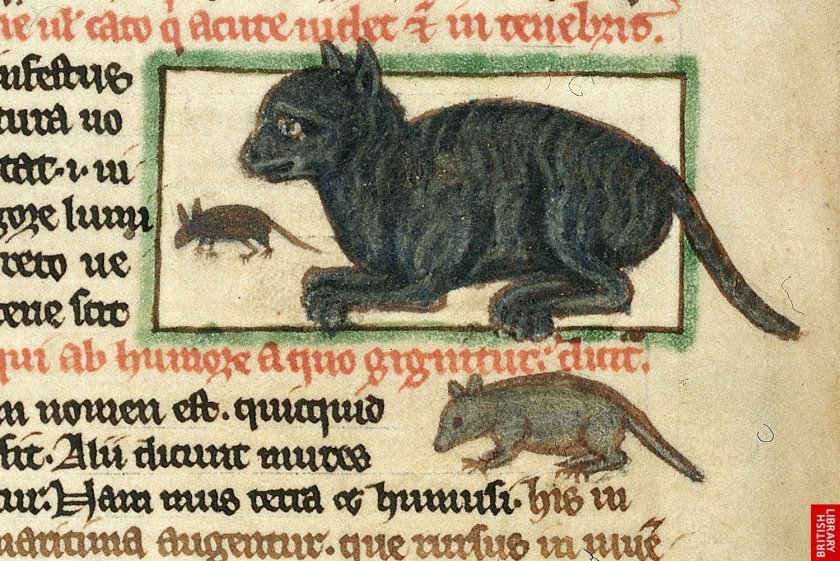
An illuminated text on cats from the Dark Ages, when felines were considered agents of the devil. (Source)

This is what sloppy research has wrought: An army of self-professed animal lovers stalking the dusty plains of Australia and the backyards of the United States, shooting domestic cats with pistols, bows, air rifles and pellet guns.

These people don’t seem keen on thinking about how they justify the callous culling of hundreds of millions of domestic cats — intelligent, sentient animals who have feelings — in an unproven effort to protect birds and rodents.

Renkl ends her column by telling us she got her wish, in a way. A few days later, a neighbor’s kid came to her for help after some wildlife-loving do-gooder poisoned the poor animal. As she watched the tomcat convulse and twitch in an agonizing death, Renkl stopped to take pity…on herself.

“For weeks I have been trying to understand my own tears in the presence of a dying cat I did not love,” she wrote.

To her credit, by the end of the column Renkl does acknowledge her rage is misplaced, generously allowing that a cat trying to survive isn’t evil. But that concession comes after several hundred words painting cats as the driving force behind the destruction of wildlife and presenting flawed studies as credible science.

The damage has already been done.


Featured image courtesy of PETA.