Blog Posts

Bud’s Book Club: The Man-Eaters of Kumaon & The Game of Rat and Dragon

Join us in reading stories of cats in space and big cats in the jungles of India.

Welcome to the inaugural post of Buddy’s Book Club, where we’ll read stories about cats and stories involving cats!

We’re going to start things off easy with a classic short story of the cat canon, which is available for free online via Project Gutenberg, and a seminal book about big cats from a man whose name is indelibly linked with them.

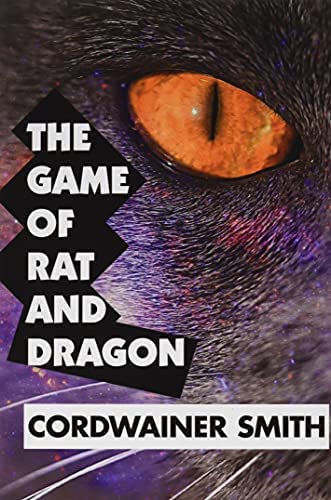
The Game of Rat and Dragon (1954) by Cordwainer Smith
51Aneono5KS._AC_SY1000_

Read it here for free from Project Gutenberg, a collaborative effort to create a digital archive of important cultural literary works that have fallen into the public domain. For those unfamiliar with Project Gutenberg, it’s completely above-board, legal and safe for your devices, and the story opens in plain HTML with illustrations included as image files. You can read the story in a browser or download it onto a reading device, tablet or phone.

The Game of Rat and Dragon first appeared, as so much short fiction of the era did, in a digest. Although Smith had penned it the year before, the story was published in Galaxy Science Fiction’s October 1955 issue and became an instant classic among cat-lovers and science fiction aficionados. (There is considerable overlap between the two, not surprisingly: Introverts whose imaginations run wild when they look to the stars tend to have many of the same personality traits as people who prefer the more sublime antics of cats.)

The Game of Rat and Dragon imagines a far future in which humanity has become a star-faring culture, meaning we’ve conquered interstellar flight and have begun to colonize planets in star systems other than our own.

There is, of course, a problem. The dark, lonely void between stars isn’t as empty as we thought it was, and is inhabited by invisible (to the human eye), inscrutable, inexorable entities eventually dubbed “dragons.”

When dragons attack they leave only death and insanity in their wake, putting the entire idea of interstellar travel at risk. Imagine if there was a not-insignificant chance of your passenger jet being attacked by impervious creatures every time you hopped on a plane. It wouldn’t be long before the entire air industry collapsed and the world suddenly became a much bigger place, with other continents unreachable by air.

Who can help humans with this problem? Cats, of course! To say more would be to spoil the fun. Meow!

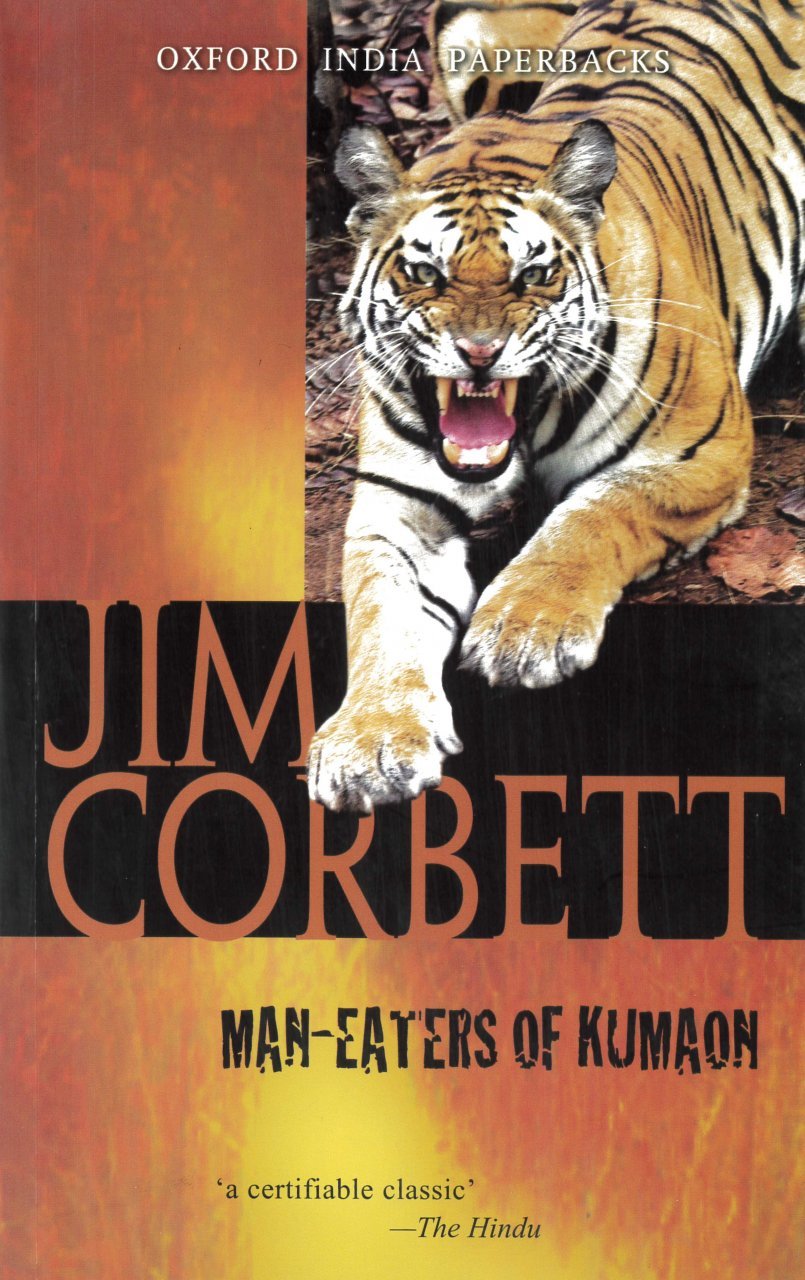
Man-Eaters of Kumaon (1944) by Jim Corbett
201355

Available as an ebook for 99 cents from Barnes and Noble.

Jim Corbett was a sportsman, the son of a government official in the British Raj who was raised in India’s jungles and came to know them intimately. He’s best remembered as the fearless hunter who finally brought down the infamous Champawat tigress, who officially claimed 436 lives over a years-long rampage as a man-eater, and likely many more that went unrecorded.

To understand the gravity of Corbett’s accomplishments, it’s necessary to understand the effect of a man-eater on rural India. The people living in India’s tiny villages are subsistence farmers. If they don’t farm, they don’t eat.

But when a man-eater as dangerous as the Champawat tigress claims an area as its hunting grounds, everything grinds to a halt: Farmers refuse to tend their fields, villagers disappear behind locked doors, and a simple walk to a neighboring village becomes an impossibility unless escorted by a group of two dozen or more armed men. Even then it’s a risk, for as Corbett notes, when tigers become man-eaters they have no fear of humans and will kill people in broad daylight, even when they’re in groups.

And yet for all their power and predatory instincts, tigers are never deliberately cruel and don’t harm humans willingly. Tigers become man-eaters by unfortunate circumstance, usually due to negligence or stupidity on the part of humans.

The Champawat tigress, for example, was like any other big cat until a human hunter took aim and shot her in the mouth, destroying one lower canine completely and shattering another. The tiger could no longer take down her usual prey, or at least not without serious difficulty. At some point — perhaps after encountering the body of a person it did not kill — the tigress realized she could survive on human flesh.

If that hadn’t happened, those 436-plus souls wouldn’t have been lost, an entire region wouldn’t have been brought to its knees, and the tigress would have continued life as normal.

The vast majority of the time, tigers are content to let humans be.

“I think of the tens of thousands of men, women and children who, while working in the forests or cutting grass or collecting dry sticks, pass day after day close to where tigers are lying up and who, when they return safely to their homes, do not even know that they have been under the observation of this so called ‘cruel’ and ‘bloodthirsty’ animal,” Corbett writes.

Despite his reputation as the man to enlist when a man-eater terrorized a region, Corbett saw the way things were trending a century ago, and begged people to let the big cats live undisturbed.

“A tiger is a large-hearted gentleman with boundless courage,” he wrote, “and that when he is exterminated — as exterminated he will be unless public opinion rallies to his support — India will be the poorer by having lost the finest of her fauna.”

Corbett would undoubtedly be deeply disturbed by the situation today, with only some 4,000 wild tigers remaining in the entire world, and the glorious species mostly reduced to spending life in captivity, constantly sedated so that idiots can pay to take selfies with them.

The Man-Eaters of Kumaon follows Corbett on 10 hunts of man-eating tigers and leopards. It’s also a story of life in the British Raj, rural life in India, Corbett’s jungle adventures, his love for his loyal hunting dog and his turn toward conservation.

Schedule:

We can do the short story in a week, yeah? Let’s shoot for one week for The Game of Rat and Dragon, and two weeks for The Man-Eaters of Kumaon. We’ll adjourn and discuss in follow-up posts. Happy reading!
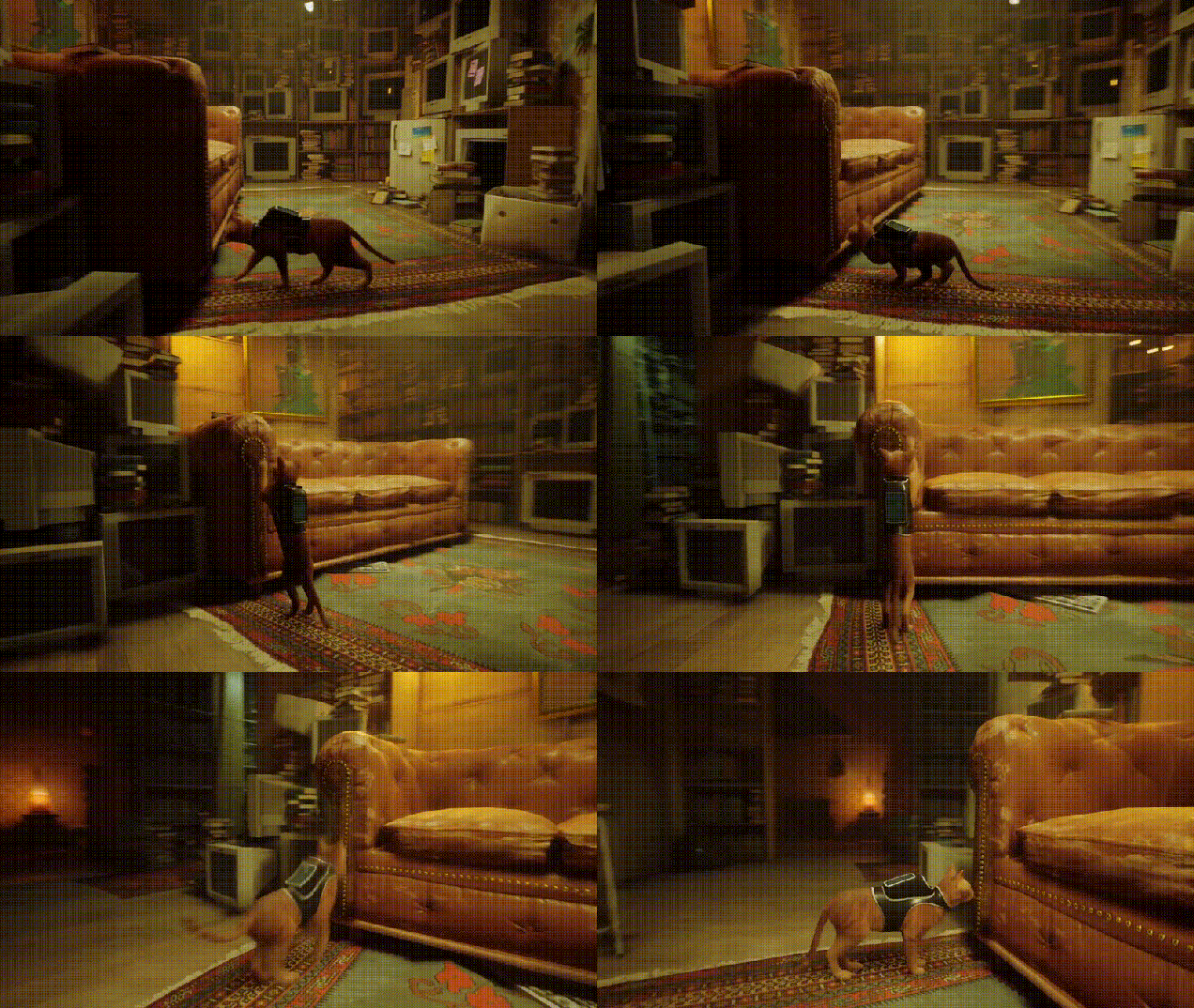
Stray’s Feline Protagonist Is Picture Perfect

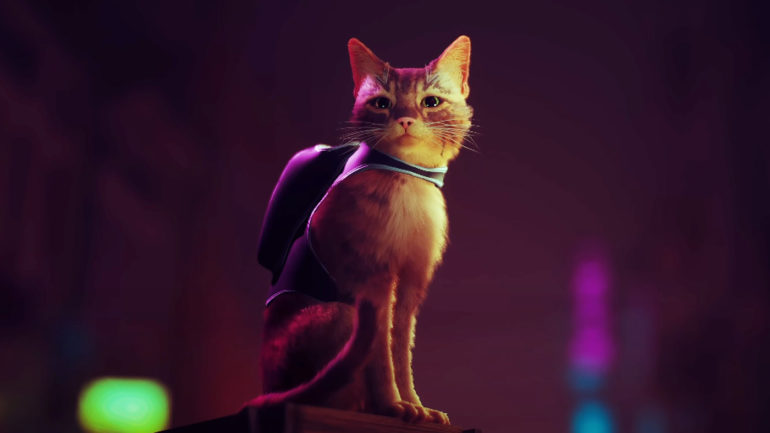
Stray follows the adventures of a feline protagonist as he navigates a strange city on a journey to get back to his family.

Determined to get inside an apartment, the ginger tabby leaps onto the ledge of an air conditioner unit, then onto the roof, where he drags a piece of debris to the edge, swipes it off and watches it shatter a skylight.

Boom. Kitty door created!

The scene isn’t part of a Youtube video or a documentary about smart cats, it’s a gameplay sequence from the upcoming Stray, a game in which the protagonist is a lost cat who’s been separated from his family and dropped into an eerie, near-future Hong Kong.

The overlap (or Reuleaux triangle) in a Venn diagram of gamers and cat-lovers is pretty sizable, and for that enthusiastic cross-section, there’s no game more highly anticipated than Stray.

Stray
Our hero gets his sustenance from bowls, needs to pause for a scratch every once in a while, and likes to rub against the legs of friendly characters he meets.

Previously we’d seen a short trailer and still screenshots, and now a video from the developers shows off more than four minutes of glorious game footage following the feline protagonist as he explores Hong Kong’s streets, back alleys and noodle shops.

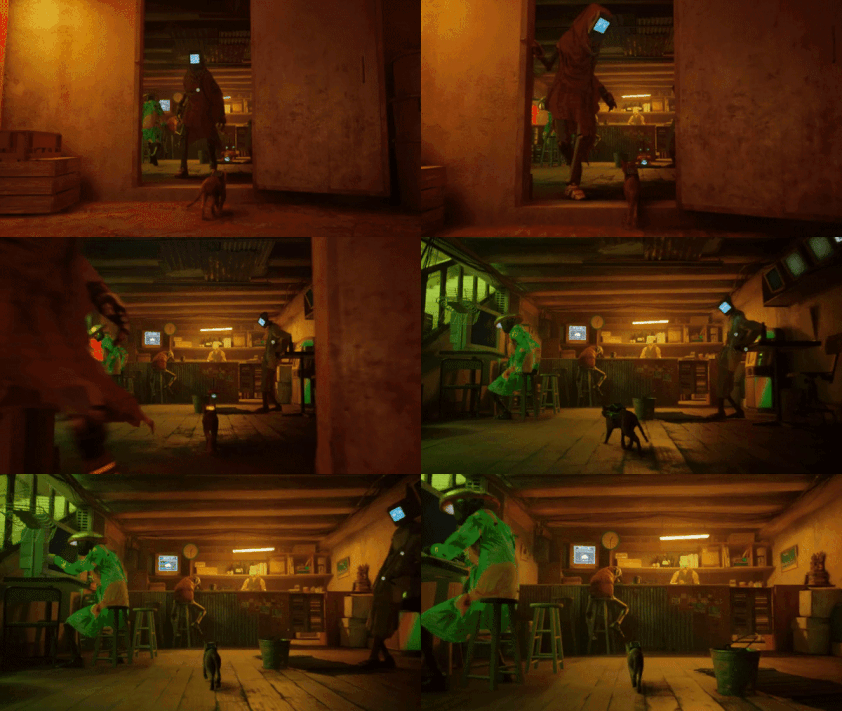
The developers are clearly cat lovers: The kitty hero of Stray moves with the grace, energy and caution of a real domestic feline, and the game forces players to tackle obstacles and challenges the way a cat would. The protagonist cat gains access to a vent shaft, for example, by swiping a coffee mug into fan blades to get them to stop spinning. In another scene, the cat is startled, jumps a full pace back and lands on all fours in a way only cats can.

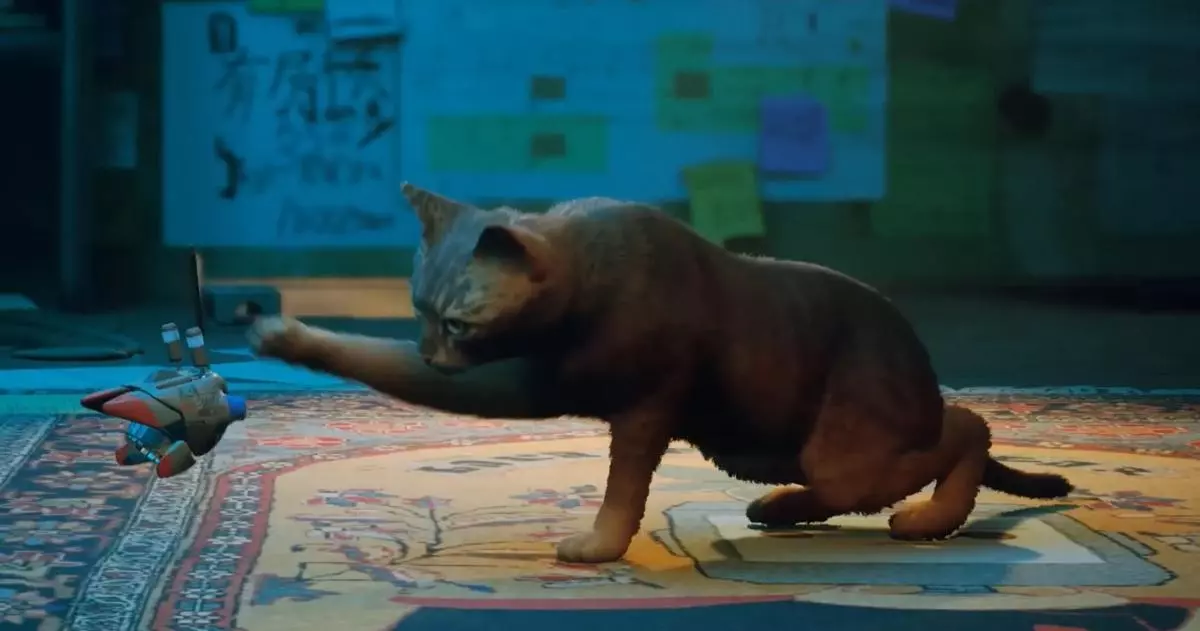
Everything from gait to reactions is perfectly cat-like. In the opening moments, our kitty hero is clearly injured, nursing one of his back legs as he hobbles down an alley. In a later scene he bats curiously at a drone the way a house cat would with a new toy.

There are no magic abilities or impossible inventories here: As the player, you can only do things a cat can do in real life, although you’re given a boost later on when a friendly character equips you with a harness on which B12, the above-mentioned drone, can dock. B12 can interact with man-made inventions, understand your cat’s intentions and facilitate rudimentary communication.

If, for example, your kitty character is dehydrated and stops to paw at a vending machine, B12 can send a signal to the machine, order it to dispense a beverage, then open it for the adventurous cat. B12 also helps your catagonist fight off enemies. By flashing a purple light at hostile machines, for example, the little drone can render them harmless and deactivate them.

Ultimately, though, the game designers want you to think in cat terms to make your way through the game world, and that means considering feline physiology when encountering obstacles, and feline psychology when trying to solve puzzles.

Stray
“A new toy?!” Stray’s hero cat is curious as he meets B-12 for the first time.

The project’s lead designers are both industry veterans who decided to strike out on their own by forming an independent studio after years of working for UbiSoft, the game industry giant known for game franchises like Assassin’s Creed and Watch_Dogs. Like those games, Stray gives players the opportunity to explore a highly detailed open world.

“Our goal is to create a unique experience playing as a cat. We are inspired everyday by Murtaugh and Riggs, our two cats,” creative director Viv said. “Most of the team are cat owners as well, giving us all a lot of helpful first-hand references. Cats are always so playful, cute and lovingly annoying that it’s an endless stream of gameplay ideas for us.”

Stray_gameplay

For the game’s atmosphere, the creators were inspired by Hong Kong’s Kowloon Walled City, a former military fortress that became a slum in the days of British-ruled Hong Kong, with Chinese triad gangs serving as de facto authorities in the lawless zone. Today, the former Kowloon Walled City is a park.

“It is also a very unique point of view for an adventure game. Exploring the strange world we are building feels really fresh when you’re sneaking under a car, or walking the rooftops with the inhabitants below unaware of your presence. Or if you want them to be aware, you can just meow endlessly to annoy them.”

Stray was originally slated for a late 2021 release, but it’s looking more likely that we won’t see it until the first quarter of 2022. Given the recent history of highly anticipated and rushed projects like Cyberpunk 2077, few gamers would begrudge a development team taking its time and getting things right rather than going into a months-long crunch period to meet a holiday deadline. Good things come to those who wait, especially in the complex world of game development.

There Won’t Be A Cat In The White House Any Time Soon, Thanks To The Dog

First Lady Jill Biden says she hasn’t brought a cat into the White House as promised because the Biden family dog, Major, has been an aggressive biter lately.

First Lady Jill Biden generated hundreds of headlines late in 2020 and again earlier this year as she promised she and her husband would welcome a feline pet to the White House for the first time since the George W. Bush administration.

Since then we haven’t heard anything — until today’s edition of the New York Times, which includes the first sit-down interview with the First Lady since her husband took his oath of office back in January.

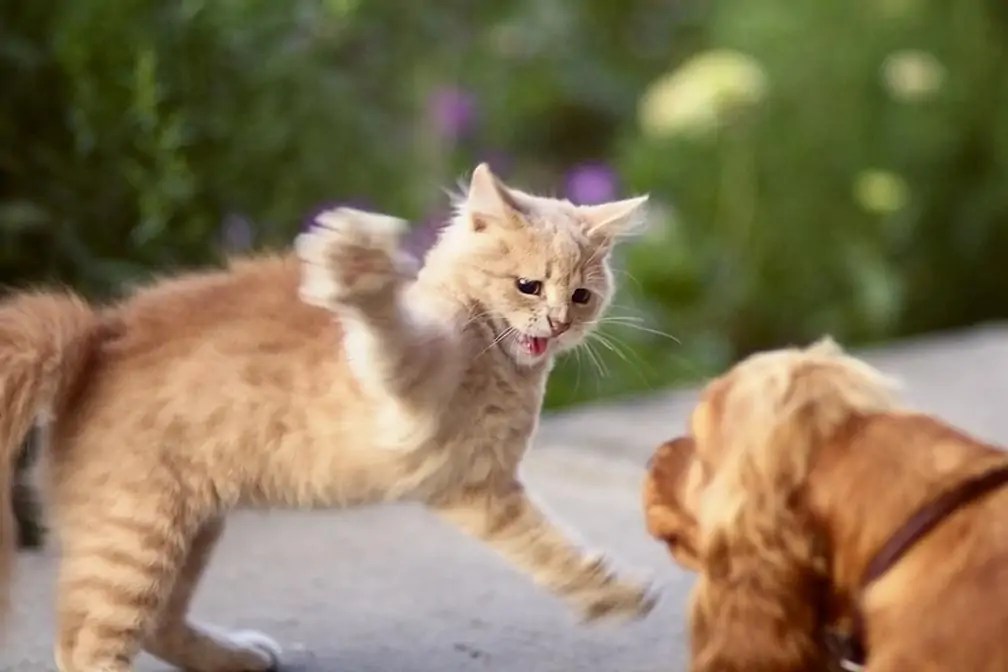
It turns out the Bidens did pick a cat, and that cat has been living with a foster family because the Bidens’ other family pet, Major the German Shepherd, has a bit of a biting problem.

White House spokeswoman Jen Psaki downplayed Major’s biting incidents, telling reporters he nipped White House staff twice, but emails obtained by the group Judicial Watch show Major’s biting isn’t so minor: In the first week of March, an internal Secret Service email said “an agent or officer has been bitten every day this week.” The dog also bit a visitor to the White House that same week, according to the email.

Since then there have been other incidents, and the pooch has been shuttled between the White House and Delaware, where he’s spent more time with trainers in an attempt to curb the bad behavior.

The president and First Lady didn’t want to subject their new cat to the stress of living with a bite-happy Husky, so the kitty remained in foster care. It seems the cat is now a “failed foster.”

“The cat is still being fostered with somebody who loves the cat,” Jill Biden told the Times. “I don’t even know whether I can get the cat back at this point.”

The Natural Order of Things
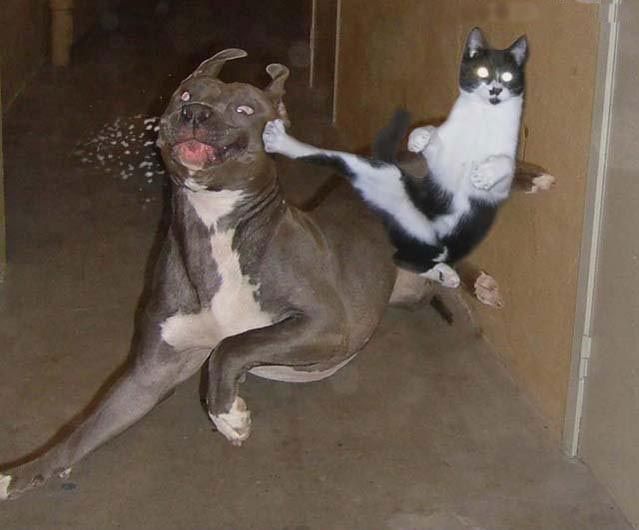
A brave and heroic cat executes a glorious karate kick to the face of a slobbering, clumsy dog, proving once again that felines are superior.

In related news, Buddy the Cat — whose track record of biting to get what he wants is second-to-none — volunteered himself to help solve Major’s behavioral issues.

“I’ll straighten him out right quick,” Buddy said, lifting a paw and flexing. “If my razor sharp claws, vicious fangs and intimidating size don’t deter him, my huge meowscles will. I guarantee he’ll want no part of this.”

Buddy the Cat: Handsome and Meowscular
Bud is not only smart and good looking, he also has huge meowscles and is known for his bravery

Here Are Some Cats Singing The Imperial March From Star Wars, Plus Some Feel-Good Cat-Human Reunions

Stories from the past week in kitty-related news.

Since we featured some sad news in our last post — though tempered with some really good news from a Portland cat cafe — we’ll wrap up the week with some humor, absurdities and science, all cat-related of course:

  • Do you have two cats? If so, you can help researchers from UC Davis and the University of British Columbia, who are studying the ways cats interact with each other in human homes. All you have to do is watch a few cat videos online, then answer a handful of questions about the behavior of the cats in those clips, as well as the behavior of your own kitties. With enough data from participants, the research teams hope they can better understand the often-inscrutable interactions, squabbles, truces and social hierarchies that define relationships between domestic felines sharing the same home territory. “Ultimately, we hope this research can help identify gaps in owners’ knowledge of cat behavior,” U of BC’s Sherry Khoddami told Gizmodo. “The welfare of cats in the home is an under-researched area.”

  • Yes, cats do have a long and distinguished history of “messing shit up,” and they simply don’t care. Maybe that’s why cats singing the Imperial March from Star Wars — okay, cats sampled and pitch-shifted to the Imperial March’s melody — feels appropriate. Our fluffballs are inevitable.

This week brought us stories of two cats who were reunited with their humans after more than a decade apart, both in the UK.

  • Tom, a tuxedo in Cardiff, Wales, went missing in 2009. He spent most of the past decade-plus living with another cat in the safety of a cemetery with the help of a nearby family, who kept them well-fed. It wasn’t until recently that someone tipped off a local rescue to the presence of the two “strays,” and finally Tom’s microchip was scanned. On Friday, Tom’s human, Donna, was overcome with emotion when she reunited with the little guy at Anna’s Rescue Centre of Cardiff, fighting back tears as she stooped down to stroke his fur. Donna also adopted Tom’s longtime companion from the cemetery. (Click the link for video, which we were not able to embed.)
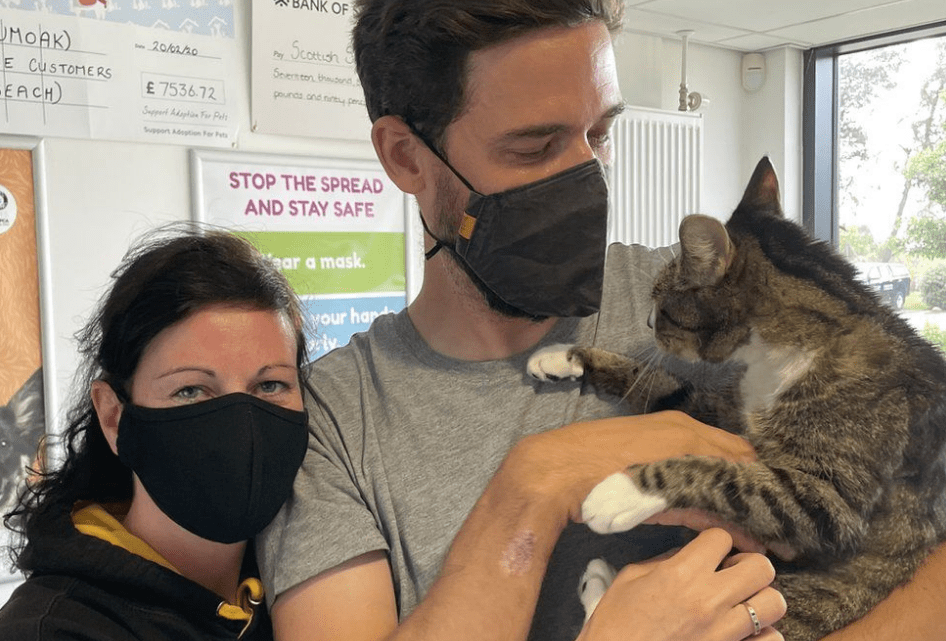
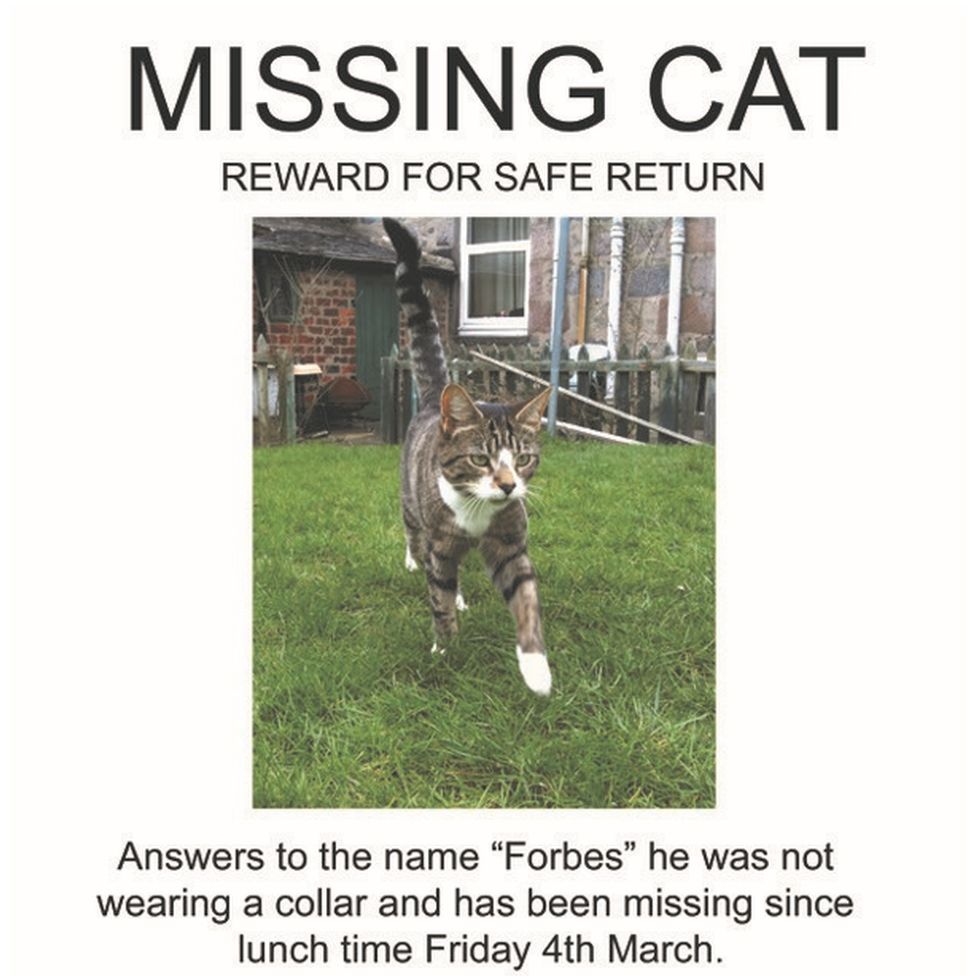
  • Meanwhile in Aberdeen, Neil and Lucy Henderson were reunited with their tabby, Forbes, who had gone missing in 2011. Neil Henderson was so shocked, he had to pull over and stop his car when his wife told him Forbes had been located by the SCPA. “I was completely unprepared for what I was about to be told and hearing that Forbes had been found left me completely astounded,” he told the BBC. Forbes was picked up by an animal control officer who realized he was very friendly and had a microchip. The Hendersons “have no way of knowing where Forbes had been all this time or what adventures he might have been on,” but they’re ecstatic that he’s back home.

Forbes the cat's missing poster
The original missing poster created by the Hendersons when Forbes disappeared in 2011.

At Least 20 Cats Dead In ‘Worst Nightmare’ Shelter Fire

Bad news out of a Florida shelter, good news from a Portland cat cafe.

Sad news out of Orlando, where more than 20 cats died in a late night fire that destroyed the shelter where they lived on Wednesday.

Officials from the Orange County Fire Department said one section of the building was already engulfed by the time they arrived, with flames visible through the roof. They’re not sure yet how the fire started, but flame patterns indicate it started near the front of the Pet Alliance shelter, where the cats were housed.

Firefighters were able to rescue all the dogs and 10 cats, but at least 20 — and as many as 30 — cats were still inside, with first responders unable to get to them, per the Associated Press. Of the 10 cats who were rescued, some were moved to another Pet Alliance shelter, while a few were under veterinary care for smoke inhalation and burns.

“If you run a shelter, this is literally your worst nightmare,” Stephen Bardy, the executive director of Pet Alliance,  told WFLA, an NBC affiliate in Orlando. “To see your building in fire and know that there are animals in there that you’re charged to care for and you can’t go in. …I’m grateful that the firefighters put their lives at risk to help save as many as they could.”

We don’t want to leave you with bad news only today, so here’s a hopeful story out of Portland, where a cat cafe was able to adopt out every one of its cats in less than a day since its post-COVID re-opening on Sept. 4.

Purrington’s Cat Lounge has coffee, wine and beer on the menu for guests who drop by to hang out with the cafe’s feline residents and see adoptable cats. Although it’s a popular place in the community, it’s had a tumultuous few years: First it looked headed for closure after its owners planned to move out of town, but was rescued by a kitty-loving local couple.

The new owners renovated the space and had big plans for it, but those were halted along with everyone else’s ambitions with the arrival of the pandemic in 2020.

Finally, the renovated cat cafe reopened about two weeks ago, and Portland locals — perhaps daunted by the Delta variant and the prospect of more work-from-home, socially limited months — were eager to give the resident kitties new homes. Since Sept. 4, Purrington’s has placed more than 80 cats in forever homes.