Blog Posts

Bud’s Book Club: The Game of Rat and Dragon

When an interstellar enemy threatens human progress, cats step in to save the day in this science fiction classic from 1954. The Game of Rat and Dragon explores the feline psyche and the cat-human partnership that has existed for 10,000 years.

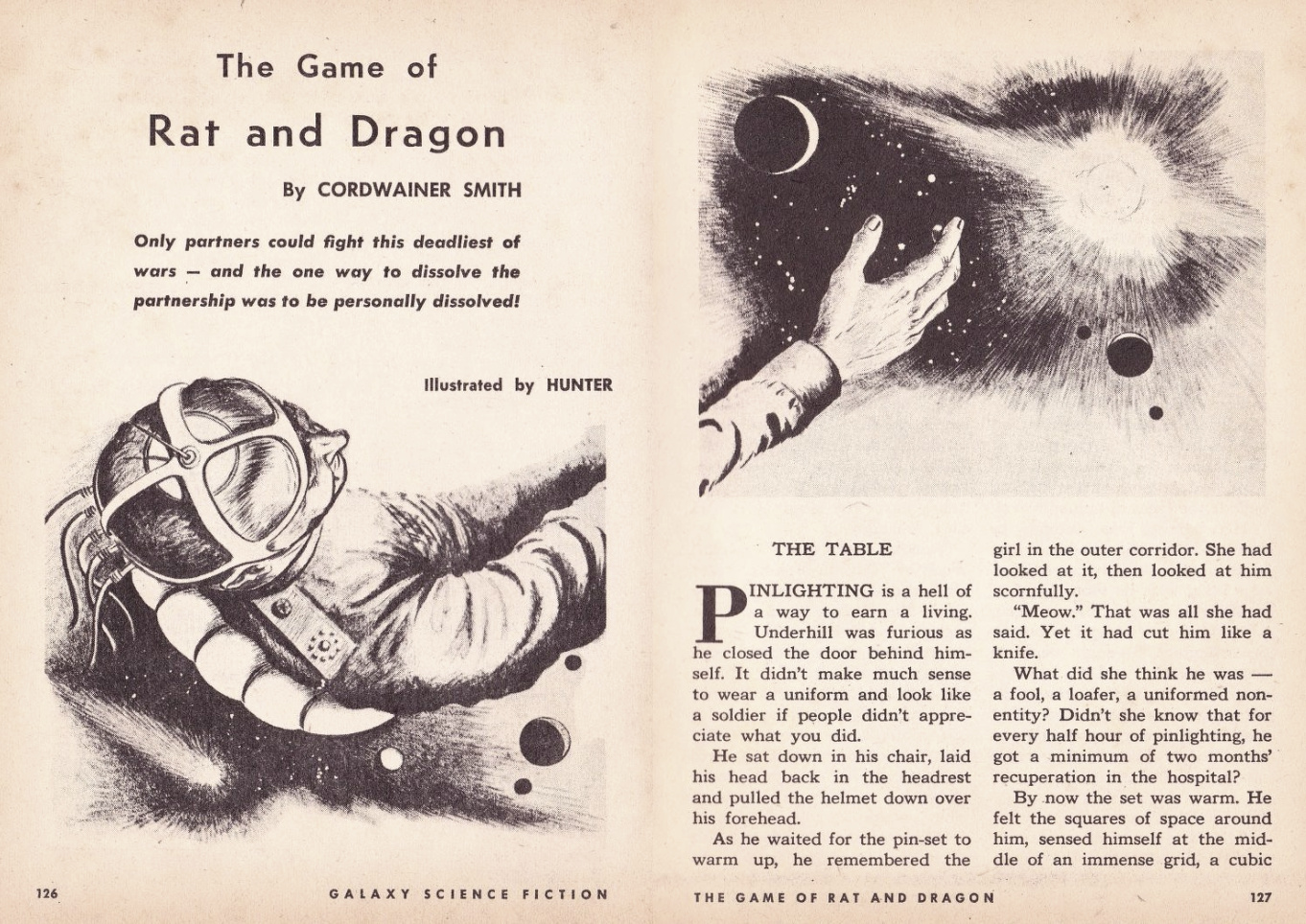
A week ago we kicked off Bud’s Book Club with a short story, The Game of Rat and Dragon, and a non-fiction book, Man-Eaters of Kumaon. This post deals exclusively with the former. (If you haven’t read the story yet, it’s available here free. Most people will be able to read the story in less than a half hour at a moderate reading pace.)

By now everyone who’s read the story knows what it’s about: Cats, of course! But the story requires a bit of world-building setup before the kitties are introduced:

In an unspecified future humans have become a true spacefaring species, mastering interstellar travel and founding colonies in new star systems.

It’s a lot like the days of colonial powers founding settlements in the New World, but without the ugliness of terrestrial colonization or the quaintness of crossing a mere ocean.

Using a form of traveling called planoforming — essentially faster-than-light (FTL) jumps — human ships are able to reach distant star systems without traveling for the decades or centuries it would normally take to cross the unfathomable distances between solar systems.

Just when it looks like no obstacle remains for humanity to spread out into the galaxy, the intrepid explorers on the rim of human-occupied space realize there’s an insidious threat lurking in the void between stars.

Huge entities, invisible to the human eye, live in the vacuum of the interstellar medium. They haunt the void and attack human ships without warning. They are “beasts more clever than beasts, demons more tangible than demons, hungry vortices of aliveness and hate compounded by unknown means out of the thin tenuous matter between the stars,” author Cordwainer Smith writes.

When the mysterious entities attack, most people are mercifully killed in an instant, but the unlucky ones survive in a permanent state of insanity, their minds unable to cope with whatever alien malevolence they’ve witnessed.

As they learn more from each disastrous encounter, humans come to understand these creatures prefer the deep dark, shying away from star systems and their abundant sunlight.

But without a way to make it across the void, it becomes clear the era of human exploration and colonization is over unless something can be done to stop the enemy.
ratanddragon

To extend the nautical theme, you can think of the dragons as giant krakens who prey on trade ships and passenger liners crossing between the American colonies and Europe during the Age of Sail. Although pushing the boundaries of new frontiers has always been dangerous, you can imagine how quickly intercontinental trade and settlement would grind to a halt if, say, half of all ships were sunk en route.

Humans can’t see the dragons, but that isn’t the primary reason they can’t successfully fight them. After all, the history of human warfare proves we’ve become adept at destroying enemies we can’t see, whether a ship’s dropping depth charges on a submarine hidden in murky waters, or some 20-year-old kid on an aircraft carrier hundreds of miles out to sea is using a joystick to lob drone-fired missiles on mainland buildings.

The real problem is that people just aren’t quick enough, unable to target and fire on the dragons before the entities react and speed away to safety.

So they turn to cats.

Kitties to the rescue

With their incredible reflexes, reaction time and hunting instincts, cats are more than a match for the dragons, and here’s where the story starts to get really fun. Cats, we’re told, travel alongside human vessels in their own little football-shaped ships that are equipped with precision miniature nuclear warheads.

Cats are happy to destroy the dragons — if their humans present the conflict as a game, make the “dragons” look like rats, and offer substantial rewards in the form of fish and poultry.
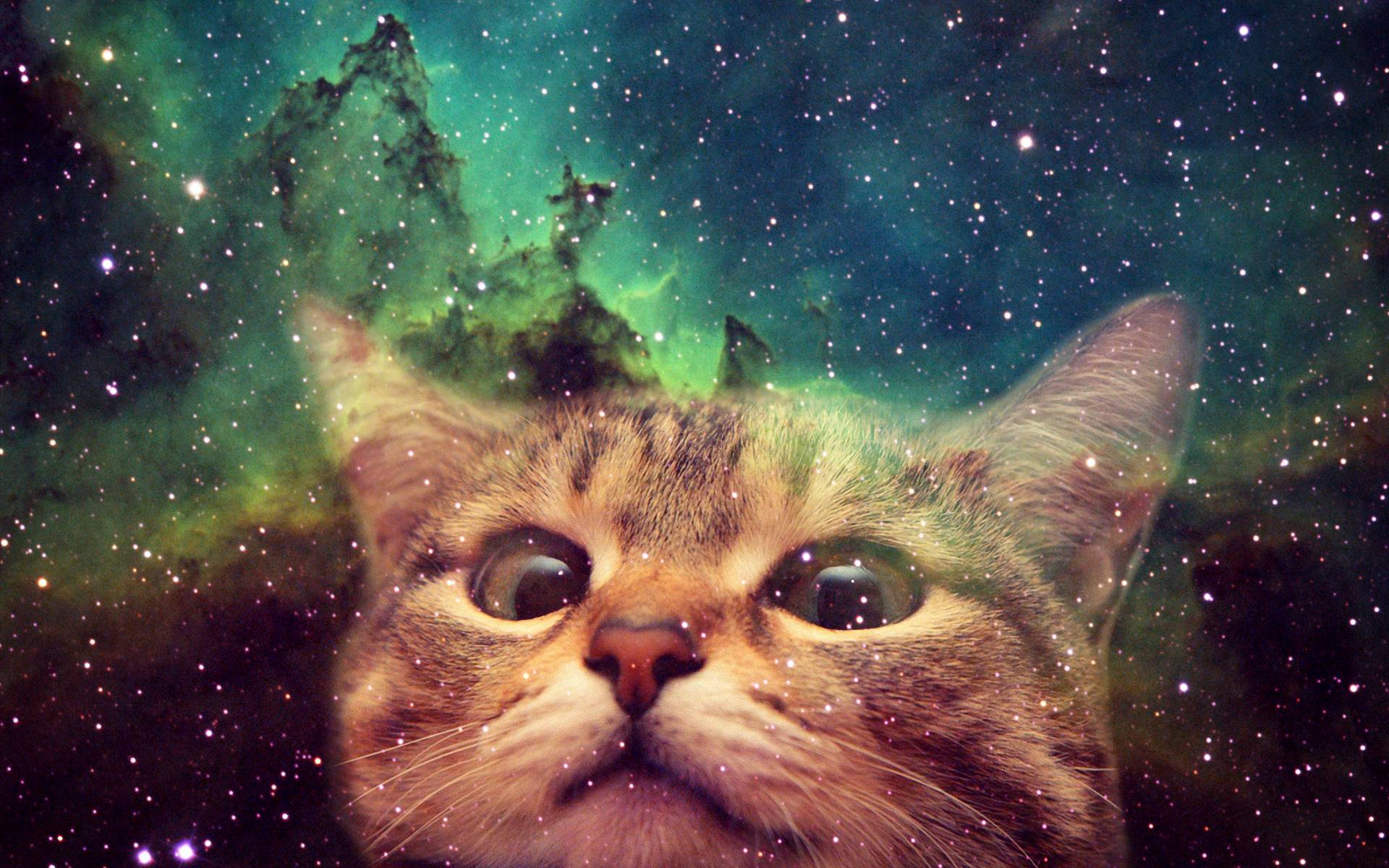
Space Kitty
“I come from the Great Litterbox in the Sky!”

That’s why the cats are called Partners: Using some sort of brain link, specially trained humans pair up with the cats, mentally project images of the dragons as “gigantic rats,” and act like spotters so the kitties can pounce on their space rodents before the latter can hurt the human passengers.

Because the dragons are harmed by light, the cats lob “ultra-vivid miniature photonuclear bombs, which [convert] a few ounces of a magnesium isotope into pure visible radiance,” neutralizing the threat before anyone can be harmed.

The mind link between human being and cat is a two-way connection, affording cats a close-up view of human thought patterns just as the humans can feel the kitty’s mental processes.

We learn that our hero, Underhill, loves the feline Partners, and he’s deeply offended when a fellow soldier mocks his work by meowing at him. We also learn the cats understand that, while their task is dressed up as a fun hunting game, they face real danger when they fight the dragons.

The mind of a cat

Through Underhill’s eyes, we meet several of the Partners.

My favorite is an unnamed tomcat, described as “a greedy old character, a tough old male whose mind was full of slobbering thoughts of food, veritable oceans full of half-spoiled fish. Father Moontree had once said that he burped cod liver oil for weeks after drawing that particular glutton, so strongly had the telepathic image of fish impressed itself upon his mind. Yet the glutton was a glutton for danger as well as for fish. He had killed sixty-three Dragons, more than any other Partner in the service, and was quite literally worth his weight in gold.”
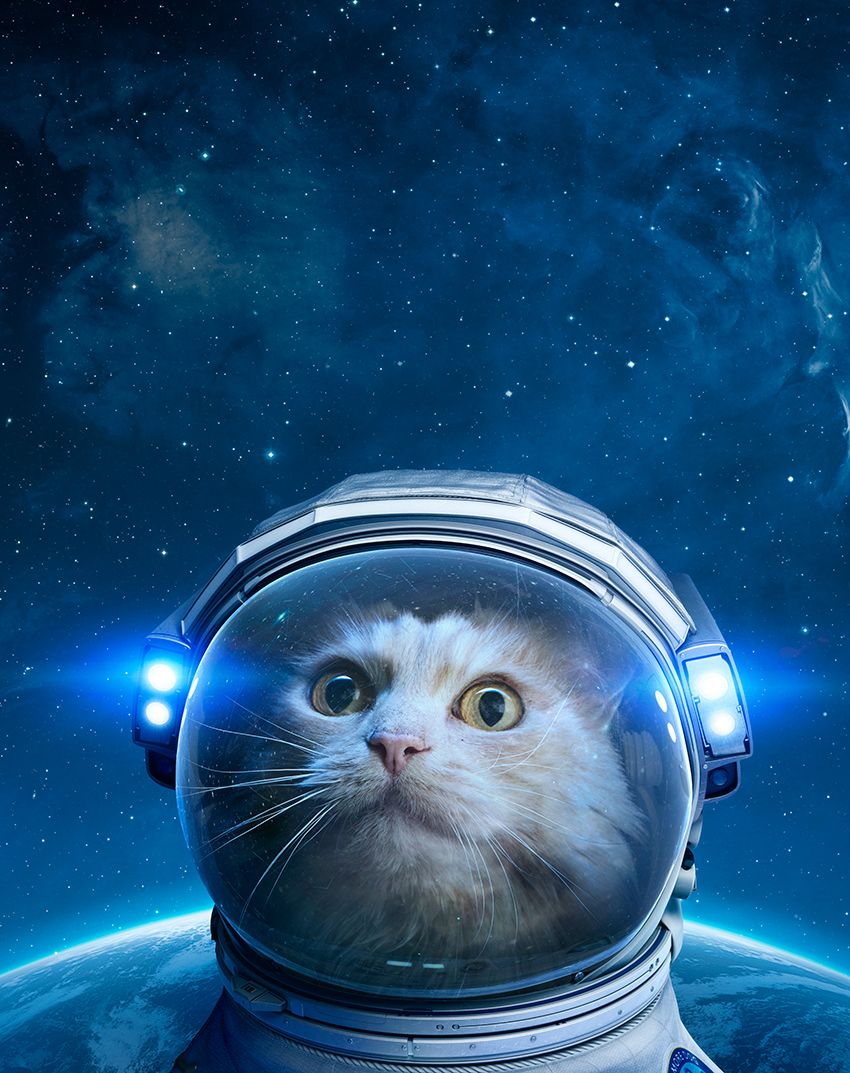
astrocat
“To boldly go where no moggy has gone before!”

We’re told that the cats recognize the complexity of human minds, but aren’t necessarily impressed by them. The things humans concern themselves with and worry about are “silly” from a cat’s perspective (which, perhaps not coincidentally, is how the philosopher John Gray imagines how cats view us), and cats can quickly grow bored with a human too focused on highly abstract thoughts or subjects that simply don’t have much bearing on feline life:

“Usually the Partners didn’t care much about the human minds with which they were paired for the journey. The Partners seemed to take the attitude that human minds were complex and fouled up beyond belief, anyhow. No Partner ever questioned the superiority of the human mind, though very few of the Partners were much impressed by that superiority.

The Partners liked people. They were willing to fight with them. They were even willing to die for them. But when a Partner liked an individual the way, for example, that Captain Wow or the Lady May liked Underhill, the liking had nothing to do with intellect. It was a matter of temperament, of feel.

Underhill knew perfectly well that Captain Wow regarded his, Underhill’s, brains as silly. What Captain Wow liked was Underhill’s friendly emotional structure, the cheerfulness and glint of wicked amusement that shot through Underhill’s unconscious thought patterns, and the gaiety with which Underhill faced danger. The words, the history books, the ideas, the science—Underhill could sense all that in his own mind, reflected back from Captain Wow’s mind, as so much rubbish.”

Underhill is as fond of Captain Wow and Lady May, a friendly Persian, as they are of him. He’s happy when he’s called upon to defend a ship and finds out he’s been paired with the latter:

“When he had first come into contact with her mind, he was astonished at its clarity. With her he remembered her kittenhood. He remembered every mating experience she had ever had. He saw in a half-recognizable gallery all the other pinlighters with whom she had been paired for the fight. And he saw himself radiant, cheerful and desirable.”
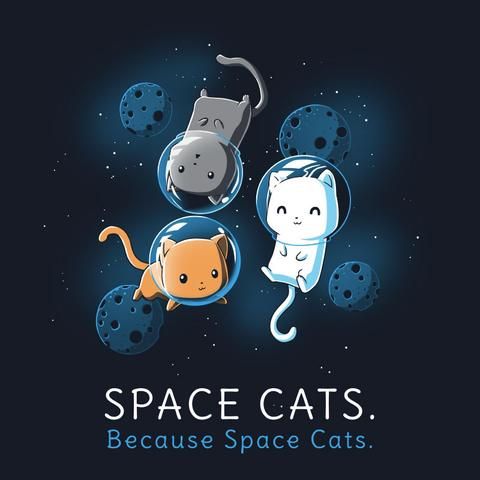
spacecats

What’s unique about this story — and what makes it particularly memorable, in my opinion — is Cordwainer Smith’s decision to explore the feline mind.

Out on a limb, from a feline world view

Minds, human or animal, are called “black boxes” for a reason. Even with the benefit of advanced science, even with fMRI and other forms of imaging, even with algorithmic AI that can read thoughts and sketch rudimentary images from our minds, we really don’t know what others are thinking, human or animal.

Smith goes out on a limb by imagining what must go on in the minds of cats, and it’s obvious he’s not only a cat lover, but he had a lifetime of experience with our furry friends when he wrote the story.

The idea that cats are all about emotion and tangible things — and are bored by things humans concern themselves with — seems dead on, as does the idea that cats aren’t impressed by our intellectual superiority, which only counts as superiority in human terms. Even if they had opposable thumbs and the means to create, would cats be interested in the kind of things we do?

Probably not. God only knows what kind of structures cats might build and what songs they’d write, but I’m pretty sure my cat would write paeans to turkey.

Did you like the story? What are your thoughts?
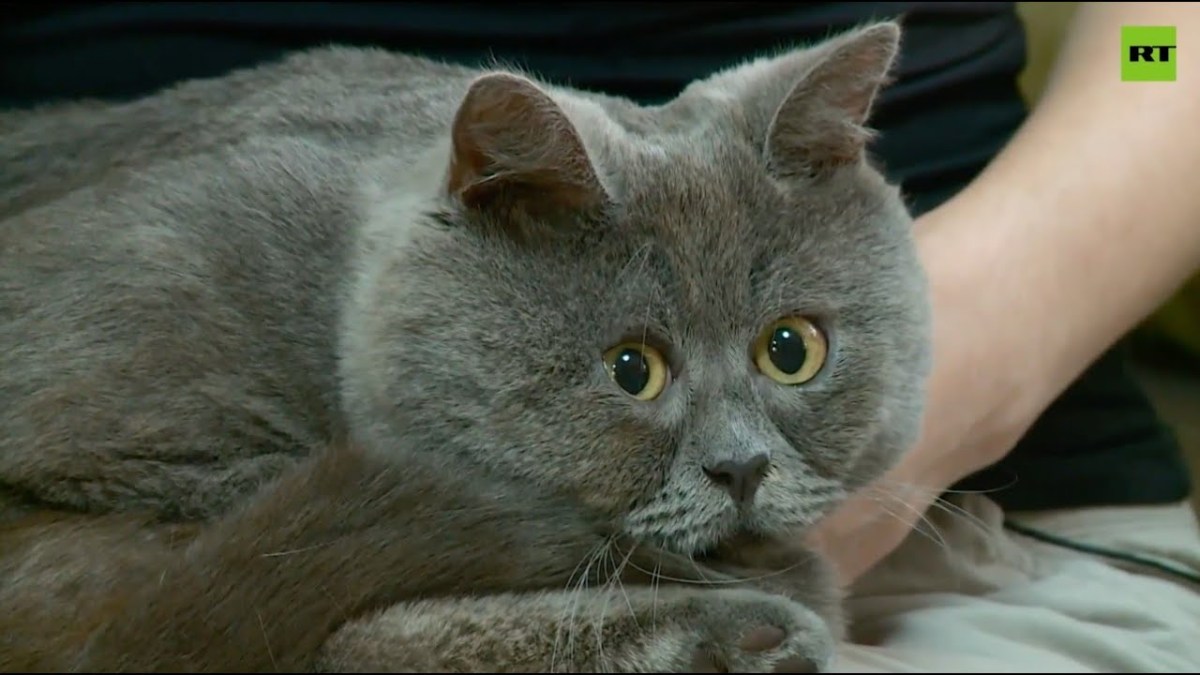
Nursed Back To Health, Rescue Kitten Becomes Garfeldian Superstar

Natalia Zhdanova heard the cries of a kitten in her backyard and found a sick, malnourished baby cat who was barely a week old. She nursed him back to health, and now he’s flourishing.

Meet Fedya, Instragram’s newest feline star.

The playful cat with a permanently surprised look on his face was just a week old when he was separated from his mom last year. Natalia Zhdanova heard his cries and found him alone, hungry and sick in her backyard in Rostov, Russia.

With help from her neighbor’s cat, Handsome, Zhdanova nursed Fedya back to health, and now the little guy is up to a healthy weight and thriving at 18 months old.

“He was very weak and was dying,” Zhdanova told the UK’s SWNS wire. “Handsome cleaned and licked Fedya and became like a father figure to him.”

The two cats are now “the best of friends,” and Zhdanova said Fedya “purrs very loudly” for her and Handsome.

“He is a very sweet, gentle, playful, and intelligent cat,” she said.

You can see more photos and videos of Kedya on Instagram @fedja_kot, where he’s accumulated more than 36,000 followers.

Animals Teach Us Our Self Worth Isn’t Tied To What We Do

We could learn a lot from our feline friends, who live in a default state of contentment, according to a philosopher who muses on cats in his new book.

NPR has an interesting article about the very human tendency to peg our self worth to our careers and our egos to our accomplishments, something most of us are guilty of to one degree or another.

I know I’m guilty of it, and I’m often unhappy when I’m not meeting some arbitrary level of creative output.

But Devon Price, a social psychologist, told NPR a pet chinchilla named Dumptruck — “the opposite of productive, and frankly, rather destructive” — led to a revelation Price had about intrinsic worth.

“I would never look at him and think of his life in terms of, ‘Has he justified his right to exist?'” Price told NPR. “He’s not paying rent. He’s not performing any service. And it would be absurd to even think about his life in those terms.”

The article prompted me to think about Bud, of course. He’s just Bud. A gray-furred, mercurial, amusing little guy whose favorite activities are eating, sleeping and hanging out with his Big Buddy.

How Buddy pulls his weight

Does he do anything to “justify” his existence? Well, according to him, he does.

“What services do I provide?” Buddy repeated when asked. “Well, first of all, I’m delightful. I’m responsible for like 95% of the delightfulness around here, let’s be honest. Yes, delightfulness is a word. Because I say it is!”

He also claims he provides security — “no burglar in their right mind would break in knowing I’m here” — as well as daily wake-up services, and “annoyingness desensitization.”

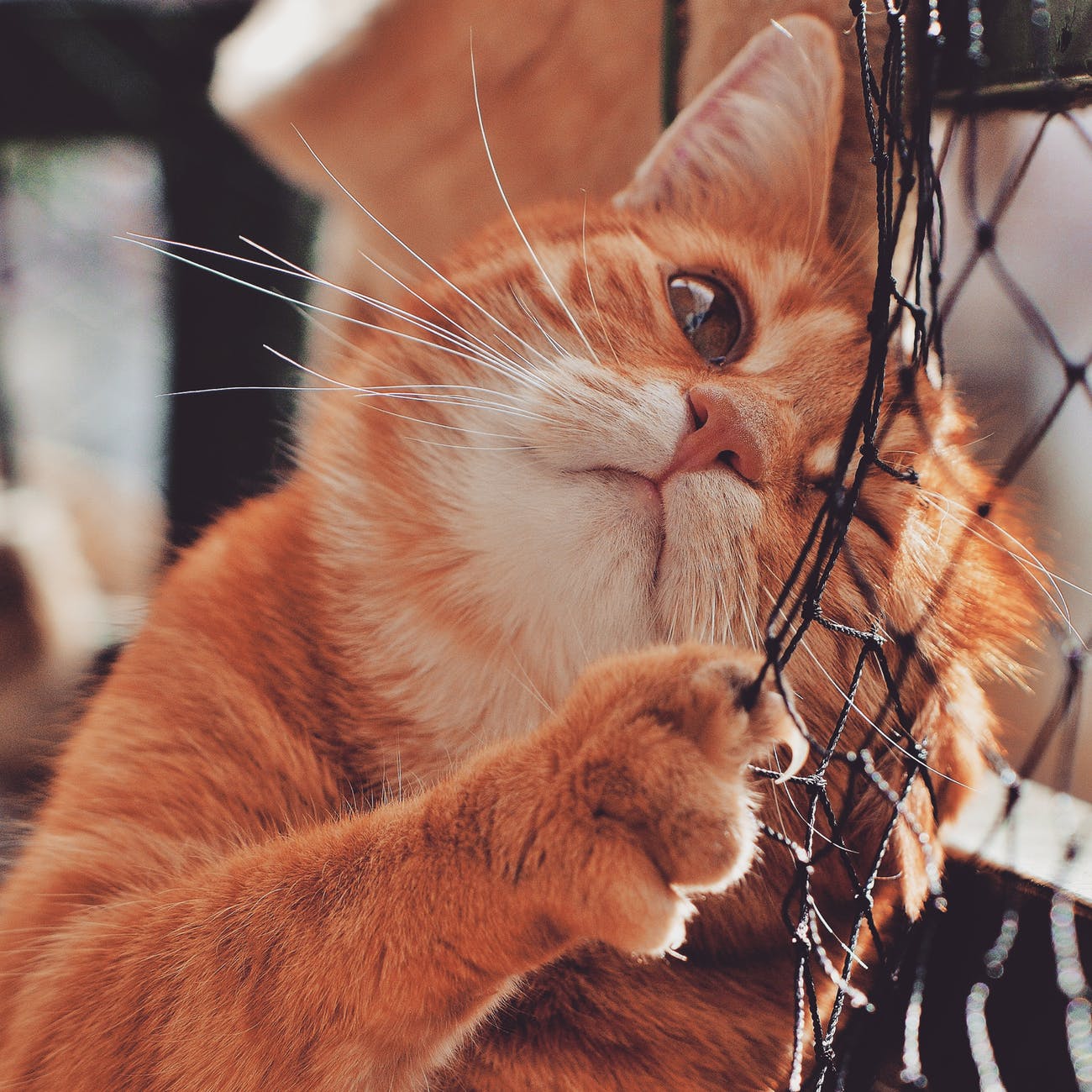
orange cat on focus photography
Credit: Alexas Fotos/Pexels

Price’s observations are not far from those of John Gray, the British philosopher who published a new book, Feline Philosophy: Cats and the Meaning of Life, earlier this year.

Cats live in the moment, Gray points out, and don’t stress themselves obsessing over “an imagined future.” Some people, especially those who don’t appreciate the full scope of animal cognition, would say cats are so adept at enjoying the present because they’re simple creatures incapable of thinking in the abstract or planning for the future.

That, of course, isn’t true: Cats develop abstract thinking skills early in their development, they understand object permanence, and anyone who’s seen a mother cat care for her babies — fretting over hiding spots, frequently moving her kittens and checking in on them when she must hunt for food — knows our feline friends are most certainly capable of planning and worry. (Or you can just watch my cat when his dinner’s late.)

Human anxiety is compounded by existential concerns, which cats aren’t burdened by. They’re not worried about their place in the world, and it probably never occurs to them that trying to be happy acknowledges the possibility of failure.

Contentment is a cat’s natural state

Cats, Gray points out, just do what makes them happy, whether it’s playing with a favorite toy or shredding a roll of toilet paper. They’re not worried about whether they could have more fun doing something else, or whether they’re making the best use of their time. Cats are “among the wisest animals because they’re spontaneous and playful and content with whatever life presents them,” as one reviewer of Gray’s book put it.

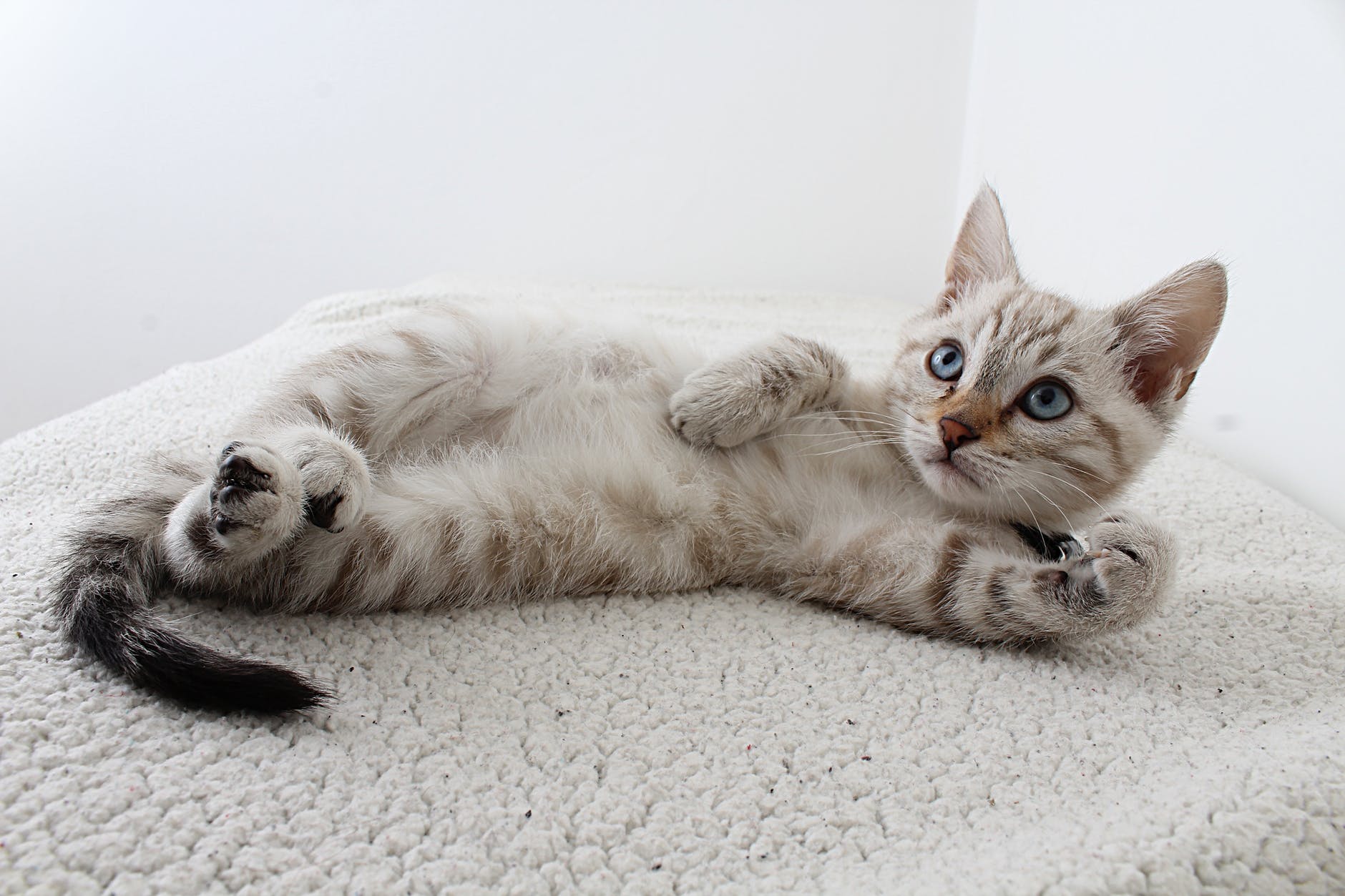
photo of grey tabby kitten lying down
Credit: Anel Rossouw/Pexels

“I would say that a lot of torment in our lives comes from that pressure for finding meaning,” Gray told The Guardian earlier this year. “Unless you adopt a transcendental faith which imagines a wholly other world where meaning is secure from any accident, most of the things that happen to us are pure chance. We struggle with the idea that there is no hidden meaning to find. We can’t become cats in that sense – we probably will need to always have the disposition to tell ourselves stories about our lives – but I would suggest a library of short stories is better than a novel.”

In response to questions about what cats might say to us if they could truly talk, rather than simply communicate, Gray responds with a question of his own: “If they could talk, would they find us sufficiently interesting to talk with?”

Would they consider us buzz kills? Would they roll their eyes, say nothing and return to gleefully knocking beverages off tables?

“Unless cats are hungry or mating or directly threatened, they default to a condition of rest or contentment or tranquility — basically the opposite of humans,” Gray told Vox. “So if cats could philosophize, my guess is they’d do it for their own amusement, not because of some deep need for peace.”

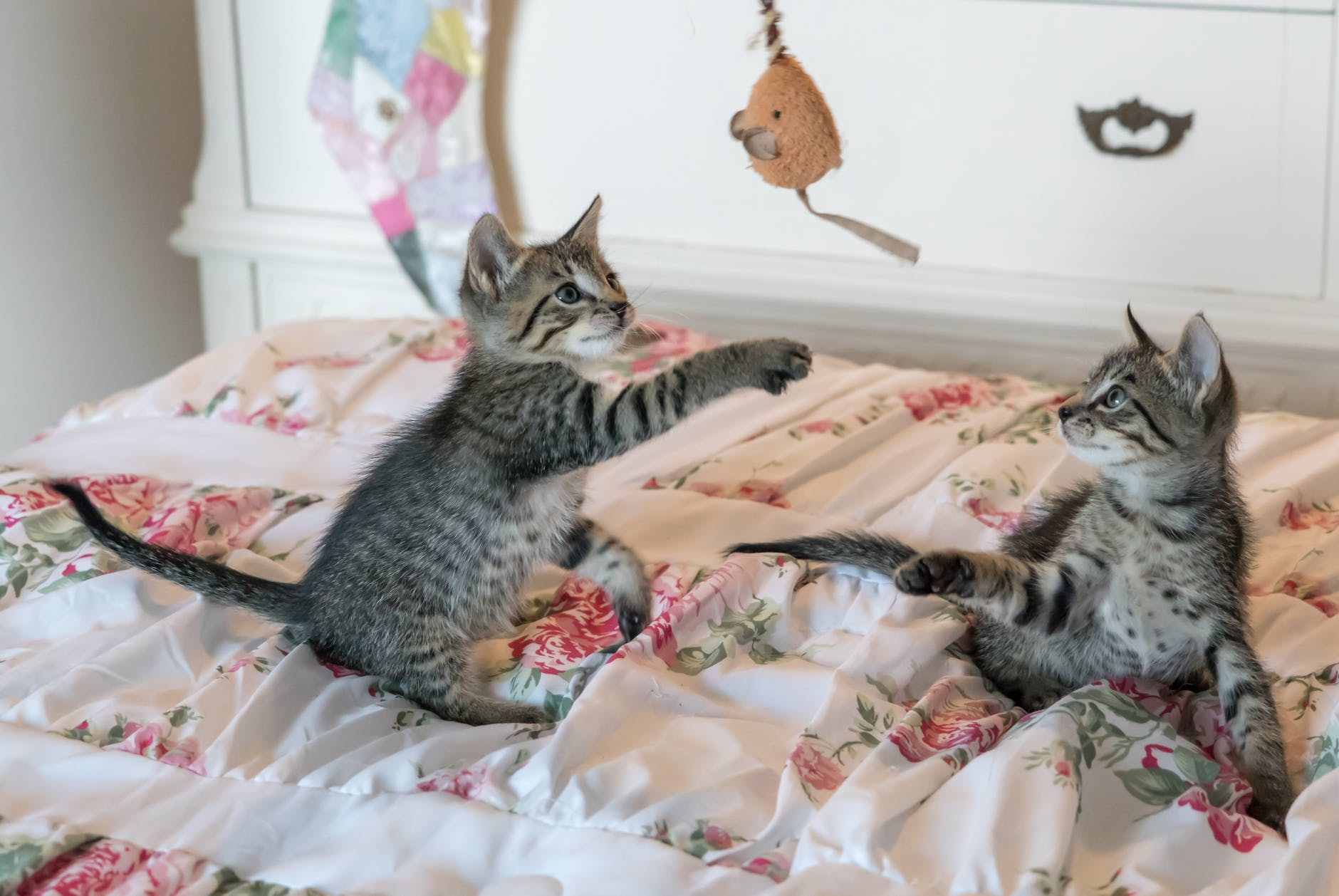
tabby kittens on floral comforter
Credit: Pixabay/Pexels

The Most Important Cat Study Ever Has Been Completed, And The Results Are In

For the first time ever, a US city has conducted a true cat census using scientifically proven methods, including doing it the hard way — by counting. The project’s authors hope other cities follow their lead.

The last decade has seen something of a renaissance in cat-related research, with insightful studies about feline behavior coming from researchers in the US and Japan.

On the other hand there’s been a glut of research into feline predatory impact and public policy, and the majority of those studies have been deeply flawed. They’re based on suspect data and tainted by the interests of people who are more interested in blaming cats for killing birds than they are in learning about the real impact of domestic felines on local wildlife.

Those studies have all taken extreme shortcuts — using data that was collected for entirely different studies, for example, or handing out questionnaires that at best lead to highly subjective and speculative “data” on how cats affect the environment.

Several widely-cited studies that put the blame on cats for the extirpation of bird species have relied on wild guesses about the cat population in the US, estimating there are between 20 million and 120 million free-roaming domestic cats in the country. If you’re wondering how scientists can offer meaningful conclusions about the impact of cats when even they admit they could be off by 100 million, you’re not alone.

No one had ever actually counted the number of cats in a location, much less come close to a real figure — until now.

When leaders in Washington, D.C., set out to tackle the feral cat problem in their city, they knew they couldn’t effectively deal with the problem unless they knew its scope. They turned to the University of Maryland for help, which led to the D.C. Cat Count, a three-year undertaking to get an accurate census with the help of interested groups like the Humane Society and the Smithsonian.

DC Cat Count
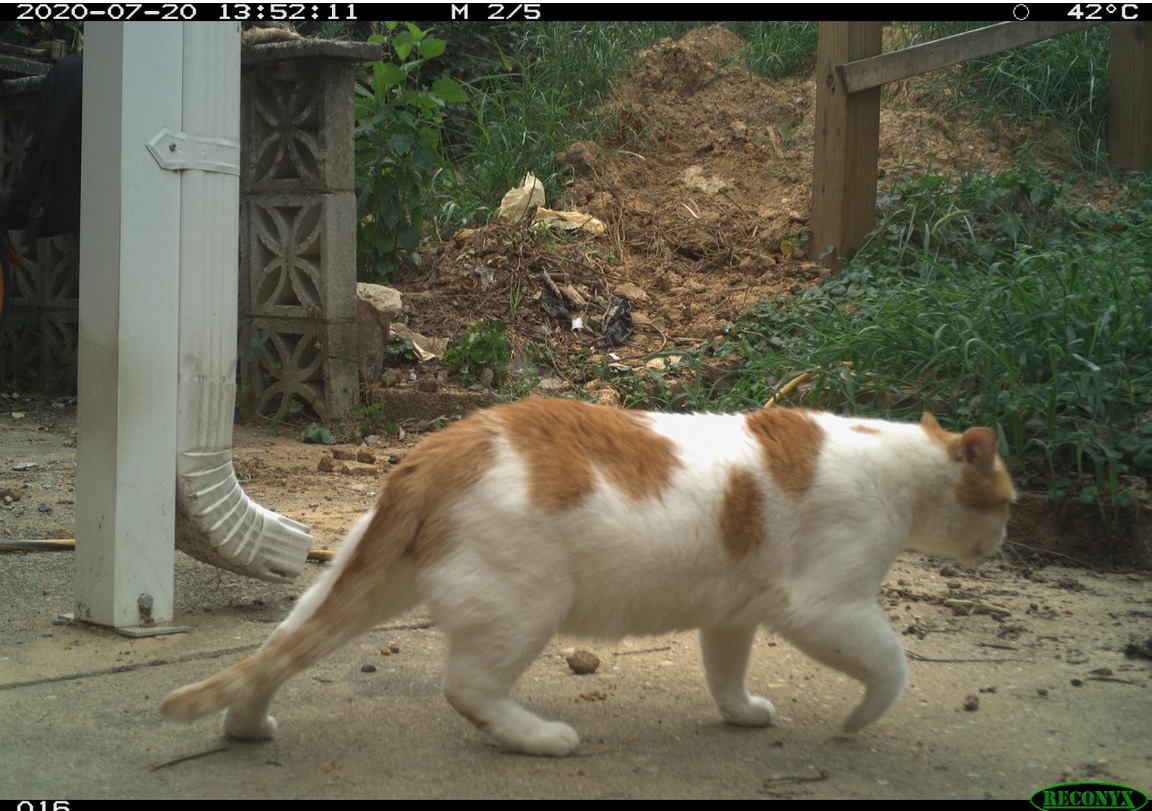
An image from one of 1,530 motion-activated cameras deployed for the D.C. Cat Count. Credit: D.C. Cat Count

The researchers approached each of their local shelters and rescues for data, then assembled a meticulous household survey to get a handle on how many pet cats live in the city, and how many have access to the outdoors.

Finally — and most critically — they used 1,530 motion-activated cameras, which took a combined 6 million photos in parks, alleys, public spaces, streets and outdoor areas of private residences. They also developed methods for filtering out multiple images of individual cats, as well as other wildlife. And to supplement the data, team members patrolled 337 miles of paths and roads in a “transect count” to verify camera-derived data and collect additional information, like changes in the way local cats move through neighborhoods.

DC Cat Count
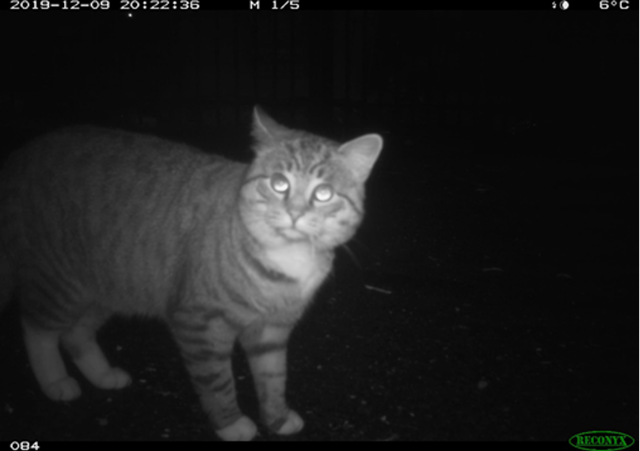
A cat who looks a lot like the Budster was captured in this 2019 photo from a motion-activated camera with night vision. Credit: DC Cat Count

Now that all the data’s been collected and analyzed, the D.C. Cat Count finally has a figure: There are about 200,000 cats in the city, according to the study.

Of those, 98.5 percent — or some 197,000 kitties — are either pets or are under some form of human care and protection, whether they’re just fed by people or they’re given food, outdoor shelter and TNR.

“Some people may look at our estimate and say, oh, well, you know, you’re not 100% certain that it’s exactly 200,000 cats,” Tyler Flockhart, a population ecologist who worked on the count, told DCist. “But what we can say is that we are very confident that the number of cats is about 200,000 in Washington, D.C.”

The study represents the most complete and accurate census of the local cat population in any US city to date, and the team behind it is sharing its methods so other cities can conduct their own accurate counts. (They’ll also need money: While the D.C. Cat Count relied on help from volunteers and local non-profits it was still a huge project involving a large team of pros, and it cost the city $1.5 million.)

By doing things the hard way — and the right way — D.C. is also the first American city to make truly informed choices on how to manage its feline population. No matter what happens from here, one thing’s certain — the city’s leaders will be guided by accurate data and not creating policy based on ignorance and hysteria painting cats as furry little boogeymen.

DC Cat Count
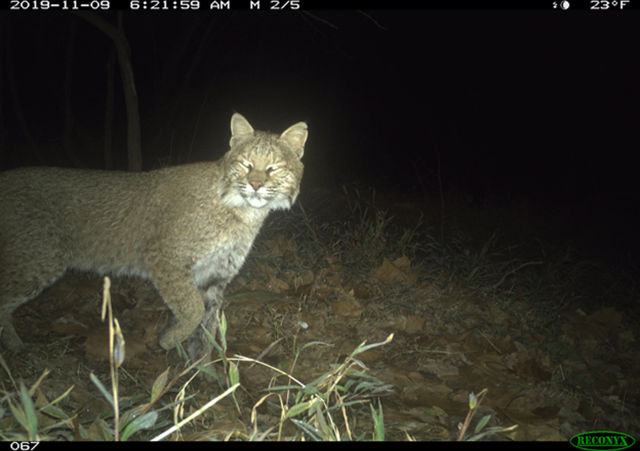
Not all the photos captured images of cats, and not all the felines were little: In this 2019 night image, a bobcat wanders in front of a trail camera. Credit: DC Cat Count

Buddy’s Gate Crashing My Dreams

Bud makes himself comfortable in my consciousness so he can annoy me on an entirely different plane of existence!

Buddy has a tendency to show up in my dreams, which I attribute to his relentless insistence on messing with me while I’m asleep, whether it’s yowling in my ear for breakfast, deciding my nose needs grooming or just burrowing into me with a soft “Mrrrrrp!”

Last night, however, was a doozy. I dreamt I was back in high school, but instead of being in class I was in the newsroom at my first-ever newspaper job, which somehow occupied the third floor of the school building. I excused myself to go have a smoke — which I don’t do anymore — and walked down to the first floor where Bud was waiting for me near the door leading outside.

To say I was alarmed to find him just hanging out unsupervised in my high school-slash-workplace would be an understatement.

“Bud!” I said. “What the hell are you doing here?”

“I came here with you, remember?” Buddy answered, speaking as if it was the most natural thing in the world. “We took the Celica.”

I sighed.

“I can’t have you running around here where someone could snatch you,” I said. “You’re going back in the car until I’m done for the day.”

“No I’m not!”

“Yes you are!”

“Oh yeah?” Buddy asked. “Where’s the car?”

Celica
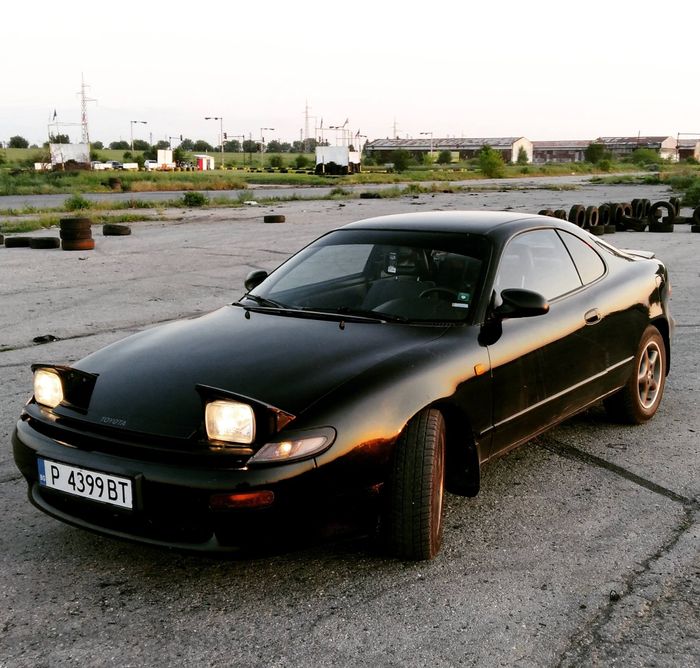
A black Celica just like the one I owned until it died one day on the highway en route to Long Island.

And that’s when my dream morphed into a recurring nightmare, which is that I’m walking through a parking lot and can’t find my car. (In this case the car I got at 19 years old, a black Celica hatchback that was all sleek looks and underwhelming engine power. I still miss that car!) In these dreams I start to panic, redouble my efforts, and realize the parking lot is so huge, so endless that I’m gonna need a lift, someone to drive me around so I can look for my car

Buddy smile
“I’m a little Buddy, short and sweet! Here are my clawses, here are my feet!”

Maybe I can ease my anxiety in future dreams by dispatching Buddy to look for the car, but in last night’s dream he was clearly responsible for moving it.

“Bud…” I said. “What’d you do with the car?”

Dreams have a way of making it seem perfectly reasonable that a 10-pound house cat can not only speak, but drive a car.

I was absolutely sure that little jerk had hidden my car! (And here’s the standard disclaimer for all new readers: “little jerk” is a term of endearment when it comes to Bud. I love the little guy, obviously.)

I know it was just a dream, but it’s probably not a bad idea to hide my keys from now on…