Brave Kitty Ready For Forever Home After Recovering From Being Set On Fire, Plus: Ohio Looks To Ban Declawing

Pixie the cat fought for his life and he’s now almost fully healed. Meanwhile, in Ohio, lawmakers want their state to become the sixth to ban declawing.

Back in April, a woman spotted a group of kids literally playing with fire, and was horrified when she got closer and realized they had set a cat ablaze.

She took the cat from the little demons and rushed him over to the ACCT Philly, where the stray — now dubbed Pixie — fought for his life as veterinary staff treated him.

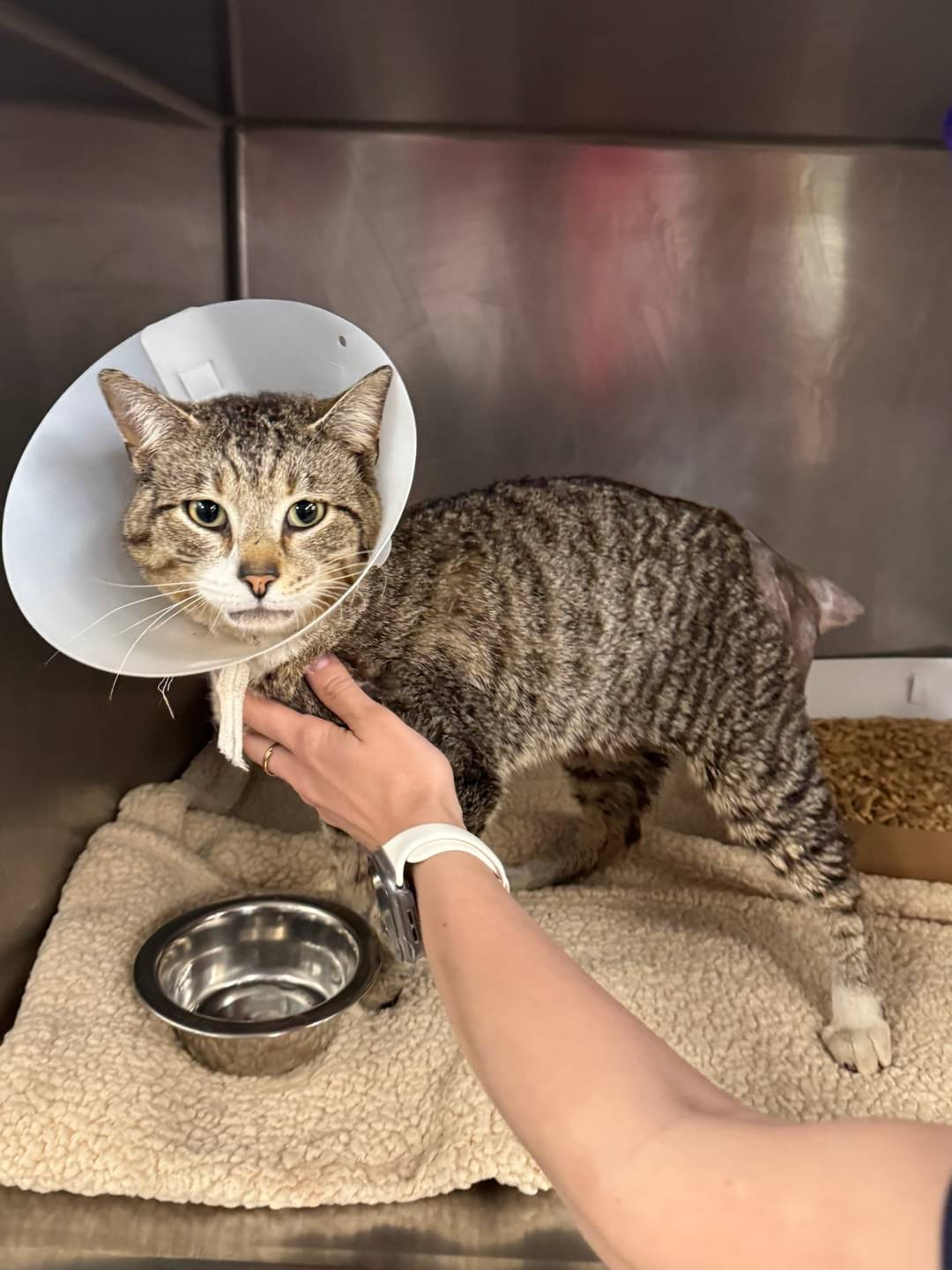
Now Pixie, who doesn’t harbor any ill will toward people and is an affectionate, loving little dude, is all healed up and ready for his forever home.

Pixie lost most of his tail and he still suffers from some incontinence episodes — which is to be expected, given the trauma he endured — but his fur has grown back, he’s healthy and he’s ready to be loved.

“Pixie’s story is hard to read. It breaks our hearts. But it’s the reality we fight every single day,” ACCT Philly’s staff posted online. “It’s why we exist – because no animal should ever face such cruelty, and every animal deserves a second chance at life.”

Pixie has recovered from his injuries and he’s ready to go to a good home. Credit: Pennsylvania SPCA

Pixie’s “spirit has been untouched” by his ordeal. If you live in the area and think you can provide a good home for the little guy — and exhibit the patience he needs with his ongoing issues from the cruelty he endured — visit ACCT Philly to fill out an adoption form. We hope Pixie gets a great home and lives his best life.

Another state looks to ban declawing

Our representaves in congress are too busy embarrassing Americans, staging Jerry Springeresque arguments in the legislative chambers and chasing TV cameras, so naturally they have no time for an insignificant issue like animal welfare.

But if they won’t act to bring our barbarian nation in line with the civilized world when it comes to banning the mutilation of cats, at least some state governments are doing what they can.

Ohio’s representatives are pushing for their state to become the sixth to ban the cruel procedure, after New York, Maryland, Virginia, Rhode Island, and Massachusetts. Washington, D.C., has also banned declawing, and a few dozen cities throughout the country have passed their own local prohibitions.

A bipartisan bill sponsored by a Republican and two Democrats has been introduced.

The usual villains in these efforts, the state’s Veterinary Medical Association, have trotted out the same tired arguments that declawing is “discouraged,” but shouldn’t be banned.

That argument doesn’t hold water when the veterinarians who hold VMA memberships are the types who offer package deals for kitten neutering and declawing. Not all or even most vets belong to state VMAs, and almost no veterinarians who specialize in feline care are members, but the vets who do support the group are the ones who see declawing as an income stream.

Their usual strategy is to call in favors from reps whose campaigns the group donates to, who in turn try to prevent declawing bans from ever reaching the floor for a vote.

After decades of successfully defeating such bans, the dam finally broke when New York passed its ban in June of 2019, becoming the first state to outlaw elective declawing.

We wish the bill’s sponsors, and their allies in local animal welfare groups, good luck in moving the legislation forward.
Trump ‘Delighted’ By Saudi Deal To Send Rare Arabian Leopards To D.C.’s Smithsonian Zoo

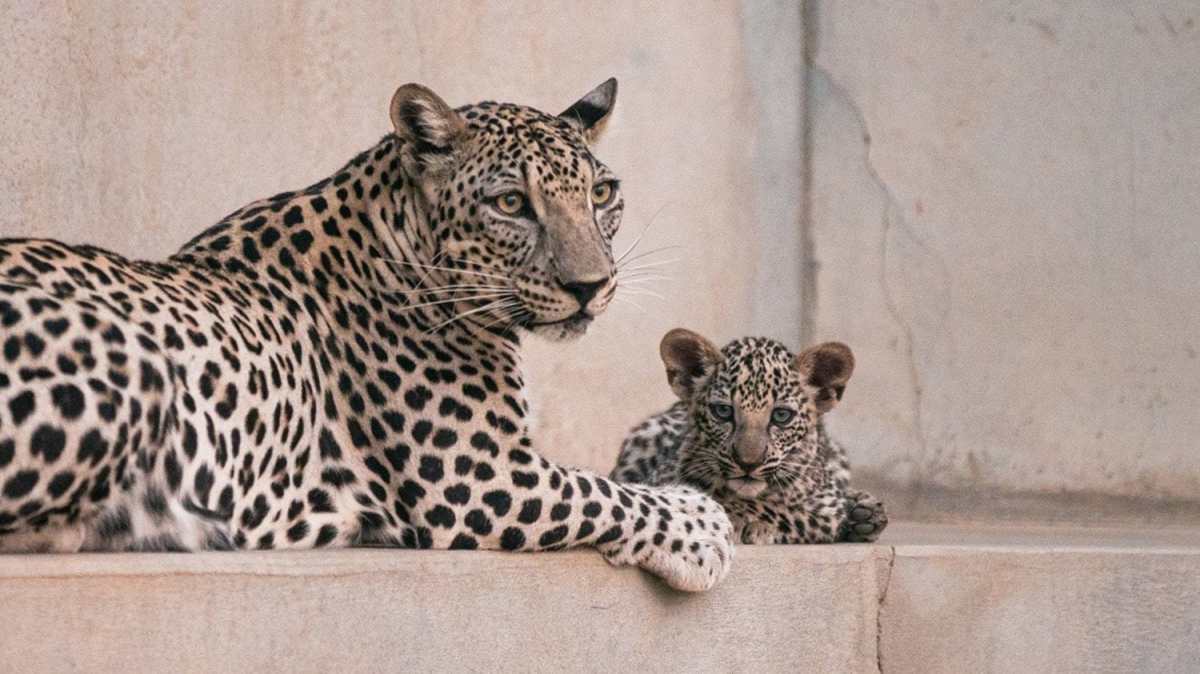
Arabian leopards are among the most rare of all cats, with only about 120 left living in the wild. Trump was taken with them on a recent visit to Saudi Arabia.

I can practically hear Donald Trump bragging about the new pair of extremely rare Arabian leopards the Saudis will send stateside as a deal-sweetener between the countries.

“They’re tremendous cats, just terrific,” he’ll say. “The most ferocious cats you’ve ever seen, believe me. It’s incredible. A lot of people are saying — and by the way, did you know leopards eat up to 40 pounds of meat a day? They’re tremendously powerful animals, very powerful.”

As the New York Times notes, Trump is just as beguiled by dangerous apex predators as he is with dangerous “strong men” tyrants:

Mr. Trump does not own pets and, unlike his sons, he does not hunt big game. But he has shown a particular fascination for animals at the top of the food chain. Last year, he talked constantly on the campaign trail about shark attacks. While campaigning in 2015, he was nearly mauled by a bald eagle he posed with in Trump Tower for a Time magazine photo shoot. (“This bird is seriously dangerous but beautiful!” he chirped after the raptor lunged at his head.)

During his first term, Mr. Trump asked aides about dropping snakes and alligators into a hypothetical moat he wanted built on America’s southern border. He also reportedly became fixated on the viciousness of badgers, badgering his former chief of staff Reince Priebus, who is from the Badger State, as Wisconsin is known, about whether badgers were mean or friendly, according to “Sinking in the Swamp,” a book about the first Trump administration. (Mr. Priebus did not respond to multiple requests for comment.)

Trump viewed the leopards and spoke to a zookeeper while he was in Saudi Arabia to complete a recent arms deal. (The U.S. will sell $142 billion in high tech weapons to Saudi Arabia so the kingdom can more effectively slaughter Yemeni civilians in its ongoing proxy war with Iran.) The American president wanted to know all about the big cats, including how big they are and what they eat. The zookeeper, who routinely handles those sorts of questions from visiting classes of elementary school children, happily indulged his interest.

Arabian leopards are fierce, but they’re somewhat smaller than their Asian counterparts. Panthera pardus nimr, as the species is known, generally has a lighter, tan-colored coat that provides more camouflage in desert and arid environments.

An Arabian leopard Arabia’s Wildlife Center in Sharjah, United Arab Emirates. Credit: Arabia Wildlife Center

The Times also quotes Joe Maldonado, aka Joe Exotic, who spoke to a reporter from prison, where he’s serving a 21-year sentence for trying to have Big Cat Rescue’s Carole Baskin murdered. Maldonado is keenly aware of Trump’s recent streak of handing out pardons to reality TV grifters, like Todd and Julie Chrisley, who stole almost $40 million, as well as less famous scammers like convicted crypto bros. (The Chrisleys, who were convicted of bank fraud and tax evasion, declared bankruptcy to avoid paying back their victims, and will now launch a new reality TV show detailing their post-prison lives. ‘Merica!)

Now Maldonado sees an opportunity.

The former “Tiger King” says Trump should have leopards and other big cats prowling the grounds of the White House, which is the kind of thing dictators like Vladimir Putin and Saddam Hussein have been known for.

“I think it would be absolutely amazing if he would put some endangered cats like that around the White House,” Maldonado said. “I’ve never been there. I don’t know how big the Rose Garden is, but I would imagine you could build a pretty nice size complex.”

Perhaps Trump can threaten to feed congressmen and senators to his new leopards if they defy him and don’t vote for legislation like the “big, beautiful bill” he’s been pushing.

Maldonado admitted that even he’s never seen an Arabian leopard, an animal so rare that only an estimated 120 of them remain in the wild. Still, he thinks he can handle them for Trump.

“Let me out,” Maldonado said, “and I’ll come take care of ’em!”

Credit: Tomasz Dworczyk/Pexels

Wordless Wednesday: The United States Botanic Garden

A jungle in the heart of our nation’s capital.

The United States Botanic Garden is in the heart of Washington, D.C., on the grounds of the Capitol. Admission is free, like almost every museum and public exhibit in the city, and the botanists and designers offer new flora with novel themes every season. These photos were taken in April with my Canon and an 18-55mm lens.

“She’s Like,’Where Are The Snacks?'”: Smithsonian Big Cat Keeper On Working With Tigers And Lions

“Oh my God, this is my job every day!” Charlie Shaw says of his position as a big cat keeper at one of America’s most well-known and well-funded zoos.

If you’ve ever wondered what it’s like to work with big cats, WTOP has a new interview with Charlie Shaw, a big cat keeper at the Smithsonian National Zoo.

Hint: it involves a lot of meat, physical enrichment, olfactory enrichment, and checking on the felids to make sure they’re healthy.

Shaw starts his day by feeding the hungry apex predators, including Damai, a 16-year-old tiger who wants all the snacks, and Vostok, a fast-growing young Amur tiger who doesn’t know a genetically-compatible mate is arriving in short order, and he’ll get to be a dad if things go well.

The genetic matches are carefully made to avoid inbreeding and give the species the best chance to recover.

“Tigers are critically endangered,” Shaw told WTOP. “What we want to do is make sure the gene pool itself is still very diverse.”

Vostok loves to swim. Credit: Charlie Shaw/Smithsonian National Zoo

Shaw says he’s working his dream job.

“You walk in and the tigers all chuff at you, or the lions roar. And you’re like, ‘Oh, my God, this is my job every day!’”

THAT story

I’m aware of it, and I think every person concerned about the welfare of cats should at least know it’s happening.

But it’s also extremely distressing. I actually had nightmares the night after I read it. So I’m offering a strong warning here: think about it before you click the story. The report is by CNN, so there are no gory images and the reporters aren’t trying to make anyone uncomfortable, but the reality of it is bad enough.

For everyone who doesn’t want to know the more upsetting details, the essence of it is that there’s a network of people making “content” of themselves torturing and killing cats, and a rapidly growing audience of people who pay thousands of dollars to “sponsor” the horrific content.

They have “menus” set up where people can select the cat they want to see tortured and specify the ways in which the cat should be hurt and killed. CNN, citing a group of vigilantes trying to dismantle the networks, says people pay up to $1,300 for the “service.” Collectively, the torturers and their audience refer to themselves as “cat lovers.”

The Chinese government, to no one’s surprise, does not care. There are no criminal penalties for what the content producers are doing, and the government hasn’t responded to complaints from concerned people or media networks.

I might address it in the future, but for now I don’t even know what to say. I was away when I read it, and it made me really want to hug Bud and make sure he’s never out of my care. Ever.

Local Politicians Have No Clue How To Manage Cats

Feeding strays is now punishable by a $150 fine in an Ohio town, the latest municipality whose elected leaders chose to ignore expert guidelines on managing feline populations.

Every time the stray cat issue comes up, local town boards and city councils act as if they need to reinvent the wheel.

Imagining that they are the first to deal with this extremely common problem, they make decisions from positions of ignorance, dismissing the concerns of people who actually work with cats. Or they “do the research” and come up with their own ineffective policies instead of simply looking at what other towns and cities have tried in the past.

At least that way, you know what works and what doesn’t, and how much your decision’s going to cost taxpayers.

But that would be the smart thing to do, which is why our local elected leaders don’t do it. Instead they pull stunts like the village board of Mogadore, Ohio, a town of 3,700 about 10 miles east of Akron.

The Mogadore board just passed a law that makes feeding strays and ferals punishable by a fine of up to $150, as if that will stop cats from finding food and breeding.

Tellingly,  Mogadore’s elected leaders say their ordinance applies to “wild, stray, or un-owned” cats, which means they don’t understand they’re all the same species.

Apparently neither do the reporters at WOIO, a local news station in Cleveland. A story from the station is confidently incorrect in telling readers “[d]omestic cats that have become wild, meaning live outdoors, roam free, and rarely interact with humans, are also considered feral.”

Stray cat and kitten
Credit: Sami Aksu/Pexels

Felis catus is a domestic animal. By definition a domestic cat is not wild and cannot become wild. Evolution cannot happen to a single animal.

While evolution is a constant process, speciation — wolves becoming dogs, wildcats becoming house cats, wild boar becoming docile farm pigs — is a species-wide shift that takes at least a few hundred years but often much longer, “from human-observable timescales to tens of millions of years” depending on the species.

The whole process results in changes at the genetic level. The transition from wildcats to domestic cats, for example, involved changing only 13 genes.

This is not rocket science, it’s basic stuff we all learned in high school science classes.

But that’s almost beside the point.

Fining people for feeding stray cats, including caretakers who voluntarily manage cat colonies, will not solve the problem. It doesn’t work. It has never worked in any town anywhere in the world.

It also creates a needlessly adversarial relationship with the passionate people doing the hard work of managing the feline population, often thanklessly and at their own expense. Why make enemies of them when they’re doing a public service?

Mogadore’s village board had a representative from Alley Cat Allies and people from local rescues on hand to inform them that fines don’t work, and to offer the humane and effective option of trap, neuter, return. TNR may not be perfect, but it’s better than anything else people have tried.

Mogadore’s board and mayor ignored the experts and went ahead with their plan to fine people instead.

They’re not alone. This happens thousands of times across the US, Europe, Australia and most other places where domestic cats live. Japan and Turkey take a more humane approach, and they’re better for it. But here in the US, we often deal with issues by ignoring precedent and engaging in wishful thinking.

If the residents of Mogadore are lucky, their elected officials will realize their mistake sooner rather than later.

Stray cat eating
Stray and feral cats already have a difficult existence without ill-advised laws making it illegal to care for them. Credit: Mehmet Fatih Bayram/Pexels