The fatter the cat, the bigger its online following.
Metro’s editors want more fat cats.
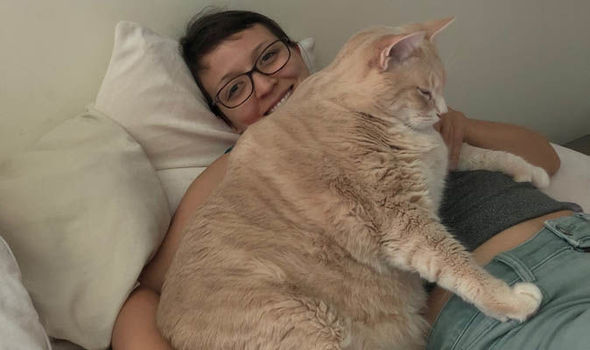
The newspaper recently profiled Manson, a 28-pound behemoth who lives with his humans in Silver Spring, Maryland, but the god of internet traffic is never sated, so the story ends with a request — or challenge — for more morbidly obese pets to drive clicks.
“Do you have a pet who’s even chunkier than Manson? Get in touch to share their story,” Metro’s editors write.
You know things have gotten out of hand when readers and editors alike respond to a story about a kitty almost three times the weight of a normal feline with a collective “Eh, that’s all? Show us a fatter one!”
In the world of Online Famous felines, popularity is directly proportional to fat, inspiring a caloric arms race among those seeking fleeting fame from fickle followers.
Indeed, the Metro story notes that while two-year-old Manson can’t hop up onto his humans’ bed without assistance, he’s amassed more than 10,000 followers on Instagram, as if an abstract measure of online “fame” — which he can never comprehend and makes absolutely no difference to him — counterbalances the maladies he’ll suffer due to his weight.
People apparently think it’s funny to see a two-year-old cat who can do little more than nap, eat and roll himself around the house. Anyone who expresses alarm for the welfare of the cat is a “troll” or a hater, according to the Metro article.
Are people stuffing their cats for followers and upvotes?
There’s really no way to determine that short of cat owners admitting it. Manson’s owners say they see no problem with their cat’s diet.
Most of these “chonky cat” stories come from shelters, where staff and volunteers are left with the hard problem of getting huge furballs to slim down after they’ve been abandoned by their humans or orphaned due to owner death. That was the case with Bazooka, a 35-pound ginger tabby whose owner had dementia and fed the cat constantly.
“[Bazooka’s owner] thought he was doing the best thing for his cat by feeding him,” an SPCA spokeswoman said at the time. “We need to look on this with a compassionate view. He was loved.”
Those viral chonky cat stories have been a boon to shelters, highlighting the good work they do and driving donations from cat lovers and well-wishers.
But those shelters are trying to get the cats in their care to lose weight, not pack on the pounds. That’s because they see first-hand what morbid obesity can do to a cat’s quality of life and life expectancy.
As for the rest of us, we should probably rethink our tendency to reward the owners of massive cats with our attention.
With news of the first infected cat comes panic and misinformation that could prove deadly to our loyal little friends.
Cats have been a Godsend in this era of social distancing.
People are looking for something — anything — to get their minds off grim reality and the repetitive, depressing 24/7 virus coverage that dominates television.
Cats have delivered. Our furry friends have been covering themselves in glory, providing an endless supply of viral videos and making people smile just by being their endearing, quirky selves.
Most of all they’ve been there for us at home, soothing anxieties and lowering blood pressure with each lap they claim and each affectionate nuzzle. We may be isolated from other people, but when there’s a cat in the house you never feel truly alone. (If for nothing else, their meows at meal time will make sure of that.)
For me it’s not even a question: Without my Buddy, I’d be slipping into depression of a kind that can’t be cured with Netflix bingeing, books or games.
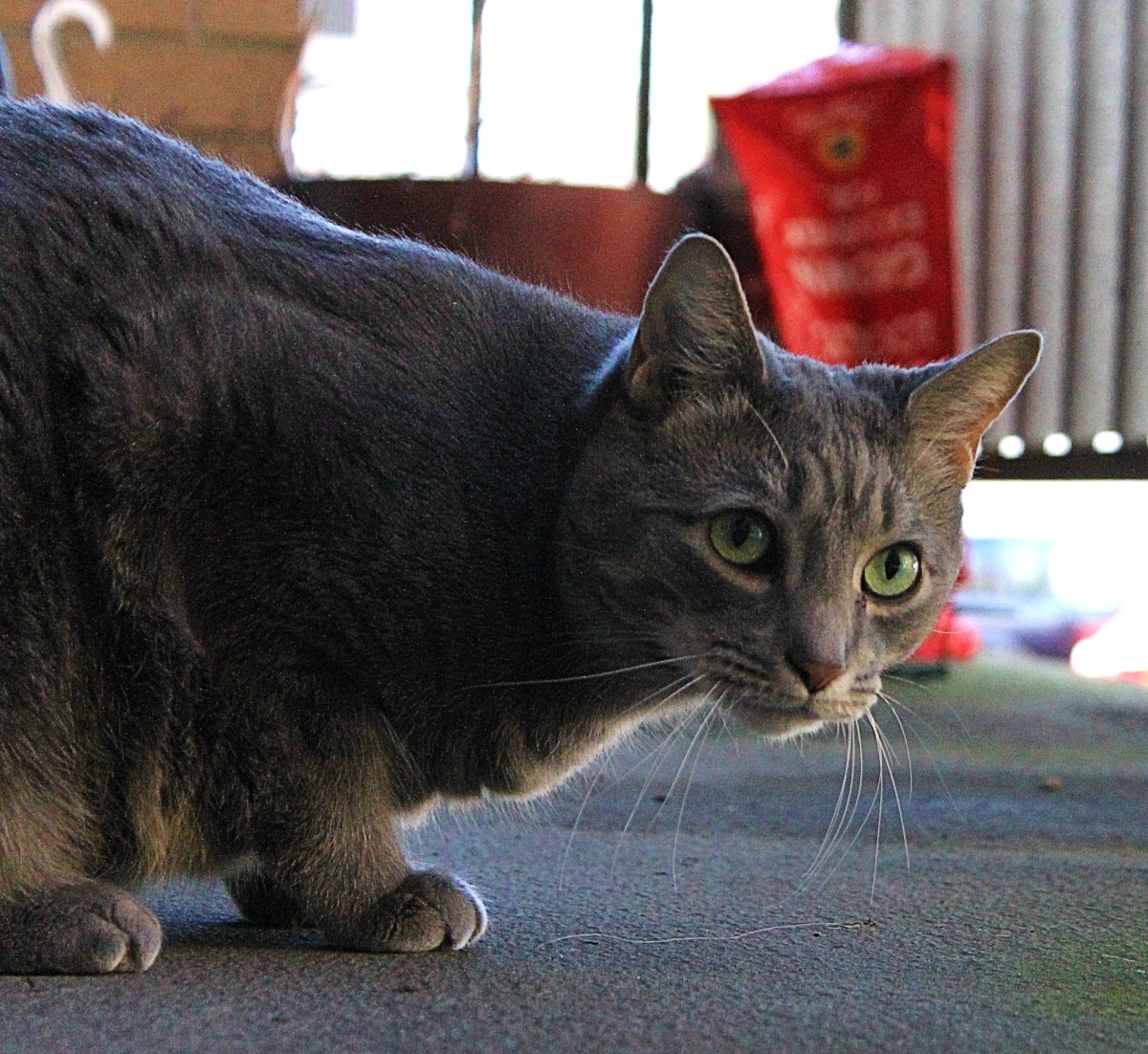
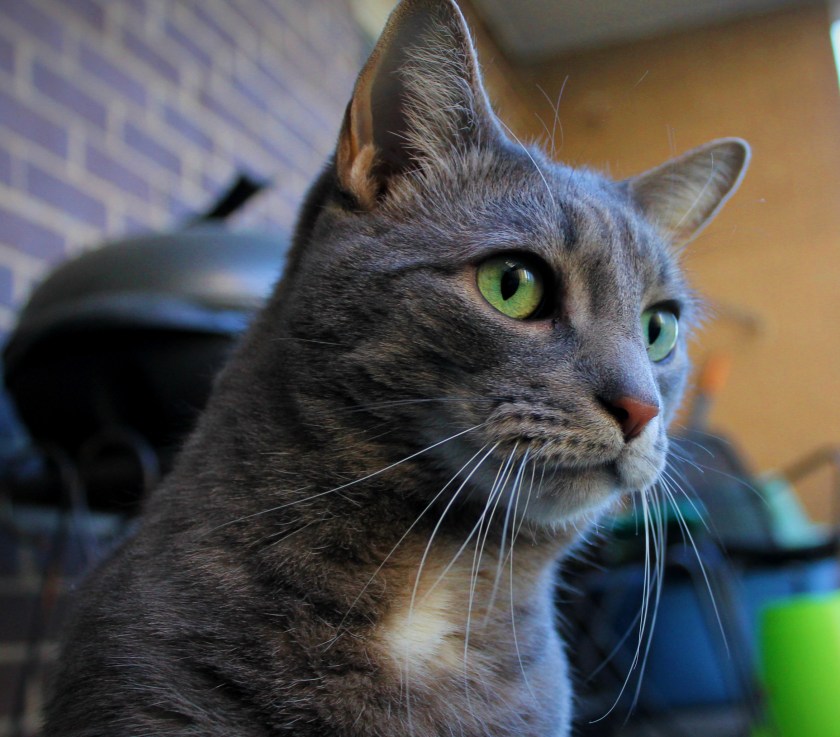
Little Buddy the Cat on March 27, 2020.
Now we’ve got to return the favor and protect our cats.
The first “confirmed” case of a cat contracting COVID-19 has come from Belgium, where a veterinary lab ran tests on a sick cat with respiratory problems and concluded the cat picked up the virus from her human.
“The cat lived with her owner, who started showing symptoms of the virus a week before the cat did,” said Steven Van Gucht, a public health official in Belgium, according to the Brussels Times. “The cat had diarrhea, kept vomiting and had breathing difficulties. The researchers found the virus in the cat’s feces.”
This is not good news.
Medical diagnostic labs in the US have tested thousands of pets for COVID-19 and haven’t found a single infected animal.
The World Health Organization has repeatedly said there is no evidence of dogs or cats serving as hosts for the virus or infecting humans, although that organization has killed its own credibility with its effusive praise for the Chinese government, and by parroting Chinese insistence that the virus couldn’t be transmitted from human to human. (WHO continued telling the world there was no evidence of contagion through late January, some six weeks after it was clear the virus was multiplying.)
The deadly consequences of misinformation
Unfortunately that didn’t stop innumerable people from abandoning their cats and dogs in China, leaving them in apartments and houses to starve. One Chinese animal welfare group, which is partnered with Humane Society International, says “tens of thousands” of pets were abandoned.
Some Chinese territories instructed people to kill their pets, and there are sickening reports of people clubbing defenseless animals to death in the streets.
That may not be surprising in China, which has an abominable record on human and animal rights, but now there are disturbing reports from all over the world. Shelter operators in the UK, for instance, say they’re fielding calls from people who want to abandon their pets because of the Coronavirus.
“Mostly, it’s people who haven’t got access to the right information online,” Claire Jones, who works at a shelter in Stoke-on-Trent, told the BBC. “It’s a nightmare.”
Misinformation and confusion are compounding the problem, the result of a new media ecosystem in which news is whatever a person’s social circle posts on their feeds and news consumers don’t distinguish between reliable press outlets (Wall Street Journal, Associated Press, Reuters, etc) and the thousands of less scrupulous sites masquerading as legitimate sources of news.
Thus, when a dog in China tested positive for trace elements of Coronavirus — but blood tests were negative — sites like Quartz wasted no time pumping out headlines declaring that dogs and cats can be infected.
Exercising caution with information
It looks like the Belgium case is another in which fact and nuance are sacrificed for clicks. Belgian virologist Hans Nauwynck is among the skeptics who believe veterinary authorities in his country acted too rashly.
“Before sending this news out into the world, I would have had some other tests carried out,” Nauwynck told the Brussels Times.
To confirm the positive test, the lab used a polymerase chain reaction, or PCR. A PCR test “allows scientists to multiply a very small sample of genetic material to produce a quantity large enough to study,” the Times noted. But the test only confirmed that the cat suffered from a flu-like virus. It did not specifically match the viral infection with COVID-19.
“A clear link between virus excretion and clinical signs cannot be established, in part because other possible causes for the cat’s illness were not excluded,” wrote Ginger Macaulay, a veterinarian in Lexington, South Carolina.
In addition, authorities didn’t rule out the possibility that the sample was contaminated or maintain a forensic chain of possession that would ensure it was properly handled.
“I would advise people to slow down,” Nauwynck said. “There may somehow have been genetic material from the owner in the sample, and so the sample is contaminated.”
To be absolutely certain, he said, more tests should have been done to confirm the initial result, and certainly before making an announcement to the world. Veterinary authorities should have tested for the presence of antibodies in the cat’s system as well, he said, which is a sign that an immune system is fighting off an infection.
“I’m worried that people will be scared by this news and animals will be the ones to suffer, and that’s not right. As scientists we ought to put out clear and full information, and I don’t think that has happened.”
With reports about the infected cat spreading across the globe — and adding to existing fears — the Belgian virologist said panic could override reason, with catastrophic consequences for our little feline friends.
“I wouldn’t wish to be a cat tomorrow.”
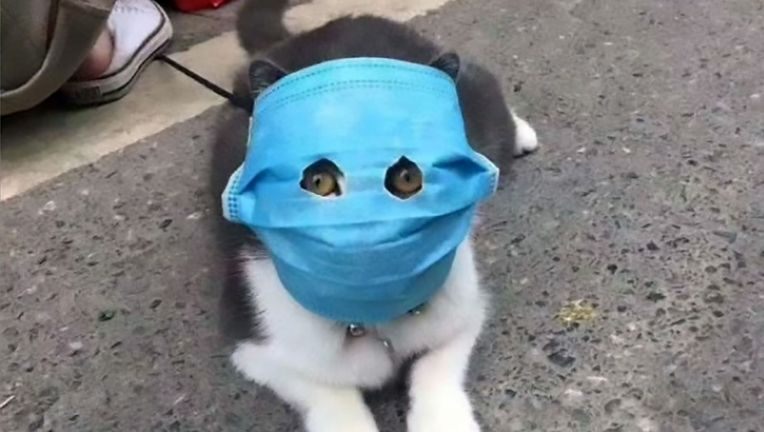
A cat on a lead in China is protected with a face mask. Credit: AsiaWire
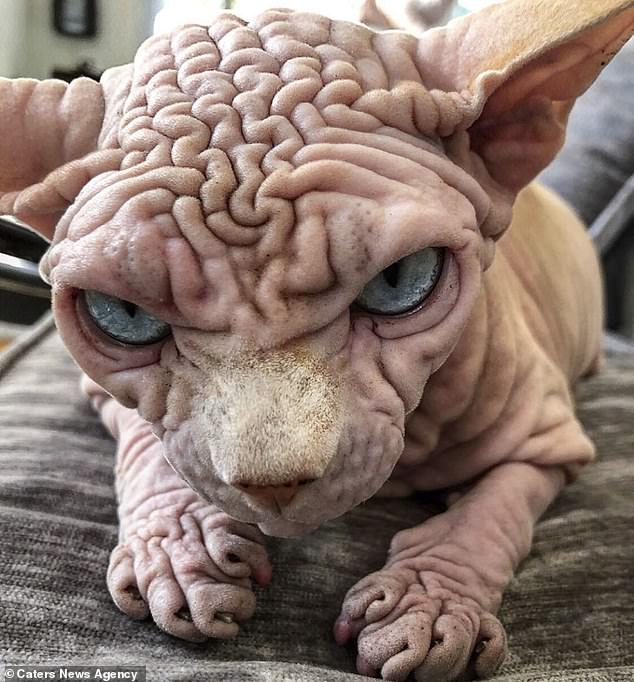
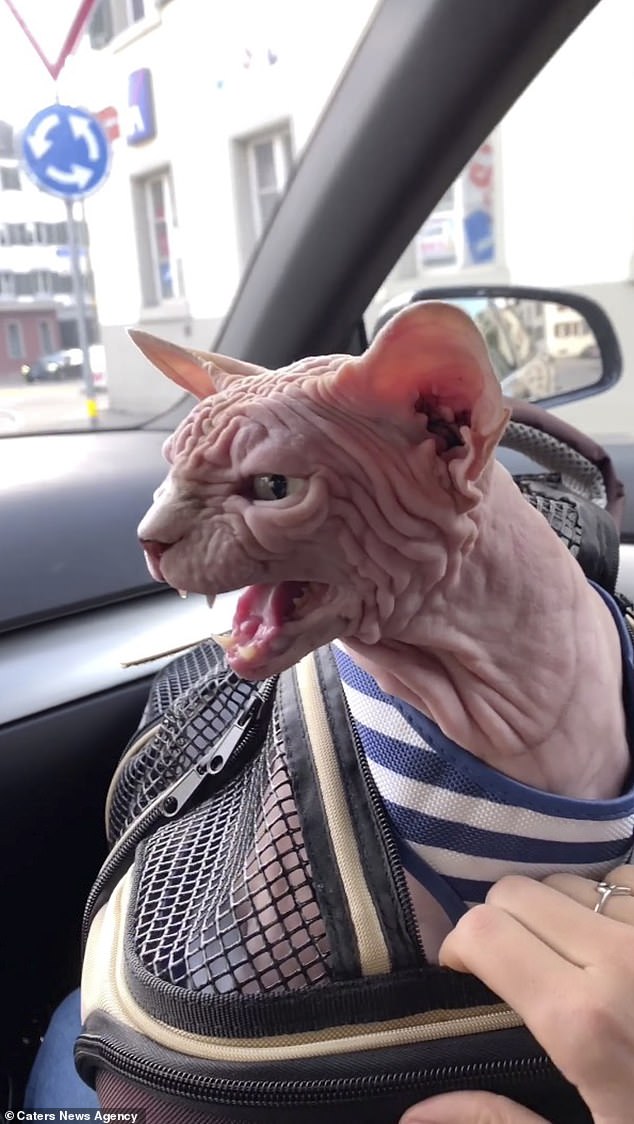
Also, we assume, known as Xherdan the Sun Eater, Xherdan the Bane of Hope, He Who Sups on Souls, and Xherdan the Earthcrusher.
The incredibly wrinkly Sphinx cat is served by a Swiss woman named Sandra Filippi, who insists the feline, despite looking like the brain of a malevolent alien, is just a big softy who enjoys cuddling and napping when he’s not talking. We’ll give Filippi the benefit of the doubt and won’t allege those talks include nefarious plans for the subjugation of the human race, but only until we get solid evidence.
Where some of us see a Lovecraftian horror from the deepest Cthulian depths, Filippi sees an adorable kitty.
“When I first saw him, he immediately stole my heart,” Filippi told the Daily Mail. “His wrinkled pink skin, as fine as a peach, and his turquoise eyes, I was in love.”
Although she doesn’t explicitly say so, it appears her cat is named after footballer Xherdan Shaqiri, a Swiss midfielder who plays for Liverpool.
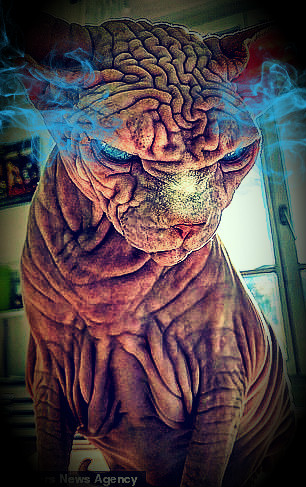
We’ve taken the liberty of making some very small adjustments (barely noticeable, really) to one of Xherdan’s photos in Pixlr, just to show our readers what an excellent Evil Overlord this cat would make:
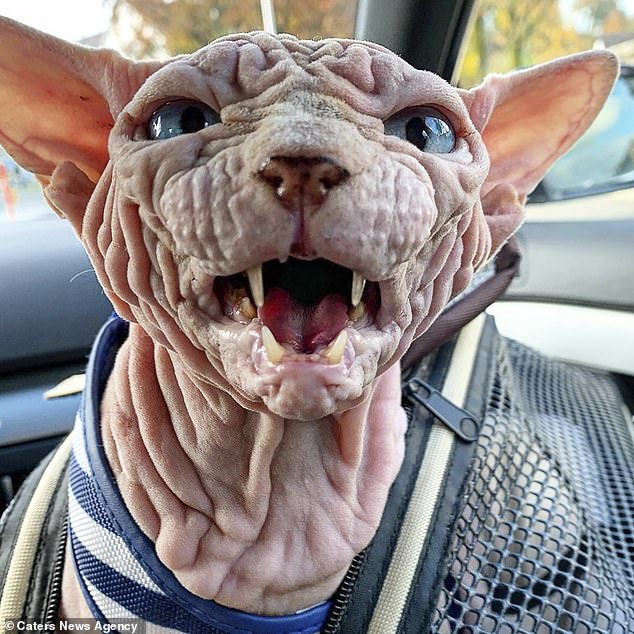
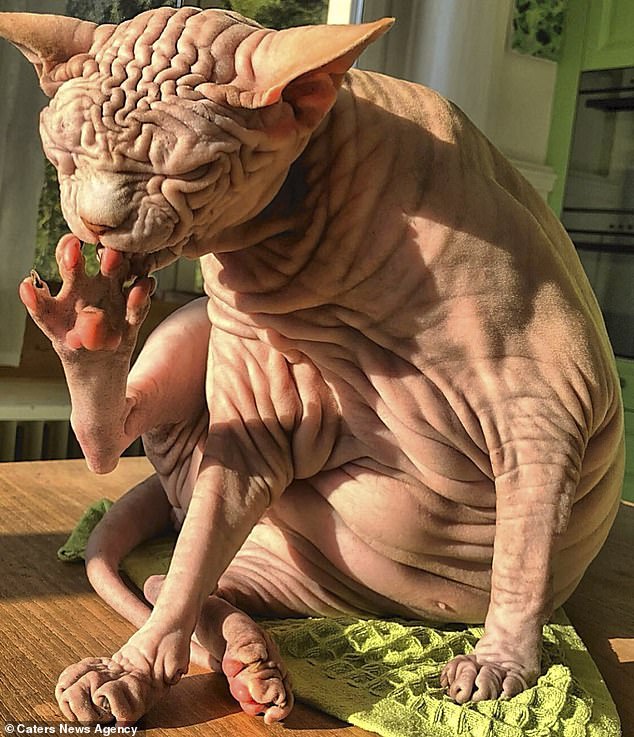
But the truth is, he doesn’t need glowing smoke coming from his eyes or dramatic lighting. He looks terrifying enough as it is:
Xherdan orders his minions to feast on the corpses of unbelievers.Xherdan grooms himself after easily reducing another human city to rubble and salting the earth it stood on.Xherdan threatens to wipe motorists from existence in a column of balefire if they don’t make way for his vehicle.
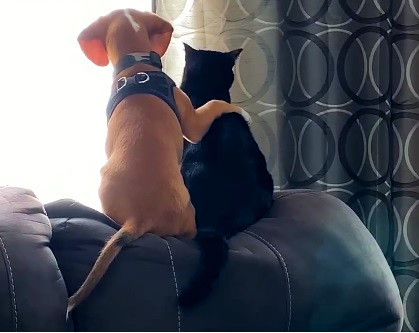
A kitten and his best friend, a puppy, are warming hearts with a video of them showing their love for each other.
Who says cats and dogs have to be enemies?
Bo, a 5-month-old Beagle puppy, drapes a paw around his best feline bud, 10-month-old Jasper, in this video showing that cats and dogs getting along is not a sign of the apocalypse, contrary to what Bill Murray said in Ghostbusters all those years ago.
Lisa Plummer of South Bend, Indiana is the pet mom to the adorable duo.
“Bo loves his cat siblings so much,” Plummer wrote, adding the little ones sometimes “drive me crazy with their constant chaos.”
“This sweet moment melted my heart,” she wrote, “and made me want to take back all the bad things I’ve said about them.”
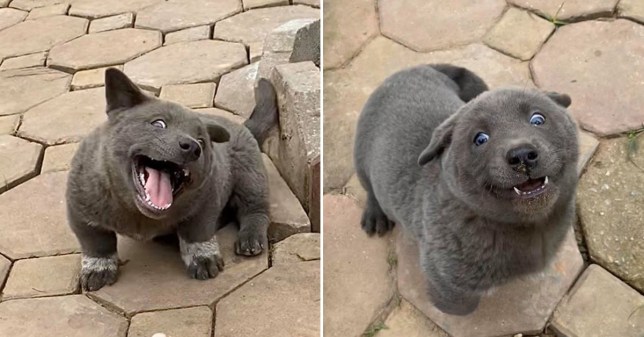
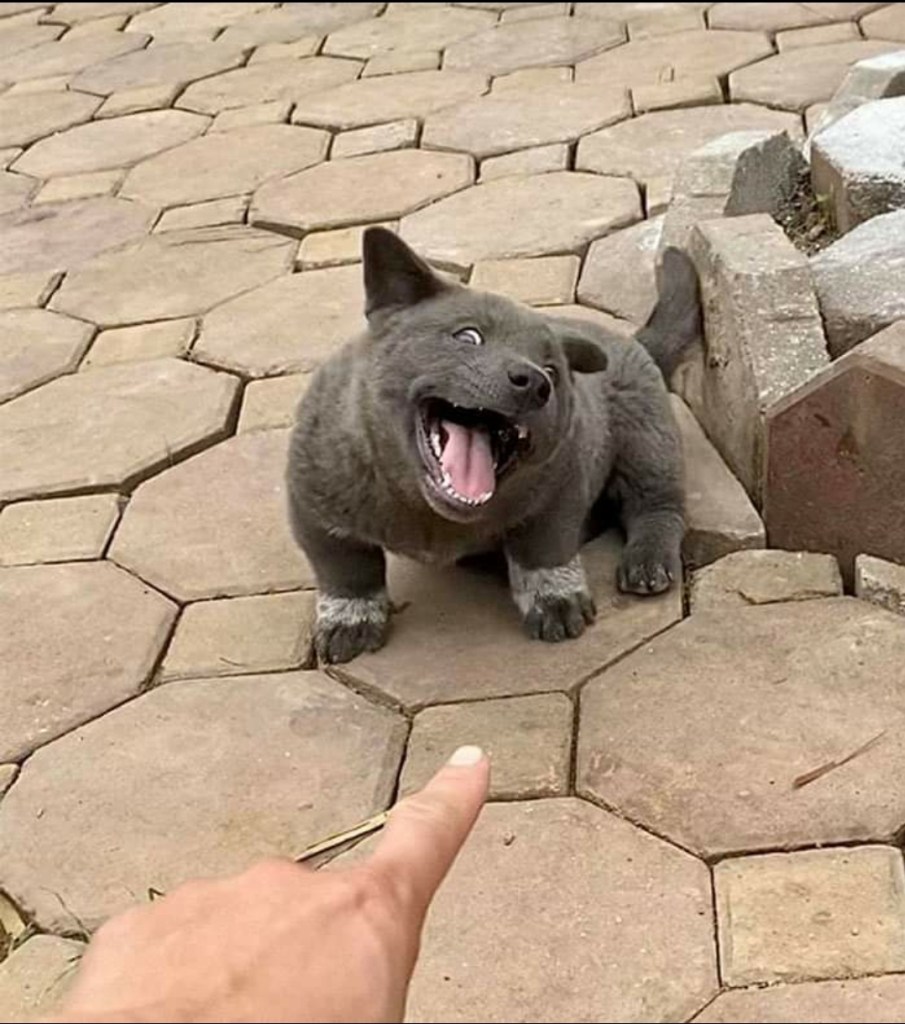
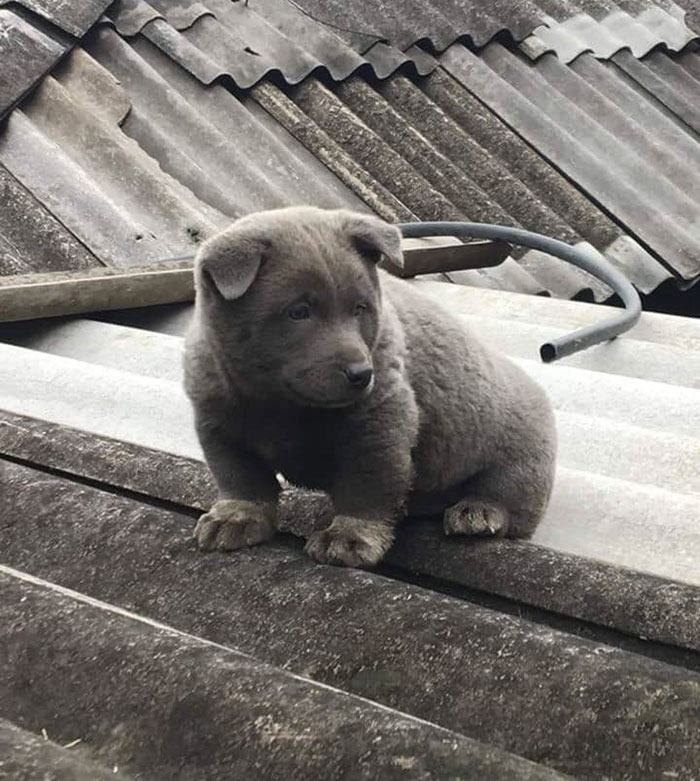
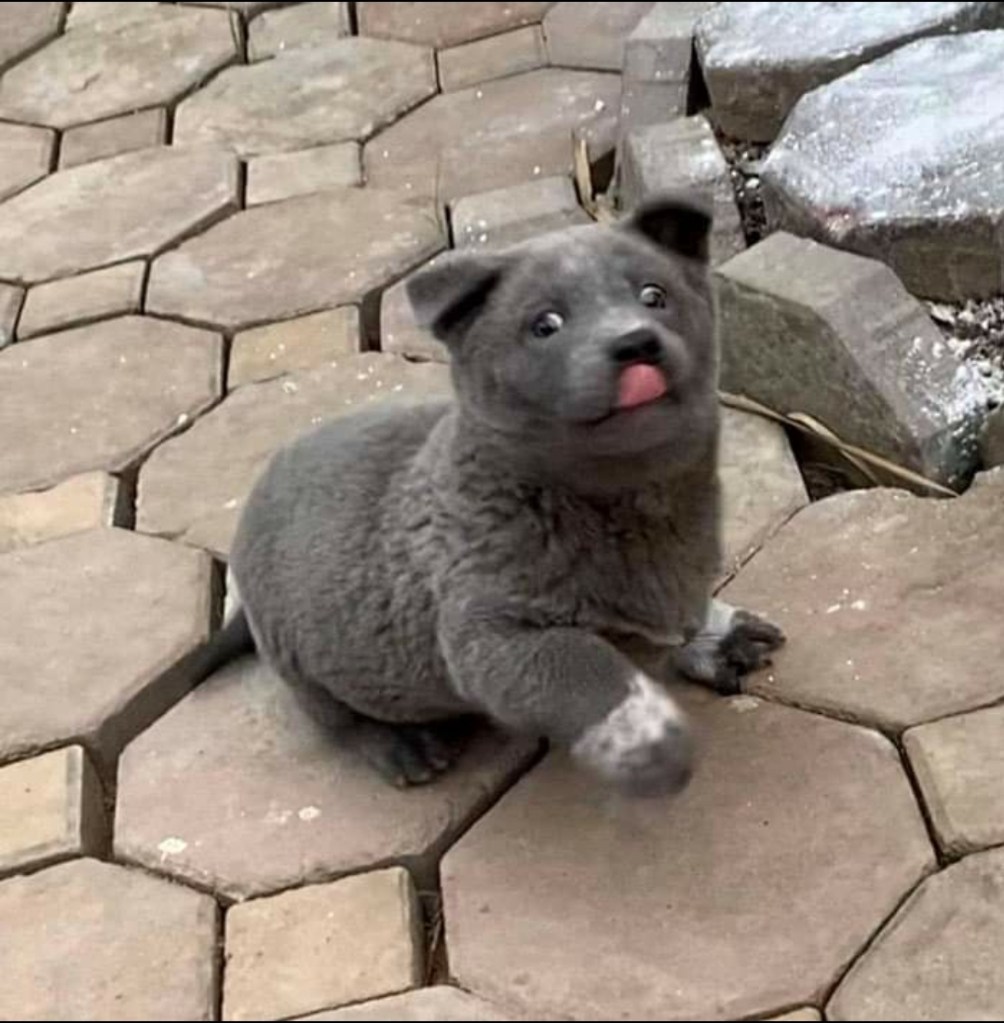
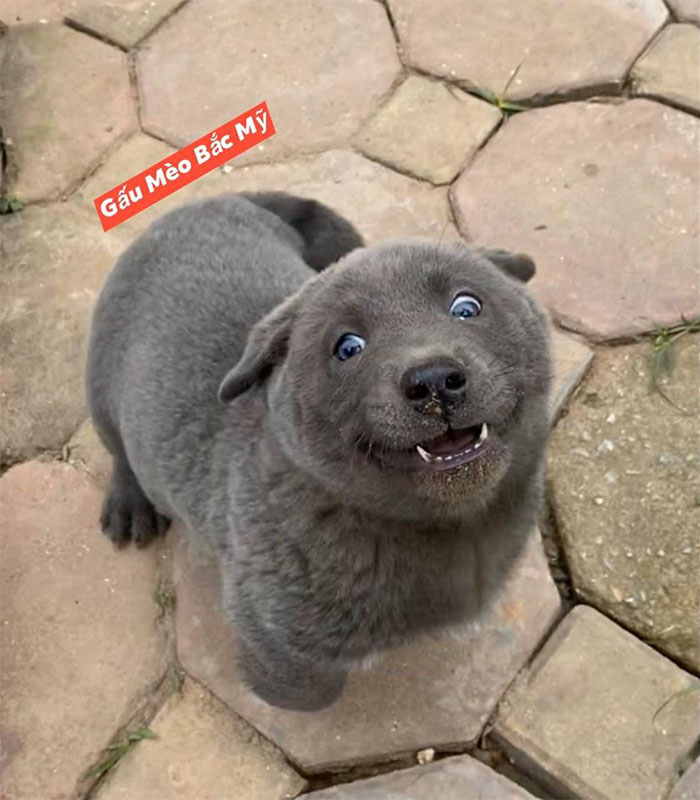
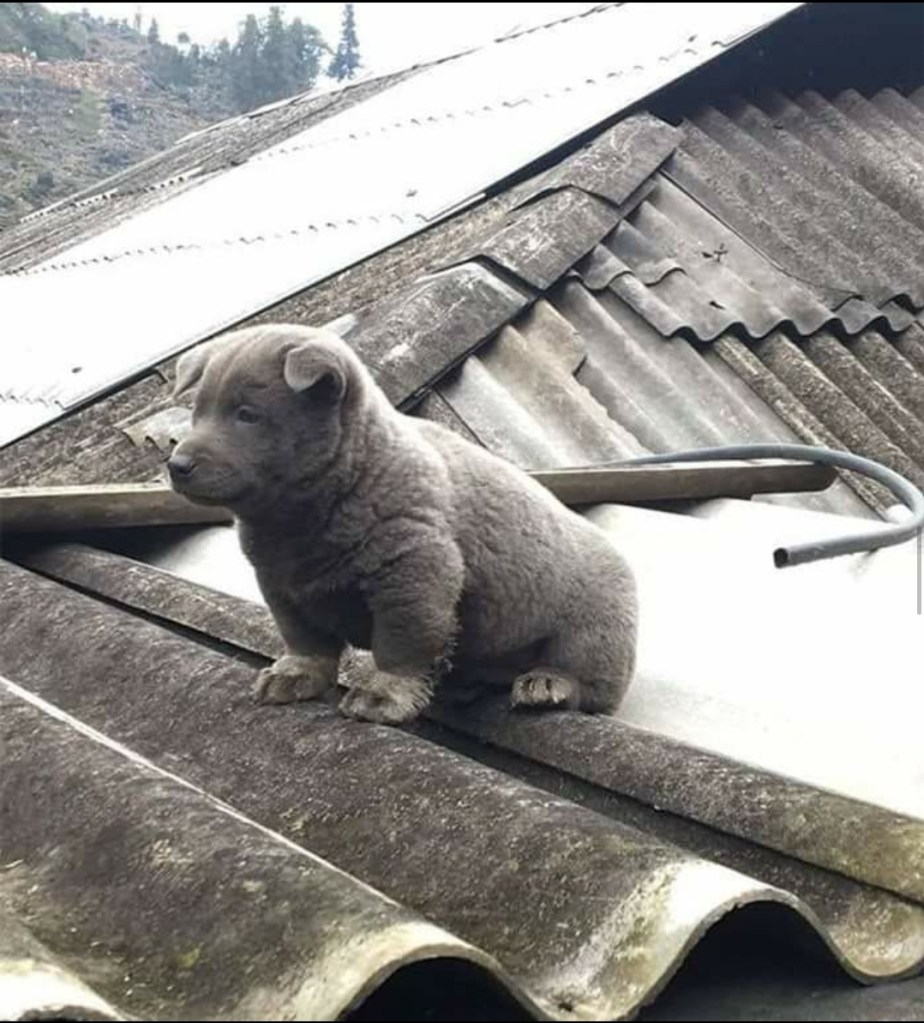
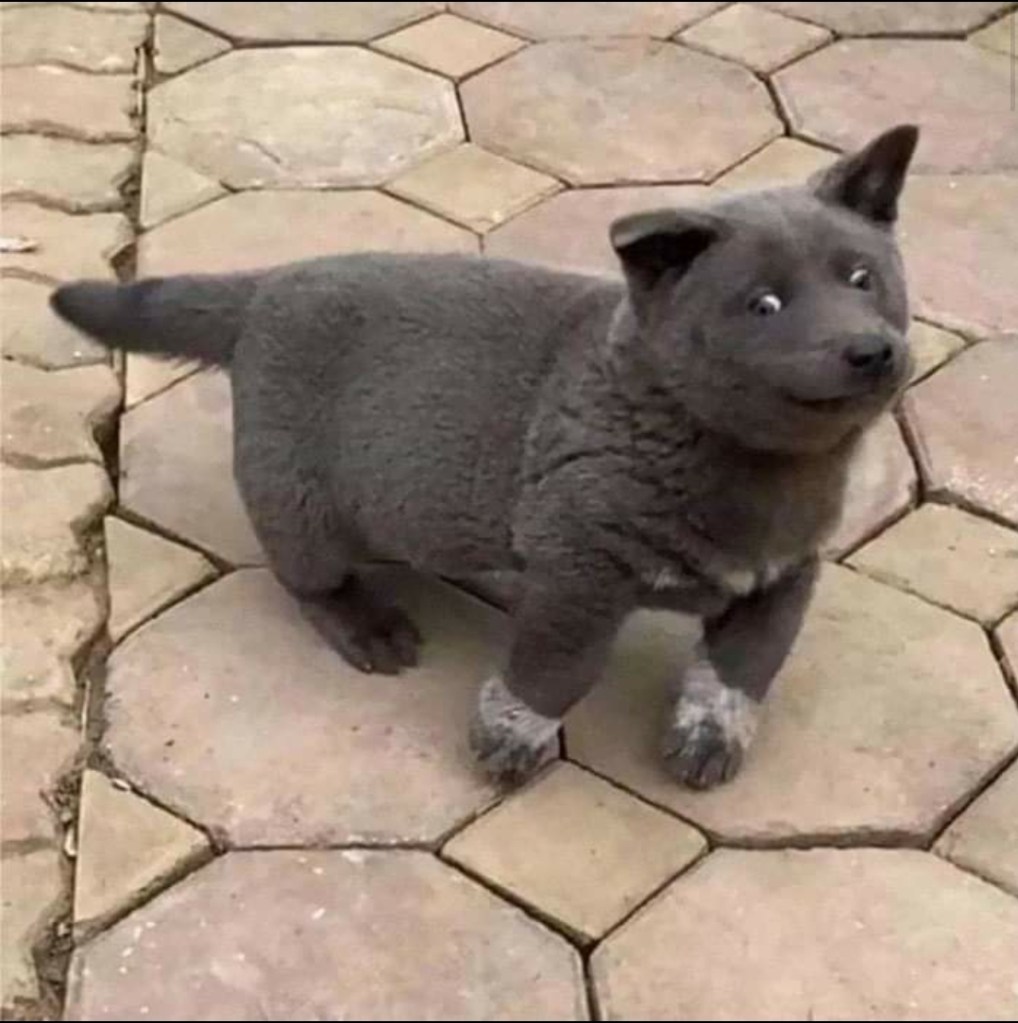
A puppy with cat-like features has taken the internet by storm. He’s a happy little dude.
The cat-dog of Vietnam. The derpiest fuzzball. Good boy.
Those are just some of the names lavished on Dúi, a young puppy whose half-canine, half-feline looks are turning heads across the globe.
Dúi hails from “a mountain province in Vietnam,” owners Hai Anh and Tuan told Metro UK. The Hanoi-based owners bought the now 2 1/2-month-old puppy and saw him rise to instant viral fame thanks to his unique looks.
Dúi is a mixed-breed dog, half Dingo Indochina (as opposed to the Australian variety) and half Bac Ha, a breed indigenous to the area.
‘He is a happy and sweet pup, he loves to play with other dogs, even big dogs and so sweet with humans,” Tuan told the newspaper.
Looking at these photos, happy seems like an understatement!





 Pain In The Bud