South Carolina Cat Dies After Surgery To Remove 38 Hair Ties From Her Stomach

Veterinarians tried their best to save Juliet, but noted “even with the best care, not every animal makes it.”

Juliet the cat and her two feline siblings were unceremoniously dumped outside their former home when their humans moved out of state a few weeks ago.

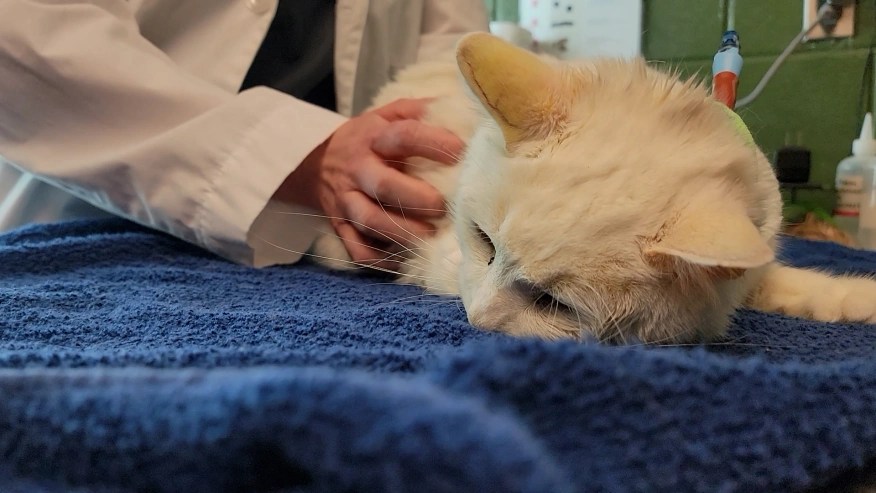
A Good Samaritan realized the trio had no one taking care of them and nowhere to go, and brought the cats to the Charleston Animal Society in South Carolina. After some time, Juliet stopped eating. A scan revealed why: The cream-and-white cat had an amorphous mass inside her stomach, a “seemingly endless bundle of strings” in the words of one veterinarian, which blocked Juliet’s stomach and prevented her from being able to eat or process food.

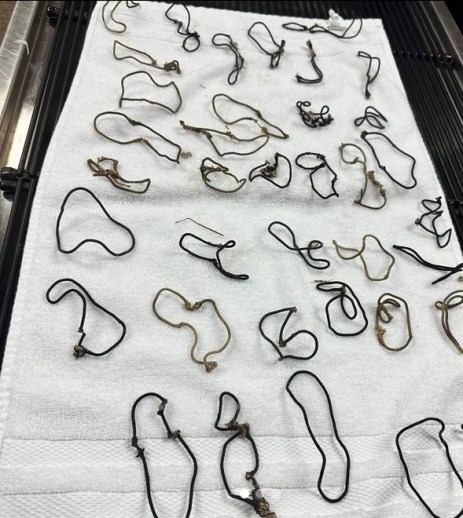
A vet performed emergency surgery on Juliet earlier this week and removed 38 hair ties.

“I’ve never seen anything like it,” said Leigh Jamison, the shelter’s associate director of veterinary care.
julietcathairties
Hair ties removed from the stomach of Juliet the cat.

Vet techs monitored Juliet closely and fed her carefully, making sure she got the nutrients she desperately needed without overwhelming her shocked system, which had suffered a buildup of fat in her liver.

They thought Juliet would pull through, but the ailing kitty took a turn for the worse on Friday and died a few hours later, the shelter announced.

“Our expert veterinarians and lifesaving team perform what we think are miracles every single day. Unfortunately, even with the best care, not every animal makes it,” staff wrote in an Instagram post. “Even though Juliet was loved and was not suffering during her last days, she did succumb to this tragic accident. We are all heartbroken.”

Pica, an eating disorder that affects humans, also occurs with cats. Defined as the consumption of items which are not food, pica can manifest in cats as a predilection for things like paper, plastic bags, rubber bands, small pieces of plastic and, as was the case with Juliette, items like hair ties that are made of fabric, wool or synthetic materials.

While there are medical reasons pica can present in felines, it’s also sometimes brought on by environmental stress, and it wouldn’t be a stretch to imagine the kind of people who would abandon their pet cats may not have been good caretakers. No one except her former caretakers know what Juliet’s been through, and they’re unlikely to come forward.

Likewise, adoption isn’t a part time, halfway or temporary thing. Adopting a cat means committing to taking care of the animal for his or her entire life. Despite the stubbornly persistent idea that cats are aloof, solitary animals who are indifferent to companionship, research studies show felines are just as sociable as dogs and form strong emotional attachments with their humans. They care deeply, but they express affection in different and less overt ways. That doesn’t mean they suffer less when they lose their homes and the people they’ve grown to love.
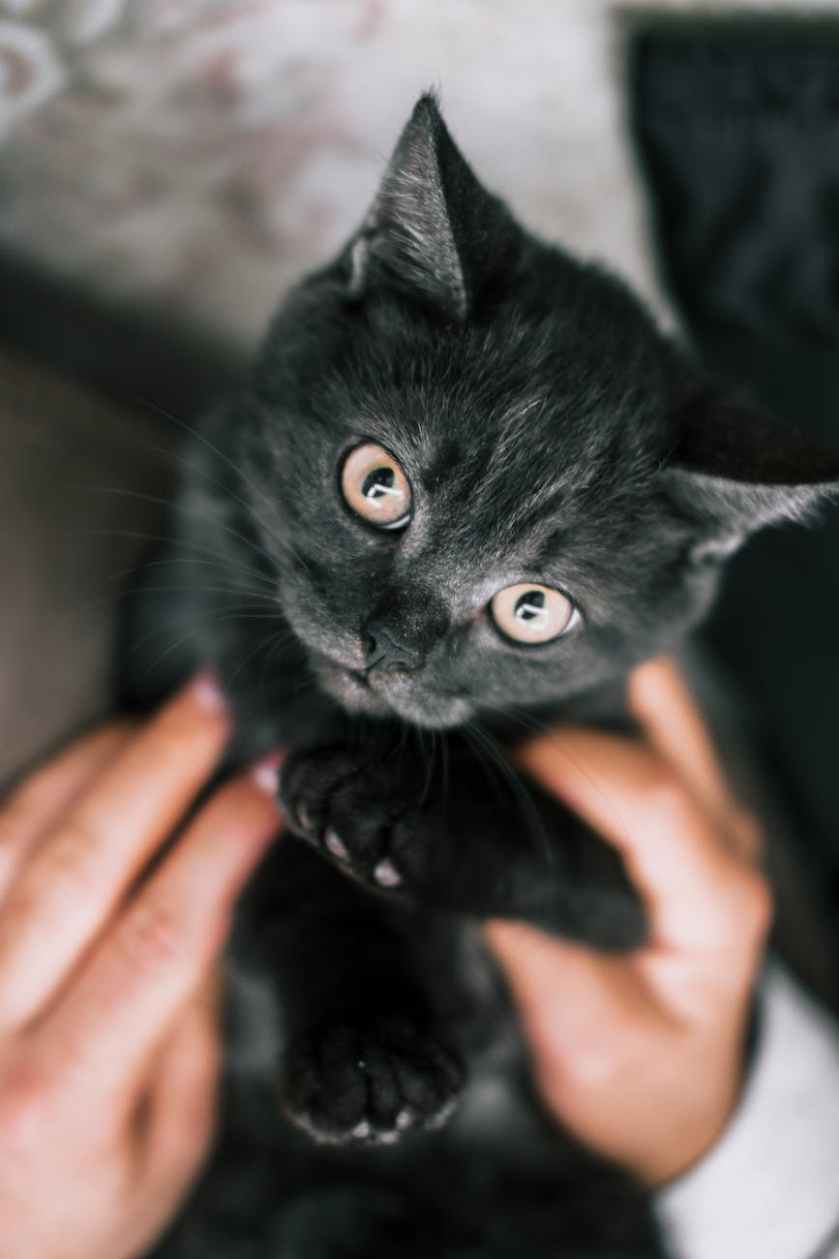
cute black kitten
Credit: beytlik/Pexels


Found Frozen To The Ground In Record Storm, Michigan Cat Is Recovering At Clinic

After a close brush with death during the severe winter storm over the holidays, a former stray cat is recovering and will get a forever home.

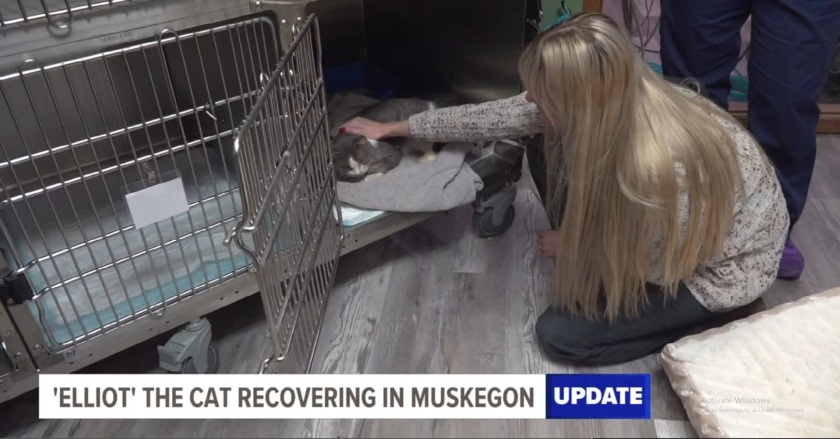
Elliot the cat was near death when Kelli Vanderlaan found him literally frozen to the concrete in the early morning hours of Dec. 26, during one of the coldest, most severe storms to sweep the US in decades.

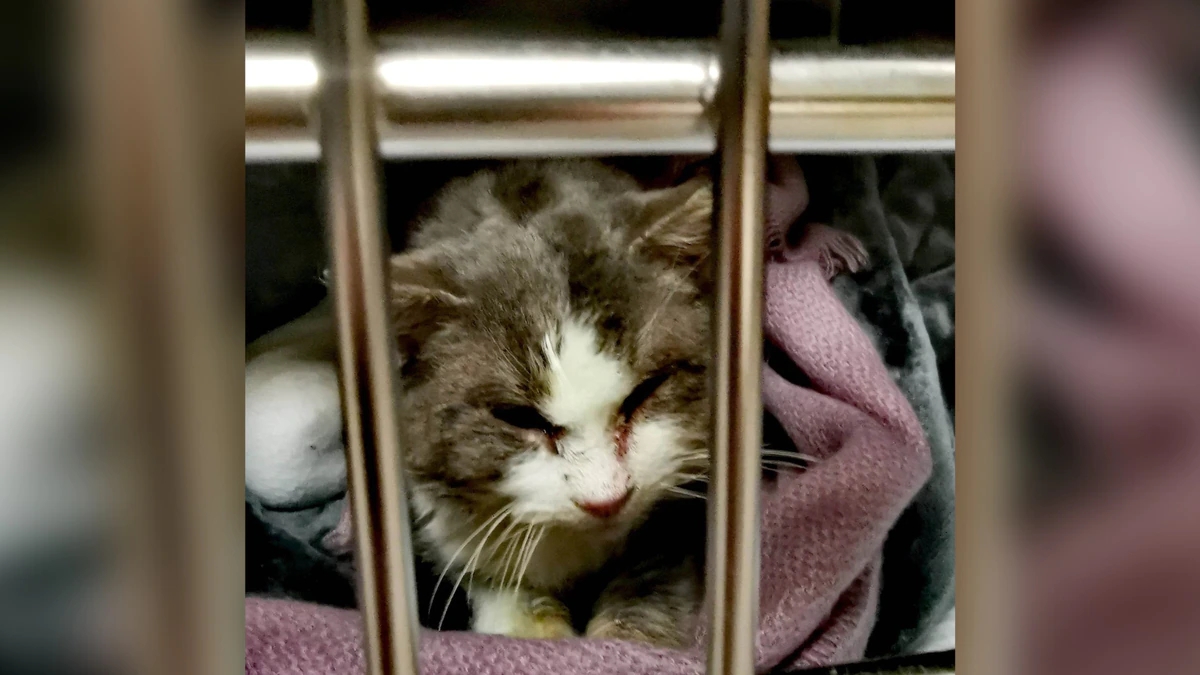
Initially unsure whether the white and gray stray was still alive, as his eyes were frozen shut, Vanderlaan wriggled him free and took him to the Big Lake Community Animal Clinic in Muskegon, Michigan. Although barely able to move and unable to vocalize, Elliot seemed to be grateful for the car’s heat.

“You could tell that he was obviously frozen, so he needed warmth and touch and everything, I think he was pretty happy when I got him into the truck,” Vanderlaan told the local ABC affiliate, WZZM.

Elliot the Cat
Staff at Big Lake Community Animal Clinic have been nursing Elliot the Cat back to health. Credit: WZZM

Once Vanderlaan and the stray arrived at Big Lake, staff there immediately began gently raising the little guy’s temperature, wrapping him in warm blankets and giving him fluids.

“We weren’t sure what he’s been through,” said Alexis Robertson, executive director of the local Humane Society. “He’s definitely been out there for a while trying to take care of himself, just trying to survive, but it was at a critical point where he was ready to pass.”

After giving Elliot a veterinary exam, cleaning his eyes and making sure he was snug, the staff at Big Lake Community Animal Clinic monitored him closely overnight. His organs had been dangerously close to shutting down when he was brought in, and he still wasn’t out of the woods yet.

Elliot, who was named after the storm that swept the region over the holidays, has continued to improve in the days since. He’s since been able to stand on his own and has regained his appetite, the clinic’s staff wrote on Facebook.

“We are so happy to say he is doing much better and was monitored during the night,” staffers wrote. “He reaches out his paw to the vet tech that has been caring for him overnight, showing her just how happy he is that he is being helped. He still has a long way to go, but we won’t give up.”

Elliot, who was described as an “older” cat who’s been fending for himself, will come out of the ordeal with his life much improved. After surviving the storm — which plunged temperatures well into the single digits, set record lows across much of the midwest and claimed the lives of at least 56 people across the country — Elliot will be put up for adoption, and the clinic has already received inquiries from people who want to open their home to the little survivor. If his will to live and his gratitude toward his rescuers are any indication, the little guy has a lot of love to give.

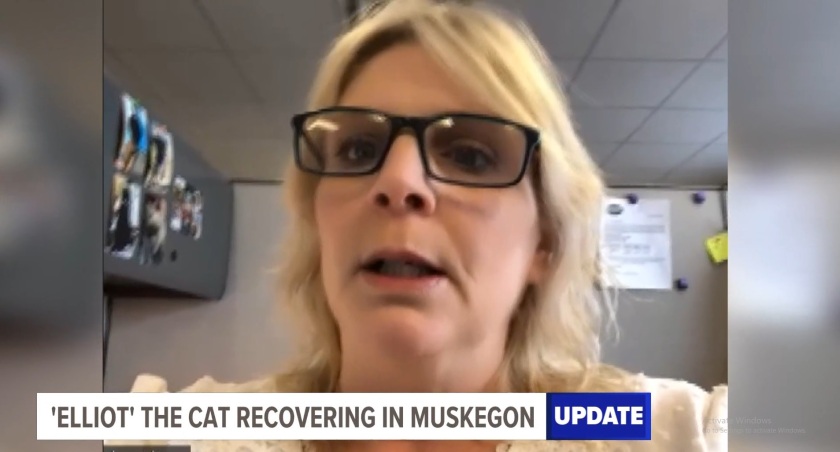
“It’s the most heartfelt feeling in the world to see this cat come from basically nothing and being vocal and happy to be touched and fed, it’s just an amazing thing to watch,” Leah Wetmore, the clinic’s manager, told WZZM.

elliotcat_save
Kelli Vanderlaan was the Good Samaritan who saved Elliot’s live. Credit: WZZM

How Cats See The World

Cats see the world differently, in objective physical terms as well as psychologically.

Have you ever wondered what the world looks like to your cat?

Veterinarians, animal ophthalmologists and researchers from the University of Pennsylvania’s ophthalmology group provided insight for this article and the accompanying images, which show how scenes look to us humans and to our feline friends.

The images are striking and show the relative strengths and weaknesses of feline vision. While cats see the world in muted colors and in less acuity than typical humans, they make up for it with their astounding night vision and their ability to instantly detect motion within their visual fields.

This image shows feline night vision at work thanks to the tapetum lucidum, a layer of tissue that acts as a retroreflector, increasing the amount of light that makes it to the photoreceptors in cats’ eyes. The tapetum lucidum is best known as the reflective “lens” that makes cat eyes appear to glow in the dark:

catsview2

This image shows the trade-off compared to human vision. Cat eyes have a wider field of view, seen below, but they don’t pick up reds or greens, and their overall vision is blurry compared to average human eyesight, represented in the top image:

catsview

Night vision and extreme visual sensitivity to movement are important to cats as crepuscular hunters, allowing them to spot prey in low light conditions and to negate advantages from natural camouflage, as motion gives away the presence of prey animals.

Cats have a slightly wider visual field than people do, at approximately 200 degrees compared to the human 180 degrees, while most cats have between 20/100 and 20/200 vision. (That’s much better than Big Buddy sans glasses, whose 20/600 vision enables him to see blurry, colorful shapes and not much else. No wonder Little Buddy likes to torture his human by swiping his glasses.)

Of course, these images do not entirely account for how cats see the world, which is why I’ve created my own image. Behold a Buddy’s Eye View, showing how the world — and humans — look to him:

Downton Buddy
From Buddy the Cat’s perspective, humans are all servants, constantly standing by to attend to him.

The Vet Thought This Stray Had No Chance, Now He’s Stealing Hearts At The Shelter

Gulliver was hit by a car and left for dead, but he never stopped clinging to life.

Gulliver was in a seriously bad way when a Good Samaritan found him on Oct. 27, on the outskirts of a “well cared-for cat colony” in New Jersey.

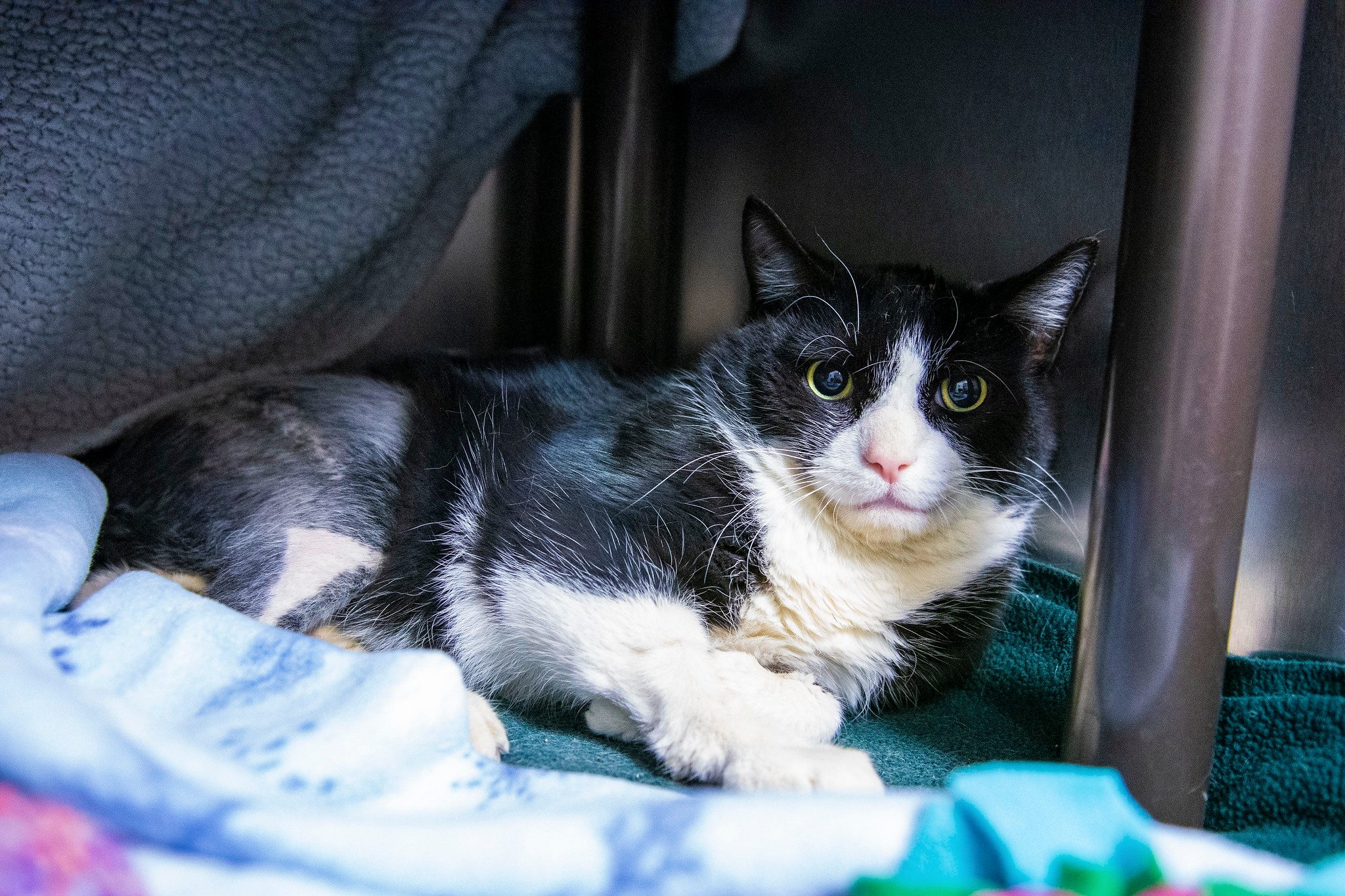
The little tuxedo cat had been hit by a car and left to die with a fractured pelvis, femur and tail. A veterinarian who examined him didn’t give him much of a chance to live, but his rescuer was familiar with Tabby’s Place in Ringoes, NJ, and knew if anyone would go to extraordinary lengths to save the little guy’s life, the staff there would.

Tabby’s Place took Gulliver in and their emergency veterinarians got to work on repairing his shattered body. It was touch and go, but Gulliver had a glorious will to live that saw him through the surgery and emerge on the other side with a ravenous appetite.

When the staff at Tabby’s Place saw him tuck into a bowl and begin “eating like a champ,” they knew Gulliver was probably going to make it.

Famished from his ordeal and in desperate need of nutrients to help his body heal,  he displayed “the best appetite I have ever seen in twenty years of feline medicine” said “Dr. Fantastic,” the collective name Tabby’s Place staff use for the skilled veterinary surgeons who put the most catastrophically injured felines back together again.

And then there was a second surprise — despite all he’d been through, despite the unimaginable pain of getting flattened by 3,000 pounds of aluminum, steel, glass and rubber and left to suffer in a broken heap, and despite pain signals hammering their way through the fog of painkillers, Gulliver turned out to be an “extremely affectionate” kitty.

“He is so affectionate and snuggly,” said Bree, a sanctuary associate at Tabby’s Place who has been caring for the little survivor. “He leans his whole body into you and makes muffins. He has personally reminded me that there is good in this world, and it is worth fighting for.”

Three weeks after his surgery, Gulliver summoned the strength to stand on his own for the first time since he was hit. He took his first few uncertain steps, Bree said, to get close enough to her so she could pet him while she cleaned his crate. His tail was so badly damaged that it had to be amputated and he’s going to require care — including manually expressing his bladder — for the near future, but the staff at Tabby’s Place will find a forever home for him.

Despite the trauma he endured, Gulliver “should enjoy a long, healthy life like any other cat,” said Angela Hartley, the sanctuary’s development directory. “It would take a special adopter to learn how to express his bladder, but as we learn continually, there are many, many special adopters out there.”

It’s not clear yet whether Gulliver will regain the ability to use the litter box on his own, but Bree said she’s “hopeful that this will not be permanent.”

Because a sickly cat from Gulliver’s colony had found his way to Tabby’s Place earlier, the colony managers knew of the shelter and Gulliver found himself “in the care of a person who knew his life was worth saving,” Bree said.

“She was so right. Gulliver’s life was saved because there are good people in the world. I feel like his loving and gentle personality is a reflection of that.”

All images courtesy of Tabby’s Place. To fill out an online application or browse the adoptable cats of Tabby’s Place, click here.

Gulliver
Now that he’s a month removed from his brush with death, Gulliver’s much healthier and even has a regal look about him. Credit: Tabby’s Place

Is Your Cat In Pain? The Feline Grimace Scale Can Tell You

For the first time, veterinarians and regular cat parents have a tool that can tell them if their cats are hurting.

Although there’s been lots of talk claiming cats don’t have facial expressions humans can parse — or even the muscles to noticeably change expressions — that’s not actually true.

It’s more accurate to say feline facial expressions are far more subtle than their human or even canine equivalents, and it takes an expert — a veterinarian or behaviorist with specialized training — to accurately read them.

This is a brand new frontier for veterinary science, and it’s all thanks to the feline grimace scale, a system developed by researchers at the University of Montreal in 2019. Using video clips of cats in various moods and stages of pain or pain-free expression, the researchers built a system that could reliably determine how a cat is feeling. (You can read more about how they did that here.)

“I call it the Rosetta Stone for interpreting how a cat is feeling,” veterinarian Liz Bales says in a new video at dvm360. “It turns out that very subtle changes in cat’s facial expressions can tell us whether or not they’re in pain. It includes the position of the ears, the opening of the eyes, the expression on the mouth, how the cat is holding its whiskers, and how they’re holding their head.”

Each of the five elements of feline facial expression are scored on a three-point scale, then added up. The result provides an accurate assessment of how a cat feels.

“It’s amazing, and it allows us to interpret feline pain in a way we never could before,” Bales says. “The hard part is, it can be a little bit tricky to learn. It is learnable, but I specialize in this and I’m still struggling to get it right every single time.”

Despite the challenge, she says, it’s well worth learning.

“The applications of this are so far and wide, and I think as the technology grows and it becomes easier and easier to use the grimace scale, the more exciting it’s going to be.”

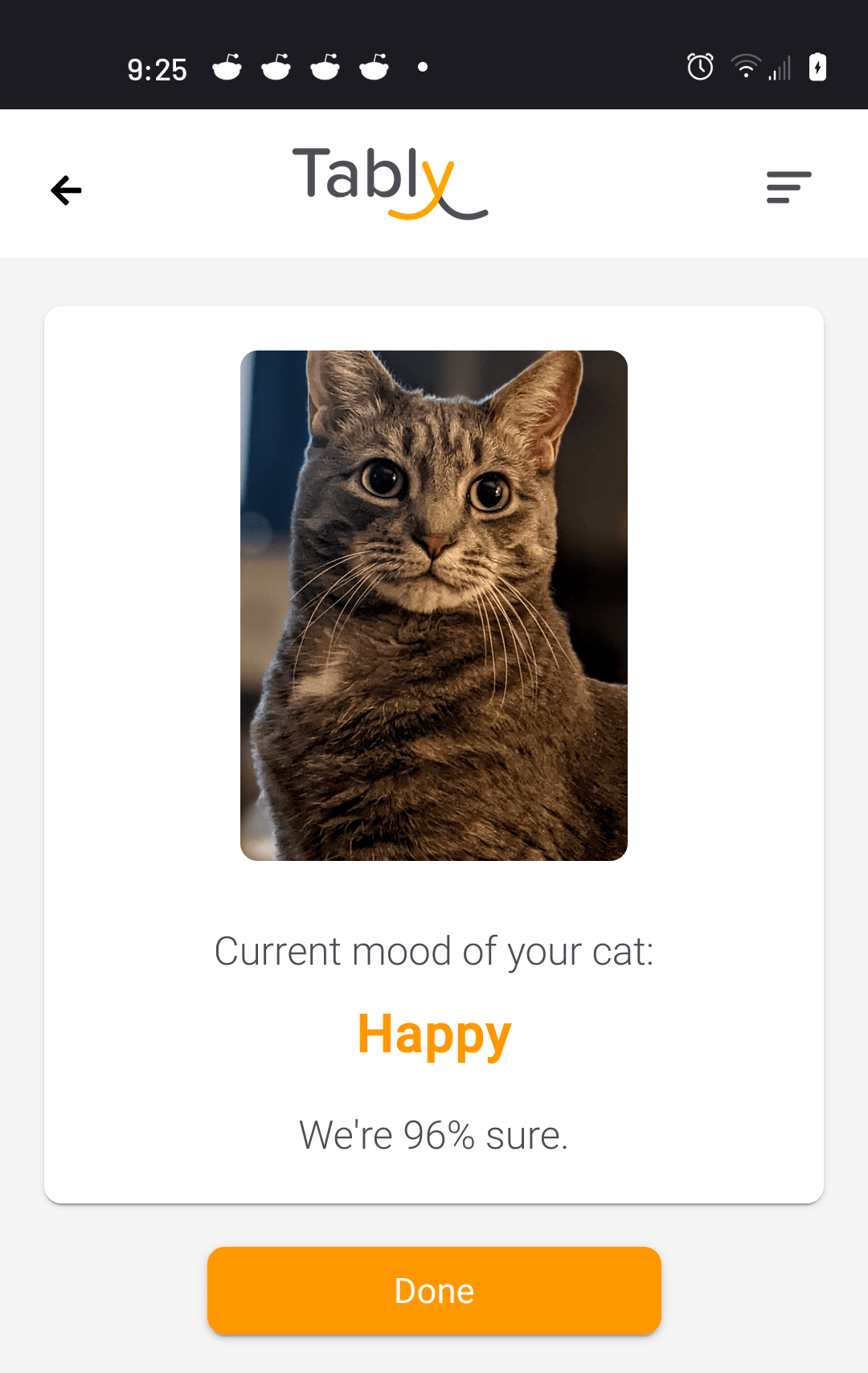
Thanks to an app named Tably, cat servants don’t have to know how to read the most subtle feline facial expressions anymore. By running a photo of your cat through the app’s algorithm, Tably can read your cat’s expression for you.

Tably Bud
Tably gauges cats’ moods in addition to their pain levels. We used the web app to evaluate Buddy last year. Thankfully he was happy!

Bales says she envisions a near future in which pet parents monitor their cats’ health and mood daily, and the scale becomes the standard for end-of-life care. With a “validated, consistent way to measure pain, we can look into more pain drugs for cats, what’s working, what isn’t.”

“A cat in pain looks like a resting cat to most people, but now we have this tool,” Bales says. “And I think as the tool evolves and we give cats a way to really speak for themselves through this Rosetta Stone of the grimace scale, then the more we understand that we can do for them, the more we’re going to do for them.”

We wrote about the feline grimace scale and Tably last year, and noted it had a lot of promise for veterinarians and us cat servants. At the time Tably was in beta and had a web app that allowed anyone to use the technology.

Unfortunately the web app seems to have disappeared, and the app is now available only to iOS users. Since we switched from an iPhone to Android, we can’t access Tably for the time being. (Let’s hope an Android version is forthcoming.) But if you have an Apple device, the app is definitely worth checking out.

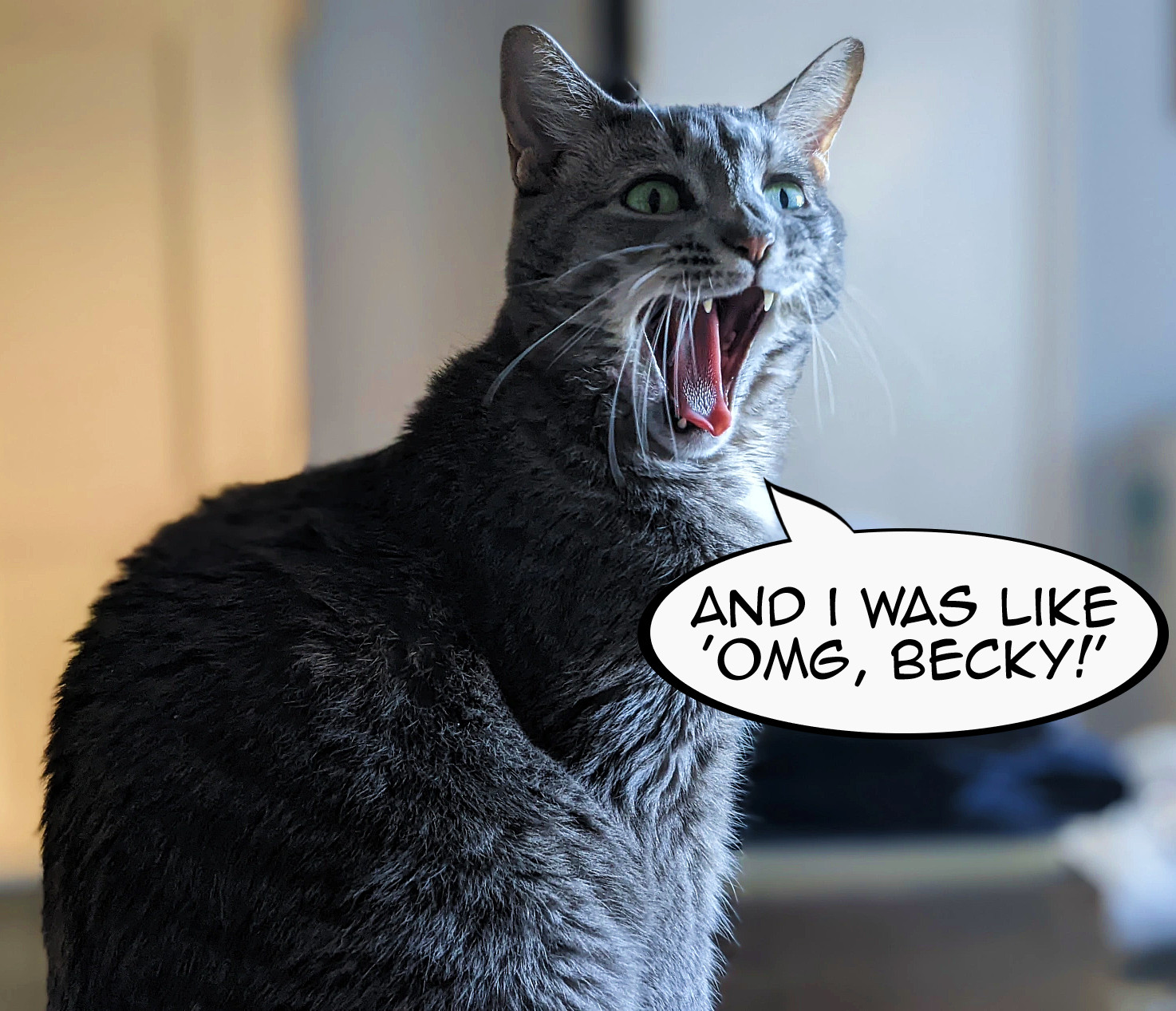
Bud and Becky
“You go, girlfriend!”