Three states have banned declawing so far in 2025.
Six down, forty four to go.
California became the sixth and latest state to ban cat declawing this week when Gov. Gavin Newsom signed Assembly Bill 867, which makes it illegal to remove a feline’s claws unless it’s medically necessary for the health and survival of the cat.
Declawing may sound like a sort of kitty manicure, but the neutral name disguises a cruel form of elective mutilation that involves amputating a cat’s toes at the first knuckle.
It’s the equivalent of chopping off a third of each finger, all to prevent potential damage to inanimate objects like furniture. The procedure has been condemned by every major animal welfare group including the Humane Society and the SPCA.
Credit: Tamba Budiarsana/Pexels
Declawing inflicts a lifetime of pain on cats, changes feline gait and posture, leads to early arthritis and causes a long list of secondary problems. For example, declawed cats are much more likely to bite because they have no other form of defense when they feel threatened, and they’re also much more likely to stop using litter boxes because it hurts to walk on the sand-like and granule texture of the litter with half-amputated toes.
Lawmakers haven’t worked out the details on how the new law will be enforced or what the penalties will be if veterinarians illegally perform the procedure. Other states have implemented a system of increasingly harsh fines and the suspension of veterinary licenses for repeat offenders.
New York became the first state to ban declawing in 2019. Maryland and Virginia followed in 2022 and 2023, respectively, and in 2025 Massachusetts, Rhode Island and now California have all passed similar laws.
Bodega cats are the stars of a popular online series and could soon become legal in New York, where they’ve helped keep delis and small groceries rodent-free for as long as such places have existed.
Although it’s way too early to celebrate, Pennsylvania could become the fourth state to outlaw cruel declawing procedures after two lawmakers there introduced a new bill.
The Pennsylvania declawing ban proposal closely mirrors laws already passed in New York, Maryland and Massachusetts, and would outlaw the procedure except in cases where it’s medically necessary. (Although extremely rare, sometimes cats suffer from cancer of the nail bed and other maladies that necessitate surgery, but that’s a far cry from the elective declawing currently legal in 47 states.)
The state’s Veterinary Medical Association, the usual villain in these situations, is opposed to the ban. State veterinary medical associations argue that outlawing the procedure — which amputates a cat’s toes up to the first knuckle — would limit options for veterinarians and caretakers.
The veterinary medical associations, which contrary to their names do not represent all or even most veterinarians, also claim that declaw bans lead to more surrenders, but that claim has been repeatedly debunked by statistics from states and municipalities where bans have passed. In each of those cases, surrenders actually decreased, which is not a surprise to those who understand declawing, rather than “solving” any behavioral issues, actually causes cats to lash out even more because of the suffering they endure from the mutilation.
Here in New York, the Veterinary Medical Association successfully prevented declawing bans from making it out of committee for years, despite organizations like the Humane Society, SPCA, Alley Cat Allies and others wholeheartedly opposing elective declawing. Each state VMA buys influence with campaign donations, and relies on the lawmakers they support to kill declawing bans. Let’s hope Pennsylvania’s Veterinary Medical Association proves less adept at derailing that state’s bill.
The Last Cat of the Skies: The Iconic F-14 Tomcat
When I was a kid, the two Dream Machines that adorned posters on my wall were the Lamborghini Countach and the F-14 Tomcat. The Countach remains a car without equal with its inimitable, angular design that still manages to look futuristic more than half a century since the first models rolled out of the factory.
The twin-engine Tomcat is kind of like the Countach of fighter jets with its variable wing geometry, prominently angular air intakes and unique silhouette that makes it easy to distinguish even from the ground.
A Tomcat from the Nimitz-class aircraft carrier USS Theodore Roosevelt (CVN 71) during a combat flight over the Persian Gulf in 2005. Credit: U.S. Air Force photo by Tech. Sgt. Rob Tabor
Grumman’s air superiority fighter was immortalized in pop culture when Tom Cruise’s ace fighter pilot, Maverick, flew the aircraft in 1986’s Top Gun, and the Tomcat enjoyed a nostalgic encore in 2022’s excellent Top Gun: Maverick, displaying its staying power in a film that also heavily featured newer aircraft like the F-18 Super Hornet and the sixth generation prototype “Darkstar,” based on Lockheed Martin’s secretive SR-72.
The F-14 is the last of Grumman’s “cat” aircraft, after the Wildcat and Hellcat, and while it no longer fills a role in the US military, it remains a potent weapon for other countries half a century since its first flight. You can read all about the Tomcat in The Aviationist’s new feature here.
The Tomcat’s variable wings were a technological marvel when the aircraft was first released. The wings are swept forward for takeoff and landing, and typically swept backward during high speed, high altitude flight, allowing the fighter to maneuver in ways other aircraft could not. The wings can also shift to an asymmetrical configuration, allowing for unique capabilities in flight.
New York’s deli cats get their say
Bodega cats, longtime fixtures of New York’s answer to grocery stores, are enjoying a moment thanks to a major push to finally legalize their presence, and popular social media accounts featuring photographs of the beloved mousers keeping watch over their stores and snoozing in snack aisles.
A bodega cat in New York takes a siesta from his usual napping, eating and rodent-hunting duties. Credit: Wikimedia Commons
Now the New York Times has a feature on the popular TikTok series Shop Cats, which features “interviews” with the neighborhood felines.
Like Buddy, they seem to have an odd fascination with Mao Zedong, and their answers don’t make much sense, but that’s part of their charm. Check it out here.
The surprise announcement came from Colossal Biosciences, a company best known for its project to bring back the woolly mammoth.
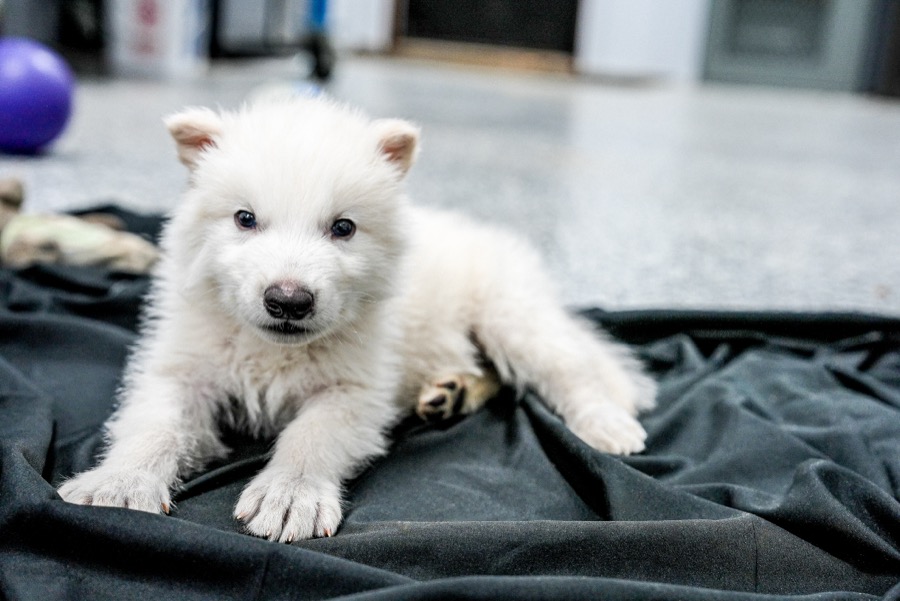
A US biotech company shocked the world Monday when it announced the births of three dire wolf puppies, bringing back a species that hasn’t lived for more than ten millennia.
Or a version of that species, at least.
Scientists with Colossal Biosciences extracted DNA “from a 13,000 year old tooth and a 72,000 year old skull and made healthy dire wolf puppies,” Colossal CEO Ben Lamm said in a statement.
Of course, it wasn’t that simple.
The dire wolf, Aenocyon dirus, was heavier, stockier and had thicker fur than modern-day gray wolves. In addition, its bite was incredibly strong, generating more force than any living species of canid.
To create the dire wolf puppies, Colossal used the genomes reconstructed from the tooth and skull, spliced them with gray wolf DNA, and made 20 gene edits in 14 genes. Healthy embryos were implanted in three surrogates — large, mixed-breed dogs — and were successfully delivered.
Romulus, one of two male dire wolf pups born late in 2024. Credit: Colossal Biosciences
Remus, who was born at the same time as Romulus. Credit: Colossal Biosciences
Whether the new puppies are officially dire wolves is up for debate and beyond the scope of this post, but just like humans and chimpanzees share 98.7 percent of their DNA, dire wolves and gray wolves share 99.5 percent of their DNA.
The species also existed concurrently with gray wolves and there was interbreeding between the populations, meaning gray wolves already have dire wolf lineage.
As a result, the puppies may be more dire wolf than some are willing to admit. Just how far a “de-extinction” project has to go for the animals to qualify as their namesakes will be debated for years, and there are innumerable questions for which we won’t have answers until the pups grow and scientists monitor their behavior in addition to their physical health.
They won’t behave precisely the way their ancestors did, since they are growing up in a captive environment with teams of specialists constantly monitoring them. The wolves are “essentially living the Ritz Carlton lifestyle of a wolf. They can’t get a splinter without us knowing about it,” Colossal’s chief science officer, Beth Shapiro, told the New York Times.
Whether bringing back dire wolves is a “good” thing is also a topic for another day, at least as far as this post goes. You may disagree, and feel free to say so in the comments, but this is a subject you could write half a library of books on, encompassing ecological, moral and philosophical questions that don’t have easy answers.
It’s made even more complex by the situation we find ourselves in, with our own behavior and relentless expansion killing off more than 70 percent of the world’s wildlife since 1970, according to the World Wildlife Fund. The company wants to use its technology to help critically endangered species, like the red fox, avoid extinction.
Colossal has partnered with leaders in the fields of genetics and bioethics, as well as organizations that specialize in animal welfare. The puppies are in a sizable, custom-built facility in an undisclosed location, secured by “zoo grade” barriers, and the company enlisted the help of the SPCA to create an environment appropriate for them. Colossal says their care regimen will include socialization and the development of pack dynamics.
A newborn dire wolf pup. Credit: Colossal Biosciences
The company has well-publicized projects to bring back woolly mammoths and the dodo, and ultimately, its founders say they want to restore balance in places where apex predators have been brought to extinction by human activity.
“This project demonstrates the awesome potential for advances in genetic engineering and reproductive technologies to recreate lost diversity,” Andrew Pask, a Colossal board member and professor of biosciences at the University of Melbourne, said in a statement. “Apex predators are critical to stabilizing entire ecosystems and their loss from the landscape can have profound impacts on biodiversity.”
The pups are named Romulus, Remus and Khaleesi. That last name is in homage to the character Daenerys Targaryen (Emilia Clarke) from the book series A Song of Ice and Fire, and Game of Thrones, the television adaptation. Dire wolves play a major part in the narrative, and the series is credited with bringing the long-extinct animals back into the popular imagination.
Jon Snow (Kit Harrington) discovers an orphaned dire wolf pup in the first season of Game of Thrones. The pup, who grows into a fierce and massive adult wolf named Ghost, plays a pivotal role in many major events in the series. Credit: HBO
Khaleesi, a female dire wolf, named after the character Daenerys Targaryen from Game of Thrones. Credit: Colossal Biosciences
As veterinarians treat the surviving animals for ailments like smoke inhalation and burned paws, donors from all over the world have contributed $750,000 to help the newly homeless moggies and ensure Happy Cat continues in some form.
Investigators are still looking for the exact cause of Monday’s fire, which claimed the life of a New York cat sanctuary founder and about 100 of its feline residents, but they now say the blaze doesn’t look suspicious.
The fire started inside the main structure at Happy Cat sanctuary, Brookhaven Fire Marshal Chris Mehrmann told local media, and investigators “cannot rule out a fire caused by propane-fed portable heaters that were in the area of fire origin.”
Happy Cat founder Christopher Arsenault, 65, was found on the second floor of the building surrounded by animals he was trying to rescue. Neighbors told investigators that they saw Arsenault emerge from the home with several cats, then dash back inside in an attempt to rescue more of the felines he cared for.
When Arsenault converted the home into a sanctuary, he cut holes in the walls and floors to create passages for the cats. Unfortunately, Mehrmann said, the fire spread more quickly because of those modifications.
In the meantime, people from the local community, the SPCA and privately run animal welfare organizations have teamed up to care for the 200 or so surviving felines. Donations have also come pouring in from all over the world, totaling more than $750,000 as of Friday morning.
More than $670,000 of the funds have come from 13,000-plus cat lovers from dozens of countries who contributed to a GoFundMe drive started by Lisa Jaeger of Jaeger’s Run Animal Rescue in nearby Port Jefferson, NY.
A memorial image created by Loving Paws, a small rescue in Suffolk County, Long Island.
The surviving cats have a range of injuries, from minor sprains to life-threatening lung damage from smoke inhalation. Volunteers have spent the past several days trying to collect the traumatized animals from the vicinity of the destroyed sanctuary.
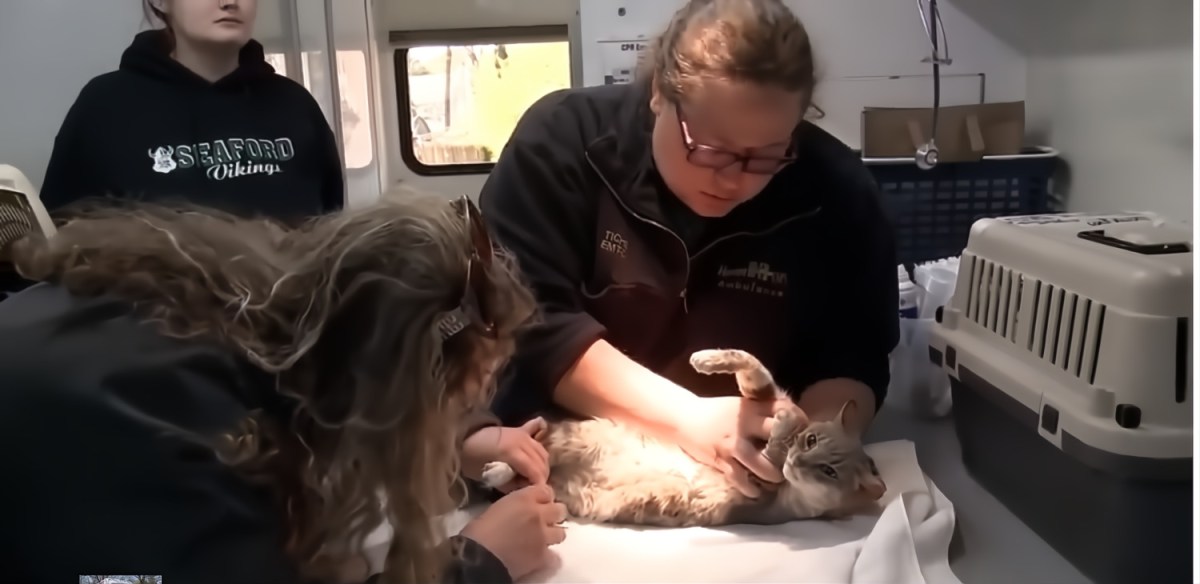
“I knew Chris well. I knew when he started. He died doing what he loved… rescuing animals,” said Robert Misseri, co-founder of Paws of War, which brought a mobile veterinary clinic to the site of the former sanctuary this week. “The very least we can do is continue his legacy and make sure that every single one [of the] cats get the proper love and care that they need to move forward.”
Veterinarians said they’ve treated lots of cats with burnt paws. Although the animals are skittish from the harrowing experience, rescues and shelters in the area are helping them find forever homes, veterinarian Jason Michael Heller told ABC News.
“We’re going to ask for our colleagues in the area here, hopefully, to take a few cats and try to get them healthy enough to be able to eat and be adopted,” Heller said.
People in the Long Island rescue community are also working on a public memorial for Arsenault, a man who dedicated his entire life to the animals in his care.
“There’s not going to be another Chris, ever, who does this,” said John Spat of Animal Protection Service, “and all we can do is try to recover what he was trying to do and try to move forward and help his organization work forward.”
“If you feed your pet contaminated raw meat or milk, they will likely die. I’m not exaggerating, just giving it to you straight,” one infectious disease specialist warned.
In more disconcerting news from the bird flu front, a new study warns of exceptionally high mortality rates for cats who are infected with the virus.
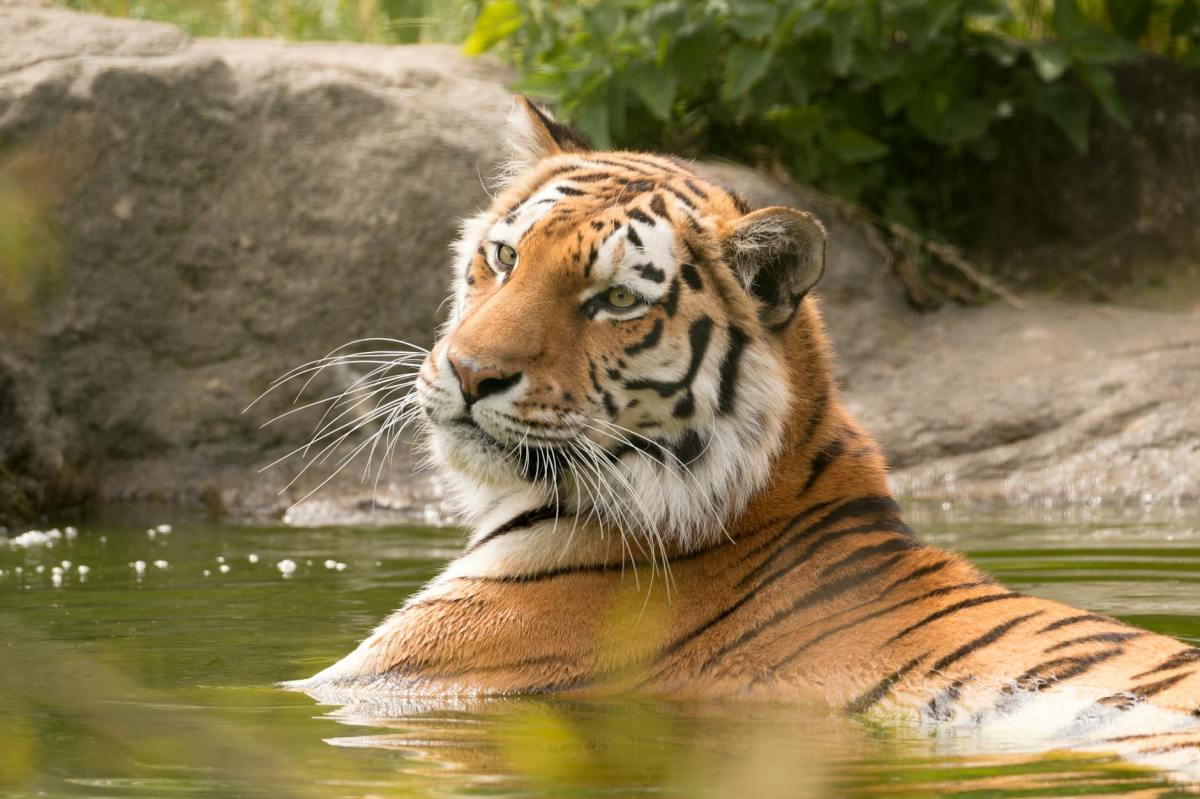
That applies to all species of cats, from the true big cats in the panthera genus — tigers, lions, jaguars and leopards — to felines, a broad group that includes domestic cats, lynx, cheetahs, pumas, ocelots, servals, jaguarundis and others.
“We don’t know if the cats are more susceptible than anybody else,” the American Veterinary Medical Association’s Michael Bailey told USA Today. “It’s just the fact they’re exposed to higher viral burdens because of where they go.”
Whether cats are more susceptible is up for debate, but one SPCA chapter said felids of all species are “uniquely vulnerable” to avian influenza because there are so many ways it can be transmitted to them by doing nothing more than what they typically do.
The @SeattleTimes reported on the first 2 cases of Avian bird flu that’s killed 2 wild #cougars in Washington, as discovered by Panthera #Puma Program and Washington Department of Fish & Wildlife. Learn more from Puma Program Director Dr. Mark Elbroch: https://t.co/feOcHnPpWTpic.twitter.com/v2nrM1jDOC
Cats can be infected by catching and eating birds and mice, drinking raw milk, eating raw meat (including commercial raw pet food), and exposure to infected animals, including cows.
In Washington state, two wild pumas died after contracting the virus from prey, a development Panthera puma director Mark Elbroch called “troubling.”
“It certainly raises eyebrows and makes one wonder: is it indicative of a bigger pattern out of sight?” Elbroch asked, noting pumas are at the top of the food chain in the Pacific northwest.
To date, as many as 900 cattle herds across the US have tested positive for bird flu, according to the US Department of Agriculture, while two thirds of California’s dairy farms — 660 out of 984 — had confirmed cases as of Dec. 26.
Bird flu was the confirmed cause of death in a house cat from Washington who died after eating Northwest Naturals commercial raw food, which has since been recalled. Three house cats in Texas succumbed to the virus, which they possibly contracted from hunting mice. The bird flu was also responsible for the deaths of two domestic cats in California who drank raw milk, and 20 of 37 wild cats — including a tiger, several pumas, bobcats and a Geoffroy’s cat (pictured at left) — at the Wild Felid Advocacy Center, a sanctuary in Washington.
Contrary to popular belief, cats are typically lactose intolerant. Credit: DHG Photography/Pexels
Veterinarians are warning people to keep their cats indoors and to avoid raw meat diets, which have become more popular in recent years. Cats should not be given cow’s milk anyway, since most are lactose intolerant. As a general rule, kittens should consume milk from their mothers or kitten-specific formula, but should not be given milk from any other source.
“If you feed your pet contaminated raw meat or milk, they will likely die. I’m not exaggerating, just giving it to you straight,” tweeted Dr. Kristen Coleman, an assistant professor at the University of Maryland’s School of Public Health.
While the west coast accounts for the majority of confirmed bird flu infections, the virus continues to spread. A map from the Centers for Disease Control shows where infections have been verified as of late December:
Credit: Centers for Disease Control
Unfortunately, the bird flu outbreak comes on the heels of a heavily politicized pandemic and a major loss in trust in American institutions like the CDC after efforts to obscure the origins of SARS-CoV2, the virus that causes COVID-19.
It’s not clear if the fallout will make Americans less likely to heed warnings about bird flu and other potential viruses, but animal welfare groups and virologists say people can keep their cats safe with a handful of common-sense steps.







 Pain In The Bud