A Colorado Woman May Have Been Killed By A Puma, But We Should Wait For The Facts

There are lots of questions but very few answers so far related to the death of a woman on a hiking trail in northern Colorado. Authorities have not confirmed a puma attack.

A woman who was found dead on a hiking trail may have been killed by a mountain lion, state authorities say.

Several hikers were making their way along the Crosier Mountain Trail in northern Colorado at noon on Thursday when they came upon a woman laying on the ground and a puma about 100 yards away from her, according to police.

The hikers made noise and tossed rocks to scare the cat off, then one of them — a medical doctor — checked the woman and found no vital signs.

They notified authorities, who launched a massive search by air and ground, closing down the neighboring trails and bringing search dogs into the effort.

The search teams found and killed two mountain lions, who will be autopsied to determine if either had human remains in their stomachs. If they do not, rangers and police will keep looking, as they say Colorado law requires them to euthanize animals who have killed humans, local news reports said.
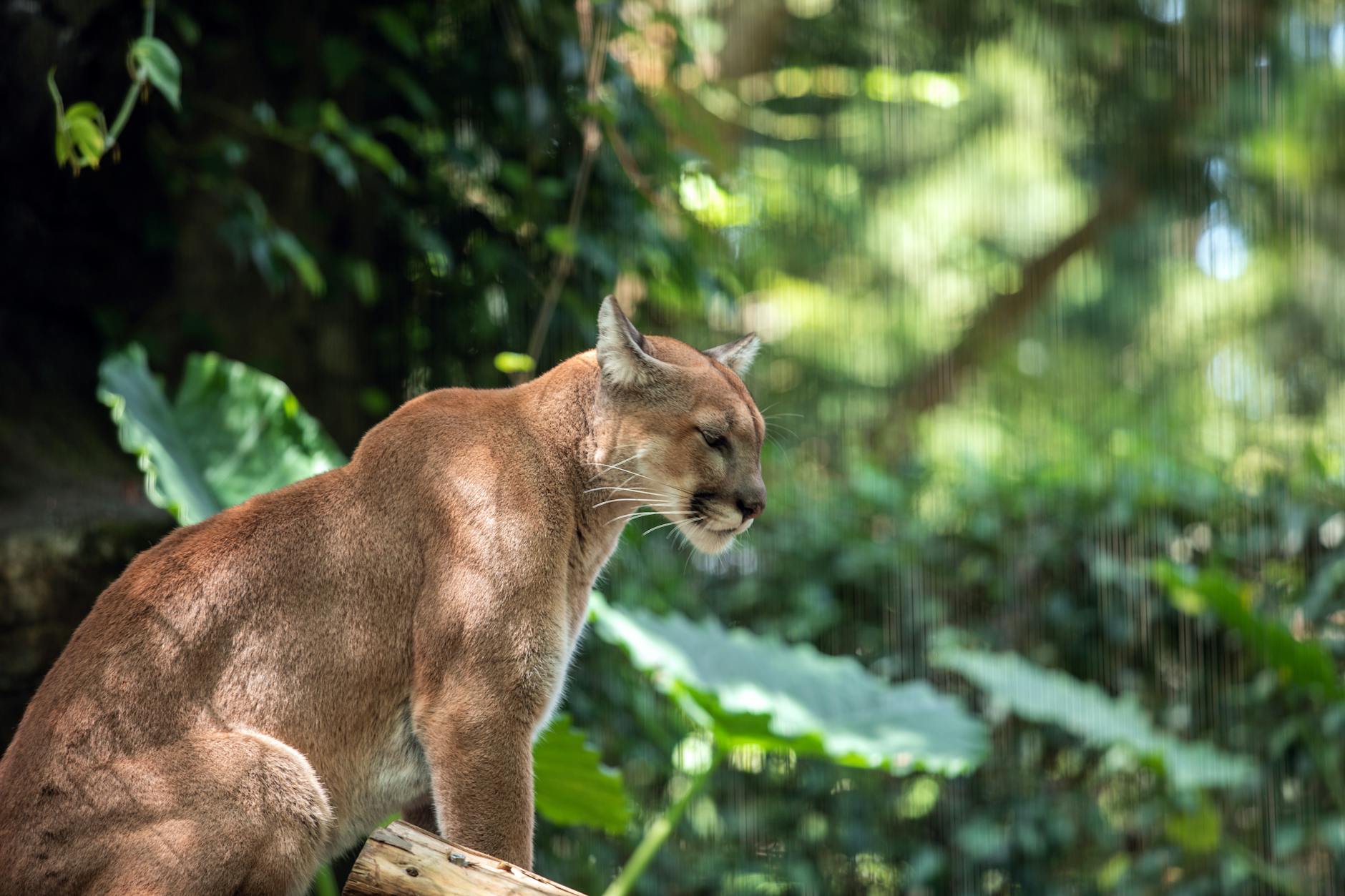
Pumas, also known as mountain lions, cougars, catamounts, screamers and many other names, are the widest-ranging cats on Earth, found throughout South America, the west of the US, and southern Canada. Credit: Charles Chen/Pexels

It’s important to note that there are no autopsy reports so far. Police don’t know how the woman died, if she was killed by the puma spotted near her, or if the animal approached after her death.

If an investigation does determine a puma was responsible, it’s crucial to place the incident in context. The last recorded fatal mountain lion attack in Colorado was in 1999, and was not confirmed. The victim, a three-year-old boy named Jaryd Atadero, wandered away from the hiking group he was with and was never seen again.

Search efforts in the following days and weeks didn’t turn up anything, but in 2003 another group of hikers found part of Atadero’s clothing. His partial remains were later found nearby.

Police said Atadero could have been killed by a mountain lion, but there’s no definitive evidence and his cause of death remains a mystery.

Aside from that incident, there have been 11 recorded, non-fatal injuries attributed to pumas in Colorado in the past 45 years despite as many as 5,000 of the wildcats living in the state’s wilderness.

Nationally there is some discrepancy in record-keeping, but most sources agree there have been 29 people killed by mountain lions in the US since 1868. By contrast, more than 45,000 Americans are killed in gun-related incidents per year, about 40,000 Americans are killed in traffic collisions annually, and between 40 and 50 American lives are claimed by dogs per year.

Americans are a thousand times more likely to be killed by lightning than by a puma, according to the US Forestry Service.
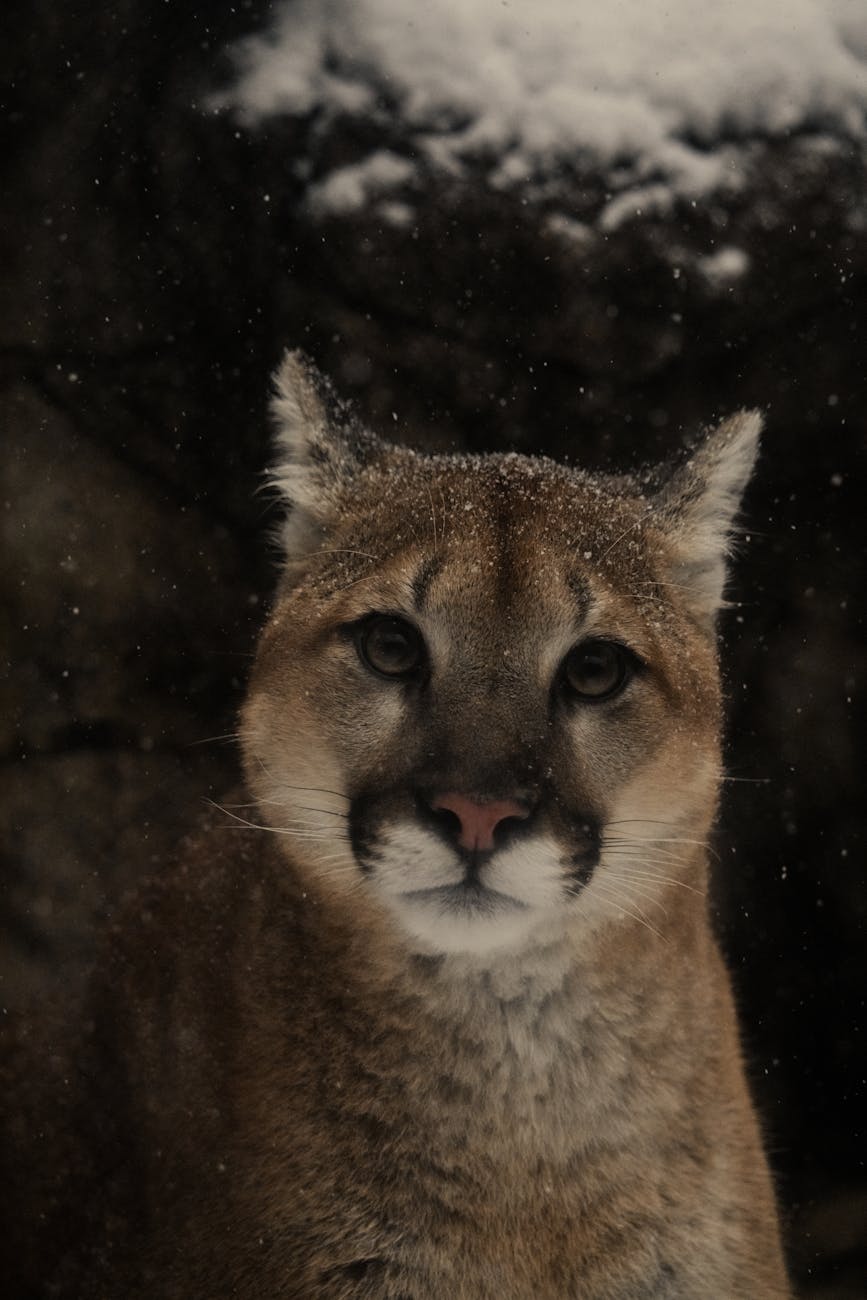
Despite their size, pumas are more closely related to house cats and small wild cats. They can meow, but they cannot roar. Credit: Caleb Falkenhagen/Pexels

Cougars are elusive, do not consider humans prey, and the vast majority of the time go out of their way to avoid humans. Most incidents of conflict are triggered by people knowingly or unknowingly threatening puma cubs, or cornering the shy cats.

Despite that, there’s confusion among the general public. Mountain lions are routinely confused with African lions, so some Americans believe they are aggressive and dangerous.

Pumas, known scientifically as puma concolor, are part of the subfamily felidae, not pantherinae, which means they are more closely related to house cats and smaller wildcats than they are to true big cats like lions, tigers, jaguars and leopards.

Pumas can meow and purr, but they cannot roar. Their most distinctive vocalization is the powerful “wildcat scream,” leading to nicknames like screamer.

In the Colorado case, police say they believe the victim was hiking alone. Her name hasn’t been released, likely because authorities need to notify next of kin before making her identity public.

This is a tragedy for the victim and her family, and we don’t wish her fate on anyone. At the same time, we hope cooler heads prevail and this incident does not spark retaliatory killings or misguided attempts to cull the species.
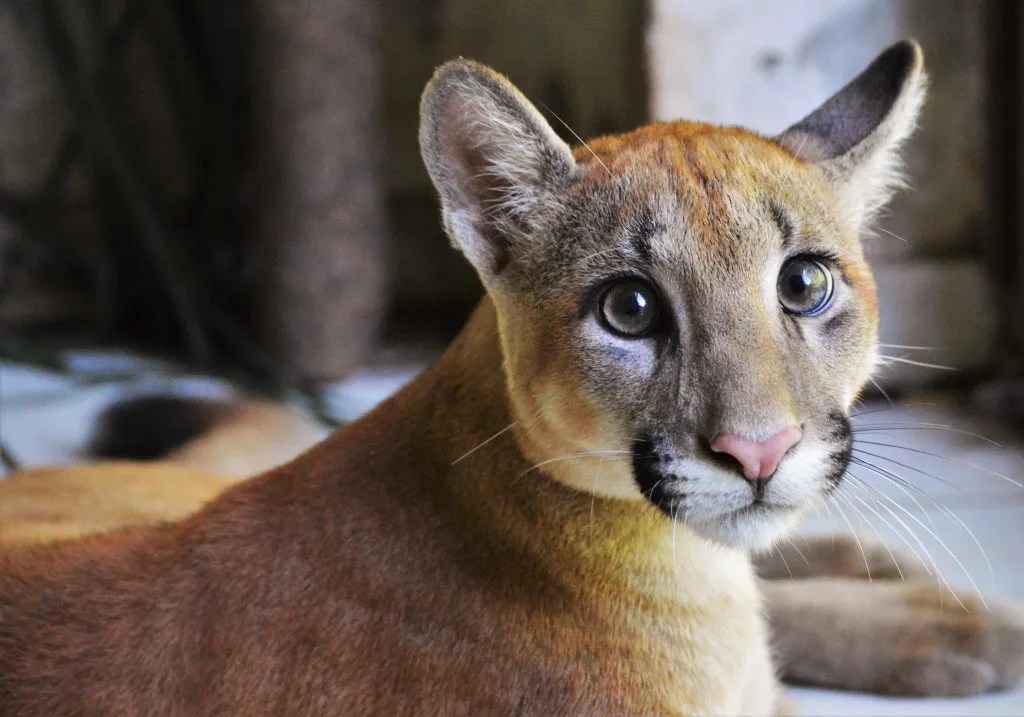
Wordless Wednesday: The Magnificent, Majestic Puma Concolor

The puma, also known as the mountain lion, cougar, screamer, panther, catamount, suçuarana, pangui, American lion and dozens of other names, looks like a big cat but is genetically closer to our domestic Feline friends.

Credit: Merazonia Animal Refuge of Ecuador

Credit: Wikimedia Commons

Credit: Elizabeth Lucas

Credit: Wikimedia Commons

Credit: Wikimedia Commons

Credit: Wikimedia Commons

Click images for full high resolution versions. Baby puma image credit Elizabeth Lucas. Prints available here.

Things Are Looking Up For This Shy Orphaned Puma As He Settles Into A New Home

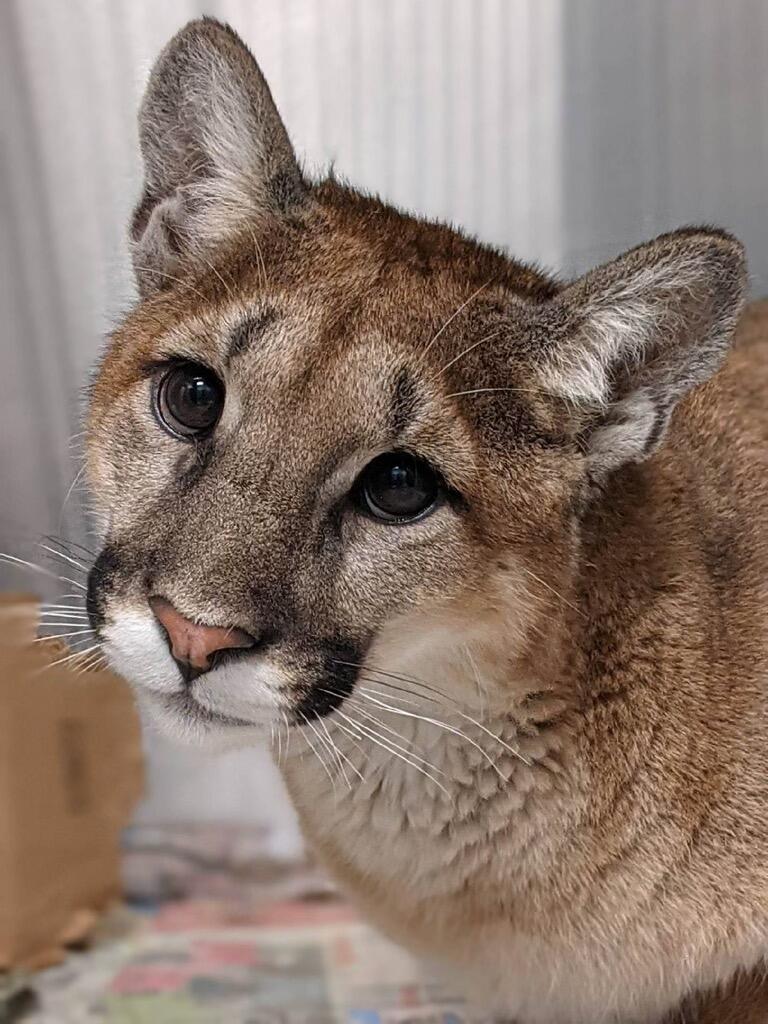
Nicholas was orphaned and severely injured as a cub as he and his mother tried to cross a busy highway. He’s settling into his new home, where he will have his own habitat, den and even his own pond.

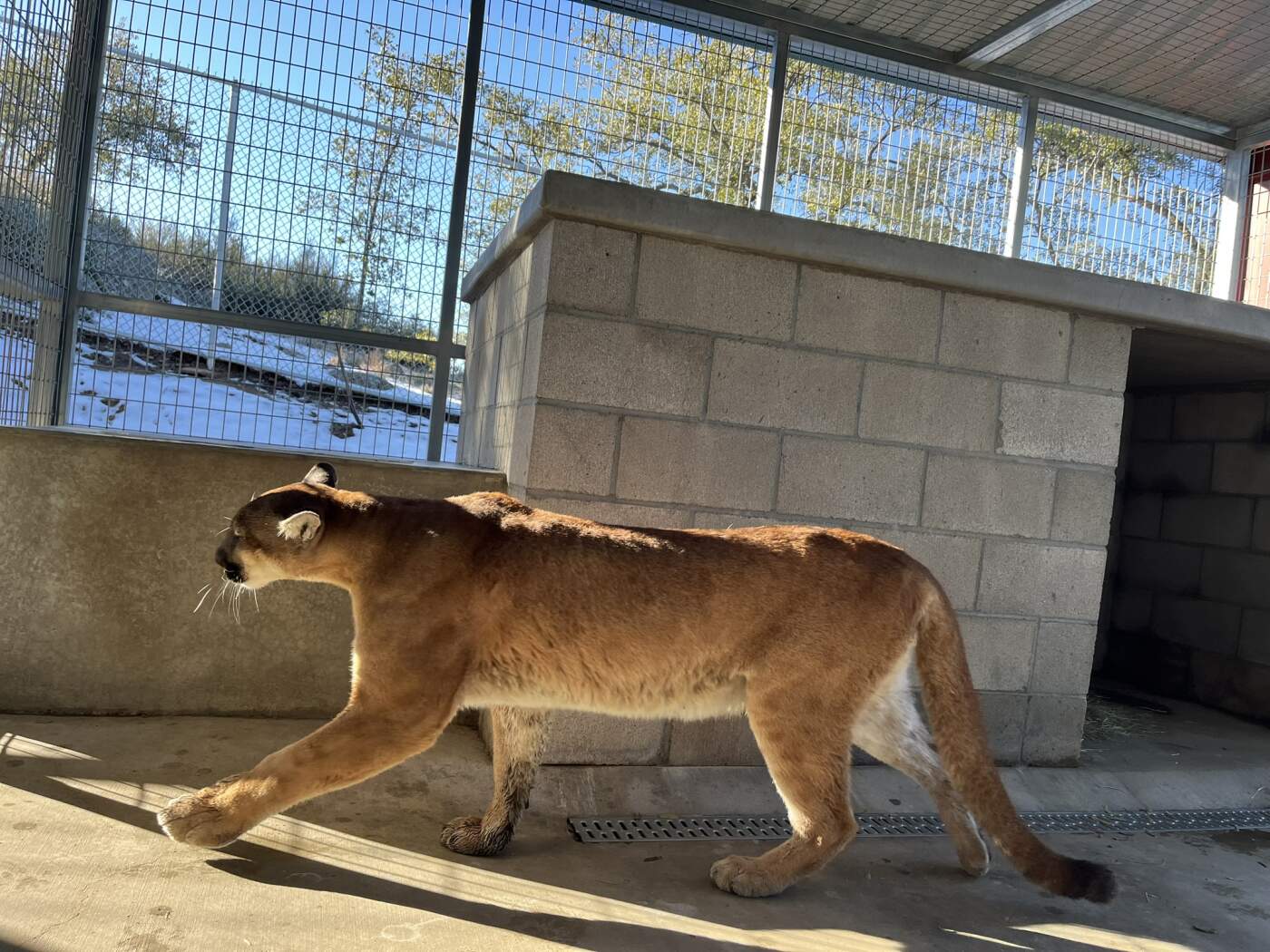
Nicholas the mountain lion has a beautiful home waiting for him with his own pond, a rock den, a grassy area where he can run around and several other little hideaways where he can enjoy some privacy and naps.

But first the three-year-old puma will have to clear quarantine and become more comfortable with his new surroundings and new caretakers.

“He’s doing really well but he’s still very scared, he’s a very timid cat, so we’re just taking it really slow, day by day and the keepers are taking some quiet time with him,” said Bobbi Brink, the founder of San Diego County-based Lions, Tigers and Bears, Nicholas’ new home.

Nicholas the Mountain Lion
Nicholas stretches his legs in quarantine as he awaits the move to his own habitat. Credit: Lions, Tigers and Bears

The golden-coated feline with an expressive face has had a tough journey to the 93-acre sanctuary that will be his permanent home.

In 2020 when he was just a cub, Nicholas was following his mother across a busy highway when both were struck by a car. Nicholas was badly injured and his mom was killed in the collision, an unfortunately common fate for members of their species as their longtime habitats are increasingly fragmented by new developments and highways.

Because they require about two years with their mothers to learn how to survive on their own, it’s almost impossible to release orphaned pumas back into the wild. Unlike, say, the orphaned orangutans of Borneo and Sumatra, who can usually be taught to successfully fend for themselves because humans can show them how to physically manipulate their surroundings, there’s no way to teach orphaned pumas how to select prey, stalk, pounce and deliver kill bites.

A sanctuary in northern California provided a home for Nicholas for about three years, but recently went bankrupt, so the staff at Lions, Tigers and Bears secured him, prepared a habitat for him and took on the Herculean task of transporting him to San Diego County.

Nicholas’ case is even more complicated because he has lasting neurological damage from the car crash that killed his mother, including a pronounced head tilt that worsens when he’s scared.

Brink told PITB it’s normal for cats like mountain lions to be spooked by the commotion and uncertainty of a move, as well as leaving everything they know behind. Nicholas is simply obeying his wild instincts, which urge him to be guarded. But he’s got a loving team of caretakers who will work with him, as well as veterinary specialists who are well versed in caring for animals with neurological damage.

“Sometimes it can take (animals like Nicholas) a month, sometimes it can take three months to build up that trust,” Brink said. “His biggest need is he’s very afraid, so we’re gonna have to work around his fear so we don’t scare him more.”

Nicholas the Mountain Lion
Despite their impressive size, pumas are more closely related to domestic cats than the big cats of the panthera genus. Like their house cat cousins, pumas enjoy tearing up paper and playing with toys. Credit: Lions, Tigers and Bears

While Nicholas will have his own habitat and can keep to himself as much as he likes, recent observations of his secretive species have shown that pumas have “secret social lives,” and Nicholas will have the opportunity to meet and interact with other mountain lions if he’s comfortable with it.

Pumas — which are known by the scientific name puma concolor and are also called mountain lions, cougars, panthers, catamounts, screamers, painters, gato monte and many other names — are among the most adaptable felids in the world and range from the southernmost edge of South America to just over the Canadian border. They’re able to thrive in mountains, tropical regions, deserts, forests, human-adjacent rural areas and even in urban population centers, as the famed “Hollywood Mountain Lion” P-22 did for more than a decade in Los Angeles.

Their ability to adapt has served them well in a changing world, but they’re not immune to the pressures of human expansion.

In California their habitats have been carved up by the state’s busy and deadly highways, leaving the cats in genetically isolated pockets. Pumas who strike out in search of their own ranges are extremely vulnerable to vehicle traffic. P-22 famously crossed several of the world’s busiest highways to reach his eventual home in LA’s Griffith Park, but others like Nicholas and his mom aren’t so lucky.

Solutions like the $90 million Wallis Annenberg Wildlife Crossing, currently under construction in Los Angeles County, can connect fragmented ranges and give pumas, coyotes, foxes, deer, rabbits and other animals safe passage. But experts point out that they are just one component in a long-term solution that must include more careful zoning, fences to funnel animals toward safe crossings, and options like tunnels that run under highways, since not all animals will use overpasses.

As planners and wildlife experts figure out new ways to ensure the survival of wildlife in an increasingly crowded, human-dominated world, sanctuaries like Lions, Tigers and Bears play a crucial role by caring for the innocent animals who are injured, displaced and rescued from bad circumstances.

To learn more about Lions, Tigers and Bears or support their ongoing efforts to provide safe, stimulating and comfortable homes for wild animals, visit the non-profit’s site. To receive updates on Nicholas and the other animals at the sanctuary, follow Lions, Tigers and Bears on Instagram and Facebook. Readers who live in the California area can book guided educational tours or visit during one of the sanctuary’s special events. Thanks to Bobbi Brink and Olivia Stafford for allowing PITB to tell Nicholas’ story. All images and videos of Nicholas courtesy of Lions, Tigers and Bears.