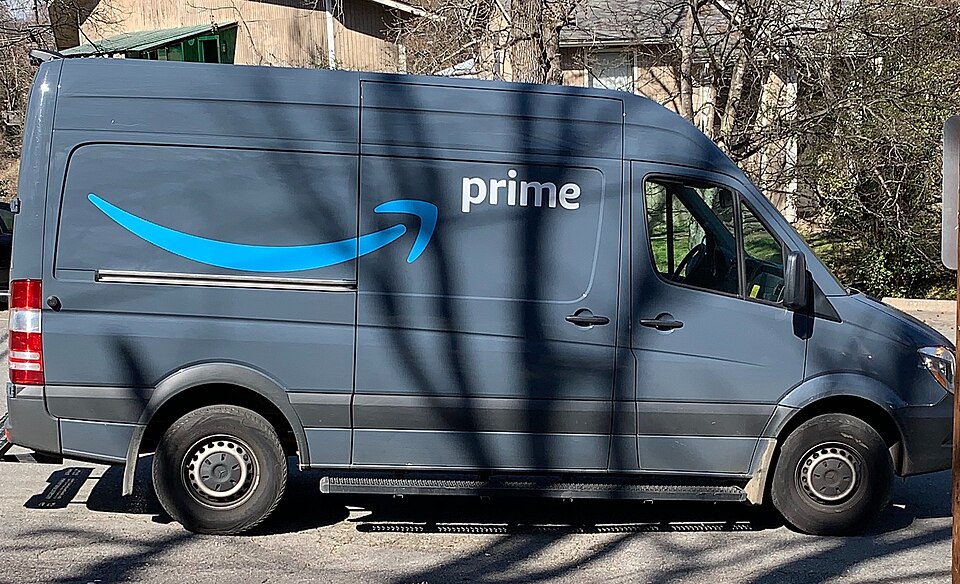
A Massachusetts woman hopes she’ll be reunited with her cat after an Amazon driver took the feline during a delivery.
In one respect, it feels unfair to blame Amazon for its employees stealing cats.
The company’s drivers make millions of deliveries to American homes, and the vast amount of time there are no problems.
On the other hand, this has happened so many times now that you’d think Amazon would make it a priority to tell its drivers: Do not steal cats from customers. It’s not acceptable, it’s traumatic for the cats and their humans, and it’s horrible PR for the company.
The latest incident involves a driver who was caught on camera this week stealing 18-year-old Murphy, who belongs to Kathy Souza of Somerset, Massachusetts. Security camera footage shows the driver retrieving cat food from her vehicle and chasing after Murphy, then disappearing.
Souza told a local NBC affiliate that neighbors at an AirBnB saw the driver steal Murphy. The driver allegedly told them she was concerned about the cat, that it “didn’t seem right to her and she was going to take it,” Souza said.
Murphy. Credit: Kathy Souza
As of mid-morning Wednesday, Souza posted an update saying she was waiting at the Somerset Police Department, where the driver apparently agreed to return the cat.
Like so many others before her, Souza found Amazon tone deaf, minimally responsive and unhelpful.
“I spoke with someone at Amazon who asked, ‘Is the cat worth more or less than $200?'” an incredulous Souza wrote on Facebook.
A customer service representative also asked Souza to fill out a satisfaction survey, which mirrors the experience others have had when the company’s drivers have stolen pets. Amazon handles the cases as if their drivers stole or damaged property rather than taking living creatures often considered family by the people who love and care for them.
The company’s responses are similar to the way it handled the case of Feefee, a 13-year-old tabby cat stolen from a family in Everett, Washington, by an Amazon driver in late July of 2024.
In that case, Amazon offered to compensate the Ishak family by sending a stuffed animal resembling Feefee, and told owner Ray Ishak that the apologetic driver had contacted police to return the cat. That wasn’t true, and to make matters worse, the Amazon driver abandoned Feefee and wouldn’t tell the family where she’d dumped the cat. Ishak spent several days driving through his neighborhood and surrounding areas, looking for the driver’s car which was visible in his doorbell camera footage.
Ishak found his cat without Amazon’s help after a great deal of stress and effort.
Souza said she would post another update about Murphy “when I have him in my arms.”
Update, 2:05 pm: Souza has been reunited with Murphy.
In a statement, Amazon said the driver’s behavior doesn’t meet the company’s standards and promised an investigation, but a friend of Souza wrote on Facebook that it was pressure from social media posts and local news reports, not action from Amazon, that prompted the woman to return Murphy.
“Rescuing animals is honorable, but due diligence is imperative, and this woman did not do hers,” she wrote.
Murphy is well known among neighbors and doesn’t stray further than three houses from home, Souza wrote in an earlier post.
We’re glad Souza and Murphy have been reunited and this story has a happy ending.
As for the lessons learned here, anyone unfortunate enough to find themselves in this situation should not wait for Amazon to act. The company won’t have the same sense of urgency, and its customer service staff aren’t trained or equipped to take the necessary steps, like liaison with local law enforcement.
In cases where people have recovered their pets, the common thread is that they took the initiative, used social media and local news to get the story out, and were relentless. Time is crucial, because in some cases delivery drivers will panic and abandon stolen pets.
The woman has been dubbed a “serial killer” of animals after eight of her pets and one of her horses met early ends, and several others simply disappeared. She’s part of an unfortunate trend of influencers and quasi-celebrities popularizing exotic pets, with “ownership” of the animals frequently leading to tragedy.
So apparently Katie Price is some sort of proto-Kardashian, a pioneer of the “famous for being famous” genre of hybrid reality/online celebrity, to use the term loosely.
Wikipedia says she got her first taste of fame in the 90s posing topless for British tabloid newspapers before moving on to loftier pursuits, like appearing on Big Brother and holding court on important topics, like whether toes have bones.
The background really doesn’t matter, except to establish that Price is someone with a lot of money, minimal common sense and extraordinarily poor judgment who has gotten so many of her pets killed or injured, PETA and other animal rights groups in the UK have begged politicians to write new laws preventing serial pet-killers from purchasing more animals.
Sort of a “10 strikes and you’re out” rule, if you will.
Four of Price’s dogs have been hit by cars, including one killed by a pizza delivery driver on her property. Another got stuck in an electric armchair and was crushed after Price gave him cannabis oil, pleading ignorance on its effects.
Previously, one of her breed cats was euthanized under mysterious circumstances at five months old, her rare chameleon fell ill and died because he wasn’t kept in a properly heated enclosure, and her “guard dog” was apparently intentionally killed by someone, although the information on that death comes from Price so there’s no way of telling what the actual circumstances were.
A horse Price owned was killed on the same road where two of her dogs met their end, which would bring the tally to nine depending on whether you consider a horse a “pet.”
Price, pictured this year.
There have also been animals — kittens, puppies, animals gifted by boyfriends, fiances, and friends — who were featured on Price’s social media feeds as babies and never heard from again, according to the UK’s Mirror. Some of them were given away to assistants and acquaintances. The fates of the others are unknown.
Price currently owns at least four chihuahuas and five Sphynx cats. An incident with one of the Sphynxes has animal lovers and welfare groups renewing calls to prevent her from buying new pets. (Price, like so many social media influencers, exclusively purchases breed pets for thousands of dollars each.)
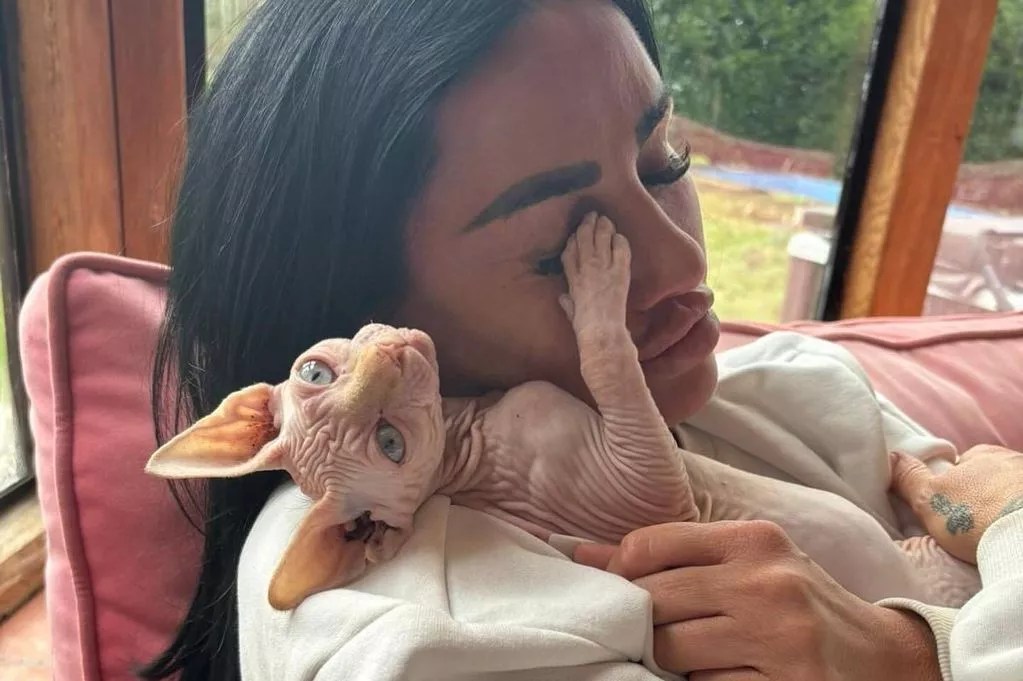
In a new video posted online, Price — who has been dubbed a “serial killer” of animals by PETA — makes duck lips at the camera and rubs one of her Sphynx cats, Kevin, explaining that the little guy suffered sunburns.
“Oh Kevin you have been in the sun today, you have got sun burnt despite us putting sun cream on you… look at his little face,” Price said in the video. A caption written by Price claims “Trying to keep the cats out of the sun is hard work.”
A screen shot from Price’s recent video in which she shows one of her cats who suffered sunburn during the ongoing heat wave.
The latest incident is drawing fresh attention to a petition that calls for the UK government to step in to stop Price from owning animals.
As of July 10, there were 37,728 verified signatures on the Change.org petition, which mentions a number of additional disturbing incidents involving Price’s pets. One accusation claims Price’s guard dog — it’s not clear if it was the dog who was killed, or a new guard dog — bit the tail off one of her cats.
“Anyone who warns Katie not to hurt the animals she takes in might as well be screaming into the wind, for all she seems to care,” PETA’s Elisa Allen said. “And here we go again: her cat is sunburnt – something she was likely warned about when acquiring a gimmick cat, bred to look odd and be hairless.”
For her part, Price claims the deaths and unfortunate incidents that have befallen animals in her care are simply the result of bad luck and circumstances outside her control. Her representatives have also accused animal welfare groups of using the influencer’s fame to raise money.
That has not changed the narrative as new incidents continue to pile up. In a 2023 live TikTok stream, Price allegedly slapped her then-puppy, Tank — who she’s since discarded — for sitting on a hoodie. “Get off! You’re sitting on my jumpers, my jumpers that I love,” Price said after the sound of a loud slap off camera, leaving viewers fuming.
Price is not alone in the world of influencers, quasi-celebrities, Real Housewife types and entertainers who apparently view animals as disposable amusements.
Hilaria Baldwin, Alec Baldwin’s wife, has earned the nickname “Cruella Seville” from her detractors for her alleged treatment of her breed cats and dogs. The nickname is a play on the character Cruella de Vil from 101 Dalmations and the Spanish city of Seville, where Baldwin claimed to have roots before claiming she was born in Mallorca.
Baldwin with two of her Bengal kittens. New kittens have appeared in her Instagram posts several times in recent years, apparently replacing older Bengals she’d purchased previously.
Baldwin, you may recall, was enthusiastically Spanish until she wasn’t. She was essentially exiled from celebrity-adjacent society in 2020 after Twitter users dug up videos of her fluctuating accent and performative “forgetting” of English words like cucumber, outlet and onion. Former classmates, acquaintances and friends came forward to say she was the Boston-born Hillary Hayward-Thomas and didn’t go by Hilaria — or speak with an accent — until around 2010, when she met Alec Baldwin.
But the actor’s wife never stopped posting to social media, and in addition to animal lovers calling foul on videos that show her allegedly mishandling her dogs, her online posts show a rotating cast of Bengal kittens. Critics have called for action against Baldwin for her alleged treatment of animals, as well as buying Bengals despite the fact that it’s against the law to keep them as pets in New York City. PETA, which previously worked with Alec and Hilaria Baldwin on a publicity campaign, also called on the couple to stop buying exotic pets.
In the music world, mainstream pop artists like Justin Bieber and Rihanna have both come under fire for purchasing baby monkeys — a capuchin in the case of Bieber, and a slow loris for Rihanna.
The Rihanna incident, in which she shared a photo of herself with a slow loris pet to social media, resulted in raids on illegal wildlife markets in Thailand, where Rihanna allegedly acquired the animal. There are nine subspecies of slow loris, ranging from vulnerable to critically endangered in conservation status, per the World Wildlife Fund.
Rihanna posing with a slow loris, a nocturnal, arboreal animal that is notably the world’s only venomous primate. The venom glands are removed from slow lorises sold on the illegal wildlife market. People continue to poach and sell them despite their declining numbers in the wild.
Bieber named his monkey Mally OG and famously ditched the then-infant in Germany in 2013, when officials there seized the primate from his private plane after it touched down in Munich, citing his lack of permits and purchase records for the animal. (They essentially accused Bieber of buying Mally on the illegal wildlife market.)
“Honestly, everyone told me not to bring the monkey. Everybody,” Bieber told GQ magazine in an interview several years later. “Everyone told me not to bring the monkey. I was like, ‘It’s gonna be fine, guys!’ It was the farthest thing from fine.”
Bieber with his pet capuchin monkey, Mally OG, who was just an infant when he was ripped from his mother’s arms so he could be sold to the pop singer.Bieber with another capuchin monkey as part of a skit in which he joked about German authorities seizing his first monkey pet.
The singer said he’d return for his pet after retrieving the paperwork from one of his US homes, but he never did, and Mally OG was placed in a sanctuary after a long rehabilitation period.
In a follow-up story five years later, Asta Noth of Serengeti Wildlife Park said Mally was still trying to imitate human speech, and didn’t know how to communicate with his own species. That’s a common problem with monkeys who are former pets, as they do not understand the complex social dynamics of troops and family units.
His developmental problems stem from the fact that “he was taken away from his mother and natural family way too early,” Noth said. “He did not learn to be a monkey.”
“Harm or death to an animal caused by another animal is not a criminal matter,” even when footage shows dog owners urging their pets to attack, the NYPD claims.
The NYPD says its hands are tied after a group of people sent their pit bulls after a well-known shop cat in Manhattan and cheered as they dogs brutally ended the tabby’s life.
Freddy was the resident moggie at Michelle Flowers, a florist on Amsterdam Avenue in Washington Heights. The little guy was outside the shop at about 9 p.m. on July 4 when a man and two women set their dogs loose on him, then celebrated and cheered as they killed him.
Credit: Cat Collective
The pit bull owners then “smoked, danced and ate food while taking photos and mimicking the grisly scene,” according to the New York Post. Surveillance cameras caught the attack and its aftermath, showing the three black-clad dog owners and others who witnessed the violence and did nothing.
A disgusted neighbor contacted the Cat Collective, a group of volunteers who feed and care for strays in the neighborhood, and they collected Freddy’s remains, then told the florist’s owner what happened.
“Someone deliberately set dogs on a defenseless cat while people watched and cheered,” Dan Rimada of Bodega Cats of New York told the Post.
Cat Collective is offering cash rewards to anyone who can identify the dog owners and the celebrating bystanders, but the police won’t do anything.
An NYPD spokesman told the paper that “harm or death to an animal caused by another animal is not a criminal matter,” citing a gap in the law.
A proposed bill, dubbed Penny’s law after a chihuahua that was mauled by pit bulls earlier this year in Manhattan, hasn’t made it out of committee in the New York State legislature, while New York’s city council is looking at a municipal law that would make it a crime to set dogs on other animals.
Credit: Cat Collective
It’s actually difficult to believe nothing can be done to get justice for Freddy, Penny and other animals aside from civil cases, which can only result in monetary damages.
Manhattan DA Alvin Bragg, who is controversial to say the least for creatively interpreting the law, seems like just the kind of district attorney who could find a way to prosecute the dog owners. The fact that the authorities are outright dismissing the possibility indicates Bragg doesn’t see this as a priority.
Working with the police to find ways to get justice is Bragg’s job, as well as the job of the attorneys working for him in the district attorney’s office. At the very least, they should be able to find something with which to charge the suspects, even if it really turns out there’s no way to hold them criminally accountable for Freddy’s death.
We hope Freddy’s killers are identified and held responsible, and we hope no more pets and strays have to be killed before lawmakers at the city and state level make it a priority to close an obvious gap in the law.
The costumed man has growled, hissed and meowed at passersby in the coastal area, reigniting old rumors of actual big cats prowling the area and freaking out people walking their dogs at night.
Ah, the things you can get away with in a country without guns.
A man in an all-black outfit has been prowling Wallasey beach in Wirral, a peninsula in northwest England, according to people who live in the area.
One witness said the man was “waving his hands in the air and making panther noises,” while others said they saw him approaching cars stopped at lights on roads near the coast.
“Anyone know who the freak in the cat mask and morph suit is at the coastal park near the harvester?” another local wrote online.
One thing was clear from witness accounts, photos and several short smartphone-shot videos: the costumed man wasn’t trying to imitate a friendly house cat.
“Was walking my dog tonight and heard a man making cat noises, shone a torch he was waving his arms at me before crawling up the hill. Never been so scared,” one witness posted to Facebook, per the BBC.
Sad as it may be, the first thing that came to mind when we read the witness accounts was that this doesn’t happen in the US, simply because odds are the costumed prankster would be shot.
“So I decided to bugger off home, had the rest of last night’s takeaway, had a laugh at the Sharons and Waynes on Blind Date, then went to see if any of the lads were up for a pint. Oi, I could really go for a Chinese! Anyone else wanna go for a Chinese?”
It’s possible whoever is behind the strange sightings is making light of decades-long rumors that mysterious and elusive big cats have been prowling the UK countryside.
Similar to persistent rumors of Bigfoot in the US, the phantom cats of the UK have their own believers who argue that there’s an extant population of leopards or pumas who are exceptionally adept at staying hidden from cameras but are occasionally spotted by farmers and motorists in the British countryside.
There’s a podcast dedicated to the topic, and proponents of the idea say it could explain a handful of cases in which livestock have gone missing.
The podcast, Big Cat Conversations, even dedicated a 2021 episode to “Wirral’s liminal leopards,” with its host interviewing several people who say they’ve encountered large melanistic felids on the peninsula over the decades.
Real big cats such as the leopard above tend to leave unmistakable evidence of their presence. Image credit: Wikimedia Commons
But as big cat experts have pointed out, it’s difficult to miss the signs when such apex predators really do claim an area as home. From unmistakable pug marks, to trees scratched and scent-marked with urine, to calls that can echo for miles in right conditions, big cats have many ways of making their presence known— and it’s often advantageous for them to do so, since they’re highly territorial animals.
One man who was out walking his dog told the BBC he thinks the whole thing is a prank.
“I don’t know his name, I think it’s just a wind up. He’s definitely not out to frighten people, he does it for fun,” he said. “He just likes being a giant cat. He doesn’t frighten our dog.”
Local police say they’re aware of the sightings. Merseyside Police and Crime Commissioner Emily Spurrell told local media that anyone who feels threatened by the suited figure should call law enforcement and report his whereabouts.
Police used the kitty’s mugshot to reunite her with her family. Meanwhile, a judge in California has issued a warrant for a man accused of murdering dozens of cats in his neighborhood.
When a kind passerby scooped up a lost cat and brought her to a nearby police station in Bangkok last week, police were happy to help reunite her with her family.
But the cat, whom they later learned is named Nub Tang (“Counting Money”) wasn’t particularly happy about being rescued, and she tried to chomp down on several officers who were trying to help her.
So a lieutenant who goes by the name Inspector Da online devised a novel way of making the best of the situation and reuniting Nub Tang with her family.
The Inspector “arrested” and “booked” Nub Tang on charges of assaulting an officer. He took a mugshot of the grumpy shorthair and took her paw prints, then posted them online.
Nub Tang even looked grumpy in her “mugshot.” Clearly, she’s a criminal.
The amusing images and story helped draw attention to the post, and the next day, after Inspector Da had taken Nub Tang home with him overnight to make sure she was comfortable and felt safe, Nub Tang’s humans saw the posts and contacted the precinct.
Inspector Da — real name Parinda Yukol Pakeesuk — happily handed the feisty feline back to her people, but not before posing for some photos with them and saying goodbye to his temporary pal.
Nub Tang has a lot of personality for such a tiny cat. Credit: Da Parinda/Facebook
Warrant issued for alleged cat killer who didn’t show for court
A California man accused of killing dozens of cats skipped out on his initial court appearance.
Police in Santa Ana arrested 45-year-old Alejandro Oliveros Acosta in April after media pressure prompted them to finally take reports of a cat killer seriously.
Neighbors had been lodging complaints and asking police to act for more than a year after pets and strays went missing. Acosta and his white pickup truck were captured on several doorbell cameras and home security cams, including one that caught a clear view of him allegedly luring and abducting a neighbor’s pet cat.
After their complaints failed to prompt action from police, people in the neighborhood turned to local media, sharing footage and information.
A local TV news report finally cranked up pressure on the cops, who arrested Acosta in late April. A search of Acosta’s home turned up the bodies of deceased neighborhood cats and evidence that Acosta had allegedly killed “dozens” of felines, a Santa Ana police spokeswoman said.
Acosta didn’t show up for a May 21 preliminary hearing. Now police are looking for him and the court has issued a warrant for his arrest.
The Santa Ana man previously posted $40,000 bail, money he will forfeit if he remains a scofflaw.






 Pain In The Bud