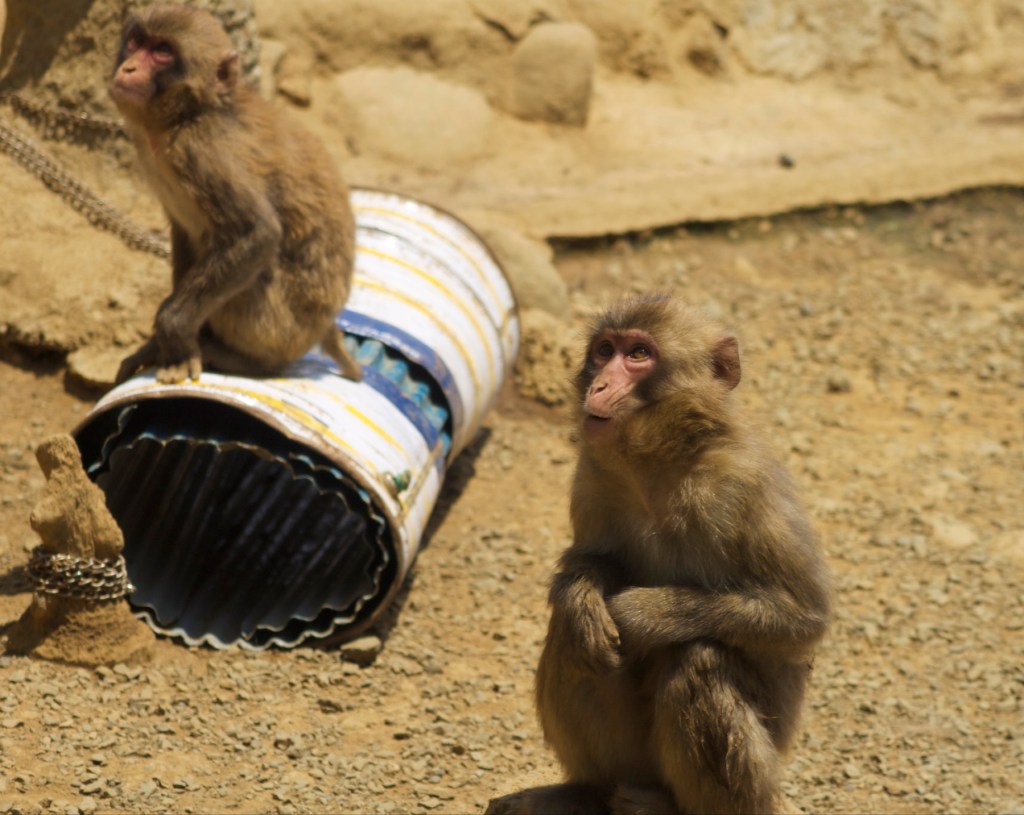
Meet the Japanese macaques, also known as snow monkeys, living in an enclosure on the side of Mt. Takao, about an hour from Tokyo.
A note on this series: Although I published some of these photos earlier, the majority have been recovered from an old drive that took a circuitous route of more than five years, three continents and four countries to get back to me. I plan to run them in themed segments on Wednesdays this summer, including Tokyo nightlife, shrines, cityscapes and more. This week’s photos are from the snow monkey exhibit at Mt. Takao.
Japanese macaques are the northernmost-dwelling of any non-human primate species.
They’re built for the cold, with heavier coats than their cousins, the rhesus, long-tailed and bonnet macaques. They also sleep in well-organized groups, rotating so each monkey gets time in the center to soak up body heat, and they’re famous for keeping warm in northern Japan’s hot springs.
But as these photos show, snow monkeys are also adaptable, and they make the best of things during the hot, humid summers at Mt. Takao, about 51 km (30 miles) from Tokyo.
These photos were taken on a hot day in June when I was one of only a handful of visitors.
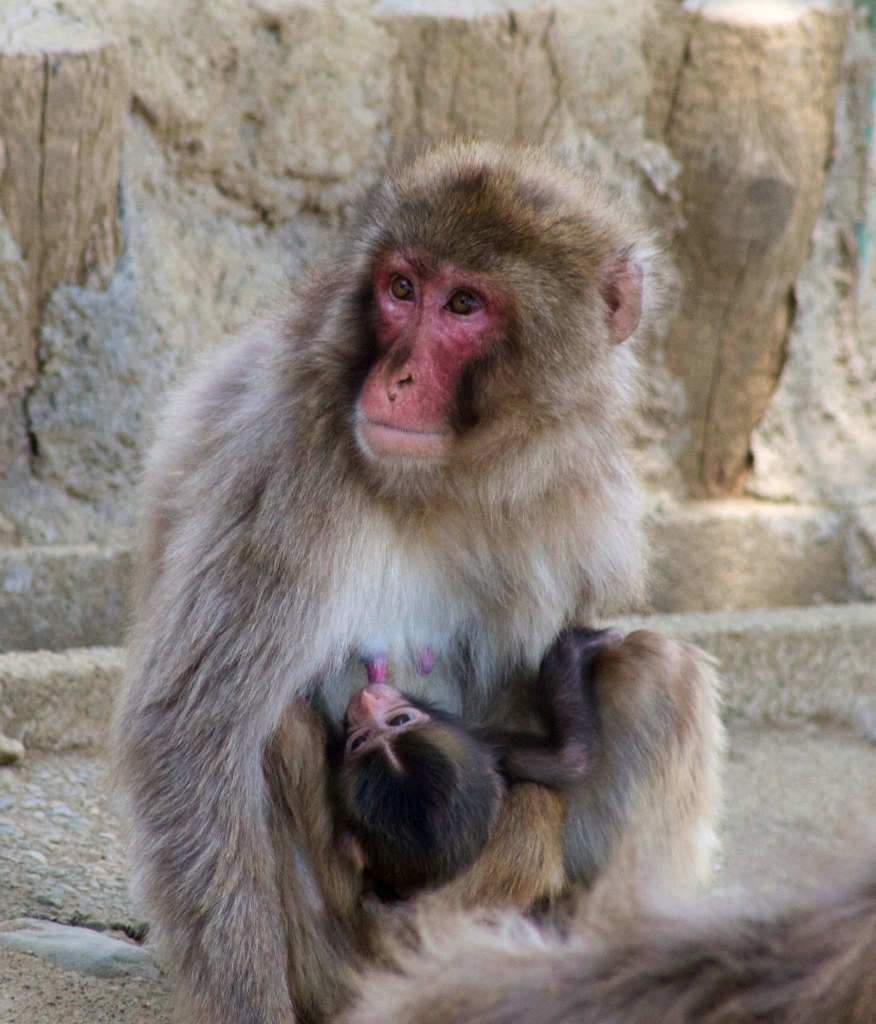
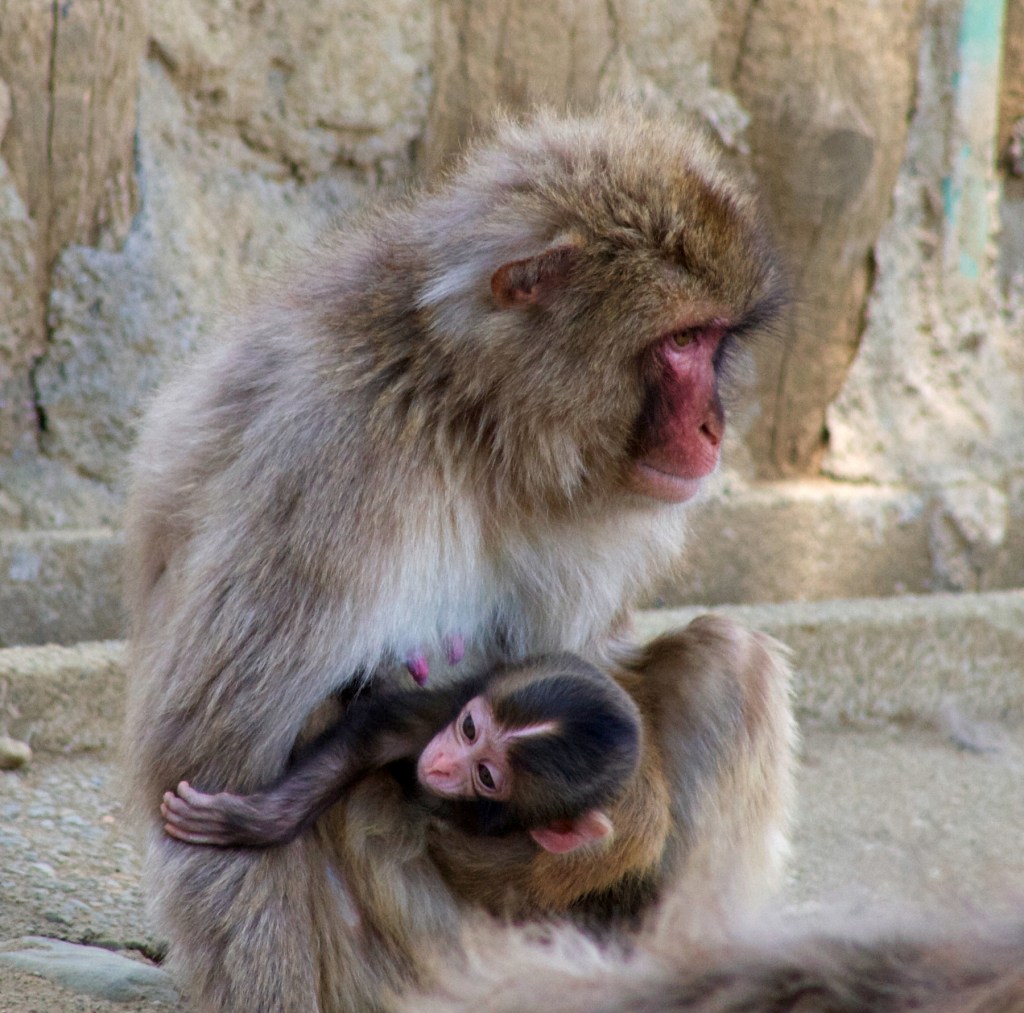
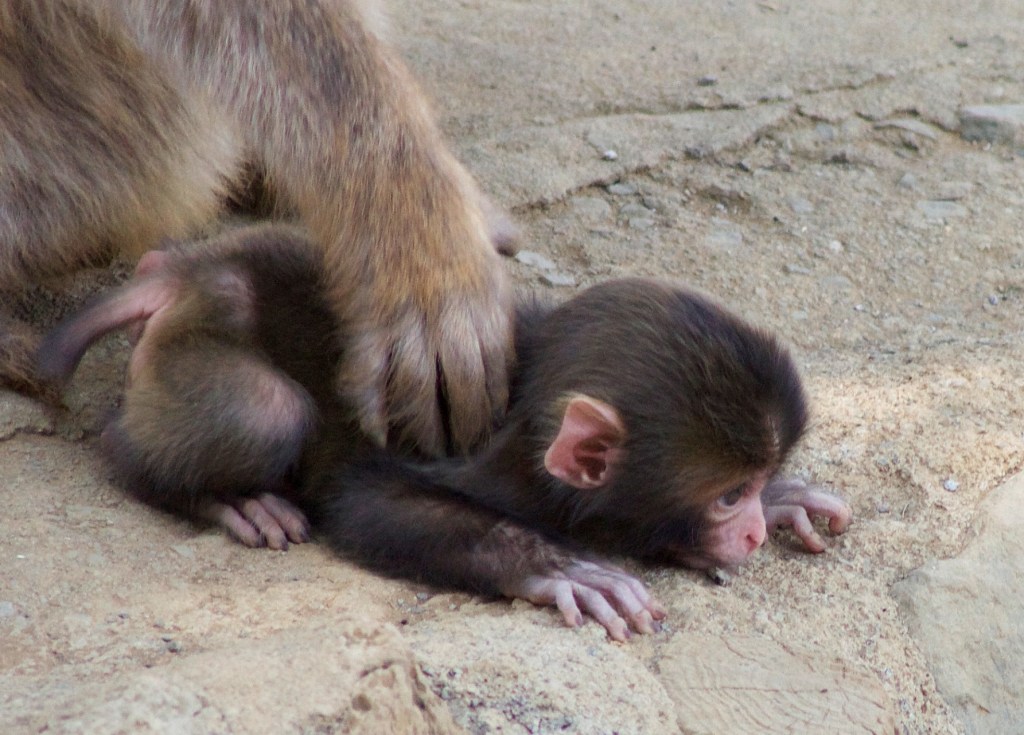
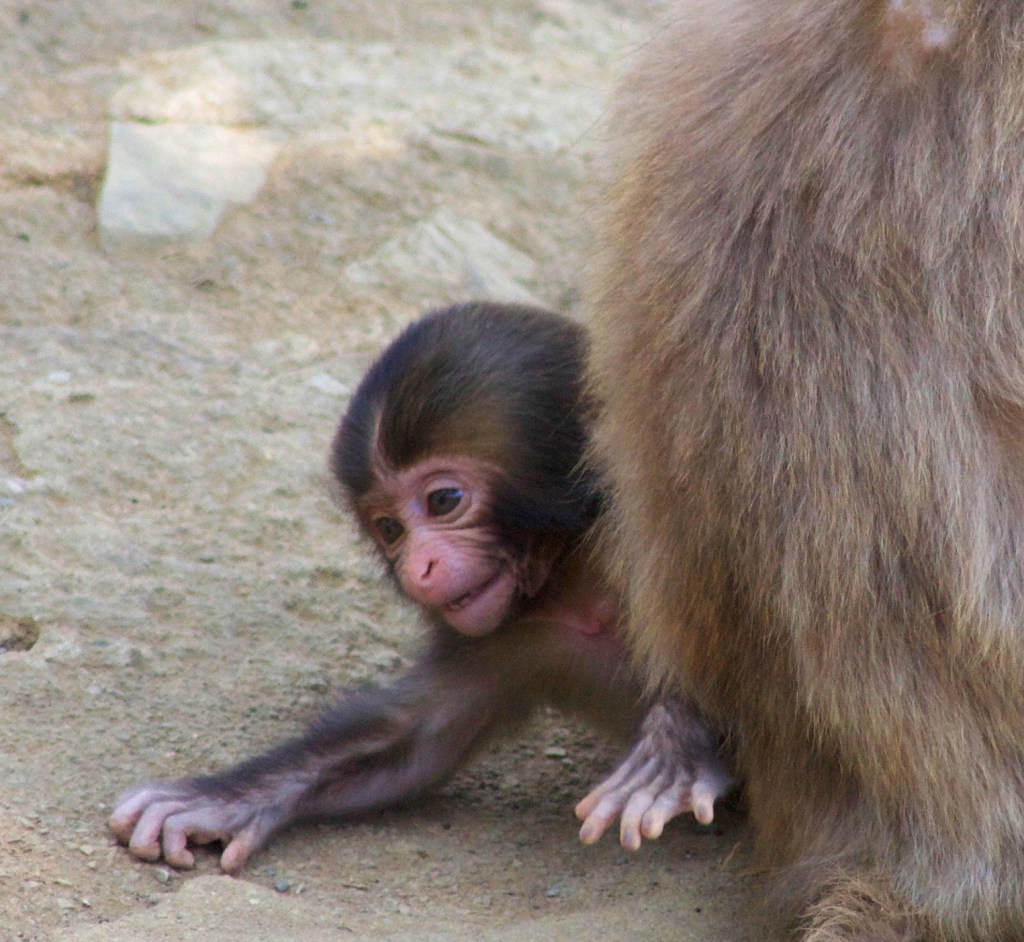
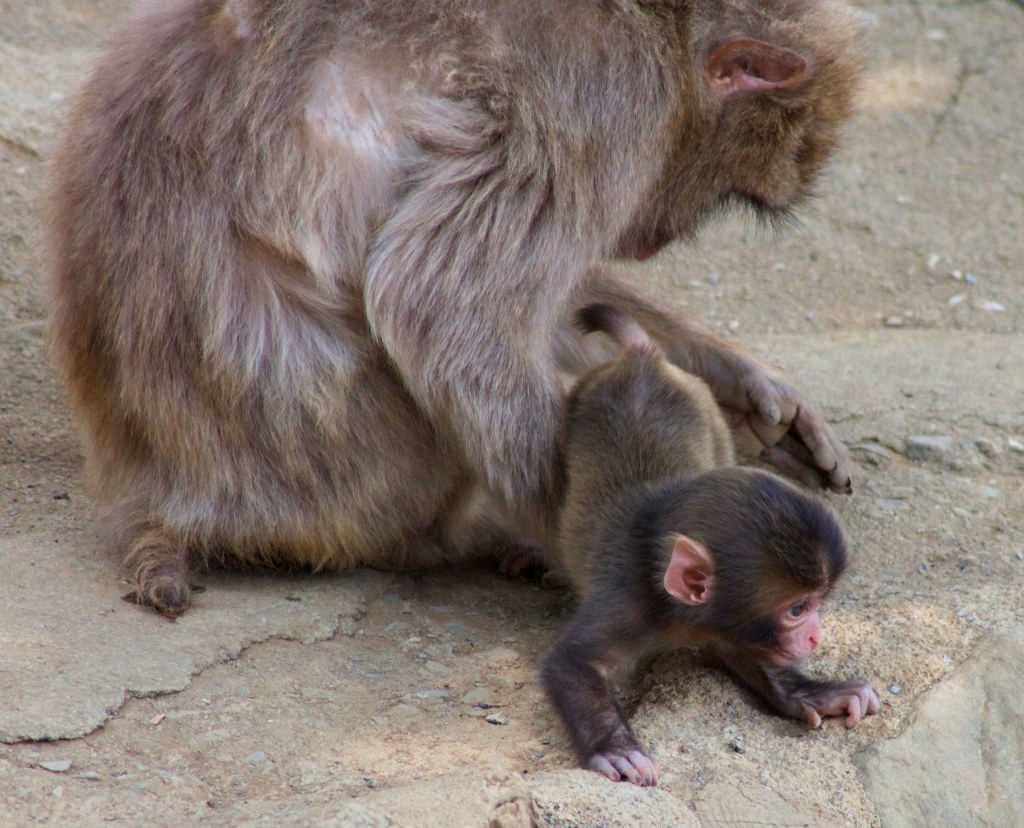
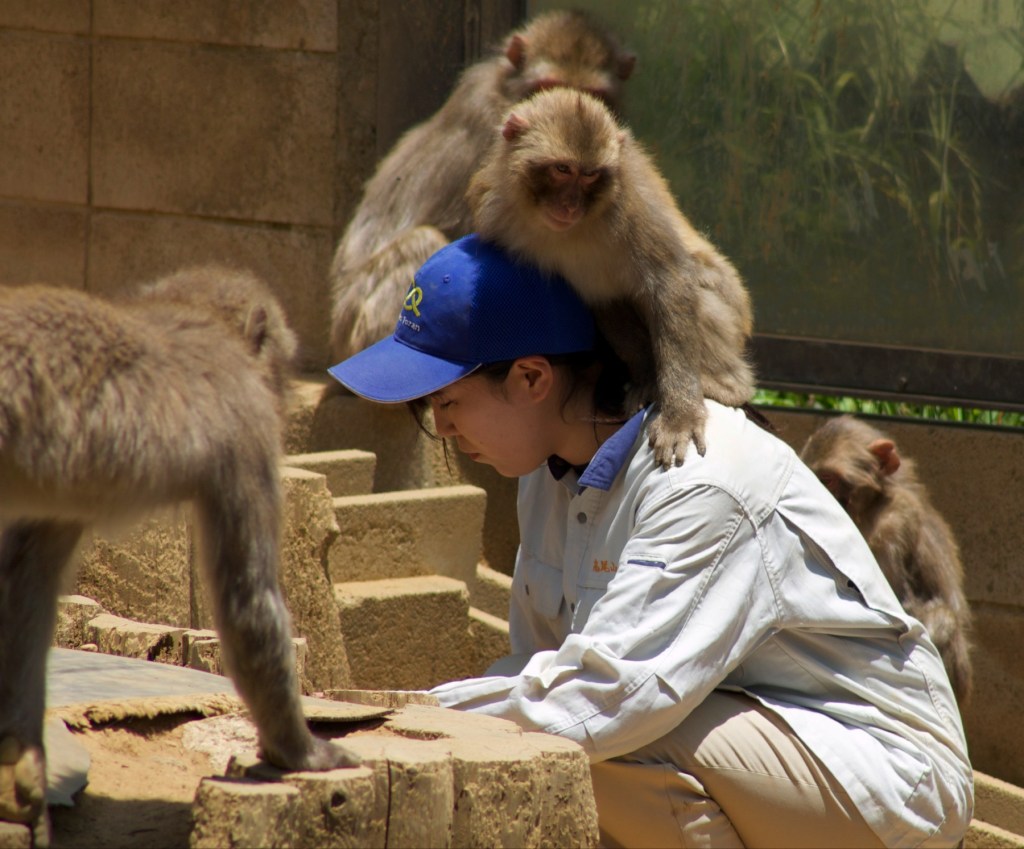
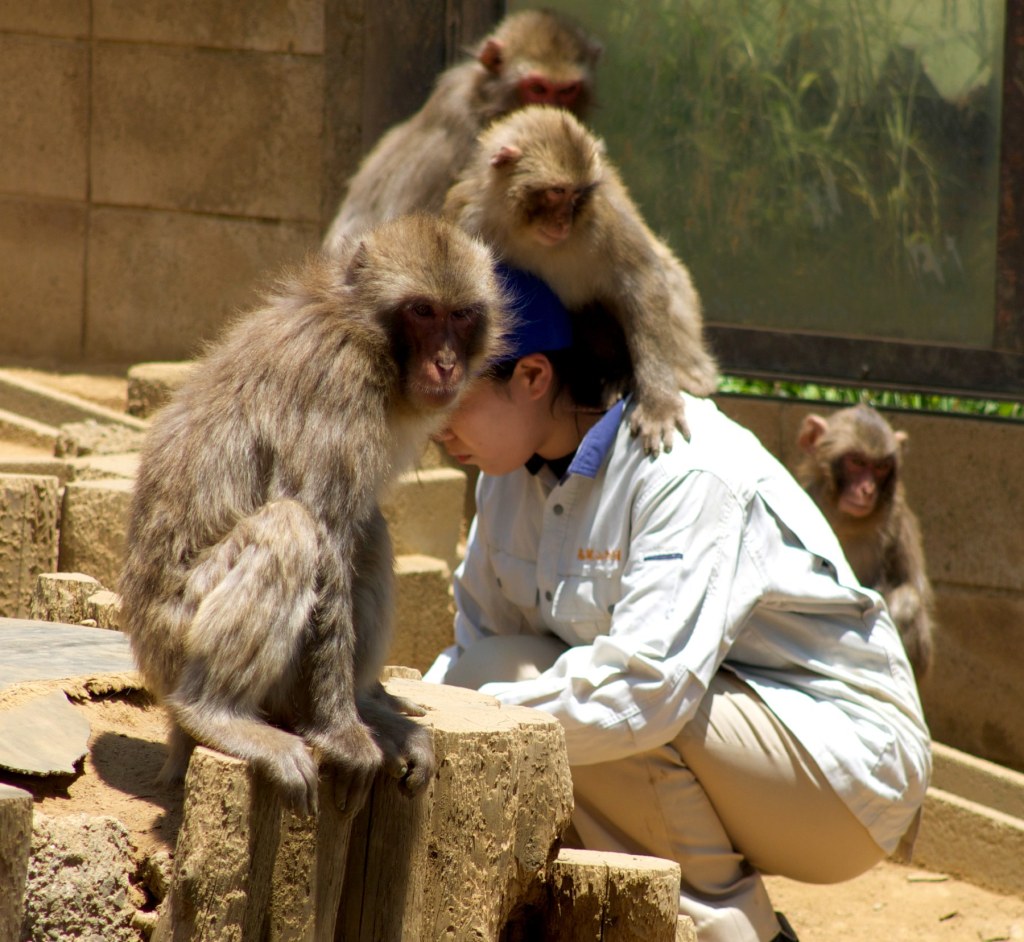
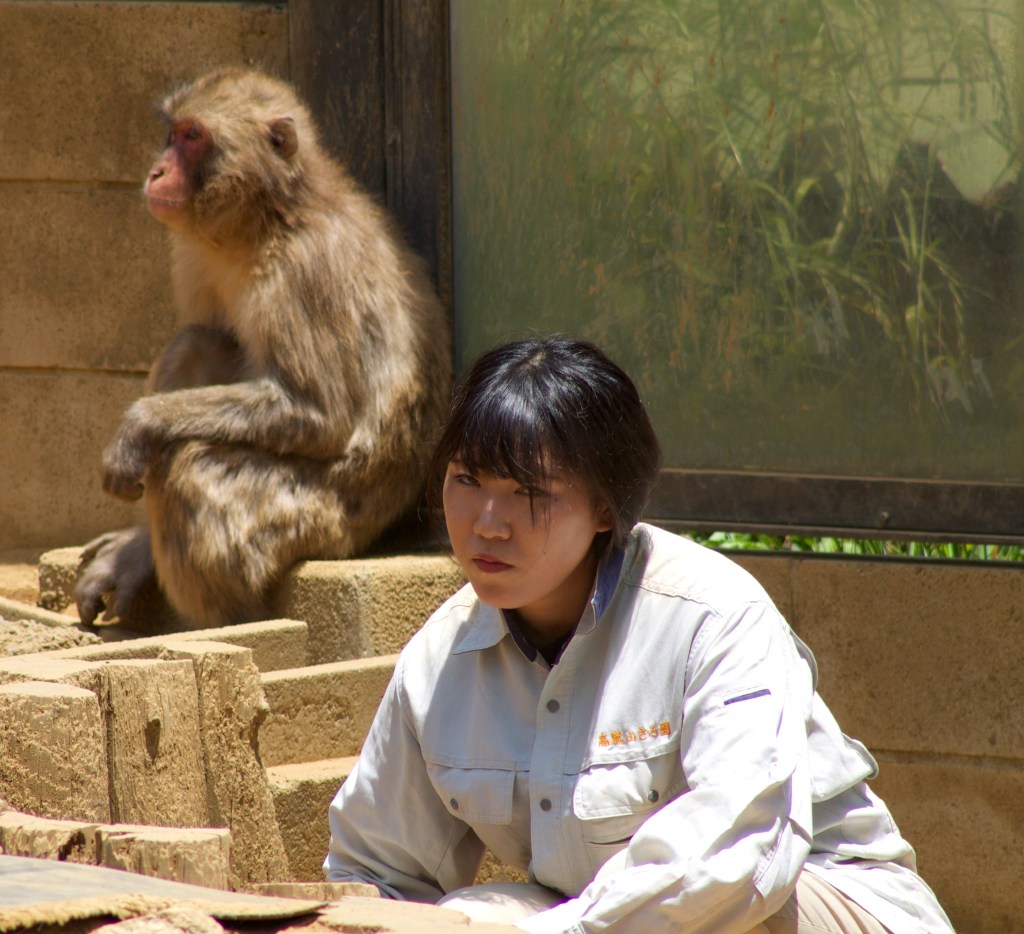
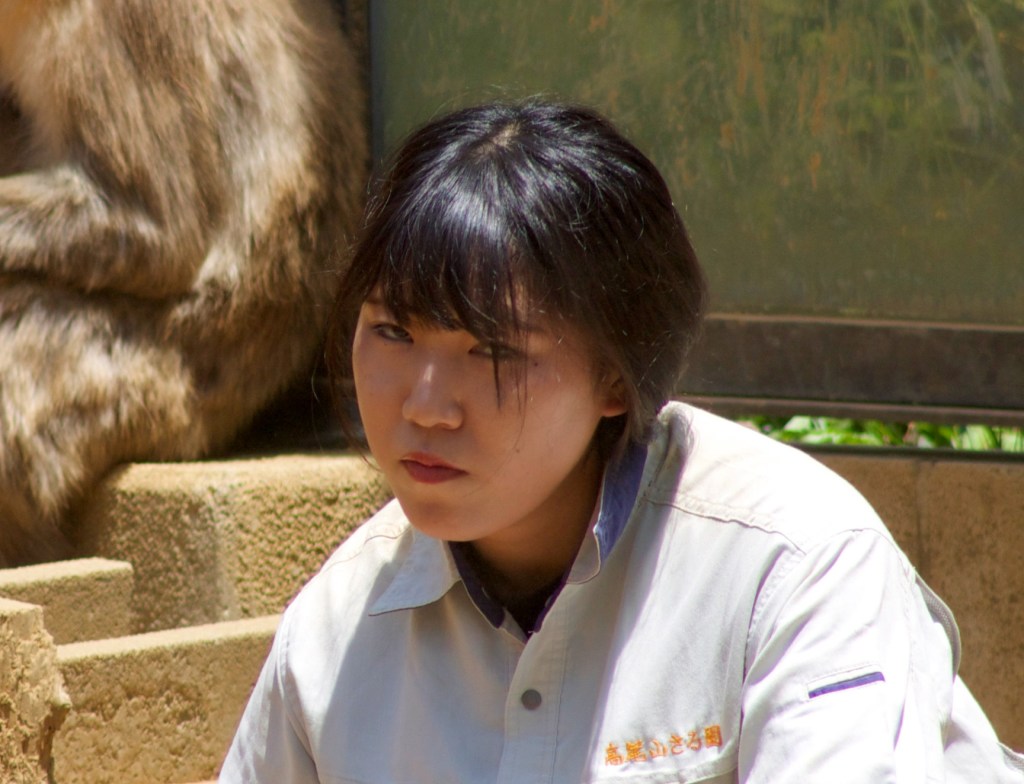
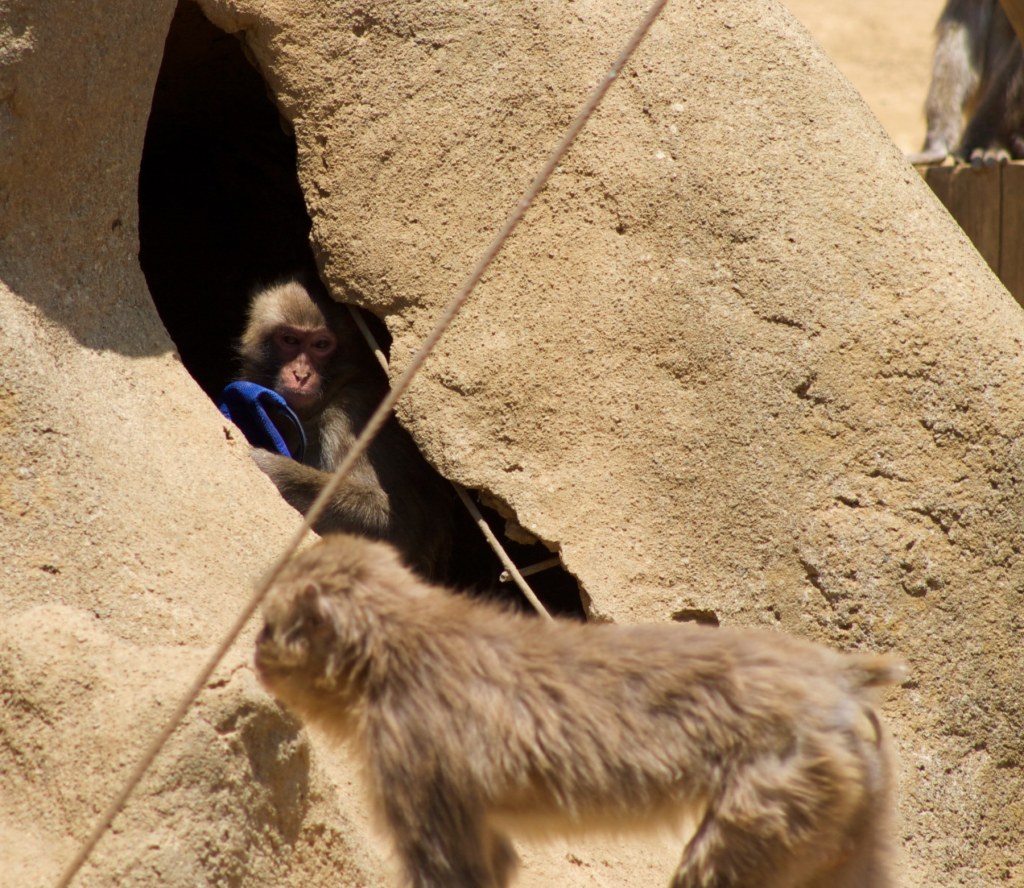
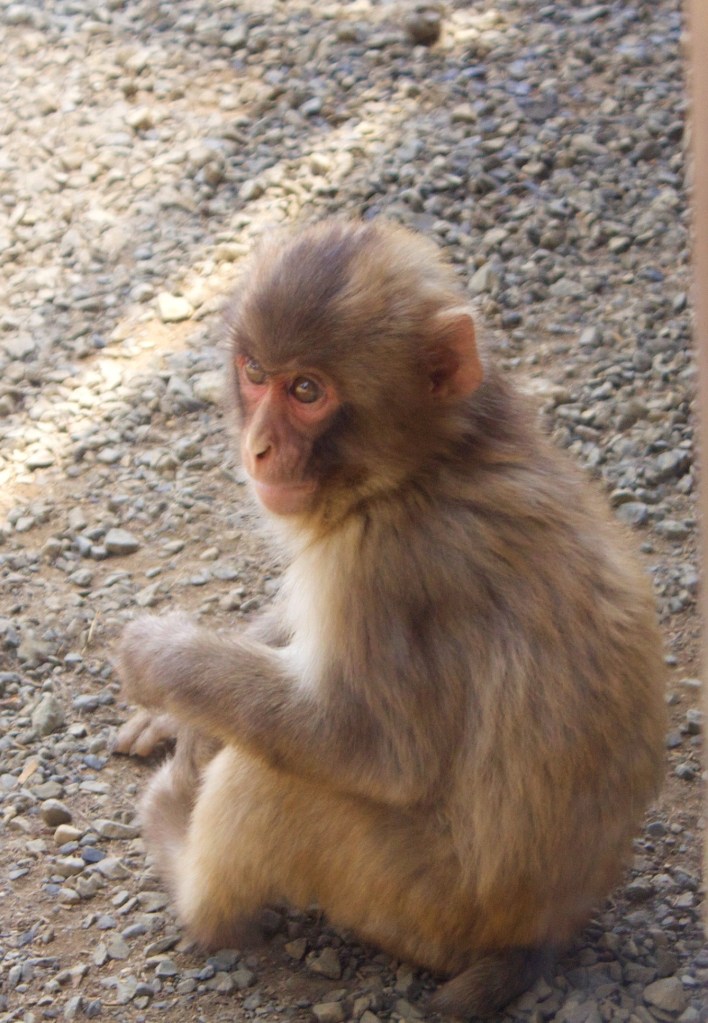
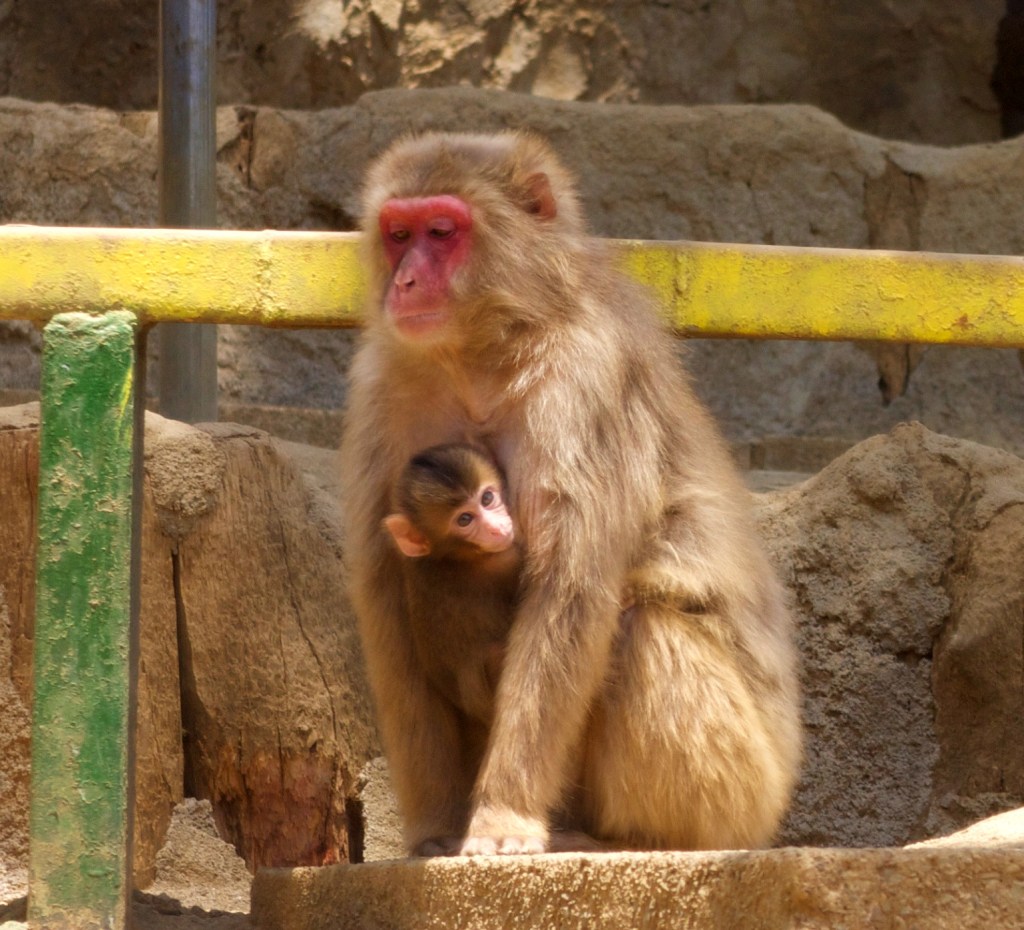
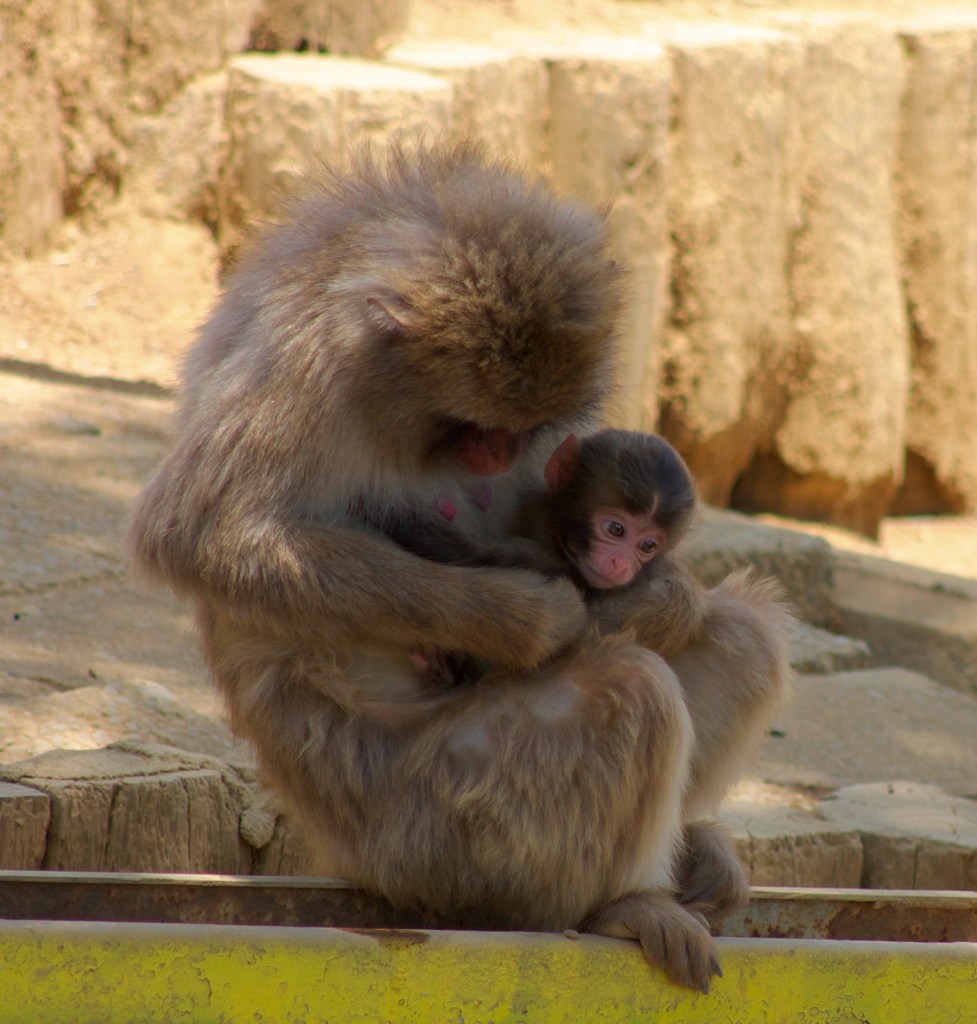
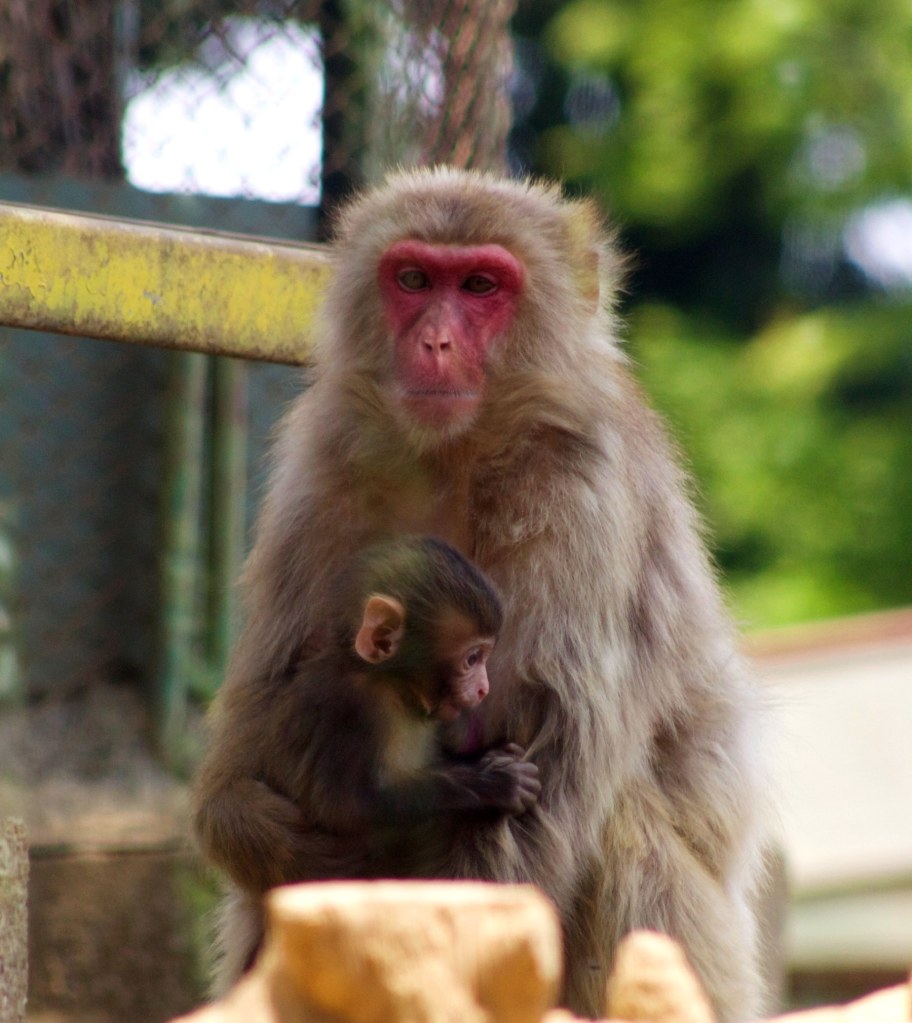
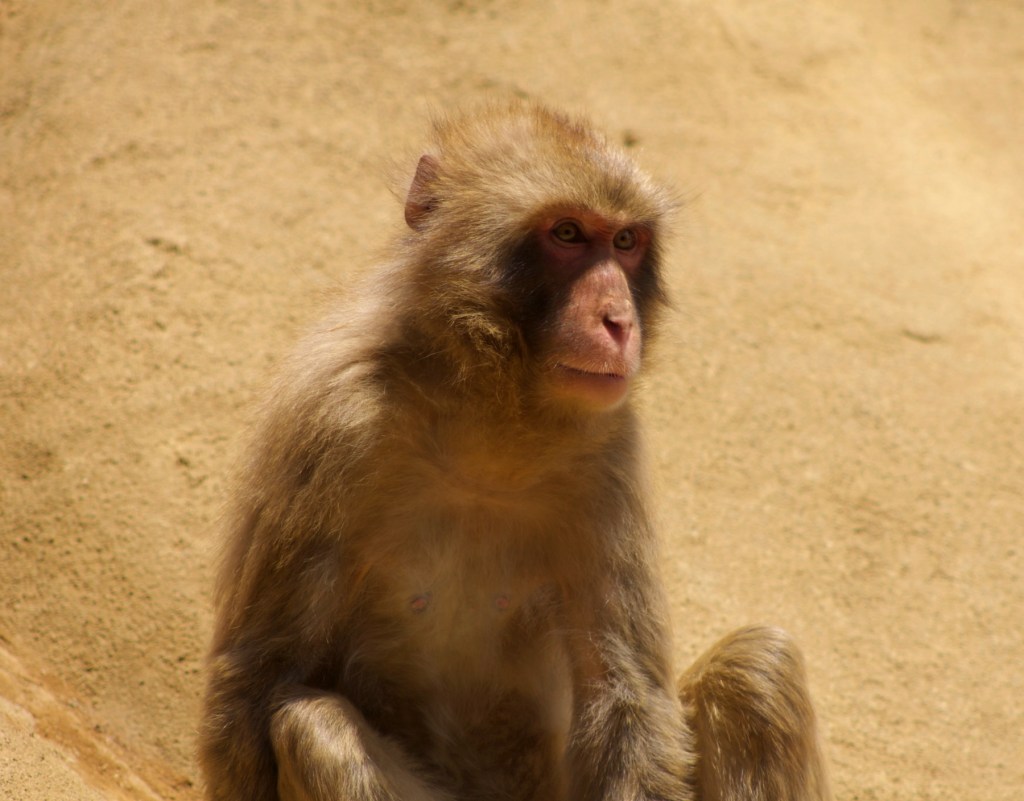
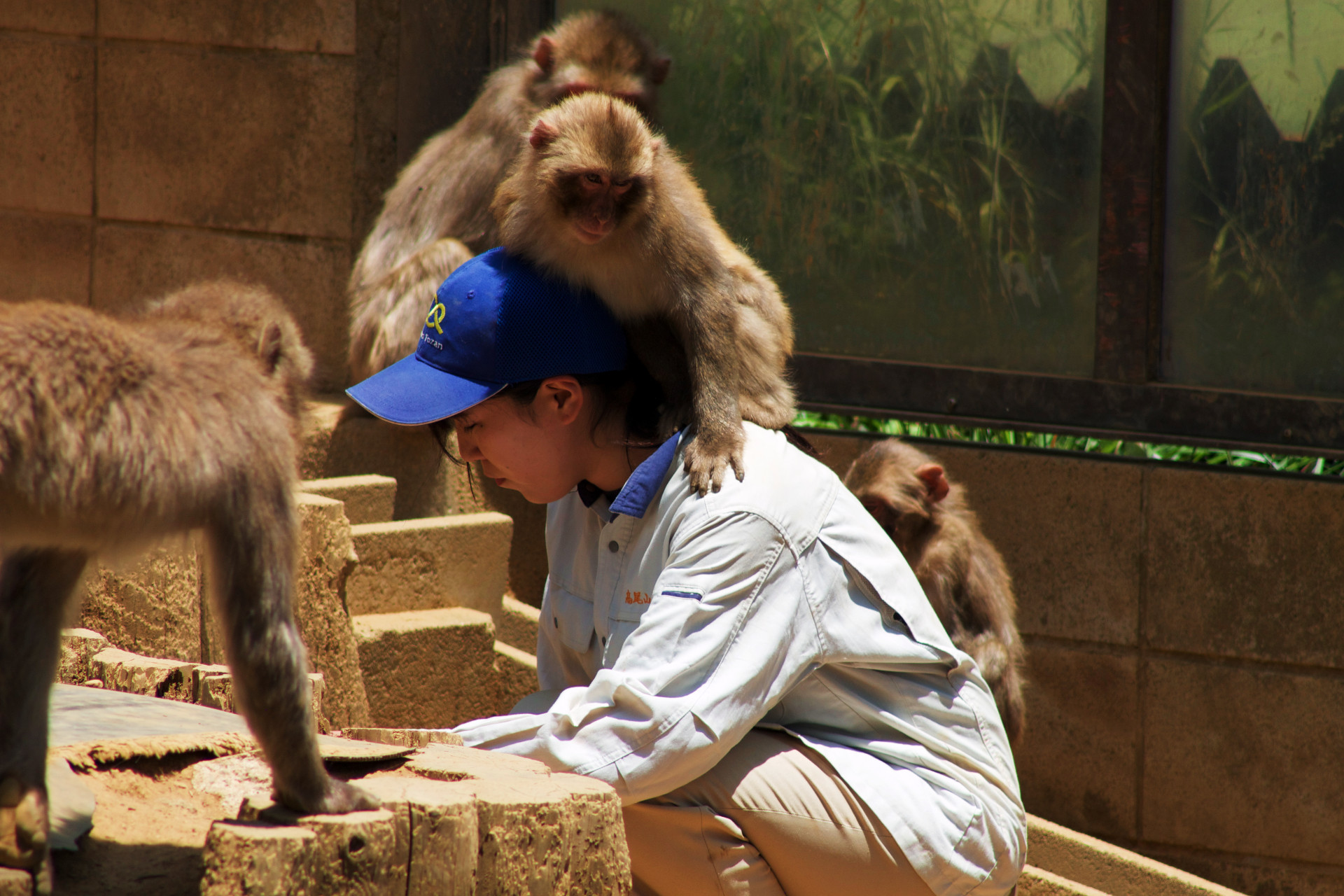
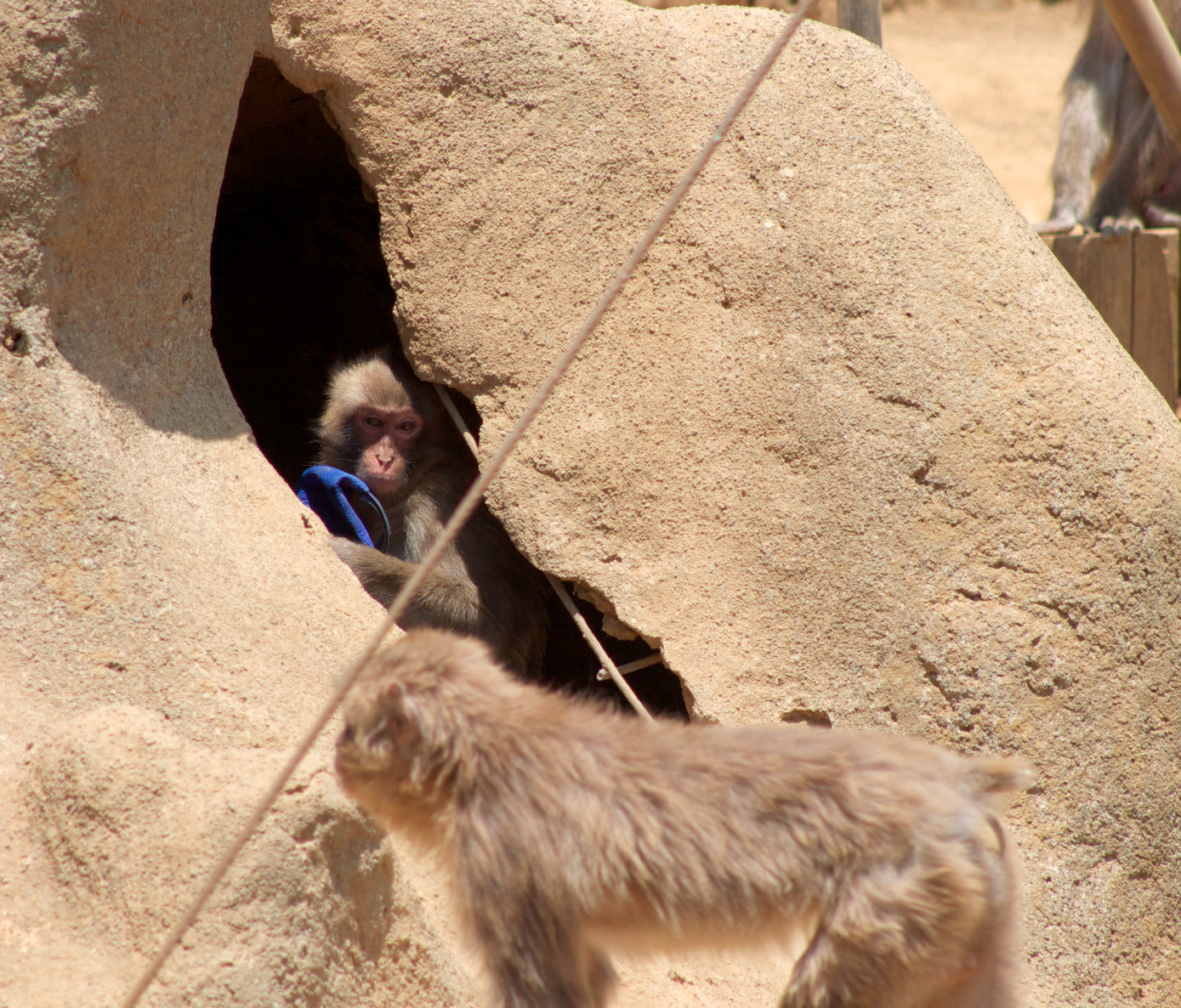
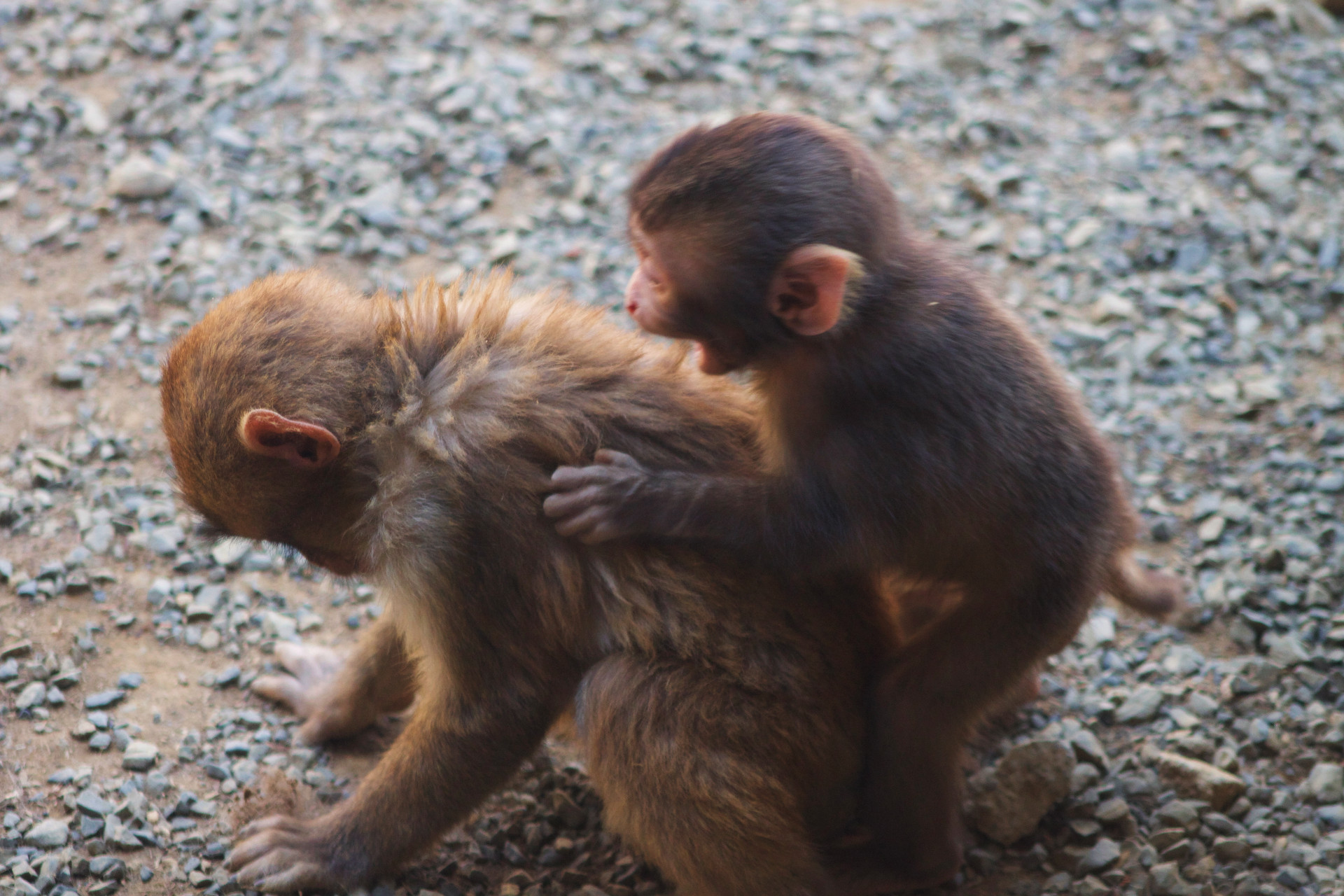
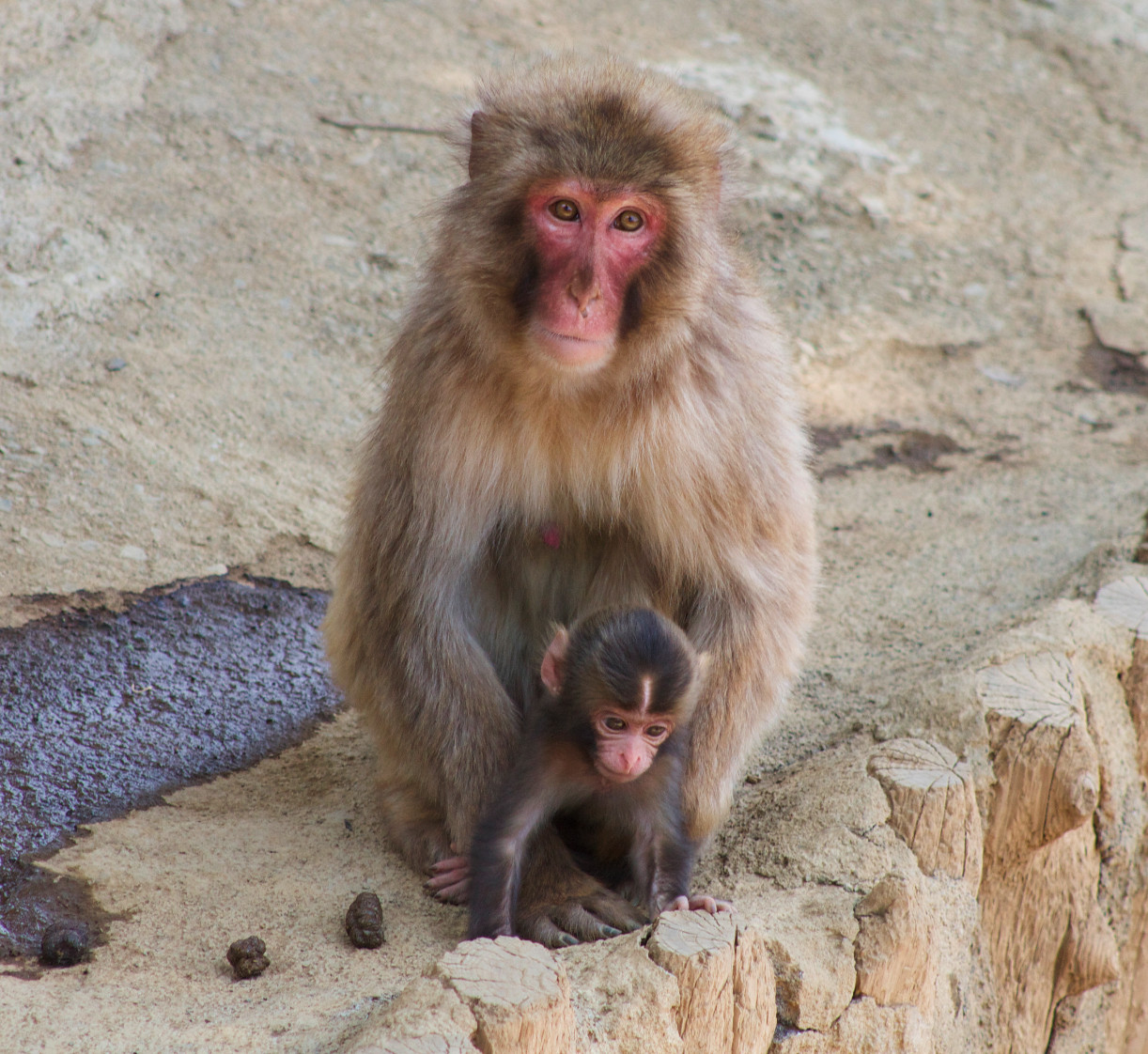
Welcome to Mount Takao! So you want to see snow monkeys?“The milk bar’s open!” Snow monkeys, aka Japanese macaques, are extremely attentive mothers. This baby is is about 8 to 10 weeks old and completely dependent on mom.“I’ve had my fill of milk, now it’s time to explore!”“But mom won’t let me go far! I’m too young to go off on my own, and mom is really protective of me.”“If I could…just…get away…for a sec!”“Come on, mom! Let me play!”A keeper at the Mt. Takao monkey enclosure. She has a hat…but not for long. Note the mischievous monkey on her shoulders, who’s waiting for just the right moment to grab her hat and run.The monkey on the left is like: “Oh crap, here it comes!”The keeper is staring daggers directly at me. There was a small crowd at the Mt. Takao snow monkey exhibit that day, and while the Hat Incident delighted the onlookers, the keeper was not amused when she saw me snapping away. I’m pretty sure she wanted to throttle me. Sorry!Yeah, she definitely hates me.Getting her hat back was not an easy task. The devious little monkey who made off with it immediately retreated into a small cave/shelter system big enough for the macaques, but too small for humans to enter. Making matters worse, there were at least four or five entrances and exits. Every time the keeper approached, the little monkey darted inside and popped up through a different hole, like a game of wack a mole. Eventually it took both keepers to retrieve the hat.“Oh, you know, just chillin’.”I was super close to this little lady. She was probably about two or three years old.Macaques live in troops of up to 300 members, and their societies are matrilinear, meaning an individual monkey’s “rank” in the troop’s social hierarchy is determined by who their mother is.
Macaque troops are headed by alphas who are the strongest males and deal directly with protecting troop members, but the matriarch runs most aspects of troop life.
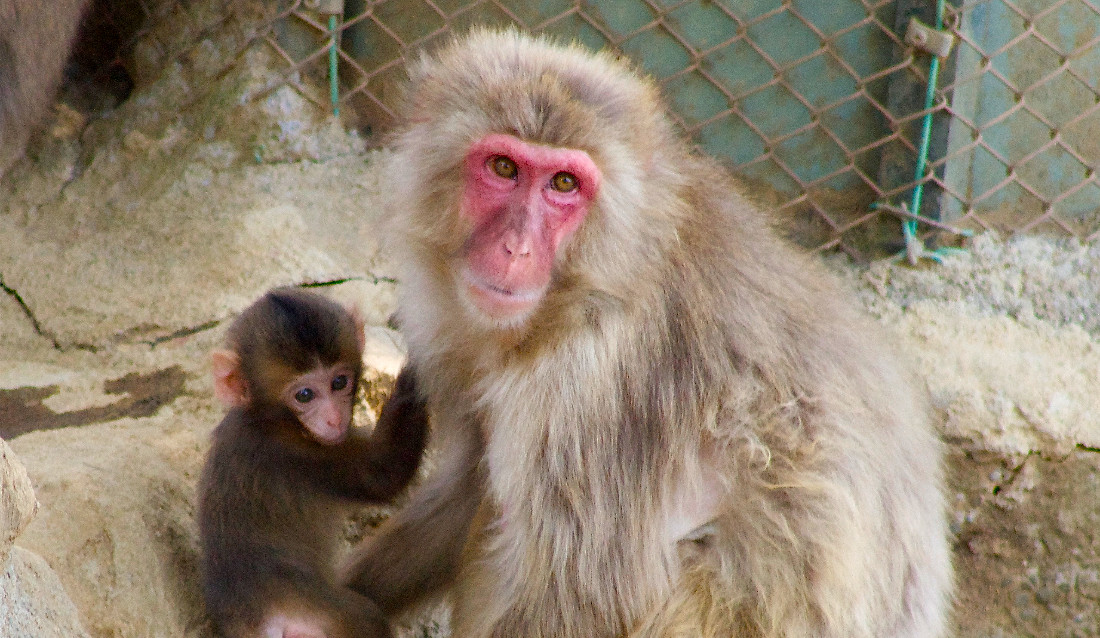
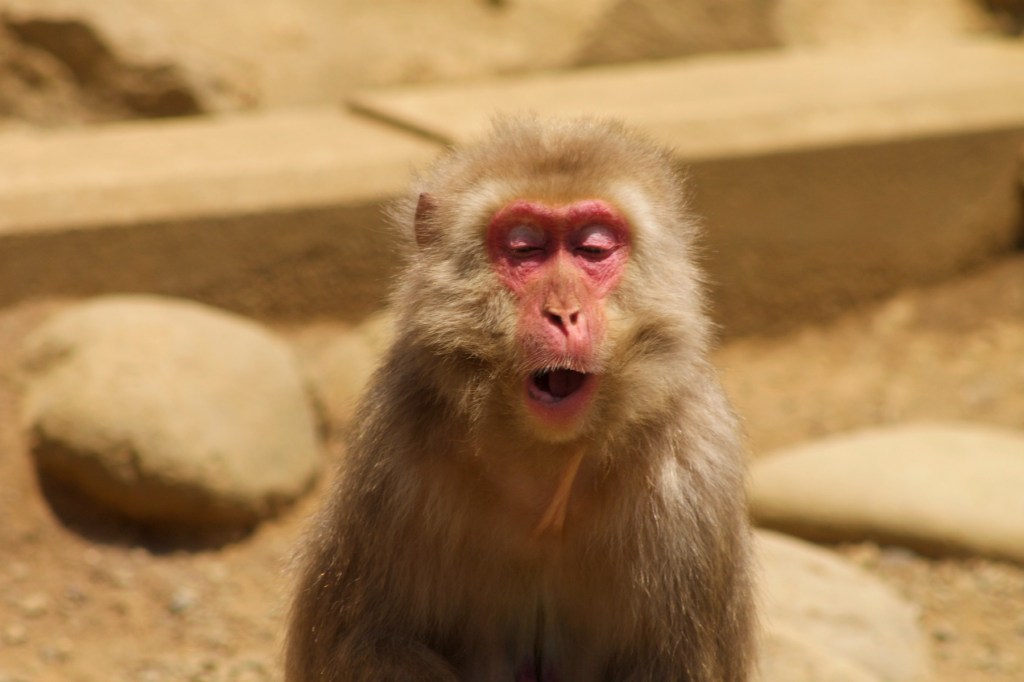
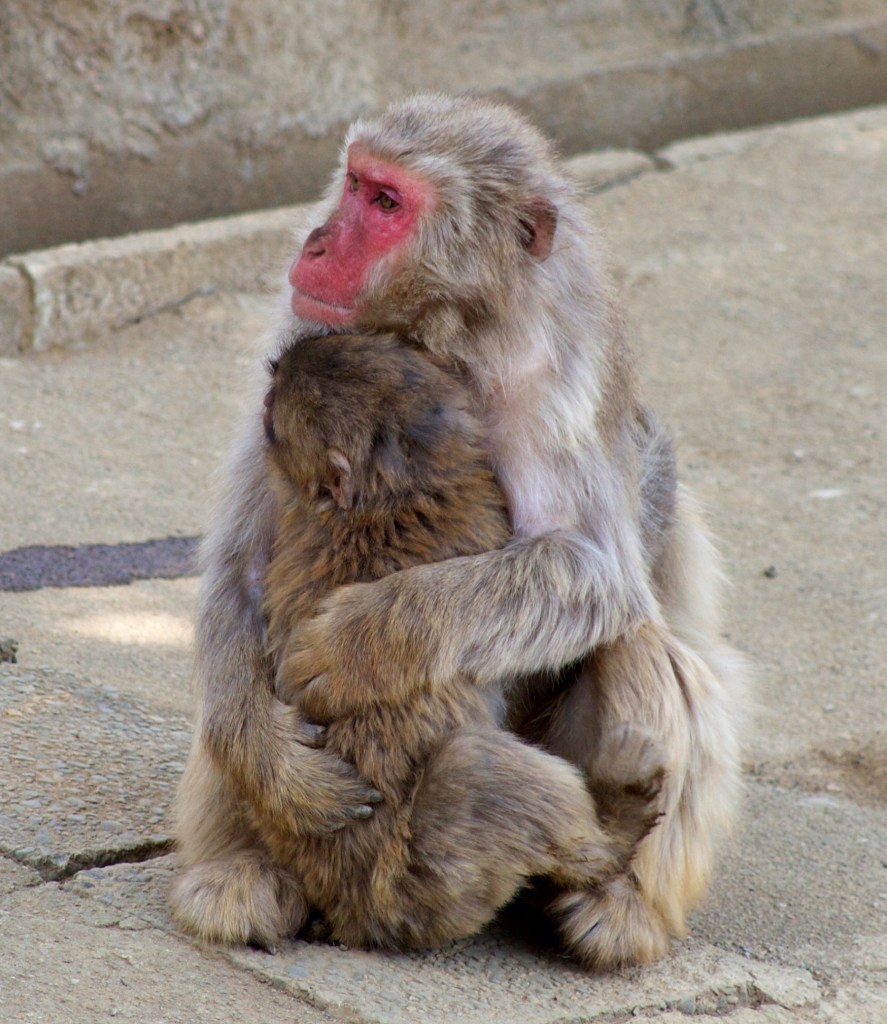
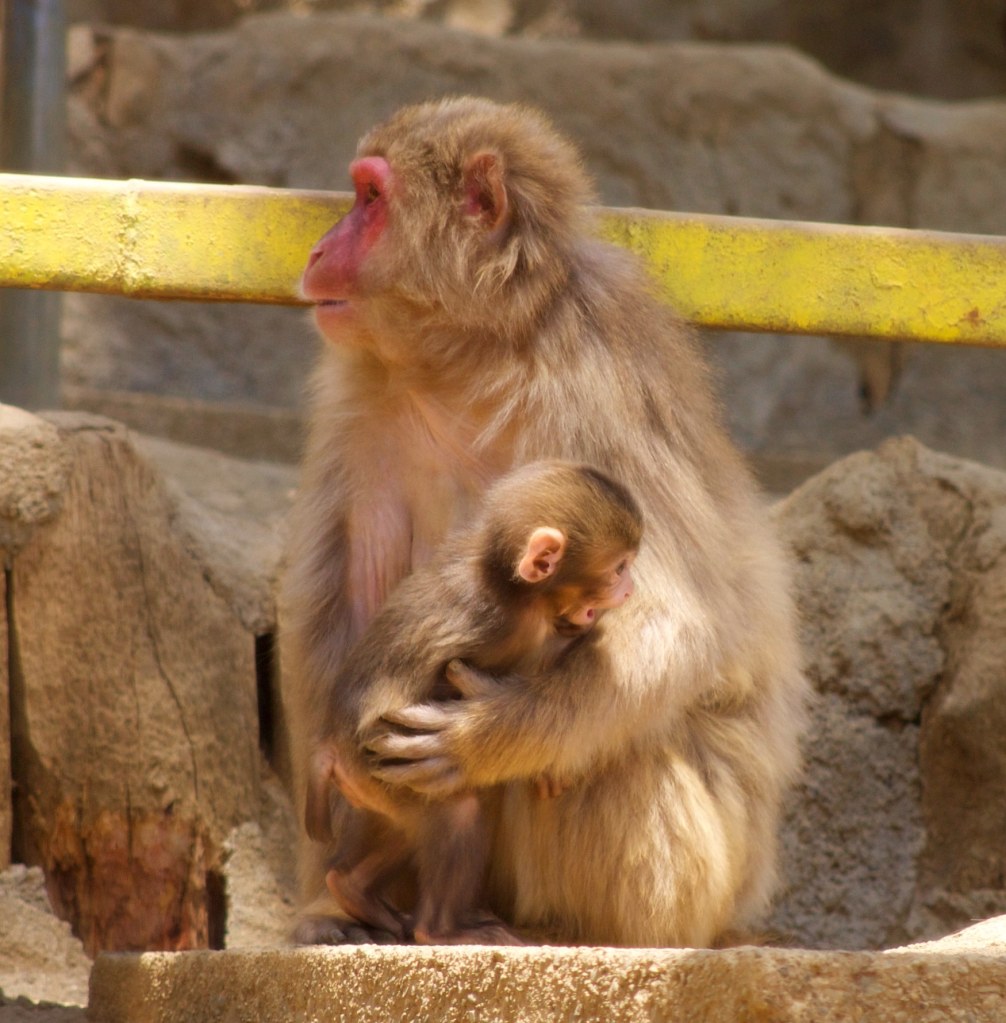
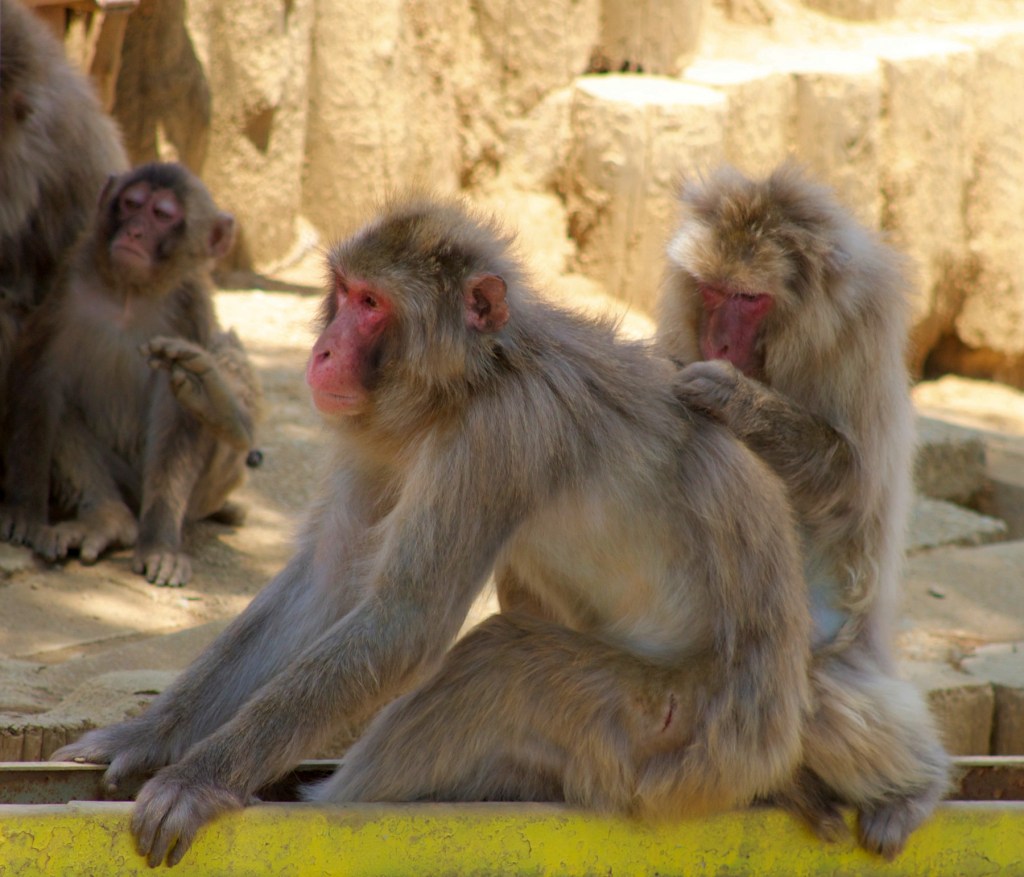
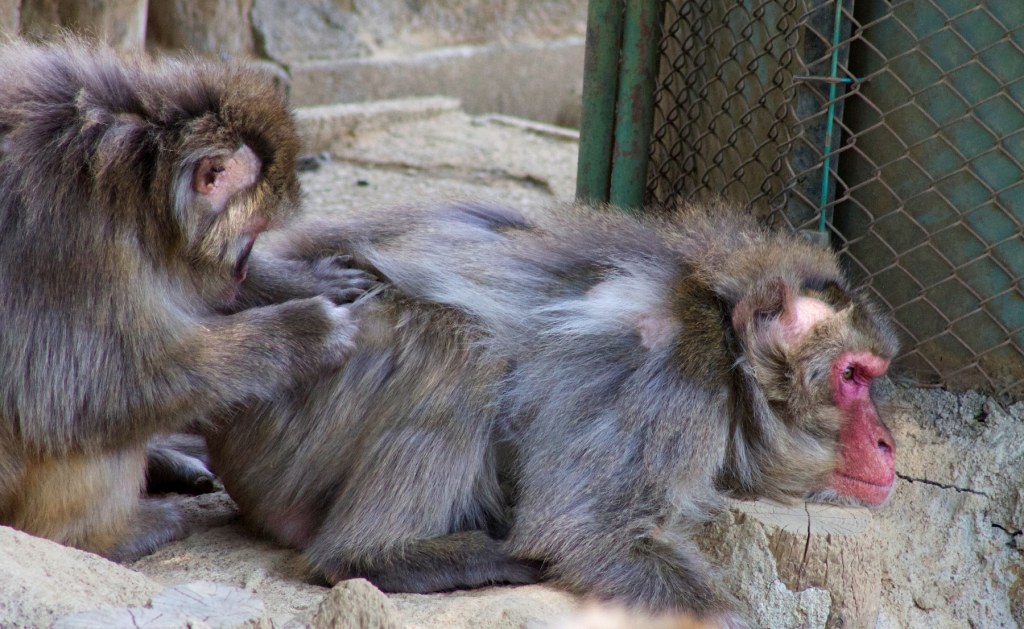
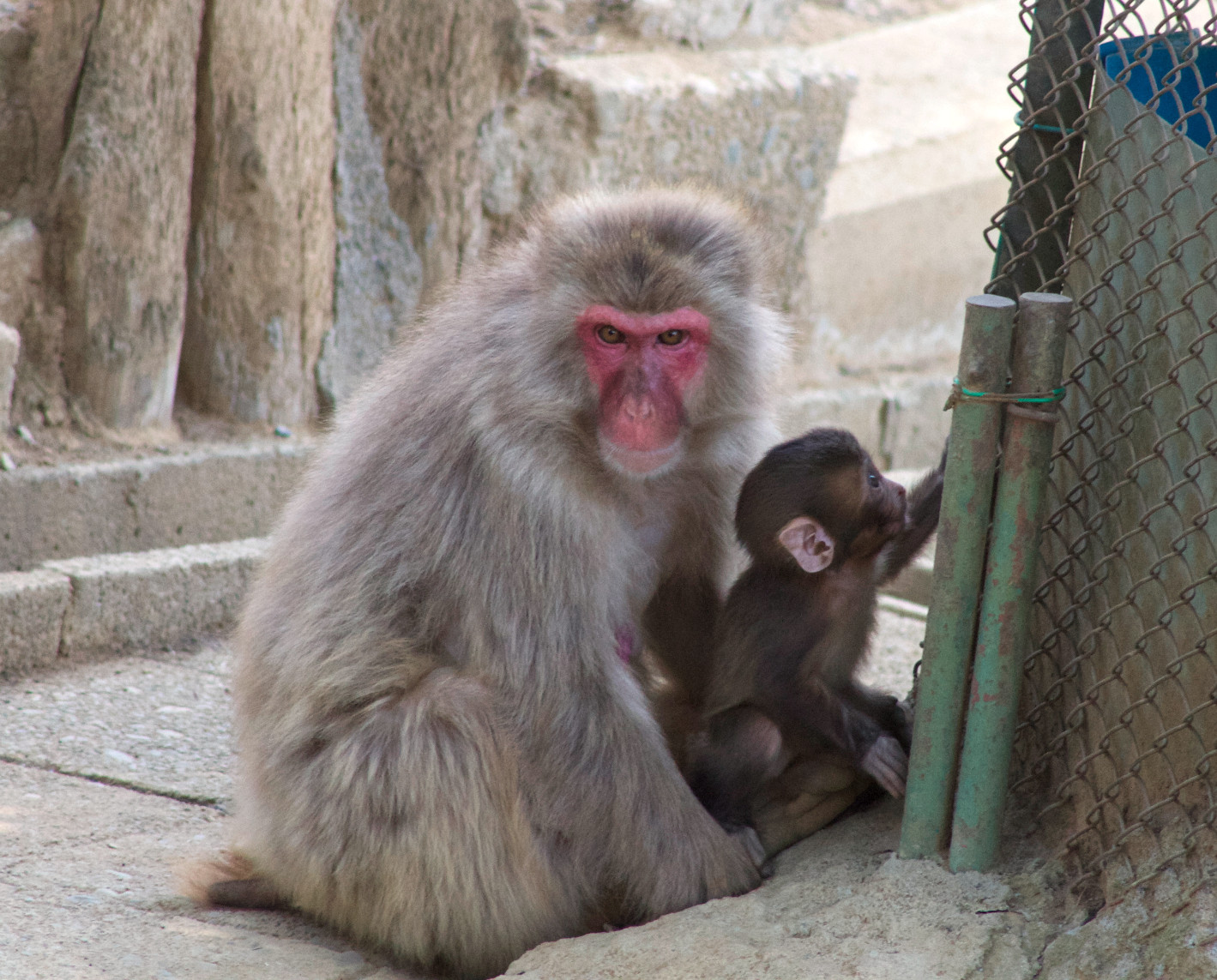
Here, a snow monkey mom hugs her child. The bond between moms and their kids is strong. Daughters stay with their mothers and their troops for life, while sons remain in the troop until they’re about five years old, at which time they depart to avoid inbreeding. They often go on to live as bachelors in small groups before joining or starting their own troops.This baby is geckering. A gecker is a “loud, pulsed vocalization” usually described as a “broken, staccato noise.” People often think of it as a baby macaque throwing a temper tantrum, but it’s more than that, and it’s involuntary, meaning the babies can’t control it. In plain English, it’s a noise, accompanied by spasms and made by babies and young macaques when they’re particularly upset. Babies usually gecker when they’re separated from their mothers, being bullied by older monkeys, or in situations when they want to nurse but their moms won’t let them. Another mom with a young nursing baby. This baby is a bit older than the one above, probably about three months old.The first baby again. Notice how mom is grooming the baby. Grooming is an important aspect of macaque social relations, in addition to serving the practical function of clearing insects and other debris from fur.More social grooming. The monkey on the right is attentively picking insects from the fur of the monkey on the left.He’s big, he’s old, he’s battle-scarred. He’s the alpha, and he always gets groomed first, whenever he wants. He also eats first, enjoys the best lounging spots, and gets to mate with his choice of females. In the wild, alphas don’t retain their thrones long, often being deposed within a year or two. Extraordinary alphas who keep their troops in good stead and enjoy an aura of invincibility can last a decade or longer.Babies nurse for as many as two years and spend almost the entire first year of their lives holding onto their moms. That’s one reason why the practice of buying baby monkeys — or any monkeys — as pets is incredibly cruel, and it’s why pet monkeys are always seen clinging to stuffed animals. They’re taken from their mothers within hours or days, and they need the tactile comfort of holding onto — and being held by — their mothers.
Harry Harlowe’s infamous experiments in the 1960s proved that the physical comfort of being held is crucial to the psychological development of all primates, humans included. If a baby is denied that, the consequences manifest as severe psychological issues later in life.A male member of the troop. It’s not clear if this guy was brought in from another captive troop elsewhere in the country, or if he’s native to the Mt. Takao troop. If it’s the latter, at his age — about four or five years old, give or take — he’ll be expected to soon depart. Young males leave their troops to avoid inbreeding and potential violence as they become stronger and are viewed as potential rivals to the alpha and/or his lieutenants.
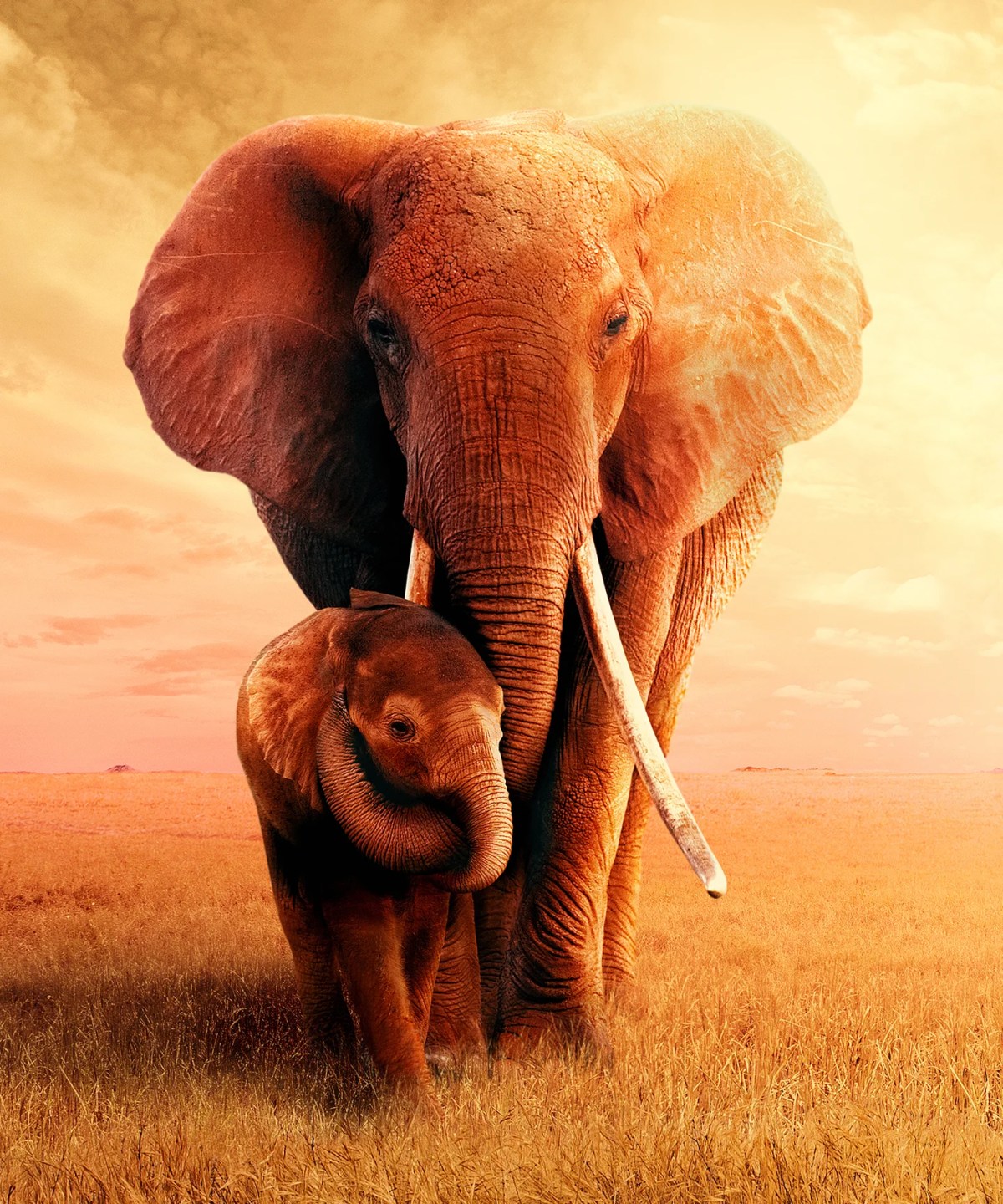
The filmmakers spent four years with matriarch Athena and her herd.
Athena learned the seasonal migratory path from sanctuary to sanctuary from her mother, who in turn learned from her mother, in an unbroken chain that goes back as long as elephants have walked the savanna we call the Maasai Mara.
Every bend, every life-sustaining water hole, every spot where the most nutritious plants grow — and especially the final resting places of her relatives, those who didn’t survive the long journeys to water and shade during drought seasons.
The 50-year-old matriarch, one of the Earth’s last “super tuskers,” has seen her family through so many difficult times that the members of the herd don’t question her even when her decisions could mean life and death for them.
She is their matriarch, and their trust in her is absolute.
During times of drought, all animals converge on the same watering holes. Credit: Apple TV
Athena is also the herd’s protector, which means being wary of humans is her default. It has to be, since humans have poached her kind to the brink of extinction to feed the insatiable Chinese ivory trade.
Filmmakers Victoria Stone and Mark Deeble spent four years with Athena and her herd while filming The Elephant Queen, and earning Athena’s trust was a laborious process.
At first, the wise matriarch wouldn’t let the documentary team anywhere near her family. That slowly began to change as they showed her they meant her no harm.
“But we could see that with her herd, with her family, she was a really calm, beautiful, temperate matriarch,” Deeble explained after a film festival screening of the documentary “And we would just spend time with her.”
‘Over the course of several weeks, Athena had allowed the small crew closer and closer, until they were about 40 meters from her. One day, Athena walked away to let her calf stand between her and the crew. That’s a rare occurrence for a mother.
“At that stage two things can happen,” Deeble said. “Either she can realize that it was a mistake, and if we’re in the middle of them we’re going to get trampled, or, and what I like to think happened, she was just testing us. Because after a while, she made a very low rumble and the calf looked up, and she wandered very calmly around the front of the calf. And from that day on, she allowed us amazing access.”’
The Elephant Queen first finds Athena’s herd during a time of plenty, when water and food are abundant, and the herd’s babies — curious Wewe, a boy, and little Mimi, a female and the youngest member of the herd — get to splash around and explore their new world.
Satao, a male “super-tusker,” arrives at the watering hole for hydration and to find a mate. Credit: Apple TV
But every year there comes a time when the water hole starts to dry out and the herd must begin a long march spanning more than 100 miles to reach a more reliable source of water.
The year Stone and Deeble began following the herd, the drought was so severe that Athena made the difficult decision to march for a far-off sanctuary, the closest known permanent water hole fed by an underground spring.
It’s a long, exhausting journey, and newborns can’t make it, so Athena is forced to delay their departure for as long as she can to give Mimi and Wewe enough time to feed and grow stronger.
Elephant calves are dependant on their mothers’ milk for two years. Credit: Wikimedia Commons
The gestation period for African elephants is about two years, and the entire herd is protective of the babies. The adults cooperate to shield them from predators and the sun, using their bodies to do both. They’re also extremely cautious around hazards like rapidly drying mud holes, which can trap young elephants.
The Elephant Queen’s stars are its titular species, but the documentary does an outstanding job not only showing us the other animals who inhabit the elephant kingdom, but also making clear the many ways those animals depend on elephants for their survival.
From geese, frogs and terrapins who rely on elephants to dig water holes, to dung beetles for whom elephant waste is a bounty, to kilifish whose eggs hitch a ride on the massive animals toward the next water source, the entire ecosystem is balanced on the broad backs of the gentle giants.
As narrator Chiwetel Ejiofor (Doctor Strange, The Martian, 12 Years ASlave) notes, elephants are tactile creatures, and when they nudge a terrapin or knock a frog off a tree branch, it’s curiosity, not malice, that motivates them. They’re herbivores, despite their enormous size, and gain nothing from harming other creatures.
Credit: Wikimedia Commons
It’s impossible to watch a documentary like this without looking into the eyes of elephants like Athena and wondering about the intellect behind them, the thoughts and emotions that motivate their actions.
In one scene, as Athena leads her herd through a parched landscape with nothing but dust and dead trees in every direction, she stops. There’s no water or food. There’s only an elephant skull, the remains of a family member who died on one of the treacherous journeys toward refuge during drought season.
The elephants crowd around the skull, gently running their trunks along its tusks the way they do every day to greet one another. Even with the body long since decomposed, with nothing but a skull remaining, they recognize one of their own.
Some will dismiss the idea that the elephants are mourning, claiming that ascribing emotions to animals is anthropomorphizing them. But if they’re not mourning, what are they doing? If they’re not remembering an individual they loved, why would they stop when it’s crucial to find water and food?
Indeed, the only other time Athena calls a halt is when one of her pregnant sisters goes into labor.
Credit: Wikimedia Commons
Documentaries like The Elephant Queen don’t exist solely for entertainment value. Despite intense efforts to protect elephants, poachers still kill an estimated 20,000 each year.
Just 100 years ago, 10 million elephants inhabited almost every corner of Africa. A 2016 study put their number at 415,000, and while there have been successes in conservation efforts, it’s difficult to ascertain whether they balance out the relentless poaching and habitat loss.
The Elephant Queen acknowledges threats to the continued existence of elephants, but doesn’t dwell on them. There’s good and bad to that: in some ways it’s a missed opportunity to galvanize viewers, but it also ensures the film is family friendly, without gore or violence. The film doesn’t sugar coat the fact that nature is unforgiving, but you’re not going to see a poacher raid on a herd.
The Elephant Queen is an Apple TV documentary and premiered on the streaming service after a limited theatrical run. I stumbled upon it as a subscriber after it appeared prominently in the app.
And while it was released in 2019, its message is still as relevant today. Whether you’re fascinated by elephants or appreciate wildlife in general, The Elephant Queen is a great example of how powerful documentaries can be, especially in transporting us to real places that exist in our world, but remain out of reach for the majority of us.
About an hour from the heart of Tokyo, Mt. Takao offers shrines, snow monkeys and hiking paths.
I arrived at Mt. Takao’s monkey park just in time to watch an exciting part of the day for the troop: lunch.
One of the keepers entered the exhibit with a bucket of seeds, and this little guy decided he wanted a ride:
A juvenile snow monkey at Japan’s Mt. Takao hops on a keeper’s shoulder.
After a few minutes of snatching up seeds, the little monkey decided he liked the keeper’s hat, so he helped himself to it:
A young snow monkey hides from one of his keepers after running off with her hat.
The keeper couldn’t get the monkey to give up the hat, so she called in reinforcements. For the next few minutes, two keepers tried to grab a hat from one monkey hiding in a den with five exits.
It was like wack-a-mole as his little face kept popping out of the various holes only to beat a hasty retreat and try for another when one of the keepers spotted him.
Eventually they did get the hat back after the prankster grew bored.
A weeks-old snow monkey baby wants to play with her older sibling, who’s picking seeds off the ground.
Snow monkeys are macaques, just like rhesus monkeys, bonnets and long-tails. What makes them unique is the fact that they are the northern-most, coldest-dwelling non-human primates on the planet.
No other monkey or ape can tolerate the extreme cold like Japanese macaques. Most people have seen images of them in snowy Nagano, where they bathe in hot springs during the deep chill and sleep in tightly-packed “group hugs” to share body heat.
Japanese macaques live in matriarchal societies. Each troop is headed by an alpha and a matriarch. Troops have strict hierarchies, and rank is matrilineal — a monkey’s standing in the troop depends on who his or her mother is.
Females stay in their maternal troops for life, while males are driven out by the alpha and his lieutenants on the cusp of adulthood, usually around six or seven years old.
This has the benefit of removing potential challengers to the throne as well as preventing inbreeding. The ousted males will spend their next few years trying to prove themselves to new troops, or decide to start their own.
I spotted the group’s alpha in the most well-shaded corner of the enclosure, attended to by three lesser-ranked monkeys who were grooming his fur. Grooming is a big deal in macaque society — it’s one of their primary social activities, where relationships are forged and problems smoothed out.
It pays to be king: The alpha always eats first, has first claim to choice spots and first crack at propagating his DNA.
Also present were two nursing moms with infants. Macaques, especially Japanese and rhesus monkeys, are extraordinarily dedicated mothers.
A snow monkey mom encourages her baby to take a few steps.
Babies spend almost the entirety of their first six to eight months of life clinging to their mothers by clutching their fur. As the babies become more ambulatory, their mothers gently nudge them to crawl, to take their first steps or climb their first obstacle.
Upon success, the babies will hop back into their mothers’ arms. Life continues that way for several more months until the babies are about a year old and start to venture further from their moms. They continue to nurse for up to two years.
A patient mother encourages her weeks-old baby to climb.
After the impromptu monkey show, I met up with my brother and we made our way up mountain toward several shrine complexes and temples.
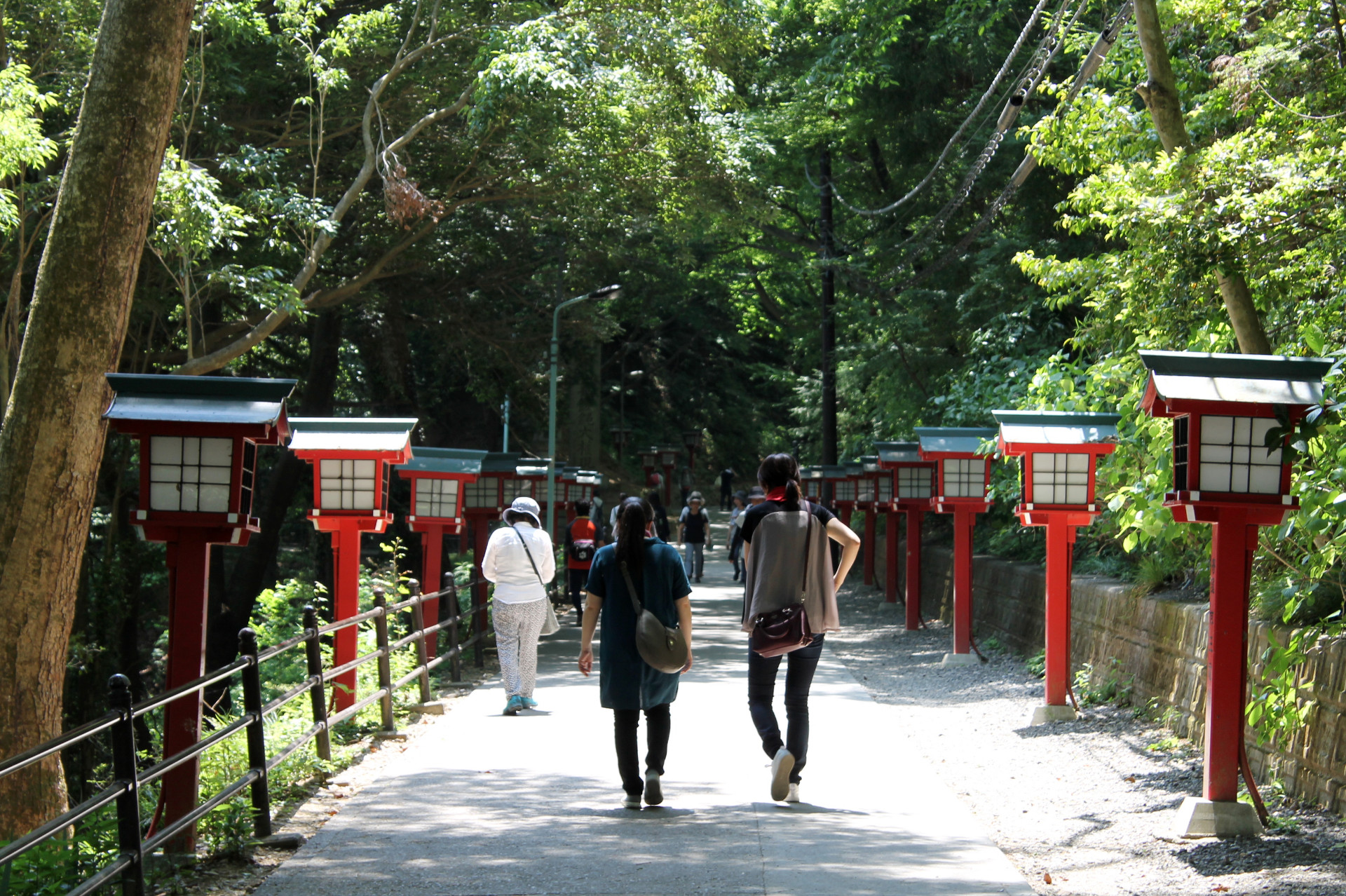
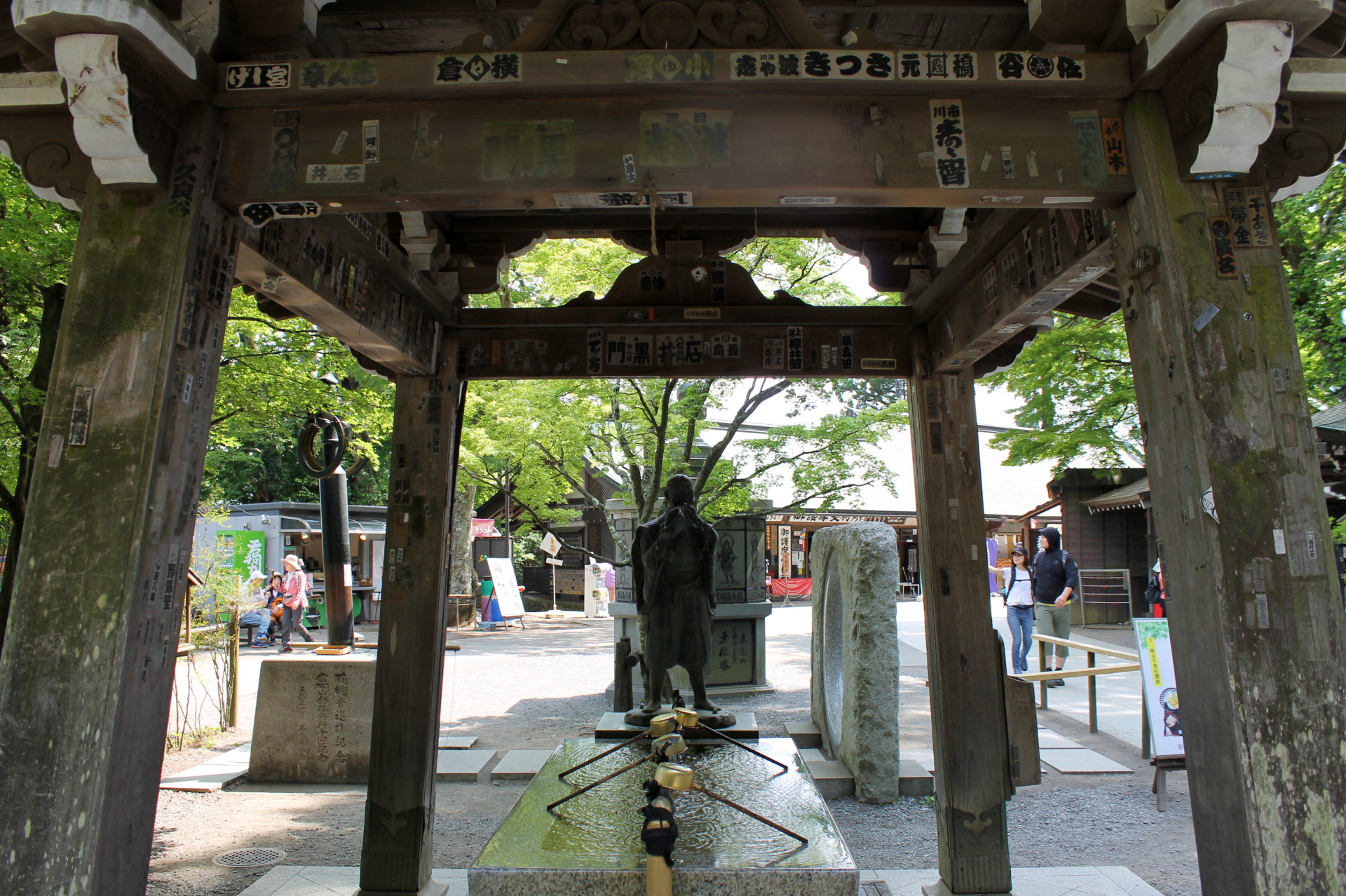
Visitors make their way toward a shrine on Mt. Takao.
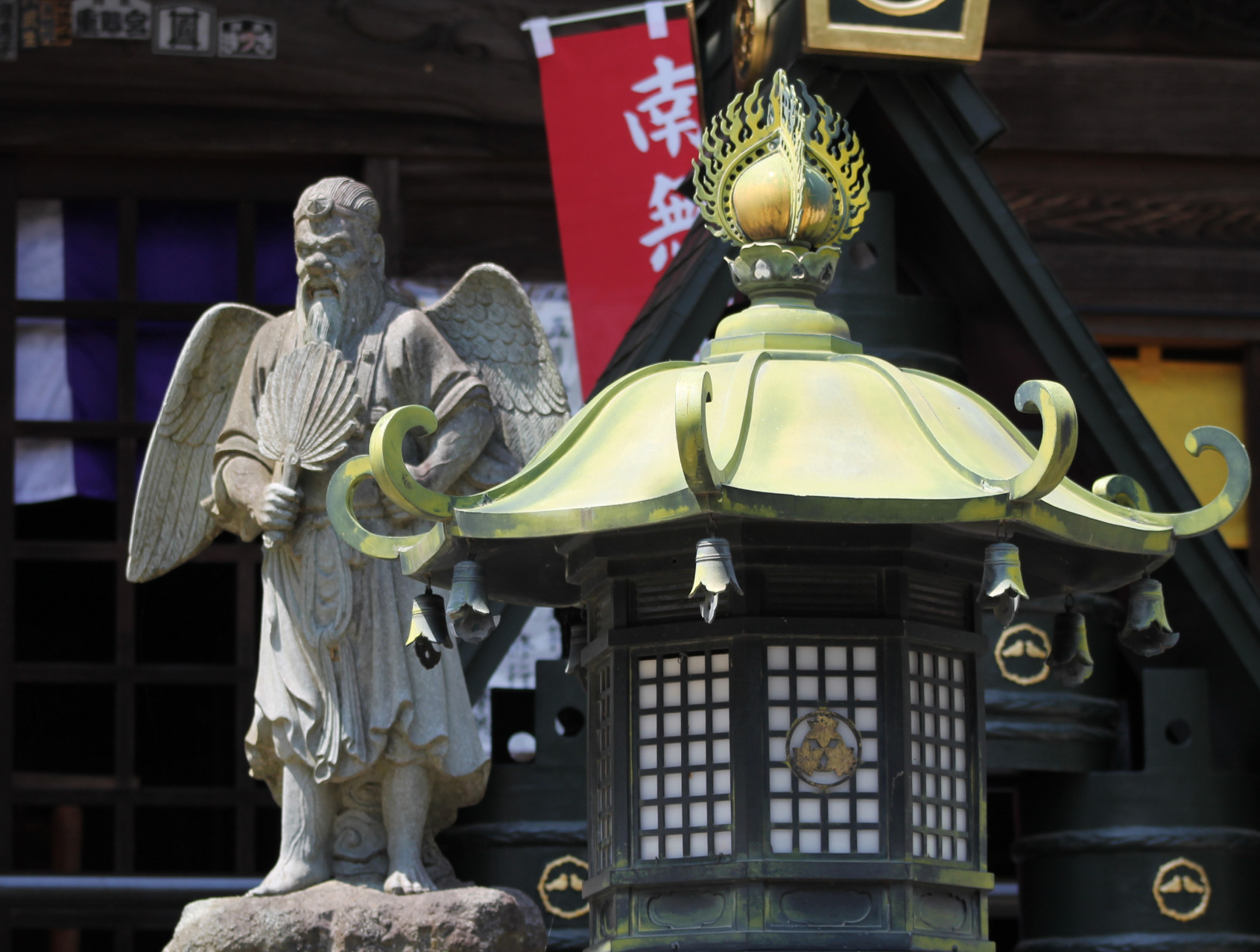
Mt. Takao tops out at 1,965-ft, and the ascent to its peak is peppered with mixed Buddhist-Shinto shrines. They’re the real deal, with centuries-old woodwork and artifacts that date back even further.
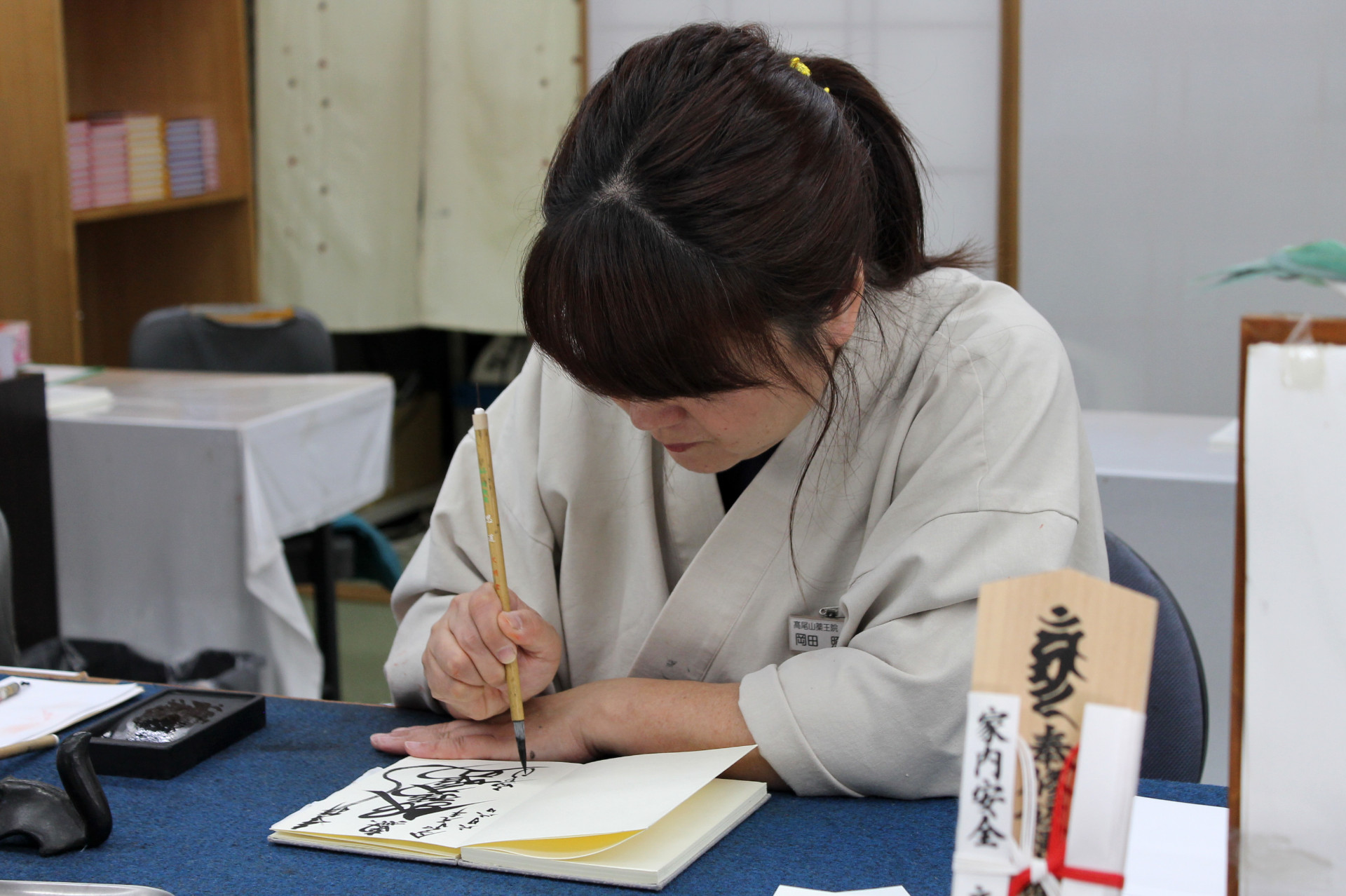
Each shrine in the country has its own unique stamps and calligraphic symbols. Visitors can buy blank books and collect stamps and calligraphy from each shrine they visit.
In this photo, a woman paints calligraphy onto a blank page with precise brush strokes:
Further uphill are the temples:
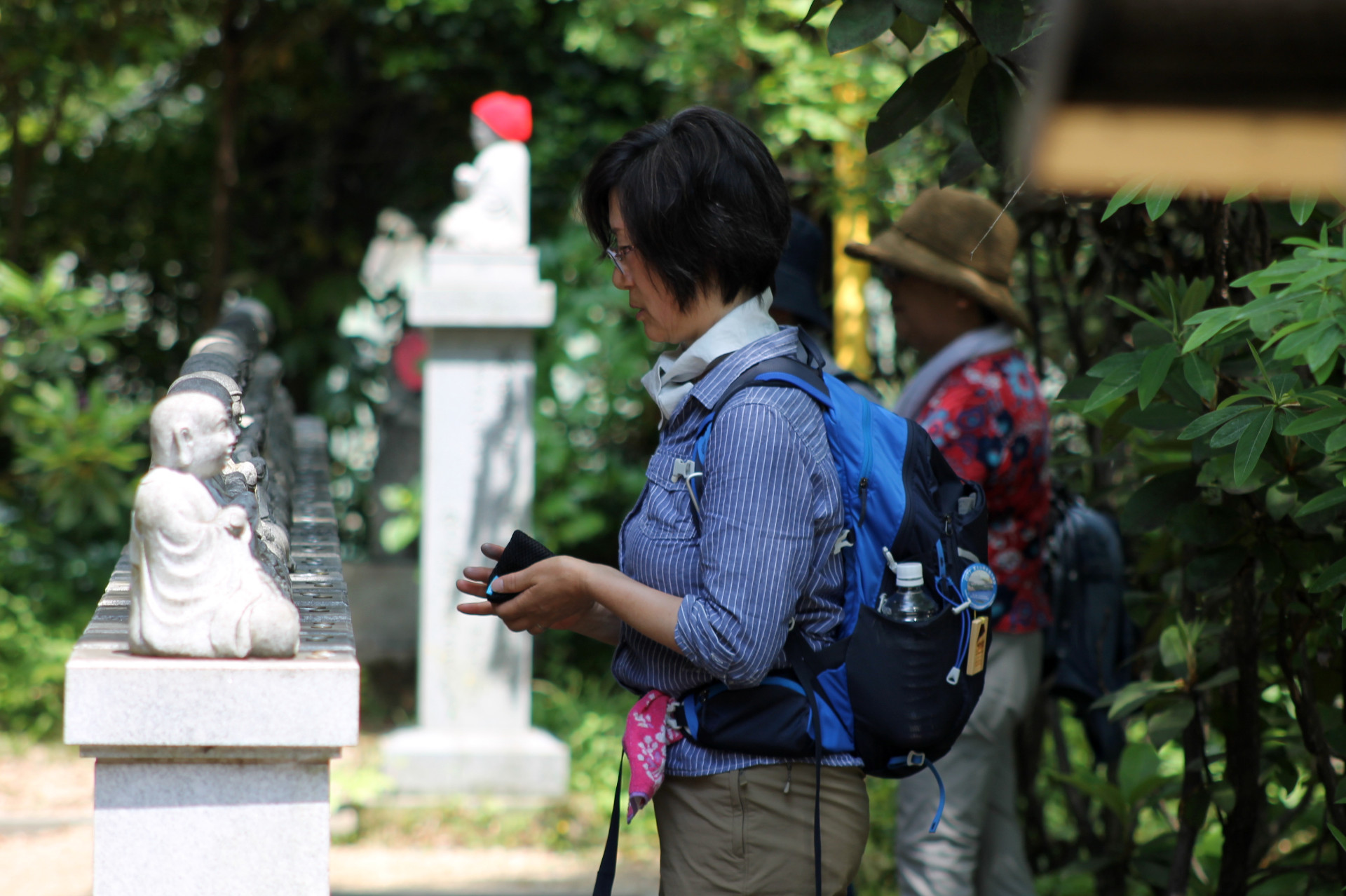
The shrines and temples aren’t just part of history, they’re sites of religious importance.
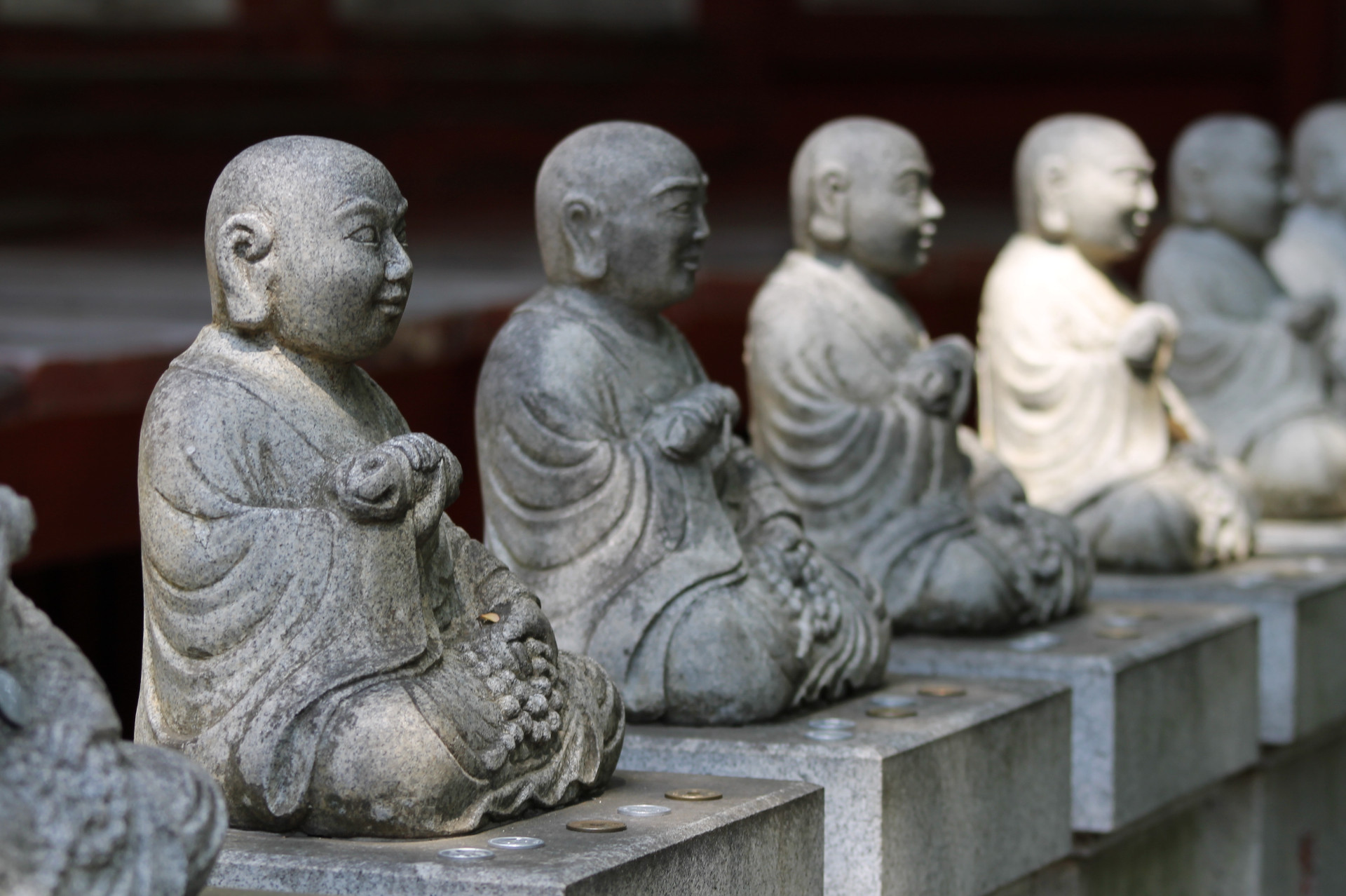
Statues of Buddha on tall plinths line a path adjacent to a medium-size temple




 Pain In The Bud