The Best Movies About Cats

A comedy, a remarkable documentary, a classic and a surprise hit make the list for the best cat-centric movies.

Keanu (2016): Jordan Peele stars as Rell, a man who is despondent after he’s dumped by his girlfriend. When a kitten shows up on his front step, Rell takes the little guy in and his life is suddenly transformed. He’s enamored with the kitten, whom he names Keanu, can’t stop talking about him, and even begins photographing him in dioramas based on famous films.

But tragedy strikes when drug dealers ransack Rell’s home, mistaking it for the small-time drug dealer’s home next door, and take Keanu. Rell and his cousin, Clarence (Keegan Michael-Key) embark on a quest to get Keanu back no matter what it takes, even if it means posing as a pair of contract killers to infiltrate the criminal world where Keanu’s been taken. It’s every bit as absurd as you’d imagine — but it’s also very, very funny. “Actually, we’re in the market right now for a gangsta pet,” is not a line I’d expect to hear in a movie, but in Keanu it works.

Flow is the surprise hit of the awards season.

Flow (2024): Even the hype of Golden Globe awards and Oscar nominations can’t take away from the powerful impression Flow makes. By now most of us are probably familiar with it through clips or trailers, but they don’t do justice to the beauty of director Gints Zilbalodis’ world, nor how naturally expressive his protagonist, Cat, is.

The animators put in an extraordinary amount of effort into understanding and perfectly replicating every feline behavioral quirk, every hackled coat and curiously bent tail. They accomplish the same with Cat’s companions, including a Labrador, a secretarybird, a lemur and a capybara. And while we’re dazzled by the visuals and energetic narrative, Zilbalodis poses a thematic question as the flood waters take the animals through the ruins of human civilization: without people, the world will go on. What would a world without humans look like? Cat and his companions tell us one story while the environment tells us another, and the result is greater than the sum of its parts.

Tiger: Spy In The Jungle

Tiger: A Spy In The Jungle (2008): What makes this documentary so special is that it was filmed over three years in an Indian tiger preserve, and the filmmakers not only disguised cameras as rocks and tree stumps, they trained elephants how to carry “trunk cams,” achieving shots which no human cameraman could ever hope to get without spooking the subjects of the film.

Tigers don’t hunt elephants because they’re simply too big. Unlike lions, they’re not feeding a whole pride, and they don’t hunt cooperatively. It’s just not worth the effort required to take down the giant, majestic beasts. As a result, tigers and elephants not only tolerate each other, they mostly ignore each other’s presence.

One of the cubs stares curiously at a camera disguised as a rock in Tiger: Spy In The Jungle

That allowed the team to get unprecedented shots of an iron-willed tigress raising a litter of four cubs by herself. We see their dens, we watch the cubs play, and we witness the incredible prowess of the mother, who according to narrator David Attenborough has a remarkable 80 percent success rate while hunting. That’s pretty much unheard of.

With four young mouths to feed in addition to herself, the tigress is determined, and also supremely skilled. The whole jungle erupts in a cacophony of shrieks and alarm calls the instant a single animal gets a whiff of the tigress’ presence, but that still doesn’t stop her from achieving her goal.

Still, the odds are against all four cubs making it, with dangers like adult leopards, sickness and hunger. Through Spy In The Jungle, we get to see the entire journey, from the newborn cubs to the confident juveniles on the cusp of adulthood. There’s no better tiger documentary anywhere.

Shere Khan, right, makes an intimidating villain in The Jungle Book (2016)

The Jungle Book (2016): With so many Disney cash-grabs in the form of live-action remakes of classics that did not need to be remade, it’s easy to dismiss The Jungle Book. The thing is, this movie has heart. Neel Sethi is an earnest Mowgli, Idris Elba voices the infamous tiger Shere Khan, and to balance out the felid villainy with some heroism, Sir Ben Kingsley voices Bagheera, the noble leopard who discovers baby Mowgli in the jungle and protects him as his wolf friends raise the boy. Lupita Nyong’o as the wolf matriarch Raksha, Bill Murray as the honey-obsessed bear Baloo and Christopher Walken as orangutan King Louie round out a great cast.
PITB Reviews: Archive 81

Netflix’s new show is a slow-building horror-drama with Lovecraftian elements.

Title: Archive 81
Showrunner: Rebecca Sonnenshine
Genre: Drama, horror
Medium: Netflix streaming

Archive 81 arrived just in time to help us through a content dead zone.

The Witcher’s excellent second season helped tide us over last month alongside Amazon’s not-so-great adaptation of The Wheel of Time, and critically-lauded The Expanse ended its six-year run on Jan. 14. Meanwhile, if network TV is your thing, the last few weeks of January through early February are filled with nothing but reruns as networks are loath to put any original content up against the NFL playoffs and Super Bowl.

Enter Archive 81: A story that promises mystery, Lovecraftian horror and a heavy dose of 90s nostalgia.

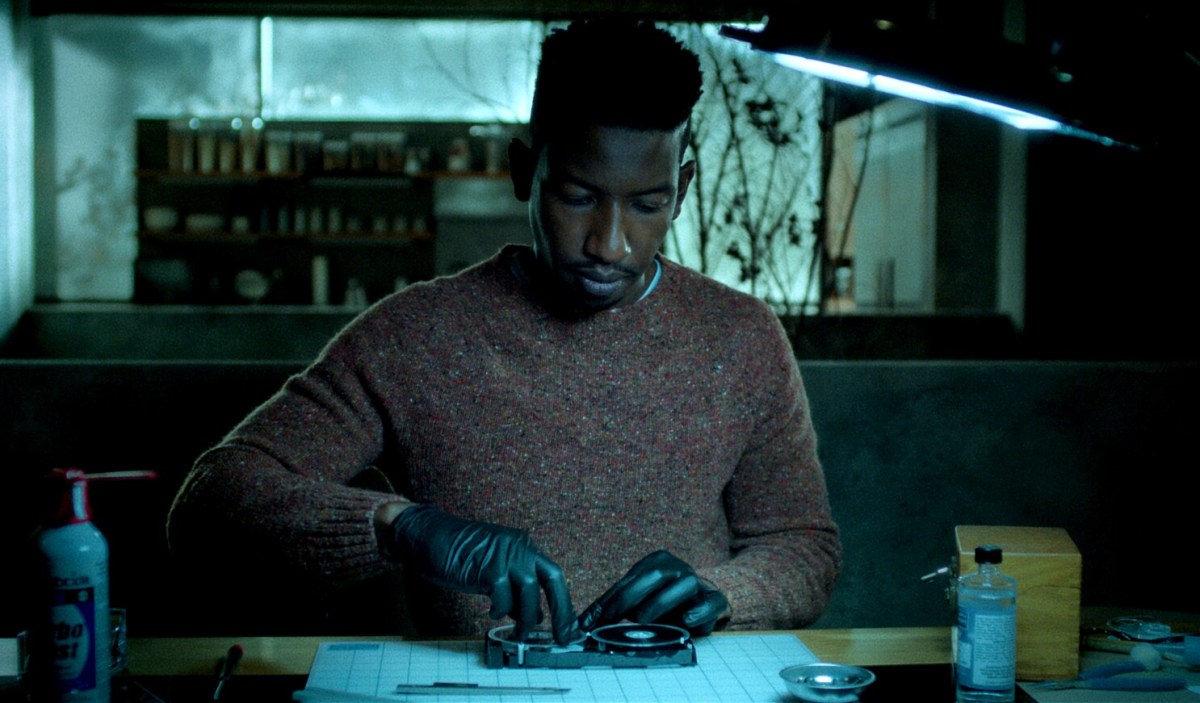
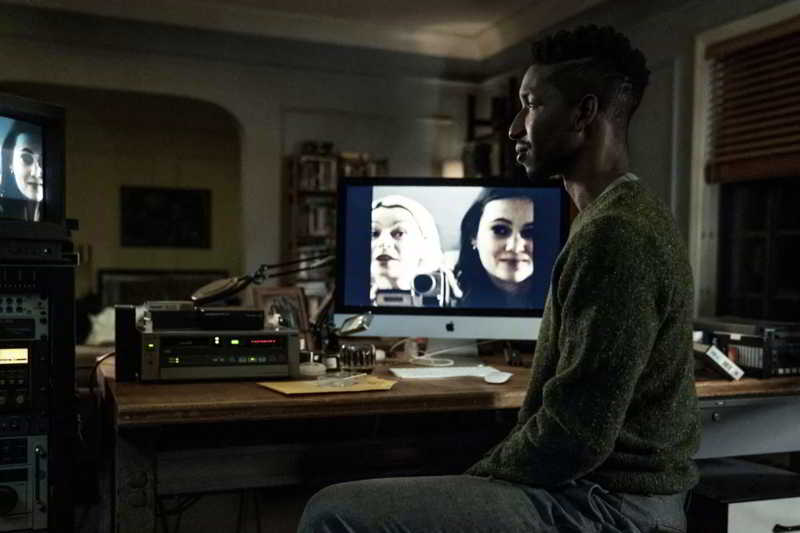
Our protagonist is Dan Turner (Mamoudou Athie), an analog enthusiast who makes a living restoring vintage media (VHS, cassette, Betamax and anything else pre-DVD), and spends his off hours crate-digging for rare recordings.

We meet Dan as he’s looking through recently-acquired VHS tapes at a street vendor’s stall in Manhattan.

“You know last month you sold me 16 hours’ worth of a T-ball tournament, yeah?” Dan asks.

“Yeah. But also, I sold you an uncut version of Phantasmagoria off channel 7,” his street vendor friend says. “That’s unreleased and very rare.”

When Dan balks at buying a box of random tapes, his vendor friend appeals to the hobbyist in him.”Look,” he says, “I know you love the hunt.”

“The hunt” he’s referring to is the obsessive drive that prompts collectors of all types to sift through yard sales, estate auctions and abandoned storage units. It’s the thrill of opening the unknown with the knowledge that most of it will be junk, but every once in a while a nondescript box will hold a rare gem.

It’s the thrill of the hunt that leads Dan to accept an archiving gig from a secretive company despite concerning red flags.

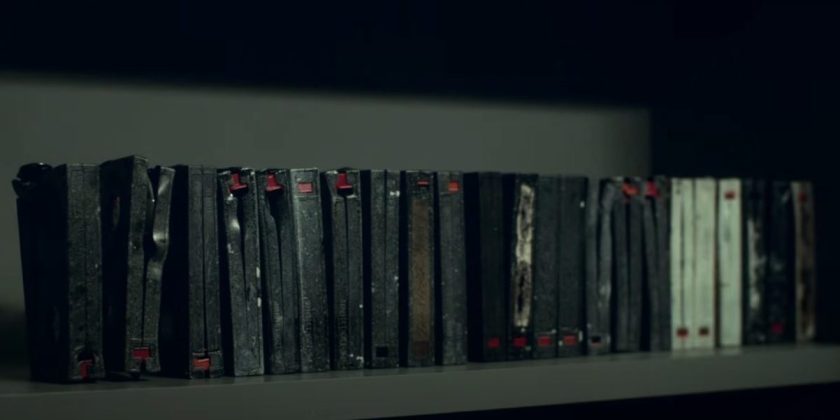
The job is to restore an archive of video cassettes scavenged from the charred ruins of a Manhattan apartment building called the Visser that burned to the ground in 1994. No one survived the building-consuming fire, and Dan’s employers believe the tapes could shed light on how the fire started as well as the people who lost their lives.

51830126744_58e4390572_o
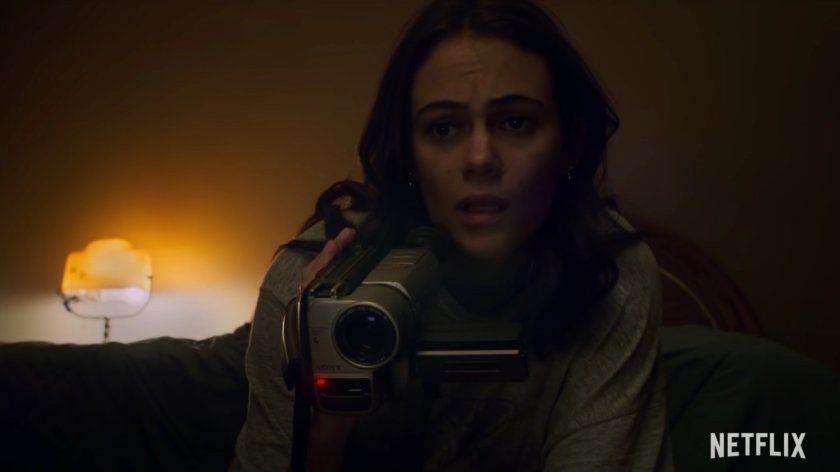
Dan finds himself increasingly invested in the story of Melody Pendras, who lived on the Visser’s fourth floor before the building was destroyed by fire. Credit: Netflix
Archive-81-tapes-e1642861568554
Dan is hired by a company to restore fire-damaged cassettes that could contain important clues about a 1994 fire that destroyed an apartment building in Manhattan. Credit: Netflix

The company offers Dan a particularly generous fee for restoring and digitizing the footage, with the caveat that for the duration of the project he has to work out of a company-owned compound in the Catskills, a few hours’ drive north of New York City.

Dan accepts and it doesn’t take long for him to become engrossed in the content of the tapes he’s restoring. The collection of cassettes was shot by a young woman named Melody Pendras who moves into the historic and creepy Visser Building, ostensibly to interview its residents for a dissertation she’s doing on the strange history of the high rise.

With each cassette Dan restores and digitizes, a new chapter of Melody’s time at the Visser is revealed, and it becomes increasingly apparent that something is very wrong with the building and the people who inhabit it.

Think Ghostbusters and 55 Central Park West, also known as “Spook Central.” In the 1984 hit, 55 Central Park West’s bizarre design choices came courtesy of an architect who was heavily into the occult, and he built the high rise to serve as some sort of supernatural antenna for spirits from another dimension. The Visser has similar origins, although the details are best left unspoiled.

Archive 81
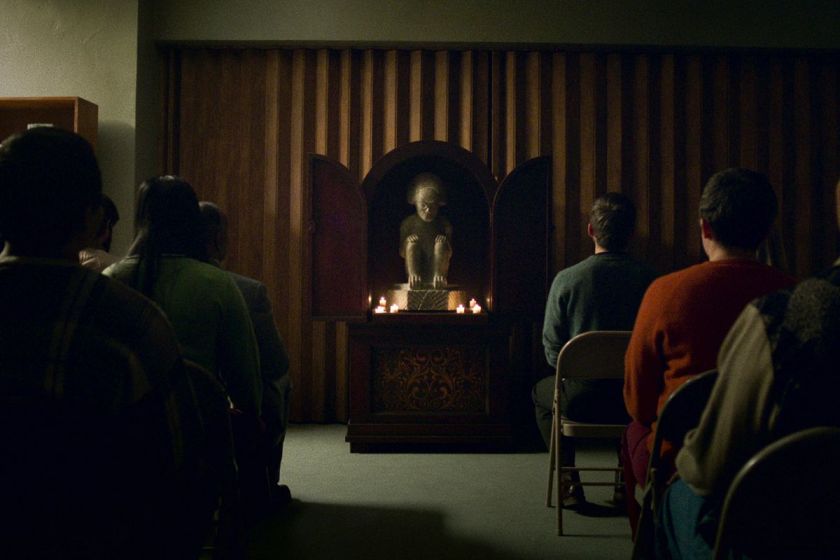
There’s something creepy going on in the Visser’s basement community room. Credit: Netflix

As Dan becomes increasingly invested in Melody’s story he begins to feel the effects of isolation, living in the brutalist compound that houses the repair studio and a cavernous living space. He’s not allowed visitors, as the content of the tapes are supposed to be confidential, he doesn’t get cell service and he begins to suspect the landline is tapped.

With a history of mental illness, Dan isn’t sure if he’s imagining things when he realizes someone else may be in the compound, and his paranoia is stoked by the discovery of journals that indicate he wasn’t the first archivist to work in the isolated building.

To make matters worse, he begins to experience vivid dreams in which he’s speaking directly to Melody — and she’s clearly in trouble, calling for help across almost three decades.

Archive 81
As Dan restores the damaged video tapes, he unravels more of the mystery surrounding the disappearance of Melody Pendras (Dina Shihabi). Credit: Netflix

Archive 81 is guilty of the so-called “mystery box” narrative format popularized by JJ Abrams and Damon Lindelof with Lost. The pair provided a template to string viewers along by unraveling just enough of the central mystery in each episode to keep viewers hooked, but as Lost proved, the mystery box form only succeeds in pissing the audience off if there’s not a solid pay-off at the end.

While Abrams and Lindelof dragged out Lost’s narrative and winged its conclusion to much derision, Archive 81’s Rebecca Sonnenshine clearly mapped out her story from start to finish. Momentum builds over eight roughly hour-long episodes until things escalate quickly toward the end. While I’m still not sure how I feel about the way things concluded, Sonnenshine’s story provides answers to most of the burning questions that pop up over the season’s run, and leaves just enough of a cliffhanger for a potential sequel. (And judging by the show’s several-week run atop Netflix’s charts, we probably will see at least another season.)

You could argue that mystery is baked into the genre: Archive 81 is a drama with elements of horror, but it doesn’t rely on jump scares. It avoids many of the latter genre’s most worn-out tropes while embracing others, layering the narrative with an ever-increasing sense of dread. It’s a clear attempt at high-concept horror.

There’s not much in the show to dissuade the squeamish and the writers are more concerned with exploring their characters than trying to freak viewers out. All the same, whether you enjoy the series or not probably depends heavily on how you feel about the genre. If you’re game for something a little dark, Archive 81 isn’t a bad way to spend a week’s worth of frigid January or February nights.

Buddy’s Verdict: 3 1/2 Paws Out Of Five:

paws_threeandahalf

Big Buddy’s Verdict: Recommended