Buddy The Cat And The Search For The Lap Of Luxury

Sir Buddy leads an expedition into the jungle to find the legendary Lap of Luxury.

AMAZON RAINFOREST — At the peak of the hill, still well within the darkness of the tree canopy where only a few slabs of light penetrate through the understory to the jungle floor, a path stops abruptly.

In its place is a steep drop and the mouth of an underground chasm carrying water over the edge, creating one of the planet’s most spectacular waterfalls — and a sweeping vista of the lake and its shores below, where structures from deep antiquity seem to exist only as outlines in the mist.

It is here in the Lost City of Casarabe that intrepid explorer Buddy the Cat believes he’ll find the legend his species has sought for more than a thousand years.

It is, he believes, the site of the Lap of Luxury.

“Many explorers have braved these jungles in search of the legendary Lap of Luxury,” Sir Buddy says as members of his team pad around their camp. “I stand on the shoulders of some pretty big cats here, on the cusp of history, to finally achieve what so many felines set out to do.”

buddy_archaeologist2
Buddy on the hunt for the legendary Lap of Luxury, which may be located in the Lost City of Casarabe.

Buddy believes the Lap of Luxury will be found in this ancient city, which was abandoned more than a thousand years ago for reasons that so far elude the experts accompanying him. Only a very small part of the Lost City of Casarabe is visible even this deep in the jungle. The flora here is too dense and the jungle floor too dark to give up its secrets so easily.

Under Sir Buddy’s direction, teams have cleared a thick network of vines to reveal a stepped pyramid, the twelve spires of a temple dedicated to a mysterious jaguar deity, and a remarkably well-preserved palace that Buddy believes once belonged to an aristocratic feline.

Some seventy rooms are contained in the palace, including a chamber the team has dubbed the Hall of a Thousand Naps, where stunning stone-carved reliefs depict an advanced felid civilization that engaged in napping not only as a biological necessity, but a function of religious fervor.

“The Caztecs were known for their brutality and the Layans were known for their enduring empire, but the hallmark of Casarabian society was the elevation of napping into high art,” says Ferdinand Lyle, an expert on South American antiquities with the British Museum. “Indeed, grand murals depict a civilization that measured time in naps and meals, and even military disputes with neighboring powers were scheduled around shut-eye. To the Casarabians, violating the sanctity of the Nap Schedule was considered an affront to the very fabric of society.”

jaguar lying on tree log
Otorongo, one of Buddy’s buddies, met the intrepid explorers deep in the jungle and accompanied them to the Lost City, facilitating a cultural exchange of napping technique. Credit: Benni Fish/Pexels

Legends and the surviving records of neighboring civilizations mention the Lap of Luxury using a dictionary’s worth of superlatives to describe its magnificence. Aztec scholars called it “simultaneously radiant and outrageously comfortable, always the perfect temperature, the substrate upon which kings enjoyed serene naps and gentle massages while being fed candied figs.”

It is alternately described as gilded, soft, gem-like in its facets and silken in tactile sensation.

“Of its comforts, it knows no equals,” wrote 19th century explorer Percy Fawcett, who spent the latter part of his life searching for Casarabe. “If today’s artisans were capable of emulating such perfection, which they are obviously not, all of civilization would grind to a halt as millions fall into deep, satisfying slumber.”

Khalbalique, a jaguar historian and contemporary of the Casarabians, wrote that the Lap of Luxury “thrillified me down to my paws.”

“Such was the lazification of this tremendulomentous relaxatory,” the big cat wrote, “that I found it extraordinatiously operose to extractify my personage from its embraculations.”
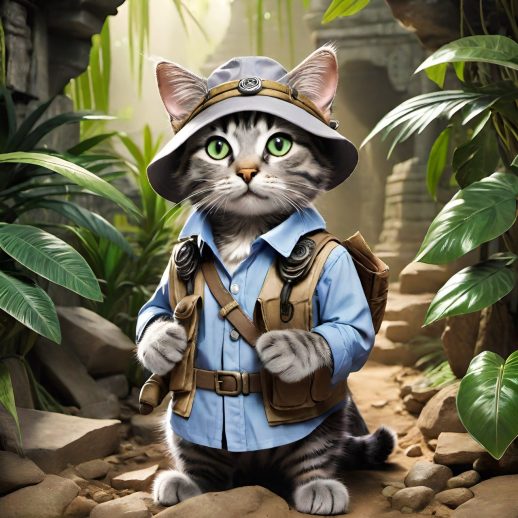
buddy_archaeologist
Sir Buddy strides fearlessly through the jungle, determined to find the Lost City and its most precious treasure, the Lap of Luxury. Here he poses for a portraitist who will send his likeness back to the Explorer’s Club to be hung on its walls alongside Mewis and Clarke, Claward Carter, Catto the Navigator and other intrepid legends.

Regardless of the conflicting accounts, all agree on one thing: the Lap of Luxury is magnificent.

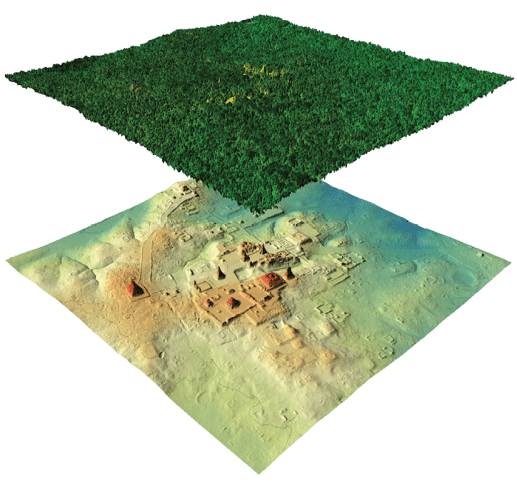
Sir Buddy and his team are working out the details of bringing a helicopter into the deep jungle in order to use LIDAR, or light detection and ranging, to sweep the area. Using a mix of near-infrared, ultraviolet and visible light, a team using LIDAR from the air can digitally “remove” the dense jungle to reveal the structures underneath, natural and man-made.

For the intrepid explorers it’s an advantage their forebears never had, and it’s one reason why Sir Buddy believes he will succeed where those who came before him did not.

“With this technology we can map the entire city and find its most opulent palaces and temples, the places most likely to house the elusive Lap of Luxury,” Sir Buddy says. “When we find it, it shall be my honor to be the first cat in more than two hundred years to settle into it, get comfortable and have a nice nap.”
lidar
LIDAR reveals the jungle’s secrets by peering through the trees and the thick blanket of foliage that has swallowed once-glorious cities.

What’s The Difference Between A Puma, Mountain Lion, Cougar, Panther and Catamount?

The puma is known by more names than any other mammal, a fact that reflects its incredible resilience and wide range.

The puma goes by a lot of names. So many, in fact, that it holds the Guinness world record for the mammal with the most names, with more than 40 monikers in English alone.

Add the puma’s various appellations in Spanish and the indigenous tongues of south north America, and the large golden cat has probably had at least 100 names by a conservative estimate.

Cougar, panther, mountain lion, catamount, Florida panther, Carolina panther, ghost cat, gato monte, cuguacuarana, painter, screamer — they’re all names for puma concolor, a felid with the size of big cats in the panthera genus but genetics more closely related to non-roaring “small” cats, including felis catus.

Indeed, although pumas are famously capable of the wild cat “scream,” they’re able to purr just like house cats and their small- to medium-size wild relatives.

Why does the puma have so many monikers?

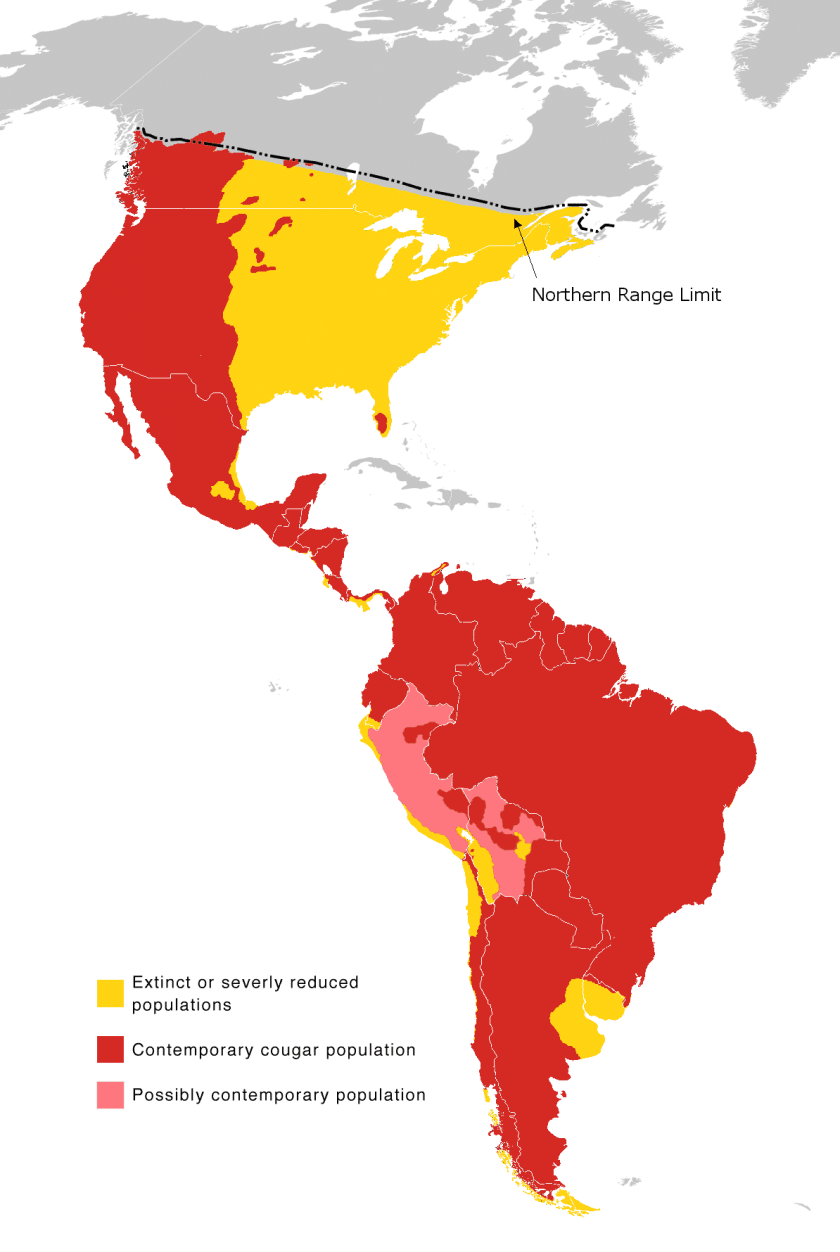
Mostly it’s because the adaptable, elusive feline has a vast range that historically covered almost the entirety of two continents:

Cougar_range_map_2010
Credit: Wikimedia Commons

Even today cougars exist in healthy numbers across most of South America and the western United States. They’re wanderers, with pockets of smaller populations in places like Florida and the midwest, and individual mountain lions have been spotted as far east as New York and Connecticut. (The New York region known as the Catskills, derived from “cat creek” in Dutch, was named after pumas when the area was part of their regular range.)

Throughout their history they’ve been familiar to a diverse group of human civilizations, societies, nations and peoples, from the Aztecs, Inca and Mayans, to the indigenous tribes of North America and the First Nations of Canada, to the inhabitants of modern-day countries like the US, Panama, Brazil, Mexico, Venezuela, Colombia, Ecuador, Paraguay, Bolivia, Chile and Argentina.

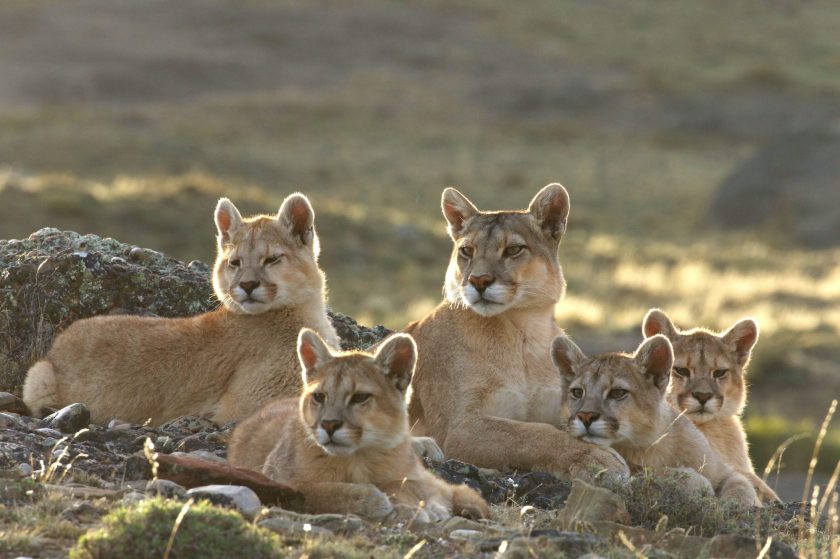
Puma
A puma with her cubs. Credit: Nicolas Lagos

But the name confusion doesn’t just stem from the puma’s many monikers bestowed by people of different cultures across space and time. The puma is also one of three cat species that are regularly called panthers. The other two, jaguars (panthera onca) and leopards (panthera pardus), are true “big cats.” That means they’re members of the genus panthera and they can roar but not purr.

Pumas are easily distinguishable from the other two: They have smooth golden fur without adornments, while jaguars and leopards both have blotches called rosettes.

It’s difficult to tell jaguars from leopards, but the biggest giveaway is the fact that jaguars have solid dot-like markings within their rosettes while leopards do not. In addition, leopards have much longer tails than jaguars or pumas, as they need the counterbalance provided by their tails to help them climb trees and balance themselves on tree limbs.

Jaguars are excellent climbers as well, but they don’t need to be as adept at living off the ground — they are the apex predators in the Americas, while leopards coexist with lions and other large animals like Cape buffalo that present a danger to the big cats even if they’re not predators.

Which brings us to our last point: Our many-named friends, the pumas, may be big and they may look dangerous, but they’re not. There have been 27 humans killed by the elusive cats in more than a century in the U.S., according to the U.S. Fish and Wildlife Service, compared to about 3,000 deaths from dog bites over the same period. Between 30 and 50 people are killed by dogs each year.

Most confrontations between humans and pumas happen when the latter are threatened and cannot escape, or when a female is protecting her cubs.

So if you live in an area where you have a chance to see these beautiful cats, admire them and keep your own kitties indoors, but don’t freak out — the puma you see one second will be gone the next.

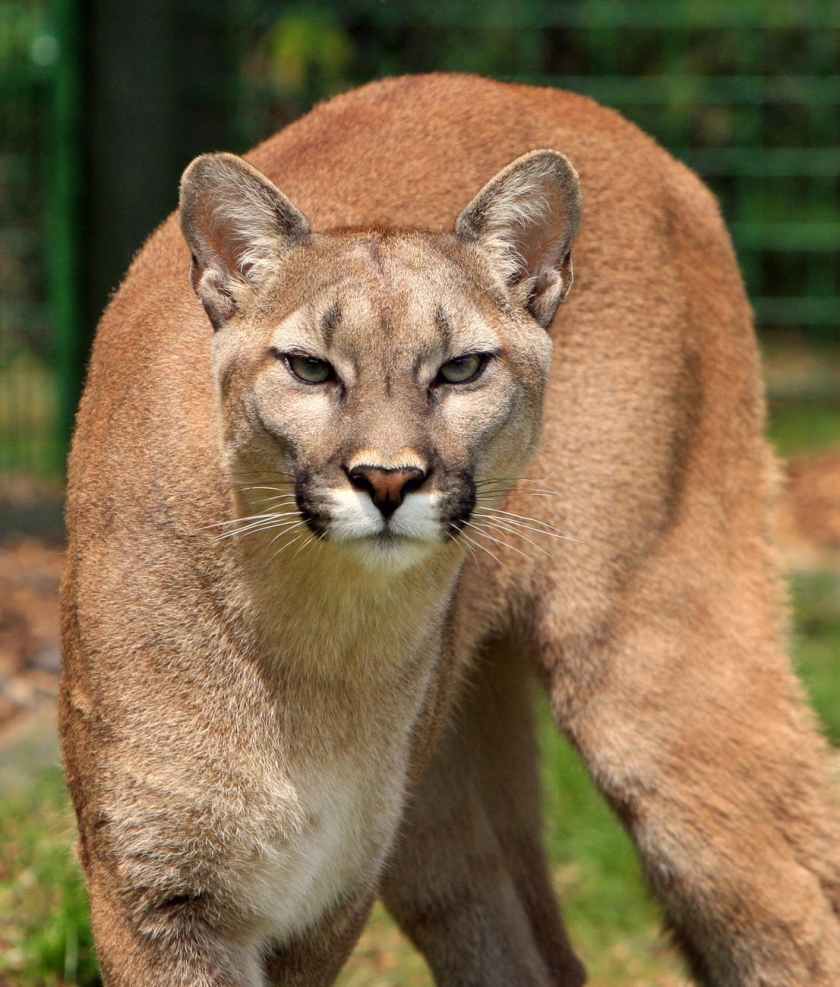
nature animal wilderness head
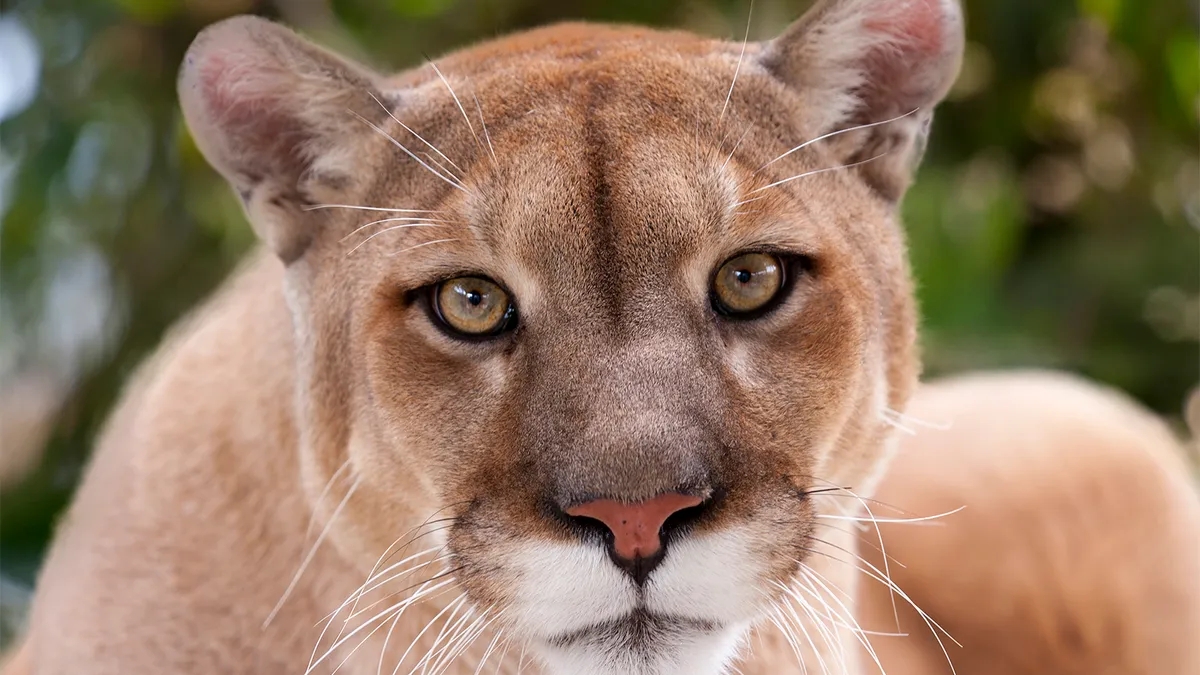
A captive puma. Credit: Pexels.com