Jury Awards Oregon Man $1.4 Million In Stolen Cat Case

The man’s attorney styled the decision as a victory for animal lovers.

An Oregon man didn’t get his cat back but he could be almost $1.4 million richer after a jury decided in his favor in a cat-napping case.

Joshua Smith, 41, adopted a cat he named Frank in 2017 after finding the little guy, apparently a stray, in an alley.

At the time Smith was living in a single room in a group drug recovery home in Portland, according to the Oregonian. The terms of his lease didn’t allow him to keep pets so when Smith’s landlord — a man named Devon Andrade — discovered Smith had been keeping a cat, Andrade took matters into his own hands and stole Frank, admitting under oath he’d taken the tabby and given it to his girlfriend, who then took Frank to a local shelter.

Smith and Frank were never reunited: It turns out Frank has a microchip and he was returned to his original family, the people who were his caretakers before he went missing and Smith discovered him more than six years ago.
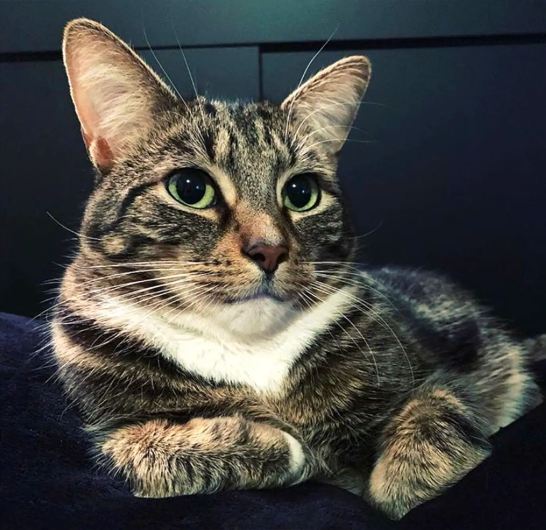
Frank the cat
Frank the cat, as seen in a photo Fuller showed to the jury.

But it took a jury less than two hours to decide against Andrade and Pine Street LLC, the company behind Pine Street Recovery Housing. The defense argued that even though Andrade should not have acted unilaterally, Smith was still in violation of his lease agreement, but the jurors weren’t buying it.

“The jury’s message should be loud and clear to landlords,” said Michael Fuller, Smith’s lawyer. “You need to respect the rights of tenants, especially when it comes to pets.”

The jury awarded Smith a shocking $1.375 million although it’s not clear how much of that Smith will see. An earlier story, published in 2019, said Smith had sought $250,000 in damages. It’s not clear why the jury went with the much larger amount.

Fuller credits the jury, saying there were several sympathetic animal lovers in the juror box.

Smith said he’s been successfully sober for years. He’s since married, moved to California and opened his own barber shop.

“The most important thing was that I got my day in court,” Smith said. “I got really lucky because I told the truth, no matter what.”
Case Dropped Against Alabama Cat Ladies After Appeal

Prosecutors dropped charges against Mary Alston and Beverly Roberts 10 months after their arrest for caring for a local cat colony.

Prosecutors in Alabama have dropped their case against two women who appealed after they were convicted for feeding and trapping cats in their hometown.

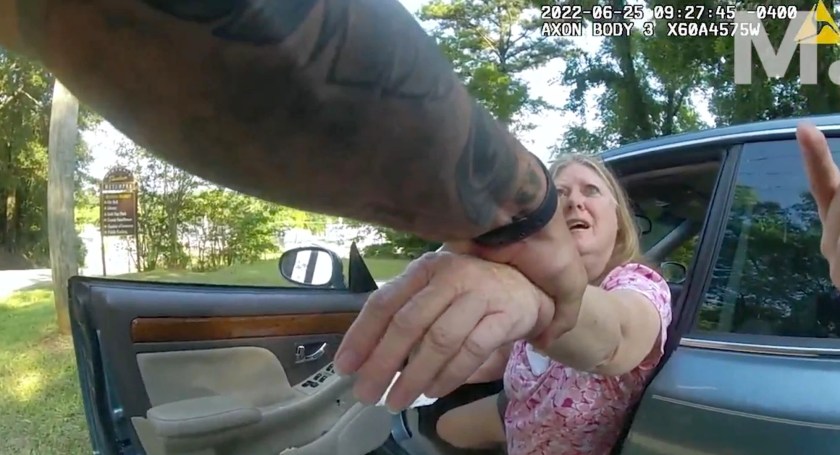
Mary Alston, 61, and Beverly Roberts, 85, were arrested on June 25, 2022 after a bizarre confrontation in which four police officers pulled up in three squad cars and treated the longtime stray caretakers like hardened criminals.

The women were convicted of related charges in December and vowed to appeal the ruling, with their attorneys calling it a case of retributive and petty small town politics.

On Wednesday, Elmore County Circuit Court Judge J. Amanda Baxley accepted a motion by prosecutors to drop the case against Alston and Roberts.

It took their attorneys four months to get the body camera footage from the Wetumpka Police Department, but when they finally obtained and released it to the public in October, Wetumpka became the subject of national scorn for the way its police treated the women.

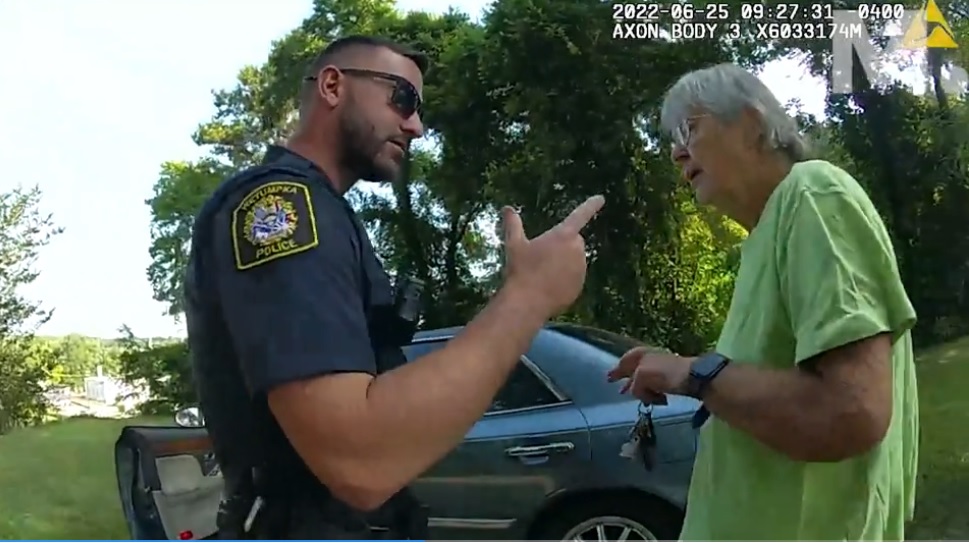
The footage showed the officers grabbing Alston by her wrists and pulling her out of her car, cuffing Roberts and berating the women for not moving fast enough when they were ordered to collect their traps and leave a wooded area on public land.

Wetumpka cat arrests
A police officer pulls Alston from her car on June 25 before arresting her for trespassing.

When Alston and Roberts expressed shock that police were hassling them, much less threatening them with arrest for managing a cat colony, one officer yelled at Roberts.

“It’s gonna get ugly if you don’t stop,” the cop said, jabbing a finger in Roberts’ face before cuffing her.

One officer told the women they were “too old to be acting this way,” and the footage captured audio of the officers laughing after one of them remarked that it was good there were no witnesses because they would have seen “a bunch of cops beatin’ up on some old ladies.”

There are no laws on the books against feeding cats in Wetumpka, so police charged the women with two misdemeanors each for disorderly conduct and resisting arrest.

Roberts and Alston argued that they were performing a service for the town by caring for the colony of strays. They were conducting TNR (trap, neuter, return) operations in cooperation with local shelters, often at their own expense, to stop the cats from continuing to breed.

Despite the fact that TNR is widely accepted as the most humane and effective way to manage stray cat populations, Wetumpka officials stuck to their allegations that the women were exacerbating a nuisance.

Wetumpka Mayor Jerry Willis doubled down after his department received overwhelmingly negative feedback over the arrests, and in a December trial witnesses described an ongoing argument between Willis, Roberts and Alston over the stray cat issue.

During the trial it was revealed that it was Willis himself who called the police when he spotted Alston’s car near the wooded area. Willis claimed he did not tell the police to arrest the women, but Officer Jason Crumpton testified that he was indeed told to arrest them.

Despite that, municipal Judge Jeff Courtney — who was appointed to his position by Willis and was not elected — found Alston and Roberts guilty of all four charges.

Prosecutors did not say why they dropped the charges on Wednesday, and it was not immediately clear if Roberts and Alston will be allowed to return to caring for the cats, who live in a wooded area on public land not far from the same municipal courthouse where they were earlier convicted. PITB has reached out to the women for comment.

“We are very worried about them,” Roberts told PITB in December. “A few animal lovers have said they would help, but we are not sure this will happen. I’m not sure there is enough food available to hunt. The weather is getting colder, and they need protein.”

Lawyer Attends Virtual Court Hearing As A Kitten, Thanks To Cam Filter

“I’m not a cat!”

Your Honor, I make a meowtion to dismiss!

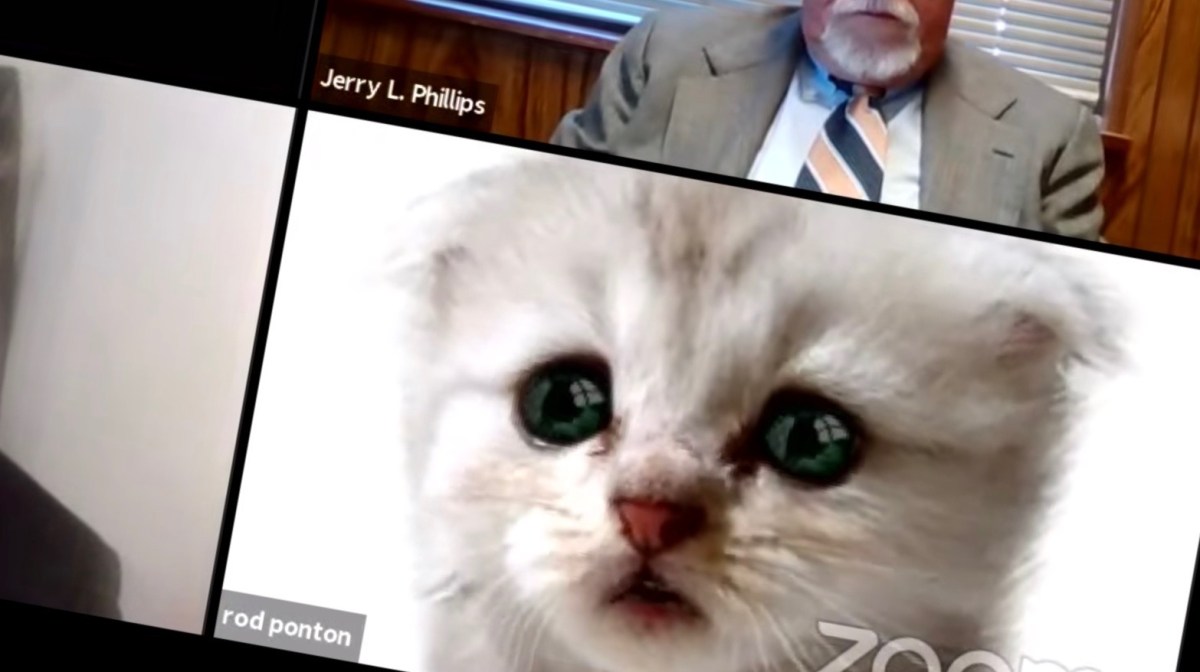
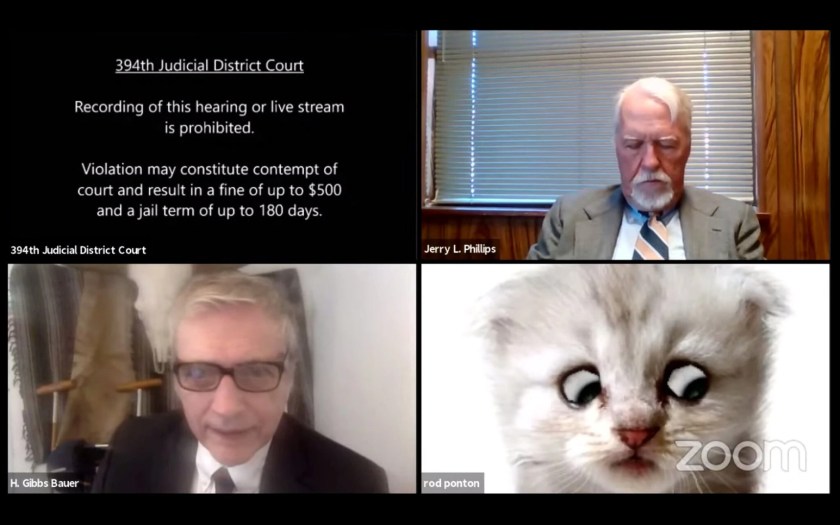
Americans have denied pretty much everything in courts of law over the years, but this one may be a first. After a Texas lawyer connected to a Zoom virtual civil forfeiture hearing and couldn’t figure out how to remove a filter that turned his on-screen image into that of an anthropomorphic kitten, the lawyer stated the obvious.

“I’m here live,” the attorney told the presiding judge. “I’m not a cat.”

Cat of Law
Two other lawyers keep straight faces as attorney Rod Ponton struggled to remove a cat filter during a Zoom call.

The lawyer is Rod Ponton of Presidio, Texas, and he’s become a viral sensation.

“When I got on Zoom everything seemed fine – my picture popped up, I was in the waiting room with the judge. But when the judge called the case, I disappeared and a cat appeared instead of me to my great surprise of course,” Ponton told the BBC.

Ponton’s misadventure is relatable at a time when almost everything that doesn’t require physical presence has been moved online due to the Coronavirus, and it’s perhaps most relatable to adults who can’t figure out what their kids have done to their computers.

Ponton, it turns out, was using his secretary’s computer after her kid had been using it. Thus the kitten filter.

He told the BBC he’s trying to “roll with it” as the video racks up millions of views.

“In Texas we have a phrase that you can’t put toothpaste back in the tube,” Ponton said. “If this was going to become an internet sensation I just had to laugh at myself along with everybody else doing so.”