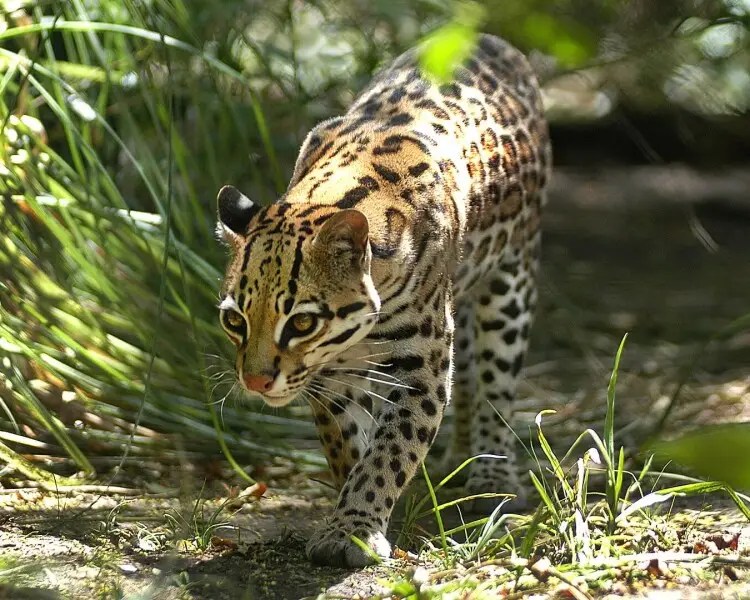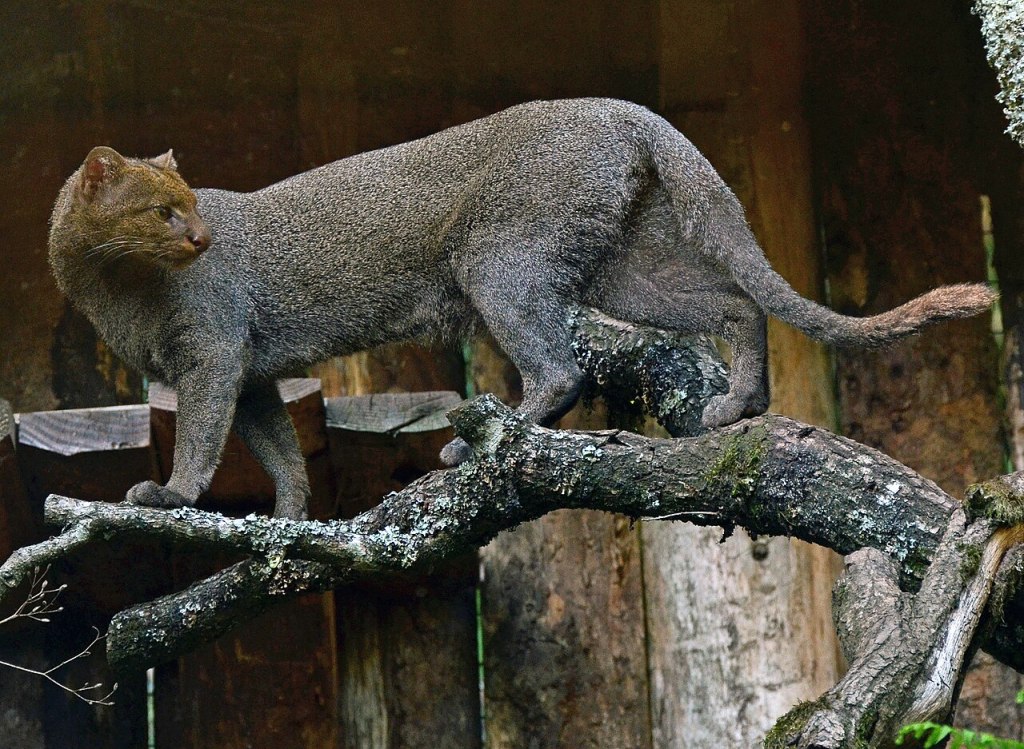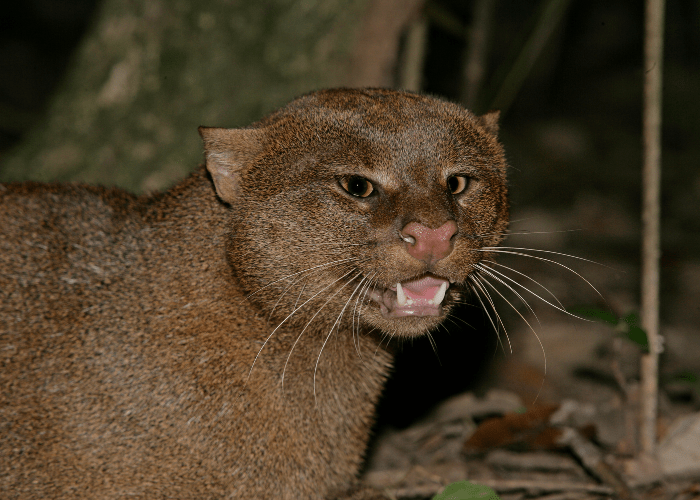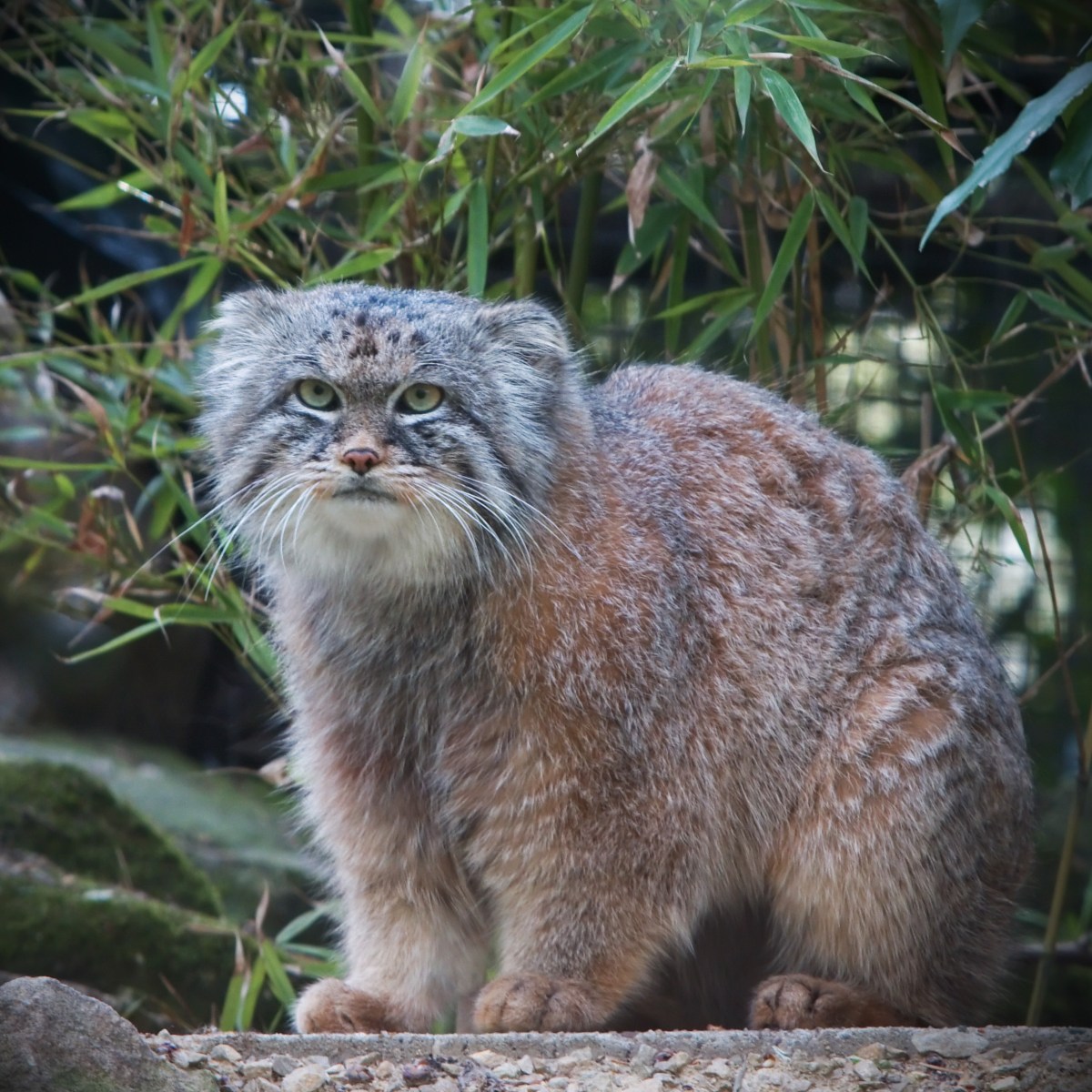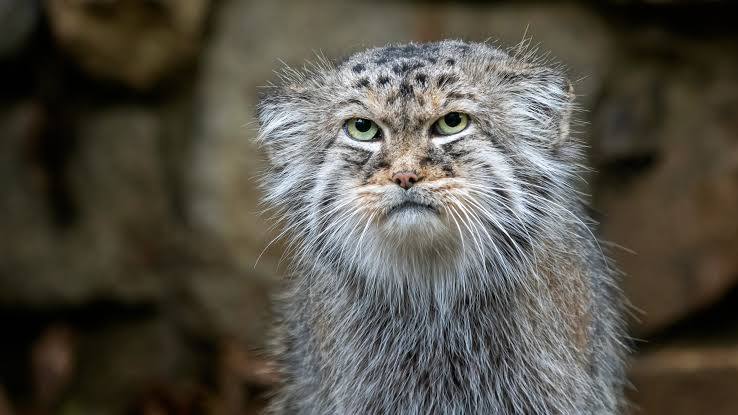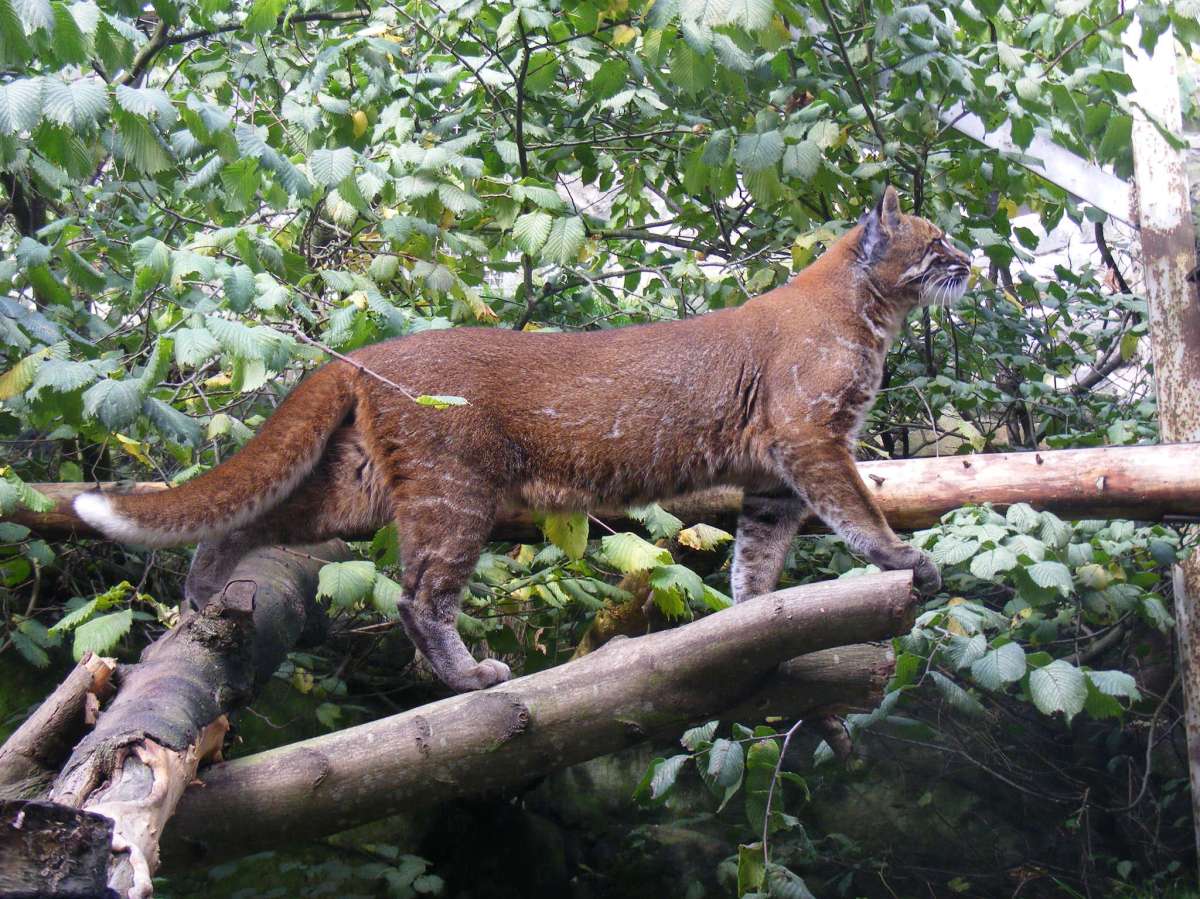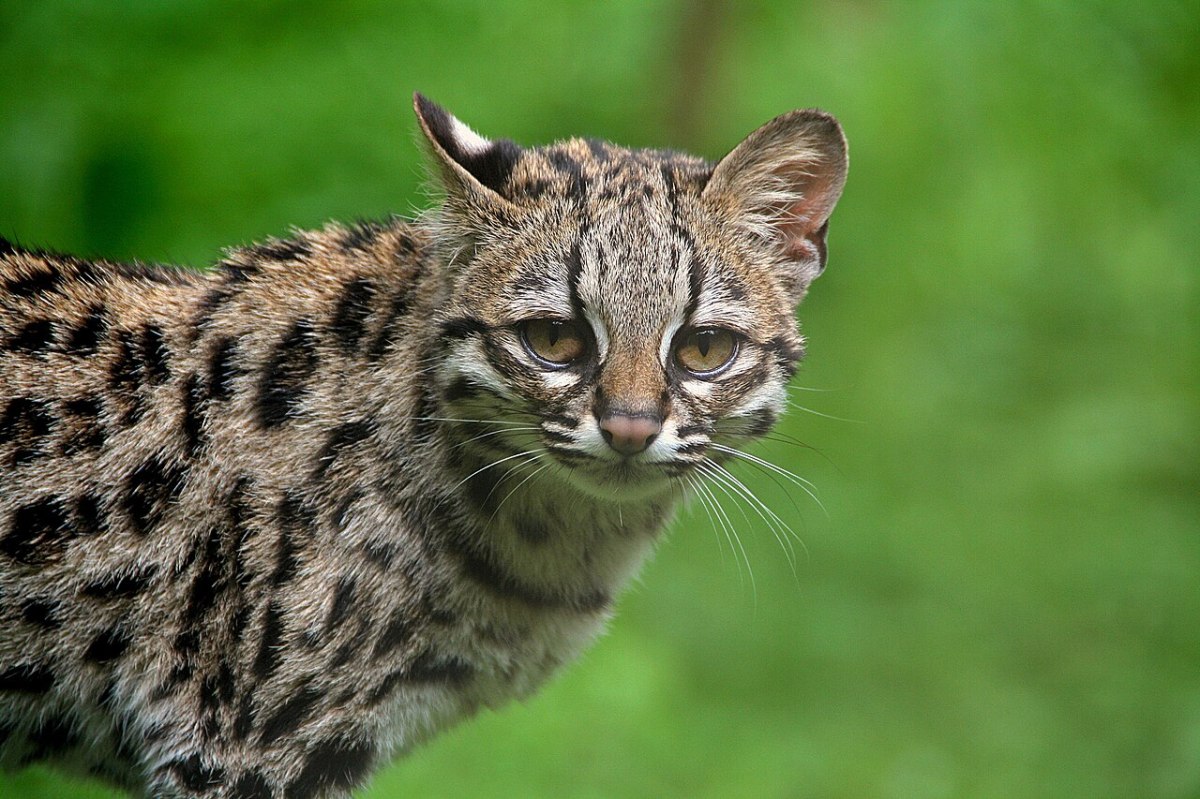
The Asian golden cat, also known as catopuma, is an elusive medium-size wildcat with striking features and exceptional hunting abilities.
It’s extraordinarily elusive, moves with a grace superlative even among fellow felids, and enjoys mythical status in many of Asia’s cultures.
It is the Asian golden cat, a medium-size feline that calls a diverse range of places home, from the mountains of rural China to the jungles of Sumatra.
Known officially as Catopuma temminckii, the species is about three times the size of domestic cats but extremely adept at taking down much larger prey, including young water buffalo and other ungulates several times the cat’s body weight.
An Asian golden cat. Credit: Wikimedia Commons
Asian golden cats inspire legends in many Asian cultures in part because of how difficult they are to find. Even the appearance of one on a trail camera in Thailand’s Khao Luang National Park this summer spawned news headlines, so rarely are they seen.
Often, as was the case with the recent sighting, they’re fleeting, just glimpses before the animals melt back into the jungle. The fire tiger seen in the June 20 trail camera footage pads across a clearing, clearly unhurried, before disappearing back into the ground cover.
In some places it’s good luck to catch a glimpse, while in other locales — like parts of Thailand — people believe a single strand of Catopuma fur is enough to protect the bearer from their larger cousins, panthera tigris. (I wouldn’t rely on that personally, but it does show how large tigers loom in the imagination in areas where they still roam the wild, even as low as their numbers are these days.)
While the Asian golden cat is known as the fire tiger in some places, it’s not a close relative of true tigers, at least not in terms of the cat family.
Credit: Wikimedia Commons
Catopuma is a feline, meaning it can meow and purr, but cannot roar. That puts the species closer genetically to domestic cats, pumas, ocelots, servals and other members of the feline subfamily. True big cats — tigers, lions, jaguars and leopards — are part of the pantherinae subfamily. Aside from their size, they are distinguished by their ability to roar, but they cannot purr or meow.
The Asian golden cat is a feline, but shares some physiological features with big cats
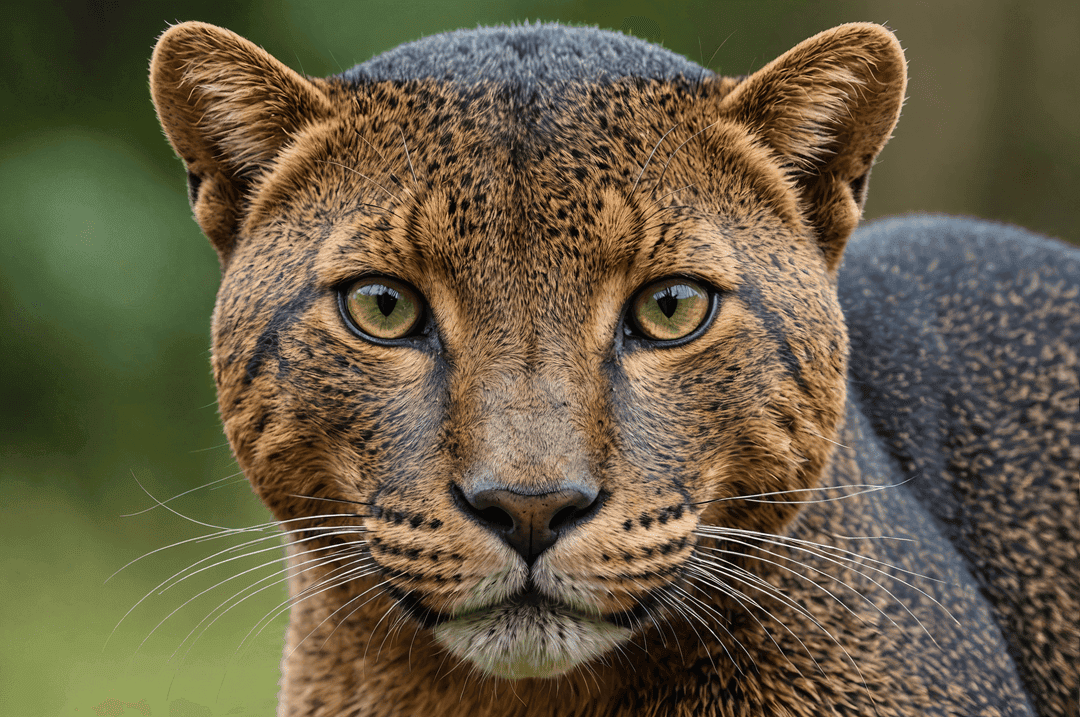
Even though catopuma is genetically closer to small- and medium-size felines, its gait, substantial tail and head shape are reminiscent of big cat features.
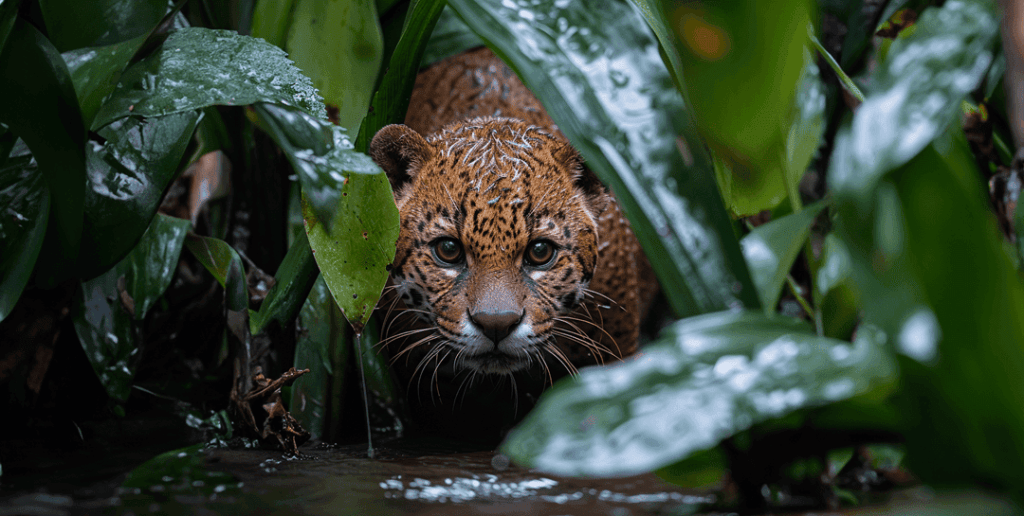
The ferocious medium-size cats also have a melanistic color morph that makes them look like smaller versions of jaguars and leopards.
A melanistic catopuma seen on a trail camera. Credit: Panthera
The fire tiger is classified as threatened as its habitats are destroyed to make way for more palm oil plantations, among other agricultural and industrial facilities.
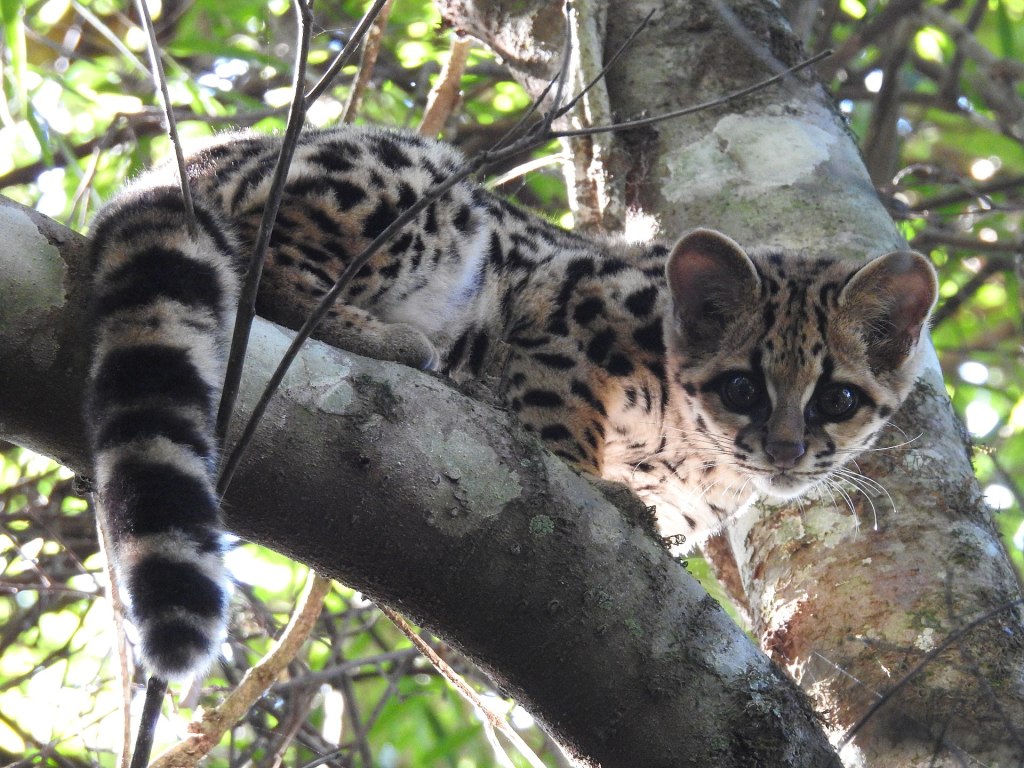
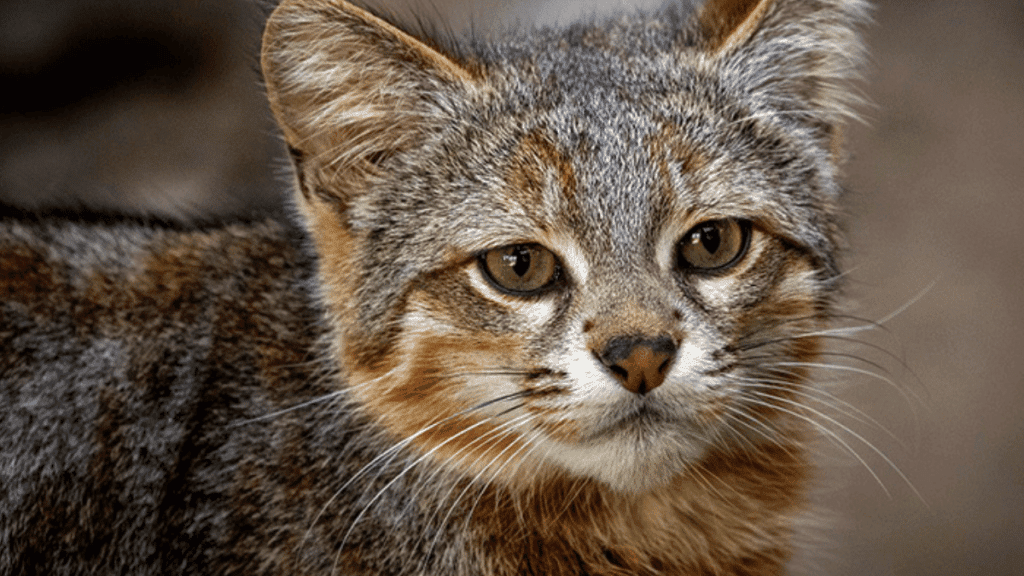
With a perpetual kitten-like appearance and mismatched coat patterns, colocolos may look like the product of AI or Photoshop, but these little ones are very real — and very feisty.
We’re heading back into obscure territory with this edition of Amazing Cats, focusing on a little-known species that ekes out an existence in the forests and plains of South America.
The colocolo, also known as the Pampas cat, superficially resembles the familiar house cat, but a closer look reveals some striking differences.
Colocolos are small, about the same size and weight as felis catus, but their tails can be quite a bit shorter and extremely fluffy.
Colocolos have pattern and color combinations seen only in their species. This one has rosettes on his body and tabby stripes on his limbs and tail. Some colocolos have thick tails with tabby-like rings, while others have bushy tails more commonly associated with long haired domestic cat breeds.
There are at least five variations of fur color and pattern, ranging from marbled to jaguaresque rosettes and, most strikingly, a seemingly mismatched pattern in which the legs have dark stripes over rusty/cinnamon-colored fur, which contrasts dramatically with the gray, gold, silver or tan of their bodies. The overall effect makes some colocolos look like they’ve been photoshopped, or assembled from spare parts.
Some colocolos appear to have solid-color coats which are actually an agouti pattern with barely visible bands of slightly darker fur.
While the species may look stocky, conservationists say it’s smaller than it appears, with its fur making up the majority of its “bulk.”
This photo might look like a fake, but it’s a documented combination of coat pattern and color among colocolos.Another photograph of a colocolo with the rusty/cinnamon limb coloring.
As if that wasn’t enough to distinguish them, Pampas cats have neotenous features that give them an even stronger kittenlike appearance compared to house cats and comparable species like the rusty spotted cat.
In other words, they’re very cute and looking at them can trigger the same protective instincts we feel when we see kittens and cute adult cats. But don’t let their disarming features deceive you — these little guys are not cuddly, don’t respond well to people who get close, and will turn aggressive if you encroach on their space.
This adorable colocolo appears to be giving the side-eye to someone. Note the slight suggestion of the classic tabby “M” on the forehead.
While they’re alternately called the Pampas cat, the word “colocolo” comes from the language of the Mapuche, an indigenous group that lived in lands that are parts of modern day Chile and Argentina.
In the Mapuche language, Colo Colo was the name of a Mapuche warrior who led his people in their resistance against Spanish conquistadors in the 16th century, but it’s also the name of an evil rat-like creature in Mapuche folklore. It’s not clear how a feline came to bear the name, but the species — leopardus colocolo — is often called gato colocolo to distinguish between the historical figure and the modern-day Chilean football club, Colo-Colo.
You might feel an urge to hug a colocolo, but that would not be a good idea. Experts say the small cats don’t take kindly to close human proximity.
Although they’re associated with the pampa, the flatlands in and around Peru best known for the mysterious Nazca lines, colocolo are adaptable and thrive in forests, jungles, wetlands, and mountain ranges like the Andes, among other terrain.
Their range stretches from Argentina in the south through Chile, Bolivia, Paraguay, Ecuador, western Brazil and an isolated population in Uruguay.
Despite their relatively wide distribution and variety of habitat, colocolos are not well understood. Experts still haven’t settled the question of whether they’re all one species or whether subgroups qualify as their own subspecies. Their hunting habits are not well-documented, although it’s known they prefer small rodents, and there is ongoing debate about whether they are crepuscular, like most felid species, or nocturnal.
Colocolo share a continent with jaguars, pumas, ocelot, jaguarundi, margay, oncilla, kodkod, Geoffrey’s cat and the Andean cat, and the fact that they live in the deep wilderness makes them more difficult to study.
Because their coloration and coat patterns can vary so widely, Pampas cats are often mistaken for other small wildcats living in South America, and people unfamiliar with their species sometimes mistake them for domestic felines.
They’re also very rare in zoos, with only one US zoo (Cincinnati) counting them among their exhibits, and only four Pampas cats in captivity worldwide. (Excluding private captivity by poachers and illegal wildlife traders.)
Like virtually every species of wildcat, the colocolo’s numbers are declining due to a number of factors, primarily human activity like habitat destruction, sport hunting and development cutting populations off from each other.
The more people are aware of these beautiful and little-known felines, the better their chances for long term survival as conservation groups receive more donations to help protect them, and lawmakers are pressured to protect the wilderness where they live.
Like all cats, colocolos appreciate the value of a nice nap.
The rusty-spotted cat of Asia shares the title of world’s smallest cat species with the black-footed cat of Africa.
Stalking the jungles, wetlands and forests of India and Sri Lanka are exceptionally skilled hunters, cats who are as swift as they are deadly.
They’re nocturnal, with large eyes that allow them to see motion and detail in almost complete darkness, and spectacularly sure-footed. Their agility, grace and natural climbing ability not only help them get to prey, but also aid them in avoiding predators.
But unless you’re a lizard, bird or small mammal, you have little to fear from the rusty-spotted cat — unless you get in its face.
The striped-and-spotted felines are as fierce as they are tiny, and they are truly diminutive — at two to three-and-a-half pounds fully grown, rusty-spotted cats are rivaled only by the black-footed cat of southern Africa as the world’s smallest felines.
A rusty-spotted cat mother stands protectively in front of her kittens in Cornwall
Although the little guys are elusive, cat enthusiasts were treated to rare close-up images of rusty-spotted kittens when a litter was born at Porfell Wildlife Park and Sanctuary in Cornwall in 2020. It was an extremely rare occurrence, as there are only a few dozen rusty-spotted cats in captivity worldwide. Like most other wildlife, the species is threatened by habitat reduction.
For context, the tiny feline is only a third the size of a typical house cat, felis catus, and would be dwarfed by the gentle giant Maine Coon.
Little Buddy’s take:These guys are awesome and I’m seriously considering moving to their territory and living among them. Do you know why? At 10 pounds I would be a giant among them, striding meowscularly through the jungle with my own personal army of felines. They would make me their king, naturally, and sing songs about Buddy the Colossal Cat. I would have their most desirable females bathed and brought to my tent, where we would dine and I would regale them with stories of my adventures in America. Sadly, though, there are no turkeys in India or Sri Lanka. Could I live without turkey?