Town officials say the step is necessary to protect a ground-nesting songbird native to western Europe.
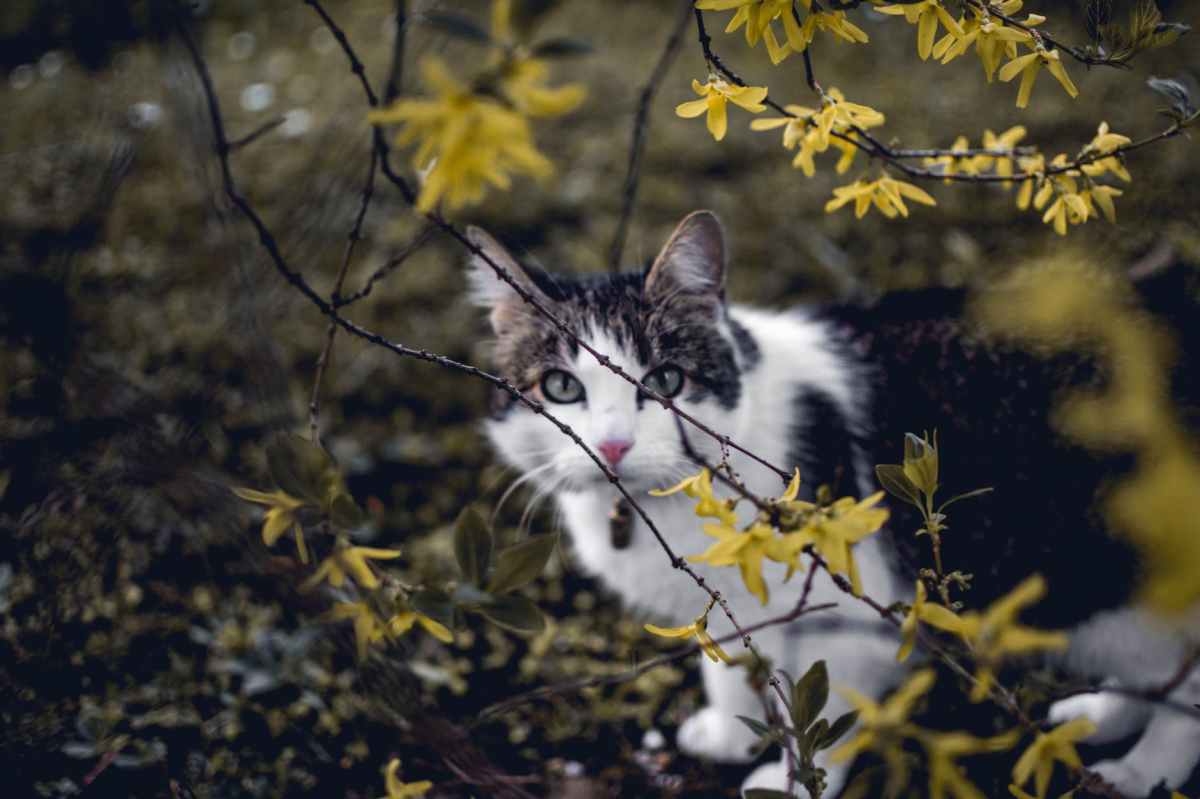
Elected leaders in Walldorf, Germany, are worried about the crested lark — so much so that they’ve decreed cats must be kept inside, with prohibitively painful fines for anyone whose cat harms one of the birds.
According to the decree, anyone who allows their cat(s) to roam outside from now until August will be fined €500, which is about $527. But if a cat kills or injures one of the European songbirds, Walldorf’s local government will fine the cat’s caretaker up to €50,000, almost $53,000 in USD.
That’s an eye-watering amount of money, especially in light of the fact that the crested lark is listed as a species of “least concern” by the International Union for Conservation of Nature. Experts say humans, not cats, are the biggest threat to the bird.
Officials in Walldorf — a town of about 15,000 people more than 600 kilometers southwest of Berlin — cited the same thoroughly-debunked studies that claim cats kill some 25 billion birds and small mammals annually in the US alone. They say they’re worried because the crested lark nests on the ground, making the birds, their eggs and their chicks particularly vulnerable to predators like domestic cats.
If you’re skeptical that local government officials — a mayor and town councilmen, essentially — are qualified to legislate on matters of conservation, you’re not alone. The decree has been met with pushback from animal rights advocates and feline fans.
“Suddenly preventing cats that are used to going outside from doing so, means immense restrictions and stress for the animals,” German animal welfare group Deutscher Tierschutzbund wrote in a statement. “The negative influence of cats on the population of songbirds is in any case controversial and, to our knowledge, has not yet been proven for the crested lark in Walldorf.”
And that cuts to the heart of the matter, doesn’t it? Like politicians in Australia and parts of the US, Walldorf’s elected leaders aren’t making decisions based on studies or reliable information. They’re taking action based on emotion and deeply flawed meta-analyses that aren’t even applicable to Europe.
We’ve always taken the position here at PITB that cats are much better off indoors. They’re domesticated animals, meaning if they have a “natural habitat” it’s human living rooms. They live much longer, healthier lives indoors and can be happy and fulfilled with a little effort on the part of their humans.
But we also believe decisions impacting living creatures should be based on real information gathered by people who don’t have an agenda. The landmark Washington, D.C. Cat Count is a great example, with birders, conservationists and cat lovers working together to complete an accurate census of domestic felines within city limits.
Now that they’ve established how many cats live in D.C. (about 200,000) and how many are truly feral without anyone caring for them (about 3,000), they can enact sensible solutions that are much more likely to successfully protect wildlife and cats without hysteria, agendas or inhuman proposals like enacting “cat hunting season” (as one US politician proposed), killing millions of cats with poisoned sausages (as Australia has done), or outright gunning cats down, as a rogue conservationist in California’s Bay Area did last year.
Cats are thinking, feeling animals. They deserve better than becoming the victims of human policies based on ignorance.
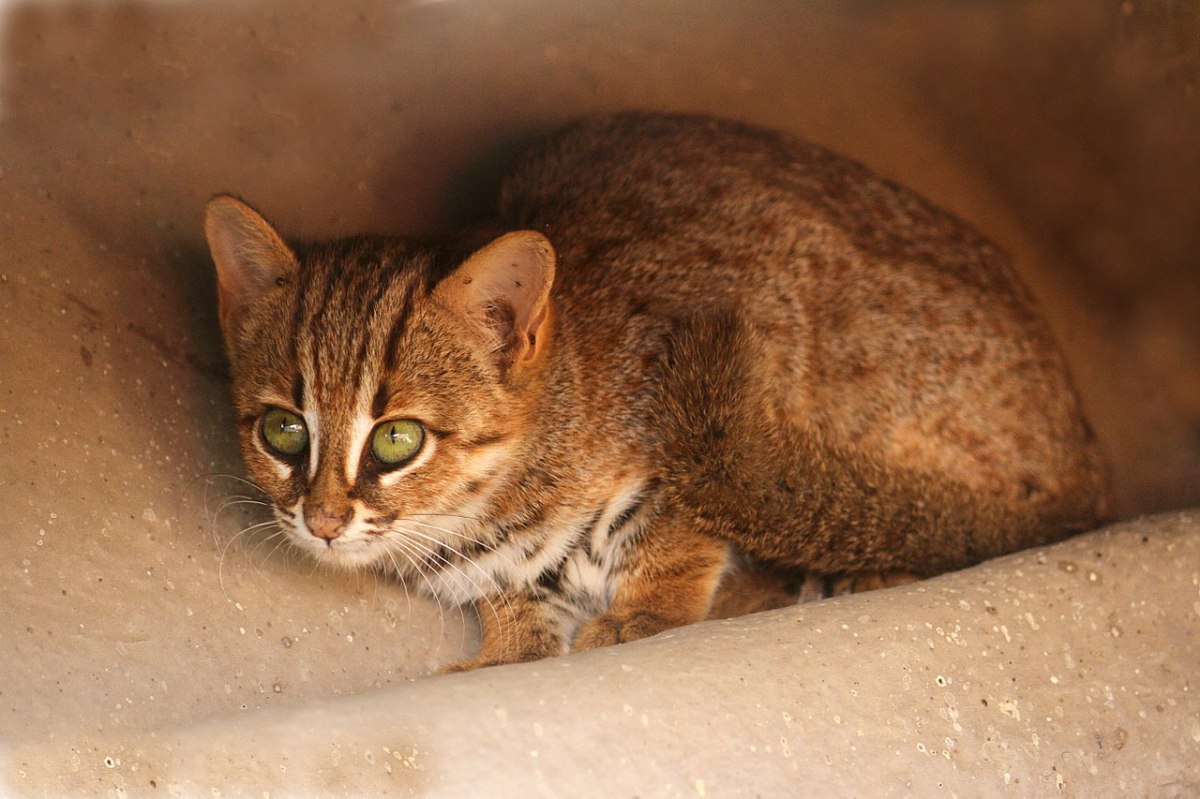
The rusty-spotted cat of Asia shares the title of world’s smallest cat species with the black-footed cat of Africa.
Stalking the jungles, wetlands and forests of India and Sri Lanka are exceptionally skilled hunters, cats who are as swift as they are deadly.
They’re nocturnal, with large eyes that allow them to see motion and detail in almost complete darkness, and spectacularly sure-footed. Their agility, grace and natural climbing ability not only help them get to prey, but also aid them in avoiding predators.
But unless you’re a lizard, bird or small mammal, you have little to fear from the rusty-spotted cat — unless you get in its face.
The striped-and-spotted felines are as fierce as they are tiny, and they are truly diminutive — at two to three-and-a-half pounds fully grown, rusty-spotted cats are rivaled only by the black-footed cat of southern Africa as the world’s smallest felines.
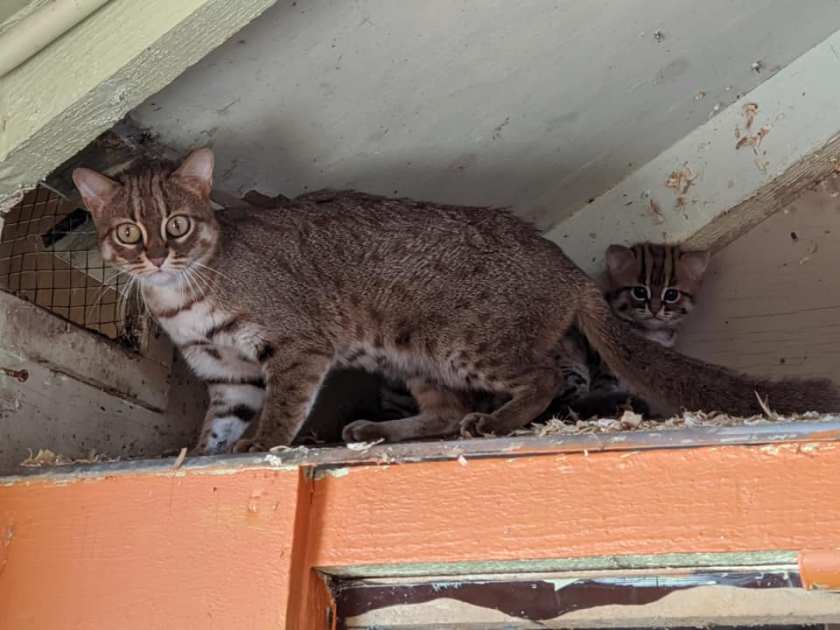
A rusty-spotted cat mother stands protectively in front of her kittens in Cornwall
Although the little guys are elusive, cat enthusiasts were treated to rare close-up images of rusty-spotted kittens when a litter was born at Porfell Wildlife Park and Sanctuary in Cornwall in 2020. It was an extremely rare occurrence, as there are only a few dozen rusty-spotted cats in captivity worldwide. Like most other wildlife, the species is threatened by habitat reduction.
For context, the tiny feline is only a third the size of a typical house cat, felis catus, and would be dwarfed by the gentle giant Maine Coon.
Little Buddy’s take:These guys are awesome and I’m seriously considering moving to their territory and living among them. Do you know why? At 10 pounds I would be a giant among them, striding meowscularly through the jungle with my own personal army of felines. They would make me their king, naturally, and sing songs about Buddy the Colossal Cat. I would have their most desirable females bathed and brought to my tent, where we would dine and I would regale them with stories of my adventures in America. Sadly, though, there are no turkeys in India or Sri Lanka. Could I live without turkey?
Armed with real data, there’s a chance to stop horrific policies designed to kill millions of cats who are blamed for driving small wildlife species to extinction.
For the past two decades, a handful of birders and “conservationists” have claimed cats kill as many as 3.7 billion birds and 22.3 billion small animals every year in the US alone.
“They’ve got to taste good,” an Australian scientist who helped develop the sausage formula said. “They are the cat’s last meal.”
Now who’s the serial killer?
Sadly, few people have thought to question the studies that claim jaw-dropping numbers of birds and small mammals are slaughtered by cats every year.
How did the studies arrive at those numbers? Their formula hasn’t varied much from “study” to “study,” and more or less looks like this:
Assemble your data from old studies that have nothing to do with cats preying on wildlife, or hand out questionnaires to a handful of cat owners and ask them how many animals they think their free-roaming cats might kill.
Since you don’t know how many stray, feral and free-roaming cats exist in the US, invent an arbitrary number. Most of these “studies” put the number of cats anywhere between 25 and 125 million, but higher numbers are better because they make for more apocalyptic predictions and generate more credulous headlines.
Completely ignore the primary factors driving avian extinction in the world, which are human-caused: Habitat destruction, habitat defragmentation, wind turbines, pesticides, cars, high tension wires and windows, which are by far the biggest bird-killers.
Attribute all of the above to feral, stray and free-roaming cats.
Take your original “data” and, without making any adjustments for climate, regional variation, migration patterns, other predatory impacts — or anything else, really — simply extrapolate the total number of bird deaths by multiplying your small dataset by the total number of free-roaming cats in the US, which you invented back in Step 2.
Package the entire thing as a rigorous study by Serious Conservationists, write some apocalyptic press releases and hype up your claims in your abstracts, because you know the vast majority of web aggregators and overworked reporters will not have the time to take a deep dive into the text of your study.
Encourage activist groups and lawmakers to push for the mass culling of cats, based on your studies.
Please, don’t take my word for it. Read the text of any of the widely-cited studies that have been reported as gospel in the last 20 years. You’ll be astonished at what passes for rigorous scientific work, and how policies that determine the fates of millions of cats are largely shaped by these studies.
The D.C. Cat Count and the importance of a baseline
But there’s hope: A coalition of groups in Washington, D.C., spent more than three years methodically taking a “census” of that city’s cat population using a variety of methods.
They surveyed thousands of households within the city limits to find out how many cat owners allow their pets to roam free. They set up 1,530 trail cameras in wooded areas, ditches, alleys, alongside streams. The cameras are motion-activated and they produced more than five million images — including more than 1.2 million images of cats and more than four million images of local wildlife. The cameras captured photos of squirrels, coyotes, raccoons, possums, deer and even wild turkeys.
They assembled teams of dozens of volunteers to personally survey areas where cats are known to congregate. Then, when all the data was collected, they spent months sorting the results, carefully keeping tally, sorting duplicate sightings of individual cats and confirming data when necessary.
Credit: Pixabay/Pexels
When all was said and done, after three years, $1.5 million and countless man-hours, the study determined there are some 200,000 cats living in Washington, D.C., and only about 3,000 of them are truly feral, meaning they’re not pets and not part of managed cat colonies.
The team — which brought together conservationists, bird lovers, cat lovers, shelter volunteers and others who would normally oppose each other on cat-related policies — also documented every step to provide a toolkit for other cities and local governments to conduct their own methodical head counts. They don’t have to reinvent the wheel to take D.C.’s admirable lead.
The leaders of the D.C. Cat Count went to all that trouble because they understood that without knowing exactly how many cats they’re dealing with, where they congregate and how they behave, any policies attempting to deal with their potential impact would be flawed and could end up doing more harm than good.
Making informed decisions about managing outdoor cats
Anyone who continues to cite the old, sloppy studies should be reminded, loudly and often, that they have led to years of failed policies, heartbreaking outcomes, enmity between cat lovers and birders, and widespread misunderstanding of how cats behave and the impact they have on wildlife.
Now the next phase begins: Dispensing with the hysteria and finding real, useful ways to minimize the predatory impact of cats on local wildlife populations.
One of the first follow-up studies to bear fruit comes, not coincidentally, from a research team in nearby Fairfax County, Virginia, and yields some surprising revelations about free-roaming cat behavior and impact.
The biggest takeaway: Because free-roaming cats almost always stick to small areas (spanning only 550 feet, or 170 meters), “cats were unlikely to prey on native wildlife, such as songbirds or small mammals, when they were farther than roughly 1,500 feet (500 meters) from a forested area, such as a park or wooded backyard. We also found that when cats were approximately 800 feet (250 meters) or farther from forest edges, they were more likely to prey on rats than on native wildlife.”
That’s it. In other words, small buffer zones are “the difference between a diet that consists exclusively of native species and one without any native prey,” the study’s authors wrote.
“Our findings suggest that focusing efforts on managing cat populations near forested areas may be a more effective conservation strategy than attempting to manage an entire city’s outdoor cat population,” wrote Daniel Herrera and Travis Gallo of George Mason University.
Credit: Phan Vu00f5 Minh Ku1ef3/Pexels
In other words, minimizing the predatory impact of cats is likely a hyper-local affair, and not something that can be effectively managed on a one-size-fits-all city-wide or county-wide basis.
This is just a first step in the right direction, and follow-up studies will yield further insights that will hopefully lead to fine-tuning strategies in managing free-roaming cats.
We still feel keeping cats indoors — for their own safety, as well as the safety of other animals — is the right thing to do, and all the evidence supports that view.
But what these efforts have shown us is that there is a way forward, and it’s not the contentious, divisive and irresponsible work that has guided cat management policy for two decades. It’s not just possible, but necessary, for all sides to work together to find solutions.
Let’s hope more people realize that, and the old “studies” are relegated to the dustbin where they belong.
“He didn’t hunt the lion and he didn’t have to hike six hours to reach it. … All he did was walk to the bottom of the tree, pull the trigger and kill it.”
Montana Gov. Greg Gianforte has to go.
The so-called “avid hunter,” who once boasted of serving “mountain lion teriyaki, antelope chops wrapped in bacon, and elk tenderloin” to investment bankers visiting his home, apparently wanted to kill another puma so badly that he put the word out to fellow hunters.
On Dec. 28, one of those hunters caught sight of one of the large and elusive felids just a few miles outside of a protected area near Yellowstone. The hunter unleashed his hounds on the cat, who escaped up into a tree, and kept the dogs there for hours to prevent the puma from escaping while the Mighty Hunter Gianforte drove hours to the location, got out of his car and bravely shot the terrified animal at point blank range.
What Gianforte did was not hunting, according to retired physician, naturalist and outdoorsman E. Donnal Thomas Jr., a Montanan who is well known for writing about hunting and outdoor sports.
Driving to a place where quarry has already been trapped and shooting it is “the difference between a hunter and shooter,” Thomas told the Yellowstone Mountain Journal. “He didn’t hunt the lion and he didn’t have to hike for six hours to reach it. It sounds as if all he did was walk to the bottom of the tree, pull the trigger and kill it.”
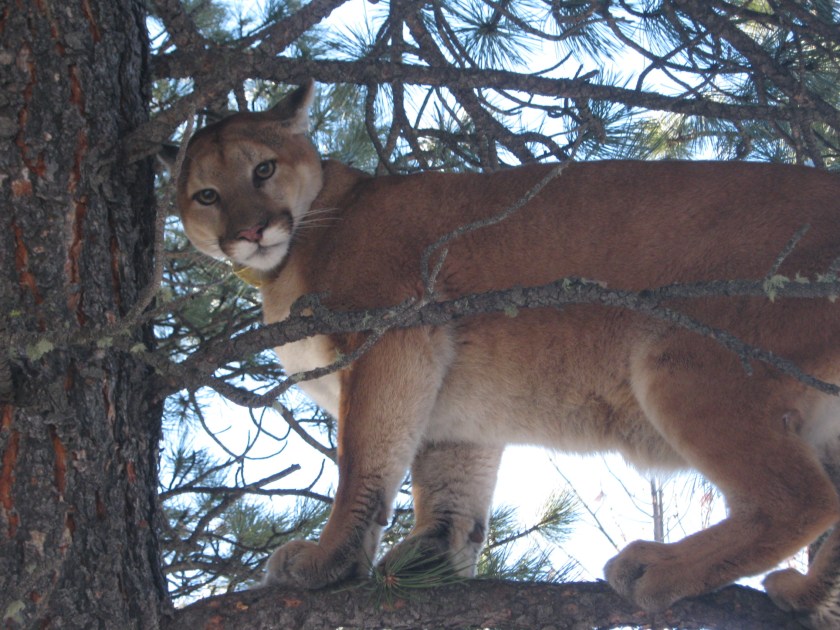
A mountain lion, also known as a puma and cougar, in a tree in Montana’s Little Belt Mountains. Credit: Forest Service Northern Region/Wikimedia Commons
The governor may have broken the law, and certainly violated ethical guidelines, by refusing to say anything about the “hunt” and having his press office ignore phone calls, emails and public records requests by journalists. That’s primarily the reason the story is breaking now, more than two months later: Journalists were finally able to track down people with firsthand knowledge of Gianforte’s “hunt” and corroborate the details with other people who were in the know.
Gianforte has had his share of hunting incidents in the past, including two incidents in which he broke the law, once for hunting an elk without a permit, and once for killing a wolf that was radio collared and actively tracked by scientists. (He was let off with a warning.)
In that incident, Gianforte killed the wolf after it ventured out of protected lands, as he did with the mountain lion, who was also wearing a tracking collar. The cat turned out to be a five-year-old male who was monitored by staff at Yellowstone park.
If you’re wondering why Gianforte’s name sounds familiar, it’s probably because he famously assaulted and body-slammed a Guardian reporter who made the mistake of doing his job and asking Gianforte — who was a congressional candidate at the time — about his healthcare policies.
“At that point, Gianforte grabbed Jacobs by the neck with both hands and slammed him into the ground behind him,” wrote Fox News reporter Alicia Acuna, who witnessed the assault. “Faith [Mangan, field producer], Keith [Railey, photographer] and I watched in disbelief as Gianforte then began punching the reporter. As Gianforte moved on top of Jacobs, he began yelling something to the effect of, ‘I’m sick and tired of this!'”
In an audio recording of the assault, an angry Gianforte screams “Get the hell out of here!” while the shocked reporter responds, “You just body-slammed me and broke my glasses!”
Hunting mountain lions should not be legal. There is no such thing as “too many mountain lions,” even by arbitrary federal standards, as the animals are rare, elusive, not hostile to humans and rarely harm people unless cornered or their cubs have been threatened. There have been between 15 and two dozen fatal encounters with mountain lions in the last century. By contrast, dogs kill an estimated 25,000 people a year.
While we refrain from discussing politics or ideology on PITB, primarily because we want all readers to feel comfortable as regulars on the site and we believe politics shouldn’t poison everything, we agree with writer Abigail Weinberg’s assessment:
“Puma. Cougar. Mountain lion. There are many names for the big cats that roam the Americas, rarely attacking humans.
But there’s only one name that springs to mind for Montana Gov. Greg Gianforte: Asshole.”
The pope’s comments were made in the larger context of an imminent “demographic winter” caused by an aging population and historically low birth rates.
Popes have a mixed record when it comes to cats.
Back in the 13th century Pope Gregory IX famously declared cats were at the heart of alleged Satanic rituals in Europe, relying on the account of one Konrad von Marburg, an author of massacres, church inquisitor and all-around idiot known for brutally torturing his victims to elicit “confessions” of heresy.
Von Marburg told the pope that Satanists had a ritual involving a black cat who would walk around backwards while the Satan-worshipers kissed its ass. The pope bought the risible story and believed von Marburg’s accounts of growing numbers of heretics, especially in Germany.
The resulting papal letter, Vox in Rama, did not declare cats were evil and didn’t ask Catholics to kill them, despite widespread claims to the contrary on the internet, but it did contribute to distrust of the animals a century ahead of the Black Plague, when people thought cats were carrying the disease.
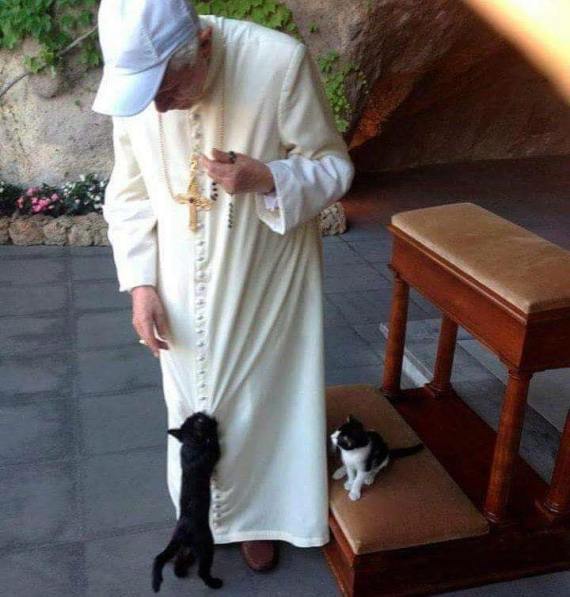
The pope who loves cats
Then there’s the Pope Emeritus, Benedict XVI.
Pope Emeritus Benedict XVI with two kittens in 2017. Credit: The Joseph Ratzinger/Pope Benedict XVI Foundation.
Cat lovers around the world rejoiced when it was revealed Pope Benedict was a cat lover and had two pet felines of his own. Cardinal Roger Mahoney, the former archbishop of Los Angeles, said Benedict was wild about kitties.
“The street talk that the pope loves cats is incorrect,” Mahoney said in 2005. “The pope adores cats.”
Catholics petitioned Benedict to help with animal welfare causes and to lend his support to efforts to help the many stray cats of Rome.
Francis the Saint and Francis the Pope
That brings us to our current pope, Francis. The elevation of Francis was met with approval from animal lovers: His chosen papal name honors St. Francis of Assisi, a Radagast the Brown type figure who lived a life of luxury as a wealthy playboy and party-goer until he had a religious conversion, sold all his possessions and became a monk.
St. Francis believed true faith in God meant having a deep respect for animals. While it’s not clear what’s true and what’s apocryphal, there are stories of Francis preaching to birds, nursing various animals back to health and even convincing a wolf to stop attacking a village in Italy in exchange for the villagers feeding it. St. Francis was by all accounts gentle with animals and appreciative of nature.
St. Francis is revered in the Catholic church and beloved by groups like the Humane Society. He is the patron saint of animals, and on his feast day Catholics bring their pets to be blessed at church.
Pope Francis during a visit with former US Vice President Mike Pence. Credit: Wikimedia Commons
Pope Francis continued his namesake’s work with Laudato Si, a papal encyclical which endeared him to animal lovers all over the world.
The encyclical was notable for the church’s strongest language yet in advocating for protecting and respecting animals. PETA made Pope Francis its person of the year in 2015, and the pope was feted by many other animal welfare groups across the world.
In Laudato Si, Francis explicitly rejected the idea that animals are resources for humans to exploit, asserted the Catholic view that animal life has intrinsic value, and called on human beings to be stewards of animals and the Earth. Abusing and exploiting animals is “beneath human dignity,” he wrote, and the associated desensitization and heartlessness of practices like factory farming are a stain on the human race.
Animals, the pope wrote, not only have souls but will “take their place” in heaven, “resplendently transfigured” in the presence of God. He also pointed out the disastrous effects we’re having on wildlife by destroying habitats, carving up the remaining land, over-fishing the oceans, poaching and hunting.
What Francis said about pets
So why are people suddenly upset with the pope?
He made some off-the-cuff remarks about people choosing pets over children, said it was “selfish” to choose the former, and brought up the plight of the world’s orphans. He pointed out that people collectively spend hundreds of billions on pet food and products while humans in the third world lack basic things like clean water, food and medicine. He also said “denying” motherhood and fatherhood leaves us spiritually poorer, as the experience brings us closer to God.
As usual any time a pope speaks, his statements are taken out of context and rehashed in the media. That’s expected, especially in the age of clickbait, the 140-character tweet and the 15-second news segment. Pope Francis gets himself into trouble by sometimes speaking too candidly when he should know his message will be garbled by gatekeepers and information filters, leading to strong reactions to things he didn’t actually say.
The pope wasn’t condemning keeping pets across the board, and he wasn’t saying all pet owners are selfish. His comments were made in the context of a larger discussion on universally declining birth rates in developed countries, specifically Europe’s “demographic winter,” also called a “demographic time bomb.”
In simple terms, Europe’s population is rapidly aging and birth rates are historically low. Populations are dying off, there are fewer people to care for the elderly, and there aren’t enough babies to replace the dead. The average age in Europe is 43, which is 12 years older than the average in the rest of the world.
COVID has compounded the problem, partly due to social distancing and partly due to economic uncertainty as a ripple effect of the virus. Of course it isn’t all that simple, and the demographic winter’s wider effects are complex and well beyond the scope of this blog.
It also helps to remember the Catholic Church has a strong social justice streak. Not the kind that involves writing snarky tweets and first world problems, but real social justice through charity, schools, scholarships, food banks, shelters, soup kitchens, hospitals and innumerable other efforts.
The pope’s background as a native of Argentina, a former janitor and chemist who became the first Latin American pontiff, also colors his outlook. He doesn’t hesitate to call out the hypocrisy of first-world nations, and although we don’t like to hear it, most of the time we need to. After almost two thousand years of popes existing in or near the world’s seats of power, for the first time we have a pope who grew up from the outside looking in.
That’s not to say I agree with everything Pope Francis had to say on the matter, but I think it’s also important to recognize that he didn’t just take shots at people who care for pets out of the blue, and he didn’t condemn people for caring for animals.





 Pain In The Bud