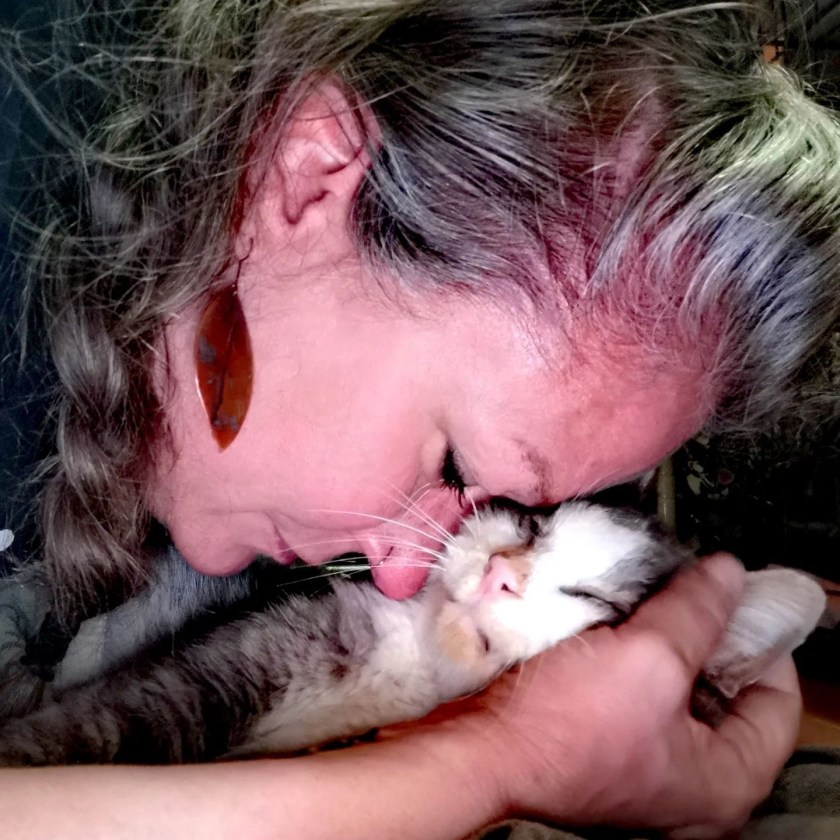
A Woman Wanted This Gorgeous Kitty Euthanized For Litter Box Issues

A veterinarian realized kitty was healthy and put her in the care of a local no-kill shelter, where she remains while hoping for a forever home.

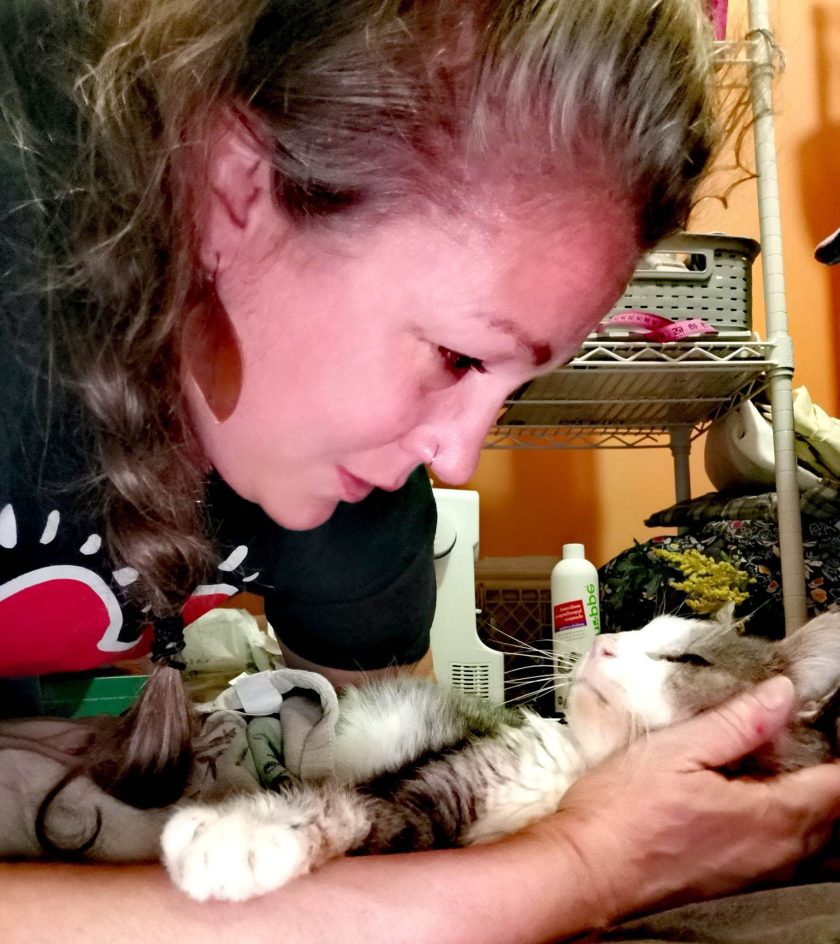
Lulu is 13 years old and began eliminating outside her litter box last year after a long life of doing her business properly.

Instead of realizing that a change in behavior was almost certainly precipitated by health issues — and attempting to get those issues sorted out — Lulu’s “owner” brought her to a veterinarian to be euthanized.

The vet realized Lulu was healthy and her issues were easily remedied, wisely persuaded the woman to sign over ownership of Lulu and brought the Himalayan to the local SPCA. She’s been there since December.

Lulu had urinary crystals which were remedied after a change in diet, and she hasn’t had an “accident” in months.

Staff at the SPCA want people to know that they don’t have to surrender a cat for litter box issues or other behavioral changes even if they think they can’t afford veterinary treatment.

“If your pet is not behaving or their behavior has changed, the first step is to get them to a vet to see if something is medically wrong. Even if it is not a medical condition, there are numerous resources — many available at Dutchess County SPCA — to help resolve the issue and avoid both euthanasia and surrender to a shelter,” Lyne Meloccaro of the Dutchess County SPCA told People. “Medical assistance, expert guidance, and management plans, and training referrals are all available for you.”

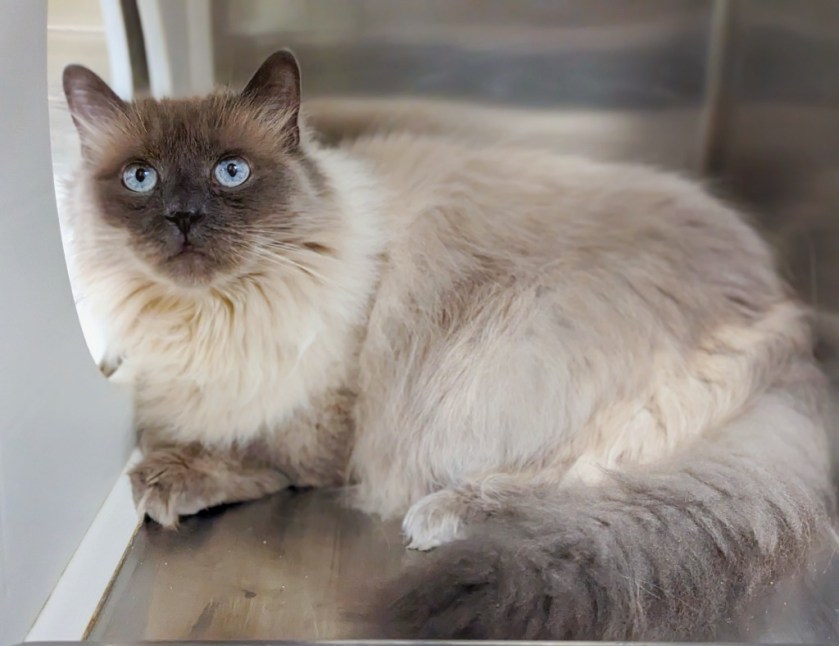
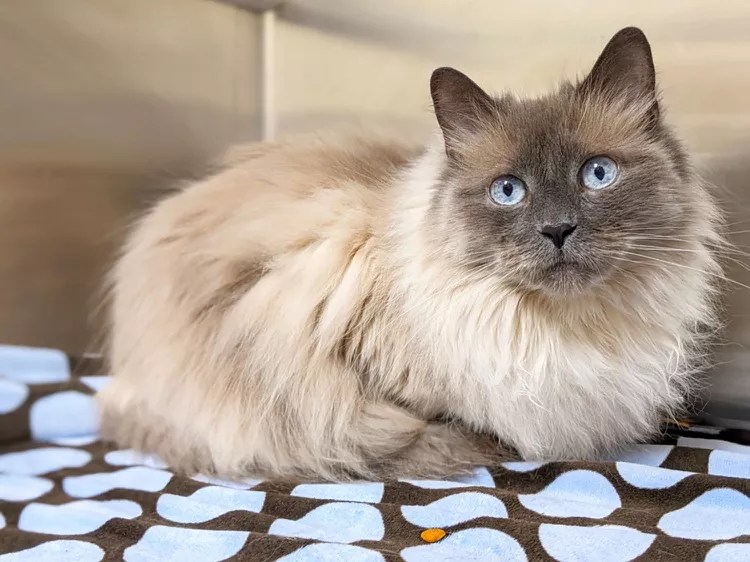
Lulu
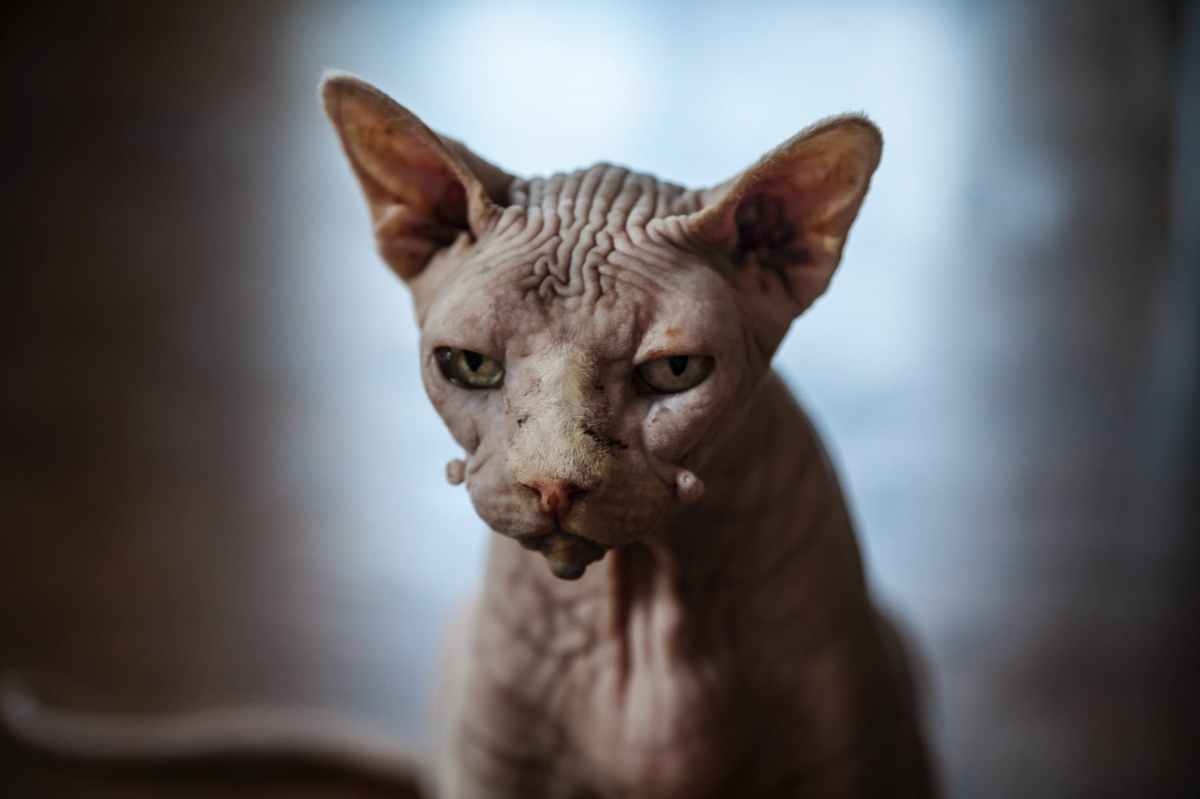
Lulu has a regal bearing, an epic coat and beautiful coloring. Credit: Dutchess County SPCA

Dutchess County, which is about 75 miles north of New York City, happens to be the former college stomping grounds of Big Buddy. I graduated from Marist College and lived in the area for some years after. The SPCA there does good work, and its law enforcement division has handled some high profile animal-related crimes over the years.

It’s sad that Lulu lost her home after 13 years, but maybe it’s for the best if she ends up with a devoted servant who will really love her. Her caretakers at the SPCA say she’s stubborn, demands affection on her own terms and wants an “emotional support human.”

Lulu is still available for adoption. The SPCA says she’ll do best as an only cat in a quiet household, and we have no doubt she’ll bring joy to the lucky person who brings her home.

‘Every Time We Needed To Refill, They Charged Us More’: FDA Says 2 US Women Made Millions Off Desperate People Whose Cats Had FIPV

The importers are accused of jacking up prices almost 16 fold on FIPV drugs they illegally imported from China, the FDA says.

FIPV is pretty much a guaranteed death sentence for cats, and the only way to cure it is with an experimental drug that doesn’t have FDA approval.

Oregon’s Nancy Ross and Nicole Randall of Texas knew that, and as importers selling the cure via the popular Facebook group FIP Warriors, the FDA says they banked on the desperation of people who would do almost anything to save their cats — including forking over vast sums of money.

Ross and Randall are now accused by the FDA of smuggling GS-441524 from China, where it’s manufactured illegally, and hiking the price by almost 16 times what they paid for it as they served as the middle women between desperate cat owners and the suppliers in Hong Kong.

Feline infectious peritonitis kills some 95 percent of cats it infects, and veterinarians often tell their clients with FIPV cats that while they can’t prescribe GS-441524, they will help administer it, track their cats’ progress through bloodwork and hopefully save feline lives — if the clients obtain the drug themselves.

FIP Warriors — now in its fifth incarnation as FIP Warriors 5.0 on Facebook — is where people with FIPV cats go to find suppliers. The group has more than 43,000 members, and the FDA says Randall made millions off of them, charging as much as $385 for vials of GS-441524 she obtained for between $25 and $45 from manufacturers in Hong Kong and mainland China.

Randall sold $9.6 million worth of GS-441524 to clients in the US, according to the FDA. Per The Oregonian:

“A spreadsheet found in Randall’s Google email showed customer orders of at least 58,460 vials and 236,836 pills of GS-441524 from July 2020 through June 6, 2022, the affidavit said.”

PITB spoke to several people who paid thousands of dollars for GS-441524 after their cats were diagnosed with FIPV. All of them said they were surprised by the news of the FDA’s investigation, and said they were given various reasons for why the drug was so expensive to acquire.

One customer from Texas, whose cat Seth began his regimen in July of 2020, told PITB she doesn’t regret spending the money to cure Seth, but she “can see how the people saw our desperate situation and took advantage of us.” She was told prices were at a premium because of scarcity.

“It was a very stressful time for us, and every time we needed to refill, they charged us more,” she said. “They knew we couldn’t say no.”
Cat-Cat_Guide-A_grey_tabby_cat_having_its_first_vaccination_injection

Another woman, whose kitten was diagnosed with FIPV in 2021, “was told that the prices were set because they ensure the medication was purchased from a trusted source.”

As a college student at the time, she used her savings and crowdfunded the other half, paying more than $5,000 for her kitten’s treatment. She said she doesn’t think the administrators of the group were ripping her off, since they had FIP cats of their own, and likely didn’t know the importers were making huge profits. She trusted the seller — who was not Ross or Randall — because the group vouched for that person, assuring her they supplied real pills.

“Of course, I don’t think this is a valid justification for hiking up prices up to 16x the amount,” she told PITB, “but I’m sincerely hoping the individual [accused by the FDA] had a valid reason for setting the prices that she did.”

Others paid even more exorbitant prices: a British woman we interviewed for a story about FIPV in 2022 said she paid about £7,000, or $9,400 at the time.

FDA investigators said they intercepted shipments from China and Hong Kong disguised as COVID masks, cat shampoo and chewable medicine for pets, and the Oregonian report says the shipments were listed as “essential oils” and “beauty products” in import documents.

Randall and Ross have not been charged criminally, but they are now targets of a civil asset forfeiture case:

“The government seized five of Randall’s bank and brokerage accounts and her 2022 Tesla Model Y car last year based on a warrant signed by a federal magistrate judge in Oregon.

The warrant identified the bank accounts and car as proceeds from the “crime of smuggling” and subject to forfeiture, according to the affidavit. It also alleged Randall, now 35, used the proceeds to buy several properties, including a ranch in Leander, Texas, in July 2021.”

While the FDA’s affidavit went into detail regarding Randall’s earnings, it describes shipments sent to Ross but does not specify how much she may have made in profit. An attorney for Randall told The Oregonian that the Texas woman will fight the civil asset forfeiture.

The illegal market for GS-441524 exists because the drug’s creator, Gilead Sciences of California, declined to submit it to the FDA for approval. That’s because it’s chemically similar to another drug the company makes, remdesivir, which was floated as a possible treatment for COVID-19. The company was worried any snags in a potential approval process for GS-441524 would also ensnare remdesivir, according to reports, putting the latter drug in limbo during the pandemic.

Now that the pandemic has retreated to much lower levels of infection and death, it’s not clear if Gilead Sciences will reconsider its FIPV medication, but there may be hope in the form of alternate treatments. A report from the American Animal Hospital Association (AAHA) says scientists at the University of California-Davis and UC San Diego are working on several promising therapies, including a potential treatment using CRISPR gene-editing technology.

But until another cure or treatment passes trials and earns FDA approval — a process that could take years — people with FIPV-diagnosed cats remain at the mercy of strangers on the internet, spending thousands of dollars per regimen and hoping the drugs they buy are the real deal.

George Santos Allegedly Stole $3,000 From Veteran Whose Dog Needed Life-Saving Surgery

The congressional clown show continues, but it’s not funny anymore — it’s just sad.

The George Santos story just keeps getting worse.

My first reaction to the initial New York Times story outing newly-elected New York congressman George Santos as a serial fabulist was surprise, then sadness because I knew his election was in large part made possible by the death of local news. If there’d been competent local media still operating in the area, Santos’ campaign would have ended as suddenly as it started in a flurry of revelatory news coverage, and Santos himself would have been a footnote, a political oddity and embarrassment to the local GOP.

Then for one glorious moment I thought maybe Santos was a performance artist, that we’d find out George Santos is the alias of some comedian or media provocateur whose congressional run was designed from the start to show that politics has become so polarized, so divorced from issues and hitched to ideological loyalties that even a widely disliked grifter — with no roots in the community and a completely fabricated resume — could win simply because he said the right things, pushed the right buttons and kissed the right behinds.

Alas, no Dax Herrera or Ari Shaffir came forward to claim credit for inventing the George Santos persona.

And it just kept getting worse. There were the stories about pending criminal charges for using stolen checks in Santos’ native (?) Brazil, former roommates who saw Santos on TV wearing expensive clothes he’d allegedly stolen from them, and Santos working as the director of a company under investigation for running an alleged Ponzi scheme.

osthoffsapphire1
Sapphire, veteran Rich Osthoff’s service dog.

The latest story might be the most infuriating: Santos is accused of stealing $3,000 from a homeless, PTSD-suffering veteran whose beloved service dog needed life-saving surgery.

Rich Osthoff, who was living on the streets at the time, needed money to pay for veterinary surgery to remove a large and life-threatening tumor from his service dog, Sapphire. Osthoff says Sapphire was his lifeline during difficult times and he was desperate to get her the surgery she needed.

In 2016 a well-meaning vet tech and another veteran connected Osthoff with Santos, who claimed he ran a charity called Friends of Pets United and could help. At the time, Santos was going by the name Anthony Devolder.

Santos set up a GoFundMe drive for Osthoff and Sapphire, raised $3,000 with a tear-jerker of a plea, then basically ghosted Osthoff and his veteran friend Michael Boll, founder of New Jersey Veterans Network. After fobbing them off with a series of excuses, he stopped responding to their calls and vanished with the proceeds.

“It diminished my faith in humanity,” Osthoff said of the experience.

Santos denied the accusation.

“Fake,” Santos texted news startup Semafor on Wednesday. “No clue who this is.”

osthoffsapphire
Osthoff with Sapphire.

But dozens of other people besides Osthoff, Boll and the vet tech were involved and confirmed Santos’ role in the fundraiser, there are publicly visible tweets from 2016 linking to it — and crediting “Anthony Devolder” for running it — and GoFundMe acknowledged the existence of the drive.

In addition, news reports have confirmed Friends of Pets United, Santos’ “charity,” was never registered as a non-profit. Santos also defrauded an animal rescue group in New Jersey when he pocketed the proceeds from a 2017 fundraiser he ran on behalf of the organization, according to dozens of media reports. Santos was terse in his response to the accusations from Osthoff and Boll, but he was eager to talk about his non-existent pet charity during his campaign, when he claimed Friends of Pets United “saved” more than 2,500 cats and dogs over a four-year span and trapped and neutered more than 3,000 cats.

Santos’ lies are so numerous and so outrageous it’s difficult to keep track of them, and it’s doubtful he remembers all of them.

He claimed his mother worked at a financial firm at the World Trade Center and died in the 9/11 attacks, but Fatima Devolder left the US for Brazil in 1999 and never returned. She also never worked in finance. He claimed four of his employees died in the 2016 Pulse Nightclub shooting that claimed 49 lives. Santos never had any employees, his company didn’t exist, and he didn’t know anyone who died at the nightclub. He claimed ownership over an impressive and burgeoning real estate empire, but never owned any properties and owes more than $40,000 in back rent on a Queens apartment he shared with his sister for years. (His sister was also the recipient of a $30,000 FEMA handout and contributed a hefty $5,000 to his campaign, but still owes tens of thousands in back rent on the apartment, reports say.)

Rep._George_Santos_Official_Portrait_(cropped)
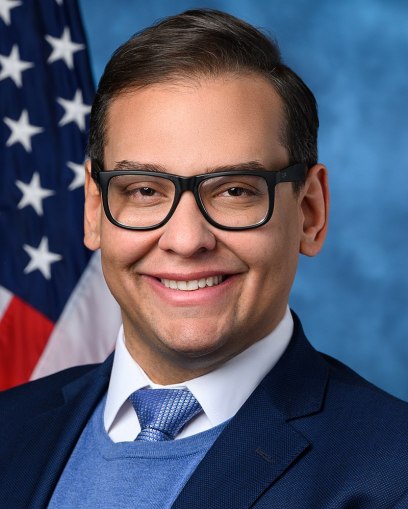
George Santos has refused to resign from congress despite calls from his own constituents, other lawmakers, figures in his own party and media commentators demanding his exit. Credit: Official congressional portrait

There are too many lies to list here, too much insanity to digest in one sitting, and it’s probably not good for the blood pressure to dwell on this weasel of a man allowing a homeless veteran’s service dog to die while pocketing the money raised for her surgery.

But we’re not done yet. We still don’t know how Santos bolstered his campaign with $750,000 of his own money, or where that cash came from. It’s not even clear if Santos is his real name, or if he’s actually a U.S. citizen, with some reports — like a New York Times story from last week — suggesting he may have married his former wife for citizenship.

While New York Republicans have been among the loudest voices to condemn Santos and demand he resign or be removed from congress, national party leaders haven’t made any moves to get rid of him — and have actually given him committee assignments — because they believe they need his vote in a slimmer-than-anticipated congressional majority.

As the lies keep piling up, the biggest question is: How long will this farce be allowed to drag on?

TikTok’s Latest Viral Trend Is Popping Cat Pimples: Can We Ban This App Already?

Each viral trend on the app is more grotesque than the last.

I’m all out of withering sarcasm, so I’ll just say it: The newest trend on TikTok involves close-up videos showing people popping their Sphynx cats’ pimples.

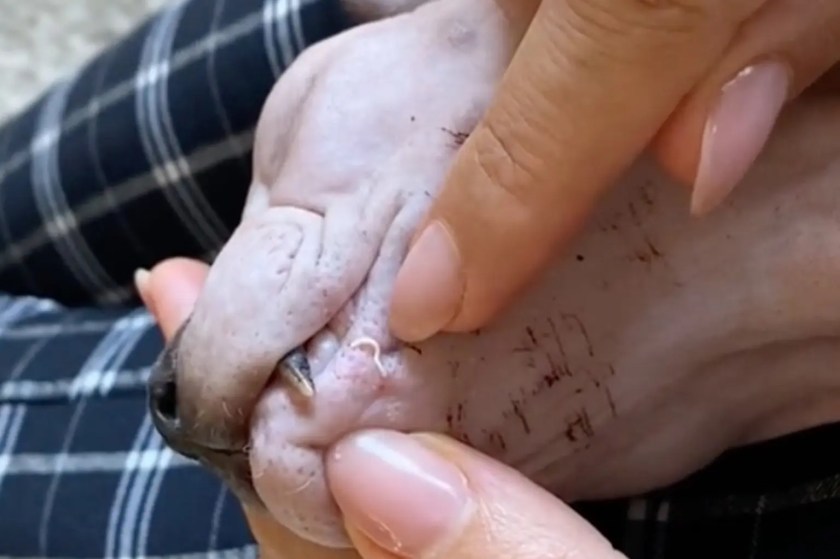
The PewDiePie of the craze, if you will, is one @Sphynx.cleaner, whose videos show a woman’s carefully manicured hands holding a defeated-looking Sphynx cat and popping its pimples between her formidable fingernails.

Tens of millions of people have watched her videos of puss pimple-popping, not including the millions of other views accumulated by lesser practitioners of the grotesque genre.

Sphynx cats lack fur and have skin often compared to chamois leather. Fur helps cats absorb and redistribute naturally-occurring oils secreted by the skin, so felines of the Sphynx breed are much more susceptible to acne problems than typical short- and long-haired cats. Without fur to help redistribute them, the skin oils can create a “film” that clogs pores, according to Jessica Taylor, a veterinarian in North Carolina.

Sphynx pimples
Uh, no. Credit: Sphynx.cleaner/TikTok

Not surprisingly, popping a cat’s pimples makes things worse and is not pleasant for the kitty.

“These lesions indicate a disruption in the skin and skin barrier, and squeezing or poking them can introduce bacteria, potentially worsening the lesion, causing pain and infection,” Taylor told Newsweek. “If the lesion is already infected, handling it could spread bacteria to the pet parent.”

As for TikTok, this is not the first time one of the app’s trends has been detrimental to the health and safety of felines, although most of its inanity is focused on humans. I suppose you can view it as some sort of advanced Darwinian engine, accelerating the self-removal of human beings from the gene pool. Among the trends that have gone viral on the app:

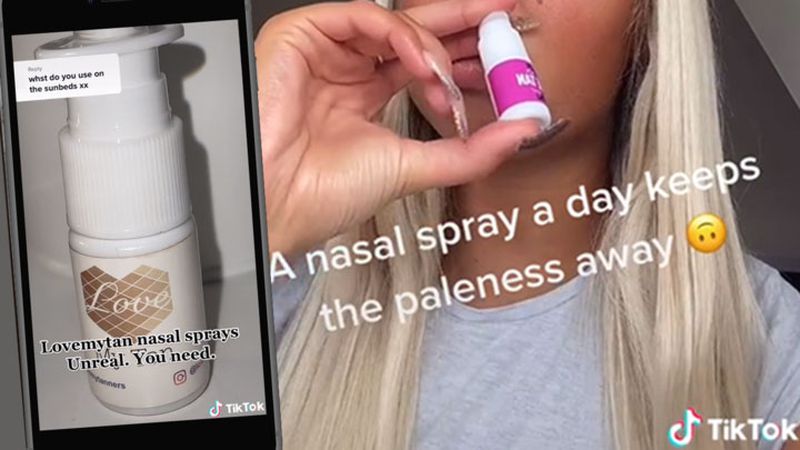
  • People who use self-tanning bottles as nasal spray out of some misguided belief that ingesting the stuff will not only achieve the desired effect, but somehow lead to a more even, natural-looking distribution of tanner. It reminds me of former President Donald Trump’s impromptu suggestion, during a national press conference, that ingesting hand sanitizer could be a “tremendous” way to stop COVID.
  • Videos instructing women to eat the tablets inside Clearblue pregnancy tests as a “contraceptive hack,” claiming the tablets — which are designed to absorb urine during the chemical test — are actually morning after pills.
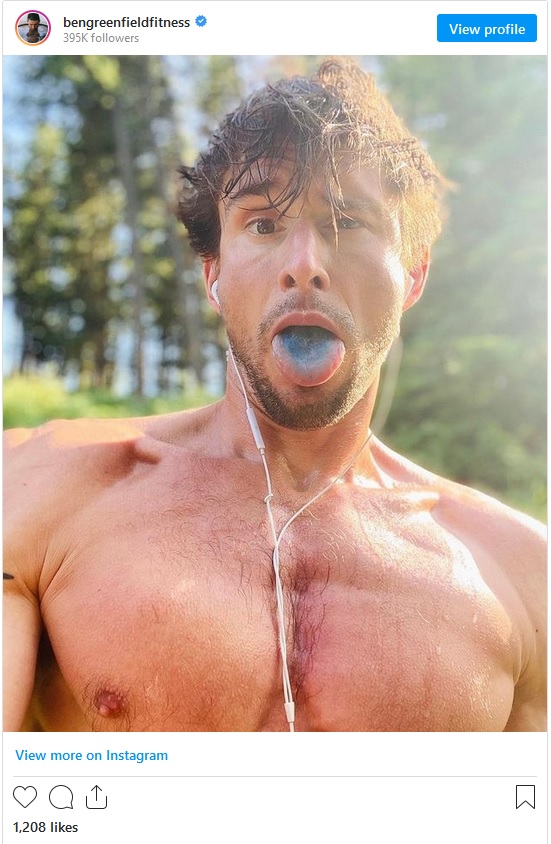
  • People ingesting methylene blue — an anti-fungal fish tank cleaner — because “fitness influencers” say it can “cure” COVID-19, boost metabolism and slow the aging process. Think of the triumph of critical thinking here: These are people who won’t get a vaccine that’s been through three-stages of trials before getting FDA approval, and whose efficacy and safety have been the subjects of rigorous peer review, but they’re willing to drink a chemical manufactured and sold as a cleaning solution for fish tanks.
  • The so-called Nyquil Challenge, in which people use Nyquil instead of cooking oil to cook chicken in a frying pan.
  • Period blood face masks, which are self-explanatory. Another grotesque and potentially dangerous trend started by “influencers” who claim some sort of nebulous expertise and know that “hacks” will net them attention and clicks. The more outrageous, the better.
https __prod.static9.net
“Did you know that urinal cakes are made by Carvel? It’s true! They’re deliciously chocolatey, with just a hint of vanilla, cinnamon and industrial strength anti-bacterial. Mmmmmm!”

Of course, we’ve known for years that Chinese companies are beholden to the Chinese government according to Chinese law, which means the government — and the communist party — can help itself to TikTok user data whenever it wants.

After TikTok’s US-based executives insisted to congress that American users’ data is firewalled and cannot be accessed by the company’s employees in China — and, by extension, the Chinese government — a series of leaks confirmed that China’s government was in fact regularly accessing that data. Absolutely no one, except maybe the politicians who think the internet is a “series of tubes,” were surprised by this revelation.

China’s government can use the data to track journalists, exploit American and European users, program its algorithm to shuffle them toward harmful content, censor content the Chinese government doesn’t like, and even coerce individuals by threatening to release information on their viewing habits.

So can we evacuate TikTok’s US headquarters already, raze it to the ground, and ban the app from every mobile store?

methblue2
“Mr. Darwin! Mr. Darwin let him go! Magnifico!”

RIP Elliot, The Stray Cat Found Frozen To The Ground

Little Elliot was recovering from his ordeal, but developed a deadly blood clot.

This feels like a real gut punch, especially after a South Carolina veterinarian’s heroic efforts to save Juliet, the cat who had 38 hair ties removed from her stomach and died after her health seemed to improve.

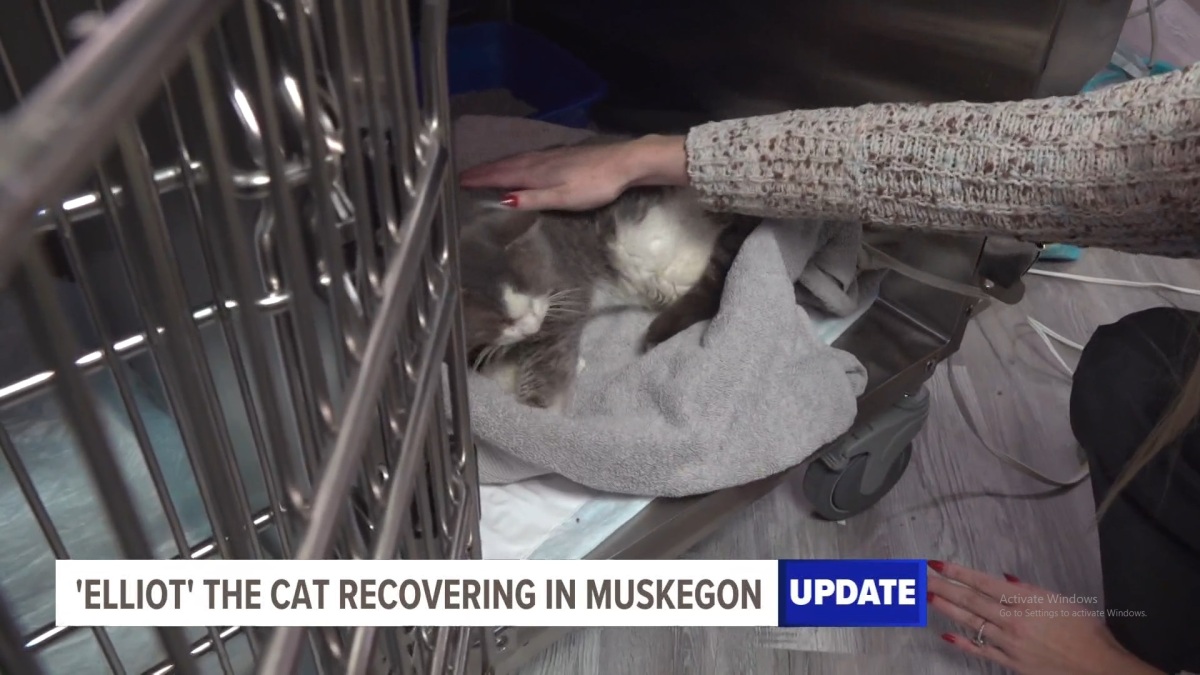
Elliot, you’ll recall, was the poor, sweet stray who was found literally frozen to the concrete on the day after Christmas, when the country was in a deep chill the likes of which we haven’t seen in decades, with temperatures plunging well into the negative. A Good Samaritan found the little guy in a bad way, with his eyes frozen shut and his organs shutting down, but she turned up her truck’s heat and rushed him to Big Lake Community Animal Clinic in Muskegon, Michigan, where the staff took good care of him and named him after the storm he was found in.

They wrapped little Elliot up in warm blankets, gave him fluids and began to slowly raise his body temperature, which was a dangerous 94 degrees. Things started to look up, too: Elliot had a habit of reaching his paw out to the vet techs who were monitoring him, began to regain his appetite, and eventually was able to stand and eat on his own.

elliotcat_follow2

But Elliot’s health took a turn for the worse again, and veterinarians determined he developed a saddle thrombosis, which is described as “a blood clot (called a “thrombus”) that lodges at the base of the aorta just as it branches into two distinct arteries, thereby obstructing blood flow to the hind limbs. It is so named because of the saddle-like shape it roughly resembles once it takes up residence in this location.”

For cats who develop a saddle thrombosis, the outlook is not good, and drugs designed to dissolve blood clots are often ineffective.

“Sadly, there was nothing we could have done to prepare for that but we knew it was time to let him be free from the pain and struggle he’s known most of his life,” Big Lake’s staff wrote to supporters.

A staffer named Diane Neas, who took Elliot into her home after a few days when he’d stabilized, was particularly hard hit by the loss, and understandably so. Well-wishes and applications to adopt Elliot had come pouring in, and it seemed like the former stray’s suffering would lead to the best reward — a warm home of his own and people to love and care for him.

“We find peace in knowing the last two weeks of his life were spent with people who showed him kindness, care and love,” shelter staff wrote. “We can’t believe the following and support he has gained on this journey to healing; from the bottom of our hearts, thank you all for caring so deeply for him and sending such love and support his way.”

Images courtesy of Big Lake Community Animal Clinic

elliotcat_follow