Sunday Cats: Eurasian Lynx Captured On Long Island, ‘Loneliest Cat’ Has Been Returned To Shelter Twice

SPCA staff and veterinarians believe the well-socialized wildcat was the illegal pet of someone living in or near Central Islip.

The saga of a “big cat” spotted on Long Island this week has come to an end with the animal’s capture.

Authorities believe the cat is a Eurasian Lynx and was a pet who escaped or was abandoned by his owner. The frightened feline was first spotted on Wednesday in Central Islip, Long Island, a suburb that stretches for 118 miles just south of New York City.

“Scared the daylights out of me,” Diane Huwer, a self-proclaimed cat lover who was the first to encounter the lynx, told the local ABC affiliate.

The area encompasses two counties and is one of the most densely populated places in the U.S. with more than 7.6 million people. It’s one of the worst places in the world for a wild cat to be abandoned, with heavy traffic, ubiquitous environmental noise and endless shopping plazas surrounded by labyrinthine residential neighborhoods.

It’s illegal to own wild animals in New York, and the cat’s “owner” likely would have kept it without a proper enclosure to avoid attention from authorities.

The lynx’s sightings made the headlines in the New York papers, as well as coverage by local TV news and online publications. It went viral on social media, with users trying to determine what kind of cat it was from the handful of blurry photos witnesses were able to snap. Some media coverage suggested it was a true big cat. (Here at PITB, we thought it was possibly a Savannah cat or an American lynx.)

lynxleonardo
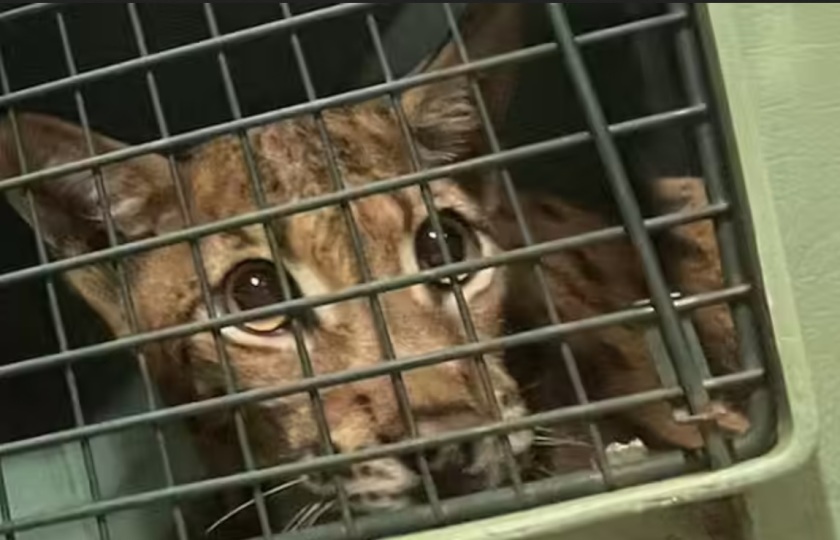
Authorities said the Eurasian Lynx was clearly socialized and wasn’t aggressive when they finally caught him. Credit: SPCA

Local authorities searched fruitlessly for three days and were about to give up early Saturday morning when someone spotted the wild cat in a residential neighborhood and called police.

The hungry feline was pawing through garbage cans next to a house in Central Islip. Authorities said the young lynx was friendly and socialized to humans.

“He was rubbing his face on the cage, looked like he was a friendly cat and from the tips we’ve gotten,” Frankie Floridia of Strong Island Animal Rescue said. “It seems these people have had him since he was a baby.”

Veterinarians have named the lynx Leonardo de Catbrio and said he’s about a year old. Despite his ordeal, the 40-pound cat was not malnourished or dehydrated, and the vets who gave him a check-up said he’s in good health. They’re waiting on lab results to confirm his species.

“Someone obviously had it as a pet,” the SPCA’s Roy Gross told Newsday. “These are wild animals, not the type of animals anyone should have. … They don’t belong in captivity this way.”

In the meantime, police, the state Department of Environmental Conservation and the SPCA are looking for Leonardo’s “owner,” who faces misdemeanor charges and a fine of up to $1,000 if he or she is convicted. They’re sure to have questions about how the person acquired a wild cat, let alone a non-native species. It’s been illegal to “import” wild animals since the Wildlife Act of 1976, and the illegal wildlife market has been a scourge on law enforcement and conservationists alike.

“I know everybody wants something that’s exotic,” Gross said. “They want something cool. It’s not cool.”

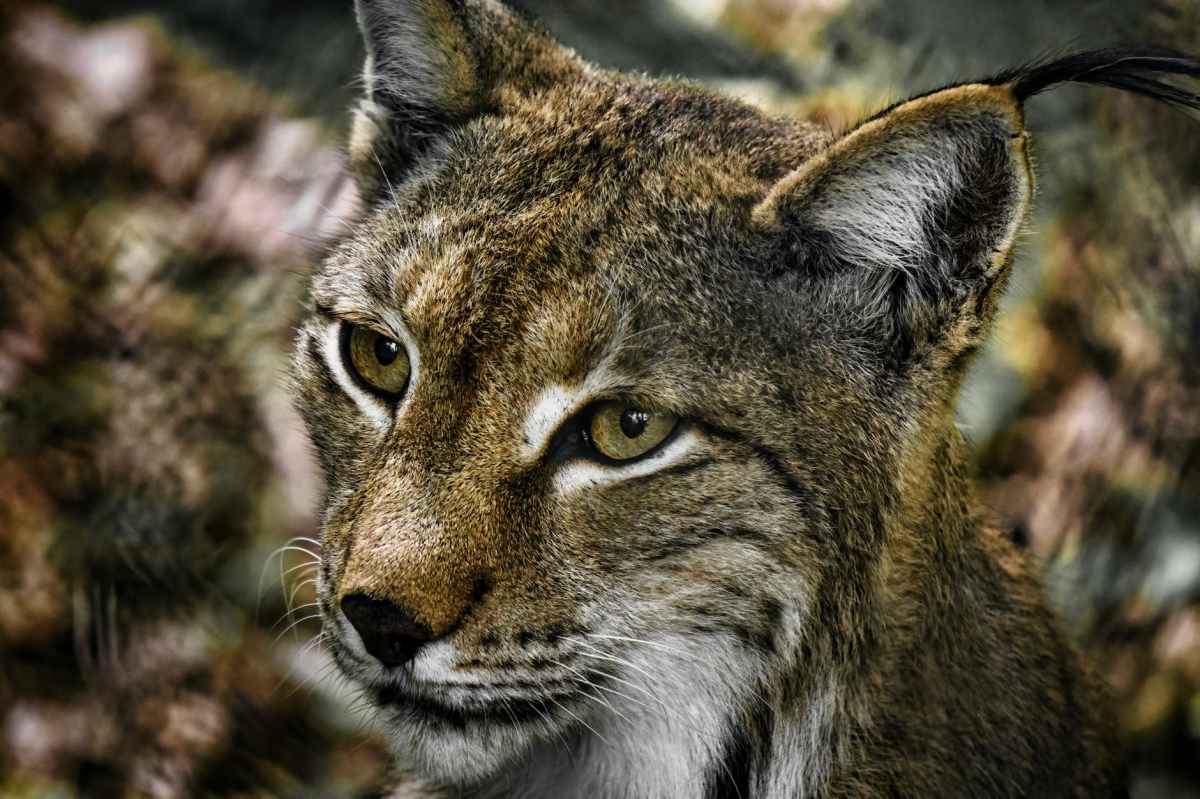
Header image of Eurasian Lynx courtesy of Pexels

A lonely cat in the UK needs a forever home

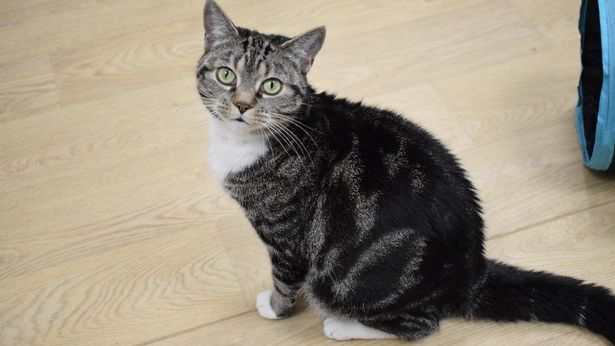
Eleven is a silver tabby who’s been returned to the shelter twice by would-be adopters, and staff at the shelter are appealing to the public to find her a forever home with patient humans.

The four-year-old with bright green eyes has been with Battersea Cats and Dogs in south London since April. Her rescuers say she takes a while to adjust to new surroundings, and they believe that’s why Eleven was returned twice within days. If Eleven’s failed adopters had been more patient, shelter staff said, they would  have discovered she’s a loving lap cat once trust is established.

Eleven the Cat
Eleven the Cat takes a while to warm up to new people. Credit: Battersea Cats and Dogs

They hope to place her in an “understanding home” with people who “will give her the time and space to settle in, as she would be a wonderful addition to a home.”

“Eleven needs her own space when she’s settling in, so she can hiss and swipe if pushed into interactions that she is not ready for,” a shelter spokesman told the Mirror. “She expects respect, but once given she will reward you with plenty of love. She is a super clever cat, who enjoys learning and she will sit on command for a treat of course.”

Get Your Buddy Down At The Shelter!

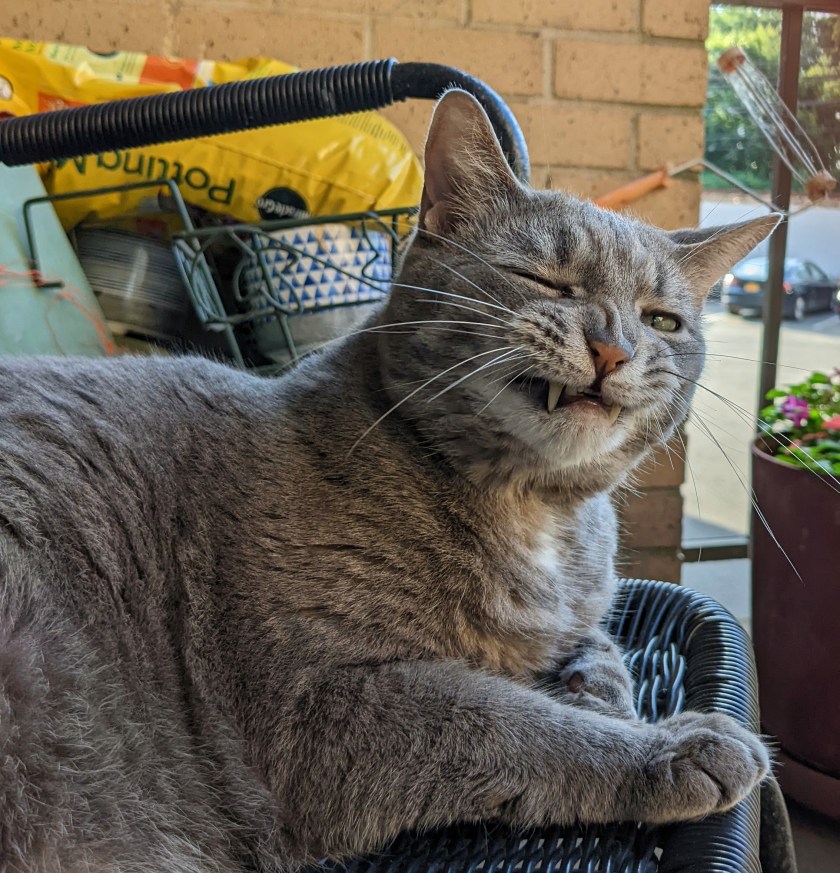
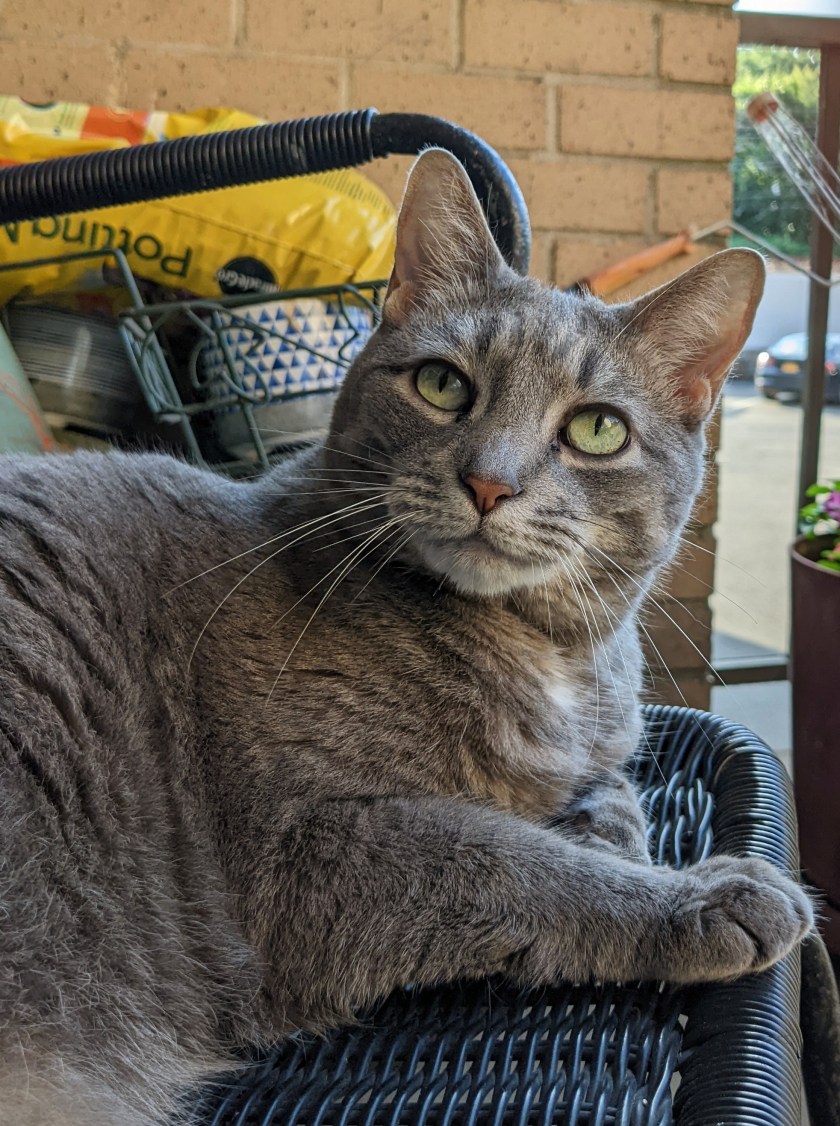
There’s Buddy, and then there are Buddies. All are valid members of the Buddesian breed.

The following is a Very Important Message from Buddy the Cat:

Hi, readers!

I’m going to share a story with you, and it may shock you to your core, but I promise it’s true and it’s a good thing.

You see, as handsome, meowscular, singular, charming, delightful, smart, full of personality and meowscular as I am (did I already say that?), I’m what the British call a moggie. A feline of no particular breed. A “standard issue cat.”

“But Buddy,” you’re thinking. “That’s impossible! How could such an awesome cat as you be a ‘plain old’ moggie?”

Well, I am. That’s why I invented the Buddinese breed, to make myself seem more exotic. But the truth is, Big Buddy adopted me, and my effortless charm and huge personality are a combination of genetics and growing up in an environment where I was doted on, played with, socialized, exposed to lots of different people and places, and just as importantly, given delicious, quality yums to eat.

The reason I’m telling you all this is that you don’t need to spend $5,000 on a Bengal or $20,000 on a Savannah to have an awesome cat. You should be slapped and sterilized if you give that much money to a breeder, let alone when there are so many kitties who need homes.

What I’m trying to say is that, as Adopt A Cat Month comes to a close, your local shelter has its own Buddies waiting for you. Go meet them!

They might not seem like Buddies. They might be depressed that their owners surrendered them, shocked that they’re in a shelter, and muted from spending 90 percent of their time in tiny enclosures. But they are Buddies, I assure you, and if you give them a chance to flourish like Big Buddy did for me, they’ll reveal themselves as the awesome little buddies they are.

Buddy the Buddy
I’m unique and special, but so are the shelter cats!

They just need a home, a human or two who will care about them, and a little love. Oh, and toys. Lots of toys. And turkey. Some of them may prefer other types of food, and they’re wrong about that because turkey is the best, but if they like lesser foods like chicken, salmon or beef, well, give it to them!

Once your Buddies realize they are in their forever homes and they aren’t going back to the shelter, things will revert to the Natural Order™, your cat will come to expect excellent service, and you will be designated as an official servant to a member of felinekind, which is the highest honor a human could hope for.

So go on! Get your Buddy! He’s waiting for you, and you’ll make every bit of difference in his life.

Your friend,

Buddy

PXL_20220624_220717310~2

At Tabby’s Place, A New Center Will Take In ‘Cats The Rest of the World Forgot’

The sanctuary’s expansion will allow staff to care for FeLV-infected cats who are highly contagious and cannot be housed with the other kitties.

In 2015, a Good Samaritan found a tiny kitten abandoned in the snow and brought her to Tabby’s Place.

Staff at the Ringoes, New Jersey-based sanctuary nursed her back to health, but tests confirmed the little one had Feline leukemia virus (FeLV). While they set up a makeshift isolation ward (FeLV is highly contagious), a woman came by and told the staff she wanted to adopt a cat no one else wanted.

She chose the FeLV+ kitten, who was dubbed Quinn, even though she knew they might only have a few months or perhaps a year or two together.

Seven years later and despite the odds, Quinn is still with her human mom. The latter decided she wanted to thank Tabby’s Place with a $3.5 million donation to help FeLV+ cats like Quinn. With the hefty donation and the support of many other donors, the sanctuary is closing in on the $5.5 million to cover the construction of Quinn’s Corner, a first-of-its-kind center for treating cats infected with FeLV.

“These little ones are really the ‘final frontier’ in terms of cats who have nowhere to turn,” Tabby’s Place Development Director Angela Hartley told PITB, “and we’re thrilled to finally be in a position to welcome them at Tabby’s Place.”

Staff at Tabby’s Place see Quinn’s Corner as a major step forward in caring for kitties who normally don’t have a chance. Because they don’t have the facilities, know-how or resources to treat FeLV+ cats, many shelters simply euthanize them.

In the initial announcement, the sanctuary described Quinn’s Corner as a place where “cats who wandered the world looking for love will find cage-free bliss, matchless medical care, and the dignity and tenderness that every Tabby’s Place cat enjoys.”

The construction crew broke ground about a year ago and, if factors like supply chain issues for construction materials and the weather cooperate, the staff at Tabby’s Place hope to celebrate with a grand opening in autumn.

Because of how contagious and deadly FeLV is — it can pass by grooming, sharing food and water bowls, and close contact — infected cats must be kept apart from the other feline residents. Quinn’s Corner will have its own entrance and lobby, individual suites and a large communal room for FeLV cats, and “solaria,” which are like fancy catios for the ailing furballs to get fresh air and enjoy chirping at birds.

Separately, the project will add a nursery and adoption suite for kittens and an “operations center” where staff can attend to all the behind-the-scenes work of caring for felines, including laundry and food prep.

Tabby’s Place will match donations until they reach the $2 million goal to supplement the initial donation of $3.5 million, but cat lovers can continue to donate at any time, Hartley said.

All construction photos and renderings provided by Tabby’s Place. Top photo credit Asish Aji/Pexels.


Thanks To A New Treatment, These Cats Have A Second Chance At Life

Parsnip and Jupiter are fighting off FIPV, a virus that until recently was a death sentence for cats. The future looks bright for both cats.

After almost three months in treatment, little Parsnip is back to her old self.

The tabby cat with expressive sky blue eyes had been diagnosed with Feline infectious peritonitis, a variation of feline coronavirus that attacks the body’s white blood cells and can render even the most playful kittens lethargic, eventually robbing them of their ability to walk and ultimately, their lives.

Parsnip was an affectionate whirlwind of energy when 21-year-old Californian Anae Evangelista adopted her. When she lost her kitten exuberance six weeks later, Evangelista knew something was wrong. When the little cat stopped eating and drinking, Evangelista realized the problem was much more serious than an initial veterinary examination suggested.

After more tests, she received grim confirmation that Parsnip had FIPV, a virus that is almost always fatal.

But a veterinarian connected her with an online group for people whose cats have FIPV and Evangelista was able to get her kitty accepted for experimental treatment with GS-441524, a nucleoside analogue antiviral drug that has proven effective at treating all types of FIP in several trials in recent years.

After a regimen of almost three months of GS-441524 treatment, Parsnip has her energy back, she’s gained a pound and a half, and “looks perfectly healthy,” Evangelista said. Equally important, her blood work and other health indicators are all positive.

She’s overjoyed at the result. Parsnip came into her life at a difficult time, when Evangelista was grieving the loss of two friends. Losing the kitten she’d bonded with — an animal who had become such a comfort to her over the months — would have been too much.

Evangelista will graduate from college in about a week’s time, “so I’m honestly so excited to have her ‘graduate’ from her treatment too,” she told PITB.

Parsnip at the vet
Parsnip being a little trooper during one of her many veterinarian visits.

Londoner Billie’s cat, Jupiter, also suffers from FIPV. When she went to adopt him, Billie knew the British shorthair had Feline herpes virus (FHV) and that it would require careful monitoring. But the infection wasn’t life-threatening and Billie had already fallen in love with the golden-eyed chonkster.

When Jupiter’s appetite waned and his behavior changed earlier this year, Billie thought the little guy was just suffering from a FHV flare-up.

“He is very loving, he is like my shadow and he loves to play,” Billie told PITB, “but he wasn’t doing any of these things.”

As was the case with Parsnip, the veterinarians didn’t think Jupiter was seriously ill. They sent Billie and Jupiter home with antibiotics and anti-inflammatory medication, but after a week Jupiter still hadn’t improved. He was subject to a battery of tests — bloodwork, ultrasounds, x-rays — and kept overnight for observation.

“FIP is notoriously hard to diagnose, and there are so many symptoms that you could mistake for other things,” Billie said, noting veterinarians often have to “work backwards” and eliminate other potential ailments before diagnosing a cat with FIPV. “Jupiter’s symptoms were so minor initially, he just seemed a bit off and hadn’t eaten much and felt hot. I think because I know him and his behavior so well, we were able to catch it early.”

jupiterjubilee
Jupiter proudly displaying the Union Jack in celebration of Queen Elizabeth’s Platinum Jubilee.

Because the tests didn’t confirm FIPV, a third visit with more tests followed before Jupiter was placed on his meds. While the FDA has yet to approve GS-441524 treatment in the US, the UK had approved the drug in fall 2021, so Jupiter was able to begin treatment right away. Like Evangelista, who paid $5,000 for the FIPV drugs, not including the initial veterinary examinations, Billie was faced with hefty bills: The three initial veterinary visits, tests and five nights of observation added up to £5,500 (about $6,930 in USD), and the medication set her back £7,500 (about $9,400).

Her family helped her pay the initial veterinary bills, her sister started a GoFundMe campaign, and her nieces began making “FIP Warrior crystal healing bracelets,” with the proceeds from sales going to Jupiter’s treatment. (A GoFundMe for Parsnip also exists, and has raised $2,060 of its $2,500 goal so far.)

So far, Jupiter is responding well to the treatment and the signs are encouraging.

Both cats will enter an 84-day observation period after their regimens. They’ll have their bloodwork monitored and will be examined several times over that stretch to make sure they’ve recovered. They’ll also be closely watched at home for any symptoms.

Evangelista and Billie said they’re heartened by the 85 percent success rate.

Despite the cost, Billie said she didn’t balk at taking care of her cat.

“Jupiter is my whole world,” Billie said. “It is just the two of us, he is my one constant and he means everything to me. He is so loving, and so sassy. He has such a little personality and I would be so lost without him.”

Follow Jupiter on Instagram @_jupitersfipfight and Parsnip at @lilmissparsnip

Frankie Sad Eyes Needs A Home

Frankie was surrendered at 13 years old and hasn’t had the easiest time adjusting to shelter life.

Even though I am the honored servant to the king, His Grace Buddy I, I am not immune to adoptable cats who tug at the heartstrings.

Frankie Sad Eyes is one of those cats. Just look at those eyes!

The little guy is 13 years old, and at an age when he should be enjoying a quiet, nap- and treat-filled life as the senior statesman among cats, he’s been surrendered by his people and has landed in a shelter.

Thankfully that shelter is Tabby’s Place, a no-kill, no-cage sanctuary in New Jersey that has a reputation for doing right by its cats. Still, any feline would be shocked by the experience of losing his or her family and ending up in a strange place with unfamiliar people and cats.

Frankie Sad Eyes
Frankie looks sad, and undoubtedly he’s finding it difficult adjusting to life in a sanctuary, but staff at Tabby’s Place say he’s a “joyful” cat with a zest for life.

Alas, I can’t adopt Frankie. Like the King himself, he’s not particularly keen on sharing his throne, so there can be no future where Buddy and Frankie are, well, buddies.

But Frankie, who is described as “a zesty, exuberant sweetheart” who still has kitten-like energy, is looking for a home where he can establish his new and forever kingdom, with a human or humans who will dote on him and see to his every need.

Visit Tabby’s Place to view their adoptable cats, make a donation or just brighten your day.