Animals Teach Us Our Self Worth Isn’t Tied To What We Do

We could learn a lot from our feline friends, who live in a default state of contentment, according to a philosopher who muses on cats in his new book.

NPR has an interesting article about the very human tendency to peg our self worth to our careers and our egos to our accomplishments, something most of us are guilty of to one degree or another.

I know I’m guilty of it, and I’m often unhappy when I’m not meeting some arbitrary level of creative output.

But Devon Price, a social psychologist, told NPR a pet chinchilla named Dumptruck — “the opposite of productive, and frankly, rather destructive” — led to a revelation Price had about intrinsic worth.

“I would never look at him and think of his life in terms of, ‘Has he justified his right to exist?'” Price told NPR. “He’s not paying rent. He’s not performing any service. And it would be absurd to even think about his life in those terms.”

The article prompted me to think about Bud, of course. He’s just Bud. A gray-furred, mercurial, amusing little guy whose favorite activities are eating, sleeping and hanging out with his Big Buddy.

How Buddy pulls his weight

Does he do anything to “justify” his existence? Well, according to him, he does.

“What services do I provide?” Buddy repeated when asked. “Well, first of all, I’m delightful. I’m responsible for like 95% of the delightfulness around here, let’s be honest. Yes, delightfulness is a word. Because I say it is!”

He also claims he provides security — “no burglar in their right mind would break in knowing I’m here” — as well as daily wake-up services, and “annoyingness desensitization.”

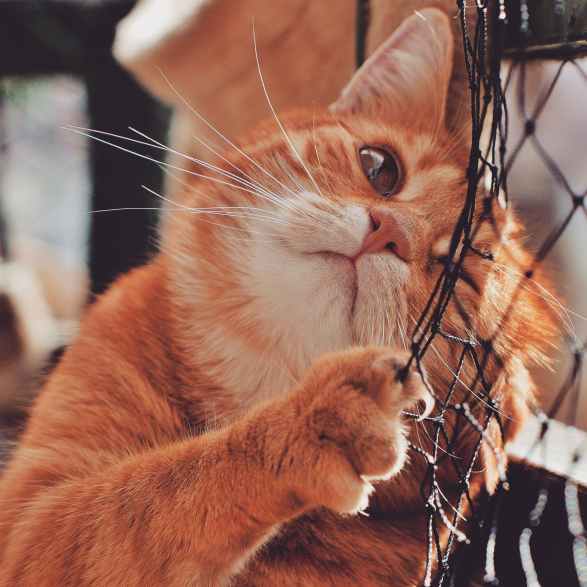
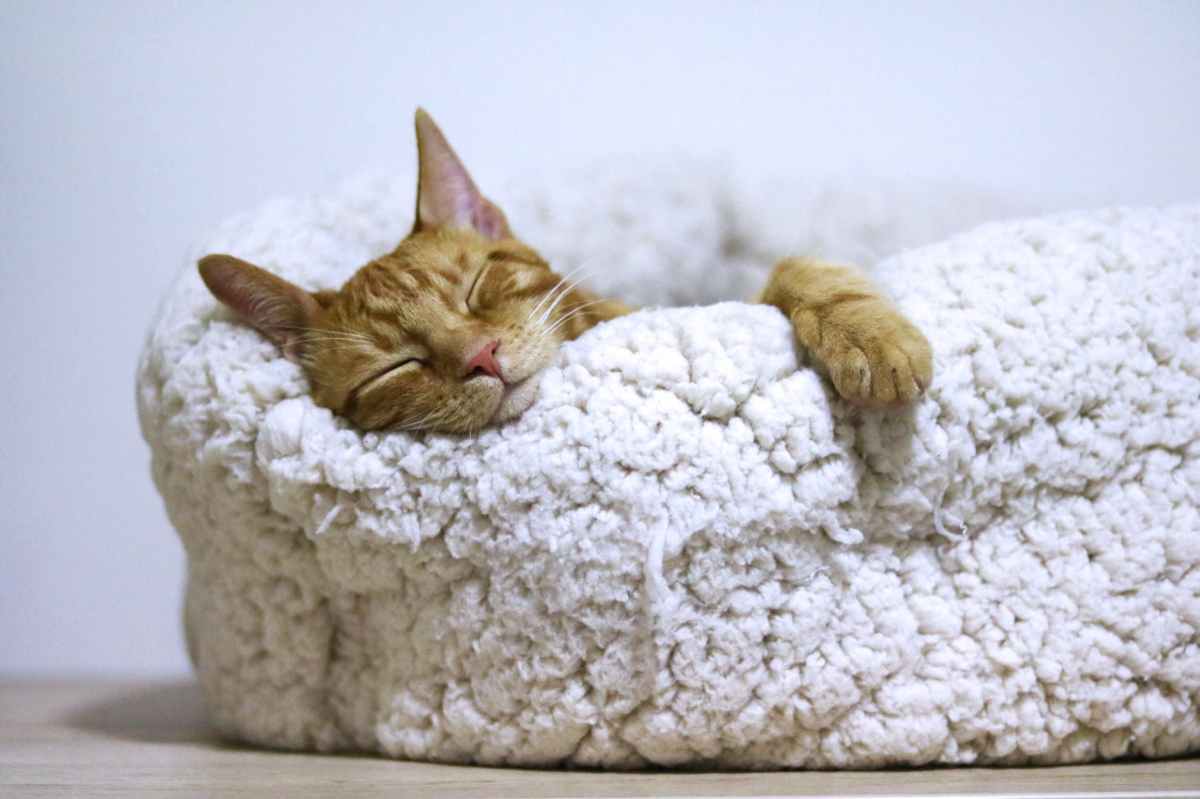
orange cat on focus photography
Credit: Alexas Fotos/Pexels

Price’s observations are not far from those of John Gray, the British philosopher who published a new book, Feline Philosophy: Cats and the Meaning of Life, earlier this year.

Cats live in the moment, Gray points out, and don’t stress themselves obsessing over “an imagined future.” Some people, especially those who don’t appreciate the full scope of animal cognition, would say cats are so adept at enjoying the present because they’re simple creatures incapable of thinking in the abstract or planning for the future.

That, of course, isn’t true: Cats develop abstract thinking skills early in their development, they understand object permanence, and anyone who’s seen a mother cat care for her babies — fretting over hiding spots, frequently moving her kittens and checking in on them when she must hunt for food — knows our feline friends are most certainly capable of planning and worry. (Or you can just watch my cat when his dinner’s late.)

Human anxiety is compounded by existential concerns, which cats aren’t burdened by. They’re not worried about their place in the world, and it probably never occurs to them that trying to be happy acknowledges the possibility of failure.

Contentment is a cat’s natural state

Cats, Gray points out, just do what makes them happy, whether it’s playing with a favorite toy or shredding a roll of toilet paper. They’re not worried about whether they could have more fun doing something else, or whether they’re making the best use of their time. Cats are “among the wisest animals because they’re spontaneous and playful and content with whatever life presents them,” as one reviewer of Gray’s book put it.

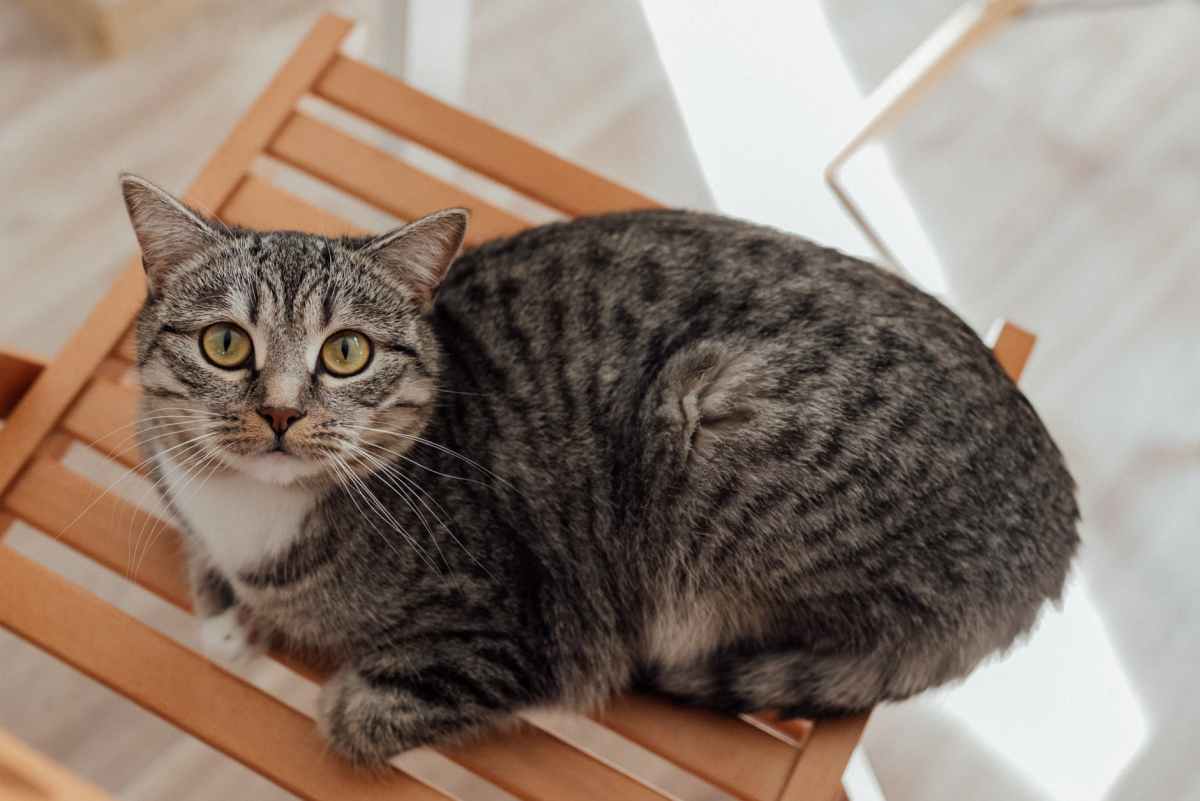
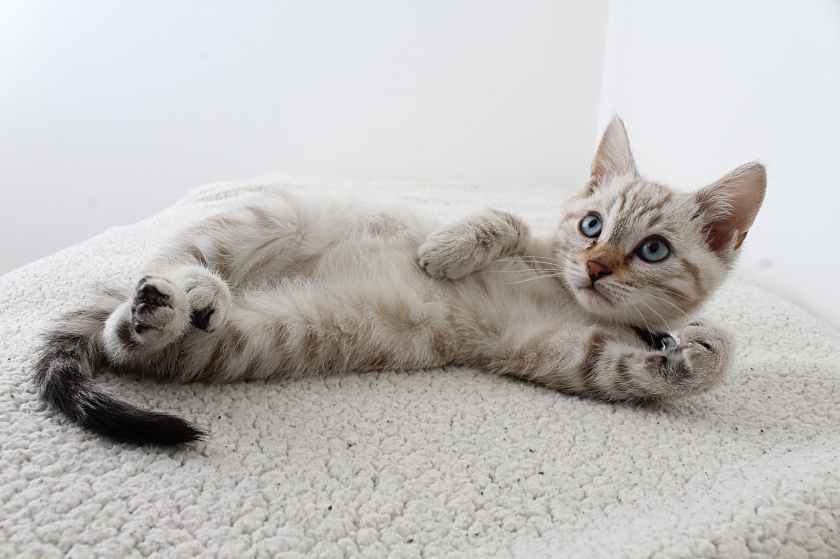
photo of grey tabby kitten lying down
Credit: Anel Rossouw/Pexels

“I would say that a lot of torment in our lives comes from that pressure for finding meaning,” Gray told The Guardian earlier this year. “Unless you adopt a transcendental faith which imagines a wholly other world where meaning is secure from any accident, most of the things that happen to us are pure chance. We struggle with the idea that there is no hidden meaning to find. We can’t become cats in that sense – we probably will need to always have the disposition to tell ourselves stories about our lives – but I would suggest a library of short stories is better than a novel.”

In response to questions about what cats might say to us if they could truly talk, rather than simply communicate, Gray responds with a question of his own: “If they could talk, would they find us sufficiently interesting to talk with?”

Would they consider us buzz kills? Would they roll their eyes, say nothing and return to gleefully knocking beverages off tables?

“Unless cats are hungry or mating or directly threatened, they default to a condition of rest or contentment or tranquility — basically the opposite of humans,” Gray told Vox. “So if cats could philosophize, my guess is they’d do it for their own amusement, not because of some deep need for peace.”

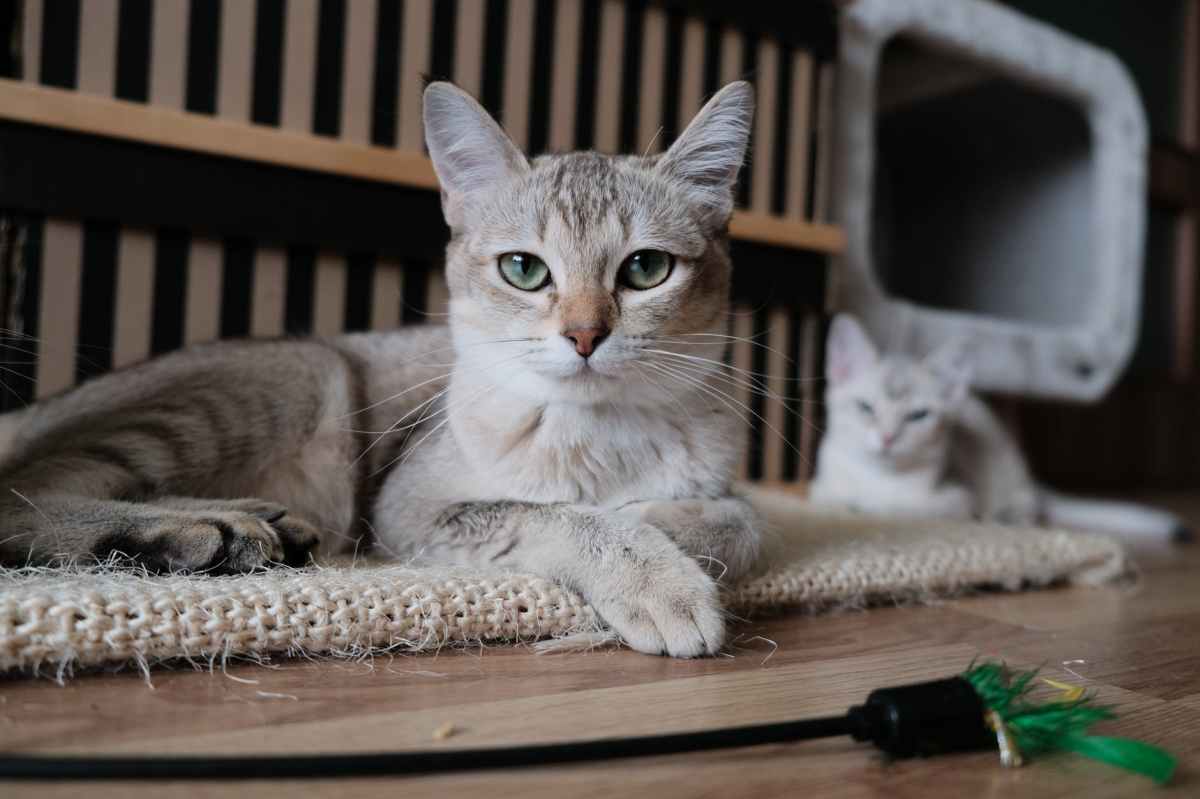
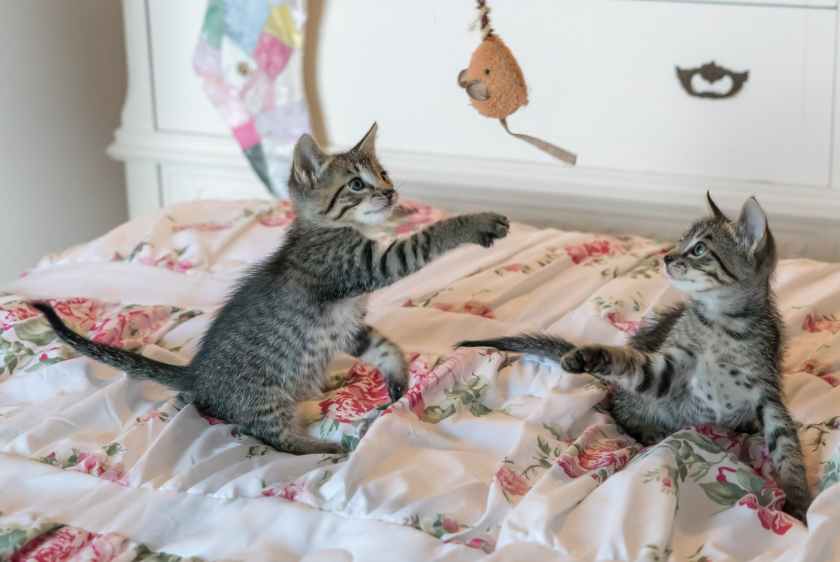
tabby kittens on floral comforter
Credit: Pixabay/Pexels

The Most Important Cat Study Ever Has Been Completed, And The Results Are In

For the first time ever, a US city has conducted a true cat census using scientifically proven methods, including doing it the hard way — by counting. The project’s authors hope other cities follow their lead.

The last decade has seen something of a renaissance in cat-related research, with insightful studies about feline behavior coming from researchers in the US and Japan.

On the other hand there’s been a glut of research into feline predatory impact and public policy, and the majority of those studies have been deeply flawed. They’re based on suspect data and tainted by the interests of people who are more interested in blaming cats for killing birds than they are in learning about the real impact of domestic felines on local wildlife.

Those studies have all taken extreme shortcuts — using data that was collected for entirely different studies, for example, or handing out questionnaires that at best lead to highly subjective and speculative “data” on how cats affect the environment.

Several widely-cited studies that put the blame on cats for the extirpation of bird species have relied on wild guesses about the cat population in the US, estimating there are between 20 million and 120 million free-roaming domestic cats in the country. If you’re wondering how scientists can offer meaningful conclusions about the impact of cats when even they admit they could be off by 100 million, you’re not alone.

No one had ever actually counted the number of cats in a location, much less come close to a real figure — until now.

When leaders in Washington, D.C., set out to tackle the feral cat problem in their city, they knew they couldn’t effectively deal with the problem unless they knew its scope. They turned to the University of Maryland for help, which led to the D.C. Cat Count, a three-year undertaking to get an accurate census with the help of interested groups like the Humane Society and the Smithsonian.

DC Cat Count
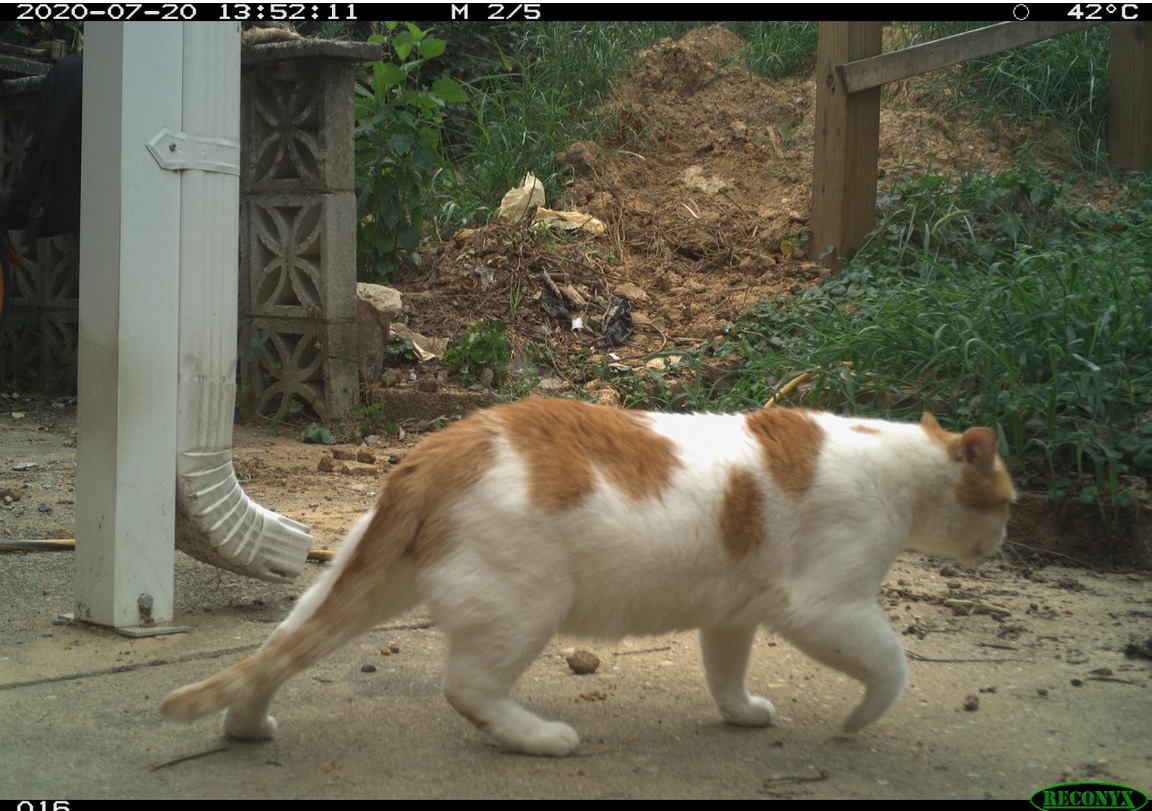
An image from one of 1,530 motion-activated cameras deployed for the D.C. Cat Count. Credit: D.C. Cat Count

The researchers approached each of their local shelters and rescues for data, then assembled a meticulous household survey to get a handle on how many pet cats live in the city, and how many have access to the outdoors.

Finally — and most critically — they used 1,530 motion-activated cameras, which took a combined 6 million photos in parks, alleys, public spaces, streets and outdoor areas of private residences. They also developed methods for filtering out multiple images of individual cats, as well as other wildlife. And to supplement the data, team members patrolled 337 miles of paths and roads in a “transect count” to verify camera-derived data and collect additional information, like changes in the way local cats move through neighborhoods.

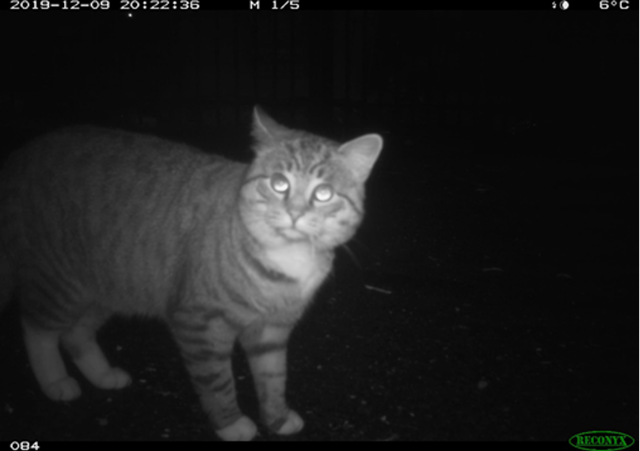
DC Cat Count
A cat who looks a lot like the Budster was captured in this 2019 photo from a motion-activated camera with night vision. Credit: DC Cat Count

Now that all the data’s been collected and analyzed, the D.C. Cat Count finally has a figure: There are about 200,000 cats in the city, according to the study.

Of those, 98.5 percent — or some 197,000 kitties — are either pets or are under some form of human care and protection, whether they’re just fed by people or they’re given food, outdoor shelter and TNR.

“Some people may look at our estimate and say, oh, well, you know, you’re not 100% certain that it’s exactly 200,000 cats,” Tyler Flockhart, a population ecologist who worked on the count, told DCist. “But what we can say is that we are very confident that the number of cats is about 200,000 in Washington, D.C.”

The study represents the most complete and accurate census of the local cat population in any US city to date, and the team behind it is sharing its methods so other cities can conduct their own accurate counts. (They’ll also need money: While the D.C. Cat Count relied on help from volunteers and local non-profits it was still a huge project involving a large team of pros, and it cost the city $1.5 million.)

By doing things the hard way — and the right way — D.C. is also the first American city to make truly informed choices on how to manage its feline population. No matter what happens from here, one thing’s certain — the city’s leaders will be guided by accurate data and not creating policy based on ignorance and hysteria painting cats as furry little boogeymen.

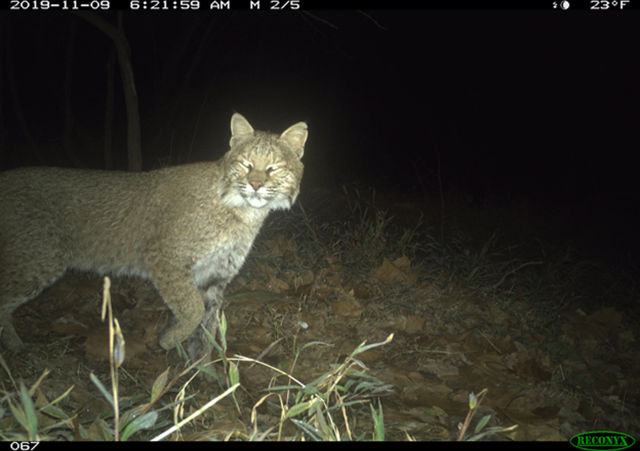
DC Cat Count
Not all the photos captured images of cats, and not all the felines were little: In this 2019 night image, a bobcat wanders in front of a trail camera. Credit: DC Cat Count

There Won’t Be A Cat In The White House Any Time Soon, Thanks To The Dog

First Lady Jill Biden says she hasn’t brought a cat into the White House as promised because the Biden family dog, Major, has been an aggressive biter lately.

First Lady Jill Biden generated hundreds of headlines late in 2020 and again earlier this year as she promised she and her husband would welcome a feline pet to the White House for the first time since the George W. Bush administration.

Since then we haven’t heard anything — until today’s edition of the New York Times, which includes the first sit-down interview with the First Lady since her husband took his oath of office back in January.

It turns out the Bidens did pick a cat, and that cat has been living with a foster family because the Bidens’ other family pet, Major the German Shepherd, has a bit of a biting problem.

White House spokeswoman Jen Psaki downplayed Major’s biting incidents, telling reporters he nipped White House staff twice, but emails obtained by the group Judicial Watch show Major’s biting isn’t so minor: In the first week of March, an internal Secret Service email said “an agent or officer has been bitten every day this week.” The dog also bit a visitor to the White House that same week, according to the email.

Since then there have been other incidents, and the pooch has been shuttled between the White House and Delaware, where he’s spent more time with trainers in an attempt to curb the bad behavior.

The president and First Lady didn’t want to subject their new cat to the stress of living with a bite-happy Husky, so the kitty remained in foster care. It seems the cat is now a “failed foster.”

“The cat is still being fostered with somebody who loves the cat,” Jill Biden told the Times. “I don’t even know whether I can get the cat back at this point.”

The Natural Order of Things
A brave and heroic cat executes a glorious karate kick to the face of a slobbering, clumsy dog, proving once again that felines are superior.

In related news, Buddy the Cat — whose track record of biting to get what he wants is second-to-none — volunteered himself to help solve Major’s behavioral issues.

“I’ll straighten him out right quick,” Buddy said, lifting a paw and flexing. “If my razor sharp claws, vicious fangs and intimidating size don’t deter him, my huge meowscles will. I guarantee he’ll want no part of this.”

Buddy the Cat: Handsome and Meowscular
Bud is not only smart and good looking, he also has huge meowscles and is known for his bravery

At Least 20 Cats Dead In ‘Worst Nightmare’ Shelter Fire

Bad news out of a Florida shelter, good news from a Portland cat cafe.

Sad news out of Orlando, where more than 20 cats died in a late night fire that destroyed the shelter where they lived on Wednesday.

Officials from the Orange County Fire Department said one section of the building was already engulfed by the time they arrived, with flames visible through the roof. They’re not sure yet how the fire started, but flame patterns indicate it started near the front of the Pet Alliance shelter, where the cats were housed.

Firefighters were able to rescue all the dogs and 10 cats, but at least 20 — and as many as 30 — cats were still inside, with first responders unable to get to them, per the Associated Press. Of the 10 cats who were rescued, some were moved to another Pet Alliance shelter, while a few were under veterinary care for smoke inhalation and burns.

“If you run a shelter, this is literally your worst nightmare,” Stephen Bardy, the executive director of Pet Alliance,  told WFLA, an NBC affiliate in Orlando. “To see your building in fire and know that there are animals in there that you’re charged to care for and you can’t go in. …I’m grateful that the firefighters put their lives at risk to help save as many as they could.”

We don’t want to leave you with bad news only today, so here’s a hopeful story out of Portland, where a cat cafe was able to adopt out every one of its cats in less than a day since its post-COVID re-opening on Sept. 4.

Purrington’s Cat Lounge has coffee, wine and beer on the menu for guests who drop by to hang out with the cafe’s feline residents and see adoptable cats. Although it’s a popular place in the community, it’s had a tumultuous few years: First it looked headed for closure after its owners planned to move out of town, but was rescued by a kitty-loving local couple.

The new owners renovated the space and had big plans for it, but those were halted along with everyone else’s ambitions with the arrival of the pandemic in 2020.

Finally, the renovated cat cafe reopened about two weeks ago, and Portland locals — perhaps daunted by the Delta variant and the prospect of more work-from-home, socially limited months — were eager to give the resident kitties new homes. Since Sept. 4, Purrington’s has placed more than 80 cats in forever homes.

‘Merica Saves A Cat On The 20th Anniversary of 9/11

Humans can be the cruelest of creatures, but sometimes we can be among the most compassionate.

That compassionate side came out on Saturday, the 20th anniversary of the Sept. 11 terrorist attacks on New York and Washington, at a Miami Hurricanes game of all places.

Craig and Kimberly Cromer are Hurricanes season ticket holders who bring a large US flag to every game, which they’ve been doing for seven years.

Per the Miami Herald:

Early in the second quarter of No. 22 Miami’s home-opener against the Appalachian State Mountaineers, a murmur rose up from the student section at Hard Rock Stadium. The students, many attending their first-ever home game, noticed a cat dangling from the upper deck. The Cromers turned around and first thought it was a dog. Another fan nearby thought it was someone’s kid.

Once the Cromers realized what was happening, they sprung into action. Craig ripped his flag free from his zip-ties, and he and his wife stretched it out to create a landing pad for the terrified cat.

No one’s sure how the cat got into the stadium or ended up on the upper deck railing, but the entire stadium began paying attention when the cat lost its footing, grabbed a wire hanging from the underside and was desperately trying to hold on, its little body dangling precariously.

People seated in the upper deck tried to help, but by that point the black-and-white domestic shorthair was out of reach.

Video of the dramatic incident shows the fearful feline hanging on by its claws. At that point, the entire stadium was invested in the poor kitty’s plight, with thousands of people inhaling nervously as one claw broke away and kitty continued to hold on by a single paw.

The cat had drawn the attention of the game’s announcers as well by that point. There was no way the cat could have known people below were scrambling to break the fall, and kitty inadvertently released droplets of terror pee on the fans in the lower deck.

The Cromers grabbed the flag, “snatched it off the handrail and used it to break the cat’s fall,” Craig Cromer told the Herald.

Catching the little one was “probably the strangest thing that’s happened” to the couple, Kimberly Cromer said.

Footage shows the cat landing on the flag, then quickly tumbling into the section below, eventually ending up in the arms of a kind-looking woman who (we hope) was able to soothe raw nerves.

It was not immediately clear what happened to the cat, but it wasn’t a stray.

“It had a collar so it must be someone’s,” Miami student Dylan Marinov told WPLG, a local news station. Marinov recorded the drama on his smartphone and shared it online.

Hard Rock Stadium’s official Twitter feed said it had made a donation to the Miami Human Society in honor of the kitty’s safe landing, and said stadium staff “wish the cat the best in his remaining eight lives.”