With A Three-Fold Increase in Cat Thefts, UK Chooses Microchip Mandate

With breed cats commanding prices in the thousands, thieves see pet theft as a quick score. Lack of prosecution has made it an almost zero-risk crime in the UK.

Mandates in the wake of COVID-19 haven’t been especially popular with a weary public, but surveys show one proposed directive has almost universal support in the UK: Requiring all cat owners get their pets microchipped.

Cat thefts in the UK have tripled in the last five years, with the pandemic contributing to the increase since early 2020, police say. Authorities say they hope compulsory microchipping — and consolidating the many chip ID databases into one — will help discourage people from stealing while making it easier to reunite felines with their families.

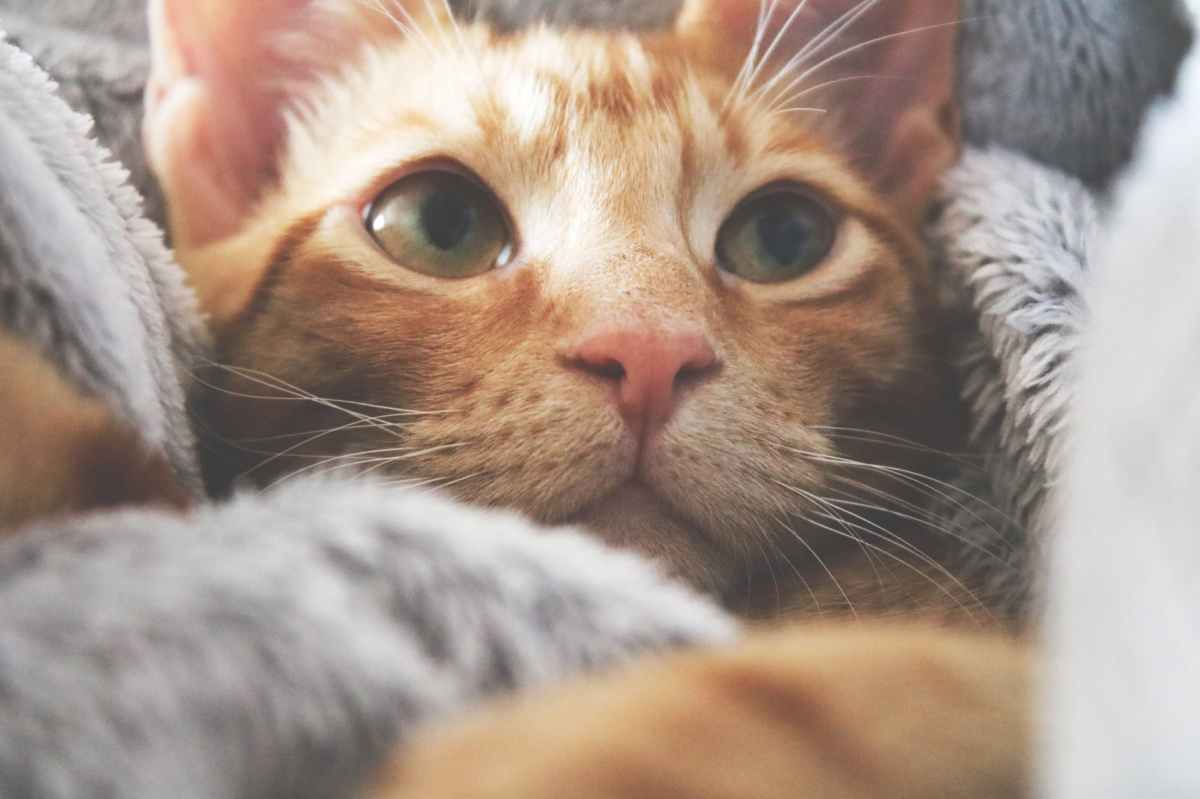
Thieves mostly target pedigreed kitties over moggies, with Bengals as the most commonly-stolen cats, followed by British Shorthairs and Persians, according to police statistics. Thieves try for breed cats because of resale value, police say.

Dog thefts have skyrocketed as well, with thieves targeting Chihuahuas, Jack Russell Terriers and German Shepards, among other popular breeds. The price of breed dogs has ballooned by as much as 89 percent since the beginning of the pandemic, when demand for new pets and a slowdown in breeding created a boom market.

For context, an estimated 3.2 million British families welcomed new pets, mostly cats and dogs, into their homes since the first lockdowns in late winter and spring of 2020, the BBC reported. Like their counterparts here in the States, UK shelters experienced unprecedented adoption rates as people battled loneliness and depression during the initial COVID waves and last year’s long winter when the virus came back with a vengeance.

“The number one reason behind pet theft is because the prices for pets have gone up drastically,” Becky Thwaites, spokeswoman for UK pet charity Blue Cross, told SWLondoner. “This happened exponentially over lockdown, as responsible breeders stopped breeding due to social distancing guidance, but more people were wanting pets.”

Despite the spike in animal thefts, only about one percent of all such crimes have led to an arrest, according to a public information request by a UK animal welfare group. 

Police have been reluctant to pour resources into those cases, partly because the law lacks serious consequences for people who steal animals. While the maximum sentence for stealing a pet is seven years in jail, under current UK law sentences are pegged to the value of the stolen item. (Unlike the US, the UK does not make a distinction between prison and jail.)

But for people who love their cats, it’s not about the monetary value — it’s about sentiment, love and the distress to human and animal when they’re separated.

Abductions instead of thefts

To change that, a new pet theft task force — set up earlier this year to study the growing problem — recommended a change in the law. Instead of treating pet thefts as property thefts, under the proposal they would be treated as abductions, with all the increased charges and consequences that come with the classification.

Treating animal thefts as abductions “acknowledges that animals are far more than just property and will give police an additional tool to bring these sickening individuals to justice,” UK Home Secretary Priti Patel told the BBC.

Advocates say treating pet thefts as abductions makes sense not just as a legal adjustment, but also as a reflection of the way cats and dogs are stolen. While some thieves stalk dog parks and lure pets away with treats, others have taken to more brazen and violent means like taking animals by force and jumping people while they’re walking their dogs.

The change would require owners to have their kittens chipped by 20 weeks and adult cats chipped upon adoption from a shelter or rescue.  Failure to microchip a pet would result in a warning and a three-week grace period. After that, cat owners would face a steep fine of £500, equal to $660 in USD.

Consolidating chip databases

There are about 10.8 million pet cats in the UK, although widespread chipping alone won’t solve the problem of pet thefts and lost pets flooding shelters. There are currently 16 different microchip databases in the UK. They don’t always share information and scans don’t cover each of the databases, so even if a cat is recovered, brought to a shelter and scanned, there’s no guarantee the kitty will be returned home.

The existence of so many non-cooperating databases operated by private companies “can pose a huge barrier to successful reunification of pets” said the British Veterinary Association’s Malcolm Morley.

UK authorities and the animal welfare groups pushing for the change are cognizant of the problem and want to streamline the 16 existing database into one central repository of cat microchip registration. That will take time and will have to include compromise on the part of the various private companies running the existing fractured databases.

“Every day, we see how important microchipping is for cats and for the people who love them,” said Pet Protection’s Jacqui Cuff, “whether it’s reuniting a lost cat with their owner, identifying an injured cat, or helping to ensure an owner can be informed in the sad event that their cat has been hit and killed by a car.”

UPDATE: Airline Investigates Cat Breastfeeding Incident, Flight Attendant Speaks Out

There have been more than 5,000 confrontations involving unruly passengers on airlines in 2021, on pace for more than all other years combined.

When we first heard about an airline passenger grossing out her fellow travelers by breastfeeding her cat, we figured at least kitty was happy with the situation — but apparently not, according to a flight attendant who was involved in the incident.

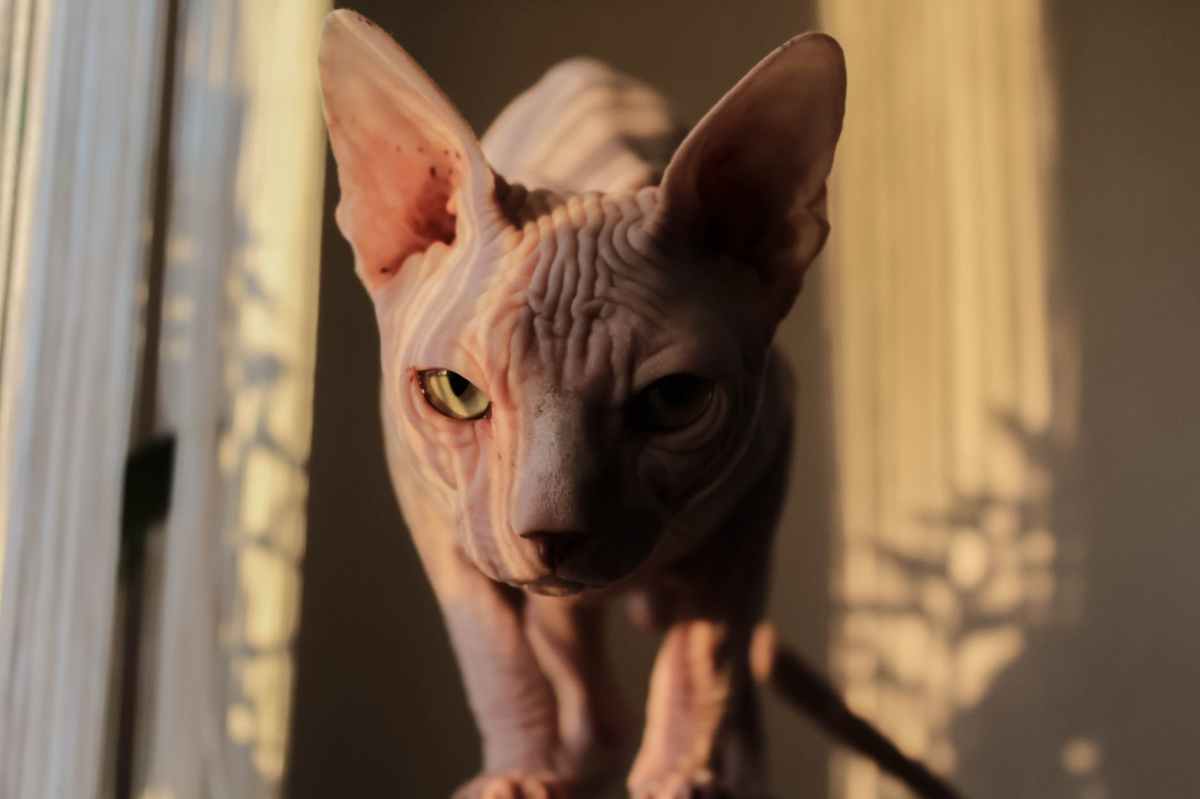
Instead of purring and kneading in a milk coma, the cat — likely a Sphinx — wanted nothing to do with feeding from the woman’s breast on the flight in late November, flight attendant Ainsley Elizabeth said.

“This woman had one of those, like, hairless cats swaddled up in a blanket so it looked like a baby,” Elizabeth said in a video about the incident. “Her shirt was up and she was trying to get the cat to latch and she wouldn’t put the cat back in the carrier. And the cat was screaming for its life.”

“What does she do at home if she’s doing that in public?” Elizabeth asked. “And then security met the flight just to tell her that she couldn’t do that again, cause it was weird and gross.”

Elizabeth has since deleted the social media account she used to upload the video.

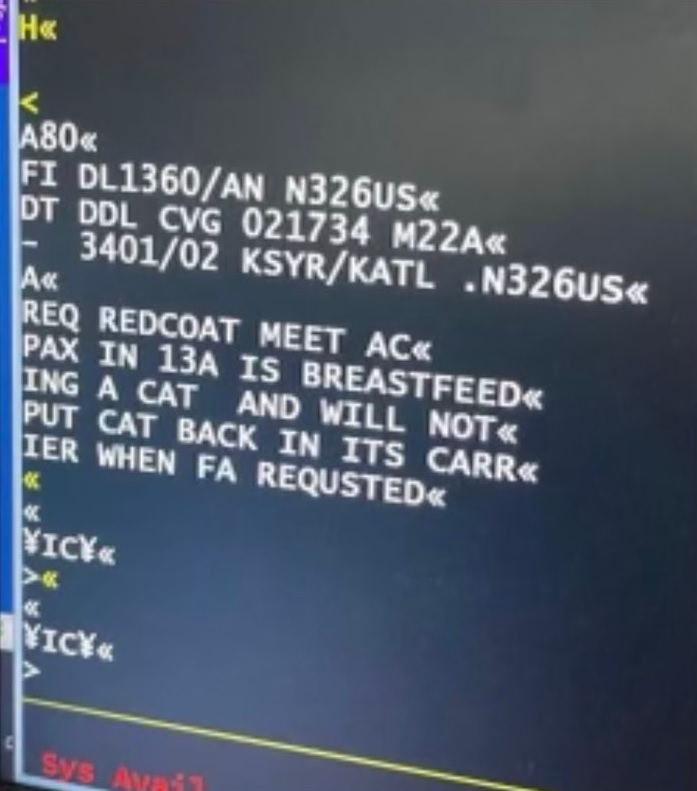
As we noted in our earlier post, the woman was uncooperative when flight attendants asked her to stop, prompting the pilot to send a message ahead to the destination airport via ACARS, short for Aircraft Communications Addressing and Reporting System.

acarscat
An ACARS message sent from Delta Air flight DL1360 to ATL, Hartsfield-Jackson Atlanta International Airport.

The bizarre incident happened aboard a Delta Airlines flight from Syracuse, NY, to Hartsfield-Jackson Atlanta International Airport in Georgia.

Meanwhile, Delta airlines has begun an investigation into the Great Breastfeeding At 40,000 Feet saga, after the incident went viral last week and garnered headlines around the world — including newspapers in the UK, Australia, New Zealand and dozens of non English-speaking nations.

Initially the passenger was reprimanded, but an investigation could result in more serious consequences, like a ban on using the airline.

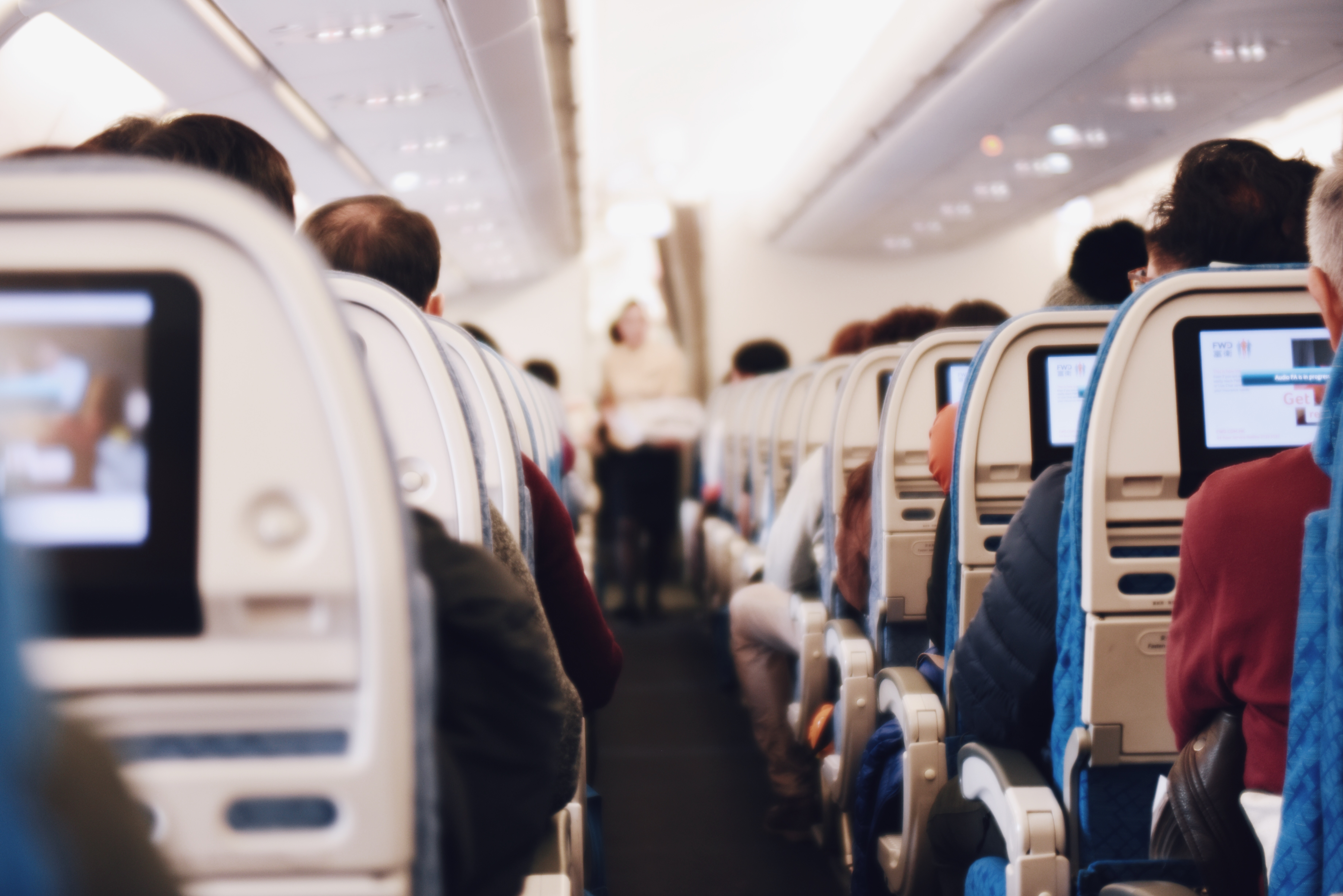
Airline aisle during flight
In-air confrontations have skyrocketed in 2021, mostly due to disagreements over COVID-19 safety rules such as wearing masks. Credit: Wikimedia Commons

The story comes amid a general surge in violent attacks and tense confrontations aboard passenger jets — and now the FBI is getting involved.

As of Nov. 4, the FAA had logged 5,033 cases involving “unruly passengers,” including 37 that were referred to the FBI for criminal prosecution.

That puts 2021 on track for more cases than all other years combined, according to the Association of Professional Flight Attendants. The majority of those incidents — as many as three out of every four — are related to confrontations over mask policies due to the Coronavirus pandemic.

Teddy Andrews, a long time flight attendant with American Airlines, testified before a congressional committee in September, recalling an incident in which a passenger called him the n-word when Andrews asked the man to wear his mask.

“These days I come to work anticipating disruptive behavior,” Andrews told USA Today. “Our colleagues are anxious, fearful. What is going to happen on the next flight? How will this passenger react if I remind them to wear their mask? Will complying with airline policies set them off? Can I avoid engaging, or would that be an evasion of my duties?”

Do You Consider Your Cat Your ‘Child’?

Why do people expend so much time, money and effort on raising the young of other species? An anthropologist weighs in.

The Washington Post has an interesting story from an anthropologist who’s taken an interest in studying the relationships between people and their pets.

Anyone familiar with evolutionary biology has heard the oft-repeated idea that we’re hardwired to propagate our DNA, and every decision we make — from who we date, when we get married, whether we put career goals on the line to take care of children — is ultimately dictated by that goal.

If that’s true, then “parenting” pets doesn’t make sense. They aren’t our biological children. They won’t carry on our family names and history after we’re gone, they won’t go to college and have careers and take care of us when we’re old. In stark terms, we’re “wasting” resources on raising — and often pampering — the offspring of other species.

Yet we do it, so the question is: Why?

Shelly Volsche, an anthropologist at Boise State University, thinks the explanation can be traced back to our roots in pre-agricultural hunter-gatherer societies, when alloparenting — cooperative parenting — was key to raising children.

“If people evolved to alloparent, and our environment is now making caring for children more difficult or less appealing to some, it makes sense for people to alloparent other species entering their homes,” Volsche wrote. “Alloparenting companion animals can offer a way to fulfill the evolved need to nurture while reducing the investment of time, money and emotional energy compared to raising children.”

As readers of this blog know, I don’t refer to my cat as my “child” and I don’t see him as some sort of child replacement. He’s Buddy, my buddy. We’re best buds. Other people choose to “parent” their children, and that’s cool. Whatever works for you.

A female macaque takes care of two babies. Alloparenting is common in macaque troops.

I think Volsche’s ideas are interesting, especially in the context of our primate cousins and the way they raise their young. Orangutans are quasi-solitary, and children stick with their moms for about eight years because it takes that long for them to mature and learn how to survive in the jungle on their own.

But more social primates, like chimpanzees, Capuchin monkeys, macaques and vervet monkeys, live in groups and cooperative parenting is a major part of how they handle raising “kids” when there’s no daycare or schools.

A mother who goes out to forage, for example, might leave her baby with an aunt or a trusted female of the troop, and it’s common to see female monkeys caring for babies that aren’t theirs.

Human and proto-human hunter-gatherer societies were essentially upjumped primate troops, so it’s that ingrained behavior we’re talking about here.

Ultimately, Volsche says we’re driven by a “need to nurture.”

“Although the details may look quite different — attending training classes instead of school functions, or providing smell walks for dogs instead of coloring books for children — both practices fulfill the same evolved function,” she wrote. “Whether child or pet, people are meeting the same evolved need to care for, teach and love a sentient other.”

This Is Why We Can’t Have Nice Things: Woman Breastfeeds Cat On Flight

“Emotional support snakes,” passengers breastfeeding cats, people being violent jerks to flight attendants: This is why airlines take away privileges.

As more airlines scoff at the idea of emotional support animals and banish pets to cargo compartments, selfish air travelers remind us why.

Like a woman on a Delta flight en route to Atlanta last week, who grossed out fellow passengers by breastfeeding her cat. Flight attendants asked the woman to stop and place her cat back inside its carrier, as per FAA rules, but she refused.

That prompted the pilot to send a message ahead to the destination airport via ACARS, short for Aircraft Communications Addressing and Reporting System:

acarscat
An ACARS message sent from Delta Air flight DL1360 to ATL, Hartsfield-Jackson Atlanta International Airport.

The pilot asked for a ground team to meet the passenger aircraft upon landing. It’s not clear if the woman was prohibited from traveling on the airline in the future.

Regardless, as press reports note, Delta has been dealing with an 84 percent uptick in emotional support animal-related incidents, which comes amid a dramatic spike in general incidents aboard passenger jets. As of September, there were already three times as many incidents compared to the whole of 2019, and the FAA had handed out more than $1 million in fines, a CNN report noted. (Data for 2020 isn’t particularly useful as a point of comparison because air travel remained restricted for months due to the pandemic.)

It’s gotten so bad that flight attendants are quitting and airlines are worried about being unable to staff flights, as most don’t have enough attendants to provide a full crew complement as it is. And who can blame these flight attendants, who are already overworked and perform an often thankless job that should not include acting as law enforcement at 40,000 feet?

One flight attendant told the New York Times she feels like her and her colleagues are “like punching bags for the public,” while others say the job has become dehumanizing.

“What really hurts are the people who won’t even look at you in the eye,” she said. “I don’t even feel like a human anymore.”

Emotional support animals are supposed to be fairly rare and reserved for people with extreme anxiety. Instead, we’ve had a parade of assholes in the past few years demanding they be allowed to travel with “emotional support snakes” among other ridiculous companion animals. A Delta spokesperson said the airline had fielded demands from people with “comfort turkeys, gliding possums known as sugar gliders, snakes, spiders, and more.”

Then there’s “Flirty the Emotional Service Horse,” whose owner also maintains an Instagram page for the animal which informs visitors that Flirty prefers the gendered pronouns “she/her.”

What. An. Asshole.

An "emotional service horse"
Above: A selfish person.

Speaking not only as a cat caretaker, but one who is very attached to my little dude, did I like the idea of leaving him back in New York for almost a month when I went to Japan before the pandemic? No. Of course not. I missed him terribly.

Did I enjoy the 14-plus hours it took to fly to Haneda Airport? Of course not. On top of existing anxiety issues I can’t vape on a plane and I don’t like confined spaces.

But boo fucking hoo.

The rest of us just get on with it. We’re already pampered and accommodated beyond what we deserve in most circumstances. We should all have empathy, and we should all have respect for people who suffer from anxiety, but your right to comfort yourself ends at the point where I have to smell a horse’s ass for the six hours it takes to cross from New York to LA. Are passengers just supposed to endure it when the horse defecates? Is a single person’s comfort more important than the discomfort of entire rows of passengers surrounding her?

There are animal welfare issues here as well. No one should be allowed to take a wild animal on a passenger flight, and there’s a strong argument to be made that bringing a damn horse — or even a duck, for that matter — onto a flight is tantamount to animal abuse. Given the choice, those animals would not be there.

We live in an era of living indictments of the American education system who think the Constitution grants them the right to shit all over everyone else as long as it makes them feel good. There is no such right.

And the more that people abuse the privilege of taking an emotional support animal on a flight, the greater the chance that the people who genuinely need them will no longer be allowed the option.

Shelter Has Received ‘Zero Applications’ For Kaya The Kitten, Who Needs A Home

A shelter in California has turned to the internet for help after adopters passed over a kitten who looks a little different.

Kaya is a 5-month-old kitten with a congenital facial abnormality, which is almost certainly the reason why adopters have passed her over.

Now To Rescue, the shelter in California that’s been taking care of Kaya, has turned to the internet for help.

She has been through a lot in her short life but that hasn’t stopped her from being super affectionate and playful,” the group’s Facebook page says. “She gets along great with her foster families other cats and dogs. She is so deserving of a wonderful forever home. Kaya has received zero applications, we are hoping that her story will continue to be shared so she can find her forever home.”

Kaya recently had surgery to “relieve her discomfort in her eyes,” but the shelter’s staff say it’s a “one time procedure” and she won’t require any more surgery or special care beyond routine veterinary needs. She’s already spayed, vaccinated, dewormed and chipped, and now she’s living with a foster family, where she gets along with the resident cats and dogs.

To Rescue is located in Montclair, about 35 miles east of Los Angeles. If any of our California readers are interested in Kaya, or know someone looking to adopt a kitten, you can download an adoption application on To Rescue’s site.

Not that this should be the reason anyone adopts Kaya, but given how popular unusual cats are on Instagram and TikTok, an adopter with a solid eye for photos and videos could probably turn her into a social media star. I wouldn’t be surprised if little Kaya has her own considerable fan club before long.

Kaya the kitten. Credit: To Rescue (Montclair, California)