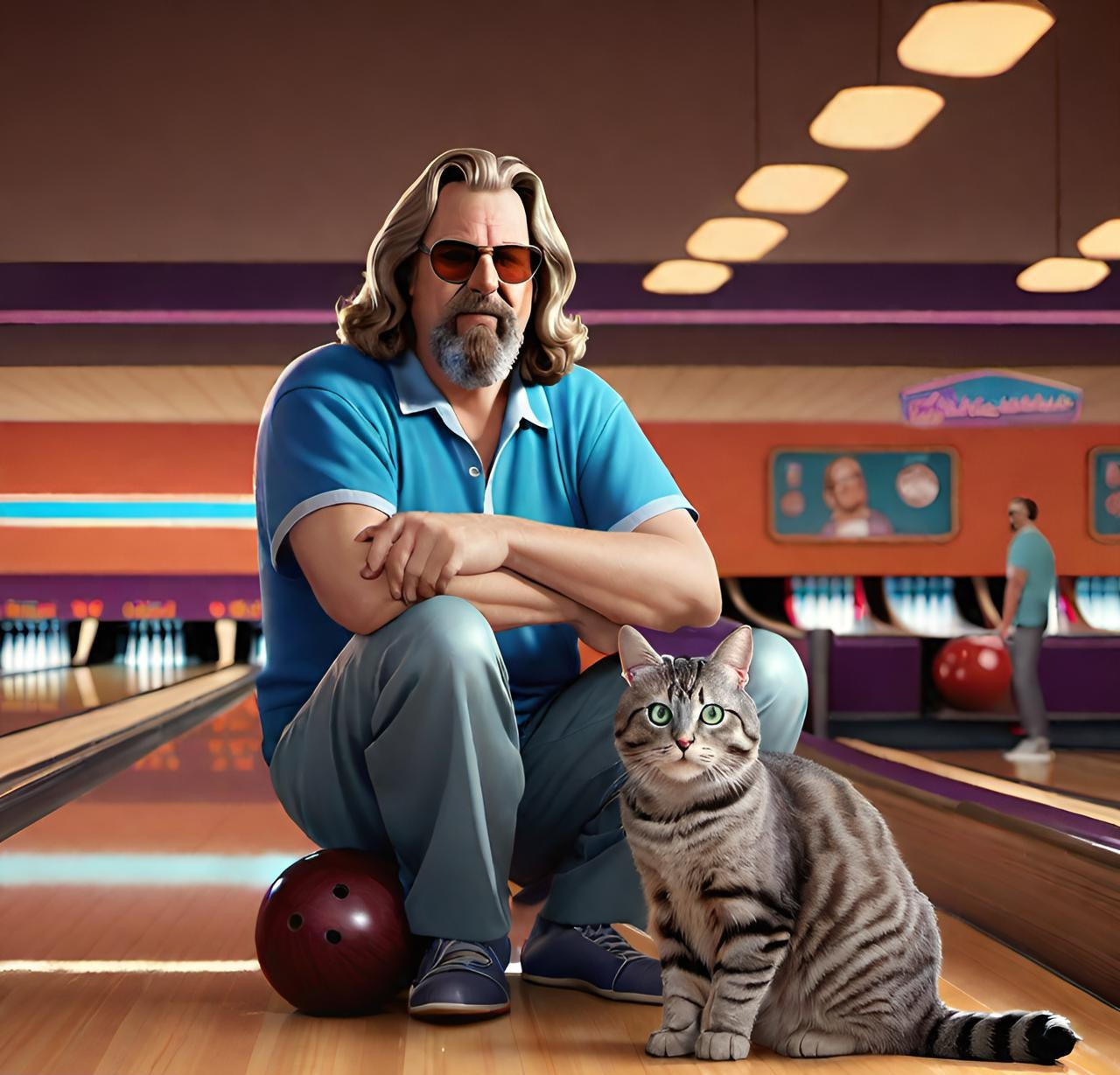
If I could make my cat understand one thing, it’s that he is a chubby 11-lb house cat, NOT a hulking 600-lb tiger with “huge meowscles” who strikes fear into the hearts of every creature to walk the Earth.
Just kidding. I’m perfectly happy going along with his delusions.
The one thing I really would communicate is that we are buddies for life and I’ll never abandon him.
Buddy’s an awesome cat. He’s super friendly, curious, lively, intelligent and vocal. His antics are hilarious. He’s a good boy.
He also knows I love him. That much is abundantly clear.
Buddy the Cat, pictured, says he’s “totally ripped” under his fur.
Unfortunately he suffers from separation anxiety, which has manifested in unfortunate ways, including a track record of attacking every person who has ever been kind enough to cat sit for him.
Aside from the fact that it’s getting more difficult to arrange care for him (his usual cat sitter now sneaks in, feeds him and gets out as fast as possible since he’s attacked her twice), it sucks to know that he suffers anxiety and sadness when I’m gone.
I see his accusatory stare when I start to pack a suitcase and set food aside for the sitter to give him. And I see his little act when I come home, the way he sniffs and feigns nonchalance. The act lasts a few minutes tops before he forgets he’s supposed to be mad at me. Then he glues himself to me for the next few days, never letting me out of sight for fear of losing me.
The truth is that I feel separation anxiety from my little pal when I’m away too, but I know precisely when I’m coming home. He doesn’t have that luxury.
So Buddy, if you ever learn to read, know that you aren’t going anywhere and neither am I. The only way we’ll be separated is if someone pries you from my cold, dead fingers.
And don’t let anyone tell you you’re not a fierce tiger!
A man and woman on TikTok claim they took in a stray, believing it was their own identical-looking cat.
Back in 2021 we were fascinated by the story of a Redditor who thought he found his missing cat after three weeks, only for his actual cat to come walking through the door a week later.
The cats did look remarkably similar, and it’s conceivable that the Redditor was so happy to have his cat back that he didn’t realize there were very small differences.
Now a couple on TikTok claims something similar has happened to them, although it should be taken with a grain of salt. They claim they brought a cat inside, believing it was their feline overlord, only to begin cuddling him the exact moment they realized their actual cat was outside looking in, appearing none too happy about the situation.
Of course to take the story at face value you’d also have to believe that the entire incident happened to be captured on video by an unnamed third person who happened to be filming them at that moment, and happened to have their camera in portrait mode for maximum TikTok compatibility.
The TikTokers
I’m not linking to the account or the Upworthy story that takes it at face value because I’m not a fan of clickbait or content scrapers, but it did remind me of the interesting 2021 story and my reaction to it.
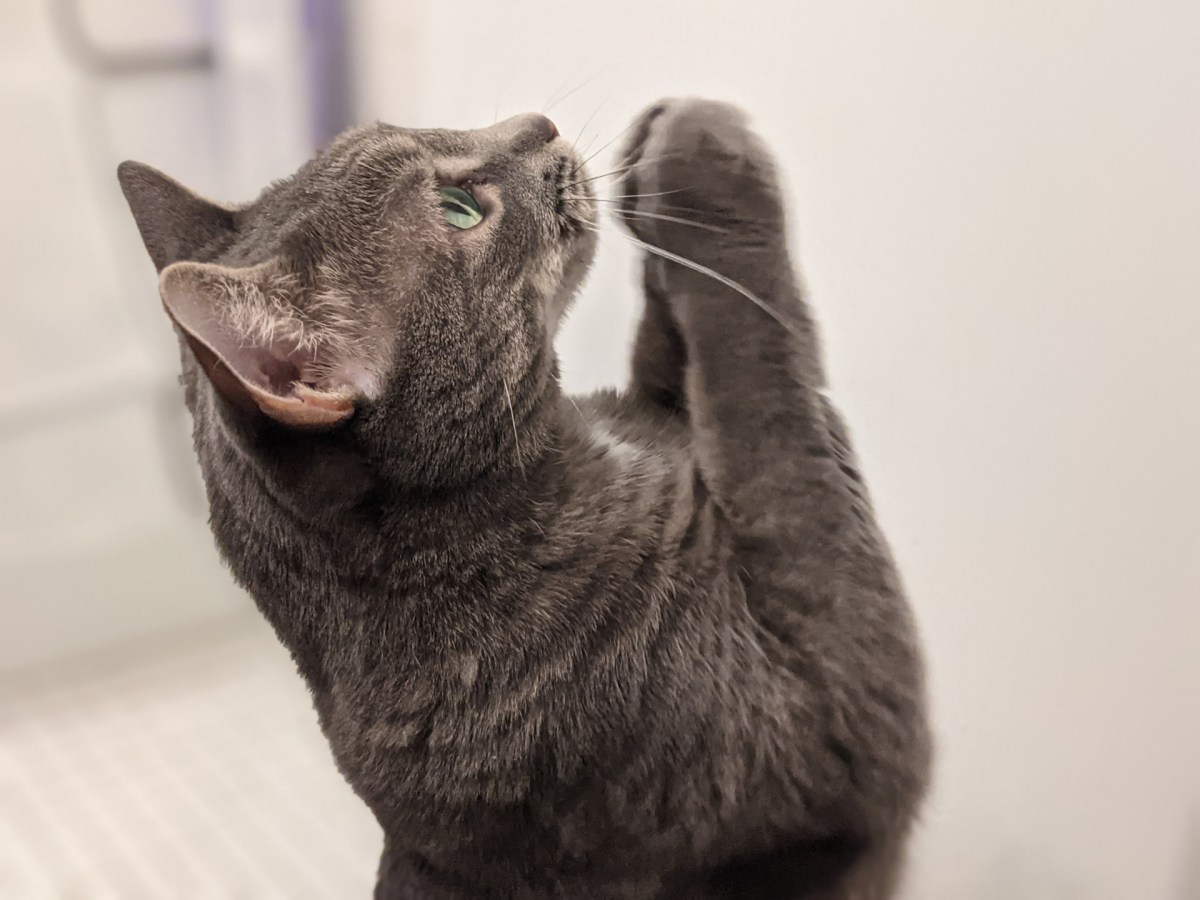
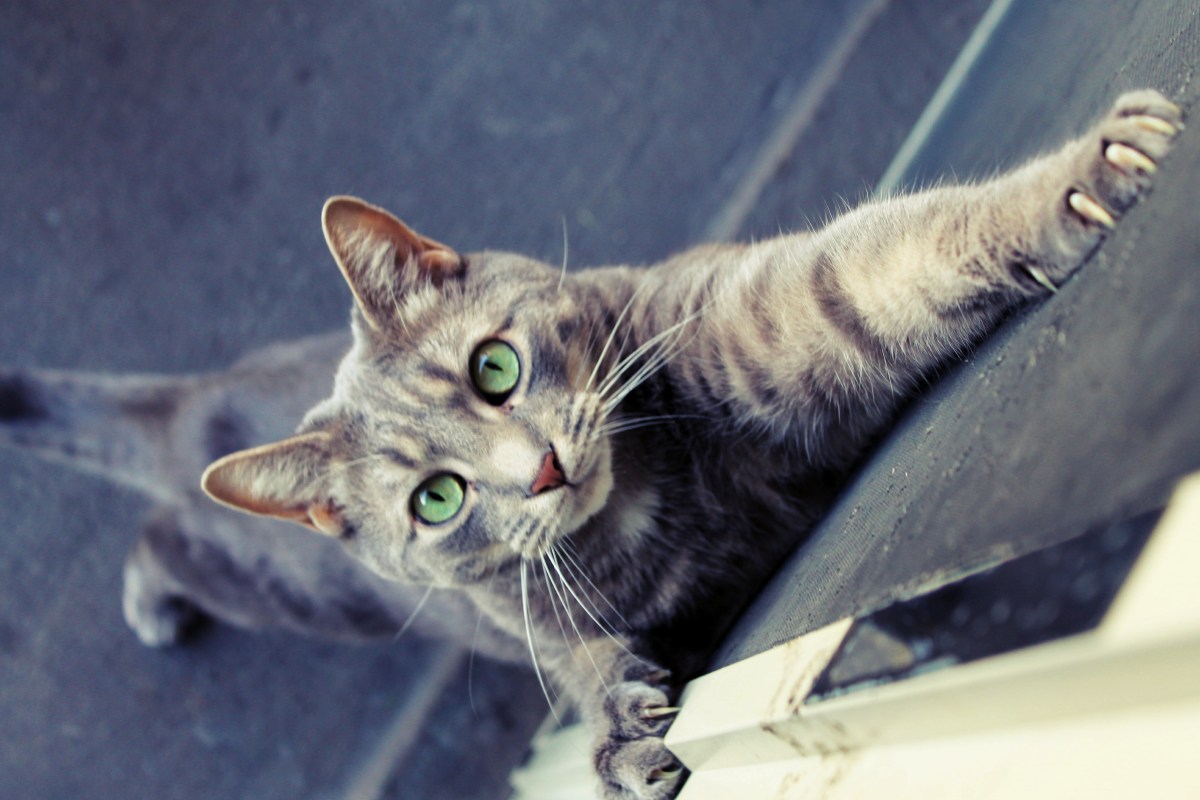
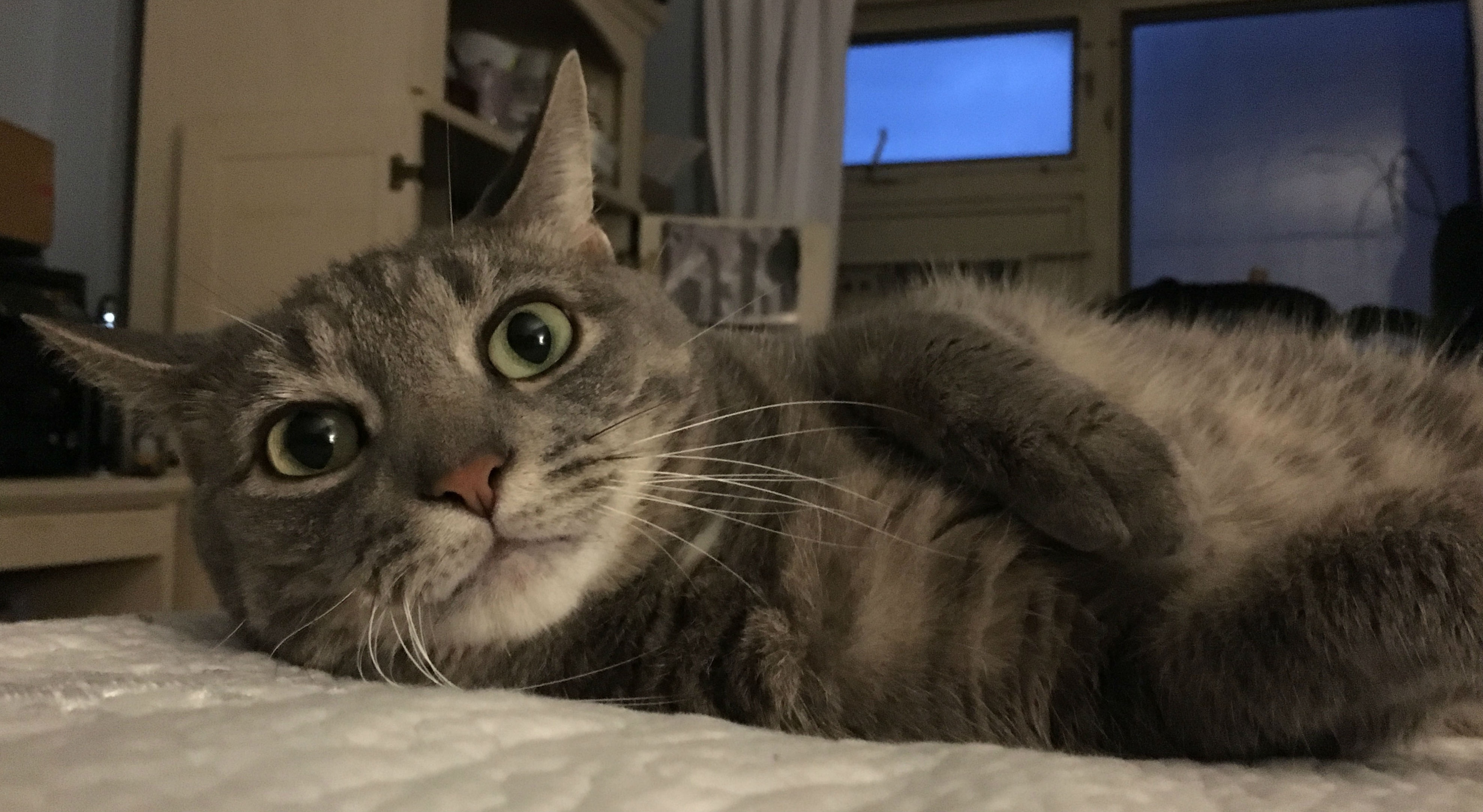
At the time I noted three of Bud’s unique physical characteristics: his bright green eyes framed by dark “guyliner,” the unique tuft of white fur on his chest and perhaps his most obvious distinguishing feature, his pronounced muzzle. You can see it in this photo thanks to the angle:
A Buddy like no other.
But most of all, Buddy’s personality is utterly unique. I could probably search to the ends of the Earth and hell would freeze over before finding a gray tabby cat with the same physical features, the same tyrannical Elmo voice and the same imperious personality.
I cannot fathom mistaking another cat for Bud because I can’t imagine another cat with all of the above qualities who also narrates his own activities in real time like a play-by-play announcer who sounds like a disco-funk vocalist singing in falsetto.
“Jumping off the couch now…funky! I can see the bottom of my bowl, dude, and that is decidedly un-funktacular! I’m gonna do a few laps around the living room at 27mph while filling you in on my latest theories about the multiverse, okay? Prepare to get funky! So I think there are — ooh, I found a crunchy treat I must have missed earlier! Nomnomnom! — anyway, I was doing some calculations and I believe if we extend out to 11 dimensions, we solve some of the incompatibilities I was telling you about earlier. In simple terms, all particles in our universe are like vibrations on a tiny rubber band, physics is the harmonies on the string, chemistry is the melodies we play on vibrating strings, the universe is a symphony of strings, and the mind of God is cosmic music resonating in 11-dimensional hyperspace! Bring me catnip! I need catnip! Can’t you see I’m on the verge of another breakthrough here?”
Buddy: Catnip aficionado, play-by-play announcer and theoretical physicist. Also, beefcake.
I’ve described Bud as a lunatic, and that’s one reason I love him. He’s crazy in the best way, unpredictable, amusing and never boring.
Could you ever mistake another cat for your own? What makes YOUR cat unique?
Papa Legba, a cat from El Paso, has made friends with one of his neighbors who likes to make sure he’s warm on his neighborhood rounds.
When Crystal Robert and her family adopted a stray cat in 2019, they quickly learned he was an expert in sneaking out even though they tried to keep him indoors.
Now they know he’s got at least one “other family,” because Papa Legba, as they call him — named after the mythical intermediary between the physical and spiritual worlds in west African folklore — frequently returns wearing sweaters.
Yes, that’s plural. Papa’s mystery second family has sent him home wearing a blue striped sweater, a solid-colored pink sweater and, for the holidays, a traditional “ugly” Christmas sweater. He’s also been given a shirt that says “Born To Be Awesome.”
Robert, who lives in El Paso, Texas, says Papa is usually averse to any kind of collar or accessories, but she believes the sweaters “humble” him because he’s cuddlier when he wears them.
“He seems more docile [when wearing the sweaters]” she told The Dodo. “Or maybe embarrassed.”
She told a local news outlet she hasn’t yet pinned down his second family, but she wants to thank whoever’s been treating the little guy well.
“I have already met with five families,” she said. “I haven’t met his other family yet, but I hope we can continue to ‘share’ custody.”
She said she’s narrowed it down to a few houses and plans to come knocking with baked goods to thank the neighbors for their kindness.
“I hope people can keep their pets at home, inside,” Robert told The Dodo. “They are our family and they are safest when with their owners, but if you have a wily cat like ours, I hope you are blessed with generous and lovely neighbors like mine.”
If cats are like small children emotionally and intellectually, is it ethical to give them a mind-altering drug?
That’s a question posed in a new article in The Conversation, and it’s something I’ve never really considered before.
It’s generally accepted that our little buddies are more or less equivalent to small children in terms of intellect and emotional intelligence. In fact kittens develop much more quickly than human children and come to certain understandings — like theory of mind and object permanence — considerably earlier than young kids do.
They also seem to possess some sapient qualities. My niece was born a year before Bud, for example, but in their early interactions he understood she was still developing motor skills and did not intend to cause him harm. I have photos of a young Buddy, still a kitten, cautiously allowing her to touch his fur and being uncharacteristically gentle with her.
There’s growing evidence that pet cats are “kittens in perpetuity.” Not only do their behaviors toward us mirror their behaviors toward their mothers — like meowing and using us as a “secure base” when faced with uncertainties — but they depend on us completely. We care for them, in turn, at least in part because they have neotenous (baby-like) features, which trigger our protective instincts.
Bud is basically a “kid,” so is it ethical for me to give him a potentially mind-altering substance?
Catnip isn’t really a drug
While some catnip companies lean into the whole “marijuana for cats” thing, naming catnip after famous marijuana strains, selling it in gag pharmaceutical bottles and even calling themselves “dispensaries,” those are marketing efforts aimed at us servants. As the authors note, it’s not accurate to consider catnip the equivalent of a drug.
It’s not physically addictive, its effects only last a few minutes and cats can’t overdose on the stuff. In fact the primary “danger” of giving too much catnip is your four-legged friend getting desensitized completely to the effect, which is why it’s an occasional treat, not a routine pick-me-up.
Meowijuana Catnip Company really leans into the whole “weed for cats” thing with catnip packaged like marijuana.
Catnip “won’t induce psychosis and won’t lead to addiction or withdrawal symptoms,” wrote authors Anne Quain, a professor of veterinary science at the University of Sydney, and Mia Cobb, a research fellow at the University of Melbourne’s Animal Welfare Science center.
We don’t have to worry about cats driving on the stuff, and they have no responsibilities to speak of so catnip and silver vine can’t impact important decisions. If they have any deleterious social effects, they end at making our furry friends drool, look silly and rendering them even more drowsy than usual.
The mysteries of the nip effect
But what about a kitty’s subjective experience? How does catnip make your feline overlord feel?
We don’t have a very good answer to that question other than what we can observe, which is that they love the stuff. (Some cats don’t respond to catnip but are put in a state of bliss by silvervine. Some respond to both. A small number may not derive much pleasure from either of the plants.)
Even when they aren’t technically impacted by it, cats seem intrigued by the scent and use their secondary olfactory receptor, the vomeronasal organ, to do that odd-looking “mouth-sniffing” thing they do.
Buddy loves catnip and silver vine. I keep his ‘nip in an out-of-reach cabinet, inside a sealed container, which is itself inside an air-tight plastic bag. Bud can be in a deep sleep yet within seconds of opening it he’ll appear like an overly enthusiastic djinn who thinks the wish thing works in reverse, meowing impatiently and trilling with anticipation as I set the good stuff down for him.
That’s as close to consent as we’re going to get from cats, and I think we can safely conclude Bud’s response is “Hell yes! Gimme that sweet ‘nip and silver vine blend!”
He gobbles the stuff down, by the way, so YMMV on your feline overlord’s reaction. The conventional wisdom is that cats who sniff catnip get more animated while cats who eat it tend to roll around in bliss and meow.
Making life more interesting for your fuzzy liege lord
Which brings us to the final point: catnip and silver vine are ultimately enrichment tools that help make indoor life more exciting for our little buddies, like toys, cat furniture, boxes, intriguing smells and most importantly, time playing with us.
We don’t talk about it enough, but keeping our cats stimulated and happy indoors is important, especially as pressure mounts for everyone to keep their felines inside. If your local area isn’t enforcing curfews and outright bans, it seems only a matter of time before they follow states in Australia, New Zealand and Europe in passing new laws. Every day there are news articles detailing the efforts of city councils and town boards to deal with outdoor, unmanaged feline populations, and it’s a safe bet that most of those elected officials will not have the welfare of the animals high on their list of priorities.
If we want to avoid cruelty toward cats, getting our own pets comfortable with living indoors is a good first step to making sure government doesn’t become involved.