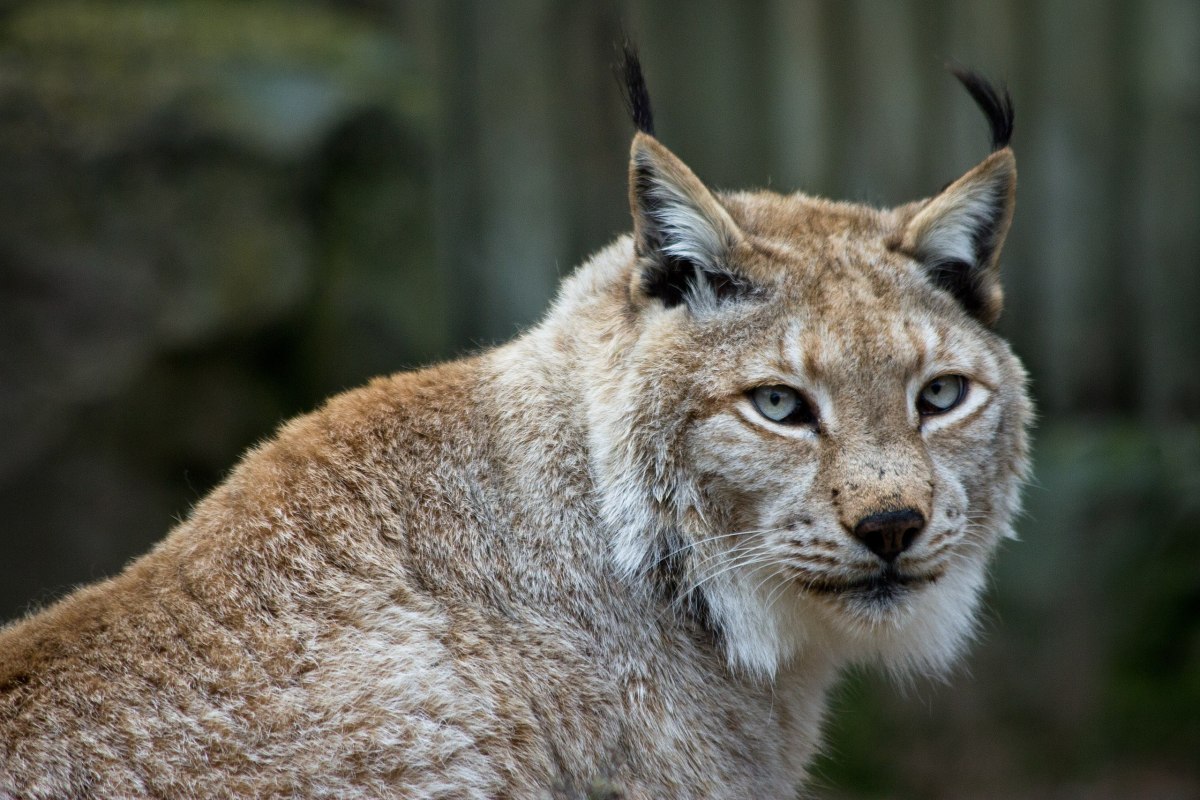
The trail camera is operated by a team studying the behavior of wolves, but this felid became the main character for a short while, posing majestically right in front of the lens.
Happy Monday! We’re starting the week off in style with an amazing video courtesy of the Voyageurs Wolf Project.
As its name implies, the project is a collaboration between wildlife biologists, ecologists and academics to learn more about wolves, specifically how they survive in the summer months.
While there’s a wealth of research on the behavior of wolves during winter, the pack animals go their separate ways in the warm weather to raise newborn cubs and hunt smaller prey.
Because it’s much more difficult to track individual wolves under the cover of heavy brush compared to following entire packs in the snow, the project relies on a combination of GPS collars and trail cameras. The latter pick up all sorts of wildlife in the Minnesota wilderness, which is how the Voyageurs Wolf Project captured this clear, close-up footage of a stunning medium size wild cat:
We captured some really neat footage of lynx this past year on our cameras but this is definitely the coolest. In fact, might be the best video of a lynx we have ever captured, not least because the lynx decided sit right in front of the camera…
— Voyageurs Wolf Project (@VoyaWolfProject) July 31, 2024
That’s lynx canadensis, better known as the Canadian lynx, and the footage is so perfect it’s as if the wild cat said “Ah, a trail camera! I’m gonna sit right here and let the humans see how beautiful and regal I am!”
From its pronounced ear tufts to its snow-soft fur and dark stump of a tail, this lynx is a fantastic example of its species. Canadian lynx are well adapted to the demands of their environs in Canada and the northern US, with heavy coats and soft, wide feet that allow it to traverse snowy landscapes quickly and silently.
They’re famously elusive and difficult to track in the wild, but maybe all we have to do is give the lynx a chance to strut its stuff.
Top image credit Carlos Delgado/Wikimedia Commons.
With much of the US already sweltering under a summer heat dome, architectural engineers warn most American buildings aren’t designed for extreme temperatures, while energy experts warn of more rolling blackouts.
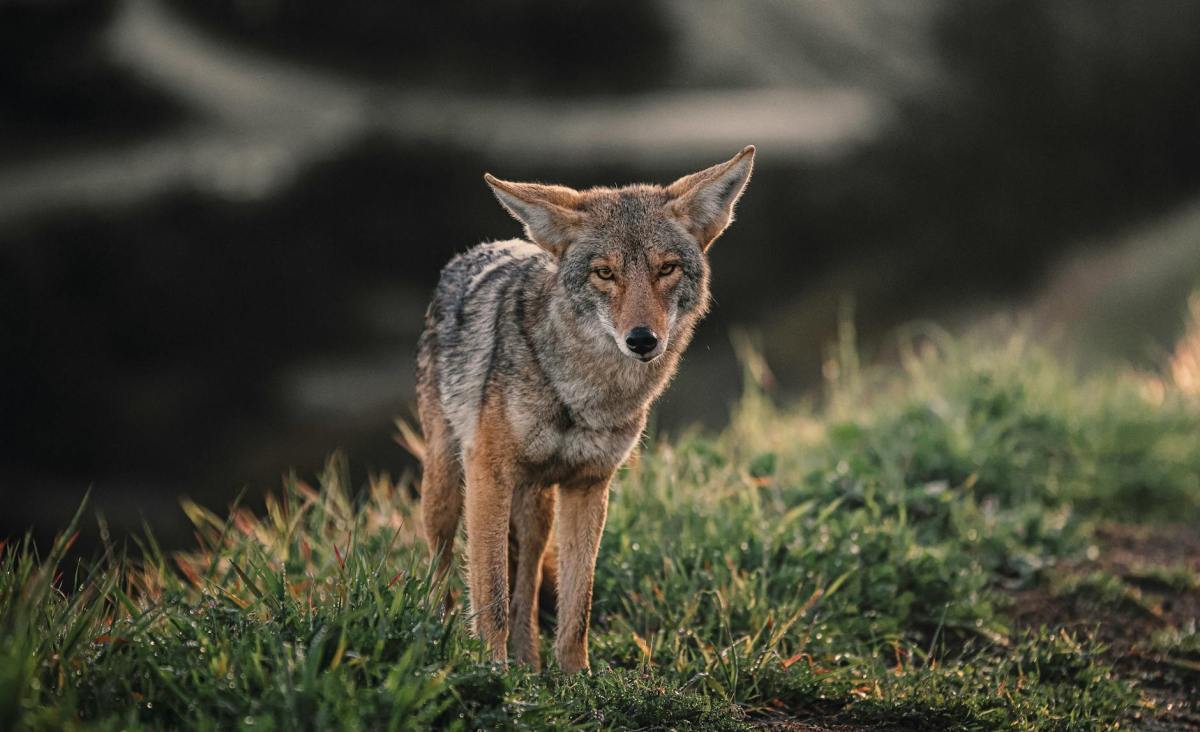
A family in Mission Viejo, Calif., heard a series of loud crashes at their back door, then reviewed their doorbell camera footage to find a determined coyote had been trying to attack their cat.
The footage shows the coyote repeatedly throwing itself at the screen door, which might have buckled if there hadn’t been a baby gate reinforcing it.
“We ended up putting a baby gate up to keep the cats inside,” homeowner Cindy Stalnaker told KABC. “That ended up being what prevented the coyote from getting inside the house because that’s what he was banging into repeatedly.”
Coyotes weigh about 30 to 35 pounds and will attack potential prey smaller than they are, which includes pets as well as young children.
The canids aren’t usually keen on approaching human homes, but in many places they’ve run out of room to roam as towns and cities clear more wild land for new developments. Less habitat means less prey, which can also lead the animals to scavenge and hunt on the fringes of residential and urban neighborhoods.
Stalnaker said she was grateful the baby gate held, but she’s looking into a more stable and permanent solution to keep her cats safe from coyotes.
What if air conditioning isn’t enough?
Human activity isn’t just driving wild animals to extinction, it’s killing them off with temperature extremes, and a Tuesday story from The Guardian provides a bleak look at how our present situation threatens human life as well: Buildings in most US cities aren’t built to mitigate excess heat, air conditioners weren’t designed to keep on chugging indefinitely with temperatures around 100 degrees, and power grids can’t keep up with the demand when millions of AC units are drawing power simultaneously.
At the same time, summers keep getting hotter and there’s no reprieve in sight.
Legal or not, New Yorkers turn to fire hydrants to get relief during heat waves. Credit: NYC Office of Emergency Management
While the heat has major ramifications for animals and sea life, it’s also directly endangering human life now:
“Some experts have begun to warn of the looming threat of a “Heat Katrina” – a mass-casualty heat event. A study published last year that modeled heatwave-related blackouts in different cities showed that a two-day blackout in Phoenix could lead to the deaths of more than 12,000 people.”
An architectural engineer tells the newspaper that temperatures have spiked so much in recent summers that cooling “systems that we sold 10 years ago are not able to keep up with the weather we have.”
The result for people in America’s hottest cities is that even AC doesn’t provide relief.
In the meantime we’re likely to see more headlines about rolling blackouts, punishing energy bills and people dying in their homes, scientists say. Fusion power and significant leaps in battery technology can’t come soon enough.
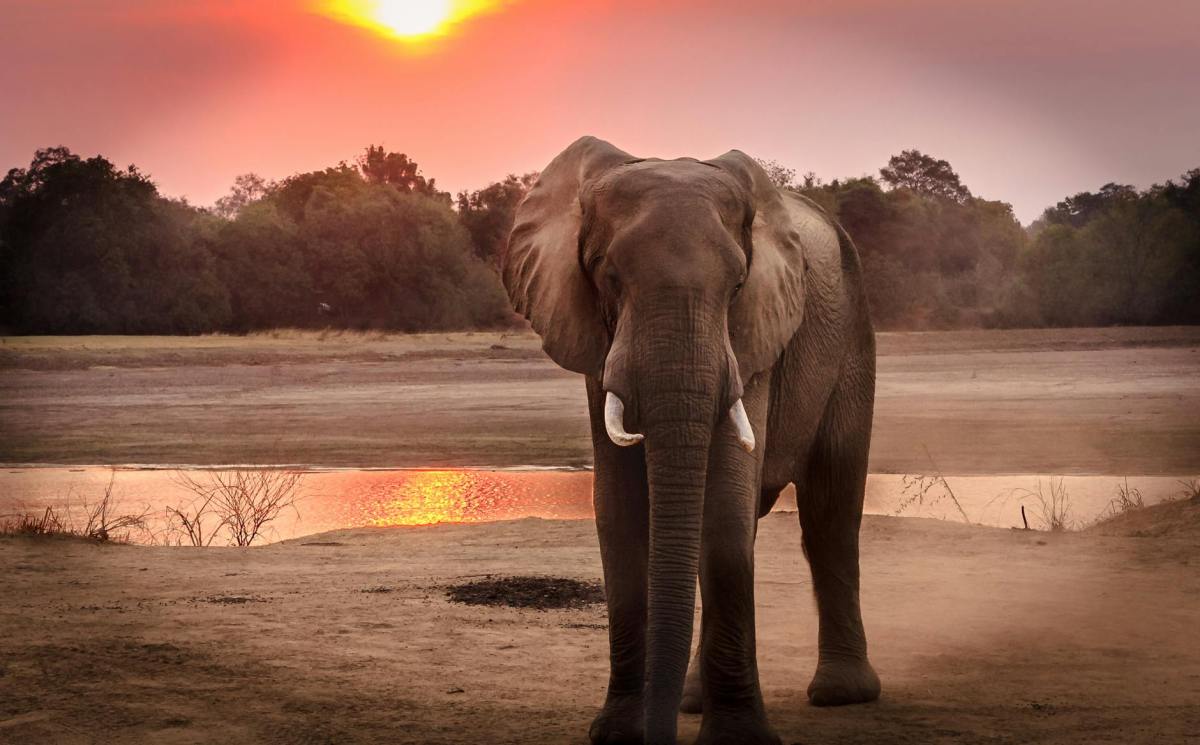
Elephants encode names and other information in low-frequency rumbles that can be heard miles away. For social animals who live in large herds, it’s crucial to be able to address individuals.
Elephants are famously social animals, moving in matriarchal herds that can consist of as many as 70 of their kind.
They also communicate over long distances, emitting rumbles that can be heard miles away.
Because of their social and nomadic existence, it makes sense that elephants would need a way to single out individuals and address each other, and for the first time researchers say they’ve found evidence of Earth’s largest land animals calling each other by name.
“If you’re looking after a large family, you’ve got to be able to say, ‘Hey, Virginia, get over here!’” Duke University ecologist Stuart Pimm told the Associated Press.
The research involved field work and analysis using artificial intelligence. To record samples of elephants communicating, teams followed herds with recording equipment. Notably, elephant rumbles include sounds in frequencies lower than the human ear can detect.
Credit: Pixabay/Pexels
The team paid close attention when one elephant vocalized and another responded, and recorded who initiated each rumble and who it was meant for.
Although elephants are best known for making loud “trumpeting” sounds, experts say those are more like exclamations while rumbles contain encoded information that African savanna elephants would need to communicate to each other.
“The rumbles themselves are highly structurally variable,” said Mickey Pardo, a biologist from Cornell University and co-author of the study. “There’s quite a lot of variation in their acoustic structure.”
A machine learning algorithm was then used to sort and categorize the large number of audio samples, looking for patterns that are difficult for human minds to detect.
“Elephants are incredibly social, always talking and touching each other — this naming is probably one of the things that underpins their ability to communicate to individuals,” said George Wittemyer, an ecologist at Colorado State University and co-author of the study. “We just cracked open the door a bit to the elephant mind.”
A female elephant with her young offspring in Kenya. Credit: Pixabay/Pexels
Notably, the elephant “names” are identifiers that they created for themselves, and are not the kind of human-bestowed names that cats and dogs respond to. The list of animals who have names for themselves is short, although likely to expand with further study. Dolphins, for instance, identify themselves with unique whistling patterns, and parrots have a similar method, but both species address individuals by imitating their calls. Elephants use their name analogs the way humans do, to directly address each other.
The research has the potential to raise public awareness of elephant intelligence and their plight as they face threats to their continued existence. Like almost all of the Earth’s iconic megafauna, elephants will become extinct if we don’t do a better job protecting them and ending the ivory trade. Every year about 20,000 elephants are slaughtered for their tusks to feed the demand for ivory, especially in China where it’s considered a status symbol, according to the World Wildlife Fund.
Yang Feng Glan, known as the”Queen of Ivory,” was sentenced to 15 years in prison by a Tanzanian court in 2019. Yang smuggled some 860 elephant tusks worth $6.5 million from Tanzania to China as the leader of one of the world’s most extensive poaching and ivory smuggling organizations.
During her years operating the smuggling ring, Yang presented herself as a successful businesswoman and ran in elite circles within China, authorities said. Two of her accomplices were also given 15-year sentences for their roles, but since then others have filled the vacuum left by Fang’s conviction, and elephant preserves are constantly under threat from heavily armed poachers.
The strange footprint may date back as far as 35 million years ago, according to a preliminary analysis.
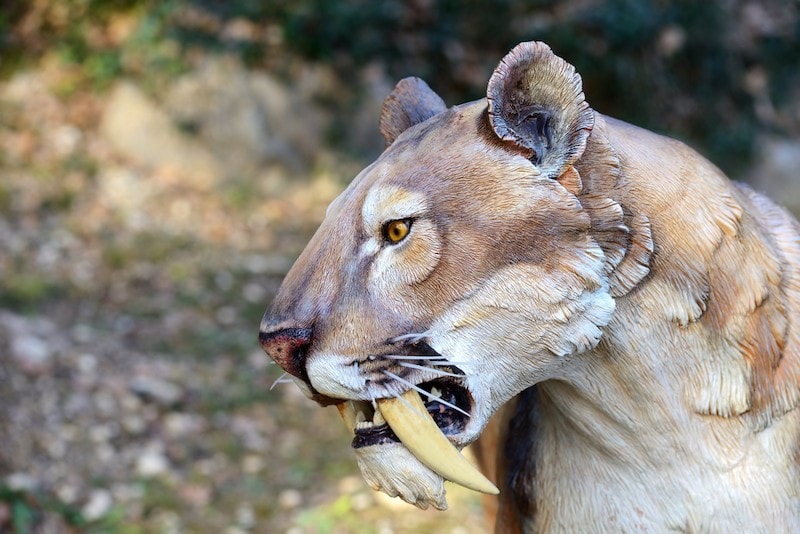
Before house cats, tigers and lions, before sabretooth cats and their scimitar-toothed relatives, Pseudaelurus (pseudo-cat) stalked the forests and plains of Europe, Asia and North America between eight and 20 million years ago.
Before Pseudaelurus, Proailurus — an animal whose name literally means “before cats” — stalked the Earth beginning 30 million years in the past.
Proailurus was thought to be the earliest true feliform ancestor, but now there may be evidence of a felid or feliform animal that predates both Proailurus and Pseudaelurus. Feliform is a term that encompasses cat-like creatures both extinct and extant, from familiar felines to civets and mongoose.
Deep in South India’s Nallamala Forest, near one of the country’s largest tiger reserves, members of the aboriginal Chenchu tribe found a fossil that could put the cat lineage back even further.
The fossil is well-preserved and clearly defined, made by an animal whose paw was about the size of an adult man’s hand. It bears a striking resemblance to tiger pug marks, but perhaps the most striking feature is its three toes.
The recently discovered fossil. Credit: Times of India
“Based on the distinctive characteristics of the sandstone, identified as the Cuddapah subgroup Quartzitic sandstone, the estimated rock’s age is approximately 35 million years,” archaeologist Arun Vasireddy told the Times of India. “It was around this time that sandstones were formed and it is likely that the animal would have cast its prints.”
Biologists have had to reshuffle their picture of felid lineage many times over the past century and a half as new discoveries uncover previously unknown species of cats and cat-like creatures. Since they first appeared, cats have taken hundreds of different forms with significant variations in size, appearance, hunting methods and preferred terrain.
The experts aren’t popping the champagne yet. There’s a lot more work to do before they can declare a newly-discovered species or even offer more than educated guesses about its niche and appearance.
Nallamala Forest may yet hold more secrets, and research teams will look for additional prints as well as potential remains. It’s a process that will unfold over years and decades, perhaps even longer.
Still, it’s a tantalizing clue about the past and the origin of some of Earth’s most iconic animals.
In the meantime, Vasireddy said, “nothing can be said clearly until further research.”
A reconstruction of Homotherium, a scimitar-tooth cat that first appeared about four million years ago. Credit: Wikimedia Commons
Styriofelis lorteti predates modern pantherine cats and was the size of a small leopard. Credit: Spanish National Research Council and the National Museum of Natural Sciences in Madrid
The recently-discovered fossil compared to a man’s foot. Credit: Times of India
By unlocking the mysteries of how sperm whales communicate and demonstrating their impressive cognitive abilities, researchers hope to get people invested in the fate of these endangered animals.
Sperm whales are chatty.
Their language is markedly different from the deep cetacean moans associated with other whales, taking the form of Morse code-like clicks that boom through the ocean in a decibel range almost twice that of jet engines.
And while we’ve long known animals like monkeys assign specific meaning to short vocalizations varying from alarm calls to affirmations of social rank, sperm whale conversations can endure for an hour or more, with participants exchanging complex strings of clicks that vary depending on context, environment and even which pod family is speaking.
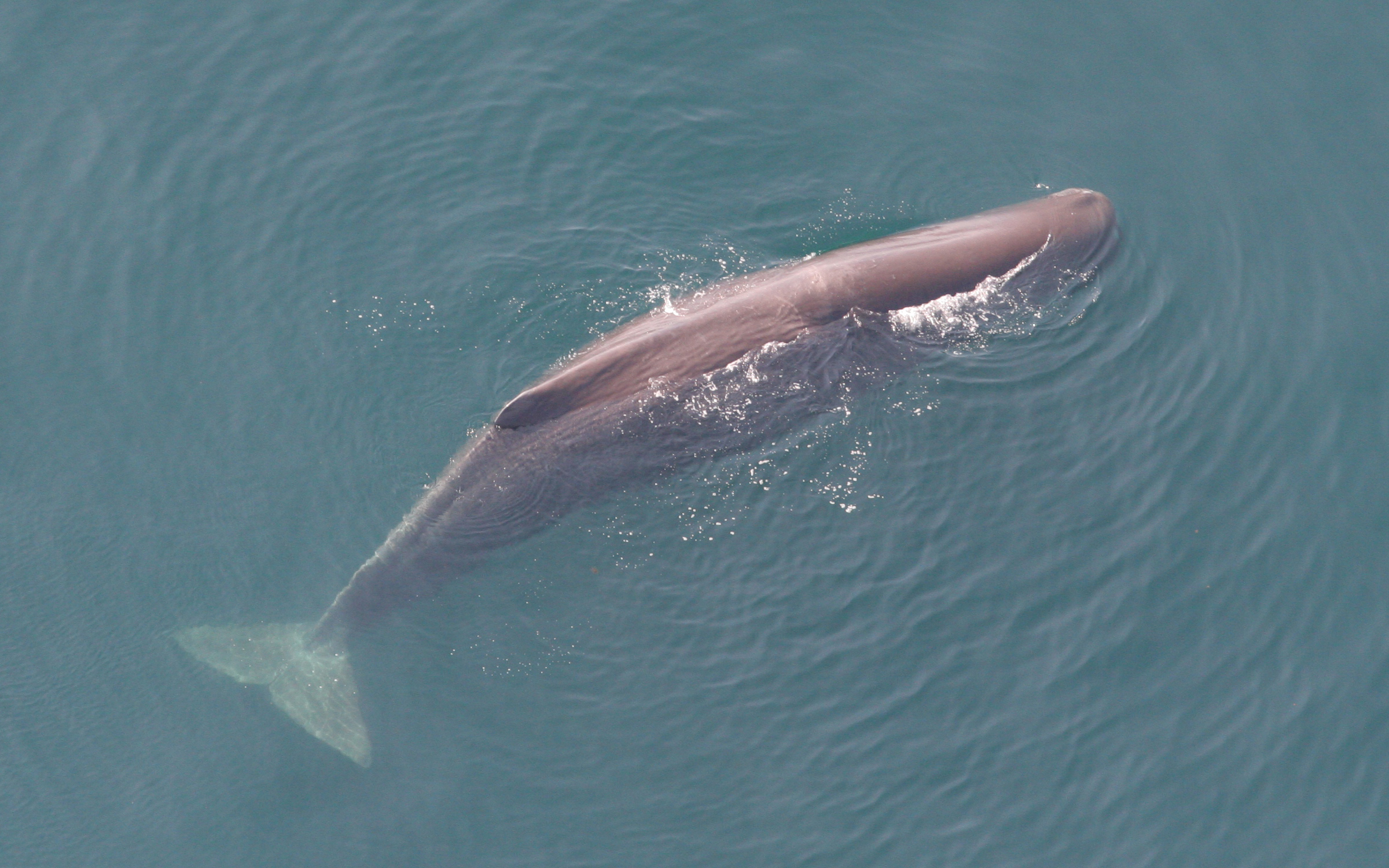
An aerial view of a sperm whale near the ocean surface. Credit: Wikimedia Commons
While artificial intelligence has been maligned over the past few years as people grapple with its rapid progress and potential for abuse, it remains the best tool we have for teasing out patterns that our human minds can’t discern, especially from large quantities of data.
With more than 9,000 recordings of sperm whales, Project CETI — Cetacean Translation Initiative, a non-profit effort to decode and translate sperm whale communication — had precisely the kind of huge data cache that AI excels at analyzing.
By feeding the recordings into specially trained machine learning algorithms, the research team was able to identify a wealth of new language patterns. While human languages are composed of quantized morphemes — prefixes, suffixes and root words — whale communication is broken down into sequences of clicks and pauses called “codas.”
Like Morse code, codas make a distinction between short clicks and long clicks. Sperm whales also vary the tempo of the clicks, which could represent inflection, “dialects” or concepts completely alien to the human mind.
“Some of what they’re doing might be totally different from our way of communicating and we’re probably never going to be able to fully grasp those differences,” Oregon State postdoctoral marine researcher Taylor Hersh told NPR.
A sperm whale fluke visible above the surface of the ocean. Credit: Wikimedia Commons
Researchers believe the “inter-click intervals” — akin to ghost notes in music — may be as significant as the clicks themselves. Importantly, while human ears were able to identify and catalog some of the codas, the machine learning algorithms found many that human analysis missed.
That’s not surprising considering sperm whales — the loudest animals on Earth, capable of generating sounds up to 230 dB — took a much different evolutionary course and, as ocean-dwelling creatures weighing up to 90,000 pounds (40,800 kg) likely have a radically different sensorium compared to humans.
The comparisons to music go further than ghost notes.
“This study shows that coda types are not arbitrary, but rather that they form a newly discovered combinatorial coding system in which the musical concepts of rubato and ornamentation combine with two categorical, context-independent features known as rhythm and tempo, by analogy to musical terminology,” CETI’s team wrote on May 7 while unveiling the most recent study.
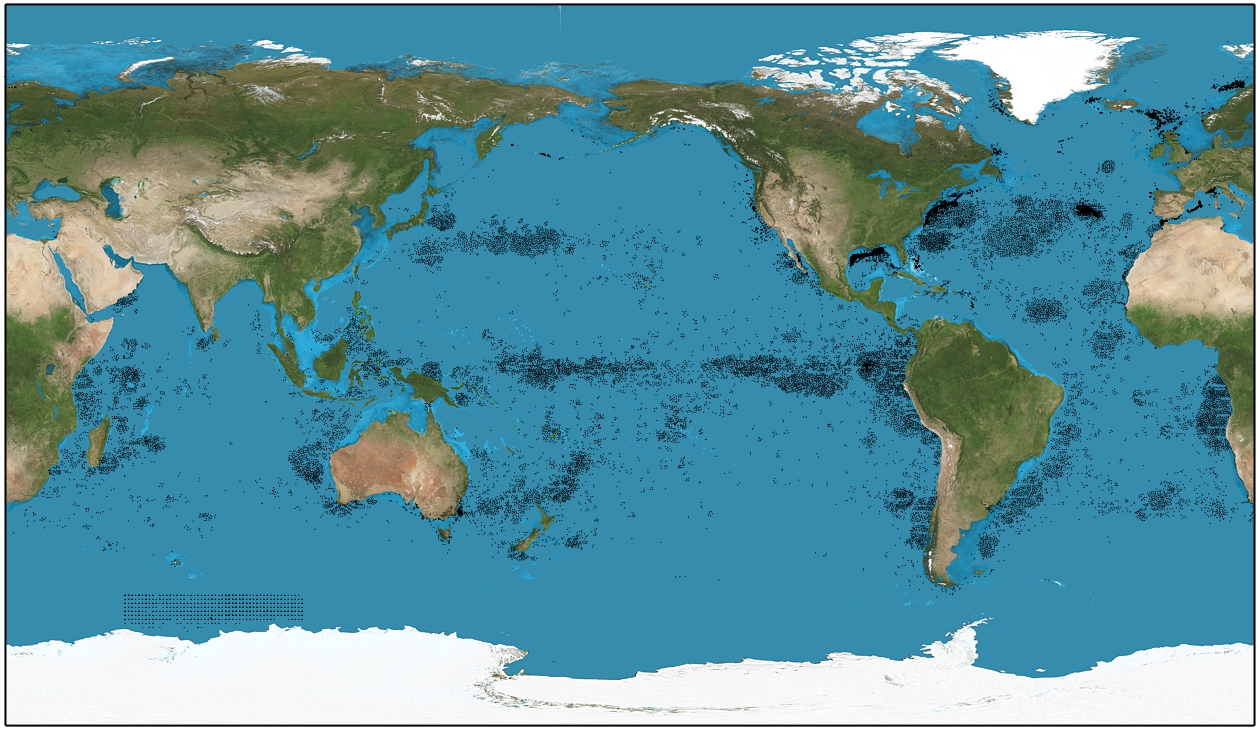
Sperm whale distribution based on human sightings. Sperm whales freely travel the oceans except in cold, ice-packed environs. Credit: Wikimedia Commons
While people have used many abilities to mark the dividing line between humans and animals over the years — including the ability to use tools, experience emotions, and demonstrate self-awareness — human capacity for authentic language with syntax and context-dependent meaning was one of the stalwarts, standing the test of time as new research toppled the other dividers by showing animals do indeed use tools, experience rich emotions and have complex inner mental lives.
With this research, scientists are assembling a “sperm whale phonetic alphabet” that will make it easier to discern and catalog whale codas.
To be clear, there’s still a lot of work ahead before scientists can prove sperm whale codas are comparable to human definitions of language, but whether they strictly meet that definition may not matter. After all, it’s clear the clicks and pauses of whale codas are imbued with meaning, even if it remains elusive to us for the moment.
Indeed, “sperm whale communication has both contextual and combinatorial structure not previously observed in whale communication,” the team wrote.
Proving sperm whale codas are tantamount to human language isn’t the goal anyway. The team has two overriding priorities — decode the meanings behind the codas, and get the wider public invested in the fate of these endangered animals by showing they’re not so different from us.
“Our results show there is much more complexity than previously believed,” MIT AI lab director Daniela Rus told NPR, “and this is challenging the current state of the art or state of beliefs about the animal world.”







 Pain In The Bud