Buddy’s Attackers Have Turned Themselves In

They face animal fighting and aggravated animal cruelty charges.

Two people responsible for a vicious attack on a Philadelphia cat have owned up to it and will hopefully face justice.

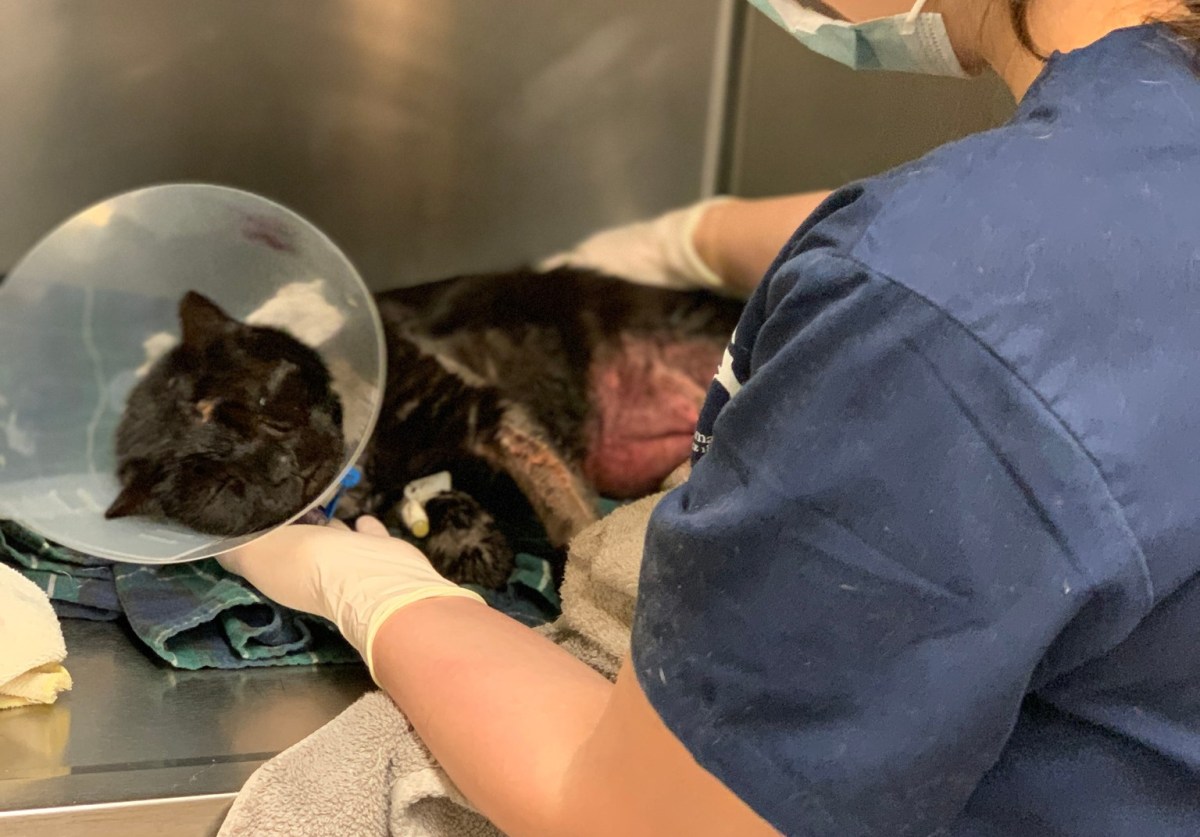
While the surveillance footage appeared to show a pair of men siccing pitbulls on a semi-stray cat named Buddy, the suspects are 17 and 12 years old respectively, according to the SPCA.

Investigators were able to ID the pair after getting leads from the public, and on Friday the 17-year-old came in accompanied by a parent to surrender himself to authorities. The 12-year-old has agreed to turn himself in today, March 26, according to the local NBC affiliate.

Authorities said they’ll charge the pair with animal fighting, aggravated animal cruelty and conspiracy for the unprovoked attack, in which they encouraged their dogs to hurt the much smaller cat. The first two charges are felonies.

However, there are caveats. Because the suspects qualify for youthful offender status, they cannot be tried as adults and may be able to wipe the convictions from their records in the future. Such deals are at the discretion of judges, and typically involve the completion of certain programs and require that the offenders stay out of trouble for a set time period after conviction.

Because of that, their names will be sealed in court records. Youthful offender deals are usually reserved for first-time offenders. It’s not clear if the teenagers in this case have priors, and it will be up to the judge to decide the terms of their sentencing if they are convicted or agree to plead to the charges.

The SPCA has taken custody of the dogs, although their fate remains unclear. Hopefully they can be rehabilitated and adopted by experienced owners.

There’s been an outpouring of support for Buddy, with well-wishers across the world donating tens of thousands of dollars toward his veterinary care and related costs, Pennsylvania SPCA’s Julie Klim said.

“While we certainly see a lot of bad as we fight to end animal cruelty, we also see how much good there is, especially in a case like this, from all corners of the globe,” Klim said. “We will do everything humanly and medically possible to ensure Buddy’s future will be a bright one.”

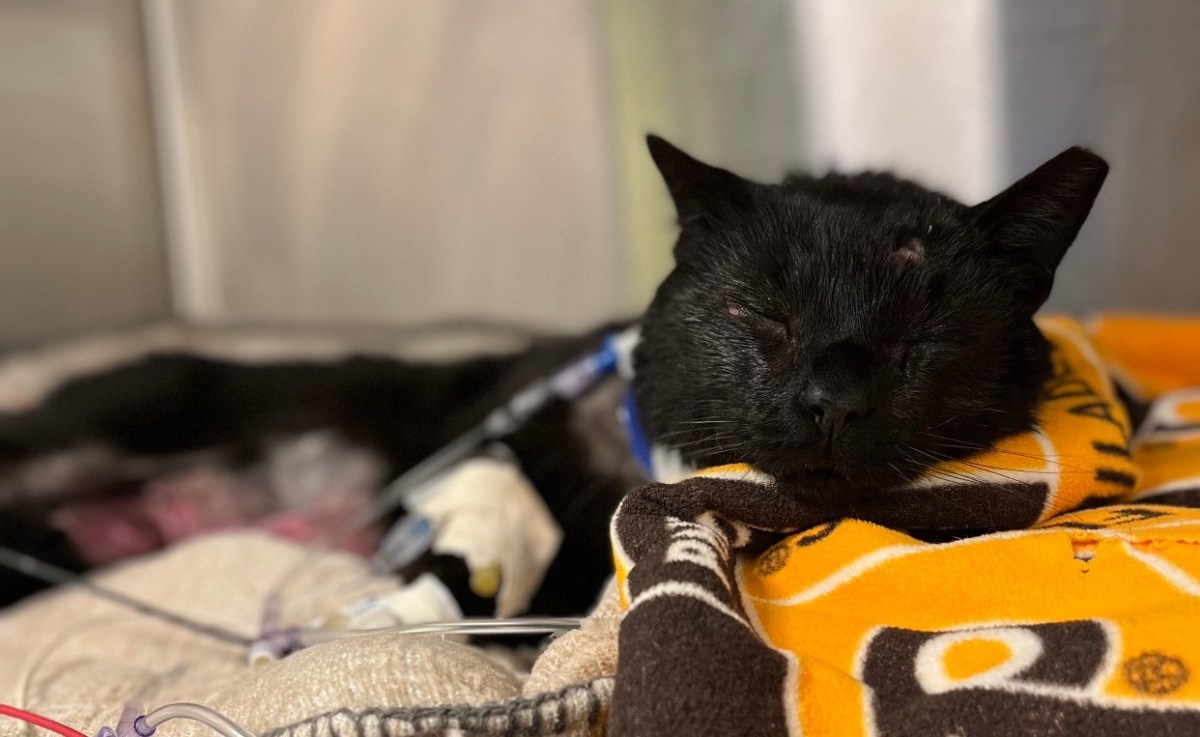
In the meantime, Buddy still clings to life. He remains in critical condition, according to the SPCA, but veterinarians are “hopeful” he’ll pull through. Here’s a video of the little fighter trying to comfort himself by making biscuits on a soft blanket at a veterinary hospital:

Welcome, new readers! This blog is about a different Buddy the Cat, but we also cover news about felines, animal welfare, the pet industry and other cat-centric topics, in addition to frequent humor posts about our benevolent, furry overlords. Buddy the Cat from New York is pulling for Buddy the Cat from Philadelphia, and hopes his fellow Buddy makes a full recovery before finding a loving family and forever home.

These Men Need To Go To Prison For Siccing Their Dogs On A Cat Named Buddy

A cat named Buddy has life-threatening injuries after two men set their dogs on him.

I took a pass on this story when I first saw it because there’s only so much senseless violence toward cats people can tolerate, and I don’t want people to feel like they’re going to be stressed out when they visit PITB.

Our primary goal here, after all, is to celebrate cats and have a laugh.

But this story is too infuriating to keep quiet about, and when I realized the victimized cat’s name is Buddy, I couldn’t ignore it.

Buddy, a black cat, was on his front porch in Philadelphia on Tuesday when two men passed by, let their dogs loose and ordered them to attack poor little guy.

The men cheered their dogs on with “Get him!” and “Good boy!”, and Buddy probably would have died there if his human didn’t hear the commotion and run outside to intervene.

The two suspects collected their dogs and ran off, while Buddy’s human rushed the injured kitty to the Pennsylvania SPCA, where he underwent surgery for life-threatening injuries.

“Buddy is still hanging in there,” the SPCA announced on Thursday. “He remains in critical condition, but we are cautiously optimistic.”

Buddy, who suffered bite wounds and other injuries over his entire body, was a stray who was cared for — but not fully adopted — by a Philadelphia family. The family told the SPCA that Buddy “didn’t want to live inside,” so after getting him neutered they let him stay on their porch and fed him daily.

“He has lots of puncture wounds,” the SPCA’s Gillian Kocker told KYW-TV, the local CBS affiliate. “They’re worried about infections, but mostly what they’re doing right now is making sure that he’s comfortable and has the medication he needs, especially pain meds.”

While Buddy is recovering and is under 24-7 monitoring, donors from around the world have chipped in, giving more than $30,000. Any money left over after veterinary costs will be used for “Buddy’s buddies,” the SPCA said, meaning other cats in their care.

If and when Buddy recovers, the SPCA said, he will be placed with another family. Meanwhile, the suspects could face felony charges for animal fighting and cruelty to animals if they’re caught, Kocher said. Let’s hope they are.

Anyone who recognizes the suspects should call the SPCA at 866-601-7722.

Will California’s Bill of Rights for Cats and Dogs Make A Difference?

The proposed law would declare cats and dogs have rights, but it doesn’t do much besides that.

Declaring cats and dogs should have fundamental rights, an assemblyman in California has introduced a law that would create a Bill of Rights for the two most popular companion animal species.

The text of the proposed legislation covers the basics including the right to food and water, veterinary care and a life free from abuse, neglect and anxiety. It recognizes felines and canines as sentient animals who need mental stimulation, and says adopting means committing to caring for an animal for its entire life.

But it’s really about pushing for an even greater effort to spay and neuter both species to avoid euthanizing almost a million unwanted cats and dogs every year.

There’s been great progress in the last decade alone: In 2011, kill shelters and animal control departments in the US put down more than 2.6 million cats and dogs. In recent years that number has fallen to 920,000, including 530,000 cats, according to the ASPCA.

That’s still a staggering number of lives taken, and animal advocates think the US can continue the downward trend in euthanizing pets via efforts to educate people and execute trap, neuter, return (TNR) plans.

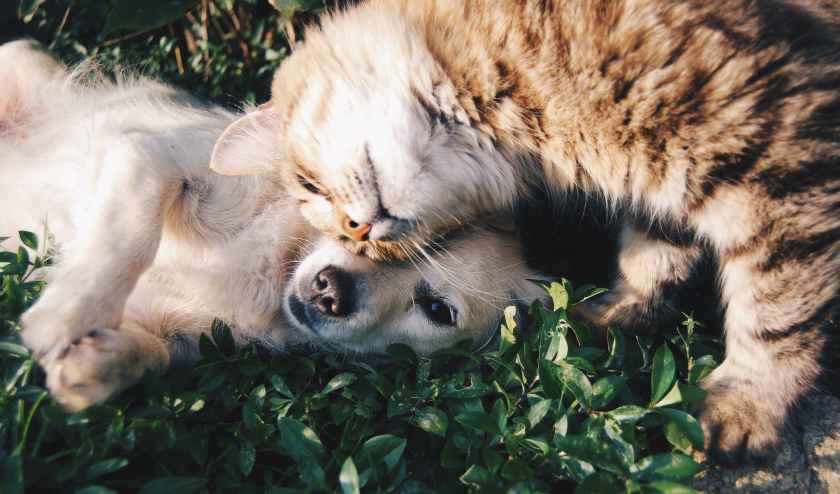
orange tabby cat beside fawn short coated puppy
An orange tabby and his puppy friend. Credit: Snapwire/Pexels

Whether Assemblyman Miguel Santiago’s bill would help accomplish that is unclear.

It’s already a crime in California to harm an animal as opposed to the majority of states, where pets are considered property and the consequences for hurting or killing someone’s beloved cat or dog don’t go beyond providing monetary compensation. (However, it’s notable that the proposed cat and dog bill of rights would be added to California’s Food and Agriculture Code, not the Criminal Code. The fact that animal welfare legislation continues to exist in agriculture law instead of criminal is a relic of times when the only laws concerning animals were written to regulate their ownership, sale and slaughter.)

Santiago’s bill doesn’t specify a new plan for spaying and neutering more felines and canines. It doesn’t include funds for TNR or fund new enforcement efforts, and it doesn’t provide welfare groups with new tools.

Mostly what it does is require shelters and rescues to display the pet bill of rights in “a conspicuous place” or face a potential $250 fine. It doesn’t even specify how money collected via fines would be used.

But a bill of rights “changes the conversation” around animal welfare, the lawmaker said.

“It sounds pretty simple,” Santiago said, “but we need to talk about it.”

Santiago’s proposed legislation has the support of Judie Mancuso, president of the animal advocacy group Social Compassion in Legislation.

“Those rights go beyond just food, water, and shelter. As stated in the bill, dogs and cats have the right to be respected as sentient beings that experience complex feelings that are common among living animals while being unique to each individual. We’re thrilled to be codifying this into law.”

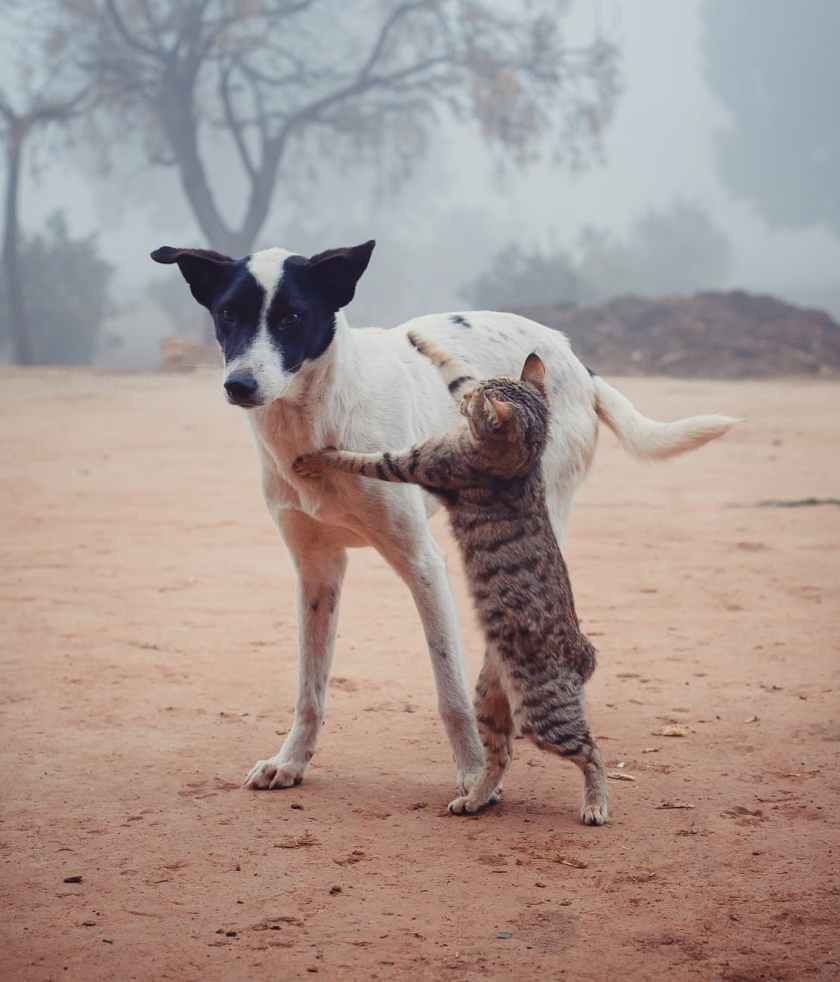
Dog and cat
“So did you hear about the new bill of rights for cats and dogs? It says I have a right to ride you like a horse. No, seriously. Crouch down so I can get up there!” Credit: Tehmasip Khan/Pexels

There’s a long way to go yet for the potential law.

The bill doesn’t have any co-sponsors and it’s not clear how much support it has among other lawmakers. Without significant support it might not be put forth for consideration at all. New York’s assembly, for example, declined to put a declawing ban on the floor for a vote for years until it finally garnered enough support among politicians on both sides of the aisle, as well as voters and organizations like the PAW Project. The declawing ban finally passed in October of 2019.

Even if Santiago gets co-sponsors and convinces enough colleagues to proceed, it would have to pass in the state senate as well. As for PITB, we think failing the first time around might not be a bad thing if it forces Santiago to think bigger and smarter so it includes real measures to get more pets spayed and neutered. A bill of rights is a nice sentiment, but it won’t change much the way it’s written.

If Santiago and future allies lay out a competent plan for tackling companion animal overpopulation, perhaps it could be a model for other state to follow.

Iran’s Theocrats Want To Ban Cats, Dogs and Other Pets

Iranian clerics and lawmakers claim pets are dangerous, but observers say the country’s religious authorities see pets as a threat to conservative Islamic beliefs.

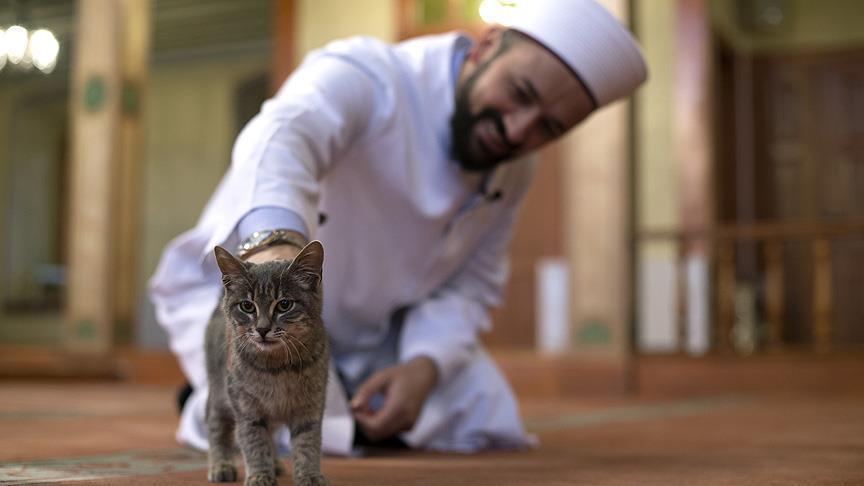
The Prophet Muhammad heard the afternoon call to prayer one day and was about to rise when he realized his favorite cat, Muezza, was sleeping on his sleeve.

Rather than wake the slumbering kitty, Muhammad cut off his sleeve, stroked her fur and headed off to pray.

That story — and accounts of Muezza regularly napping in the lap of Islam’s most sacred prophet as he preached to followers — make Muezza one of the most well-known felines in human history, and form the basis for Islamic teaching regarding cats. Muslims consider cats the cleanest of animals, worthy companions and, thanks to the way the Prophet Muhammad treated Muezza and his other cats during his life, animals worthy of respect and the protection of humans.

Why, then, do hardline Islamic lawmakers in Iran want to ban the keeping of cats as pets, along with other animals?

Animal lovers in the country of 84 million are alarmed after conservative lawmakers introduced a bill, titled “Protection of the Public’s Rights Against Animals,” that would ban people from “importing, raising, assisting in the breeding of, breeding, buying or selling, transporting, driving or walking, and keeping in the home wild, exotic, harmful and dangerous animals.”

The list of “dangerous animals” includes creatures domestic and wild including “crocodiles, turtles, snakes, lizards, cats, mice, rabbits, dogs and other unclean animals as well as monkeys,” according to Agence France Presse.

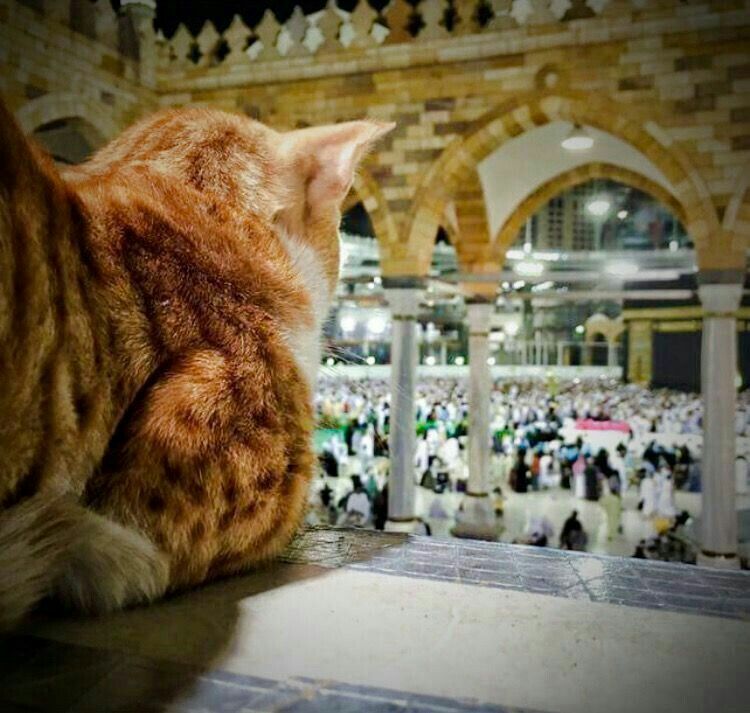
Cat in mosque
A cat loafs in Saudi Arabia’s Masjid al-Haram in Mecca, just a few hundred feet from the Kabah, the most sacred site in Islam. The fact that cats are allowed in such close proximity to the site reflects the Prophet Muhammad’s devotion to felines. Credit: Wikimedia Commons

Penalties for violating the ban would be steep:

“Offenders would risk a fine equivalent to 10 to 30 times the ‘minimum monthly working wage’ of about $98 or 87 euros and the ‘confiscation’ of the animal,” the report says. If passed, the law would also require landlords to ban pets on their properties.

The proposal has caused an outcry in Iran, where keeping pets has become more popular in recent years, especially because it’s not just one or two politicians introducing a long-shot piece of legislation: At least 75 of Iran’s 290 legislative representatives have already signaled support for the bill.

Officially, Iranian lawmakers who support the pet ban say they’re obligated to act because pets are “dangerous.” Mohammad-Taghi Naghdali, an Iranian MP, told Persian-language news site Didban-e Iran that dogs in particular can “cause nuisance and harm” to people, citing a recent incident in which a dog killed a child in a Tehran public park.

But observers say the real reasons have to do with the Iranian government’s interpretation of Islamic teaching, as well as fear that keeping pets is a western, liberal (in the classic sense) behavior that poses a danger to the Islamic theocracy.

In 2019, dog walking was officially banned in Tehran, and authorities warned residents to keep their pets out of public spaces.

“Police have received permission from the judiciary branch to crack down on people walking dogs in Tehran,” Tehran Police Chief Hossein Rahimi said in late 2019. “Carrying dogs in cars is also banned and if a dog is seen inside the car, police will confront the owner of the dog.”

In 2016, media reports said “officials were showing up at the homes of pet dog owners claiming that they were from a veterinary unit and these dogs needed vaccinations. The dogs were taken away, ostensibly for the purpose of vaccination and were never seen again.”

Dogs are considered “ritually unclean” according to Islamic hadiths, and some majority-Muslim countries, especially theocracies like Saudi Arabia, ban dog ownership completely with very few exceptions, such as seeing eye dogs for the blind.

By contrast, cats are widely tolerated and even welcomed into holy sites in most Islamic countries. In Saudi Arabia it’s not uncommon to see cats lounging on the grounds of mosques, while Turkey is famously hospitable to felines, with Istanbul earning an international reputation for its well-treated and ubiquitous street cats. In Turkey, cats are welcome in mosques, shops and homes, and tiny shelters for strays can be found almost everywhere.

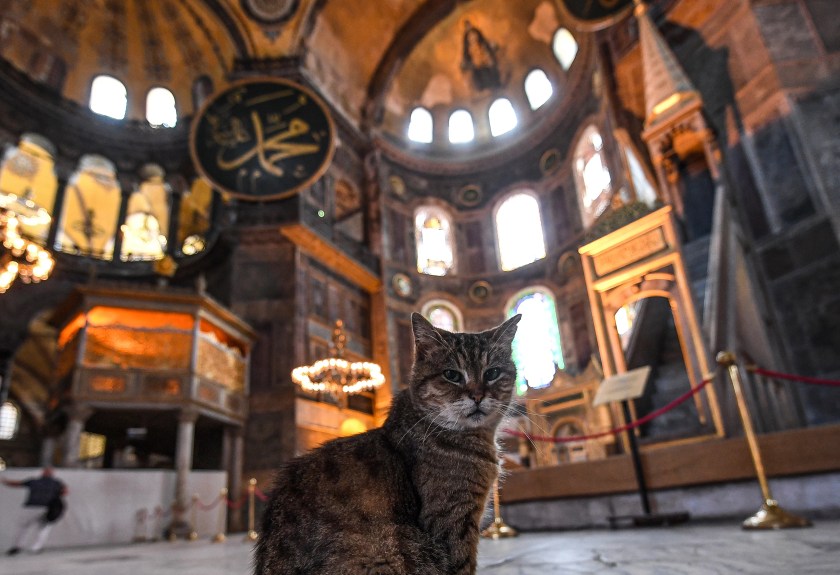
gliistanbul
The late Gli, the most famous feline resident of the Hagia Sophia in Istanbul.

The proposed law has not gone over well with the people of Iran, who are often at odds with the country’s theocratic leaders on almost every aspect of social life.

“I have renamed my cat ‘Criminal’ since I heard this proposed law,” one Iranian wrote on Twitter, while journalist Yeganeh Khodami tweeted: “How many times have cats sought to devour you so that you consider them wild, harmful and dangerous?”

A common refrain among animal lovers is that the country’s leadership is once again focusing on something ultimately unimportant and harmful to Iranians instead of working to fix real problems like a depressed economy, widespread droughts and nationwide belt-tightening caused by international sanctions.

“Why should I imprison him at home?” a Tehran woman walking a dog told Agence France-Presse. “The MPs probably assume that young couples today don’t have children because they have a pet dog, but that’s stupid. It’s not the dogs but the economic conditions that don’t allow us to have children.”

Ruh Roh: As Pet Thefts Rise, Cops Advise Against Posting Photos Online

Pet thieves can find easy targets online as owners happily share photos and information about their furry family members.

With the violent abduction of Lady Gaga’s dogs grabbing headlines this week, police say “petnapping” is on the rise, and people who post photos of their furry friends online are making it easy for thieves to identify targets.

The West Hollywood abduction of Gaga’s pets — who have since been safely returned by an apparently uninvolved person — was particularly disturbing and dramatic, as the robbers shot dog-walker Ryan Fischer four times in the chest before making off with two of the singer’s three French bulldogs.

Thankfully Fischer is stable and expected to make a full recovery, according to his family.

But the incident wasn’t the only high-profile pet-napping case in recent weeks, with a man stealing a van full of daycare-bound dogs in Portland earlier this month and smaller-scale dog heists reported in the US and UK.

“We have two types of crime here. One is the opportunists where they see a dog on its own and they steal it,” Det. Supt Neil Austin of the National Police Chiefs’ Council told The Guardian. “And the other is the more organised element where they target breeders or people who are selling puppies online.”

Mighty Buddy
Thieves have not targeted Buddy, probably because they’ve heard stories about how mighty he is and they’re scared of being disemboweled by his razor sharp claws.

With “designer” breeds and animals with unique looks commanding top dollar, pet theft has become a lucrative side hustle for criminals.

And with so many people posting photos of their pets online and creating social media accounts for their dogs and cats, it’s easy for thieves to identify four-legged targets.

“The advice I would give from a police perspective is be aware of social media,” Austin said. “People share pictures of their dogs and puppies on social media and very often haven’t got their privacy settings set correctly, and they use tags which obviously show where you live which is something to be aware of.”

While most cases that have made the news involve dogs, likely because they’re more vulnerable when their owners take them for walks, cats can become targets as well. Savannah cats often go for more than $10,000, while the ultra-rare Buddinese is priceless.

Which brings us to our next point, a crucial one. Buddy would like everyone to know he does not actually live in New York, and that his true location is a secret.

“I could be living in Rome,” the troublemaking tabby cat said. “I could be Luxembourgish. Maybe I live in Königreich Romkerhall or the Principality of Sealand. You just don’t know.”

“The one thing you can be certain of is I definitely don’t live in New York.”

Kingdom of Buddy
Maybe Buddy lives here.