Bird Flu: Study Warns Virus Has 90% Mortality Rate In Cats, Wild Pumas Succumb To Infection, Sanctuaries On Alert

“If you feed your pet contaminated raw meat or milk, they will likely die. I’m not exaggerating, just giving it to you straight,” one infectious disease specialist warned.

In more disconcerting news from the bird flu front, a new study warns of exceptionally high mortality rates for cats who are infected with the virus.

The study found 89.6 percent of avian influenza cases in cats are fatal, making the virus a virtual death sentence.

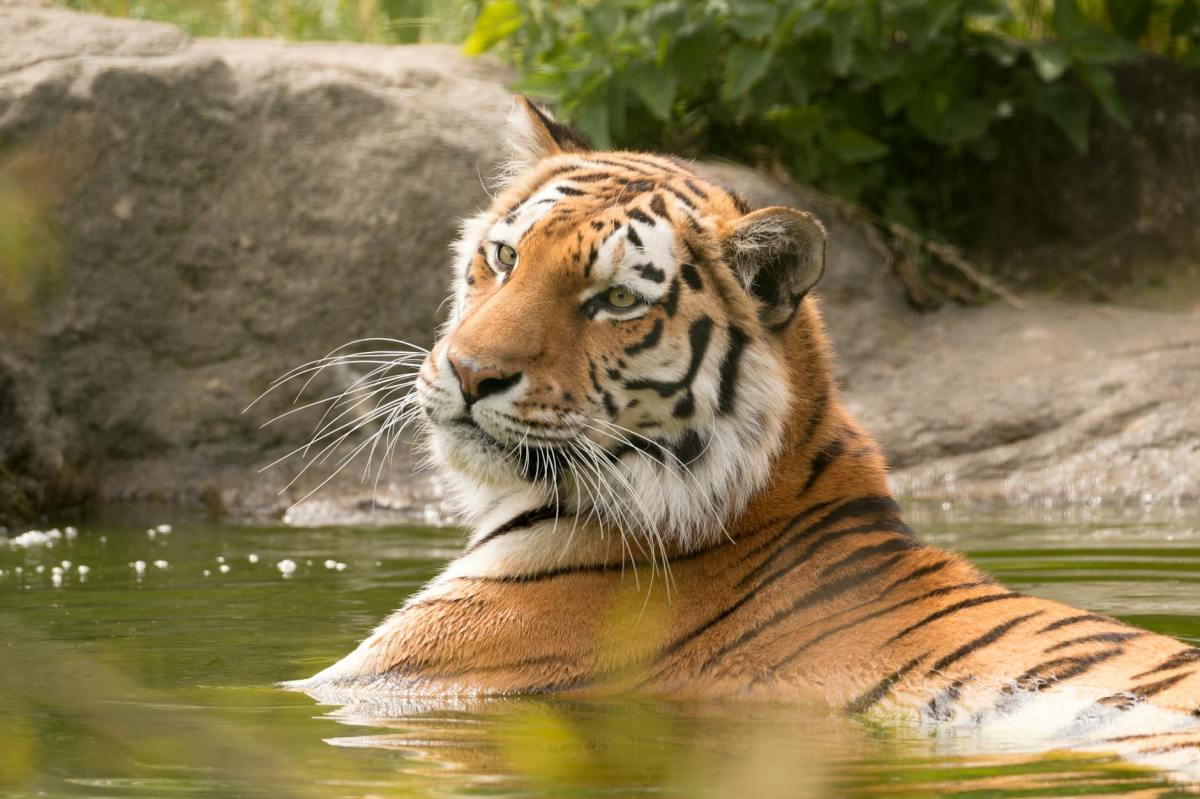
That applies to all species of cats, from the true big cats in the panthera genus — tigers, lions, jaguars and leopards — to felines, a broad group that includes domestic cats, lynx, cheetahs, pumas, ocelots, servals, jaguarundis and others.

“We don’t know if the cats are more susceptible than anybody else,” the American Veterinary Medical Association’s Michael Bailey told USA Today. “It’s just the fact they’re exposed to higher viral burdens because of where they go.”

Whether cats are more susceptible is up for debate, but one SPCA chapter said felids of all species are “uniquely vulnerable” to avian influenza because there are so many ways it can be transmitted to them by doing nothing more than what they typically do.

https://platform.twitter.com/widgets.js

Cats can be infected by catching and eating birds and mice, drinking raw milk, eating raw meat (including commercial raw pet food), and exposure to infected animals, including cows.

In Washington state, two wild pumas died after contracting the virus from prey, a development Panthera puma director Mark Elbroch called “troubling.”

“It certainly raises eyebrows and makes one wonder: is it indicative of a bigger pattern out of sight?” Elbroch asked, noting pumas are at the top of the food chain in the Pacific northwest.

mousegeoffreyscat

To date, as many as 900 cattle herds across the US have tested positive for bird flu, according to the US Department of Agriculture, while two thirds of California’s dairy farms — 660 out of 984 — had confirmed cases as of Dec. 26.

Bird flu was the confirmed cause of death in a house cat from Washington who died after eating Northwest Naturals commercial raw food, which has since been recalled. Three house cats in Texas succumbed to the virus, which they possibly contracted from hunting mice. The bird flu was also responsible for the deaths of two domestic cats in California who drank raw milk, and 20 of 37 wild cats — including a tiger, several pumas, bobcats and a Geoffroy’s cat (pictured at left) — at the Wild Felid Advocacy Center, a sanctuary in Washington.

adorable cream kitten drinking milk outdoors
Contrary to popular belief, cats are typically lactose intolerant. Credit: DHG Photography/Pexels

Veterinarians are warning people to keep their cats indoors and to avoid raw meat diets, which have become more popular in recent years. Cats should not be given cow’s milk anyway, since most are lactose intolerant. As a general rule, kittens should consume milk from their mothers or kitten-specific formula, but should not be given milk from any other source.

“If you feed your pet contaminated raw meat or milk, they will likely die. I’m not exaggerating, just giving it to you straight,” tweeted Dr. Kristen Coleman, an assistant professor at the University of Maryland’s School of Public Health.

While the west coast accounts for the majority of confirmed bird flu infections, the virus continues to spread. A map from the Centers for Disease Control shows where infections have been verified as of late December:

Credit: Centers for Disease Control

Unfortunately, the bird flu outbreak comes on the heels of a heavily politicized pandemic and a major loss in trust in American institutions like the CDC after efforts to obscure the origins of SARS-CoV2, the virus that causes COVID-19.

It’s not clear if the fallout will make Americans less likely to heed warnings about bird flu and other potential viruses, but animal welfare groups and virologists say people can keep their cats safe with a handful of common-sense steps.
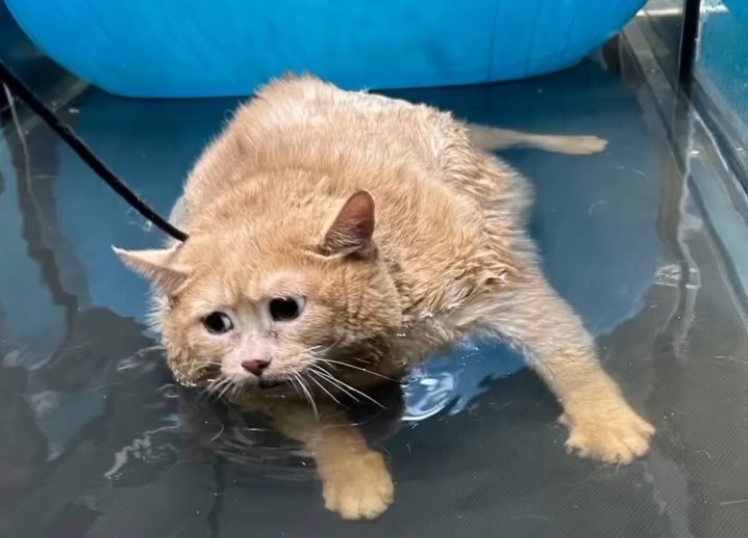
Crumbs The Corpulent Cat Is Already Enduring Treadmill Sessions

Crumbs was rescued from a bad situation where people fed him without regard for his health. Now he’s got a lot of work ahead of him as his new caretakers help him lose weight so he can walk on his own again.

Crumbs, the morbidly obese tabby who was rescued from the basement of a Russian hospital last week, is already putting in the work to melt pounds.

That means he’s enduring two things most cats hate — exercise and water. You’ll recall from our earlier post that Crumbs weighs 38 pounds and cannot walk under his own power, so his new caretakers at Matroskin animal rescue in Perm, Russia, have him on a special waterproof treadmill where he gets the benefit of buoyancy while he gets his steps in.

The big guy is not a happy camper in the video, but he’s doing his best.

I’ve heard horror stories about the hospitals in Russia and Ukraine, so if it sounds strange that the staff at a hospital would feed cookies, soup and other inappropriate food to a cat, well, let’s just say it’s not the kind of environment most of us picture when we think “hospital.” (Which is another reason to be grateful for living in the west, where we have it much better than most of us generally realize.)

Hindustan Times article
Non-native English speaking staff at the Hindustan Times may have confused Whiskas the cat food brand with whiskey, the alcoholic beverage, or there may have been a translation error.

Interestingly, a Hindustan Times story about Crumbs claims the hospital employees served whiskey to the obese cat in addition to the junk food, a claim repeated in the headline and article.

That would add another wrinkle to an already ridiculous story, but thankfully it’s not true. Your intrepid friends here at PITB checked the original text and with the help of translation software, determined it used the Russian word for “Whiskas,” as in the cat food, not whiskey. (It probably goes without saying, but never give alcohol to your cat. As little as a teaspoon of whiskey could be fatal.)

So if there’s some small comfort here, it’s that the people who fed Crumbs for so long weren’t completely ignorant to his needs, and it appears he got at least some species-appropriate food.

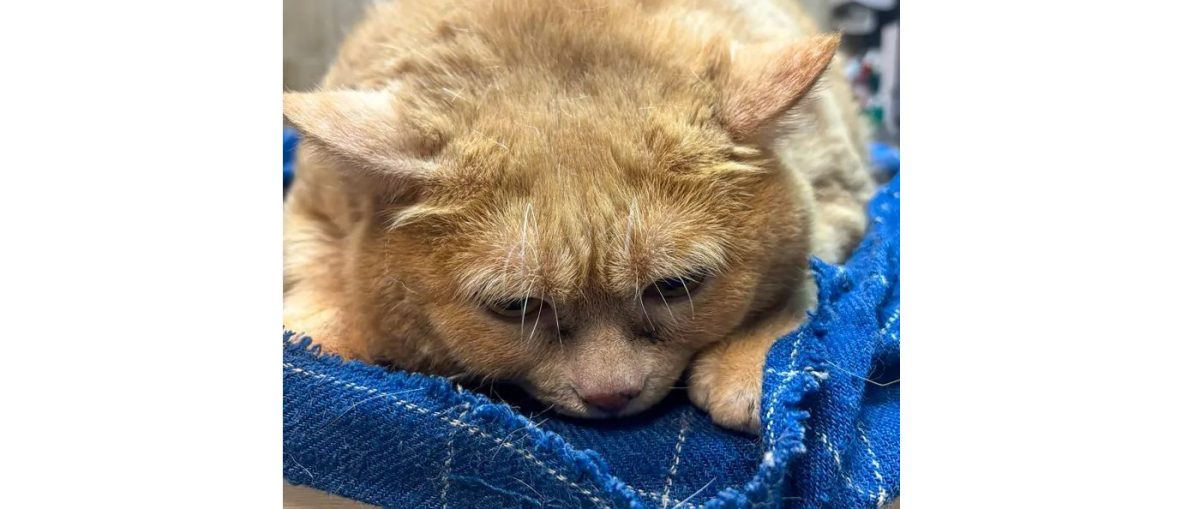
Crumbs the Cat
Crumbs shortly after he was rescued. Credit: Matroskin animal shelter

Rescued Cat Gorged On Cookies Till He Was ‘Too Fat To Walk,’ Now He’s On A Diet

The abandoned cat found his way to the basement of a hospital in Russia, where staff members provided him with inappropriate food — and way too much of it.

Animal rescuers in Russia have their work cut out for them after taking in a mega-chonky cat weighing 38 pounds.

The orange tabby, named Crumbs by his rescuers because he leaves none in his wake, is so overweight he can’t walk and has been placed on a strict diet to meet his first goal of becoming ambulatory.

After that, his rescuers said, the real work begins as they try to get Crumbs down to about 10 pounds, which they believe is a healthy weight for a cat of his original size.

Crumbs the Cat
Crumbs with one of his rescuers who is helping the morbidly obese feline shed pounds.

Staff at Matroskin Shelter in Perm told Russian media that Crumbs was abandoned by his owners and was living in the basement of a hospital in the city.

It wasn’t clear if Crumbs was already obese when he was surrendered, but hospital staff were not providing him with the kind of protein-rich meat cats need to stay healthy. Instead, they plied him with cookies and calorie-dense soups, apparently putting no limits on his food consumption.

“Kroshik’s story is an extremely rare case when someone loved a cat so much that they fed him to such a state,” shelter volunteers said.

Crumbs is in for a shock as he adjusts to his new diet, but the more difficult challenge may be the treadmill sessions that await once he’s able to move under his own power.

Screenshot_2020-11-15 barsik-cat-2020-1-1 jpg (WEBP Image, 915 × 610 pixels)
Barsik suffered the indignity of being labeled “The Fattest Cat In New York” and even made the front cover of the New York Post, but the former chonkster and his new human had the last laugh:

The problem of overweight cats has received more attention in recent years, with veterinarians warning people not to intentionally overfeed their cats. Unfortunately, some people have taken to fattening up their felines for the sake of social media success, looking to copy others whose extraordinarily “chonky” cats have earned equally massive online followings.

In Poland, Gacek the cat was removed from his street-side tiny house and taken indoors because visitors to the city of Szczecin would not stop feeding the overweight celebrity chonkster, despite signs pleading with them to stop. (It also didn’t help that people tried to steal Gacek after he became internationally famous.)

Gacek

Above: After Gacek went viral for being the top-rated attraction in his home city of Szczecin, Poland, a steady stream of admirers made the pilgrimage to see him in person, offering tribute in the form of snacks.

Here at Casa de Buddy, I had to put His Grace on a diet because he was pushing about 12 1/2 to 13 pounds, up from his natural weight of about 10 or 11 pounds. That might not seem like much, but Bud isn’t a very large cat despite his belief that he’s a hulking tiger. Two pounds is as much as 20 percent of his ideal body weight.

As you might imagine, the little guy was not happy about his significantly reduced snack allotment and made sure to communicate that to me loudly and often.

chubbybuddy
“I am NOT chubby, I am meowscular!”

There have also been success stories. Barsik, once dubbed “The Fattest Cat In New York” after tipping the scales at an astonishing 41 pounds, made a second round of headlines after he shed a significant portion of his weight. Nowadays he’s looking happy and healthy as he’s able to run and jump like a cat should.

Local Politicians Have No Clue How To Manage Cats

Feeding strays is now punishable by a $150 fine in an Ohio town, the latest municipality whose elected leaders chose to ignore expert guidelines on managing feline populations.

Every time the stray cat issue comes up, local town boards and city councils act as if they need to reinvent the wheel.

Imagining that they are the first to deal with this extremely common problem, they make decisions from positions of ignorance, dismissing the concerns of people who actually work with cats. Or they “do the research” and come up with their own ineffective policies instead of simply looking at what other towns and cities have tried in the past.

At least that way, you know what works and what doesn’t, and how much your decision’s going to cost taxpayers.

But that would be the smart thing to do, which is why our local elected leaders don’t do it. Instead they pull stunts like the village board of Mogadore, Ohio, a town of 3,700 about 10 miles east of Akron.

The Mogadore board just passed a law that makes feeding strays and ferals punishable by a fine of up to $150, as if that will stop cats from finding food and breeding.

Tellingly,  Mogadore’s elected leaders say their ordinance applies to “wild, stray, or un-owned” cats, which means they don’t understand they’re all the same species.

Apparently neither do the reporters at WOIO, a local news station in Cleveland. A story from the station is confidently incorrect in telling readers “[d]omestic cats that have become wild, meaning live outdoors, roam free, and rarely interact with humans, are also considered feral.”

Stray cat and kitten
Credit: Sami Aksu/Pexels

Felis catus is a domestic animal. By definition a domestic cat is not wild and cannot become wild. Evolution cannot happen to a single animal.

While evolution is a constant process, speciation — wolves becoming dogs, wildcats becoming house cats, wild boar becoming docile farm pigs — is a species-wide shift that takes at least a few hundred years but often much longer, “from human-observable timescales to tens of millions of years” depending on the species.

The whole process results in changes at the genetic level. The transition from wildcats to domestic cats, for example, involved changing only 13 genes.

This is not rocket science, it’s basic stuff we all learned in high school science classes.

But that’s almost beside the point.

Fining people for feeding stray cats, including caretakers who voluntarily manage cat colonies, will not solve the problem. It doesn’t work. It has never worked in any town anywhere in the world.

It also creates a needlessly adversarial relationship with the passionate people doing the hard work of managing the feline population, often thanklessly and at their own expense. Why make enemies of them when they’re doing a public service?

Mogadore’s village board had a representative from Alley Cat Allies and people from local rescues on hand to inform them that fines don’t work, and to offer the humane and effective option of trap, neuter, return. TNR may not be perfect, but it’s better than anything else people have tried.

Mogadore’s board and mayor ignored the experts and went ahead with their plan to fine people instead.

They’re not alone. This happens thousands of times across the US, Europe, Australia and most other places where domestic cats live. Japan and Turkey take a more humane approach, and they’re better for it. But here in the US, we often deal with issues by ignoring precedent and engaging in wishful thinking.

If the residents of Mogadore are lucky, their elected officials will realize their mistake sooner rather than later.

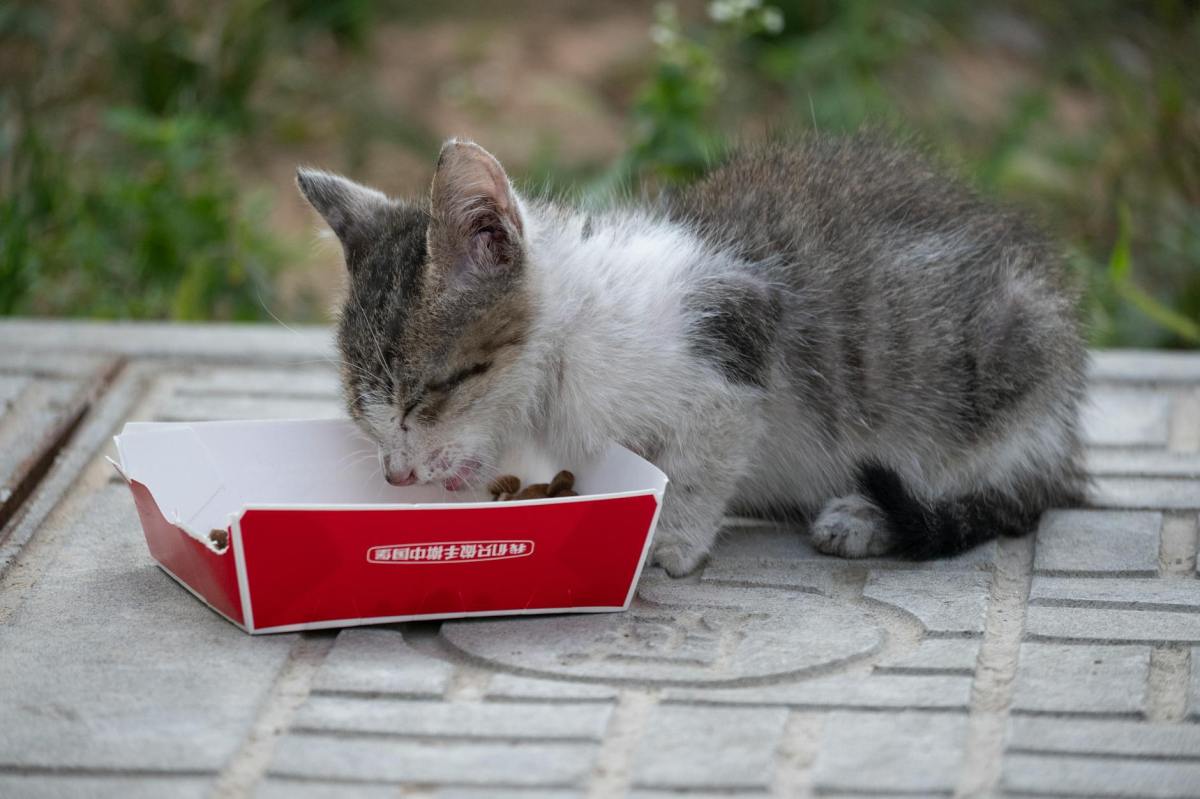
Stray cat eating
Stray and feral cats already have a difficult existence without ill-advised laws making it illegal to care for them. Credit: Mehmet Fatih Bayram/Pexels

Petition: Texas Teacher Accused Of Abusing Cat Should Be Reinstated ‘No Questions Asked’

The petition says “an exceptional teacher” has been “unjustly accused.” The petition’s creator blamed “snowflakes” for sharing the video of the incident with police, who arrested the teacher on Aug. 25.

A new petition claims Texas high school teacher Emily Marie Benner has been “unfairly accused” of abusing a cat and demands Benner’s school district reinstate her as a teacher immediately, “no questions asked.”

The petition’s creator blames “soft, slow-minded” “snowflakes” for allegedly manufacturing outrage, claims Benner could sue police for arresting her, and demands authorities drop charges against her.

Benner was arrested on Aug. 25 after police and school administrators were provided with a video showing the 25-year-old teacher allegedly abusing a cat two days earlier. In the video, which was shot in a classroom at Westwood High School of Palestine, Texas, Benner tells her students to hold the screaming feline down as she staples shut an incision on the cat’s abdomen, according to police, who also said the cat was not given anesthesia.

Benner was teaching an animal science class but is not a veterinarian and isn’t licensed to practice veterinary surgery. It’s not clear how she obtained the cat, nor have authorities said who made the initial incision on the cat’s abdomen. Police said the feline is recovering in the care of a veterinarian.

According to the petition, Benner is “a dedicated agricultural teacher in Westwood” who “has been unjustly accused of animal cruelty.”

“Her charge not only questions her professional integrity but also jeopardizes her role as an influential educator in our community. As people who appreciate her significant contributions to education in Palestine, TX, USA, we understand how detrimental this baseless accusation is to our local education system. Considering she has been an exceptional teacher, we call for the immediate dismissal of these charges and the reinstatement of Emily Marie Benner in her role, no questions asked.”

Teacher accused of animal cruelty
A still image from Benner’s high school classroom on Aug. 23 shows students holding down the thrashing, screaming feline while Benner staples its abdomen.

While Westwood School District Superintendent Wade Stanford said the “procedure amounted to animal cruelty” and promised to take “immediate and decisive action to address this issue” in a letter to parents of Westwood High School students, he did not say Benner was suspended or comment on her current status.

Benner’s arrest and alleged suspension as an educator is a “grave actionable breach to a respected member of our community,” the petition claims, asking signatories to help “right this wrong.” It also claims Benner has not been afforded due process.

“It’s the Christian thing to do and the right thing to do!” one person who signed the petition commented.

The petition’s creator, Jim Hughes of Palestine, made a post in Benner’s defense on Facebook, arguing that people were “spreading hate” by criticizing Benner. The post sparked arguments among locals who said home surgical procedures on animals are common in rural communities, and others who disputed that assertion, insisting it’s cruel not to provide the professional care of a veterinarian.

“Do you think everyone has the money to take their pet to the vet?” Hughes wrote, blaming the criticism on “snowflakes” who live in a “soft, slow-minded world.”

Arguing that animal owners “would be broke” if they sought veterinary help “for every incident,” Hughes said home surgery is just the way it’s done: “Every farmer I know castrates with just a pocket knife and no pain medicine.”

Top image credit: G. Fring/Pexels