The fast feline narrowly avoided becoming a meal for a pair of coyotes in Sacramento.
Allyson Seconds was driving through midtown Sacramento on Thursday morning when she saw flashes of fur weaving between cars in traffic.
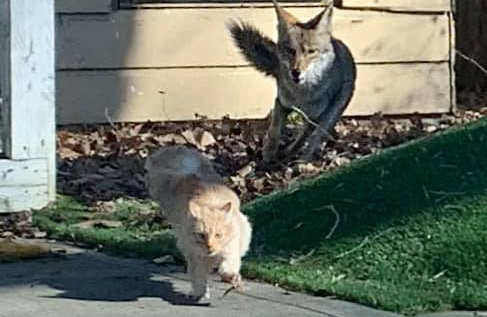
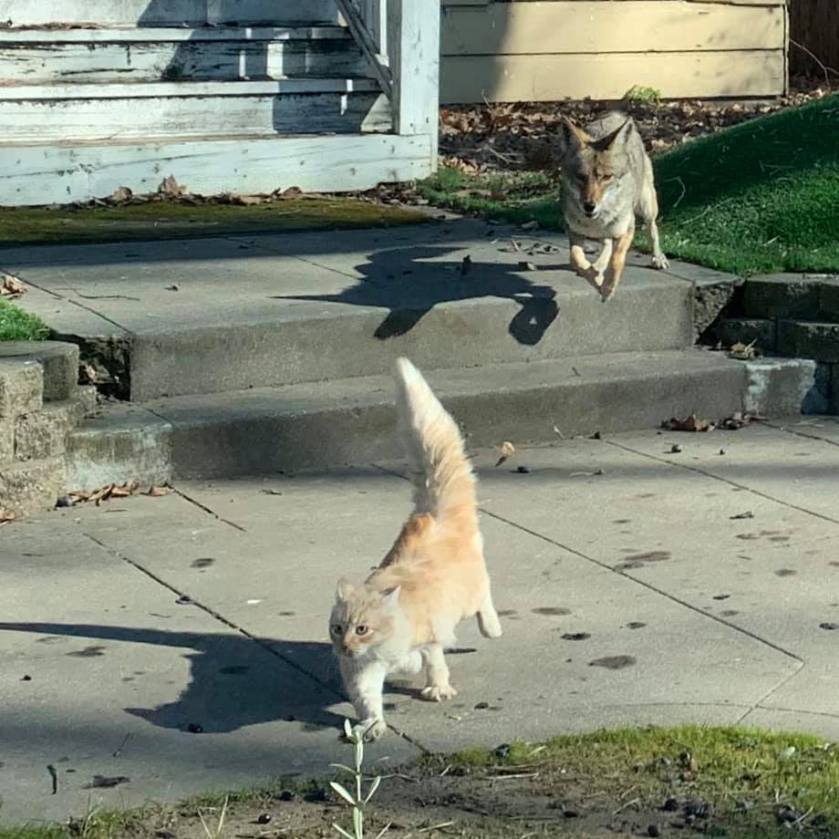
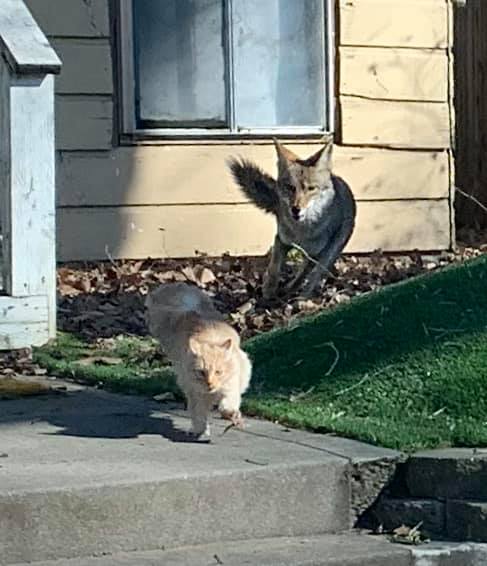
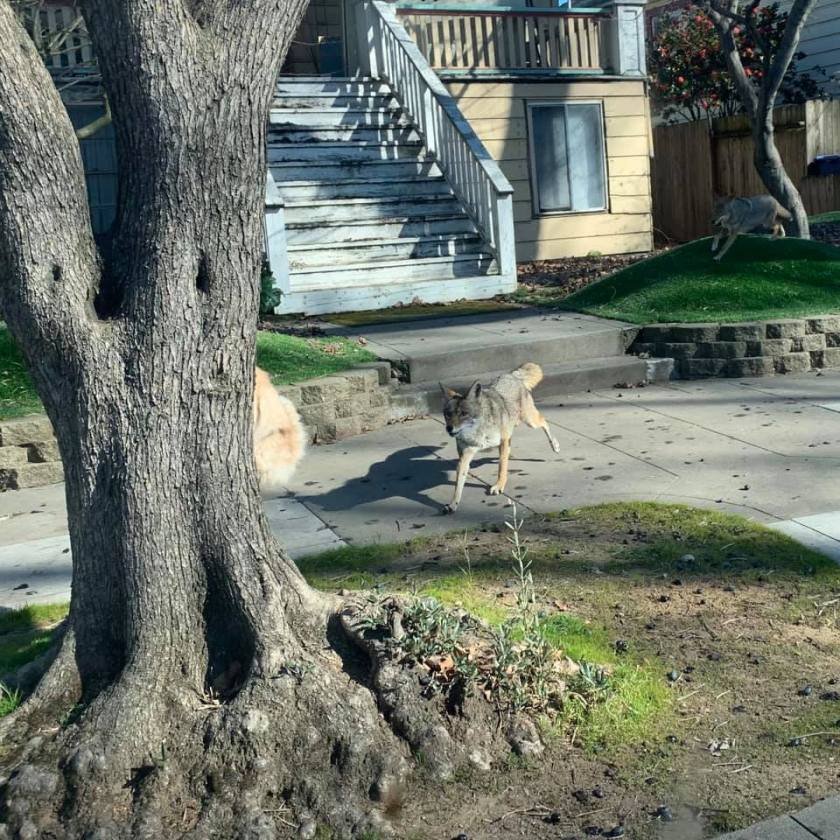
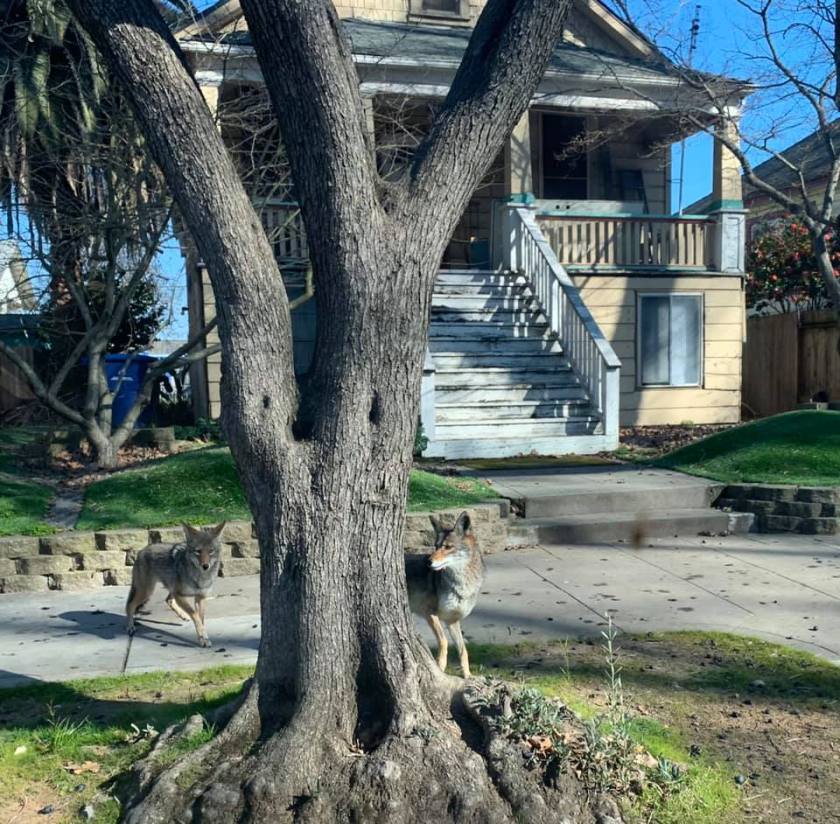
“I pulled over thinking I’d seen two loose dogs crossing the street and went into rescue mode,” the Sacramento woman recalled. “When I saw they were coyotes I grabbed my phone and took just these four shots of them running and jumping up at a tree.”
Seconds didn’t didn’t understand why the coyotes were so worked up until she reviewed the shots.
“I didn’t realize at first that it was a house cat they were after until I looked at the pictures,” she wrote. “That’s one lucky cat!”
The swift tabby managed to stay a stride ahead of his canid pursuers before going vertical and beating a quick retreat up a tree.
This photo shows the telltale signs of a terrified cat: Kitty’s tail is raised, rigid and three times its normal size while its ears are pinned back against its head.
A tabby cat narrowly escapes the jaws of two coyotes on Feb. 6 in Sacramento. Credit: Allyson SecondsThe coyotes were right on kitty’s heels. Credit: Allyson Seconds
The next two photos show the end of the chase: In the first we can see just a flash of fur as the cat scurries up the tree, and in the second shot the coyotes look miffed at being outplayed by a domestic cat.
Credit: Allyson Seconds
As for Seconds, she understands what so many people and local media reports get wrong. There aren’t “more” coyotes, as if they’ve suddenly decided to start becoming prolific breeders. The reason those of us in urban and suburban neighborhoods see them more often is because we encroach on their habitats with every development, cul-de-sac and ugly strip mall we build.
It’s a story that is sadly repeated across the globe as animals as varied — and endangered — as mountain lions, tigers and orangutans find fewer contiguous plains, jungles and forests to hunt and forage within.
“This is not even close to a coyote damning post,” Seconds wrote on Facebook. “Housing developments and more homeless living at the river are certainly driving them inland from their more suitable terrain but guess what? The coyotes are adapting to city life and we are seeing more and more of them in all corners of our town. They aren’t going anywhere.”
She signed off by making a suggestion we’ve advocated many times on this blog.
“And as for those worried about their cats for reasons illustrated in my photos? Time to start keeping kitty inside.”
A new video purports to show a cat speaking fully formed sentence in English. People are buying it.
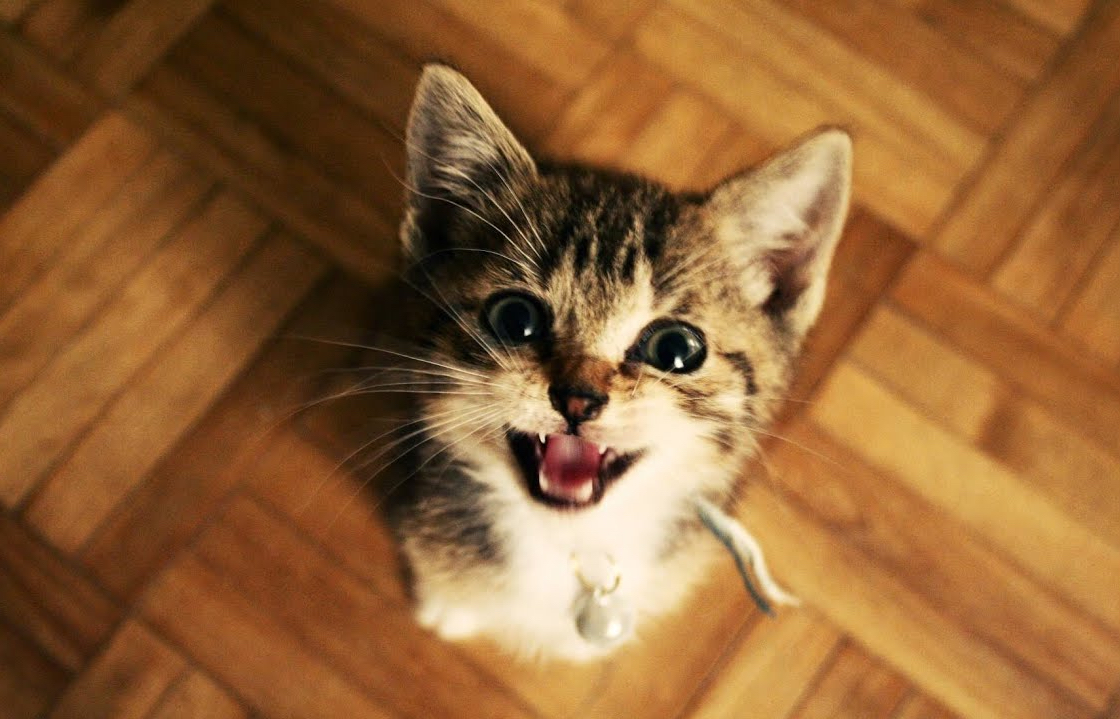
A new, internet-breaking viral video appears to capture a cat speaking English, prompting a wave of speculation about whether cats are basically furry parrots when it comes to talent for mimicry.
The TikTok clip features a voice saying “Hello” and “Are you coming?” followed by an amused narrator turning the camera on his cat and incredulously asking “What did you just say?”
The video’s viral success has led to a net-wide conversation about animal cognition, and whether cats in particular understand far more than they let on.
“And this is a proof that animals can talk,” one TikTok user commented, summing up much of the online reaction to the clip.
It should be noted the handful of times cats have been recorded producing vaguely human-sounding speech, the sounds were stress vocalizations from terrified or anxious cats.
That’s what’s happening in the famous “Oh long Johnson, oh don piano!” video, in which a stressed out tuxedo vocalizes a few phrases before proceeding with more gibberish. To people who aren’t familiar with cats the video may seem funny, but those of us who care for the little tigers can recognize the signs of extreme agitation.
Here’s the “Oh long Johnson” video:
And here’s the new “Hello!”/“Are you coming?” video:
The viral TikTok video is a whole different ballgame: The words are well-formed, the sound is clear, and the phrase makes sense.
Unfortunately, it’s not real.
First I’ll point out the obvious: The cat is off-camera when it “speaks” because painstakingly editing video to make its mouth move in sync is a much more difficult task than dubbing in a vocal file.
Secondly, a careful listening with headphones makes it clear the “Hello” and “Are you coming?” are not from the same source as the meow, and the directional mix isn’t right. The sound should be distorted and should be directional if it’s coming from a cat in the next room, to the right of the person recording the scene on a smartphone.
This was an audio cut and paste job without much attention paid to detail. The video’s creator didn’t bother panning the clip.
But perhaps most damning of all, the sound looks wrong. I isolated clips of the cat “speaking” in a wave editor — an old copy of the ultra-reliable Cool Edit Pro — and compared them to various samples of cat meows pulled from the Internet and sampled from Buddy himself.
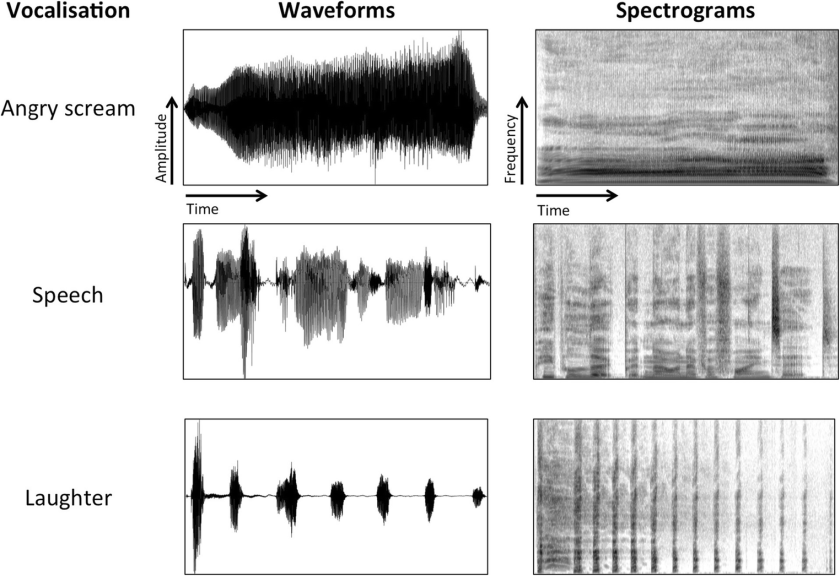
When visualized in an audio editor, “the waveform of speech is complex and variable, reflecting the variety of vowels and consonants that are used and the dynamic nature of speech articulation.”
In other words, you can see the stops and starts of human speech and the articulations of different sounds reflected in how the audio appears visually. This is because we have fine motor control over our vocal apparatus, something animals lack. (A 2016 Princeton study determined macaques, for example, have the necessary vocal anatomy to mimic human speech, but they don’t have the “brain circuitry” to form the precise articulations.)
Cat vocalizations, on the other hand, lack those markers. Additionally, at higher resolutions you can see patterns indicative of rhythmic sounds in samples of cat vocalizations, not unlike isolated drum tracks in a studio recording.
This is because feline meows often have embedded purrs, and trills are naturally quantized. They’re rhythmic sounds. If you’ve ever had a purring cat laying on your chest, this will be familiar to you: You can hear the percussive sound, which persists while the cat is exhaling and inhaling.
A domestic cat’s meow in waveform. Notice the lack of transients, pauses and variation, which would be indicative of human speech patterns.
Solicitation purrs and even basic meows have similar qualities. It’s a well-known fact that cats communicate with each other via body language — tail, eyes, ears, posture — and scent. Adult cats rarely vocalize to each other, so when they meow to us it’s because they recognize that we don’t “speak” tail or whisker, and they’re trying to communicate with us in a form we understand.
But cats are like macaques — they do not possess the brain circuitry to form the precise articulations necessary for human speech.
As primates, macaques have similarly-formed mouths, tongues, teeth and lips. Cats do not, which presents another set of problems when imagining them mimicking human speech. Think of “t” sounds, both the hard t and the soft “th” — they require us to rest our tongues against our upper front teeth or the roof of our mouths.
Cats don’t have substantial front teeth. They’re more like little shredders.
Likewise, to speak the phrase “Are you coming?” requires fine motor control to form the hard “c” sound. It involves precise control of air flow from the throat to the mouth and subtle placement of the tongue
Although the idea of talking pets may be appealing to generations that grew up on Disney movies and other media featuring anthropomorphized animals, the truth is they do talk to us in their own ways. The least we can do, as the supposedly more intelligent species, is to meet them halfway.
Chinese authorities threaten pets as Coronavirus fears grow.
It shouldn’t come as a surprise that a government with no respect for any kind of life — human or animal — would threaten the mass extermination of cats and dogs.
It’s par for the course in China, where authorities in dozens of cities and provinces are urging people to “deal with” their pets in the wake of the Coronavirus threat — or the government will, media reports say.
The warnings have been issued in Wuhan, the epicenter of the Coronavirus, as well as Shanxi, Beijing, Tianjin, Shandong, Hebei and Shanghai, according to the Humane Society International.
Yet there’s no evidence the virus has been transmitted by domesticated pets like cats and dogs, and no evidence those animals can catch it from humans, experts say.
In Wuhan, residents have been told to keep their pets indoors, and warned that any cats or dogs spotted outdoors will be “killed and buried on the spot,” the UK’s Metro reported.
But experts say it’s the government’s fault that the virus jumped from wild animals to humans in the first place. China has refused to shut down so-called “wet markets,” where live animals are sold next to the carcasses of recently-slaughtered animals, despite the fact that SARS and other viruses originated from those markets.
A Chinese wet market. Credit: Nikkei
Officials believe the Coronavirus originated at the Huanan Wholesale Seafood Market, one of many “wet markets” described as “filthy, crowded places where animals are displayed alive in small cages” and “are often slaughtered on site.”
China has been “mired in long-held beliefs about the benefits of eating exotic and often endangered animals for good health,” the Humane Society said in a statement, referring to traditional Chinese “medicine” and other folk practices that use animal parts in ineffective and dangerous tonics and elixirs.
In addition to creating the circumstances for viruses to jump from wild animals to humans, the illegal wildlife trade has pushed animals like tigers and pangolins to the brink of extinction.
“Chinese society is boiling with anger at wildlife policy failures,” said the Humane Society International’s China policy specialist, Peter Li. “Social media is full of posts condemning the refusal to shut down the wildlife markets. This is the worst Chinese New Year in China’s recent history.”
Cats are an “emerging audience,” Youtube says as feline-centric videos rack up millions of views.
At first, Buddy wouldn’t look at the TV.
I’d pulled up a live feed of a nature cam on Youtube, hoping my cat would be drawn to it by the sounds of bird calls and the sight of vividly-plumed orioles and robins alighting on a feeder, but he just didn’t seem interested.
Leaving the stream on just in case, I went back to my writing, then checked on the little guy again 20 minutes later to find him glued to the TV, sitting close and staring up like a small child watching Saturday morning cartoons.
Buddy was watching a quintet of Bluejays pick seeds from a tray feeder in Ohio, his eyes following the quick movements of the birds while he chirped in excitement.
The channel, Bird Watching HQ, is one of dozens catering to a rapidly-growing segment of YouTube’s viewership: cats.
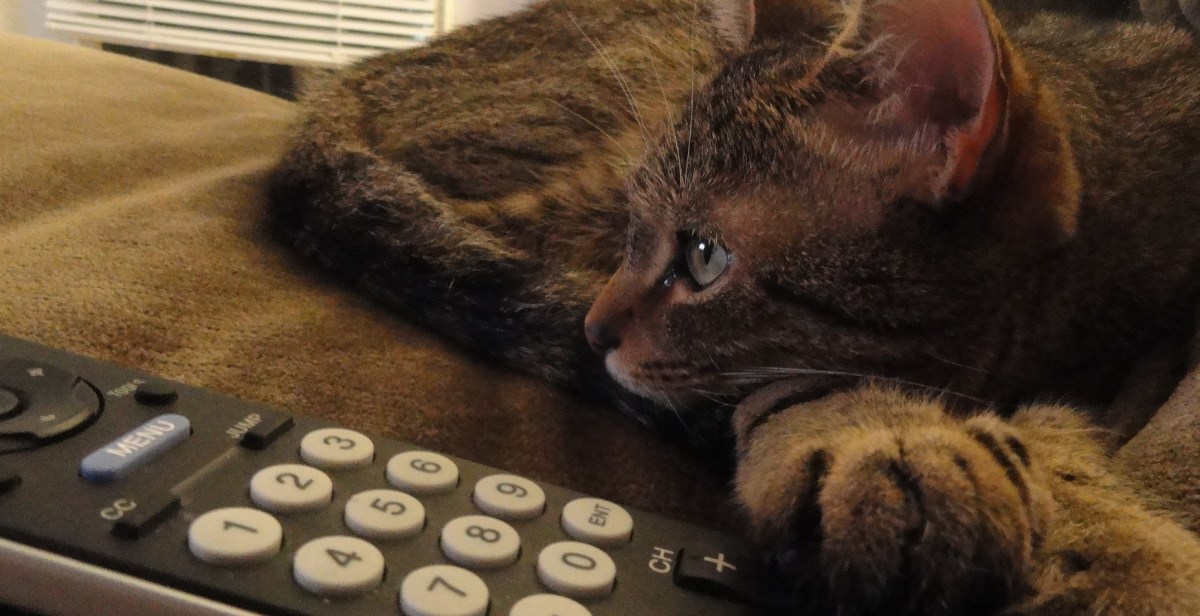
Kitty wants the remote
In retrospect it seems like it was inevitable that cats — the stars of innumerable YouTube videos viewed billions of times on the platform — would become viewers too.
Indoor cats get a visceral thrill from watching birds and small mammals the same way people do while watching thrillers, horror flicks or adventures: It’s a way to get adrenaline flowing in a safe environment.
For Scott Keller, the proprietor of Bird Watching HQ, cats weren’t his intended audience, and the fact that felines love his channel is a happy coincidence. It started as a blog “about how to attract wildlife to your backyard,” he said, prompted by how much he enjoyed taking his kids and his dog for walks near his home in Ohio.
“The live cameras were added in September 2018 to show the specific feeders and food that I was currently using,” Keller said. “I was certainly not thinking about entertaining videos for cats.”
Keller now has four live streams for viewers — human and feline alike — to get their nature fix: Two are set up in his backyard in Ohio, one in California is run by a partner whose feeders are frequented by hummingbirds, and the last is in an animal sanctuary in the Czech Republic. The operator of the California cam goes through between 50 and 100 pounds of sugar a week to keep her feathered guests happy, Keller said, and the European bird cam often captures unexpected visitors.
“It has actually been a great way for me to learn the birds of Europe,” Keller told us. “We have even seen owls catching mice at night here.”
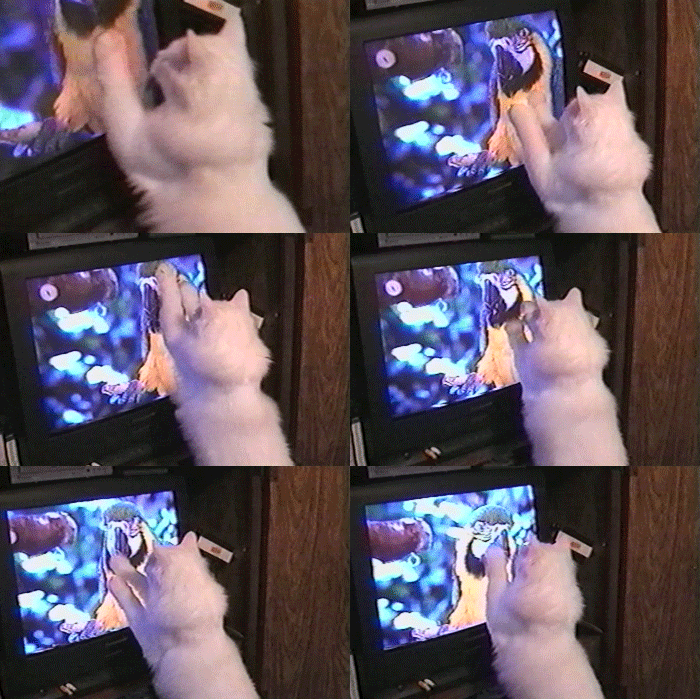
“MUST…KILL…LARGE BIRD!” A cat is determined to break the magic glass and reach the bird inside.
Cats as couch potatoes
If you’re wondering whether it’s a good thing to introduce your cat to TV and Youtube streams, veterinarians say there’s little downside.
“It won’t hurt your kitty’s eyes, so you don’t have to tell Fluffy not to sit too close to the TV,” veterinarian Jillian Orlando told VetStreet.
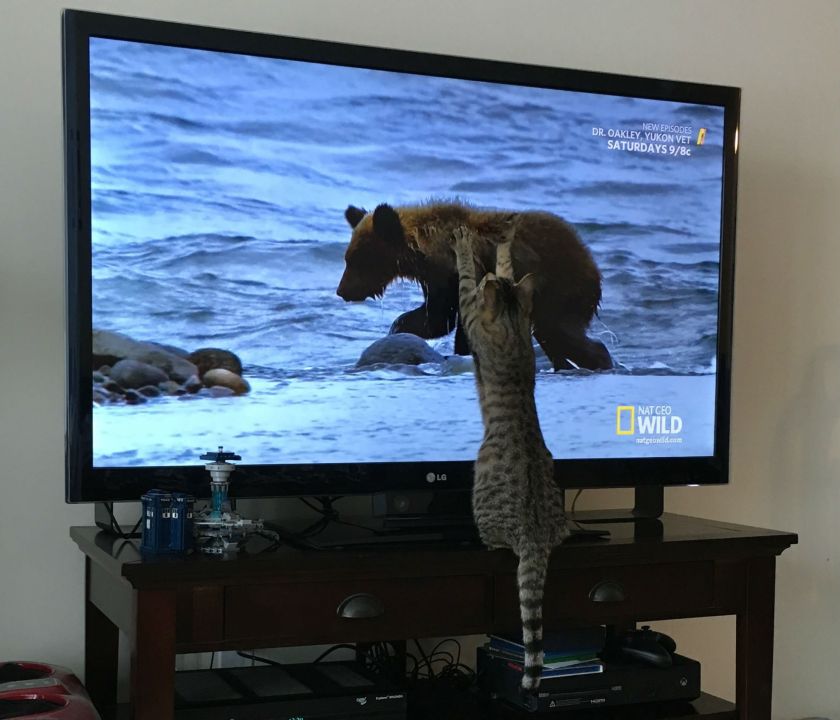
The only real danger, Orlando said, is your cat getting a little too stimulated and potentially charging at the TV to go after the on-screen birds or rodents. Most cats won’t, but if yours is the type to charge head-first into a window screen after spotting a bird outside, then you might want to keep an eye on kitty as she gets her fix.
“Not so fast, big guy!” An overexcited kitty attacks a bear on the National Geographic channel. Credit: Mandadadada/imgur
The topic’s been the subject of academic research as well, with a 2007 study concluding TV was effective in relieving the boredom of shelter cats who didn’t have windows to gaze out of. While cats don’t see colors as well as we do, videos featuring prey animals hold “enrichment potential” for indoor cats, the authors concluded.
Cat-centric TV is official
As for the phenomenon of bird-watching videos and channels created specifically for cats, Youtube is well aware of it. Content tagged “videos for cats” was viewed more than 55 million times on Youtube in 2019, Youtube trends and insights lead Earnest Pettie told Wired.
That actual number of feline viewers could be much higher, since it doesn’t count content like Keller’s, which isn’t created for cats but has nonetheless reached them as an audience.
“We now have this world where cats are an emerging audience,” Pettie said, “and movies for cats are an emerging trend.”
As for Keller, he believes indoor cats and humans enjoy the videos and cameras on his channel for many of the same reasons.
“I have also heard from a lot of people that can’t go outside anymore, such as in a retirement home, with disabilities, or special needs children that are using the cameras to get a glimpse of wildlife each day,” Keller said. “There are also many people that are sitting at their cubicles at work during the week that just need some natural sounds.
His previous owner had dementia and kept feeding him, and feeding him…
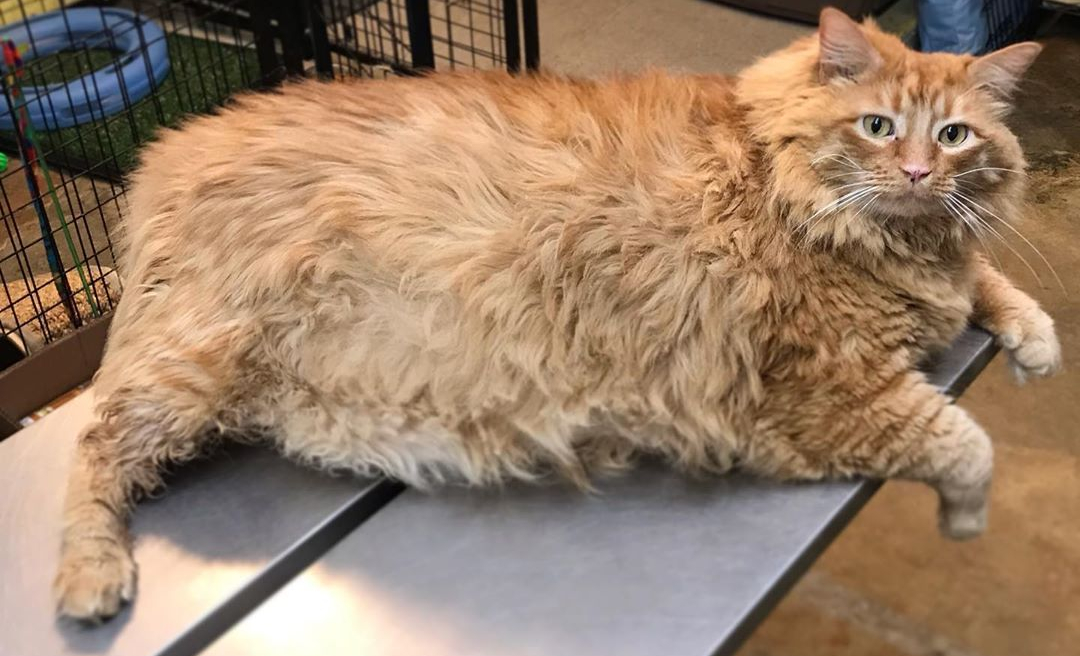
Meet Bazooka.
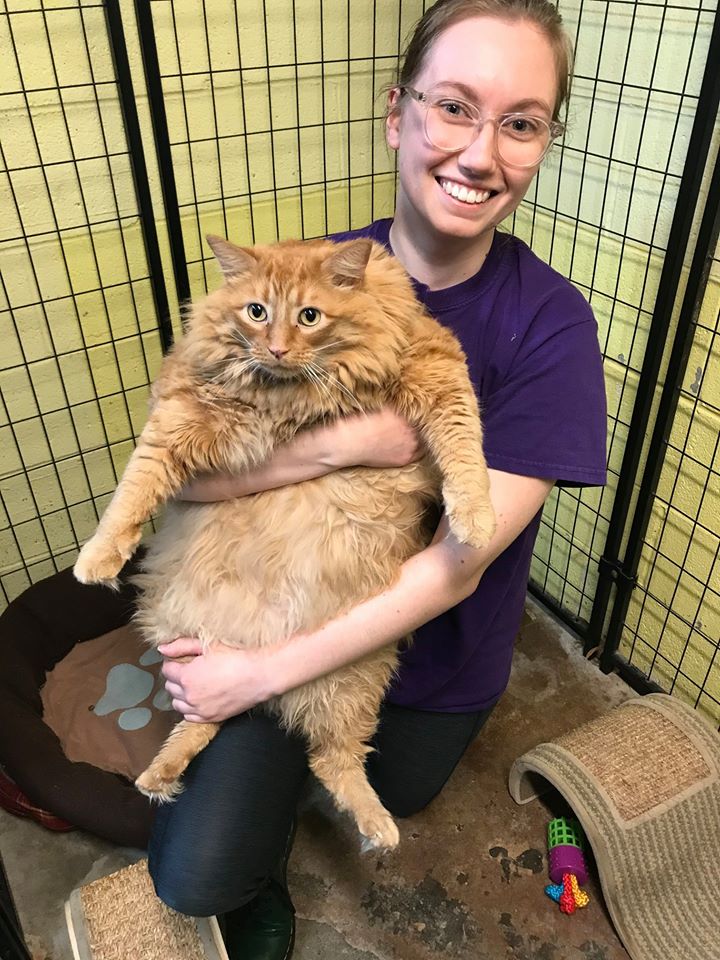
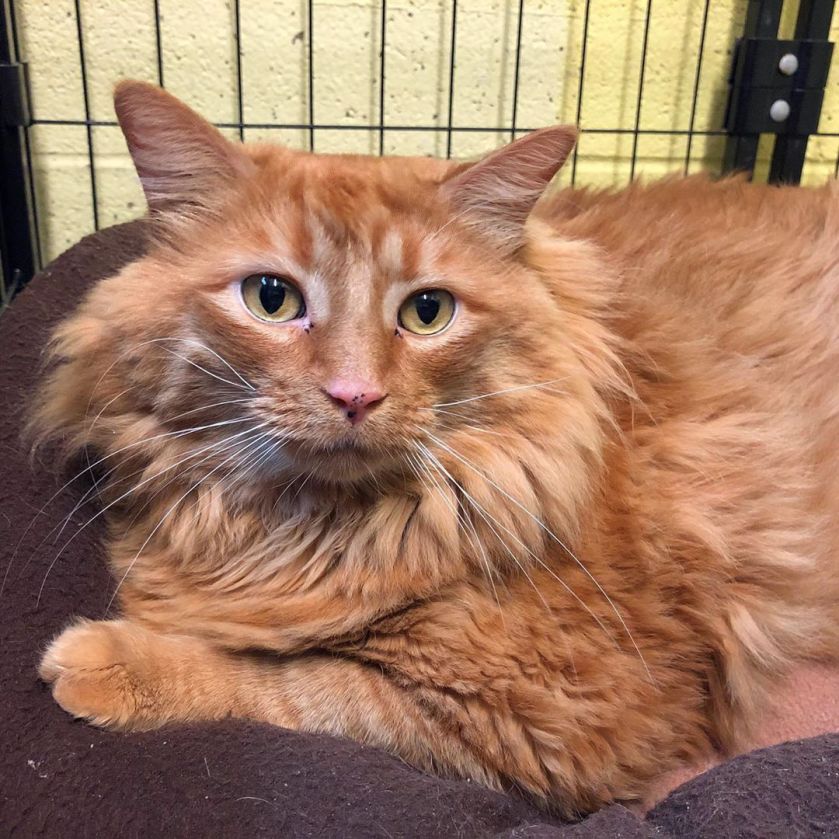
The orange butterball weighs in at 35 pounds and was surrendered to the SPCA in North Carolina’s Wake County this week after his former owner died.
Although the shelter says some people were initially outraged that a person would let the ginger tabby grow to such elephantine proportions, it turns out there’s more to the story: Bazooka’s owner was inflicted with dementia and, never sure if he’d fed the amiable cat, he just kept feeding and feeding — and feeding — Bazooka, who has apparently never met a cup of kibble or a can of tuna he won’t happily scarf down.
We wouldn’t be surprised if there was some insistent meowing prompting his late human to keep refilling those bowls.
“[Bazooka’s owner] thought he was doing the best thing for his cat by feeding him,” the SPCA’s Darci VanderSlik told North Carolina’s News-Observer. “We need to look on this with a compassionate view. He was loved.”
It turns out Bazooka is a loving and chill dude as well.
“He wants to be around people,” said Michelle Barry, the big guy’s foster mom. “He’s happiest lying right next to you. And he’s more active than I expected him to be.”
He’s in for quite an adjustment period, going from a life of on-demand meals to a strictly-regulated diet designed to get him down to a healthy weight. As any cat servant knows, there’ll be lots of agitated meowing in his future.
The ‘Zookster has already been adopted and will soon move into his forever home after the shelter provides some basic veterinary care and draws up a weight loss plan for him. Working with his new human, staff at the SPCA want to get Bazooka down to 20 pounds or so, which they feel is appropriate for his large frame.
They say they’re just glad to help.
“We don’t know a lot of the back stories of the animals we get, but we try not to judge people or make people feel bad about the circumstances that led to their surrender,” VanderSlik said. “We’re really lucky to have the resources to take him in and help him get a home he deserves.”
Bazooka’s a handsome kitty with a lion-like mane. In this photo, he’s thinking about pastrami sandwiches. Credit: Wake County NC SPACA




 Pain In The Bud