The Bizarre Effort To Brand Cats And Dogs According To Political Ideology

“Things are just a little more progressive here in San Francisco.”

In one of my favorite South Park episodes, Kyle’s father Gerald uproots his family and moves to San Francisco because, he explains, he can no longer stand the narrow minded, gas-guzzler-driving, gun owning people of South Park.

He throws a party in his San Fran townhouse, inviting his new neighbors who all have multi-hyphenate last names and a habit of speaking with their eyes closed, settling into deeply self-satisfied reverie as they literally savor the smell of their own farts.

“Can you believe those morons in Texas just executed another prisoner?” one of Gerald’s new neighbors says, tooting into an empty wine glass before raising it to his nose like an aromatic vintage and taking a deep, enthusiastic huff. “Things are just so much more progressive in San Francisco.”

While reading this article about the Portland metro area boasting the highest percentage of single cat-owning men in the country (more than twice the percentage here in New York, and almost three times more than Miami), I couldn’t help but picture some of the men in the story as crudely drawn South Park characters, inhaling air biscuits as they associate an animal with their politics.

“I think it makes sense because it’s a more progressive part of the country,” one of the men told the Seattle Times as he tried to explain Portland’s high percentage of single “cat daddies.” “I think there’s more freedom to not be ‘toxically masculine’ in this part of the country.”

Because we can’t help but ruin everything with politics in this country, the effort to drag cats and dogs into the left-right divide has been picking up steam in recent years, aided by click-seeking media.

Republicans Are Dog People, While Democrats Prefer Cats,” reads a Business Insider headline. “What our cats and dogs say about our politics,” reads another from the Washington Post. Time magazine quizzed 220,192 readers on their politics and pet preferences, concluding: “It’s True, Liberals Like Cats More Than Conservatives Do.”

The alleged political divide over companion animals has been the subject of research papers in psychology and veterinary journals, and pets are now routinely included in the ideologically-motivated invective that saturates social media. Conservatives are portrayed as poor, shotgun-toting rednecks driving beat-up pickups covered in Gadsden flags while their faithful but stupid dogs hang their heads out of the windows, trailing globs of drool.

Liberals, meanwhile, are portrayed as unmarried middle age women who spend their Saturday nights on their couches with pints of Ben & Jerry’s and their feminine, useless cats, bemoaning their lack of relationships.

The incels and pick-up game “artists” have even gotten in on it.

“Only a cat-owning bitch would complain to the police about a f—ing joke,” manosphere influencer Andrew Tate raged in a 2022 video after one of his intentionally inflammatory social media posts provoked a stronger response than he anticipated. “Who calls the police on a f—ing joke? Cat owners. Cat owners are liberals. Cat owners believe in hate speech. Cat owners are Democrats. Cat owners are dickheads!”

Tate, by the way, has been rotting in a Romanian prison since December after he was arrested and accused of running a human trafficking ring that exploited young women. Tate, his brother and their associates lured the victims with declarations of love and promises to get married. Once the young women arrived in Romania, the country’s authorities said, Tate and his crew would confiscate their passports, imprison them in Tate’s mansion near Bucharest, and force them to perform sex acts on live streams for the financial benefit of the defendants.

Tate was arrested after unsuccessfully trying to troll Greta Thunberg on Twitter by showing off his expensive, gas-guzzling hypercars and bragging that he likes to eat pizza without recycling the boxes. Romanian police, who were already looking at Tate in a wider human trafficking probe, noticed the pizza boxes seen in his videos were from a local chain and moved quickly to arrest him.

Tate has lost three appeals to toss the case, which is ongoing. But the alleged human trafficker still boasts a massive and loyal online following, and as far as his fans are concerned, his words are law. If Andrew Tate says cats are the preferred pets of “liberal bitches,” then it’s true in the eyes of his fans, many of whom pay hundreds of dollars a month for an online “school” where Tate purports to teach them the finer points of masculinity.

Aside from ruining yet another one of life’s joys by dragging politics into it, I’m worried that pets will pay the price for the misguided effort to associate them with ideology.

Cats in particular are already extremely vulnerable and tend to get the brunt of abuse by proxy. That is to say, studies show men who are abusive toward women often target cats belonging to women as proxies for their anger. They associate felines with the feminine. Women target cats to harm their exes and significant others as well, but there’s a lack of statistics since men don’t usually seek help in domestic violence situations.

Likewise, sitting on porches while drinking beer and shooting at critters who happen by is practically an official sport in some parts of the country. As someone who has Google News alerts set up for cat-related stories, I see the same depressing stories every day: cats who die a few feet from their front doors or who make it home with BB wounds, arrows sticking out of their chests or actual gunshot wounds.

Those stories are so common, it’s difficult not to despair for the poor cats and for whatever diseased way of thinking prompts people to hurt and kill innocent animals.

Do we really want to give people more incentive to kill cats?

Do we want gun owners regaling each other with stories about how many “liberal cats” they’ve shot?

Do we want potential caretakers passing on adopting cats because they’re worried their choice of pet indicates they belong to a certain ideological tribe? After all, everything from the cars we drive and the stores we shop, to observing basic hygienic practices during a pandemic, allegedly says something about our political beliefs.
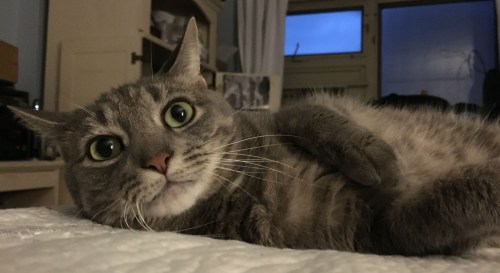
Buddy the Handsome Cat
Buddy the Cat: Not wimpy!

As for men who love cats, we already deal with absurd stereotypes. (We’re invariably described as gay, feminine and somehow not as manly as dog owners, even those of us who have hulking, muscular house tigers like Buddy!) We don’t need to encourage even more stereotypes, and in general I think we could all do with less box-checking. Life is not a Myers-Briggs test.

I know one thing for certain: cats are masters of living in the moment, and they have no patience for human nonsense like politics. They are innocent and pure. Sullying them with political associations is a disservice to these regal, wonderful animals.
Disabled Young Mountain Lion Gets A New Home

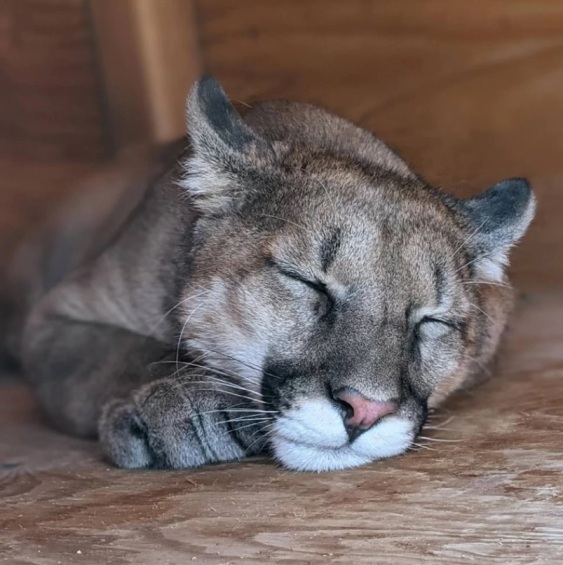
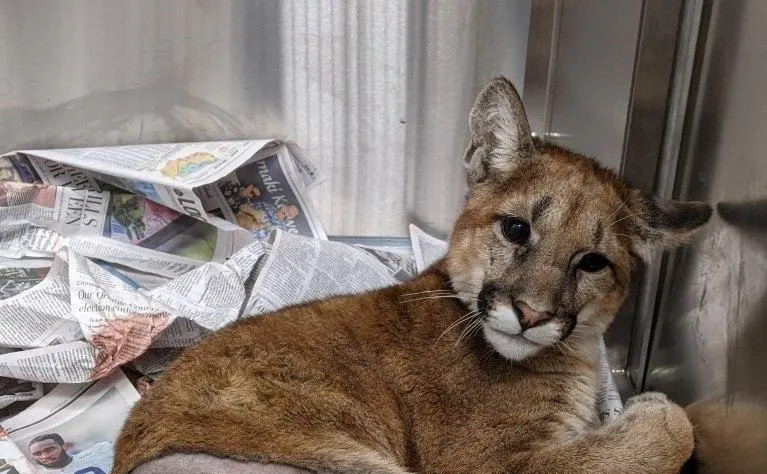
Nicholas requires regular veterinary care after his mother was killed and he almost lost his life when a driver struck them on a California highway.

Nicholas was just a cub and was following his mother across a busy toll road in Orange County, Calif., in 2020 when a driver hit them, killing his mother and leaving him with life-long disabilities.

Along with the trauma of watching his mother die, the little puma endured months of surgeries to repair his body. Since then, young Nicholas had been living in a sanctuary in northern California, but was about to find himself homeless when the sanctuary’s operators went bankrupt.

With just hours to go before that facility was closed, a sanctuary called Lions, Tigers & Bears of San Diego County swooped in and agreed to take the special-needs puma, who requires regular veterinary care.

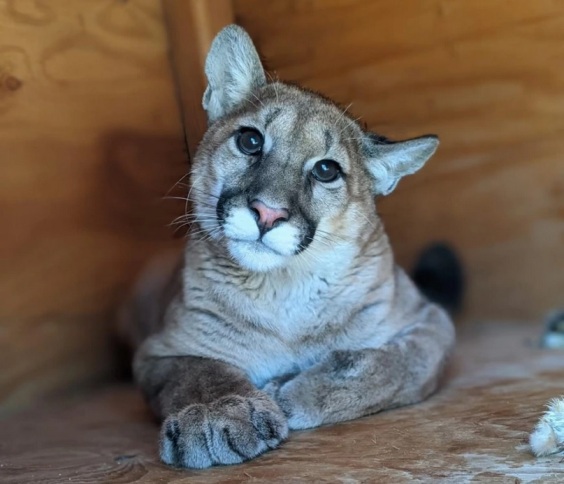
“Nicholas has a head tilt and neurological issues, both conditions require ongoing veterinary care,” Lions Tigers & Bears founder Bobbi Brink told KTLA. “We’ve had a few animals with these issues, so our veterinary team is well-versed in providing the specialized care required for Nicholas, and we’re relieved to give him a permanent home with a den, a healthy diet, medical care and enrichment and toys.”

The handsome young puma is currently in quarantine, Brink said, and will be moved into his permanent habitat after 30 days.

Although California is part of their native range and home to a relatively stable population of mountain lions, the species is seriously threatened by habitat destruction, habitat fracturing and vehicle traffic. Some 70 pumas are killed each year on California’s highways, and experts say the survivors are stranded on isolated “islands” of habitat, separated from potential mates by deadly highways. Indeed, scientists who track native wildlife in California have noted signs of inbreeding among pumas, as the animals are cut off from other populations of their species.

nicholasmountainlion
Nicholas in quarantine. Credit: Lions Tigers & Bears sanctuary

The life of the much-celebrated, recently deceased mountain lion P-22 illustrates the problems faced by the unique cats.

P-22 became famous when he migrated from southern California to Los Angeles, crossing the state’s busiest and most dangerous highways to get there. He settled in LA’s Griffith Park, which straddles the hills with the famous Hollywood sign and the outdoor Greek Theatre.

Although he became a local icon, frequently making cameos on the doorbell camera systems of people living nearby and making his rounds through the park and surrounding neighborhoods, P-22’s range was only nine square miles — the smallest range ever recorded for an adult male mountain lion — and he did not have opportunities to mate and produce cubs, as his kingdom was cut off from areas where he might encounter female pumas.

One solution to the problem is to build land bridges connecting areas where mountain lions and other wildlife make their homes. In April of 2022, officials broke ground on the Wallis Annenberg Wildlife Crossing, which when complete will connect Agoura Hills to the nearby Santa Monica Mountains.

But such projects are wildly expensive and take years to complete. The Wallis Annenberg Wildlife Crossing has a $90 million price tag and won’t be finished until 2025. On the bright side, about two thirds of the cost has been covered by private donations, proving Californians and other wildlife lovers are invested in the survival of mountain lions, coyotes, deer and other fauna expected to make use of the bridge.

It’s also an encouraging sign indicating efforts to educate the public about local wildlife have been successful. Along with the other problems they face, pumas — also known as catamounts, cougars and dozens of other names — are often confused with African lions.

nicholasmountainlion1
Nicholas enjoys a nap. Credit: Lions Tigers & Bears sanctuary

Because they’re large cats, they’re called lions and they resemble their African counterparts, many people assume mountain lions are dangerous. But not only are mountain lions (puma concolor) an entirely different species than African lions (panthera leo), they are not in the same category of felid.

Pumas are actually felines, meaning they’re more closely related to domestic cats, and like smaller cats they can purr but cannot roar. True big cats, like tigers, lions, jaguars and leopards, are members of the genus panthera and are capable of roaring, but not purring or meowing.

Perhaps most importantly, pumas are not aggressive toward humans. There are only 27 recorded deaths from encounters with mountain lions over the past century compared to more than 50,000 deaths from dogs, for example, and in almost every one of those cases the pumas were either cornered or their cubs were threatened.

Nicholas is not only a reminder that animal life is valuable, his circumstances also remind us that we’re going to have to find creative ways to ensure the survival of many species as humanity expands. The global population is expected to level off at about 11 billion and then slowly contract as third-world countries undergo the same lifestyle changes common to nations that have already made the transition to first world. But until then, it will take a massive and coordinated effort to ensure we don’t end up on a very lonely planet and likely endanger our own survival with the cascade failures that arise from extirpating entire species.

Follow Buddy the Cat on Facebook!

Cat With Gang Tattoos Rescued From Mexican Prison, Up For Adoption

Authorities found the cat in a sweep after a New Years Day riot resulted in 17 deaths and the escape of thirty inmates.

On Jan. 1, the inmates in one of Mexico’s most notorious prisons celebrated the New Year by starting a riot.

Ten prison guards and seven inmates lost their lives in the violent chaos, and thirty inmates escaped the CERESO 3 prison, according to press reports from Mexico.

When authorities finally regained control — an effort that required the military, national guard and local cops — they conducted a sweep of the facility for contraband and weapons, and that’s when a police K9 unit found a cat wandering the dangerous grounds by himself.

Dubbed “the gangster gato” by the local press — he doesn’t yet have a real name — the feline was taken into the care of Juarez’s Department of Animal Welfare for the Rescue and Adoption of Pets while police complete their investigation.

tatcat3
The cat, who reportedly belonged to the late Los Mexicles gang leader, is in good health. Credit: Juarez Animal Control

He’s an Egyptian, a breed that commands up to $2,000, and reportedly belonged to Ernesto Alfredo Piñon de la Cruz, aka “El Nato,” the former leader of the Sinaloa cartel-aligned Los Mexicles gang. Cruz was the alleged “mastermind” of the escape who died on Jan. 5 when police caught up to him. He didn’t go quietly and died in the resulting shootout.

Although it may be difficult for Americans and others to imagine how prisoners could keep pets, stories about the subsequent raid and sweep say authorities found “VIP cells” stocked with amenities like space heaters, air conditioners, personal washing machines and various other electronics. The Chihuahua State Human Rights Commission and other NGOs had previously warned that the inmates were “practically running the prison,” and that guards there didn’t have the manpower or will to crack down on illegal activity in the cell blocks.

Gang leaders and others who had power were able to set up their cells like lounges, with couches, plasma TVs, video game consoles, stereos and card tables. One had a pet snake in a terrarium, and several kept safes full of cash they’d use to pay for items smuggled in through a secret entrance. There was even a mechanical bull to amuse the inmates and help them kill time.

In all, authorities seized more than 2,800 pieces of contraband, according to reports.

“The privileges are over,” Chihuahua Gov. Maru Campos said earlier this month as authorities showed some of the contraband and weapons they’d seized to reporters.

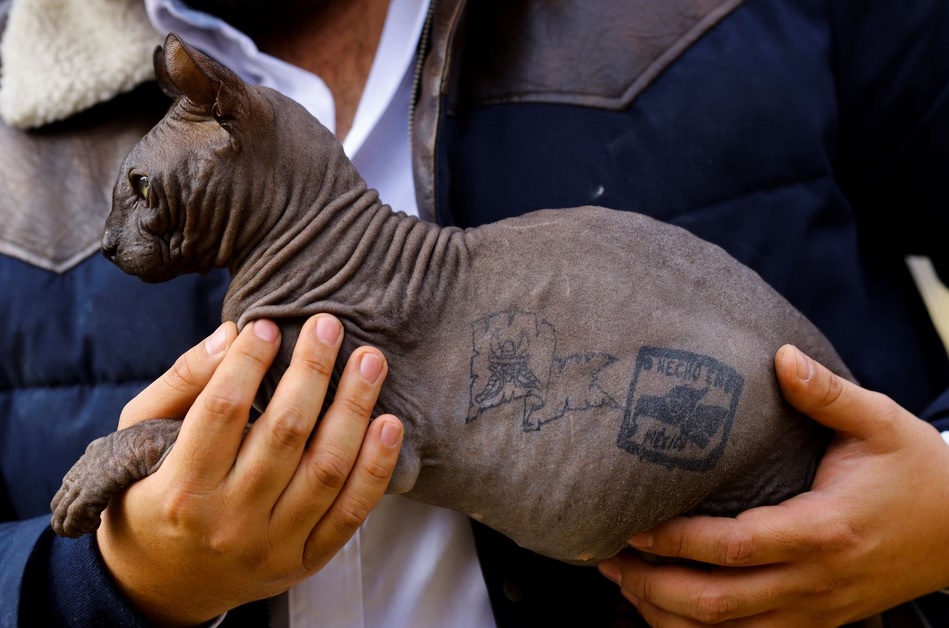
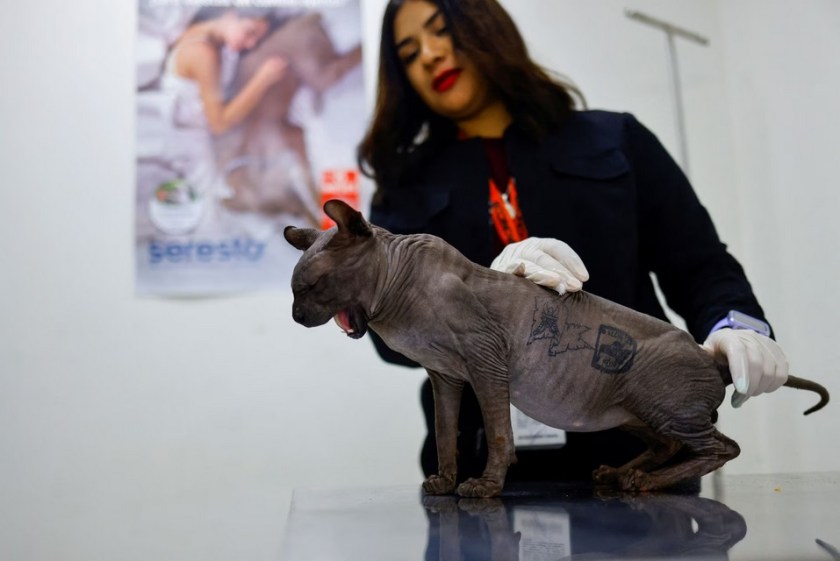
The cat is in good health, staff at the Juarez Department of Animal Welfare say. He’ll always carry scars from his time in CERESO 3, unfortunately, because the Mexicles tattooed him with the gang’s logo and an associated slogan, “Hecho en Mexico,” or “Made in Mexico.”

Despite living in such chaotic and dangerous conditions, “the cat is very sociable, and is in great shape, with no infections,” said Cesar Rene Diaz, a Juarez official.

The city is taking applications for adoption and a committee of Juarez officials will make the final decision on who gets to give the kitty a forever home. Government officials and their relatives are barred from applying to adopt the cat.

Sunday Cats: Hoarders In Buddyland, Alleged Dallas Zoo Thief Nabbed, P-22 Remembered

More than 6,000 people, a capacity crowd, said goodbye to the famed mountain lion P-22 at The Greek Theatre in LA.

When police went to a Yorktown, NY, home for a welfare check this week, the last thing they expected was to find an army of cats.

The responding officers breached the home when no one answered, finding an elderly couple deceased inside, along with some 150 hungry, neglected cats. Police don’t believe there was foul play in the death of the couple, but the number of cats and the condition of the home have “hindered” their investigation.

The Westchester County SPCA is taking on the monumental task of collecting the cats, giving each of them veterinary care and finding homes for them. Staff there are calling it the largest single rescue in their history, and they’d already filled their own facilities and local shelters to capacity by the time they’d rescued 100 of the famished felines, leaving them scrambling for room to place the others. Some have upper respiratory, eye and skin infections, the SPCA said, while most of the cats were malnourished and dehydrated.

Despite living in conditions police described as “filth and squalor,” the cats are well-socialized and friendly, rescuers say. They believe the husband and wife may have been Abyssinian breeders at some point.

“It’s very unusual in a case like this, especially with that number of cats, for them to be as social and sweet as they are, usually they are scared when they come from a situation like this because they haven’t had a lot of human interaction,” the SPCA of Westchester’s Lisa Bonnano told the New York Post.

Yorktown is about 28 miles north of Casa Buddy, and we can vouch for the excellent work done by the Westchester County SPCA, whose veterinarians gave kitten Buddy his first shots and gave him the snip.

Veterinary costs alone are expected to exceed $40,000, so if you’d like to help, you can make a donation here.

Alleged Dallas Zoo thief nabbed

When 24-year-old Davion Irvin stopped an employee at the Dallas World Aquarium to ask about exotic animals there, the staffer recognized him as the same man pictured in a surveillance still from the Dallas Zoo.

Police released the image to the public after three separate enclosures at the zoo were breached, leading to the brief disappearance of a spotted leopard on Jan. 13 and the theft of two emperor tamarin monkeys about two weeks later. The langur monkey exhibit was also breached, but the animals were not removed.

After the aquarium’s staff tipped them off, cops caught up to Irvin a few miles away and have since linked him to all three break-ins. They charged him with two counts of burglary — for the monkeys and the leopard — and six counts of animal cruelty. They’re also looking into whether Irvin may have been involved with the “very suspicious” death of an endangered lappet-faced vulture on Jan. 21.

Cops, who initially suspected the thief was looking for exotic animals to breed or sell, have said Irvin hasn’t told them why he wanted the primates and the medium size cats. Their investigation is ongoing.

Thousands say goodbye to P-22

More than six thousand people crowded into The Greek Theatre in Los Angeles on Saturday to say goodbye to P-22, the Hollywood Lion, a puma who made the hills above the city his home for more than a decade.

p22mural
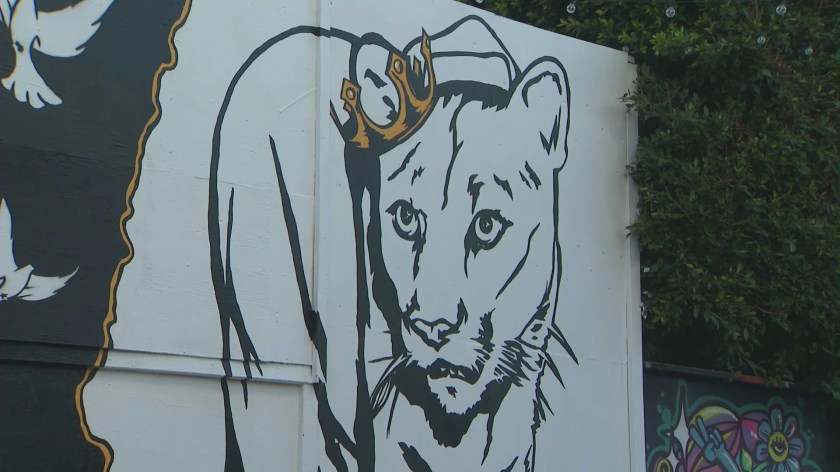
One of several new murals of beloved mountain lion P-22, who was euthanized in December after he was hit by a car and suffering from an infection.

People spoke about seeing his curious face pop up on their doorball cameras, spotting him disappearing into the trees in Griffith Park, and how his presence piqued the curiosity of many people who took the time to learn more about mountain lions.

But the unofficial theme of the event was how P-22 showed people humans and wildlife can co-exist, and how our species can do a lot more to make sure the animals we share the Earth with will survive in the future. One woman told LAist that before she learned about P-22, she “used to think they were scary” and aggressive like the big cats they’re often confused with.

Others said he inspired them to get directly involved with conservation efforts.

“We are wildlife. We are creatures of nature, just as all the animals and plants are,” archaeologist Desireé Martinez, a member of the indigenous Gabrielino-Tongva tribe, told KTLA. “What can we do to make sure that the creatures that we are sharing this nature with have the ability to survive and live on — just like us?”

P-22’s unforgettable visage, already familiar to Los Angelinos, is now ubiquitous in his former range, with several murals adorning the sides of buildings and other displays bearing his image.

“He inspired so much happiness. I mean, look at all the people that are here,” Babetta Gonzalez told LAist. “We have to remember that we are in their neighborhood and we need to respect their environment. We have integrated, but we could do a lot better.”

UPDATED: Monkeys Go Missing From Dallas Zoo Weeks After Clouded Leopard Freed From Habitat

Authorities believe the person or people who stole the monkeys intend to sell them as pets or breeding animals.

UPDATE, 2/1/2023: A tip led police to an empty home in Lancaster, Texas, about 15 miles from the zoo. The missing tamarins were found inside a closet and were unharmed, per CNN. They were returned to the zoo and examined by veterinarians.

Police still want to speak to an unidentified man (see story below) who was seen on zoo grounds, but they haven’t said what the man was doing or how he may be connected to the thefts. The abduction of the tamarins follows two other incidents of breached enclosures at the zoo, and the theft of 12 squirrel monkeys from Zoosiana in Broussard, Louisiana, this weekend.


Original story, 1/31/2023:

Dallas police released a photo of a “person of interest” they’d like to speak to after a pair of emperor tamarin monkeys went missing from their enclosure in the Dallas Zoo, the latest of three incidents in which animal habitats at the zoo were breached by human hands.

The first incident happened on Jan. 13 when zookeepers noticed a three-year-old clouded leopard named Nova was missing from her enclosure. They found a breach in the mesh netting that serves as one of enclosure barriers, and said it was a clean, intentional cut with a blade, not from the animals.

After a frantic search — and multiple appeals to the public informing people the leopard was not dangerous and should not be shot — zookeepers found Nova hiding in a tree on the zoo grounds, not far from her enclosure. Nova’s sister, Luna, lives in the same enclosure and remained there.

That same day, staff at the zoo also found another breach, this time at the langur exhibit. Langurs are old-world, leaf-eating monkeys native to Asia. None of the monkeys were missing, but the discovery strengthened the suspicion that someone had tried to steal Nova and at least one monkey, but were not successful.

Now it appears that same person or a copycat has been successful in another habitat. On Jan. 30, zookeepers found a breach in a habitat that hold’s the zoo’s emperor tamarin monkeys. Two of the monkeys were missing.

Tamarins are tiny arboreal new world monkeys that have become popular pets due to “influencers” popularizing them on sites like Youtube and celebrities purchasing them.

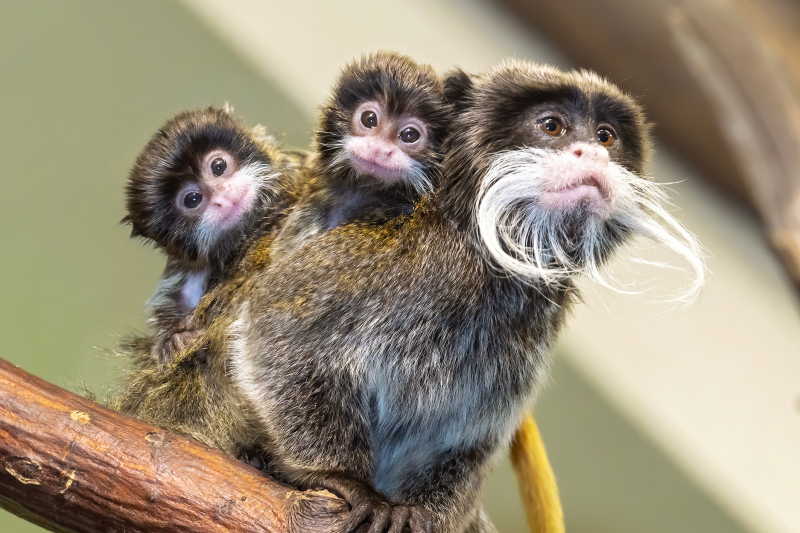
tamarinwithbabies
A tamarin mother with her babies. Primate babies are virtually attached to their mothers for the first years of their lives

There are an estimated 15,000 monkeys living as pets in the US, and some species fetch up to $7,500 as infants, when they’re violently “pulled” from their mothers when they’re just days old and sold. Most are temporary pets, lasting up to two years before docile, adorable infants become destructive, resentful juveniles and the “owners” decide to cut their losses. Buying monkeys as pets and subsequently abandoning them has become so common that sanctuary spots are at a premium, with a handful of sanctuaries taking thousands of monkeys annually.

Some people buy new babies every year or two, shipping the “old” ones off to sanctuaries — or simply dumping them in the woods where they don’t know how to fend for themselves — and repeating the process of infantalizing newly-purchased monkeys. Macaques, capuchins, marmosets and tamarins are the most popular monkeys kept as pets.

Despite the appeal to some people, humans cannot meet the social or environmental needs of monkeys, who naturally live in troops with complex social hierarchies and relationships.

“Monkeys are not surrogate children, and they’re not little people,” the Humane Society’s Debbie Leahy told the New York Post in a 2013 story.

“Pulling” monkeys from their mothers traumatizes infants and the mothers, and there is a wealth of data from primate maternal deprivation studies — going all the way back to the cruel experiments of psychologist Harry Harlow — documenting the psychological damage done to the animals when they’re removed from their mothers and troops.

“If you try to keep them as pets you’re creating a mentally disturbed animal in 99.9 percent of the cases,” Kevin Wright, director of conservation, science and sanctuary at Phoenix Zoo told National Geographic. “The animal will never be able to fit in any other home. Never learn how to get along with other monkeys. And, more often than not, will end up with a lot of behavioral traits that are self-destructive.”

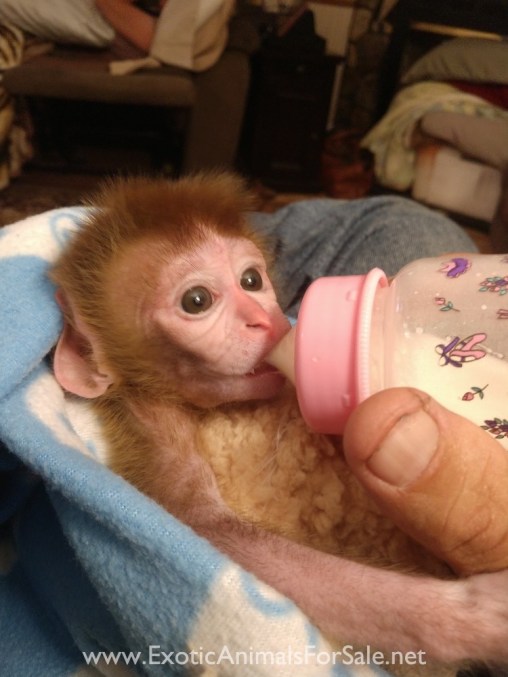
rhesusmonkeybaby
A rhesus monkey baby, already separated from its mother at just a few days old.

Tamarins, which are often called “pocket monkeys” by people who keep them as pets, can fetch up to $5,000 apiece, generally less than larger primates like capuchins or macaques. Demand for macaques has skyrocketed since the pandemic, as laboratories test various drugs on the old world monkeys, and prices for infants have risen as well.

Despite officials at Dallas Zoo installing additional cameras and increasingly patrols on the grounds at night, an intruder or intruders were able to evade detection and successfully remove the animals some time between Sunday night and Monday morning.

Police have released an image of a man who was seen strolling through the zoo and have asked for the public’s help identifying him so detectives can speak with him. Police did not say why they believe the man, who is pictured wearing a hooded jacket and eating Doritos, would have information on the missing animals or what his role might be.

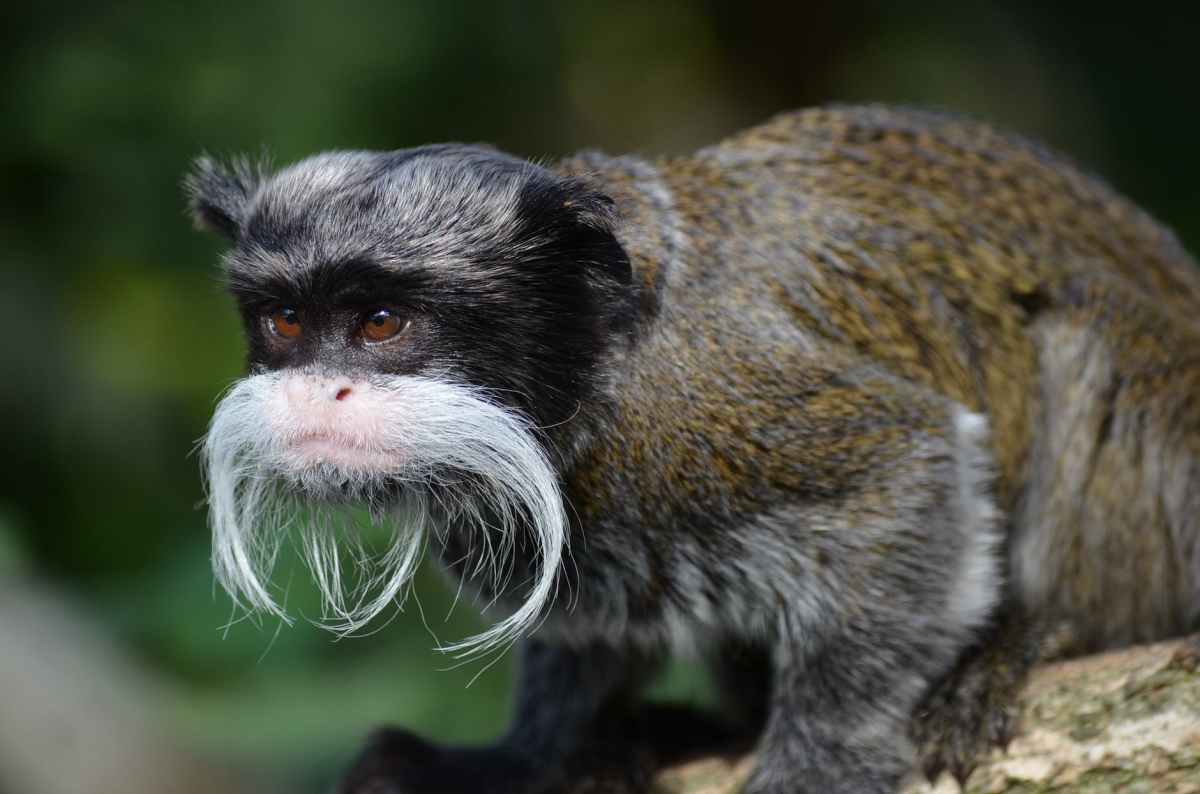
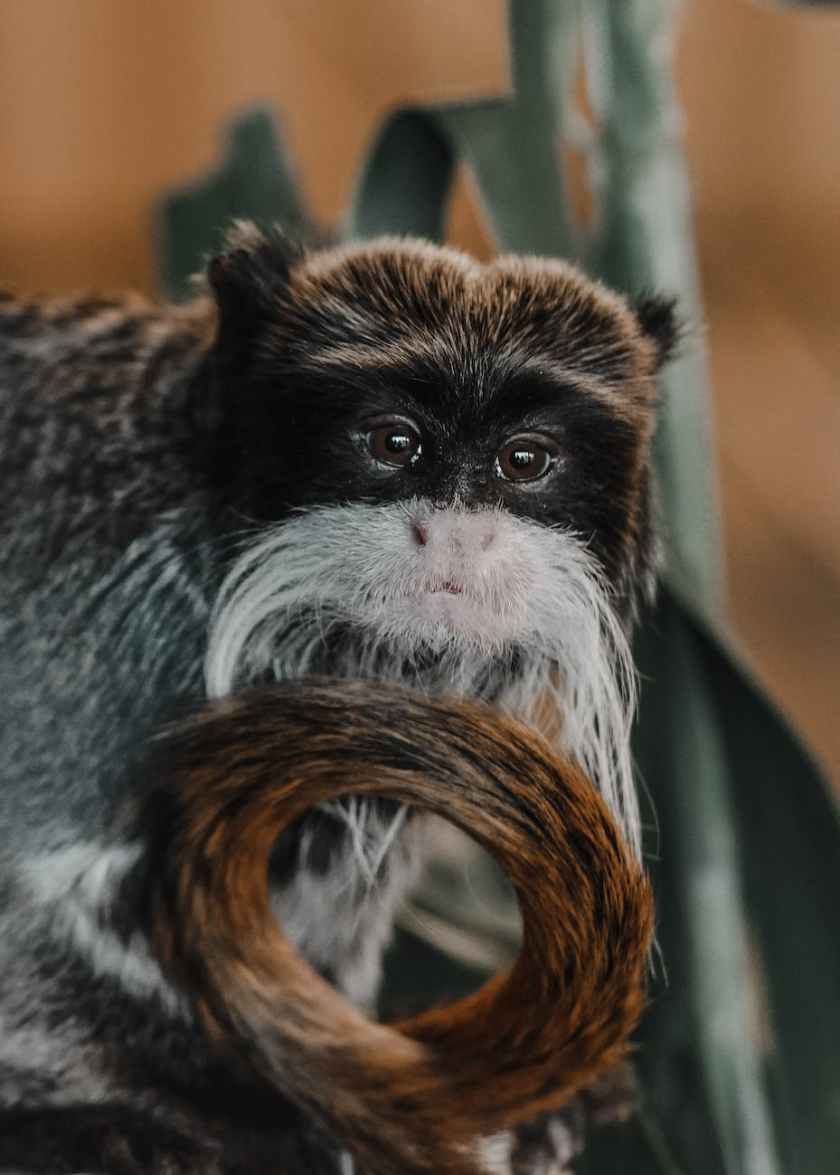
close up photo of a tamarin monkey
An emperor tamarin. Credit: Nathan J Hilton/Pexels