The police are looking for the public’s help in identifying and tracking down a man seen in a disturbing video.
Cops are looking for the public’s help identifying a man who abused a cat, injuring the feline so badly it had to be euthanized.
The man chased the cat into an apartment complex in Hamilton, Ohio, on Jan. 24 at 9 p.m. He caught the cat, forced it into a plastic bag and then slammed the bag down hard on the stairwell, according to footage from security cameras the complex. He dumped the cat, still alive and suffering, behind the apartment complex and fled.
The cat was found by deputy dog wardens, according to local media, but had a fractured pelvis and spine and had to be euthanized.
A still image from Jan. 24. Police say the suspect returned last week to scope out security cameras. Credit: Butler County Sheriff’s Office.
In addition to being shockingly cruel, the suspect isn’t the sharpest tool in the shed. Cops say he doesn’t live in the complex, but returned there last week to look for surveillance cameras. In doing so, he gave the police a better look at his facial features and more images to release to the public.
“In the new photos of the suspect, he is wearing the same coat and shoes, but has a recent hair cut, according to the BCSO.”
For those of you living in the Ohio area, details on how to contact the Butler County Sheriff’s Office are in the post below. Help them find this cruel man so he can be prosecuted and convicted.
Youtube is home to thousands of videos depicting the torture of baby monkeys, many of them presented as “cute” examples of pet ownership.
Look at what Youtube’s algorithm has served up for me: an “adorable” video of a baby monkey who loves to carry his equally small backpack!
Look at him. He loves it!
“That’s the cutest thing I’ve ever seen,” gushed one Youtuber.
“WHY IS THIS SO CUTE HELP ME,” another asks.
Others dub the video “so adorable,” “so cute” and call baby monkey Pika “the most adorable little baby I’ve ever seen.”
The video has five million views in four weeks. A handful of viewers might instinctively know something’s wrong while the vast majority of those people never give a second thought to what they’ve just watched.
Let me tell you what you’re looking at.
“Pika” is an infant rhesus macaque, about four weeks old by the look of him.
He is the “pet” of a woman in China, and to become her pet he was ripped out of his screaming mother’s arms as she fought tooth and nail to keep her grip on her baby. It’s at least a two-person job and the people who steal baby monkeys, either directly from the wild or from enclosures they own on breeding farms, up-armor themselves before going into the cage to protect from vicious bites and scratches.
Such is the fury of a mother whose baby is being taken from her.
(Above: An “adorable” video of an infant rhesus macaque who has been stolen from his mother and sold as a pet and has spent the first few weeks of his life being tortured to force him to walk on two feet. Right: A still from a video from a man who hunts monkeys titled “Baby Monkey Headshot”)
Pika was taken within a few hours to a few days after birth. No one wants adult monkeys so it’s imperative that the babies are swiftly “pulled” from their mothers, photographed and matched with buyers online. In the US an infant macaque will set you back about $5,000, but in China it’s considerably cheaper because the monkeys are native to Asia and certain parts of China, as well as neighboring countries and the territory of Hong Kong.
Being torn from his mother is just the first of many traumas Pika will endure in his guaranteed-to-be-miserable life.
Baby monkeys are a big thing in China, especially among the Mandarin-speaking nouveau riche of the mainland who have considerable disposable income and look for ways to signal their economic status to their peers. Expensive clothes, designer handbags, rare trinkets, you name it. If you’re a young upper class man perhaps you buy a sportscar. If you’re a young woman, you get a baby monkey, create a social media page and show everyone what a fantastic mother you’re going to be by clothing, feeding, training and disciplining the baby.
“Don’t monkeys walk on four legs?” you might be thinking. “They’re not bipedal, are they?”
No, they are not.
To walk upright, Pika has already endured the second major trauma of his young life: The human “mothers” take the little babies, tie their hands behind their backs, then tie a small rope or string around their necks. The other end is tied to an immovable object and the baby is given just enough slack that he can continue breathing if he remains upright.
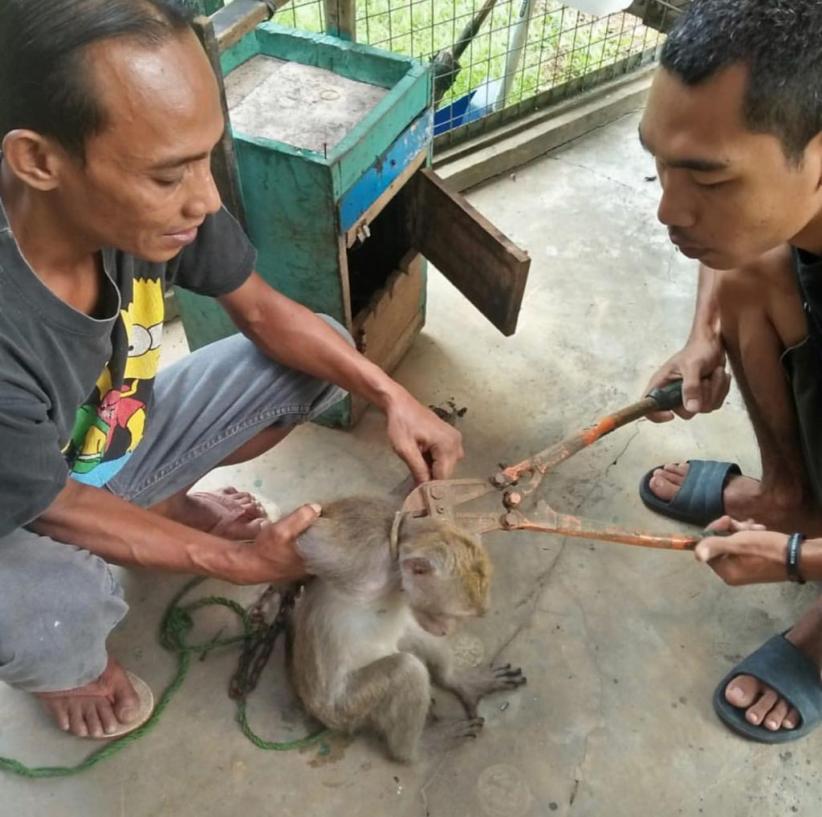
This baby monkey has his hands bound and is just beginning his brutal topeng monyet (dancing monkey) training in Indonesia.
This technique, borrowed from the topeng monyet (literally “dancing monkey”) trainers in Jakarta, forces the young monkey’s leg muscles to develop and forces his spine to become accustomed to rigidity.
For the first session, baby Pika would have been left like that for two, maybe three hours, likely screaming for his mother the entire time if his “owner” doesn’t put a stop to it with violence.
The intervals would increase steadily until he’s left like that overnight. Each time the rope is given less slack so Pika is forced to stand rigid.
Topeng monyet training in Indonesia: This is the next phase of training after baby monkeys endure several weeks of being strung up by their necks. Here, a “trainer” is forcing a baby long-tailed macaque to hold an object, which will be part of the “monkey show for kids” the baby will be forced to star in for the next few years of his life. Credit: Jakarta Animal Aid Network
Because they must have the strength and fine motor control to hold onto their mothers’ fur in the wild, macaque infants are ambulatory almost instantly, unlike the helpless infants of their primate cousins like orangutans and, well, humans.
The rope technique allows infants like Pika to quickly become accustomed to walking upright, but they will immediately revert to walking on all fours because that’s how they naturally move and that’s what their muscular-skeletal system is designed for.
That’s why Pika has a “cute backpack.” The backpack is filled with a counterweight so Pika must walk upright or fall over, giving his “owner” what she wants: A “cute” video to share on social media.
Of course Pika could simply refuse to walk, but then he’ll go hungry. Note the reason why he’s laboring, at just a few weeks old, with a counterweight on his back, with an unnatural gait to reach the other side of the room: the demon who purchased him is holding his bottle. No walk, no bottle. Walks, plural, because undoubtedly there were several takes.
(Pika may or may not have a tail. The “owners” often amputate them — without anesthetic — because they’re impediments for preemie diapers, and cutting tail holes in the diapers increases the chances of “accidents” spreading.)
Macaques are hyper-social creatures and they’re so similar to humans socially that psychologist Harry Harlow conducted his infamous maternal deprivation studies on infant rhesus monkeys like Pika.
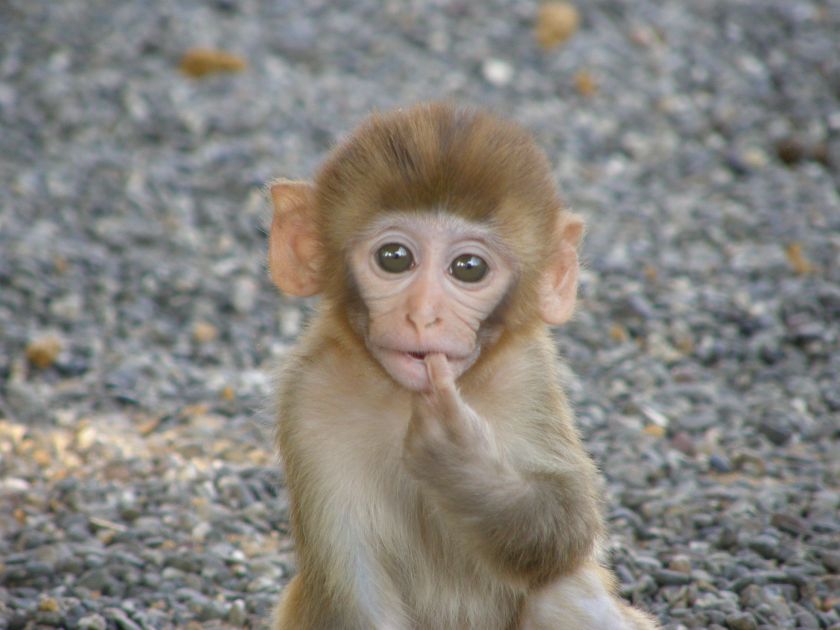
A rhesus macaque baby of about four months old. Rhesus macaques, who are extremely social and nurse from their mothers for up to two years, were used in psychologist Harry Harlow’s infamous maternal deprivation experiments. Credit: Wikimedia Commons
In the wild babies like Pika will spend the first year of life clinging to mom and rarely straying more than a few feet from her. The mother-baby bond is so strong that daughters stay with their mothers for life, and sons stay until they’re five or six years old, at which time they’re booted from their home troops to avoid inbreeding.
The mothers do everything for their babies. They nurse them, groom them, protect them, soothe them when they scrape a knee and scoop them up when an older monkey is bullying them. Macaque babies nurse until up to two years old and they can frequently be seen hugging their mothers.
Through cruel experimentation Harlow found that the tactile feeling of being held in a mother’s arms is absolutely crucial to normal psychological development in primates, humans included. Harlow took infant rhesus monkeys from their mothers within hours and placed them in total isolation. Some babies were given inanimate “surrogate mothers” made of wire, while the others were given surrogates made of cloth. Both groups had major developmental and psychological problems, but the babies with wire “mothers” were far worse off.
That means Pika, who has already been stolen from his mother and forced to endure physical cruelties just weeks after his birth, has also been deprived of something intangible, something so important that it will have an indelible impact on his life.
That is why when you see pet monkeys, you always see them clinging desperately to stuffed animals. The stuffed animals and blankets aren’t their “lovies” like a child would have. It’s much sadder than that. Those inanimate objects are their surrogate mothers which they turn to for comfort and a crude approximation of what it feels like to hold onto their moms.
Some “owners” don’t like that, so they place babies like Pika in barren cages. No matter how horrifically they abuse the babies, when the “owners” let them out in the morning the first thing the baby does is cling to his abuser. That is his nature.
So what happens to Pika?
There’s a timer on cuteness. Pika will be an adorable baby for about a year, which will fly by. By that time he’ll already be showing signs of extreme discontent. He’s got no mother, no friends to play with, no troop, no one to groom or to groom him. He won’t be allowed to climb and explore like he would in the wild, nor can he forage. Food is something placed before him, not something he finds and picks from trees.
Pika, hardwired by hundreds of thousands of years of genetic heritage, will know something’s missing, but he won’t know why. He’ll start to “act out,” only he won’t think of it as acting out because he does not, and cannot, understand human social etiquette, nor what it means to keep things clean by human standards.
As he acts out, he’ll be punished, often severely. He’ll become more of a problem until at about 18 months his “owner” will get rid of him. Some people will take their pet monkeys to sanctuaries, but those are few and far between in China, spots are very hard to get, and the owner will be on the hook for monthly payments for as long as Pika lives, which could be up to 25 years.
So it’s more likely that Pika will be poisoned or simply dropped off somewhere in the woods far from home where he’ll starve or be killed, because he doesn’t have the skills to survive and his kind live in troops. If he’s dropped off where there are other monkeys his chances will be even more slim, since macaques will not accept troop outsiders and can get violent if they perceive an interloper in their territory.
As for Pika’s owner, if she’s not tired of the whole business she’ll buy a new baby. Some women are one and done, but others see it as practicing for parenthood and/or they enjoy the dopamine rush of online attention and praise. I’ve seen some Chinese women go through half a dozen babies, often buying two or three at a time so they can stage spectacularly cruel contests, like dropping a single bottle into a cage and filming the babies fight over it.
What I’ve written here doesn’t even scratch the surface of the cruelty involved with the baby monkey “pet” fad, but don’t make the mistake of believing this is a thing that only happens in China, Thailand or Cambodia. Some 15,000 baby monkeys are purchased every year by Americans, who fare no better when it comes to reaching that 18-to-24-month point when formerly cute, docile babies grow into resentful, frustrated juveniles and become destructive.
While sanctuaries like Jungle Friends exist, they are overcrowded and the same challenges apply to American monkey “owners” as they do to their Chinese counterparts.
We’ll revisit this whole nasty business in a future post, but in the meantime, I ask you to question “cute” animal videos, especially where wild animals and humans are involved.
A note about Youtube and Google: Youtube is owned by Google, whose founders often bragged about their motto: “Don’t be evil.” Youtube and its content moderation teams are well aware their platform hosts tens of thousands of animal abuse videos, including innumerable videos of monkeys — often babies — being abused in horrific ways. There are entire channels, monetized and in good standing with Youtube, that cater exclusively to a depraved audience of self-described monkey haters who call infant macaques and other monkeys “tree rats” and not only provide steady advertising income to the channel operators — which can be life-changing money in countries like Vietnam and Cambodia — but send money via PayPal and Venmo to them with requests for specific kinds of torture.
Youtube has been aware of this for almost a decade at least. Going back to 2014, I was one of a group of dozens who mass reported channels to Youtube, tagging blatant and horrific animal abuse. Every report was ignored. The only thing that prompted Youtube to action was when I contacted a friend who worked for PETA at the time and got them to pressure Youtube directly to take down a handful of notorious monkey abuse channels. Youtube took action, but those channels were quickly replaced by new ones, creating a game of wack-a-mole.
To this day, and despite steady pressure and negative coverage in the press, Youtube takes little more than symbolic action on animal abuse videos, particularly those involving monkeys.
One of New Zealand’s most prominent economists has called cats “serial killers” who are driven by “bloodlust,” and is one of many who blame domestic cats for the decline of local wildlife.
An annual hunting competition for children in New Zealand has a new category this year, awarding a cash prize to the young hunter who kills the most cats.
You read that right.
The North Canterbury Hunting Competition announced the new category on Saturday and says it will offer a $250 prize to any child 14 or younger who kills the most felines.
In a statement, the local SPCA pointed out the obvious, that cats will suffer horribly, pets will die and the competition will result in bungled kills en masse, leaving wounded cats to suffer horribly before the children finish them off — if indeed they do.
“There is a good chance someone’s pet may be killed during this event,” the Canterbury SPCA wrote in a statement. “In addition, children often use air rifles in these sorts of events which increase the likelihood of pain and distress, and can cause a prolonged death.”
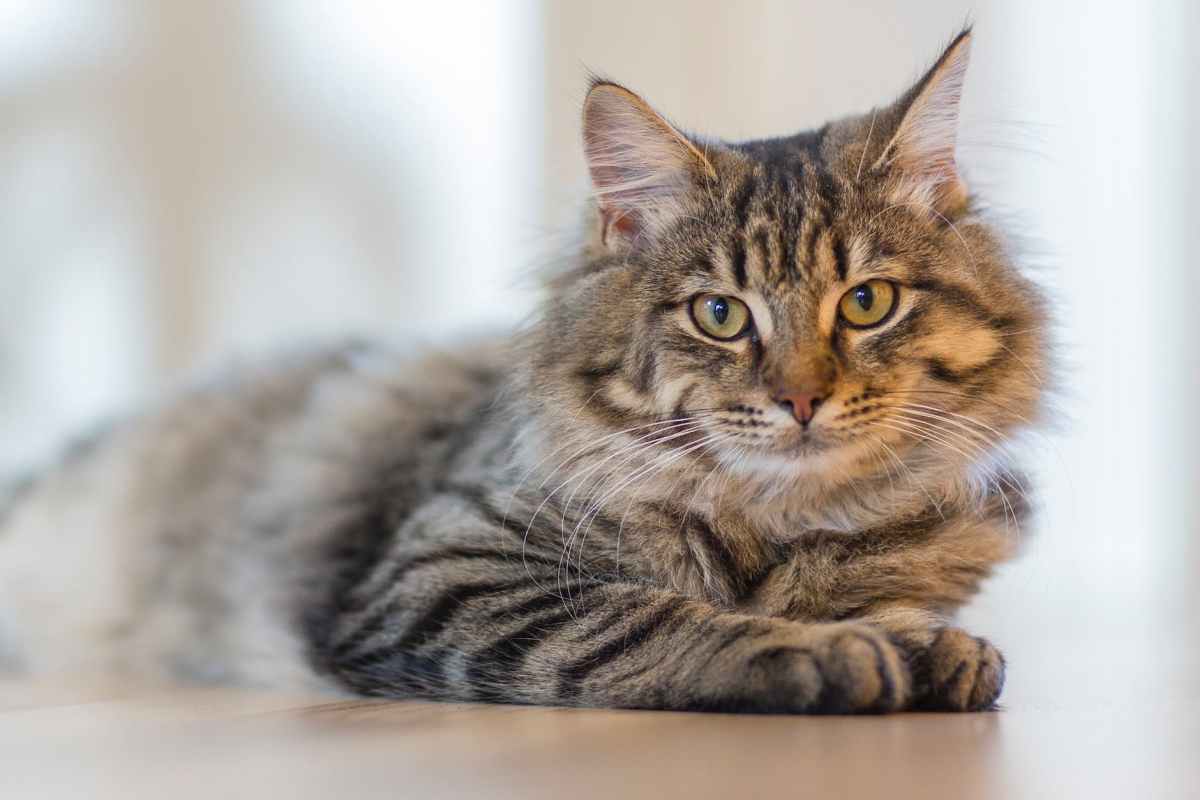
Credit: Ali Arapou011/pexels
Prompted by the same sloppy “research studies” that inspired Australia to kill millions of cats — and resulted in a mouse plague of biblical proportions in 2021 and 2022, causing billions of dollars in damage to farms, homes, businesses and infrastructure — New Zealand is on a disinformation-fueled jihad against felines.
Like all such studies, the claims that cats are singlehandedly responsible for declines in native wildlife, thus absolving direct human activities of blame, come by way of overzealous bird conservationists and others who insist the mass murder of cats will save native birds and small mammals. As if humans destroying habitats, dumping chemical waste, creating wind farms that act as bird dicers, building glass skyscrapers that millions of birds fly into every year, saturating entire swathes of the Earth with light pollution and EM radiation that harms and confuses animals — and all the other things people do — have no impact whatsoever, and it’s only those dastardly cats who are the culprits.
You’ve got to hand it to the misguided conservationists, who have picked tiny scapegoats who can’t defend themselves verbally or physically against humans.
To understand how the “hunting” (killing) competition can be real, it’s important to understand the context of the way cats are portrayed in New Zealand. Gareth Morgan, a Kiwi economist and politician, launched a campaign about a decade ago with the stated goal of eradicating cats from the island nation of 5.1 million people, which would forbid people from adopting new cats and end programs like trap, neuter, return (TNR) in favor of having local animal control departments kill felines.
Morgan, whose Cats to Go site portrays kitties with devil horns and glowing red eyes, says cats are evil animals driven by “bloodlust.”
“Cats are the only true sadists of the animal world, serial killers who torture without mercy,” Morgan has said.
A screenshot from the group’s Facebook page announcing a new prize for young hunters.
The North Canterbury Hunting Competition, which also offers prizes like dirt bikes for child hunters, pulled the new category announcement from its Facebook page on Monday but stopped short of canceling the event, blaming people who were upset by the idea of cat hunting.
Citing abusive feedback, the group said it’s “incredibly disappointed by this reaction” and said the hunt is for a good cause, raising money for local projects.
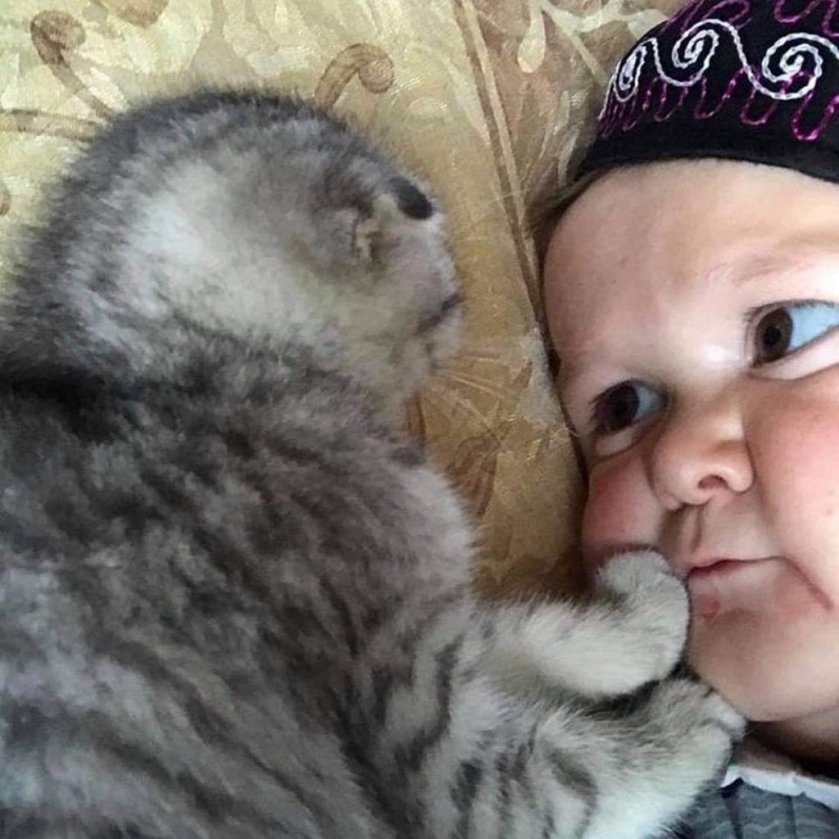
Hasbulla filmed himself pulling his cat by its ear and repeatedly smacking it.
Even if you haven’t heard the name Hasbulla Magomedov, chances are you’ve seen images of the Russian’s cherubic face, which exists in the pantheon of internet memes with the likes of Cash Me Outside Girl, Kermit and Condescending Wonka.
Magomedov is not a child, despite his 3’4″ stature and toddler-like appearance. He’s an adult man who suffers from a form of dwarfism, although he’s never publicly spoken about his condition in detail.
Normally known simply by the mononym Hasbulla, beyond his status as a meme the diminutive Russian is mostly known for hawking garbage (cryptocurrency, self-branded merchandise, supplements) and for his nebulous association with mixed martial arts, existing as a sort of barnacle on the UFC where he appears at weigh-ins, uploads video of himself providing commentary and is carried around as a kind of good luck totem by Russian fighters.
Now Hasbulla is famous for something else — horrifically abusing his cat.
In a new video — which Habsulla was apparently proud of and voluntarily shared publicly — the 20-year-old speaks in his native Russian while pulling violently on his cat’s ear. The feline — which is terrified of Hasbulla and flinches when he approaches — escapes to the safety of a shoe box, but his tiny tormentor follows, smacking the poor cat on its body and head while barking in the gutteral nonsense that passes for a language in his gas station of a country:
Hasbulla boasts six million followers on Instagram, 1.5 million on Twitter, and his videos on TikTok have amassed an astounding 10.3 billion views.
The video is disturbing enough on its own, though I can’t help but wonder if Hasbulla is willing to share this kind of behavior, what’s going on when the cameras are off?
And if people are willing to physically abuse their cats to feed the content beast and keep their viewers “entertained,” how will they lower the bar in the future when their clicks slow down and they feel they need to do something even more shocking to reignite interest?
An older photo of the same cat in kittenhood, when Hasbulla introduced the kitty to his followers. The sweet cat
The revelations about the shooters underscore the link between animal abuse and violence toward people.
One of the takeaways from the 2019 documentary Don’t F*** With Cats: Hunting An Internet Killer is the connection between violence toward animals and violence toward humans.
The 30-year-old who killed college student Jun Lin previously announced himself to the world with a series of videos in which he killed cats and kittens, then led online groupies on a years-long goose chase, parceling out crumbs of information to keep them interested until he finally “graduated” to humans and murdered Lin.
If police had taken the cat-killing videos more seriously, some of the documentary’s subjects believed, detectives could have caught the killer before he set his sights on a person. Of course, this blog’s position is that animal life has intrinsic value and animal abuse should be investigated for its own sake, but if police are more motivated out of fear that animal abusers could commit violent crimes against people, that helps cats and other animals too.
Now we’ve learned that the 18-year-old gunman responsible for the Texas school shooting and the 18-year-old who gunned down 10 people in a Buffalo, NY, supermarket were both cat killers before they were murderers of human beings. The former murdered 21 people, including 19 children and two teachers at a school in Uvalde, Texas, on May 24 while the latter took the lives of 10 people, all black, in a hate-motivated massacre on May 14.
The Texas shooter filmed himself grinning while holding “a bag of blood-soaked dead cats,” the New York Post reported on Sunday. David Trevino Jr., who knew the shooter, said he was “known for hurting cats.”
“He liked hurting animals,” Trevino told the Post. “I’m told he killed the cats and carried around the bag of bodies for s–ts and giggles The video shows he was not right in the head. He’s not all there. The video raises all sorts of red flags.”
The Buffalo murderer told online acquaintances he’d beheaded a cat, and wrote about it in a journal as well. Like the Texas shooter, his animal abuse wasn’t a secret. His mother knew, and gave him a box to bury the dead animal.
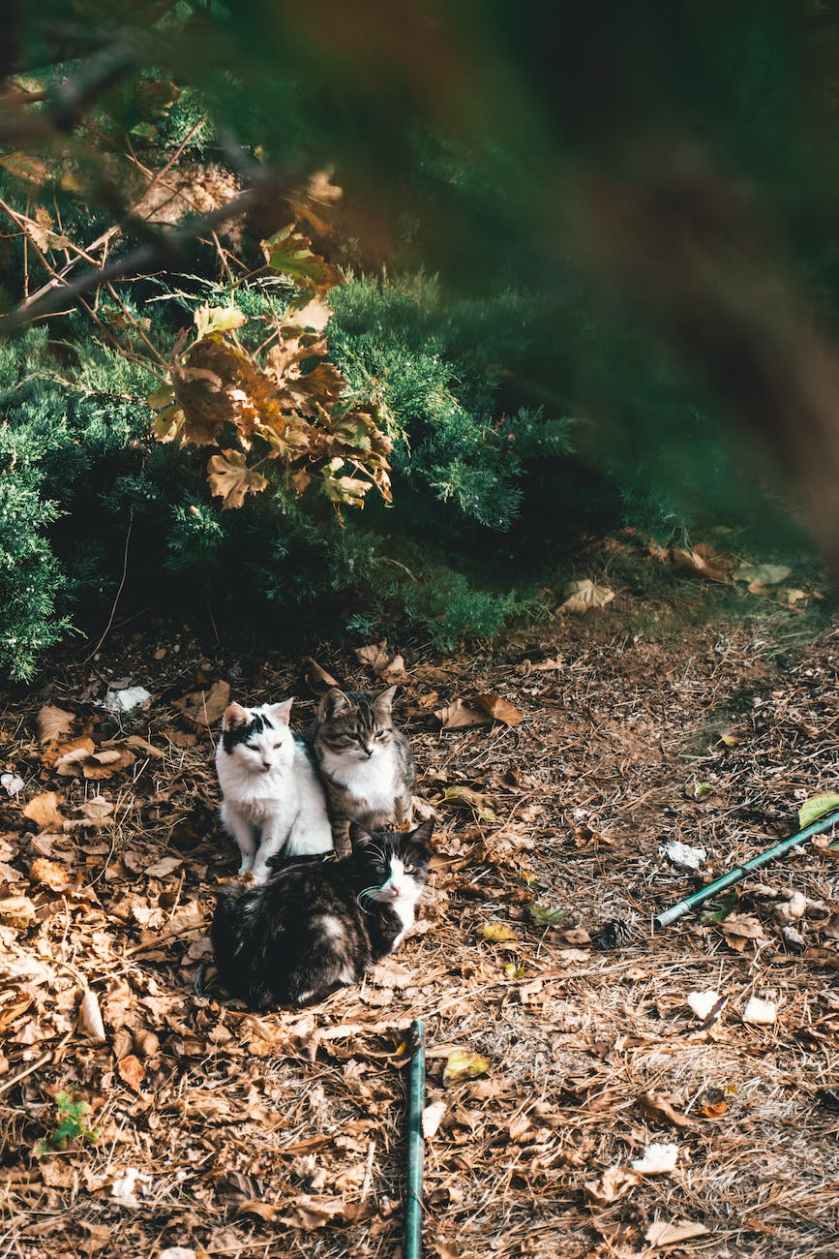
Credit: Mark Burnett/Pexels
The shooters both fit the profile of animal abusers who move on to hurting people: Most animal abusers are men younger than 30, according to the Humane Society, and studies have found men who abuse cats often target them as an emotional proxy for women. More than 70 percent of women who have companion animals and were in an abusive relationship reported their significant others harming their pets.
Classmates of the Texas shooter described him as “eerie,” “scary” and quick to lose his temper. He was known for physically threatening girls and women, and for harassing them online. One classmate, 17-year-old Keanna Baxter, said he got “super violent” when he dated her friend.
“He was overall just aggressive, like violent,” Baxter said. “He would try and fight women. He would try and fight anyone who told him no — if he didn’t get his way, he’d go crazy. He was especially violent towards women.”
The Texas shooter spent a lot of time creeping on women on social media and in group chat services, which brings us full circle back to Don’t F*** With Cats. In a conversation with a teenage girl on group video chat app Yubo, he told her he “wanted his name out there” like the deranged killer at the center of that documentary.
The shooter, who lurked in group chats uninvited, also showed off the guns he bought after he turned 18 on May 16.
“He would be active every day and join our lives, repeating girls’ names until they paid attention to him,” the girl said.
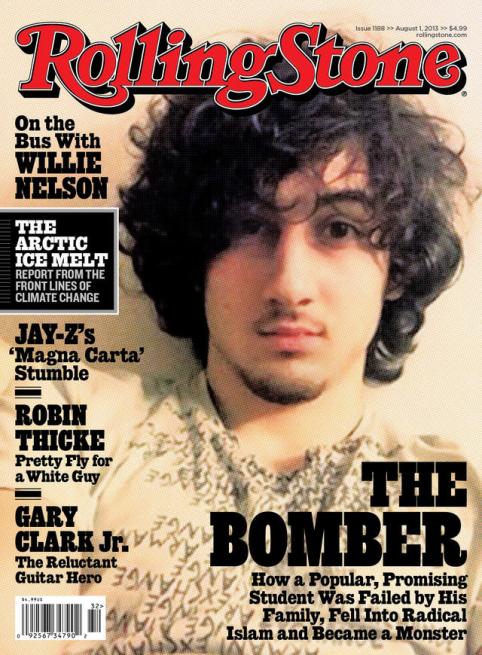
Rolling Stone was widely condemned for putting one of the Boston marathon bombers on its cover as if he were a rock star, but the issue was its best selling of the year.
Although the blame game begins while the bodies of the victims are still warm, as shrieking heads speculate on cable news, no one ever talks about the obvious and uncomfortable truth, which is that these disaffected young loners desperately want to show people they’re important, that they matter.
If they can’t find fame, infamy is a second prize they’re happy to embrace, and they’re motivated in part by the notoriety that previous members of their grim brotherhood “achieved” by massacring fellow human beings.
Major media figures aren’t merely willing to grant that wish. They’re wholeheartedly, enthusiastically in on it, filling hours of airtime looping the same short bits of footage, breathlessly reporting every nugget of information, and holding court over panels of “experts” who are happy to speculate on motivations regardless of how little they know. They blame video games, society, the lack of nuclear families, the lack of male role models, white supremacy, bullying, guns — everything but their own role in turning the killers into household names.
After all, almost everyone who was alive in 1999 can name the two trenchcoated murderers who perpetrated the Columbine massacre, back when things like that still shocked the country. But how many of us can name a single one of the 13 victims?
That’s why I won’t name the killers on this blog. It’s just one blog, in one small corner of the internet, and it won’t make a difference. But if everyone stopped naming them, stopped making them household names and the stars of obsessive crime porn, stopped turning them into objects of fascination whose faces are plastered on magazine covers like rock stars, maybe it would change things.
If would-be killers knew infamy was off the table, that if they survive they’ll remain anonymous nobodies without prison groupies begging for face time, journalists begging for interviews, and grief vampires discussing them for years in “true crime” books and on podcasts, would they go through with it?