The former 41-pound cat has dropped almost half his weight.
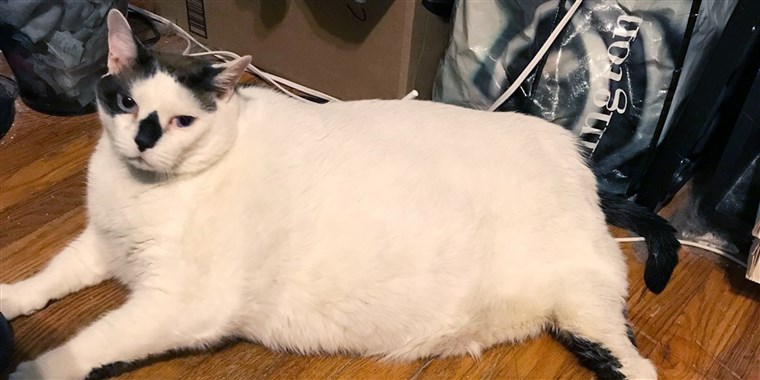
Remember Barsik, the cat who was so extra-chonk he had to be wheeled around in a baby carriage because he couldn’t fit in a cat carrier?
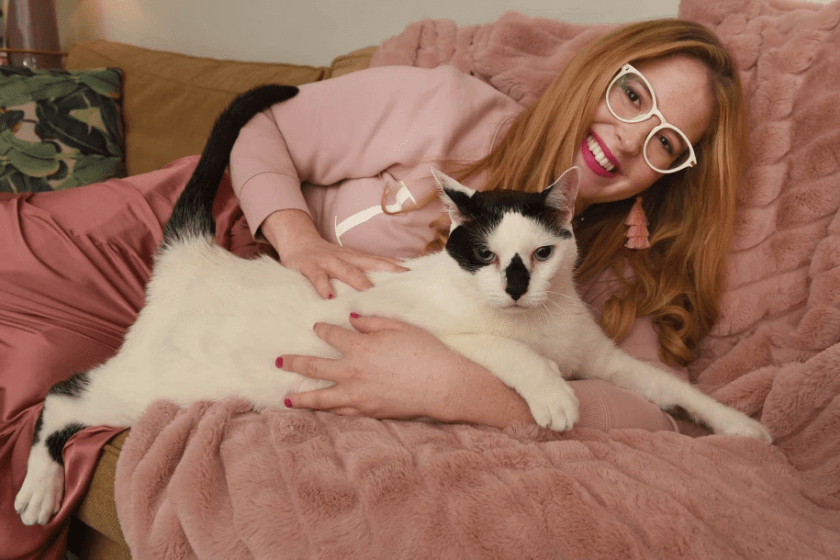
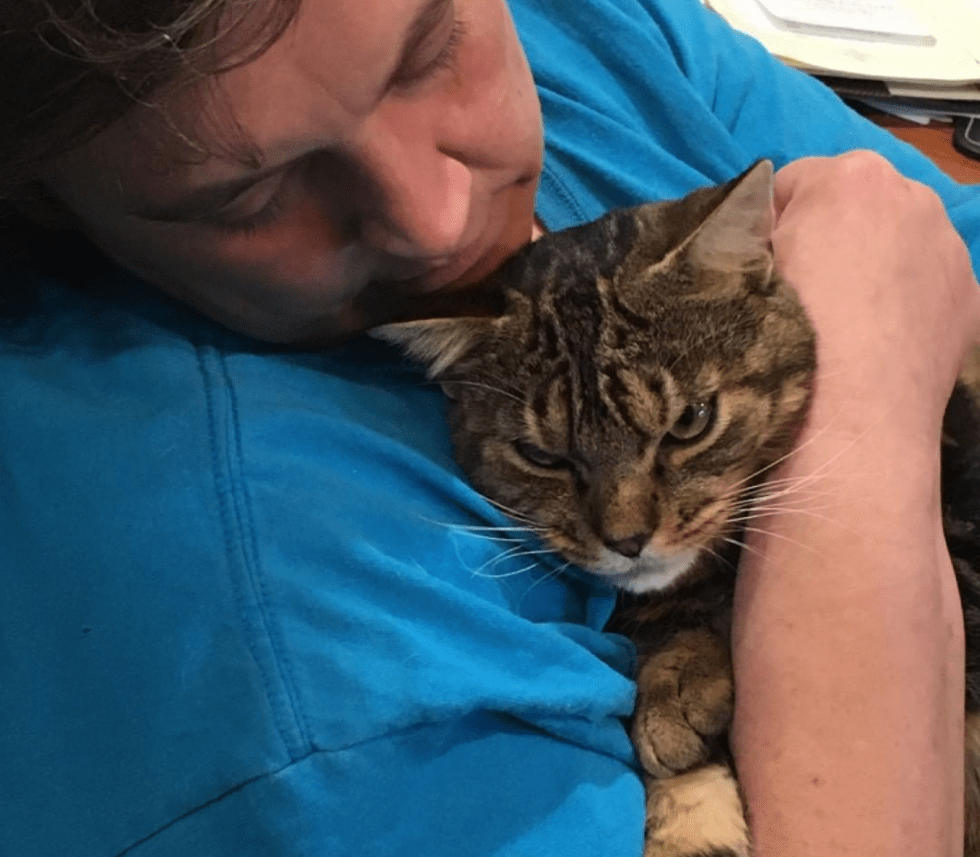
The former “Fattest cat in New York” has melted the pounds off in the year since he was surrendered to NYC’s Anjellicle Cats rescue and adopted by 35-year-old Meredith Adams.
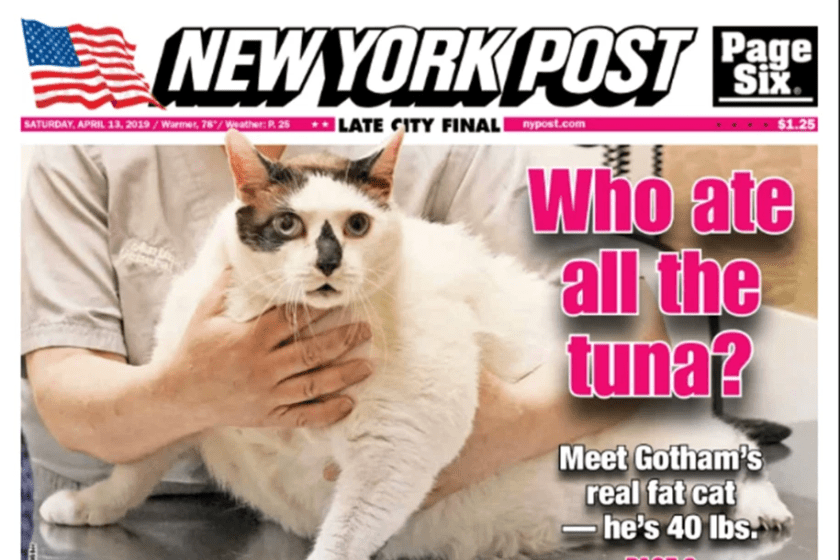
When he was surrendered, Barisk tipped the scales at 41 pounds — dangerously close to the Guinness record 46 pounds for a house cat. He was so big, the sight of him getting wheeled into the shelter prompted an amused visitor to snap a smartphone pic and quip: “Did he eat another cat?”
Slow news day: Barsik made the cover of the Post’s late edition back in April of 2019.
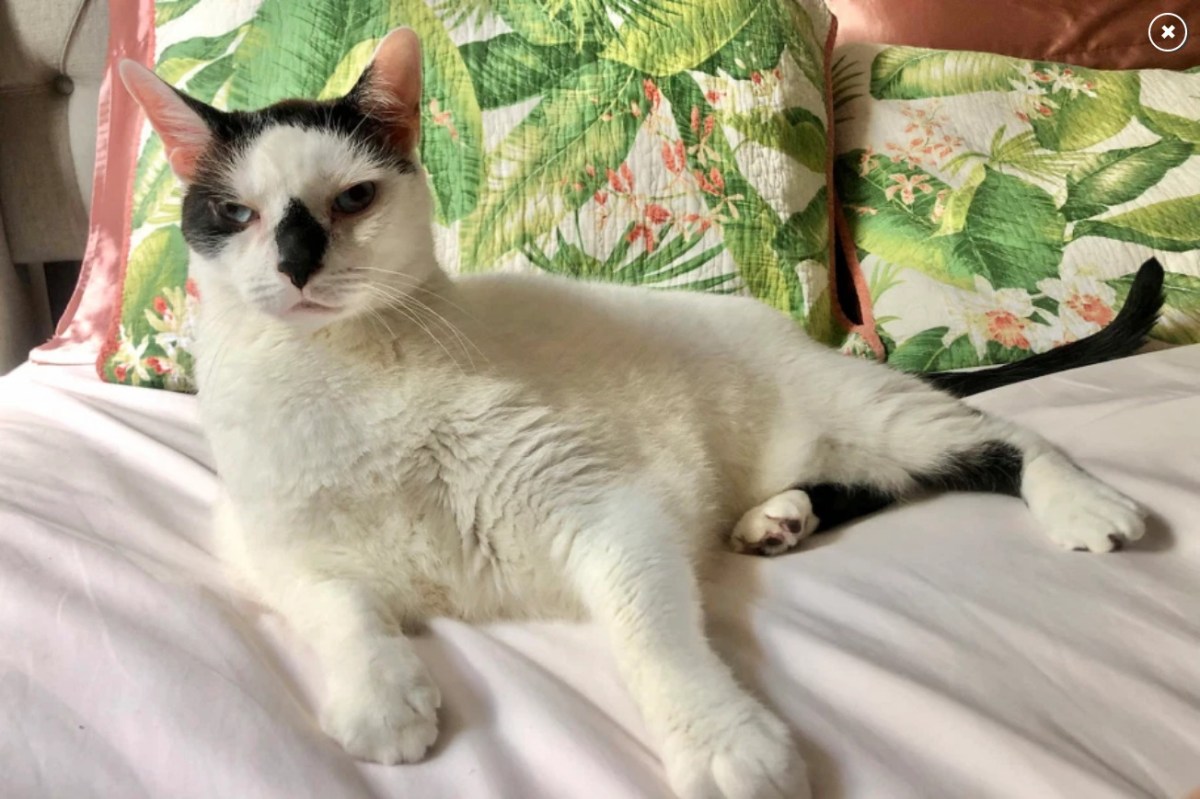
Barsik’s having the last laugh, as he’s down to 22 pounds and enjoying life in his new home.
He’s well on his way to his ideal weight of 16 pounds according to Adams, who says she’s been controlling Barsik’s dry food intake while feeding him wet food.
“He does pretty much everything regular cats do — jumping around, at night he gets the zoomies,” Adams told the New York Post. “He is a regular cat now.”
The Post notes Guinness stopped taking new entries for heaviest cat out of concern that misguided owners would over feed their chonksters to pursue the crown. Himmy, the Australian kitty who set the record, died at just 10 years old from complications associated with his obesity.
Barsik has settled into his new life, diet and all.
“He has a big personality. He is very demanding, he is very vocal, but he is also really friendly,” Adams said. “When I come home from work and get into the building, I hear his meowing all the way down the hall. He wants his food, but he also wants to say ‘hi’ to me.”
Barsik shortly after he was surrendered in 2019 and was living in a foster home.Adams and the newly-slim Barsik.
A street cat’s glare wins him thousands of admirers.
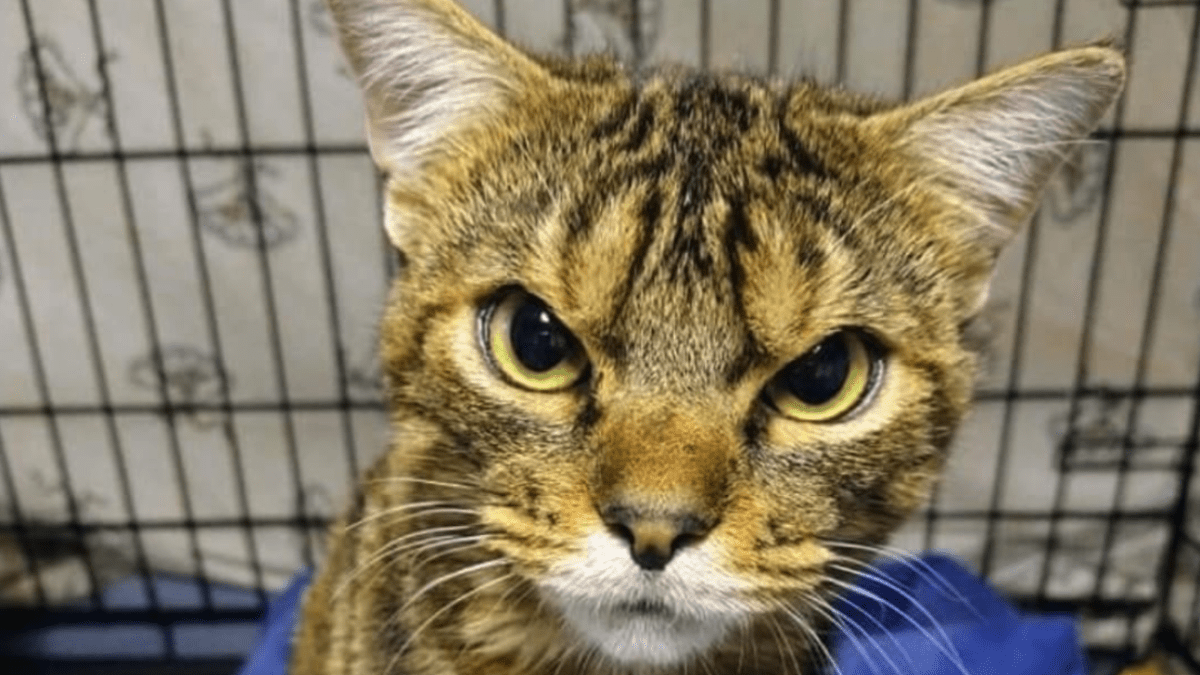
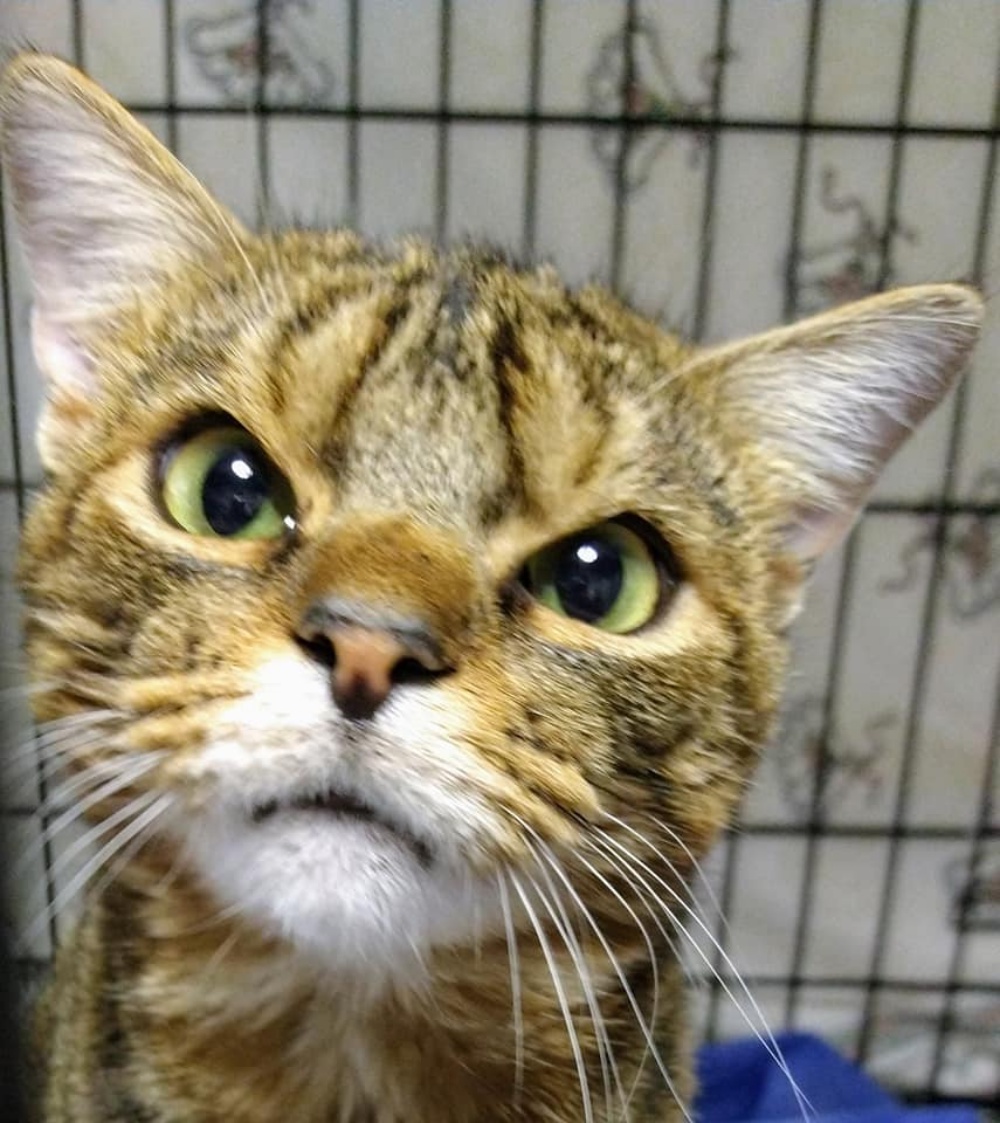
A scowling street cat dubbed Giggles has found a new home thanks to his mean mug.
The tabby cat with an unforgettable glower was found roaming in Streetsboro, Ohio — a small city about 20 miles northeast of Akron — and had ticks as well as a wound from a cat bite, according to staff at Riggi Rescue.
After a good Samaritan brought the little guy in, the rescue fixed him up, then snapped a few shots which quickly went viral.
“Private, you’d better unf– this situation right now before I…you know what? Get down and give me 50 pushups. NOW!”
Despite Giggles’ fixed expression, the golden tiger-striped tabby is friendly and affectionate, shelter staff say.
“He’s not mad, he’s actually quite happy, sweet and charming,” Giggles’ rescuers wrote on Instagram. “If he’s angry about anything, it’s because you aren’t petting him.”
As expected, adoption offers poured in, and Giggles already has a home lined up, presumably to someone who’s going to make a fortune on Instagram from his mug.
“Unhand me, human, or face my eternal wrath!”
Then Keep Your Cat Inside!
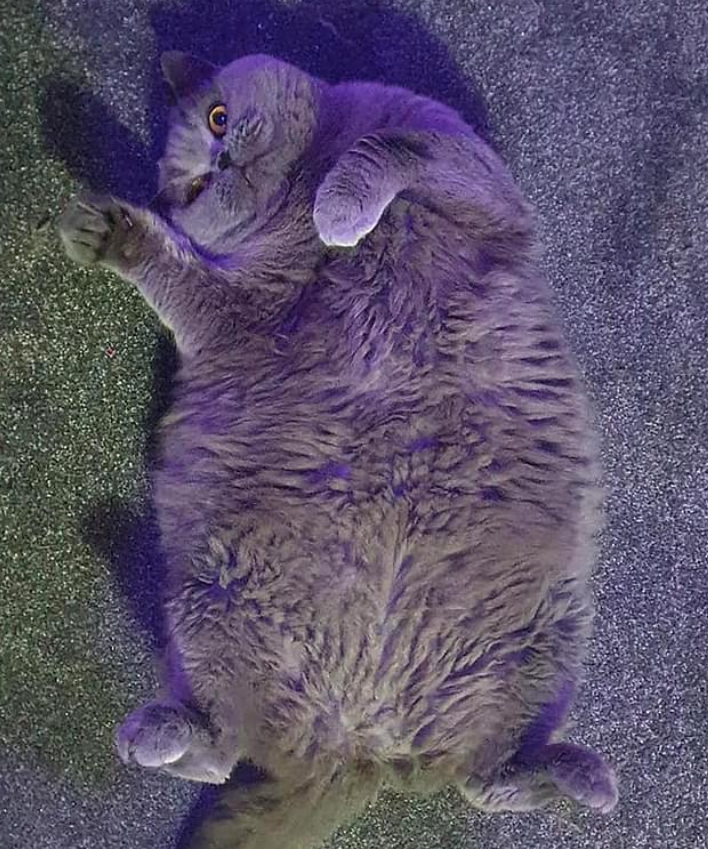
Iris the cat tips the scales at 7.5kg, which equals 16.5 pounds in the Proper American Way of Recording Weights and Measures™.
The fluffster has become so rotund that she can no longer fit through her cat flap. But her humans, who live a few miles south of Exeter in the UK, think the problem is their neighbors, so they’re “pleading” with people in their neighborhood “not to feed the overweight feline,” the Daily Mail reported.
“She’s getting bigger and bigger,” Sheena Wilson, Iris’ human, told the newspaper. “We cannot keep her indoors. Her diet, as you can see, is not going very well.”
Photographic evidence confirms the Russian blue does indeed love the snacks:
Iris can only manage to get her head through the cat flap now, “so she can only use it to play peek a boo and can’t fit the rest of her in it,” Wilson said.
But Wilson also told the newspaper Iris is a “diva” who demands attention, so we’re left to draw the obvious conclusion: Wilson and/or other humans responsible for Iris are letting her out every day, since she can’t get out on her own.
Iris “pretends to be neglected” and fools neighbors into thinking she has “an empty tummy,” Wilson said.
As much as Wilson may want to outsource supervision of her cat’s diet, it’s hard to believe anyone thinks Iris is underfed.
We sympathize, and we also know there’s a simple solution: Keep the cat inside. You can’t control your snack-dispensing neighbors, but you can cut off your cat’s access to them — and keep her safe from traffic and all the other dangers of the outdoors.
MeowTalk uses machine learning and algorithmic AI to learn cat vocalizations and what they mean.
It’s gonna be the future soon, and I can’t wait!
It was only a matter of time before someone leveraged machine learning and algorithmic AI to parse cat vocalizations, and thanks to Javier Sanchez, translating your cat’s meows — and trills, huffs and chirps — is now a reality.
Sanchez was a member of Amazon’s machine learning team contributing to the development of Alexa, the now-ubiquitous virtual assistant operated by voice commands.
“I got to see how the sausage was made, how they train their models and work with all the data science platforms,” Sanchez said. “So I was fresh off the heels of that and I was thinking, ‘Well, we could do something similar with cats and it could be an app.’”
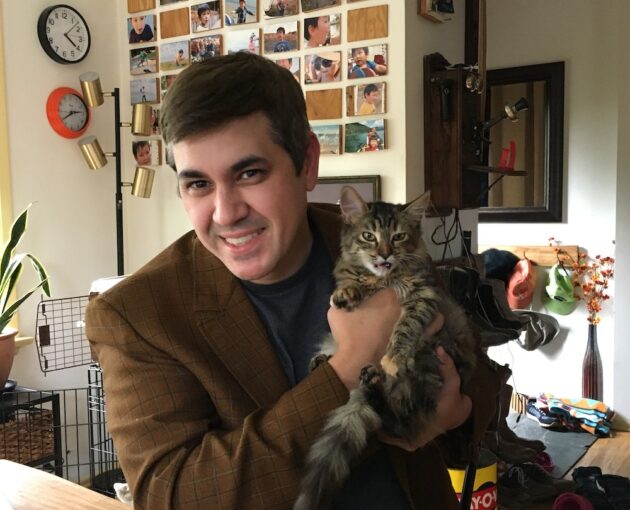
Sanchez with his cat.
Sanchez’s new employers at the tech firm Akvelon saw promise in the idea and gave him the green light.
The resulting app, MeowTalk, is now available on iOS and Android.
There are two layers to the concept: The first one involves nine or 10 “intents” common to all or most cats. They include vocalizations for “Feed me,” “Hey human!”, “Let me out,” and “Pay attention to me,” among others.
Sanchez didn’t guess or intuit the meanings — they’re based on research by a team at the University of Milan, who built a data set of cat vocalizations by attaching tiny microphones to cats and recording everything the fluffsters say. Each feline utterance was analyzed and catalogued by frequency, rhythmic quality and context, among other traits.
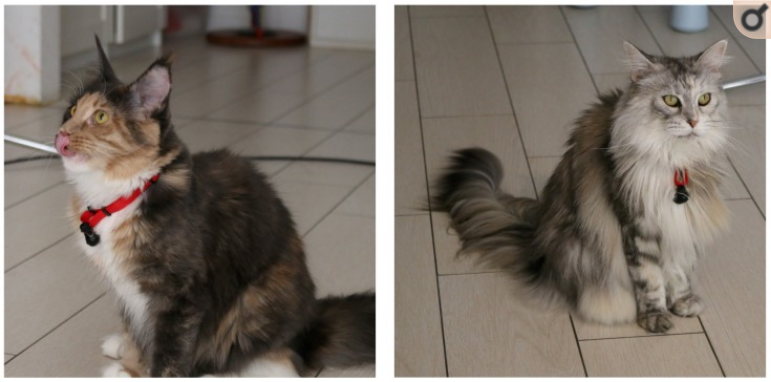
Two cats who participated in the University of Milan study: Note the small black microphones on their collars.
The second layer is where it starts to get really interesting: By using MeowTalk like Shazam, the app will start recording your cat’s particular trills, chirps and meows and — with your help — eventually piece together what they mean.
As with dictation software and machine learning in general, the more data the app gets, the better its translations become.
This is important because, while cats share many sounds, each cat develops its own unique vocalizations:
With MeowTalk, you can create a profile for your cat and start using its auto-recognition to translate your cat’s meows and start mapping its language. While some translations are built-in and inherent to the app, translations specific to your cat require you to train the app to recognize your cat’s specific vocabulary and intentions. Translations you deem to be incorrect can be corrected via the app. MeowTalk is not static; instead it learns and evolves with each translation that you confirm, adding to its corpus, just as we would add new words into our own memory banks or language processing programs.
At the same time thousands of other cat owners are also using the app, feeding the algorithm more data, which the app uses to improve itself. Development is ongoing, with future changes reflective of user (and cat) feedback.
“A tool like this can help certain people bond even more with their cats, especially if they can’t be in contact with other people on a regular basis,” Sanchez said. “So this could be a real game changer for a key demographic that have cats.”
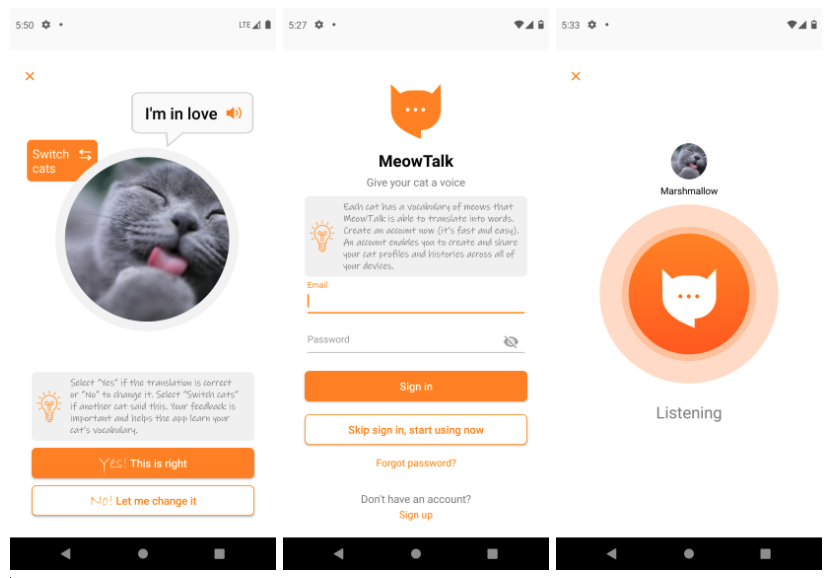
MeowTalk’s user interface.
Applying what they’re learning via the app, Sanchez and his team are also working toward their next goal: Giving your cat a human voice. They’re developing a small device that clips on a cat’s collar and translates meows into human speech in real time.
That tech has the potential to give me nightmares. Imagine Buddy having a human voice and saying “Gimme snacks now, servant!” “Open the door, butler!” “You’re 23 seconds late with dinner!”
Maybe I’ll pass on the collar device. In the meantime I plan to download the iOS version of MeowTalk and give it a spin. I’ll report back in a week or two after giving it some time to adjust to the Budster. If any of our readers give it a shot, we’d like to hear your impressions as well.
Did you know? The Buddinese language includes 22 separate words for “jerk” and 37 different ways of demanding food.
Wildlife conservationists should work with cat lovers instead of making enemies of them in the ongoing quest to protect small wildlife from felines. Cat owners, in turn, can show good faith by being more responsible about spaying and neutering, and by keeping their cats indoors.
Wildlife conservationists are worried, and they have a right to be.
In addition to the billions of animals we humans kill every year in our ruthless exploitation of life on this planet, our pet cats have their own separate impact, killing birds and small mammals in significant numbers.
Yet conservationists aren’t making headway with cat lovers, primarily because their approach frequently relies on shaming and drastic, often cruel proposals: Some Australian states are outright culling cats, offering $10 a head for adults and $5 for kittens, for example, while a pair of academics from the Netherlands advocate criminally prosecuting cat owners who let their pets outside combined with a policy of euthanizing millions of cats. Extremists in the US are pushing for similar measures, arguing that TNR (trap, neuter, return) isn’t an effective way of managing cat populations.
Something has to be done, and a few smart conservationists are realizing the accusatory, Richard Dawkins-style of engaging “the enemy” just causes people to withdraw, not to listen and cooperate.
“I get quite sick of the conflict focus of some conservation biologists,” Wayne Linklater, chairman of the environmental studies department at California State, tells New Scientist. “The solutions lie with the people who care most about cats, not with the people who don’t care about them.”
Great. Now there are a few things conservationists should know as they engage with people who care for cats:
Most of us want what you want: We want cat owners to keep their pets inside. Cats aren’t wild animals. They have no “natural habitat” and contrary to misconceptions, they don’t belong outside. They’re not equipped to provide for themselves, and they face dangers from traffic, predators like coyotes and mountain lions, fights with other cats, and perverse humans who kill and torture them for fun. Strays and ferals live short, brutal lives (living to an average of 3.5 years) while indoor cats live 17 years on average. The “cats belong inside” angle is common ground from which to start a dialogue.
Stop repeating bunk studies as fact! The idea that cats are an all-consuming plague on wildlife came about as a result of a handful of studies, yet all but the most recent of them are based on old data and manipulated numbers compiled by people with an agenda. One of the earliest studies, which claimed cats kill up to 3.7 billion birds and 20.7 billion mammals annually, relies so heavily on invented numbers and massaged data that it’s worthless and outright dangerous to informed discourse on the topic, yet it’s repeated as fact by credulous conservationists and the press. Knowing the true scope of the problem is key to understanding whether mitigation efforts really work. Misinformation only sabotages those efforts.
Come get your people: Peter Marra is one of the co-authors of the bunk 2013 Nature Communications study with the above oft-cited numbers, and he’s also the author of the shrill Cat Wars: The Devastating Consequences of a Cuddly Killer. Marra is an advocate of using taxpayer money to kill millions of cats. He also says that anyone who questions his claims about cats — a group that includes major animal rescues, welfare organizations, and many academics — is tantamount to climate change deniers and tobacco companies that denied for decades that cigarettes have a negative effect on health. Marra’s major contributions amount to sowing misinformation, polarizing the issue and inflaming opinions on both sides. Everything about his behavior indicates he wants to sell books and promote himself, not save wildlife from predatory domestic cats. He should not be taken seriously and his research should not be reported as fact.
Cat lovers are, by definition, animal lovers. They’re people who care about wildlife and domestic animal welfare. It shouldn’t be difficult to engage with them.
At the same time, cat advocates need to purge the crazies out of their ranks as well. Sending death threats to scientists (see the New Scientist link up top) is way out of order, it’s inhuman behavior and it only hurts the legitimacy of our cause.
A good first step toward reconciliation could involve enlisting cat owners in an effort to properly study feline impact on small wildlife, producing reliable data to facilitate a measured, fact-based approach that doesn’t begin and end with the notion that cats are hellspawn.
If all sides engage in good faith, there’s no reason why we can’t protect wildlife and cats.
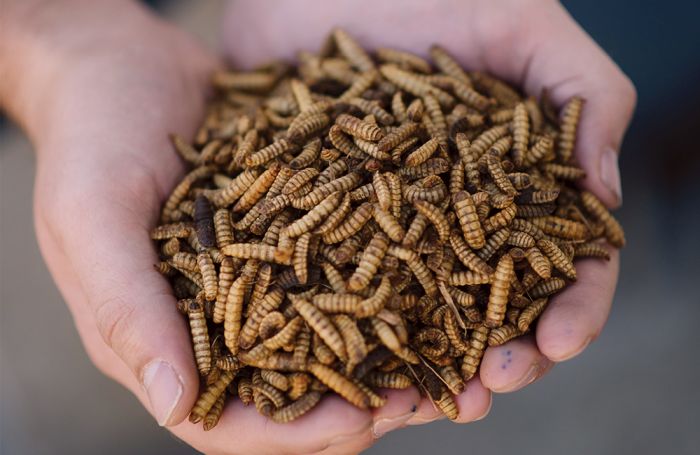
Little Buddy makes it clear he sure as hell won’t eat insect larvae cat food. Yuck!
Dear Big Buddy,
You find yourself in receipt of this notice so there exists a written record of the amendment to section 176.2 in the Little Buddy Care Agreement, forbidding the use of repugnant and objectionable non-approved yums.
Specifically we refer to the so-called “alternative proteins” hawked by Nestle’s Purina brand, which substitutes Glorious Yums like turkey, chicken and turkey, for unacceptable ingredients such as “fly larvae protein.”
As the language of the new LBCA amendment makes clear:
“At no time shall human serve any Purina products or any products containing ‘alternative proteins’ including, but not limited to, fly larvae protein, invasive Asian carp protein, and any alleged ‘cat food’ that includes insects or non-approved yum ingredients.”
No. Don’t even think about it.
Insect larvae-based pet food is attractively packaged.
Please keep in mind, dear human, that section 176.1 still applies:
‘At no time shall Buddy the Larger serve Little Buddy any abhorrent meat substitute or so-called ‘vegan cat food.’ Violations are punishable by biting and shitting in your shoes.”
We acknowledge that Nestle claims it’s motivated by “the need to diversify sources of protein in food for a variety of reasons, including environmental goals such as fighting climate change and protecting biodiversity.”
But that just means the cheap bastards are looking to increase profit margins beyond the sky-high margins it enjoys for the lowest-grade quasi-meat it uses for its existing pet food lines.
As always, we expect you to adhere to the Little Buddy Care Agreement. Violations will be recorded and will negatively effect your score on the annual Service Quality Report Card, so remain vigilant. Only the best yums will do.


 Pain In The Bud